The Rare 1631 Wicked Bible
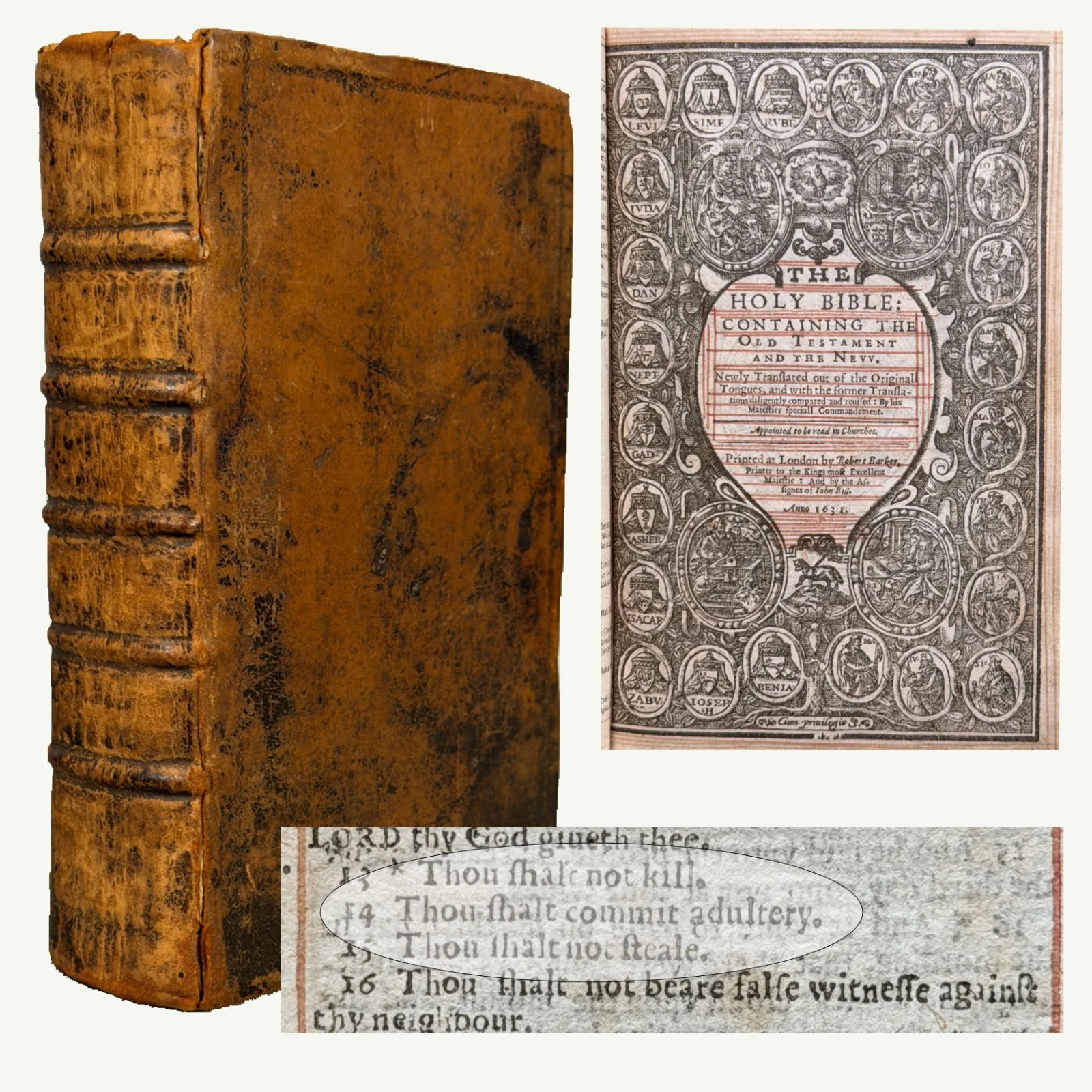
Few things capture collectors’ attention faster than a Bible that contains a mistake, and even fewer than one that caused a royal scandal. Today we’re looking at the most infamous English Bible misprint of them all: the Wicked Bible of 1631, where a single omitted word changed a commandment and created one of the most sought-after errors in printing history.
Printing an English Bible during the hand-press era was a complex and extraordinary undertaking. Every letter was set by hand, page by page and sheet by sheet, and a single edition could require well over a million individual pieces of movable type. With so many opportunities for human error, even the most skilled printers occasionally introduced mistakes that escaped multiple rounds of proofreading.
Misprints and the Hand-Press Era
Some errors were minor spelling variations, while others altered the meaning of an entire passage with the omission or substitution of a single word. Today, these printing mistakes, known as misprints, offer a fascinating glimpse into the realities of early printing and have become highly collectible in their own right, often commanding significant premiums because of their rarity and historical interest.
Among the best-known English Bible misprints is a 1594 Geneva Bible whose New Testament title page mistakenly bears the date 1495 instead of 1594. Another is the so-called Child-Killer Bible, a 1795 King James Bible in which Mark 7:27 reads, "Let the children first be killed," rather than "filled." The magnificent 1717 folio printed by John Baskett gave rise to the famous Vinegar Bible when the headline above Luke 20 mistakenly read "The Parable of the Vinegar" instead of "Vineyard." Yet chief among all English Bible misprints is one found in a modest 1631 octavo King James Bible.
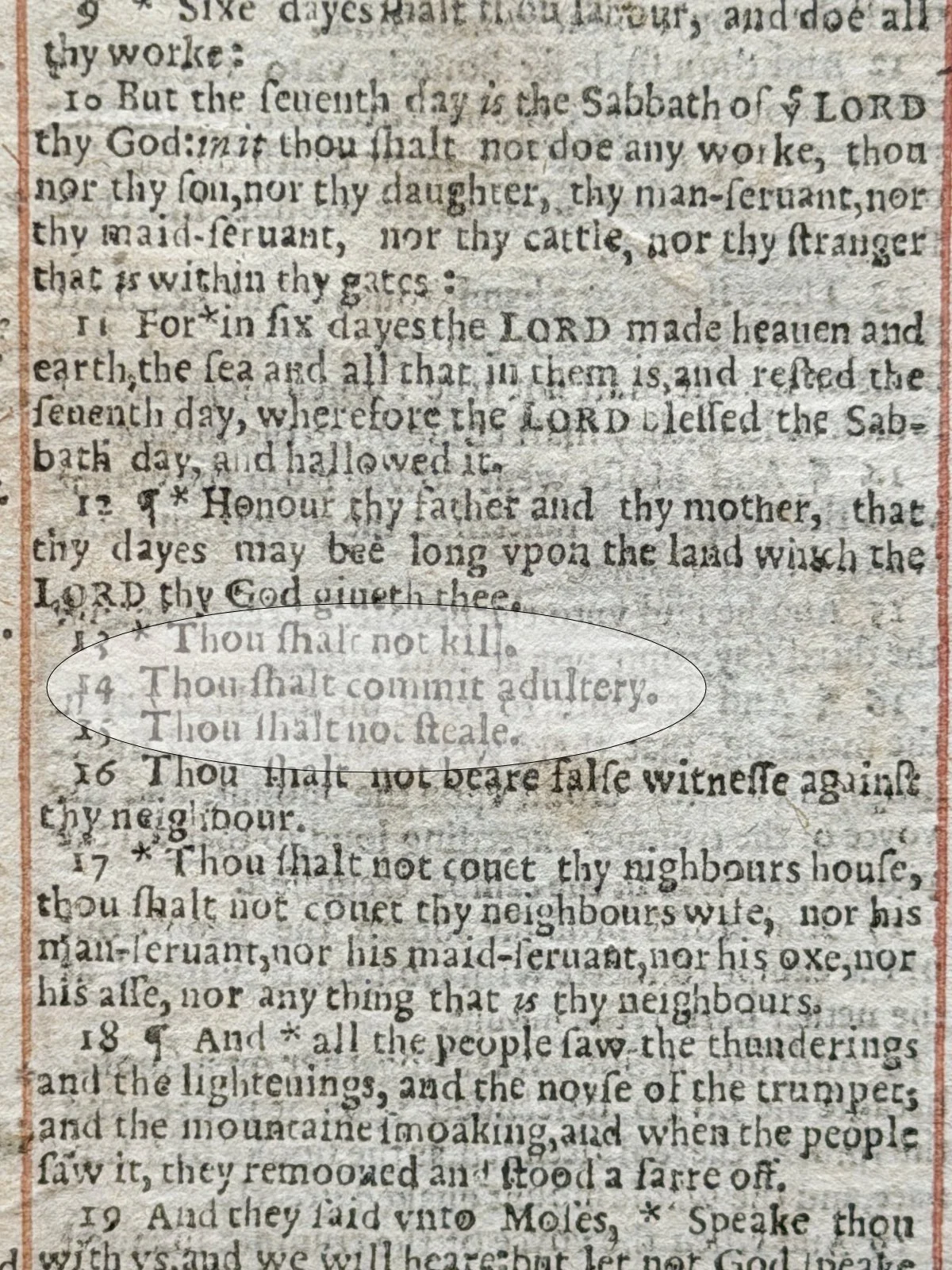
The celebrated Wicked Bible earned its notorious nickname through the omission of the word not from the Seventh Commandment in Exodus 20:14, leaving the shocking reading, "Thou shalt commit adultery." In his Historical Catalogue of Printed Editions of the English Bible, A. S. Herbert described it as an edition of which "specimens are very rare," and it remains the most sought-after of all English Bible misprints.
A Low Survival Rate
Approximately 1,000 copies were printed in 1631 by the King's Printers, Robert Barker and Martin Lucas. Once the error came to light, Archbishop Laud ordered the edition suppressed, and most copies were seized and destroyed. Peter Heylyn records that the printers were summoned before the High Commission Court, where "the whole Impression was called in, and the Printers deeply fined," reportedly £300 (Cyprianus Anglicus, 1668). Barker lost his royal printing patent and, after years of mounting financial difficulties, eventually died in debtors' prison.
Today, only twenty-five copies are known to survive, eighteen of which are held in institutional collections. Opportunities to acquire a copy are therefore exceptionally rare.
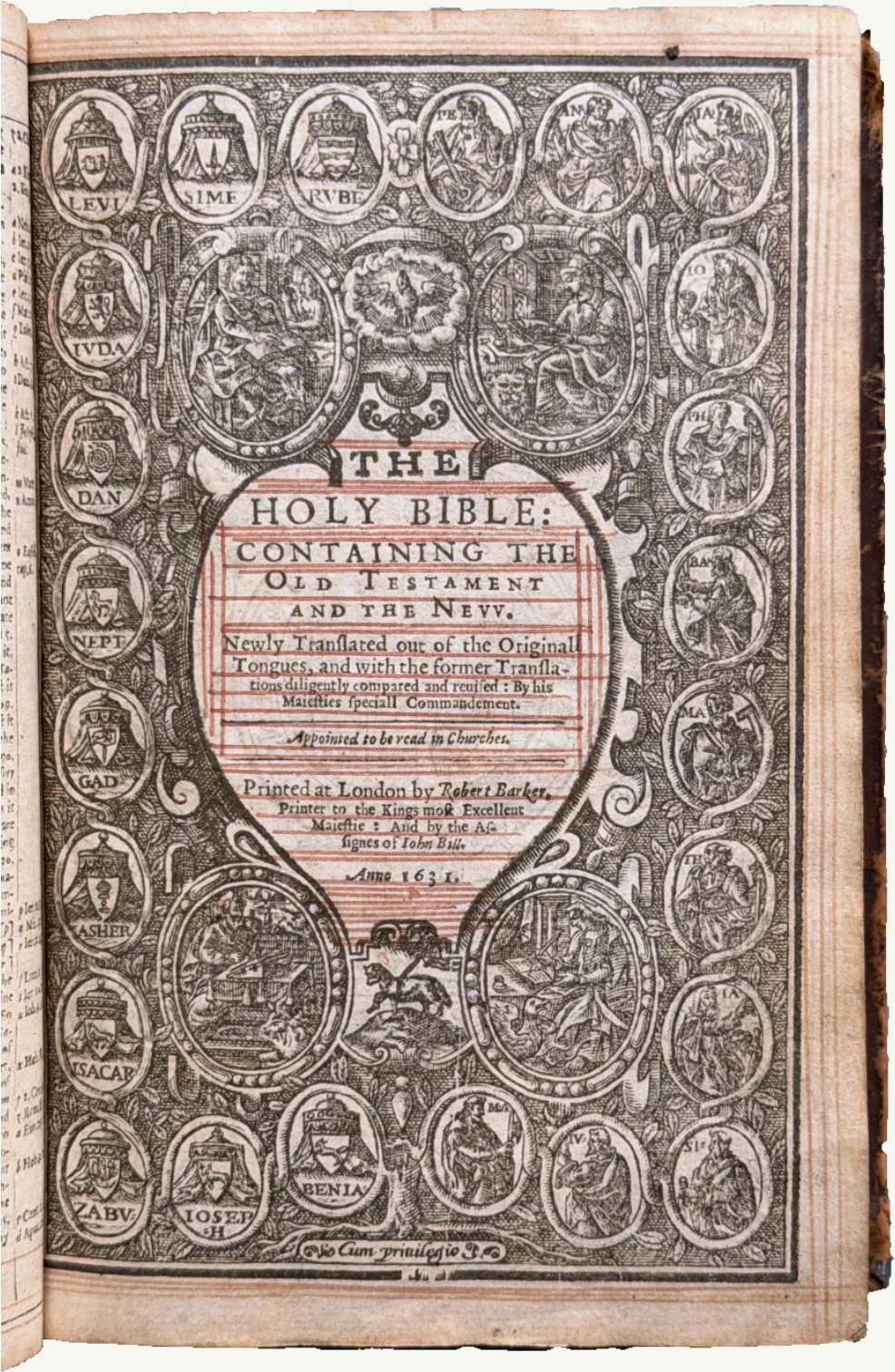
Condition is equally important, as most surviving examples are incomplete or exhibit substantial defects. The only copy to appear at public auction in recent decades suffered from extensive condition issues, including multiple leaves with loss of text, yet still realized $56,250 in 2018.
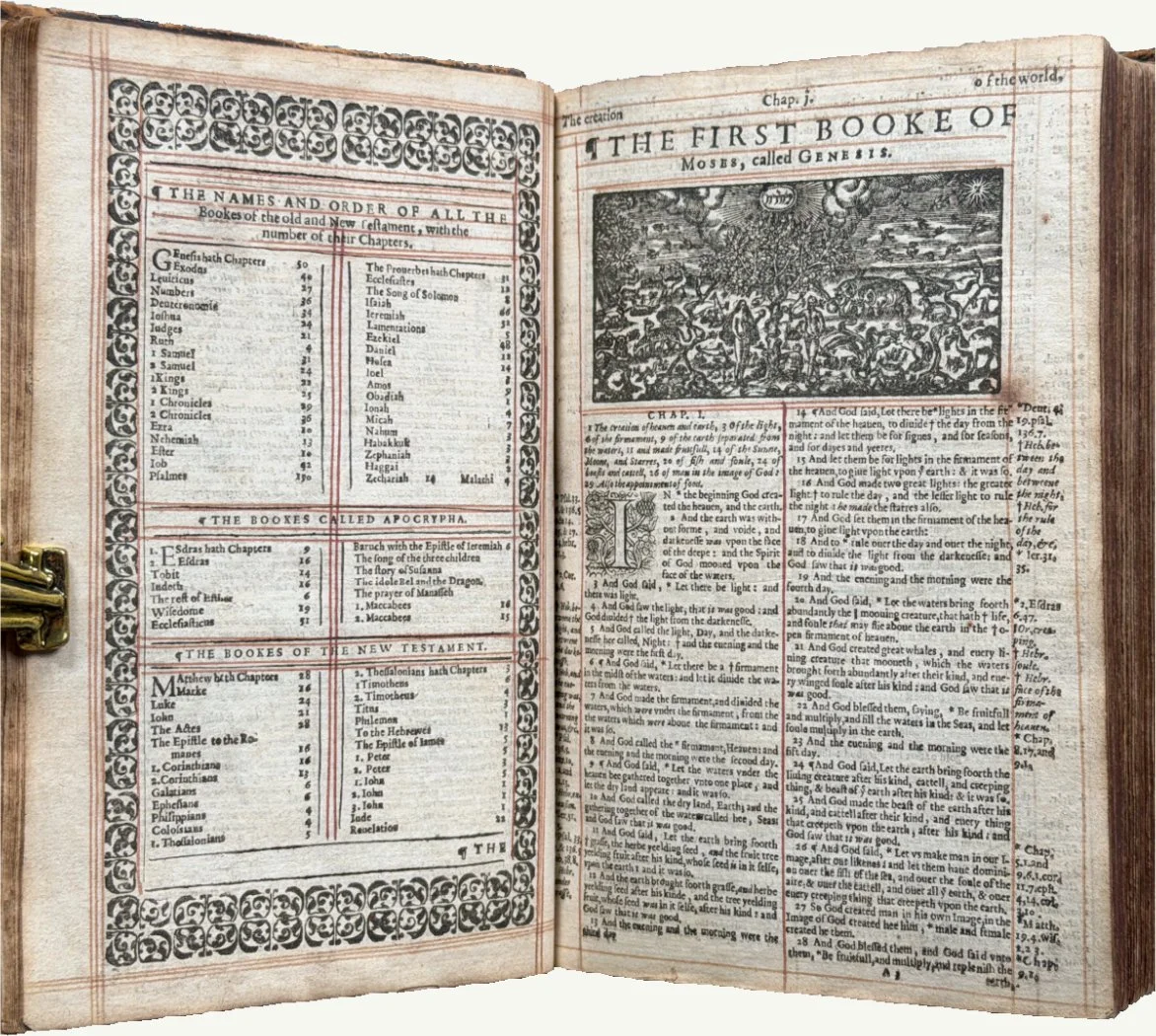
By contrast, the present example is complete and remarkably well preserved. It may well be the finest surviving copy of the Wicked Bible remaining in private hands.
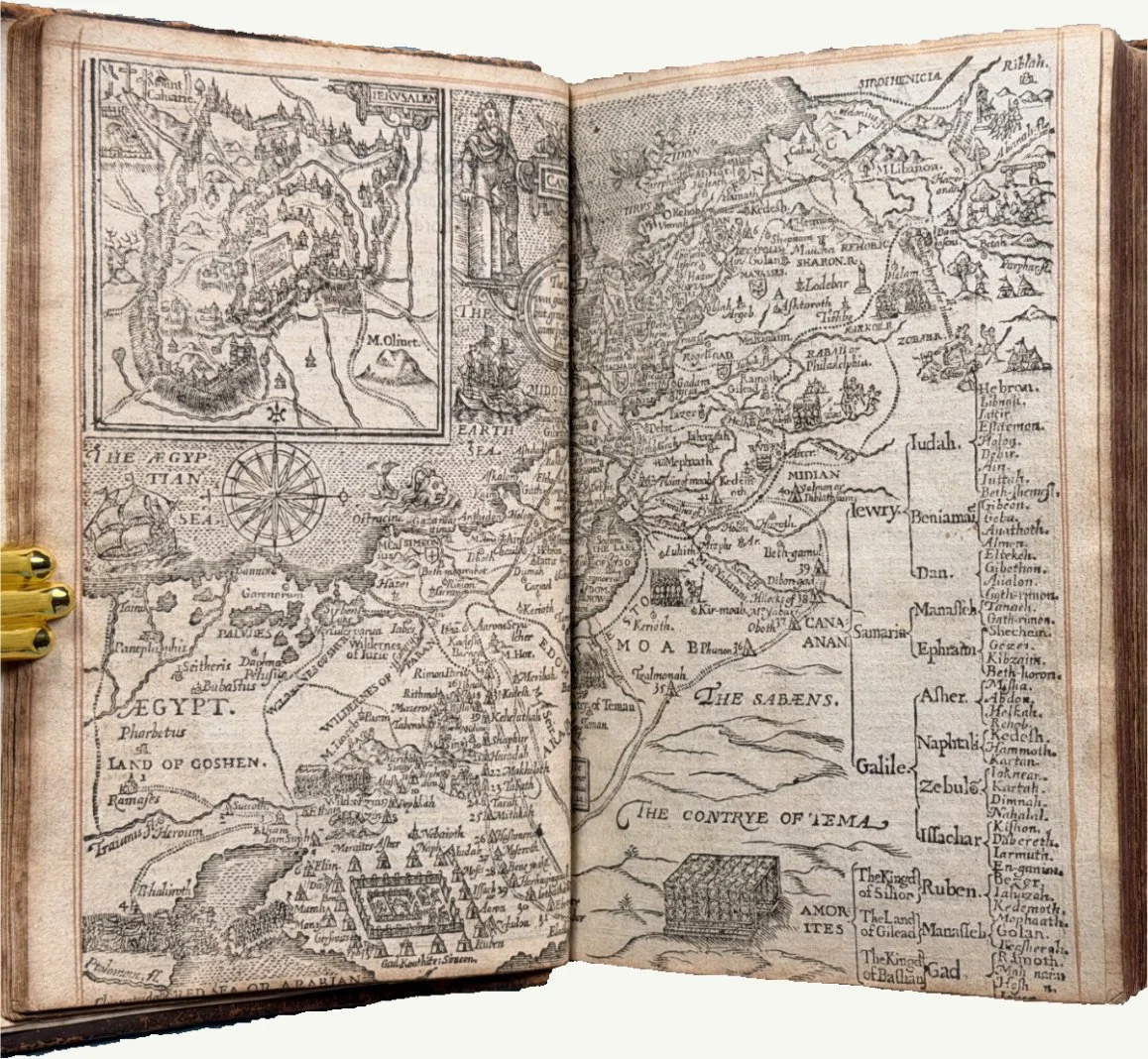
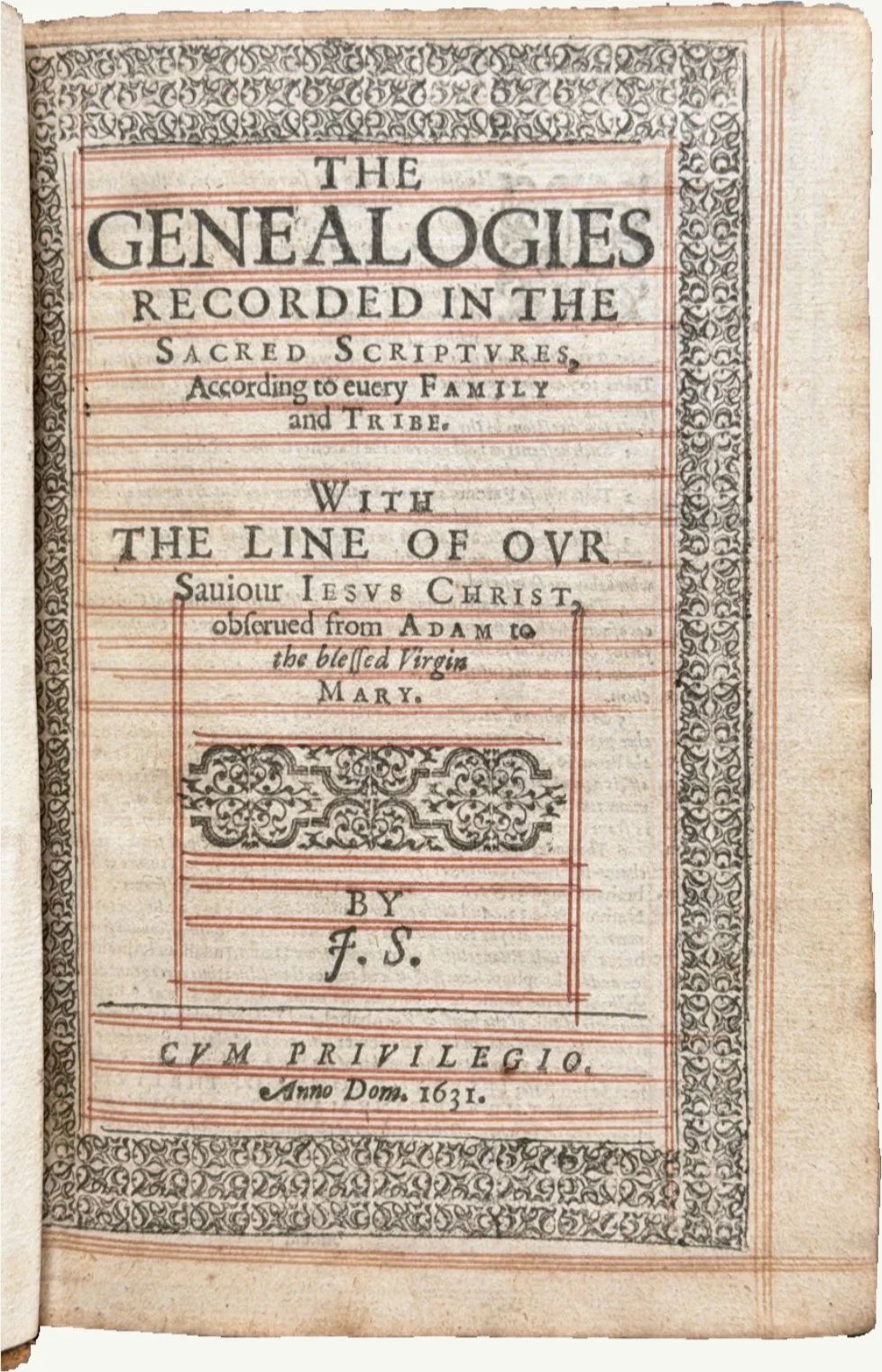
This copy of the Wicked Bible is bound with Speed’s Genealogies which includes the double-page map of Canaan, and also with A Briefe Concordance with printed title page.
One intriguing theory suggests that the omission of not was not an accident at all, but an act of deliberate sabotage intended to damage Robert Barker's reputation. By the early 1630s Barker had accumulated both financial troubles and powerful rivals, making the theory sufficiently plausible to have been repeated for generations. Yet no contemporary evidence supports the claim. Significantly, Barker himself never alleged sabotage during the legal proceedings that followed, despite facing severe financial penalties and public humiliation. Whether the omission resulted from simple human error or something more sinister remains one of the enduring mysteries surrounding the Wicked Bible.