
The 1549 Matthew’s-Tyndale Bible
W
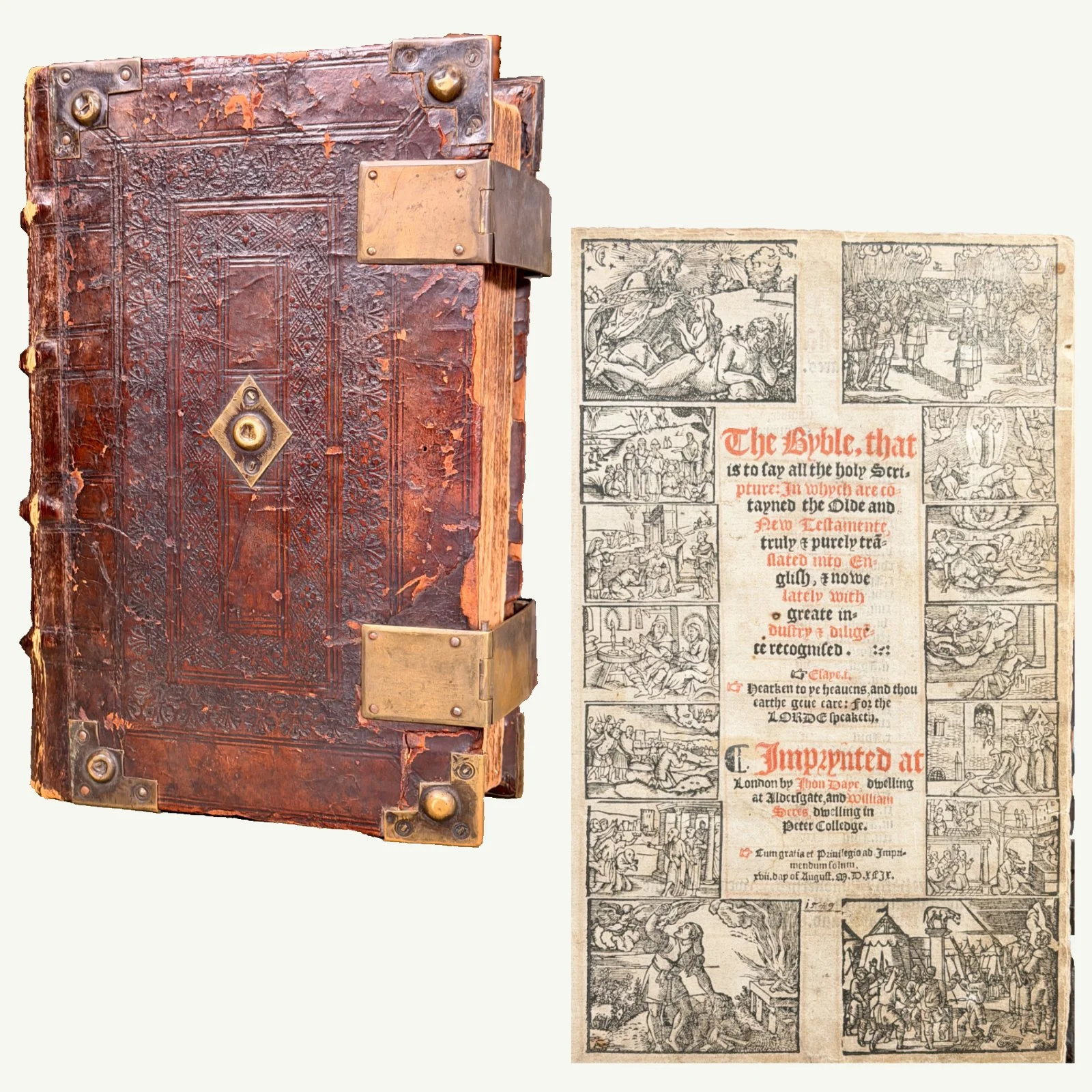
We are excited to share one of our favorite acquisitions of all-time: a 1549 Matthew’s-Tyndale Bible, preserved in a beautiful contemporary English binding. This version marks a milestone in the history of the first generation of English Bibles and serves as a reminder of the sacrifices made to bring the Scriptures into the language of the ploughboy.
First printed in 1537, the Matthew’s Bible followed the Coverdale Bible of 1535 and uniquely incorporated all of William Tyndale’s translation work. Bibliographer A.S. Herbert rightly called it “the primary version of our English Bible” because nearly two-thirds of the text is Tyndale’s—the father of the English Bible. Scholar David Daniell described it as “the most influential of all the early printed English Bibles.”
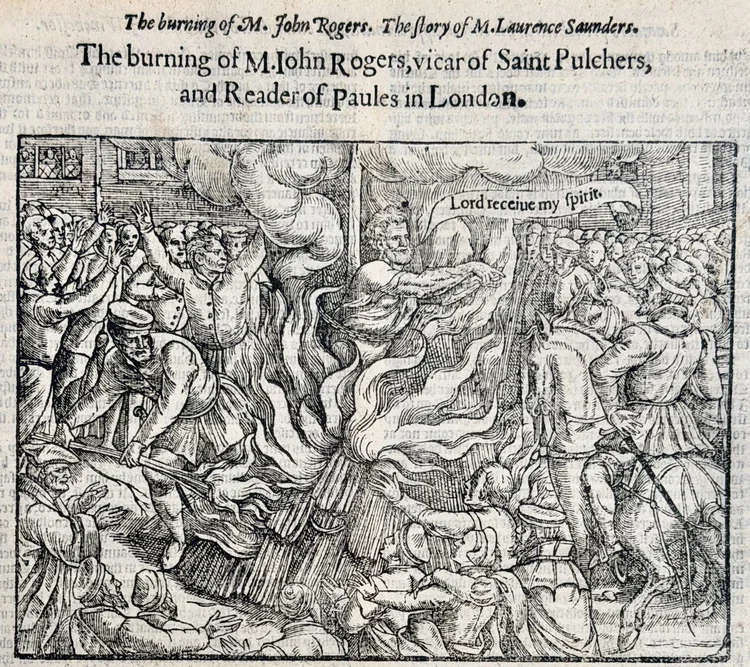
Tyndale was burned at the stake for heresy in 1536, before he could complete his translation of the entire Bible. His close friend, John Rogers, would himself be burned at the stake for heresy in 1555, largely for his role in producing this book.
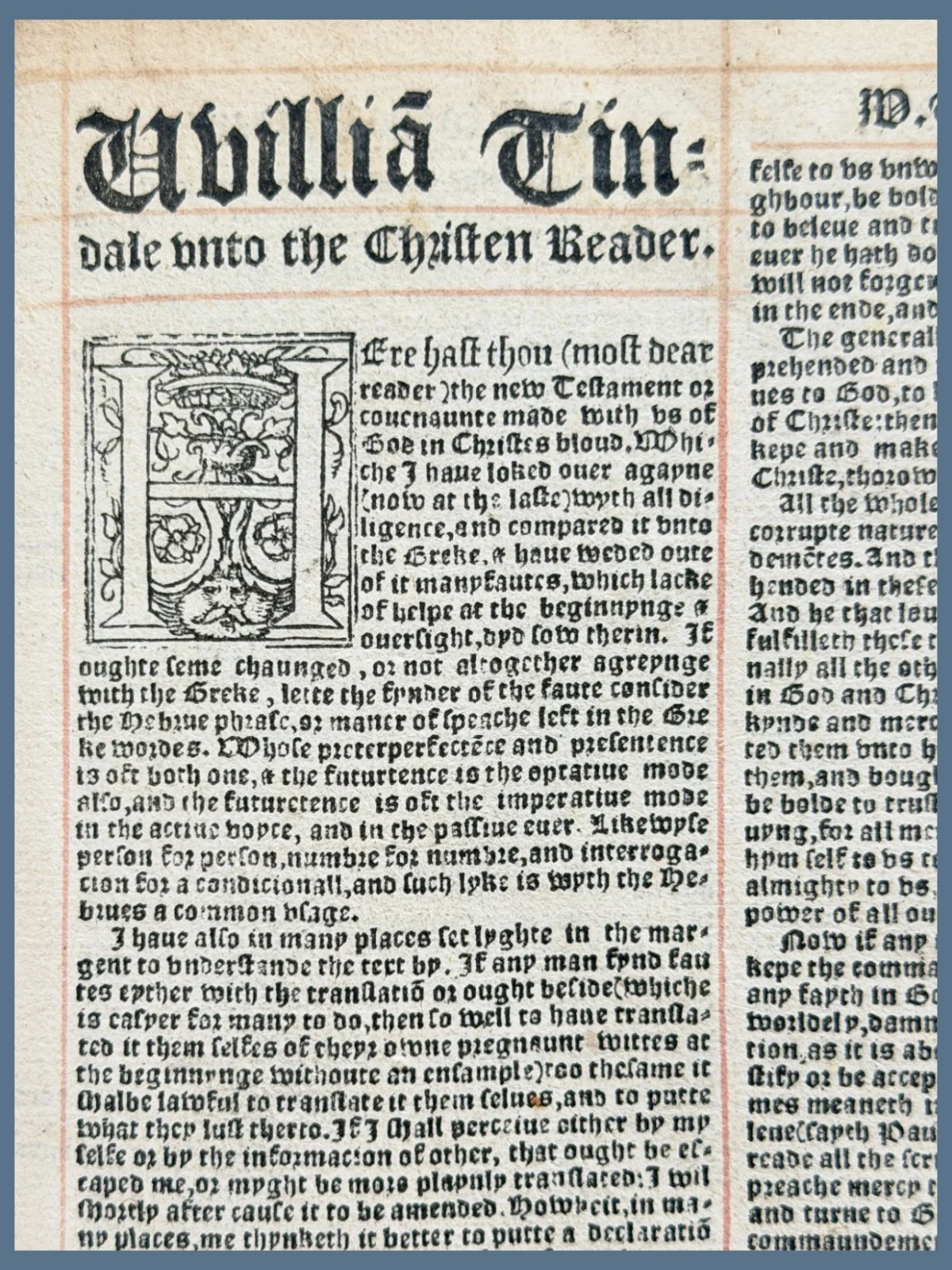
Still William Tyndale
Tyndale’s English New Testament was printed in its entirety 500 years ago, in 1526, and smuggled into England hidden in bales of cloth. Copies spread rapidly, allowing the entire New Testament, faithfully translated from the Greek, to be read by ordinary people for the first time.
Already fluent in seven languages, Tyndale mastered Hebrew and went on to translate the Pentateuch into English. In 1530, he published the first five books of Moses with explanatory Tables. His translation choices show an understanding of Hebrew idioms and structure that was groundbreaking for his time.

After completing the Pentateuch, Tyndale turned to the historical books. He was captured in May of 1535 and executed on October 6, 1536. In the sixteen months after his arrest and removal to Brussels, the fate of his manuscript translation work from Joshua to 2 Chronicles, and the book of Jonah, remains uncertain. Shortly after Tyndale’s capture, his English house was raided by Pierre Dufief. The most likely person to have rescued these vulnerable manuscripts was his close friend, John Rogers.
Working with the printer Matthew Crom in Antwerp, Rogers produced the Matthew’s–Tyndale Bible of 1537, the first complete English Bible to incorporate all of Tyndale’s translation work. His endangered manuscript pages had safely arrived in print.
John Rogers
John Rogers (c.1500–1555) graduated from Cambridge in 1526 and became rector of a London parish. In 1534, he moved to Antwerp to become a chaplain to English merchants, where he came under the influence of Reformation theology and became personally acquainted with William Tyndale and Philip Melanchthon. Melanchthon offers a compelling portrait of Rogers in a letter:
“A learned man… gifted with great ability, which he sets off with a noble character… his integrity, trustworthiness, and constancy in every duty make him worthy of the love and support of all good men.”
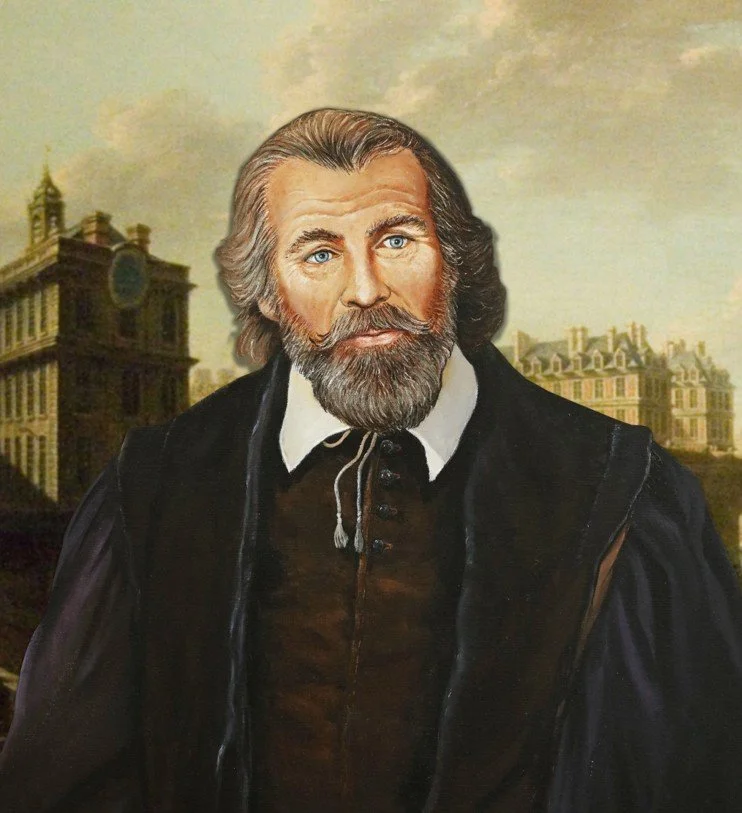
Rogers published the Matthew’s Bible under the pseudonym “Thomas Matthew.” Tyndale’s name was already condemned as heretical, and Rogers undoubtedly feared that an open association with him would place his own life in jeopardy.
When Queen Mary I ascended the throne in 1553 and restored Roman Catholicism, Rogers was arrested for heresy. After imprisonment and examination, he was burned at the stake at Smithfield on February 4, 1555, becoming the first Protestant martyr of Mary’s reign.