
 Image 1 of 22
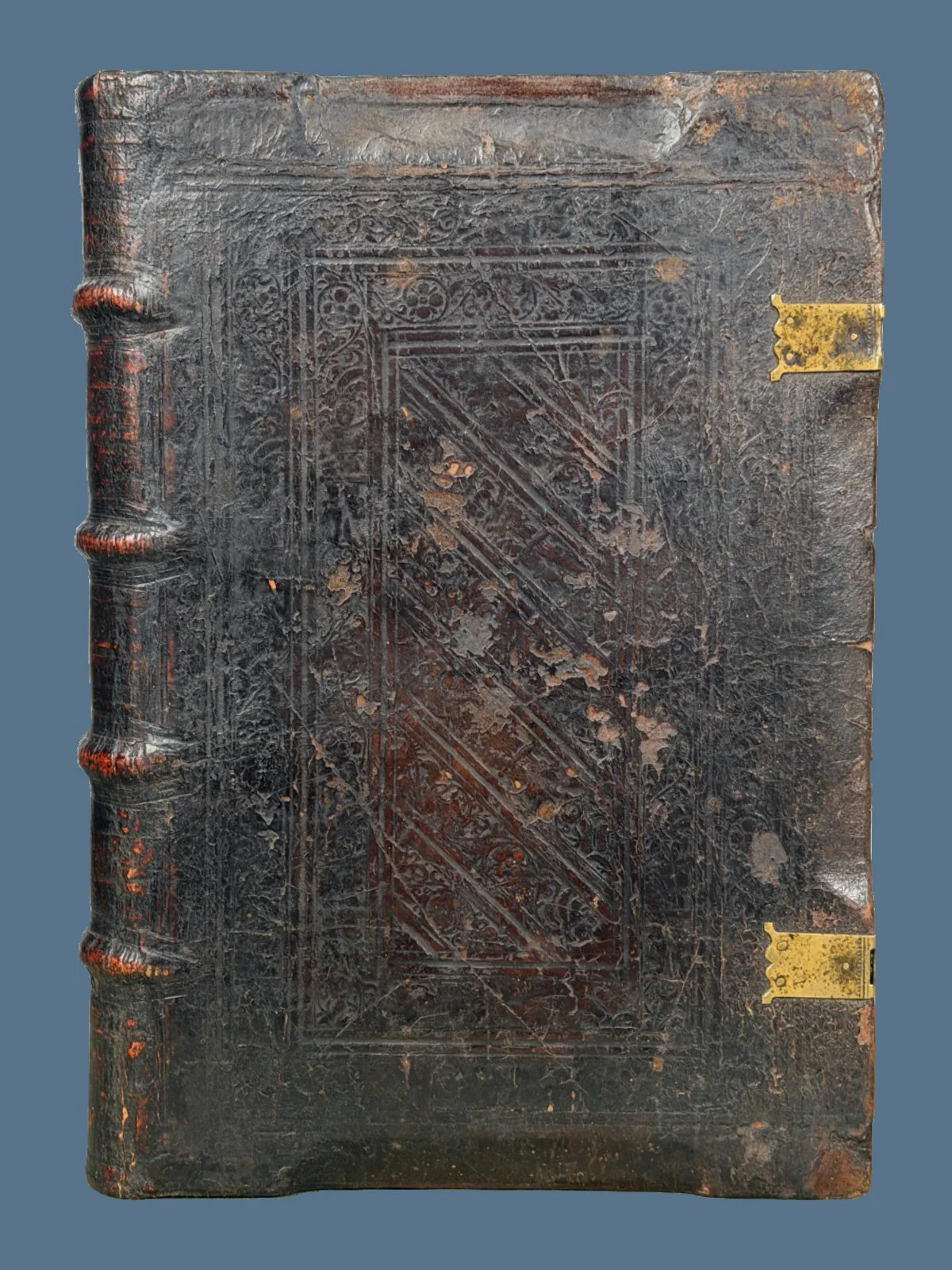 Image 2 of 22
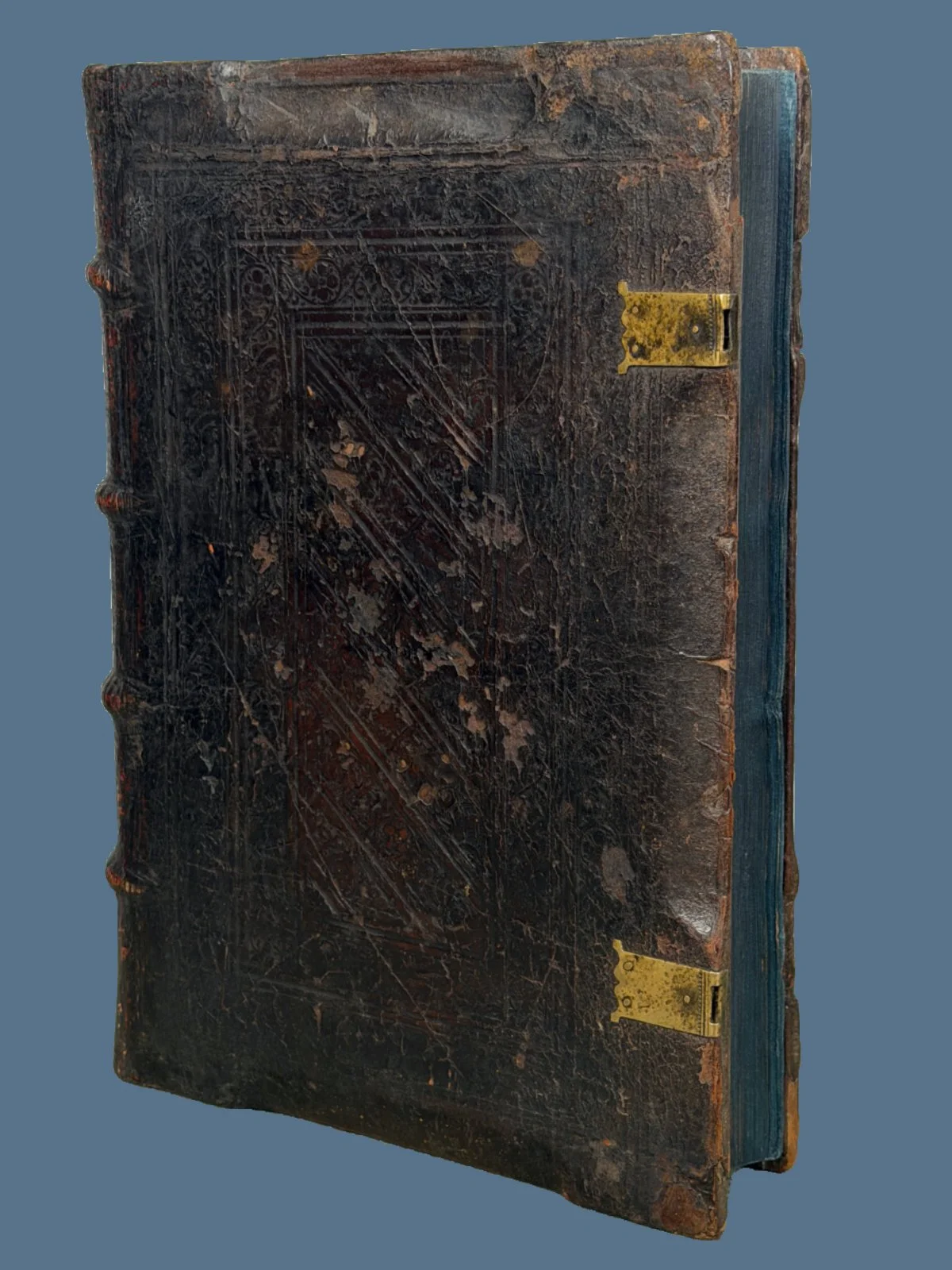 Image 3 of 22
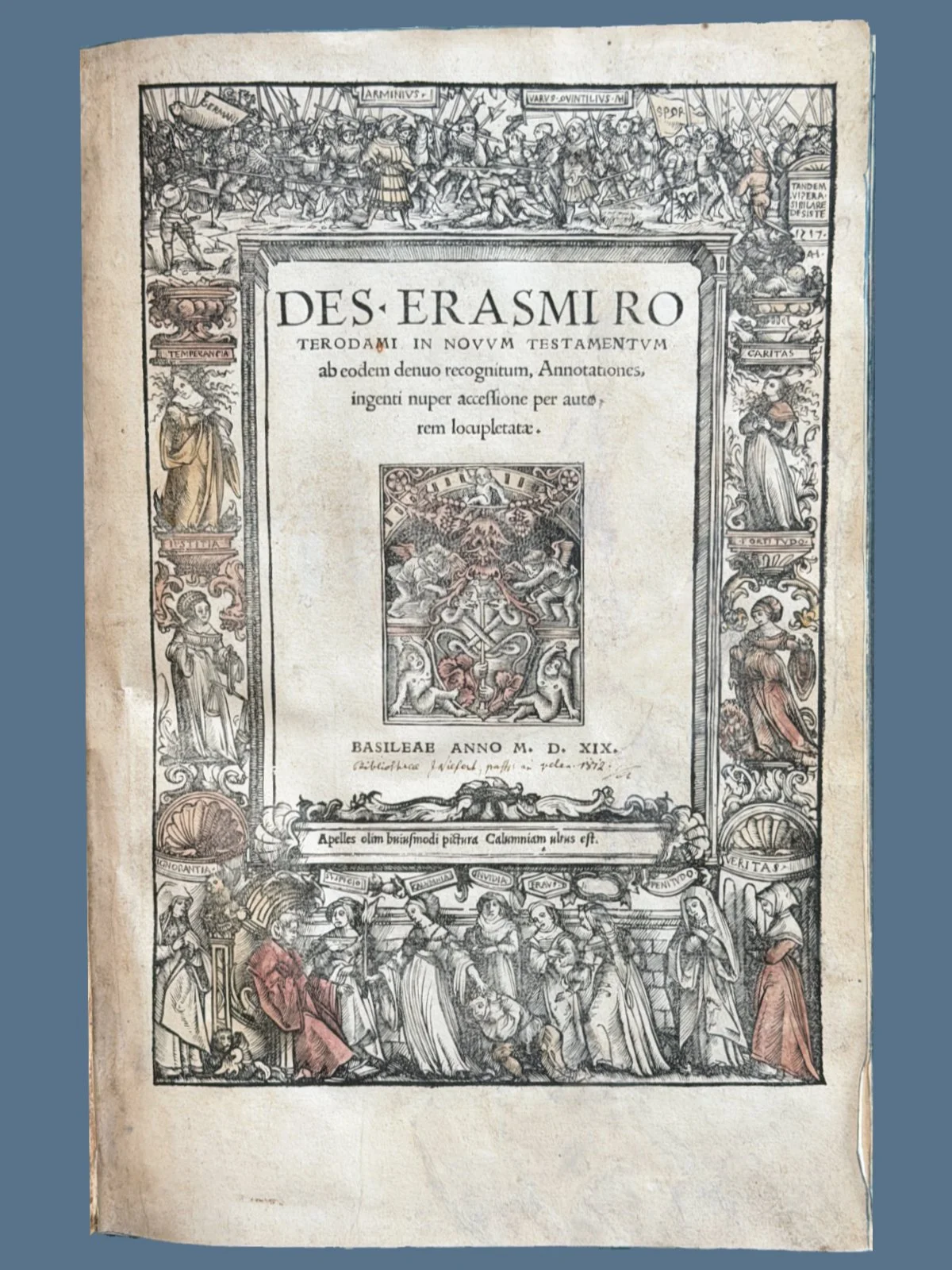 Image 4 of 22
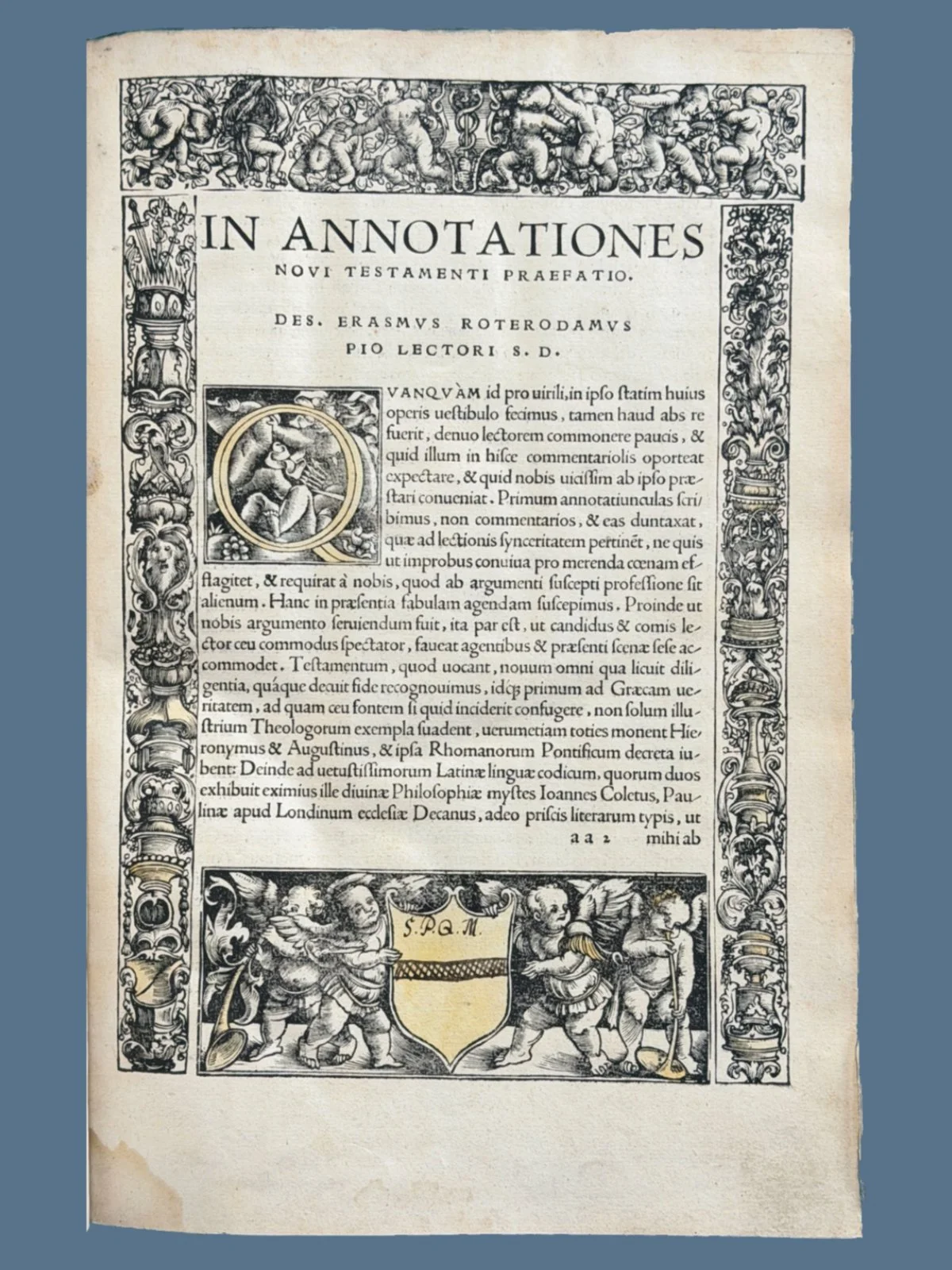 Image 5 of 22
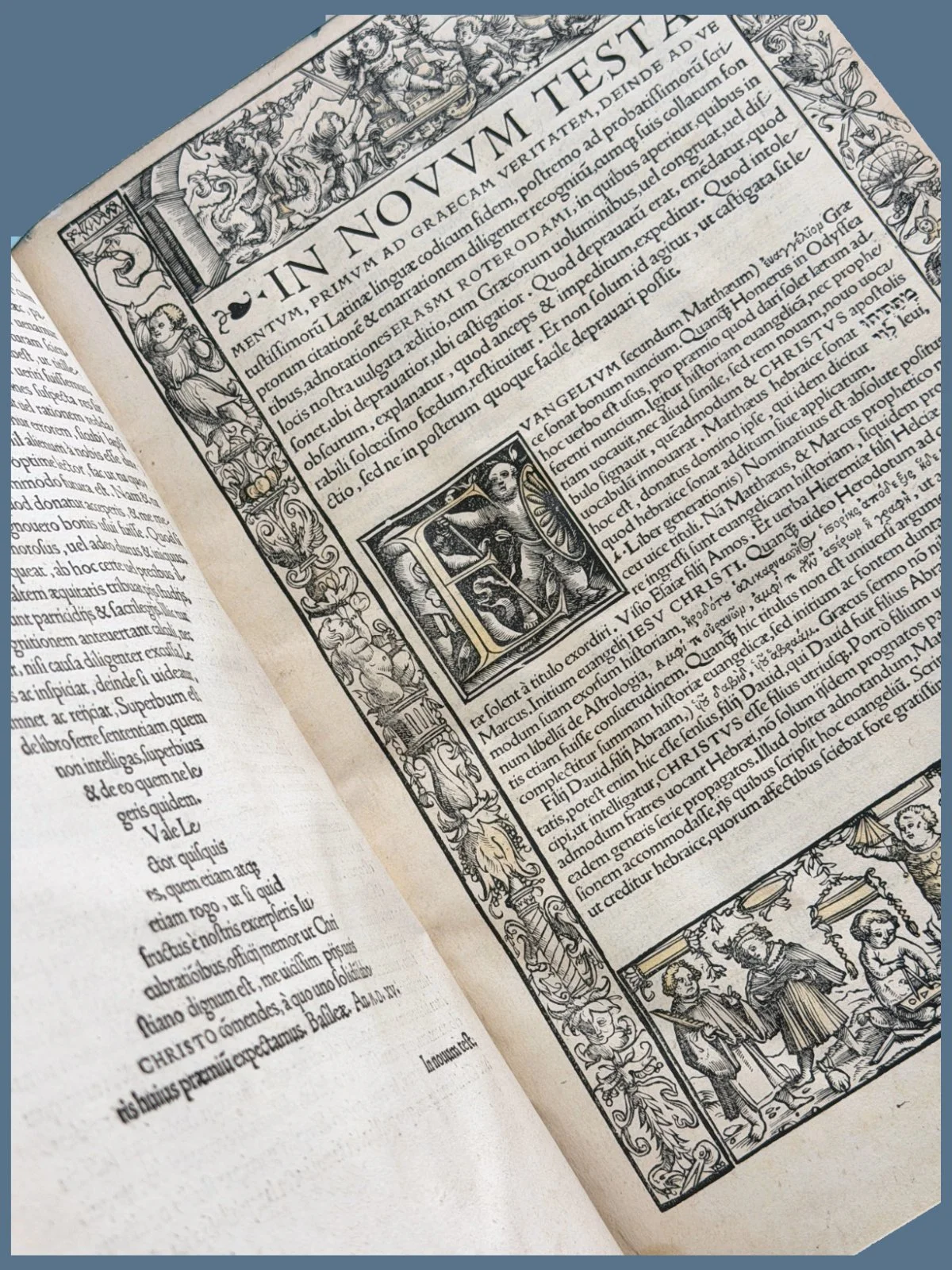 Image 6 of 22
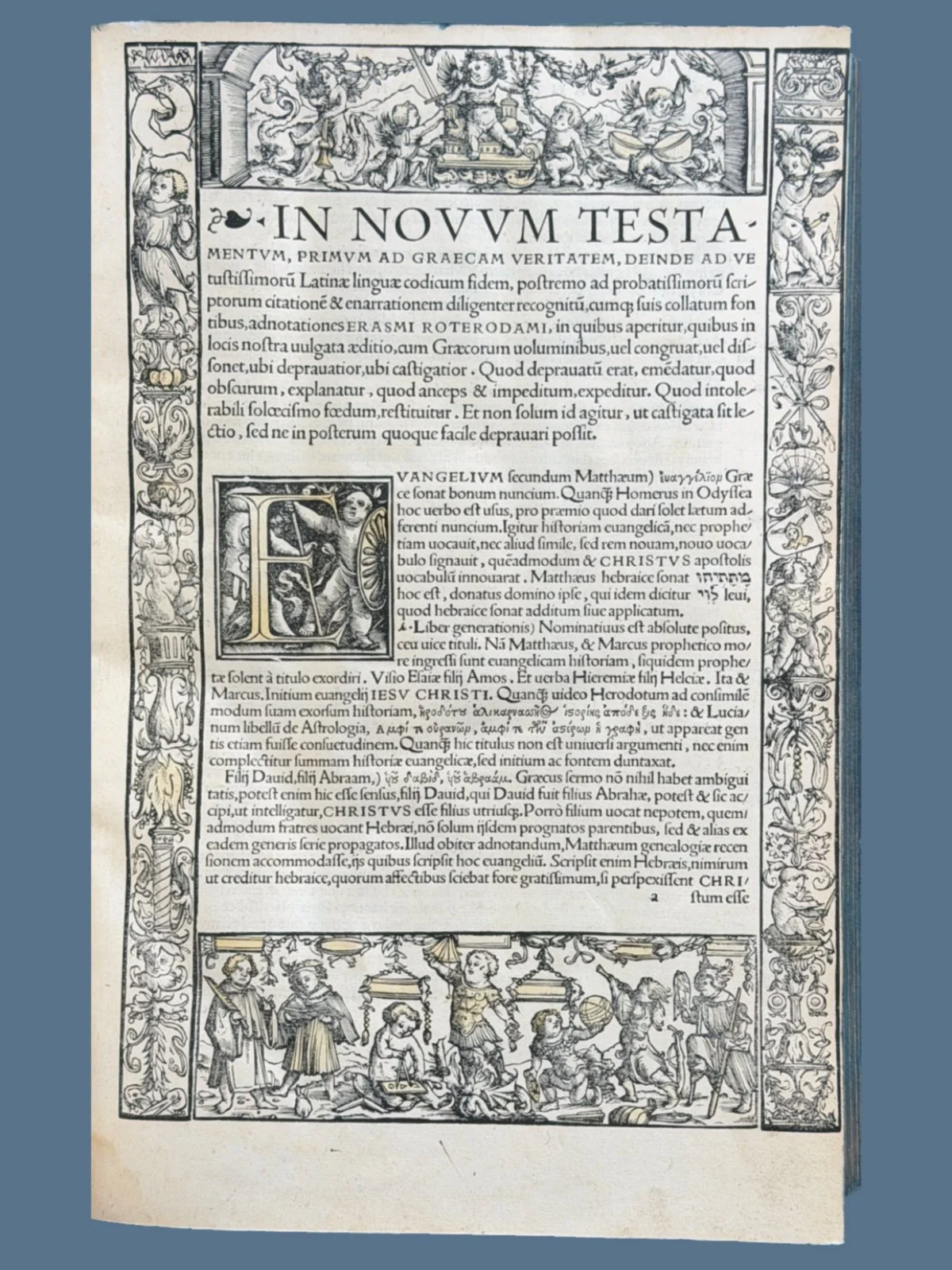 Image 7 of 22
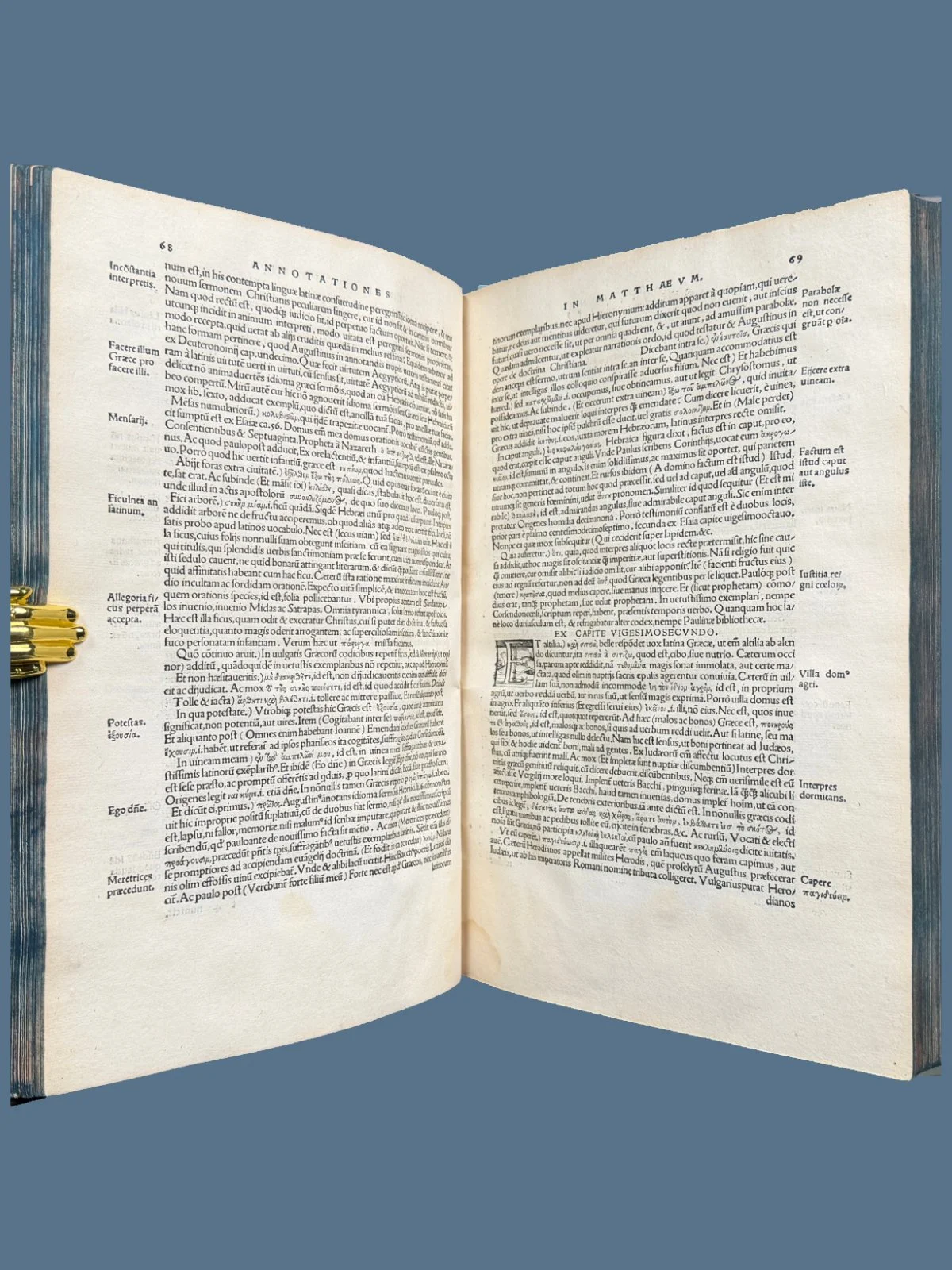 Image 8 of 22
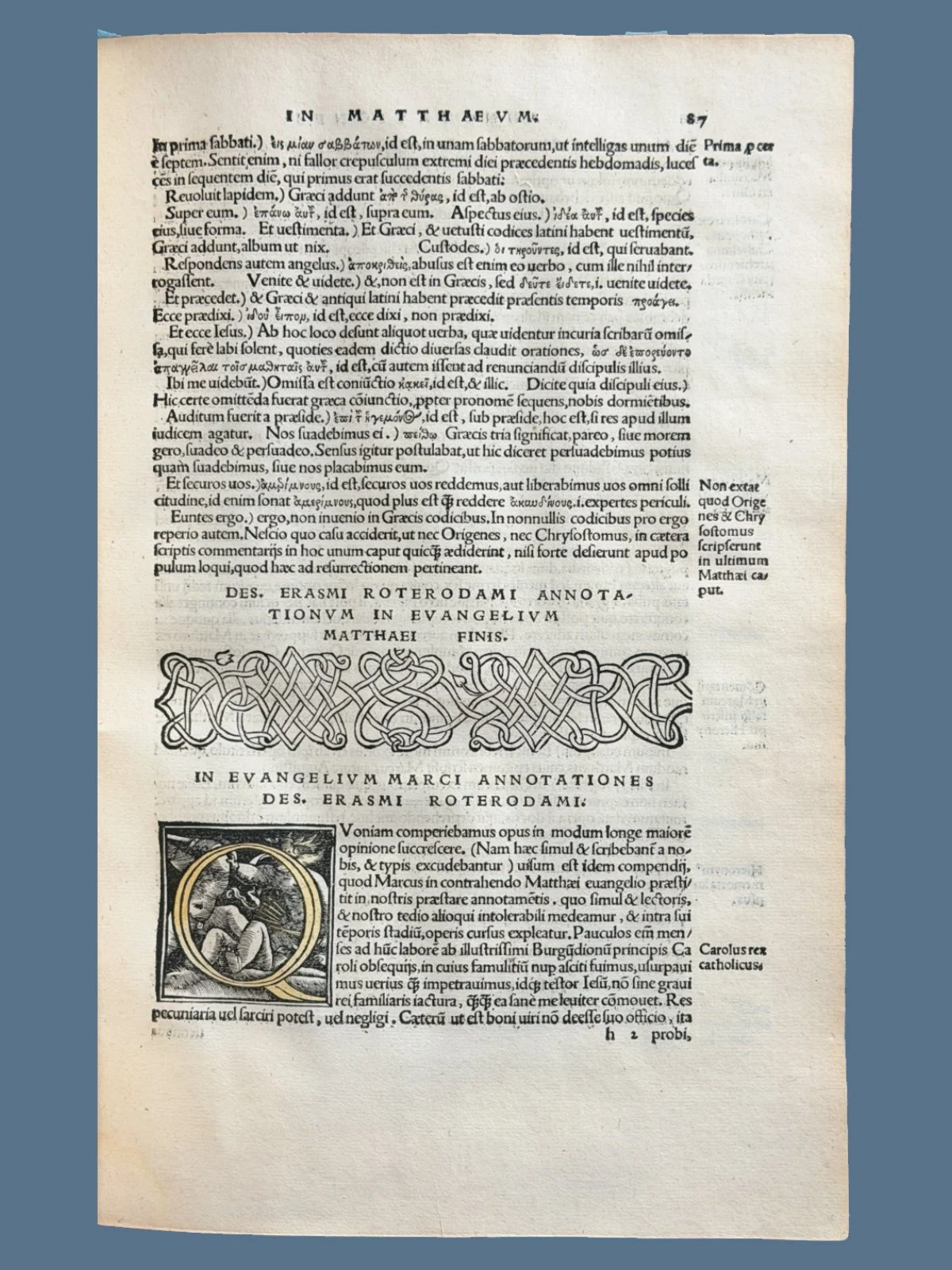 Image 9 of 22
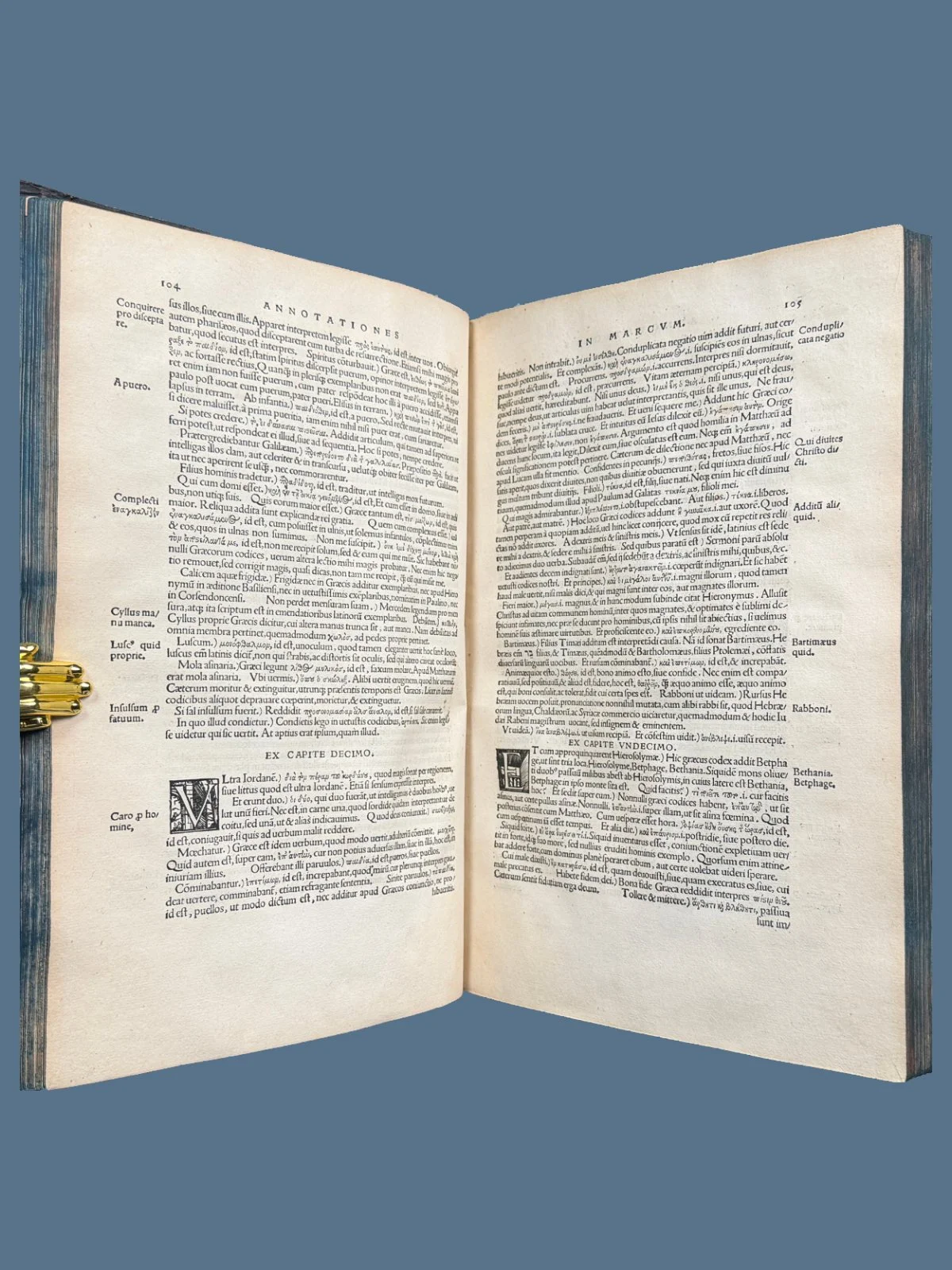 Image 10 of 22
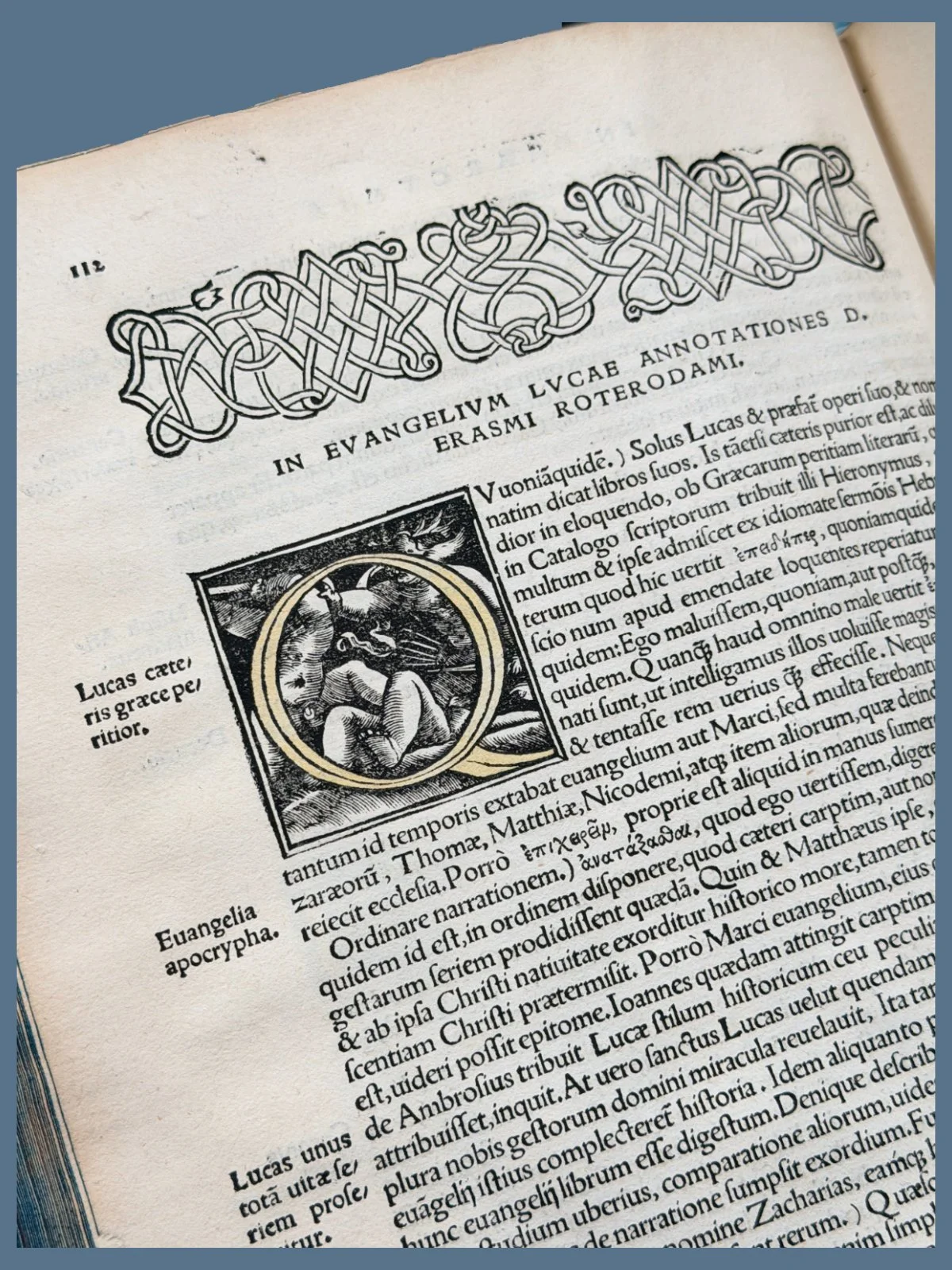 Image 11 of 22
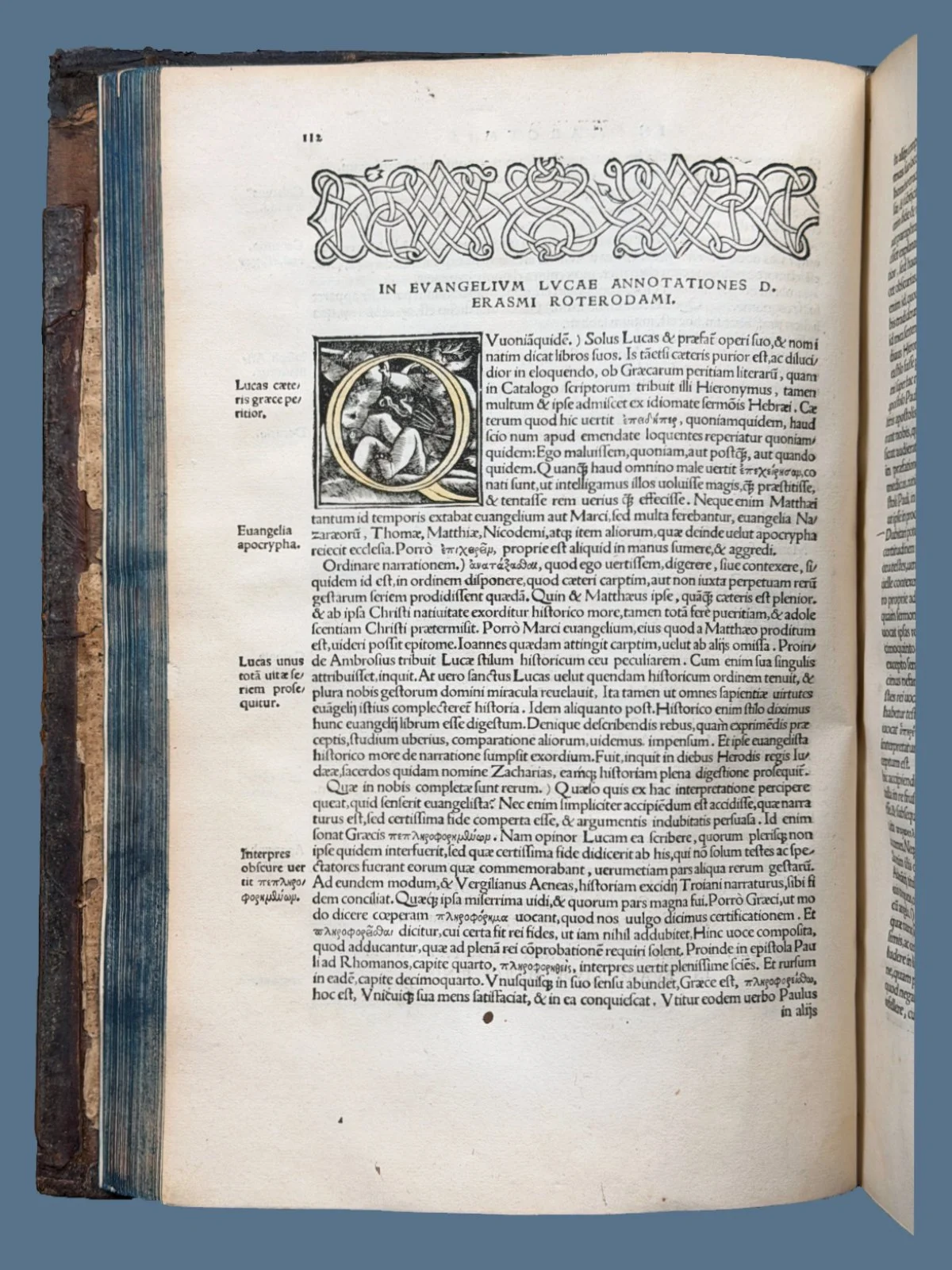 Image 12 of 22
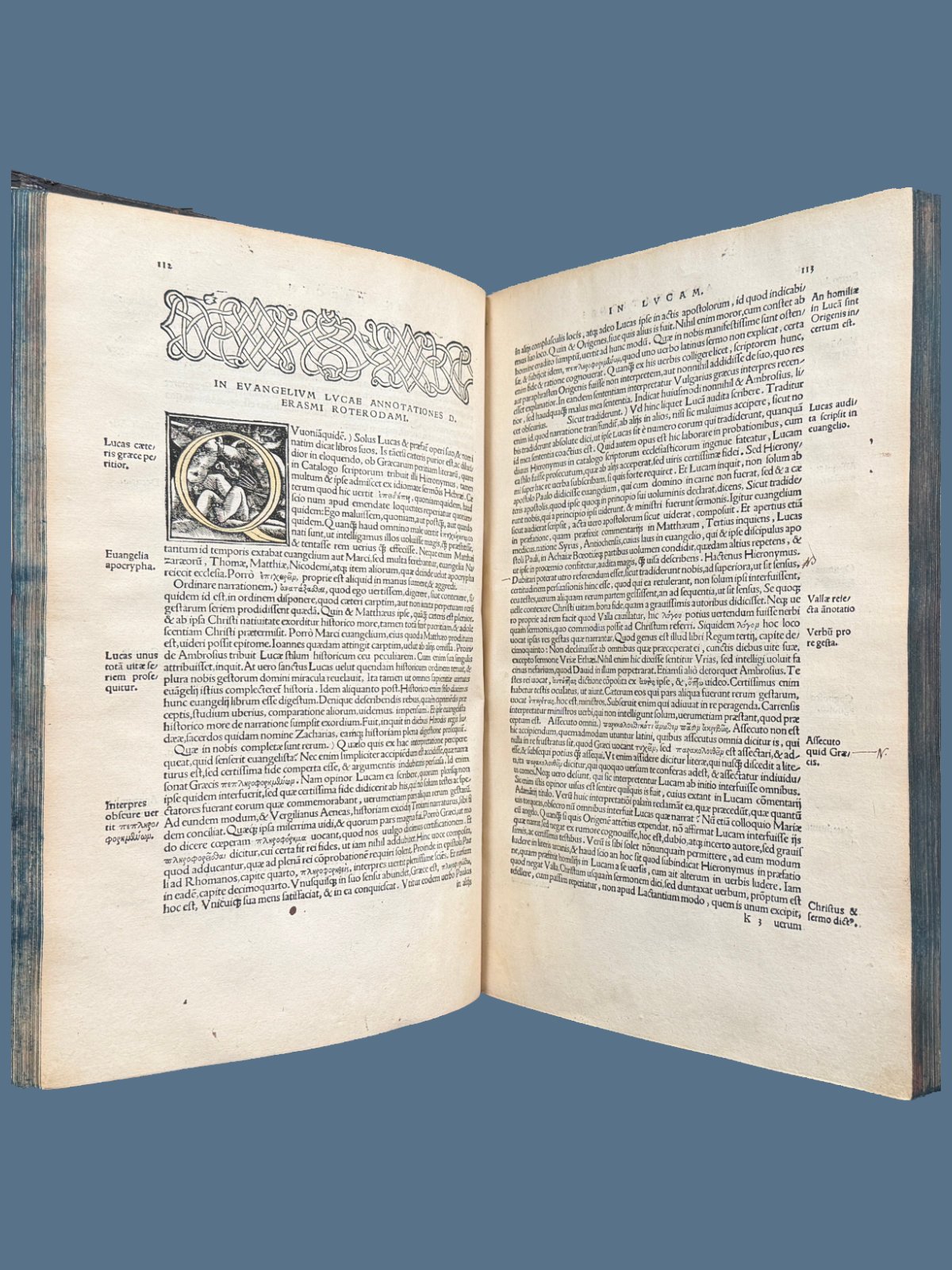 Image 13 of 22
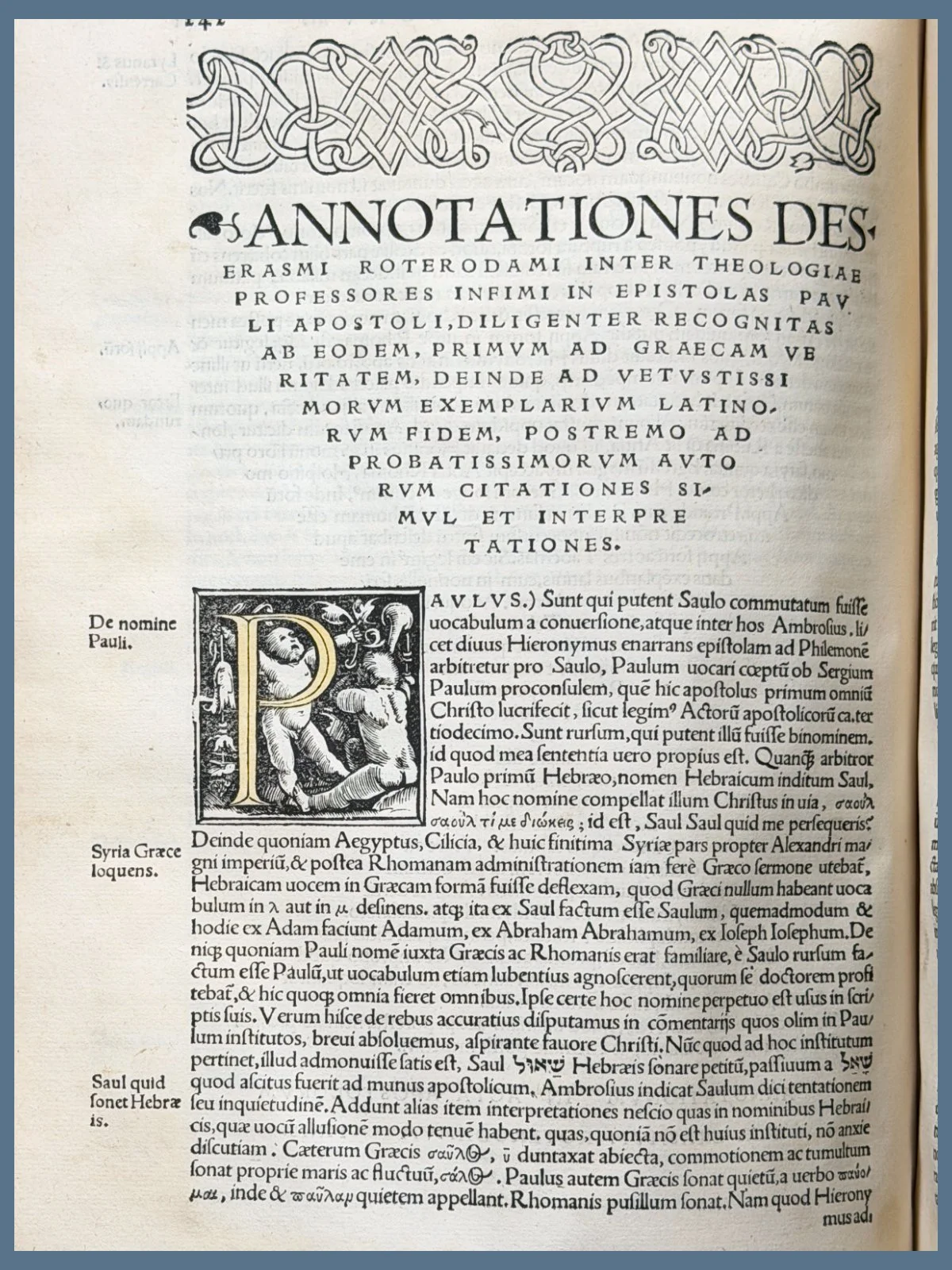 Image 14 of 22
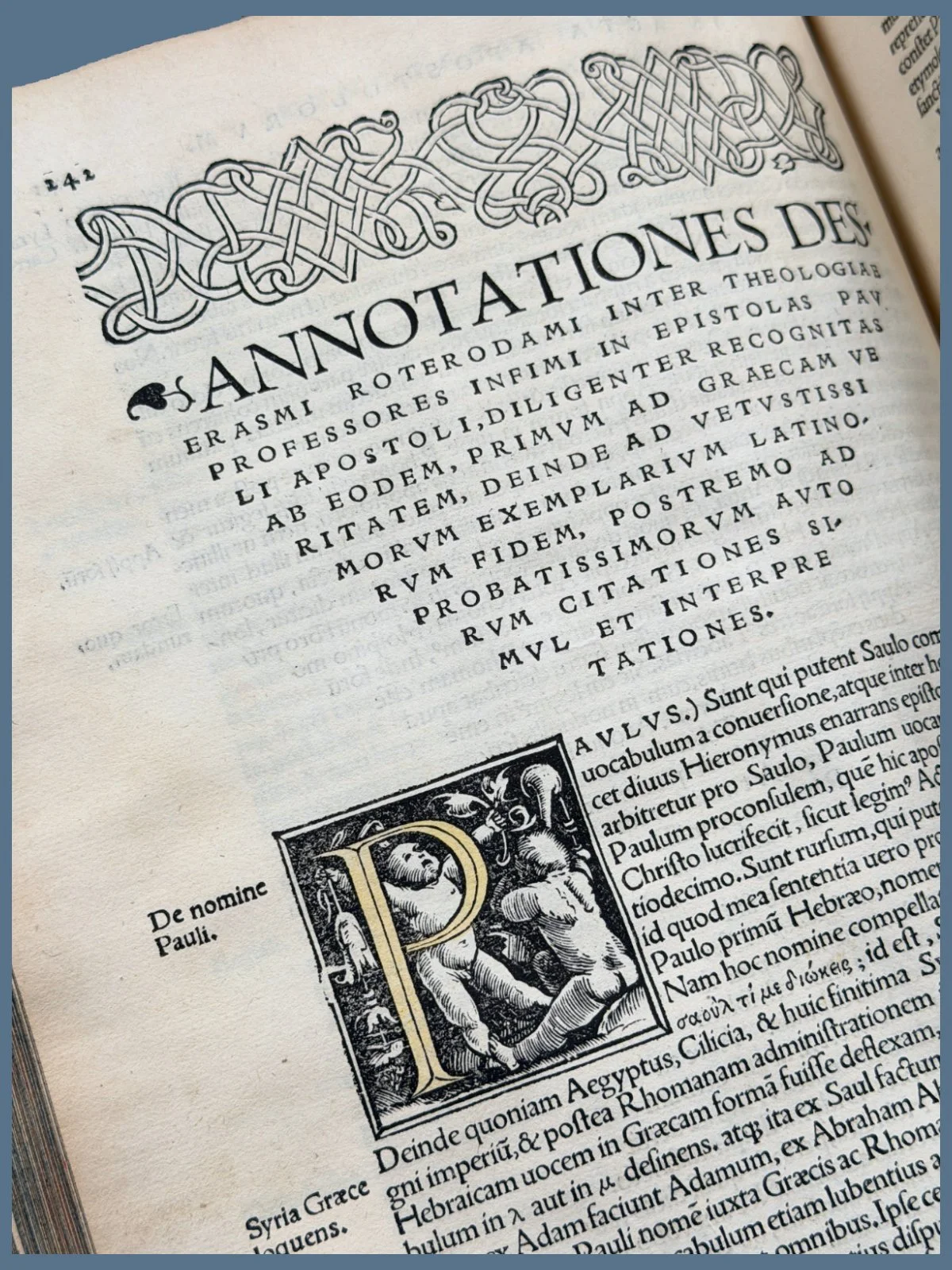 Image 15 of 22
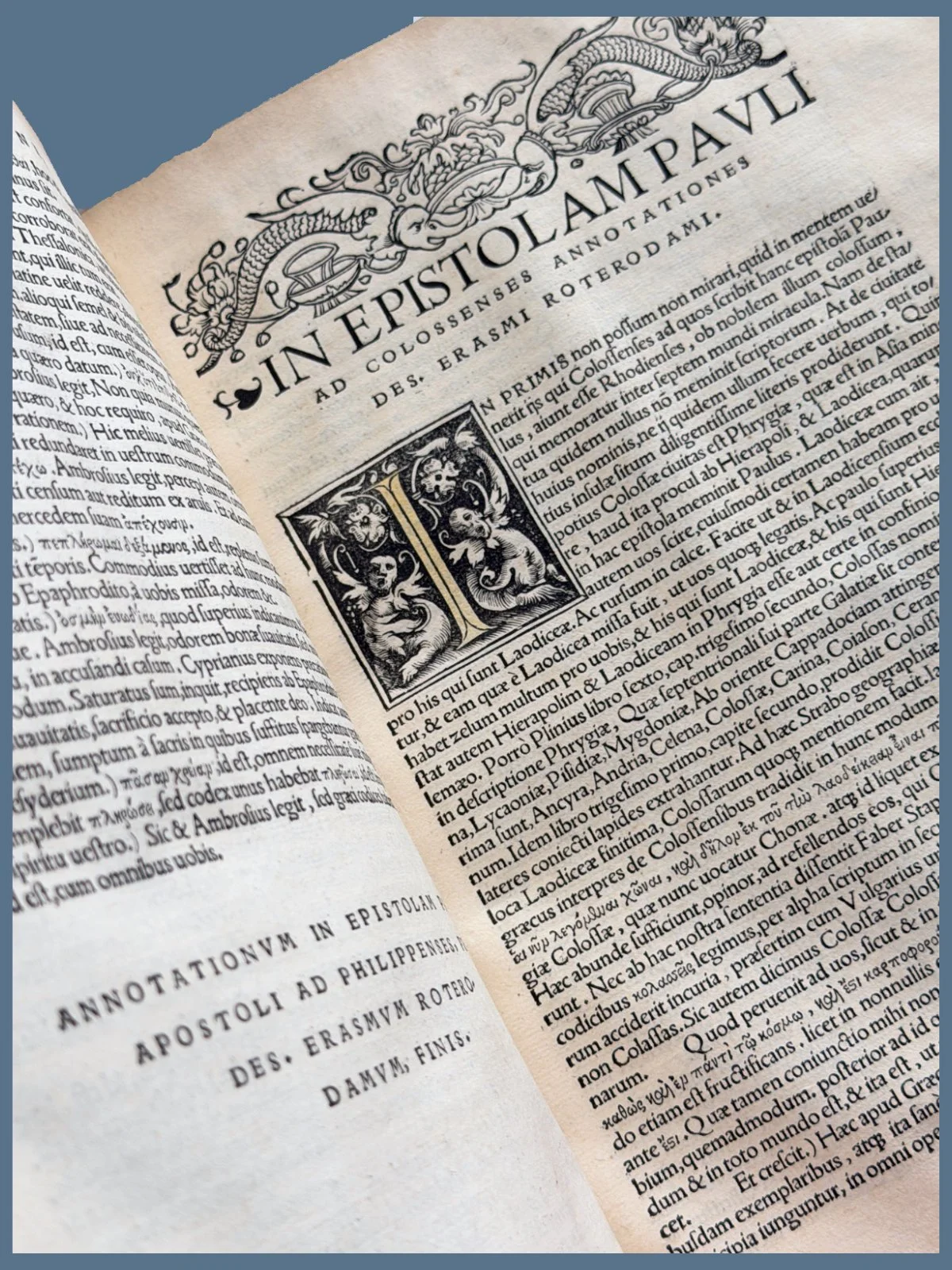 Image 16 of 22
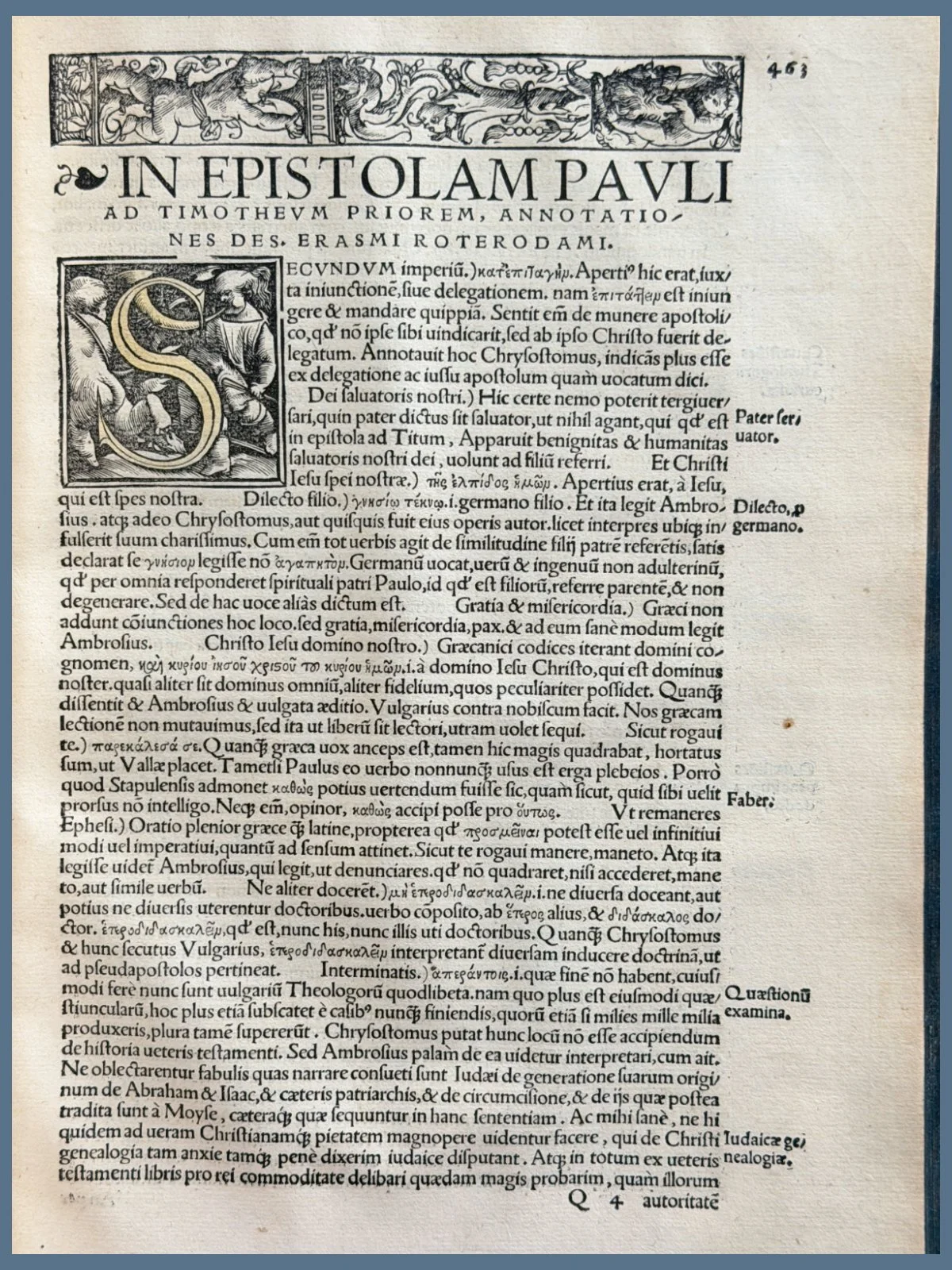 Image 17 of 22
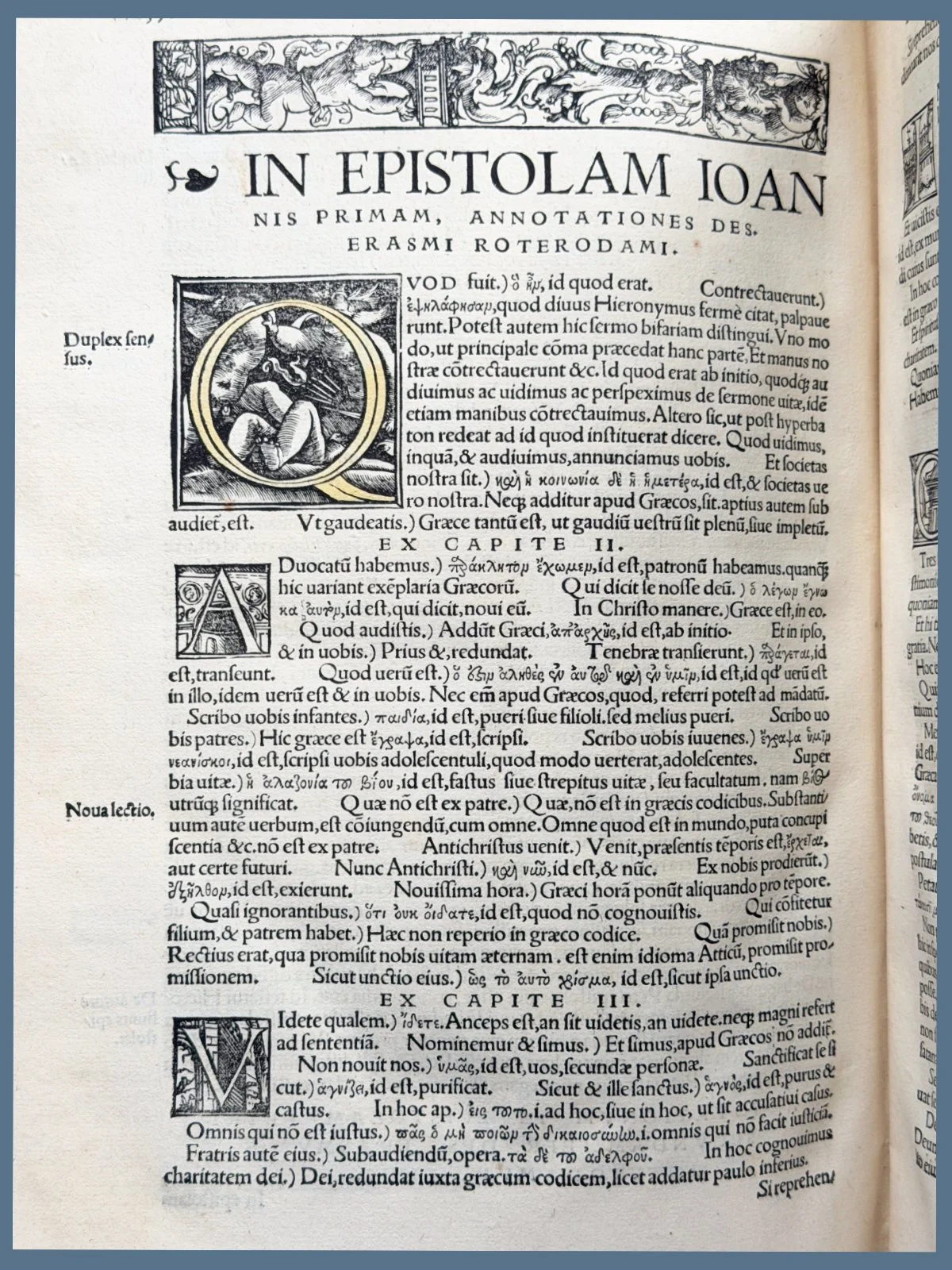 Image 18 of 22
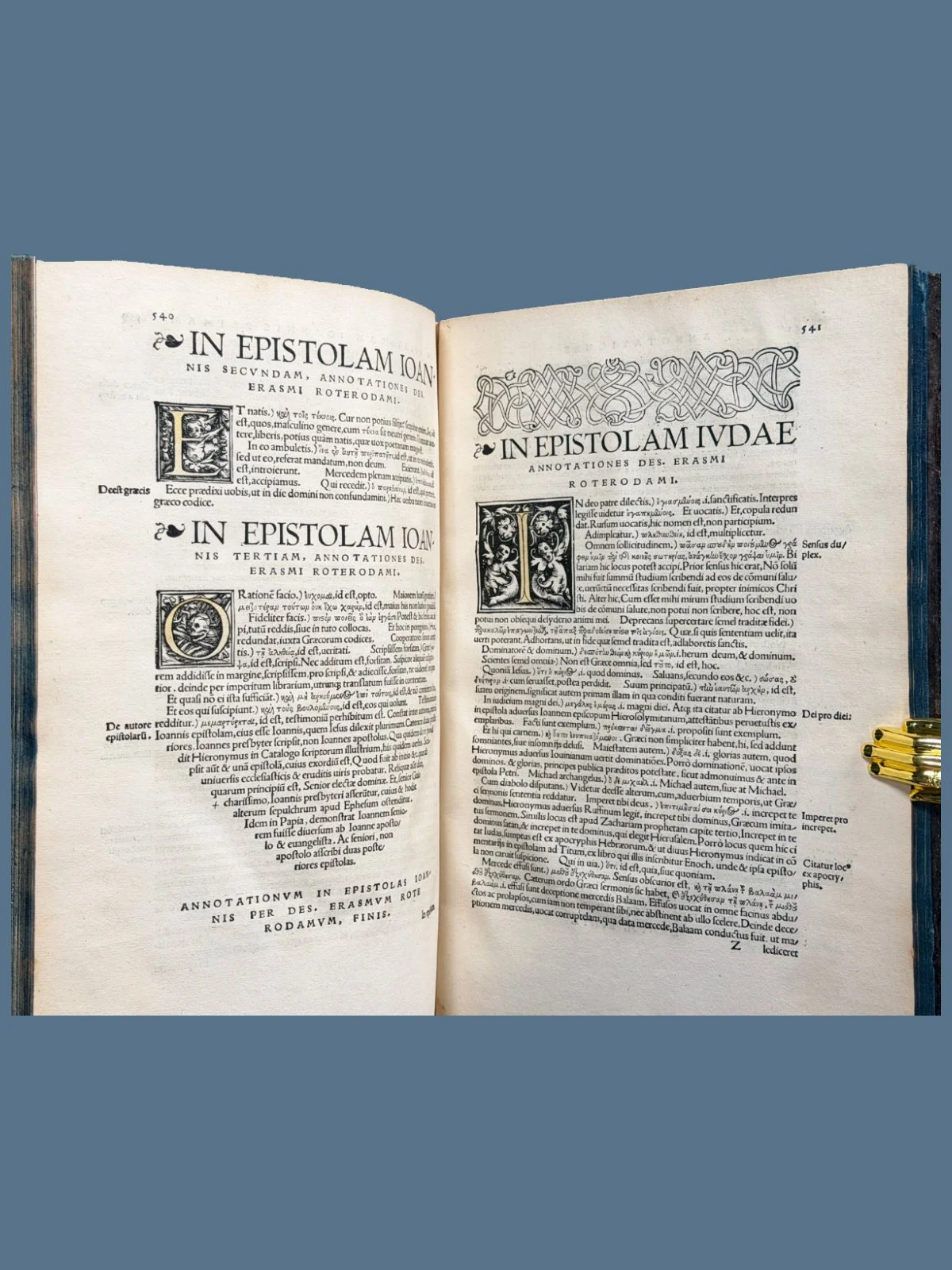 Image 19 of 22
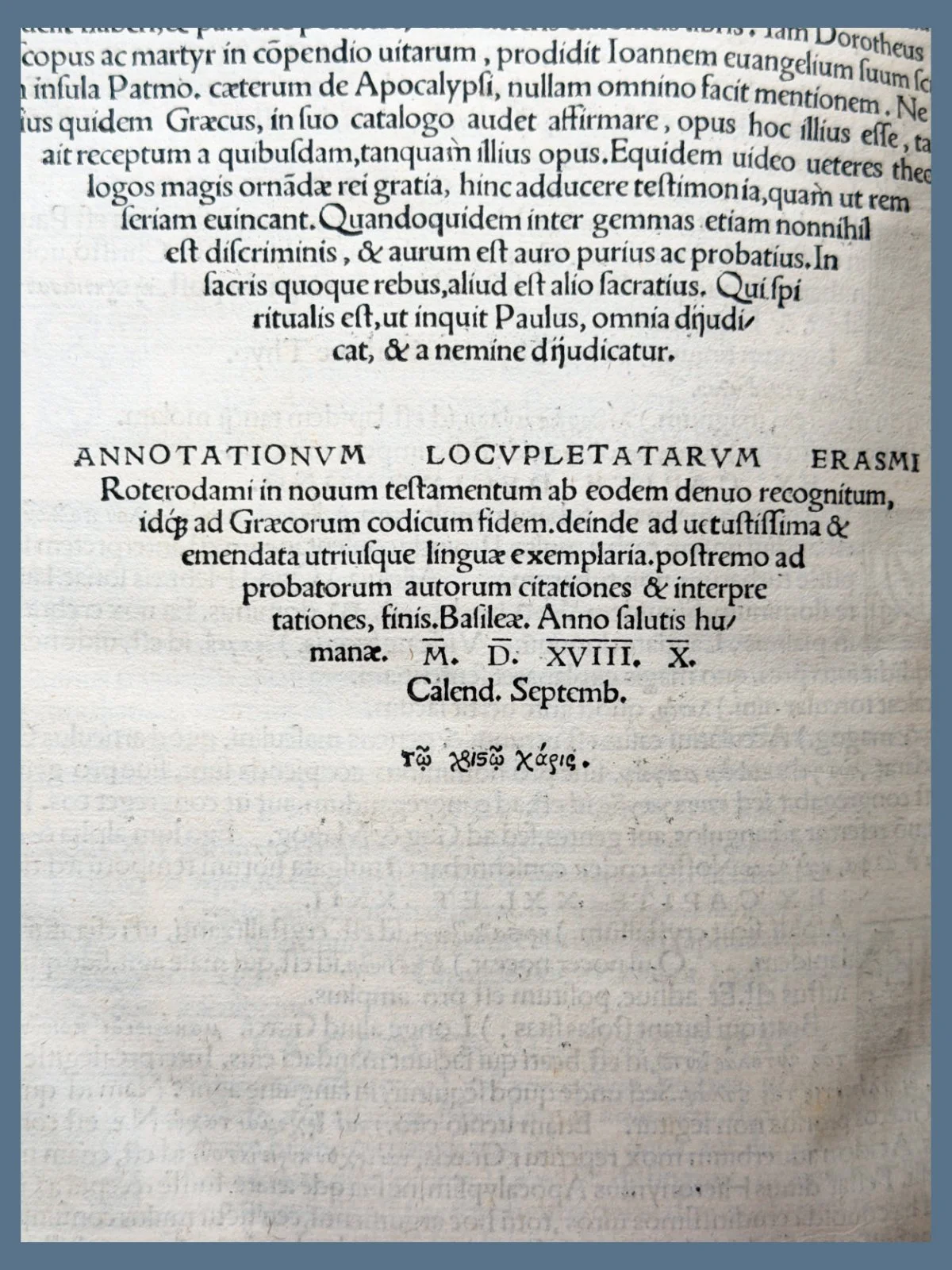 Image 20 of 22
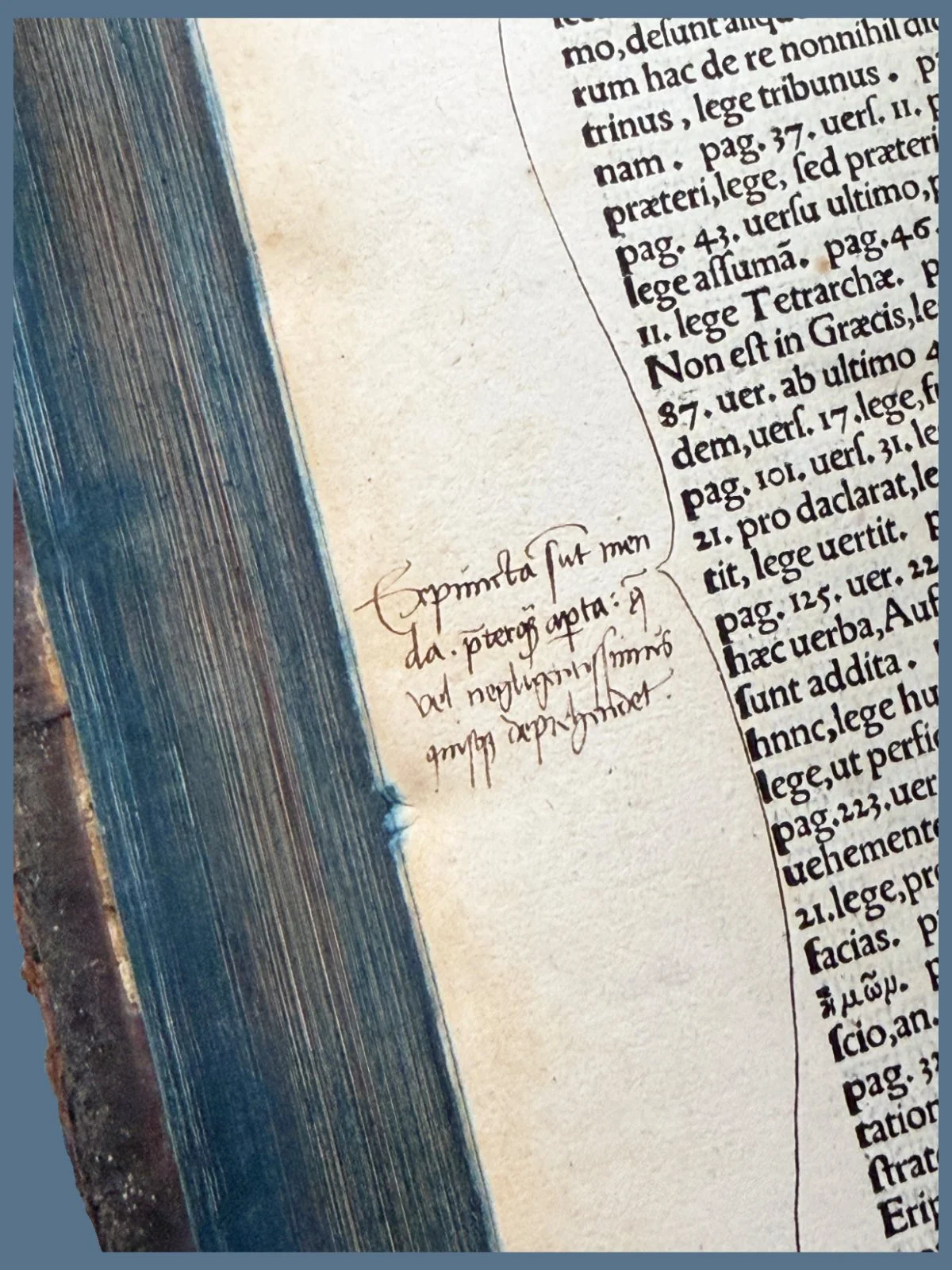 Image 21 of 22
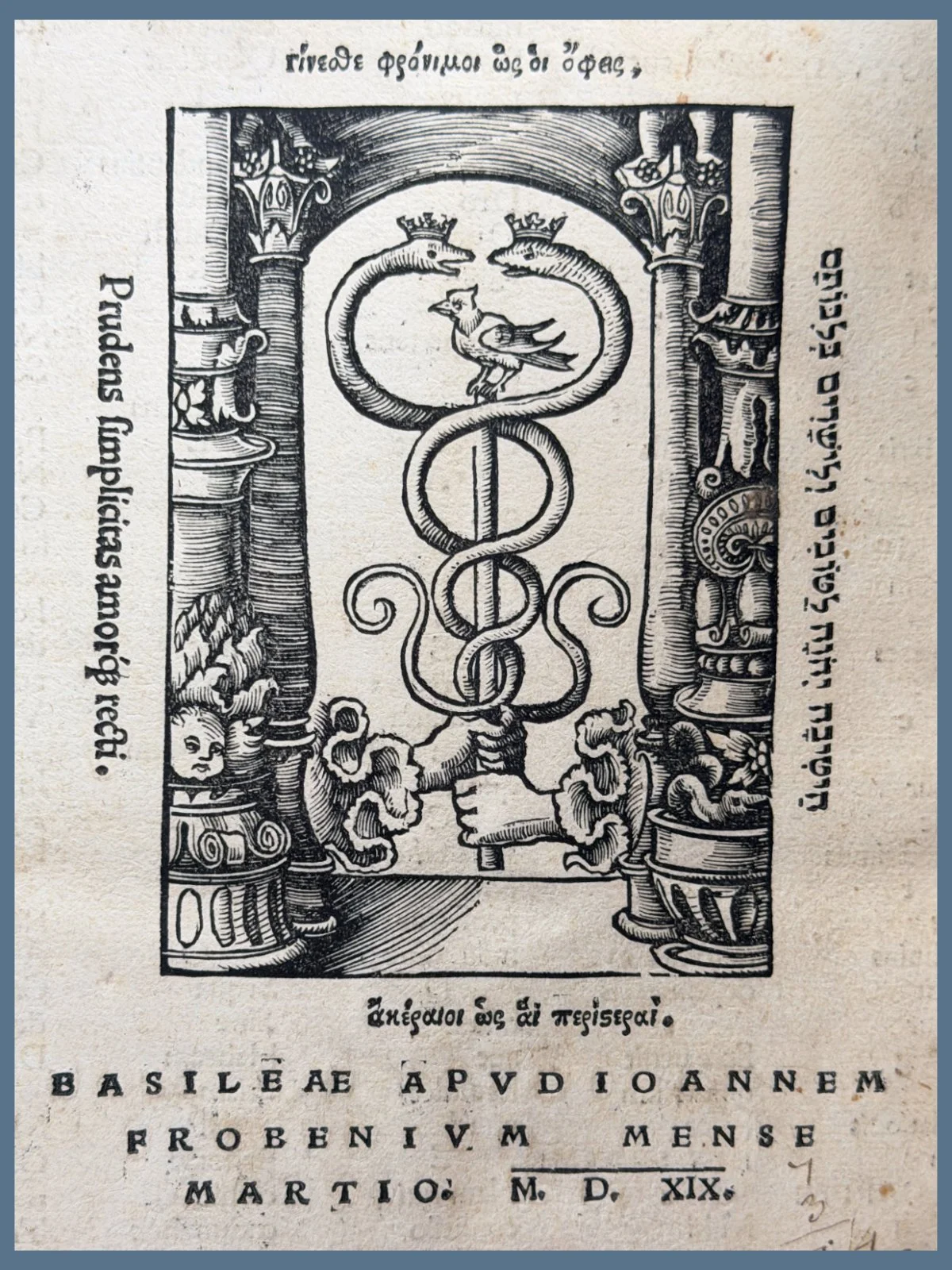 Image 22 of 22
In Novum testamentum ab eodem denuo recognitum, Annotationes, ingenti nuper accessione per autorem locupletatae.
Summary
The second edition of Erasmus’ Annotations, enlarged and printed separately for the first time. Erasmus revolutionized New Testament scholarship by applying humanist philology to the biblical text, comparing Greek manuscripts, and challenging errors in the Latin Vulgate.
Description
Title page (1519) within elaborate woodcut border by Holbein with red and yellow highlights. Title page to the Preface and the beginning of Matthew with additional woodcut border by Holbein, featuring yellow highlights. Elaborate headpiece to the beginning of each book. Greek and Roman types with woodcut initials at the beginning of each chapter. First chapter woodcut initials to each book of the Bible with yellow highlights covering twelve lines of text. Each subsequent chapter begins with woodcut initial. Froben device of crowned snakes and bird perching on hands enshrouded with clouds on final verso.
Collation
aa^4, a-z^6, A-Y^6, Z^4, Aa-Bb^8. 579 pp. Complete with title pages and index.
Binding
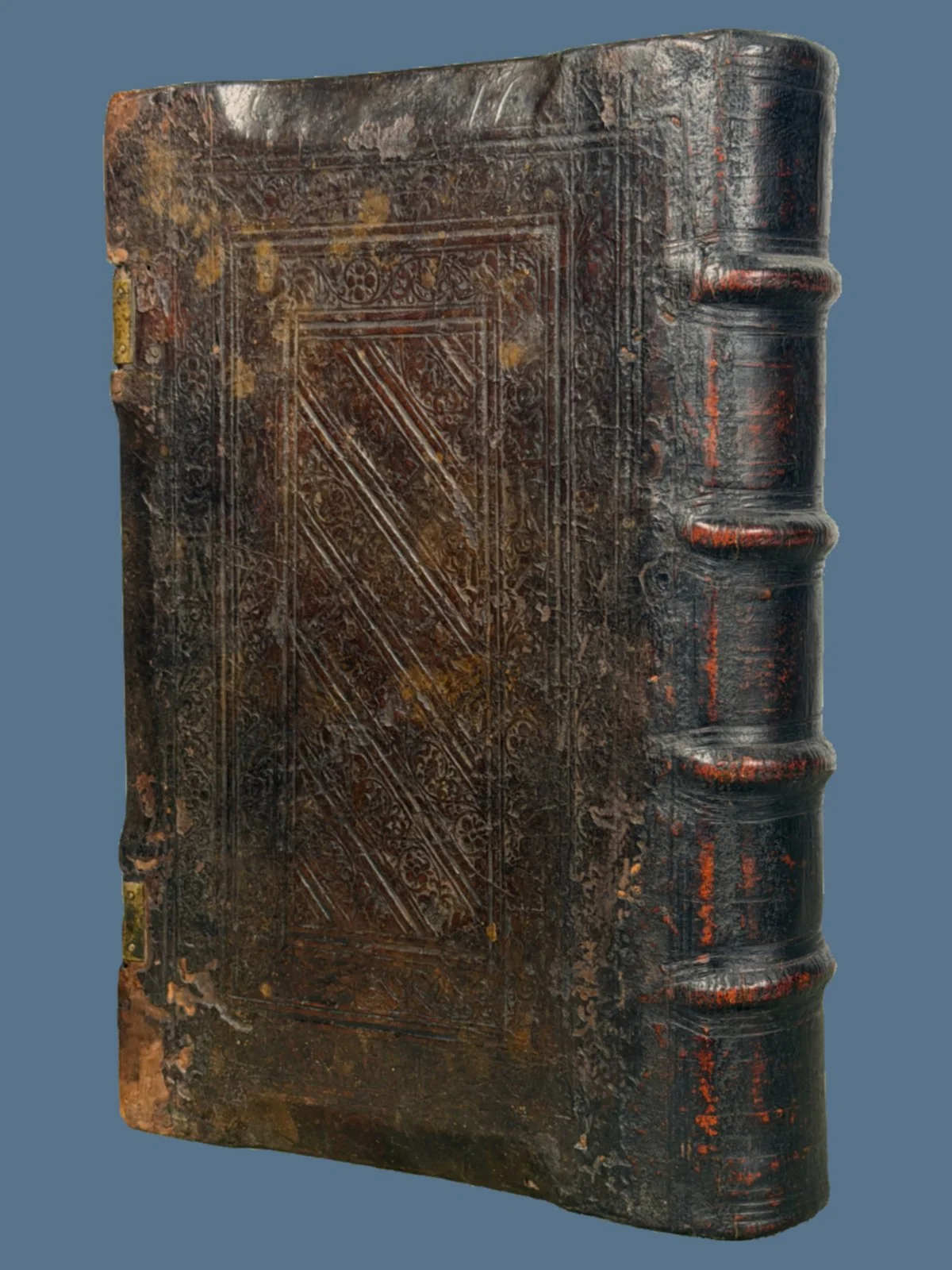
Contemporary alum-tawed blind-tooled dark brown pigskin over boards. Covers with triple paneled border around a rectangular frame, enhanced with flowers and swirls. Evidence of clasps, retaining hasps. Expertly rebacked and recornered. All edges blue.
Condition
Generous margins throughout. Occasional, mostly marginal staining. A clean and crisp copy.
Provenance
Inscription on title page reads “Bibliotheca J. Niefert … Velen 1872.” A couple of additional marginal notes in a cursive hand.
Note
First issued here as a separate companion volume to his New Testament, the Annotations represent Renaissance scholarship at its most incisive and disruptive. Erasmus systematically compares the Greek text with the Latin Vulgate, introducing hundreds of corrections and exposing accumulated mistranslations and interpretive habits that had long shaped Western theology, including readings that touched on key points of late medieval sacramental theology, while advancing the case for a more accurate rendering of Scripture grounded in the original languages. He repeatedly stresses that the biblical text, without scholarly aid, is exposed to misunderstanding and distortion.
The Annotations stand as a landmark of Renaissance thought: a work that reshaped biblical scholarship, influenced reformers such as Luther and Tyndale, and remains one of the defining intellectual achievements of early modern Europe.
References
Adams E887; De Hamel, Christopher. The Book. A History of the Bible; Daniel, David. The Bible in English.