 Image 1 of 25
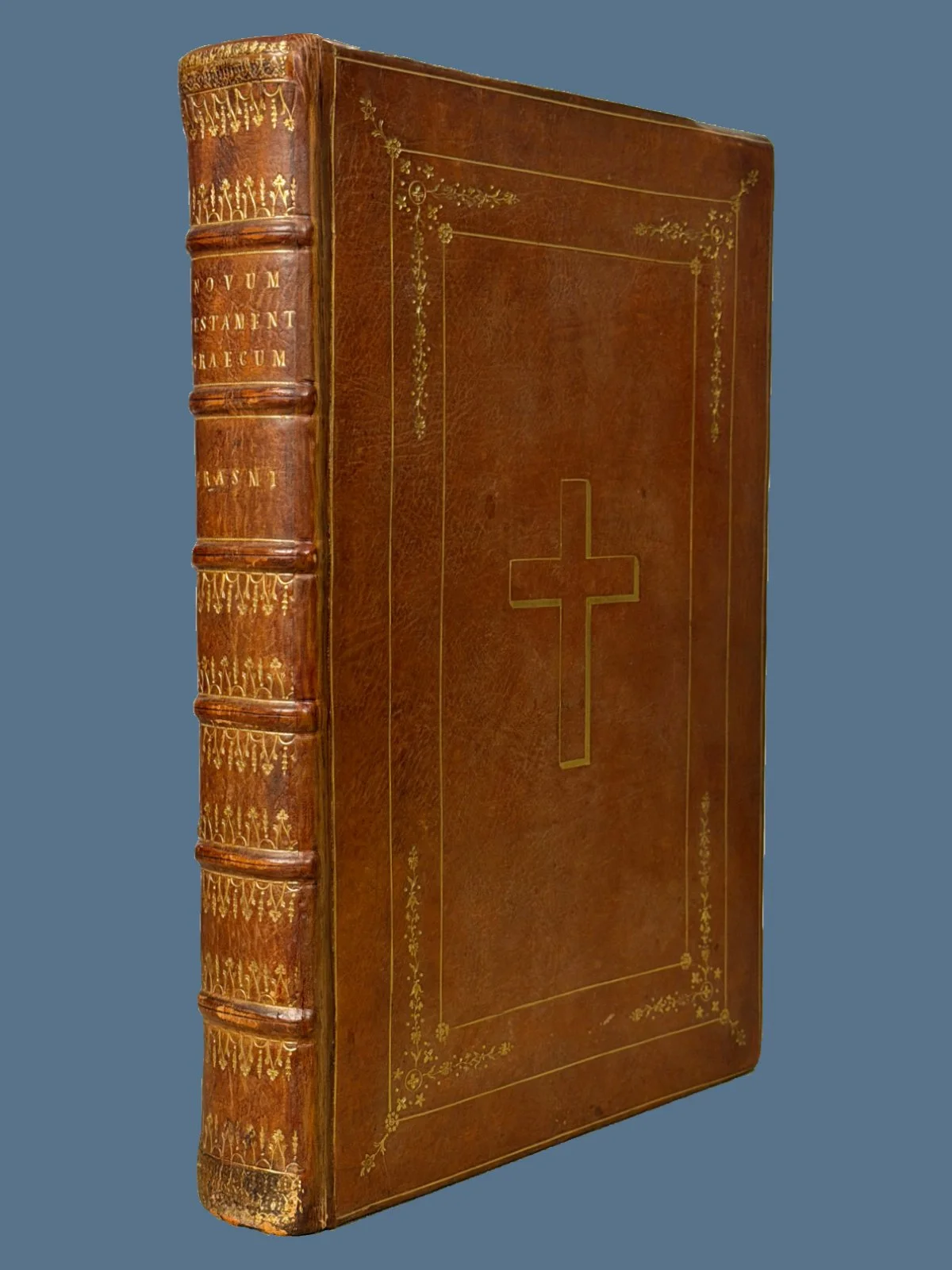 Image 2 of 25
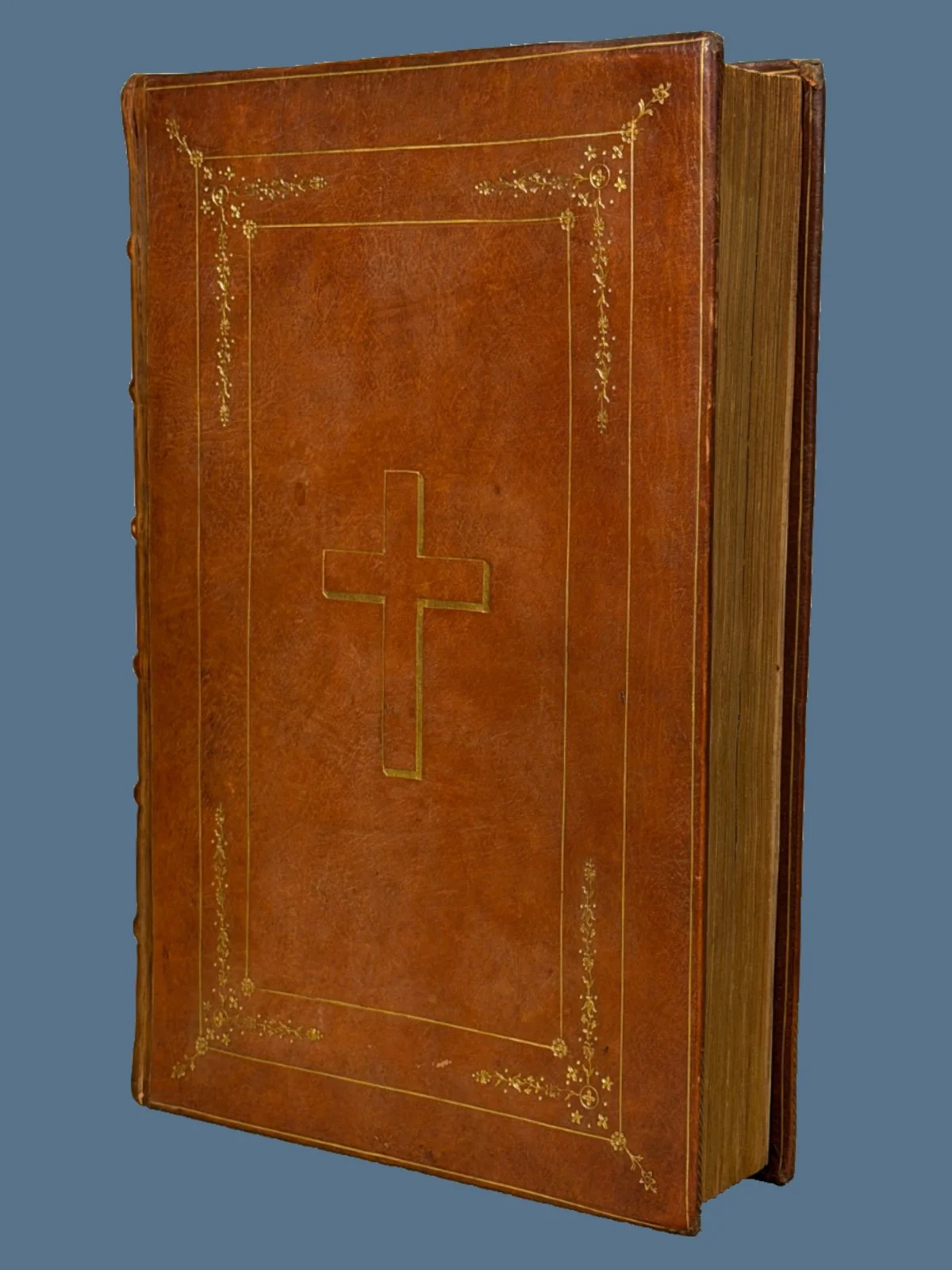 Image 3 of 25
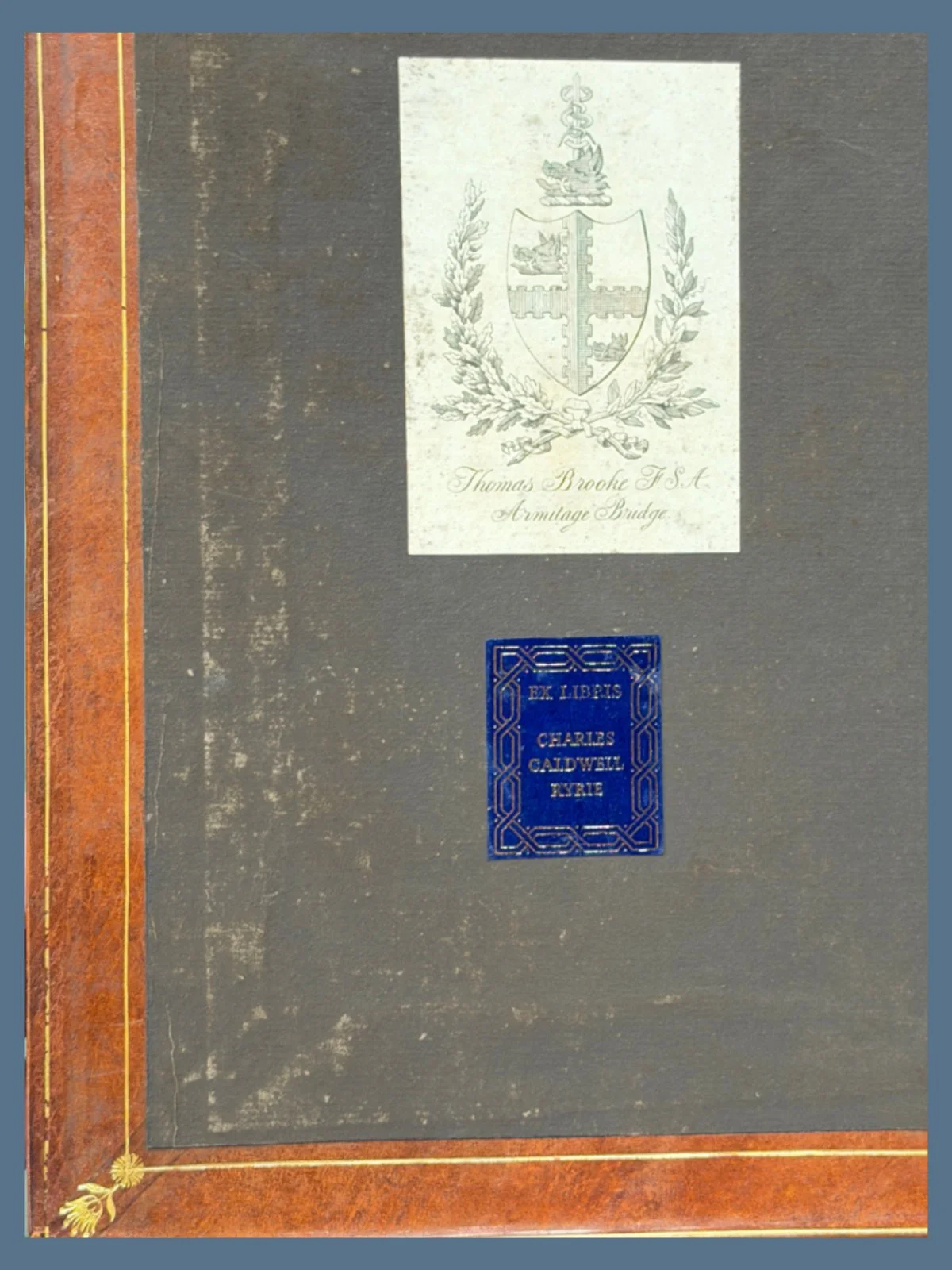 Image 4 of 25
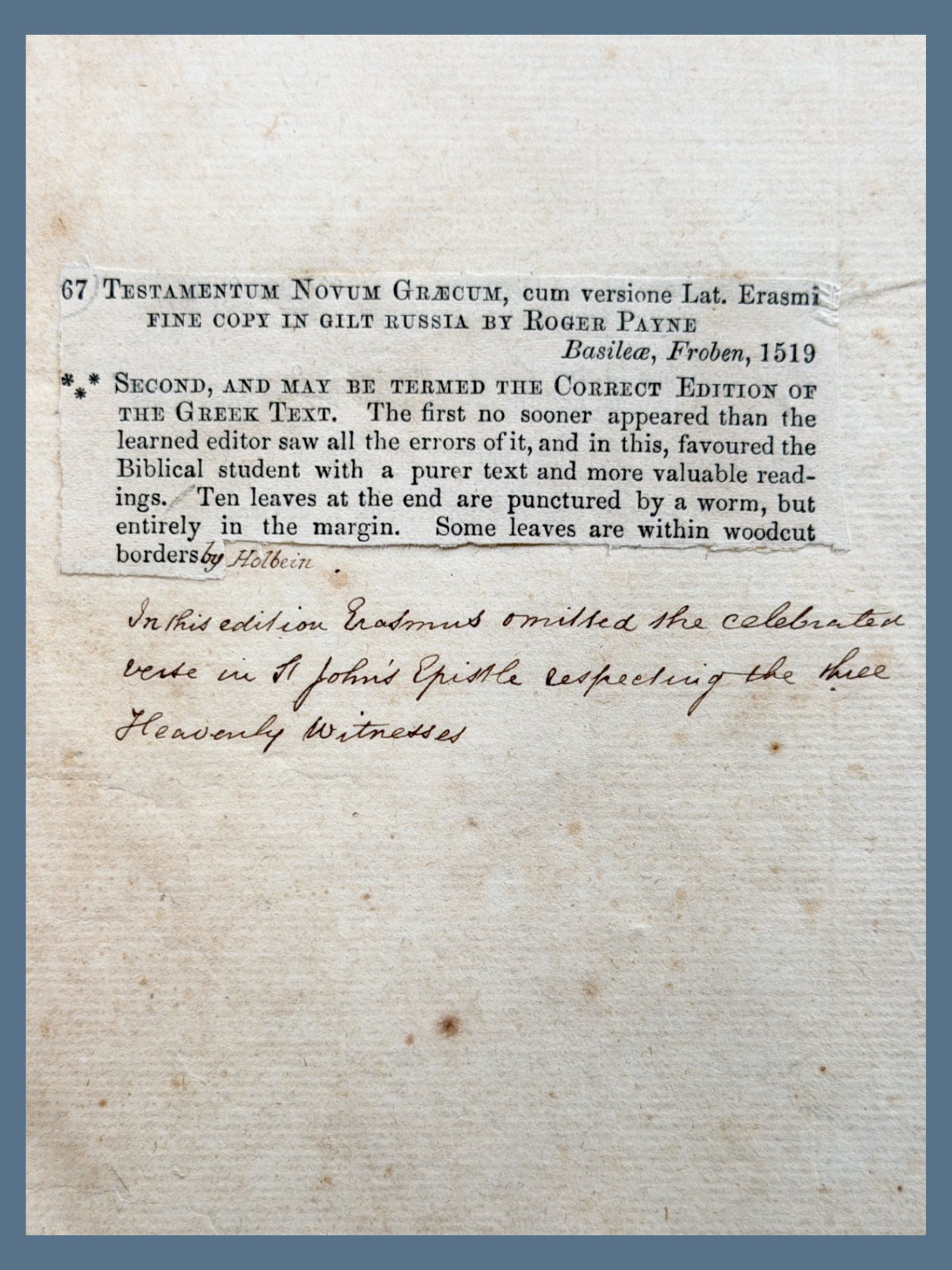 Image 5 of 25
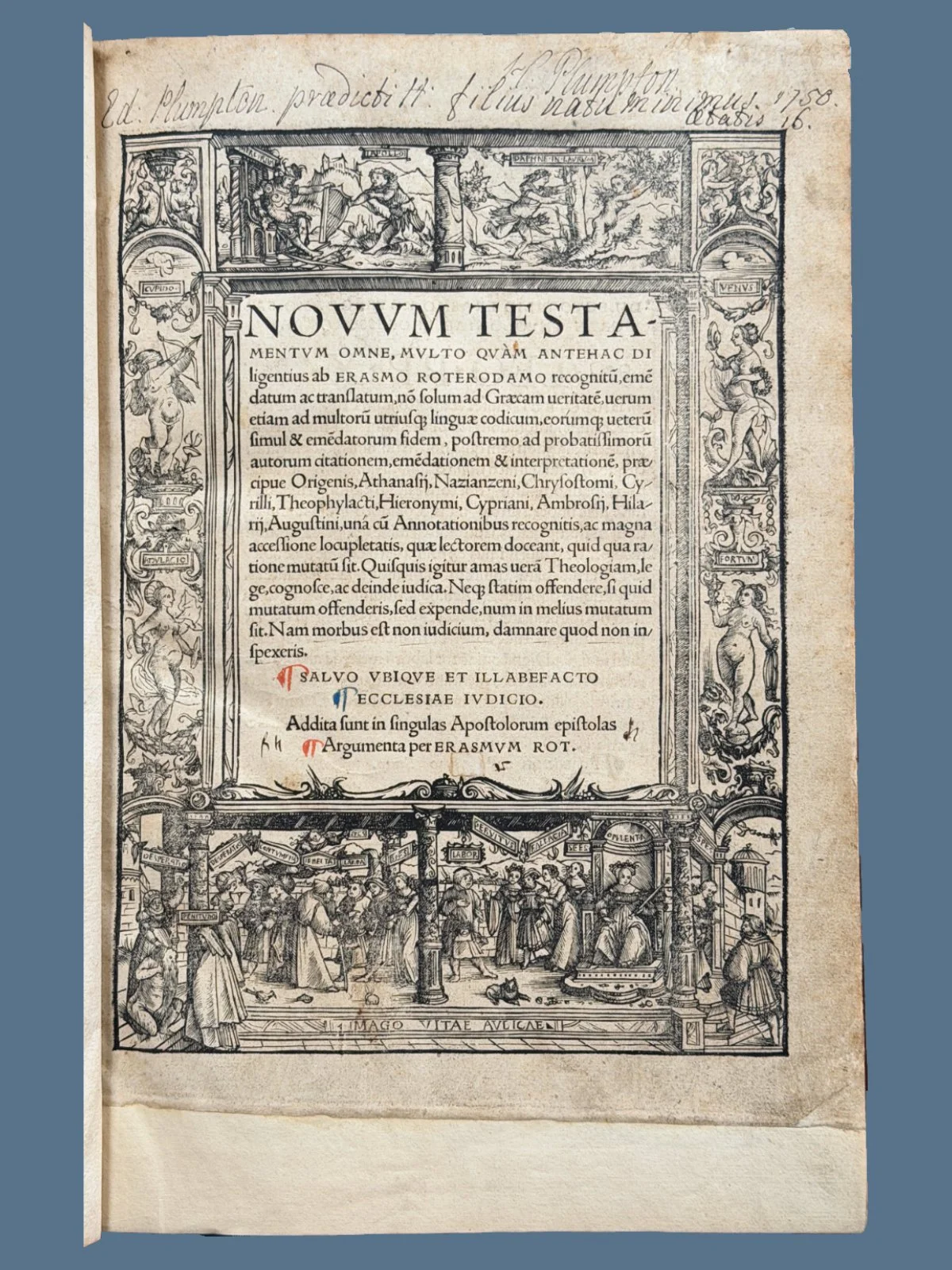 Image 6 of 25
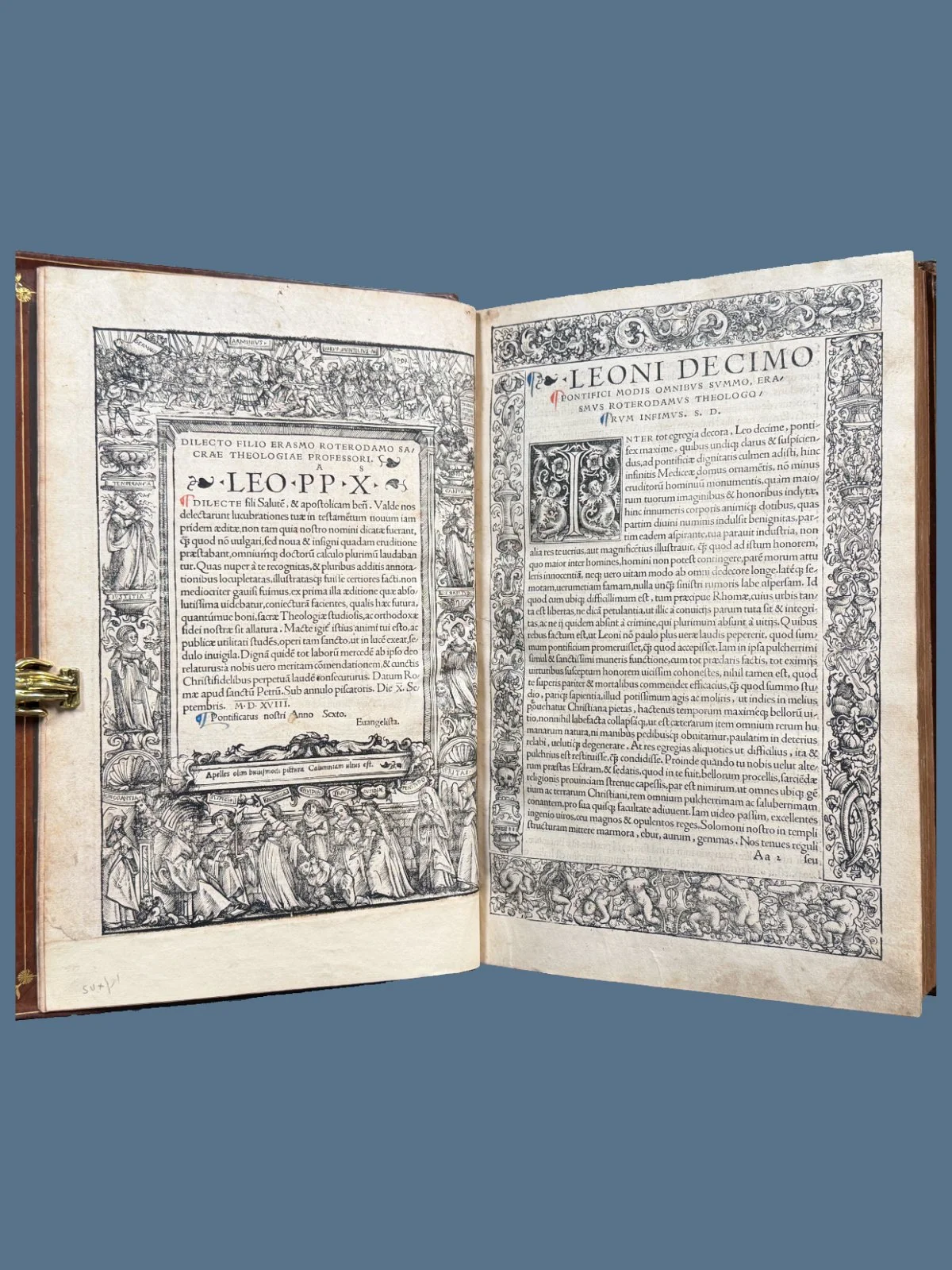 Image 7 of 25
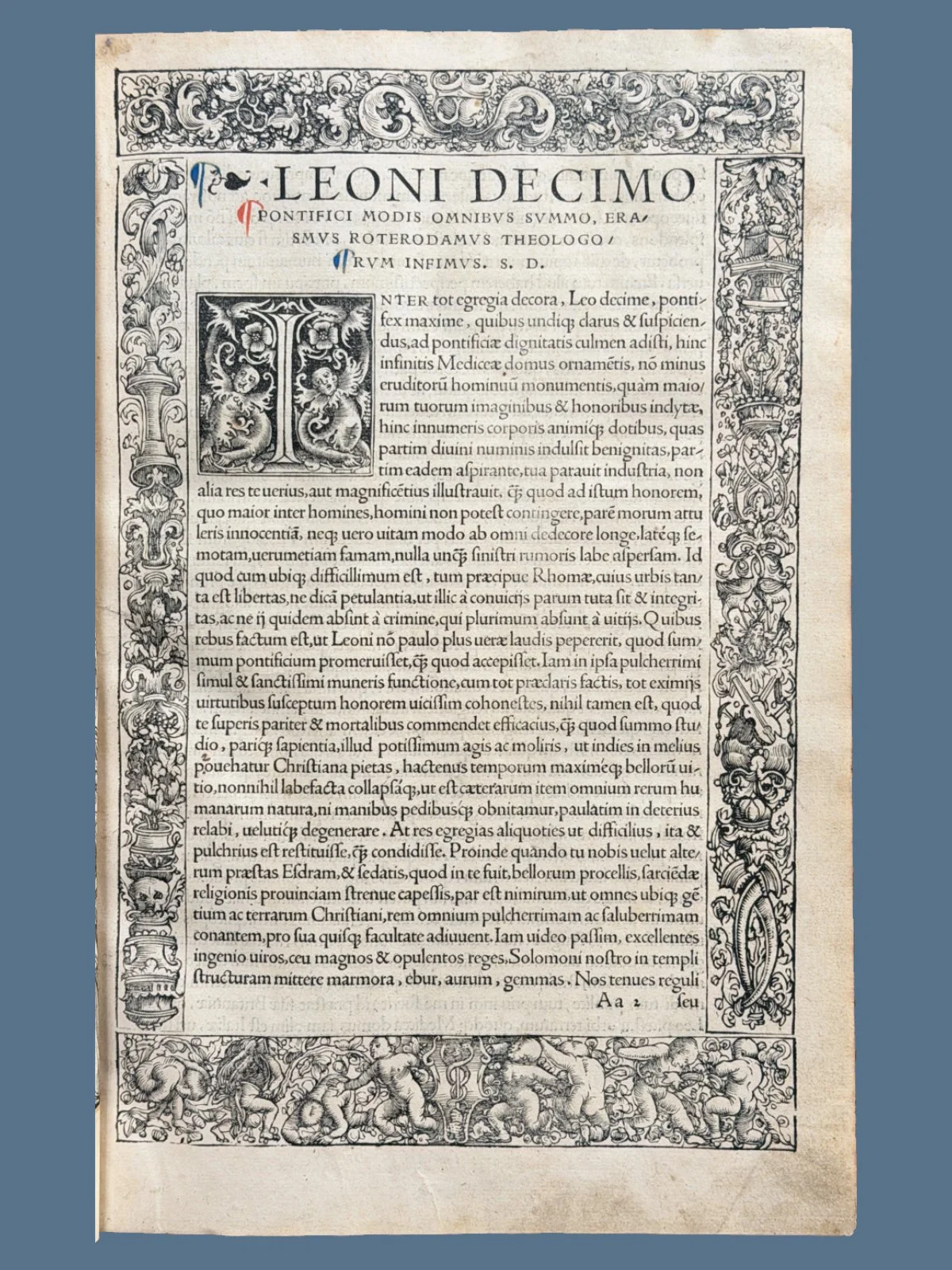 Image 8 of 25
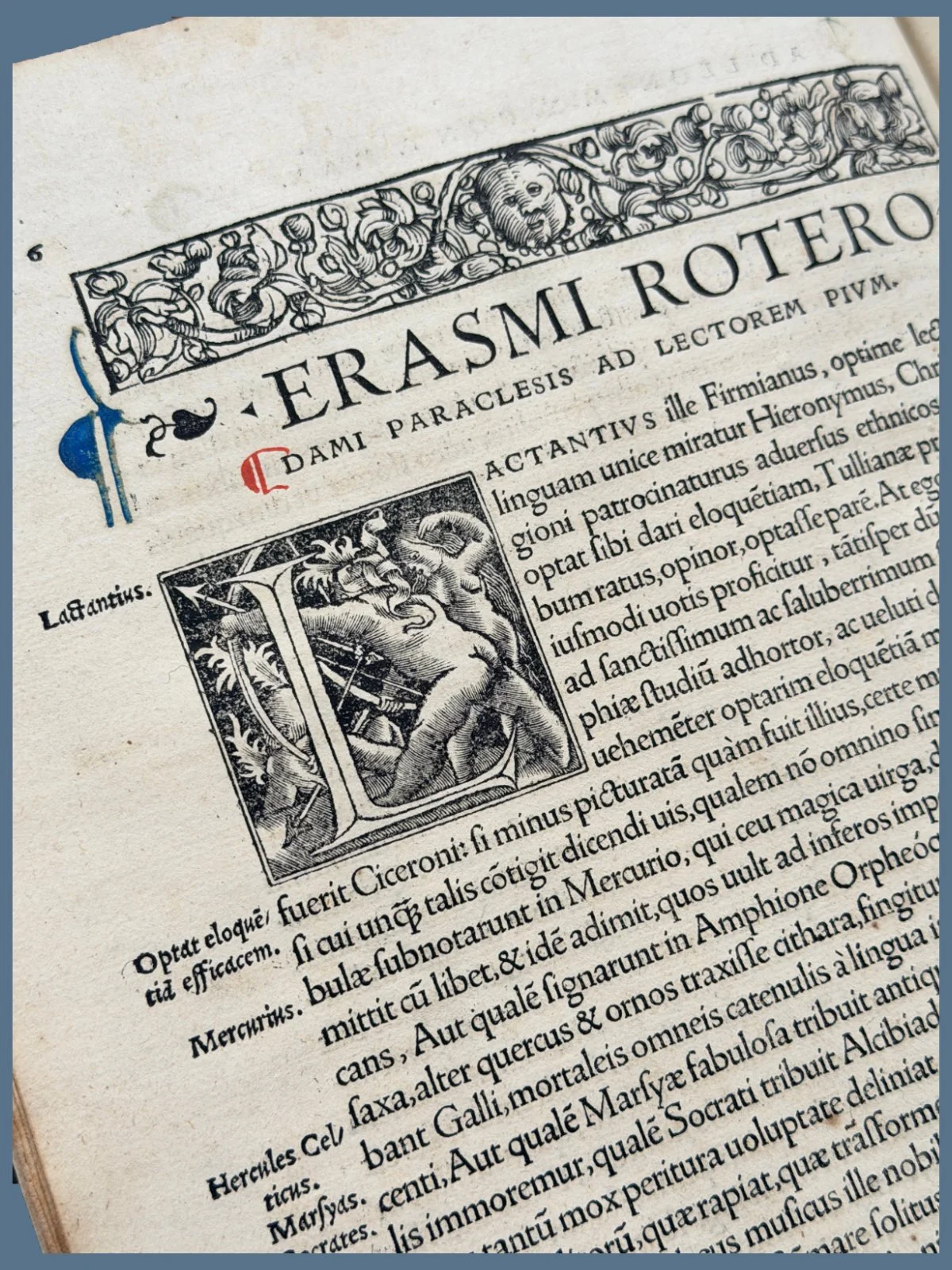 Image 9 of 25
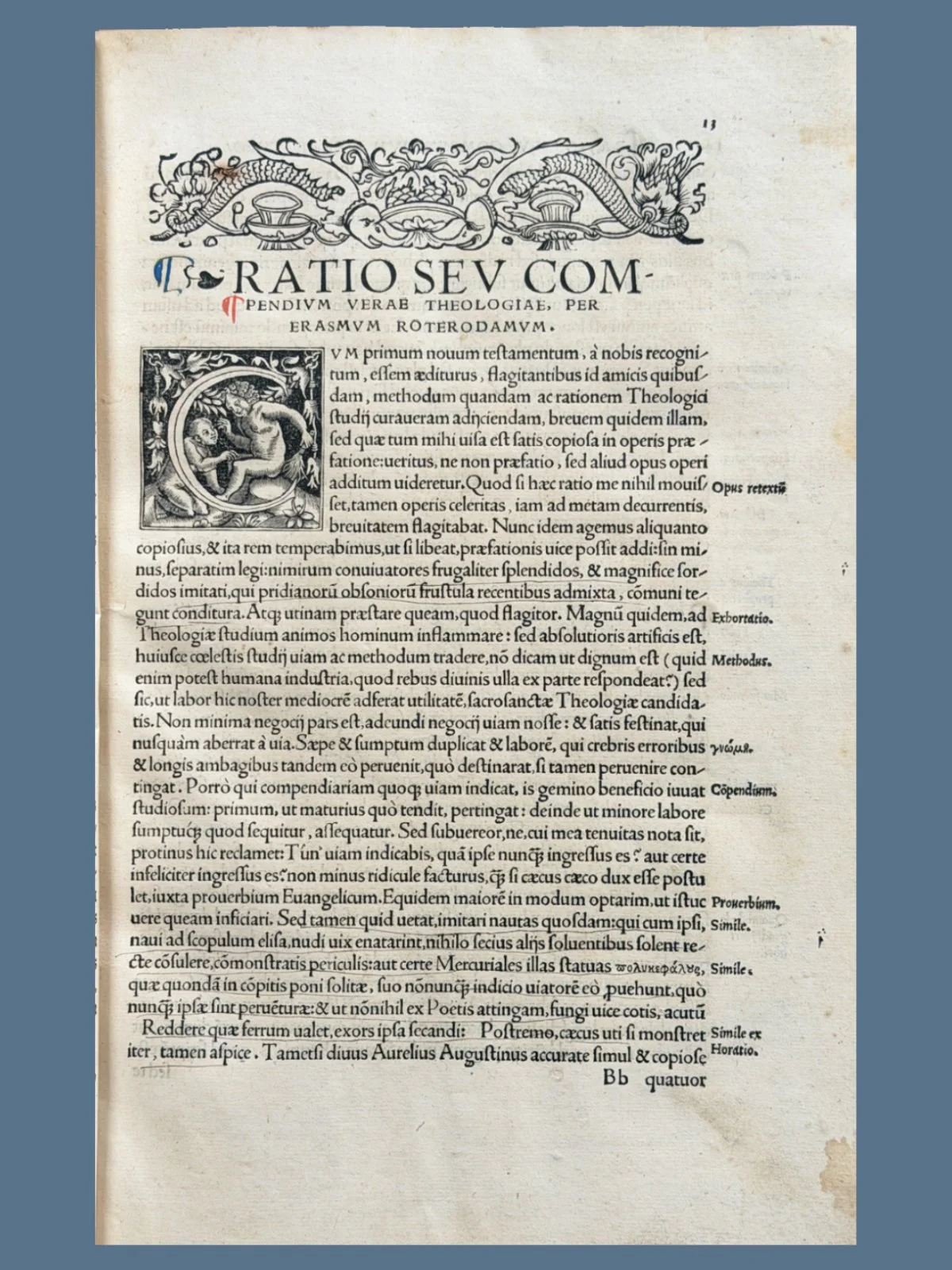 Image 10 of 25
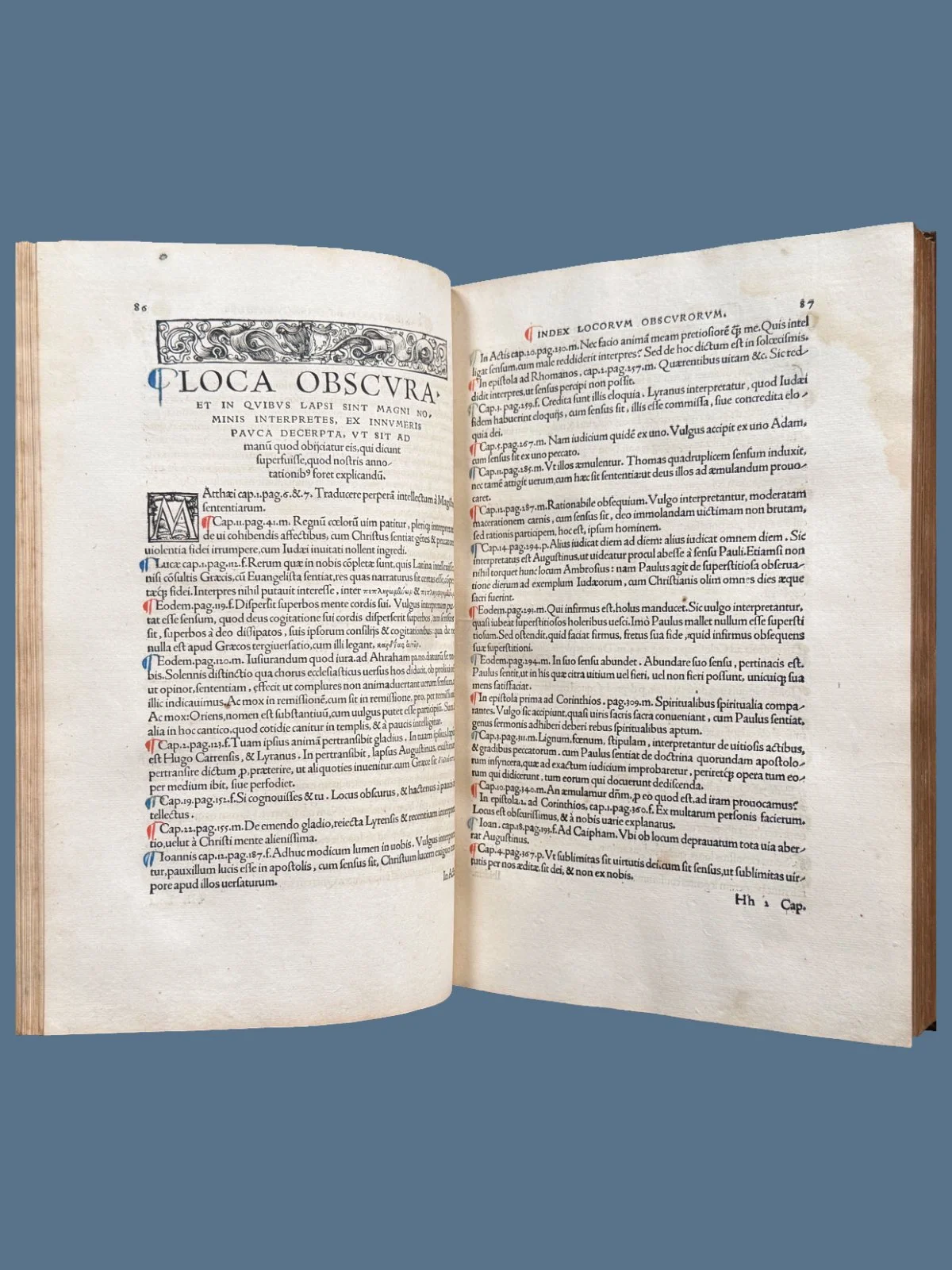 Image 11 of 25
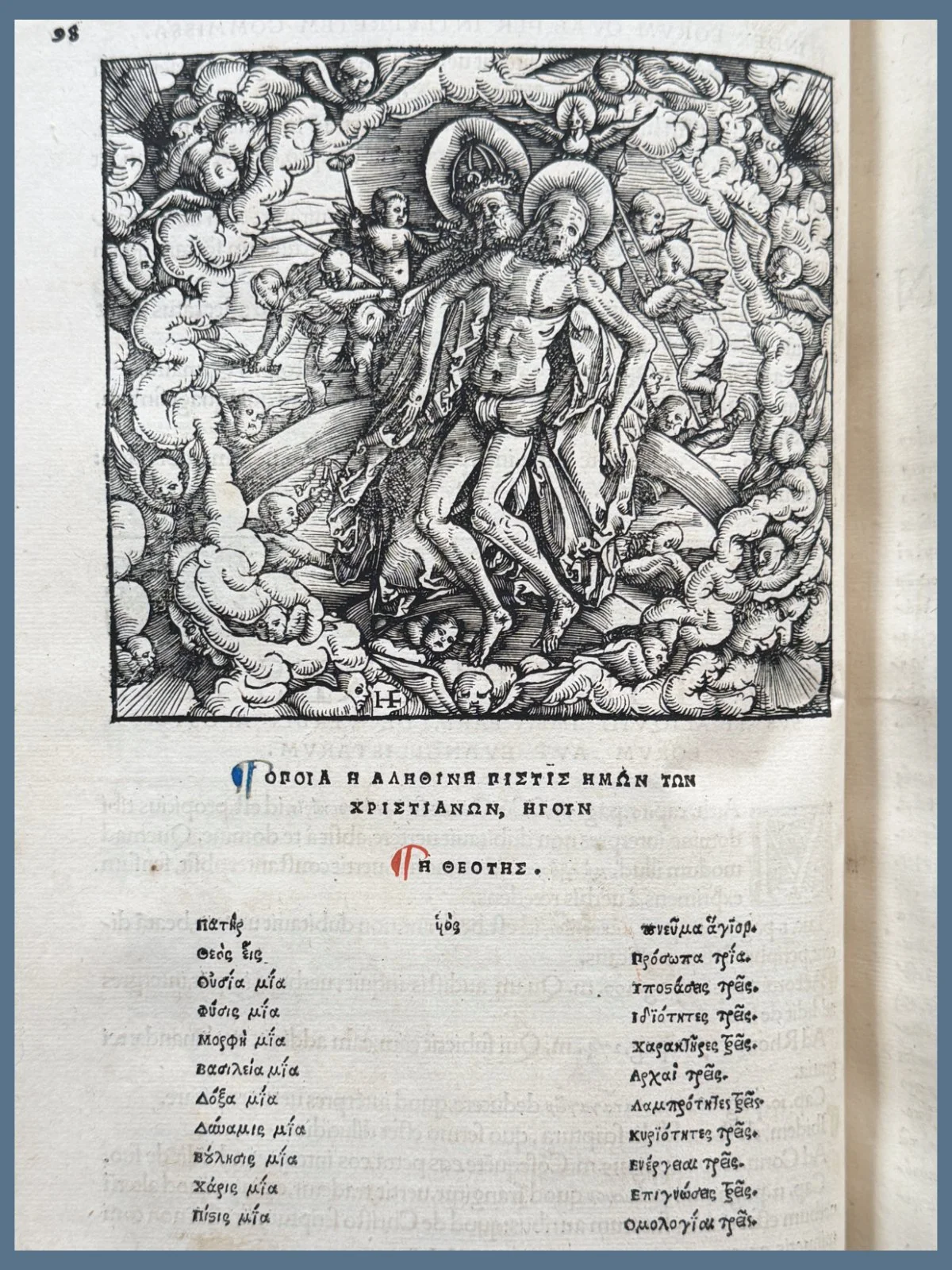 Image 12 of 25
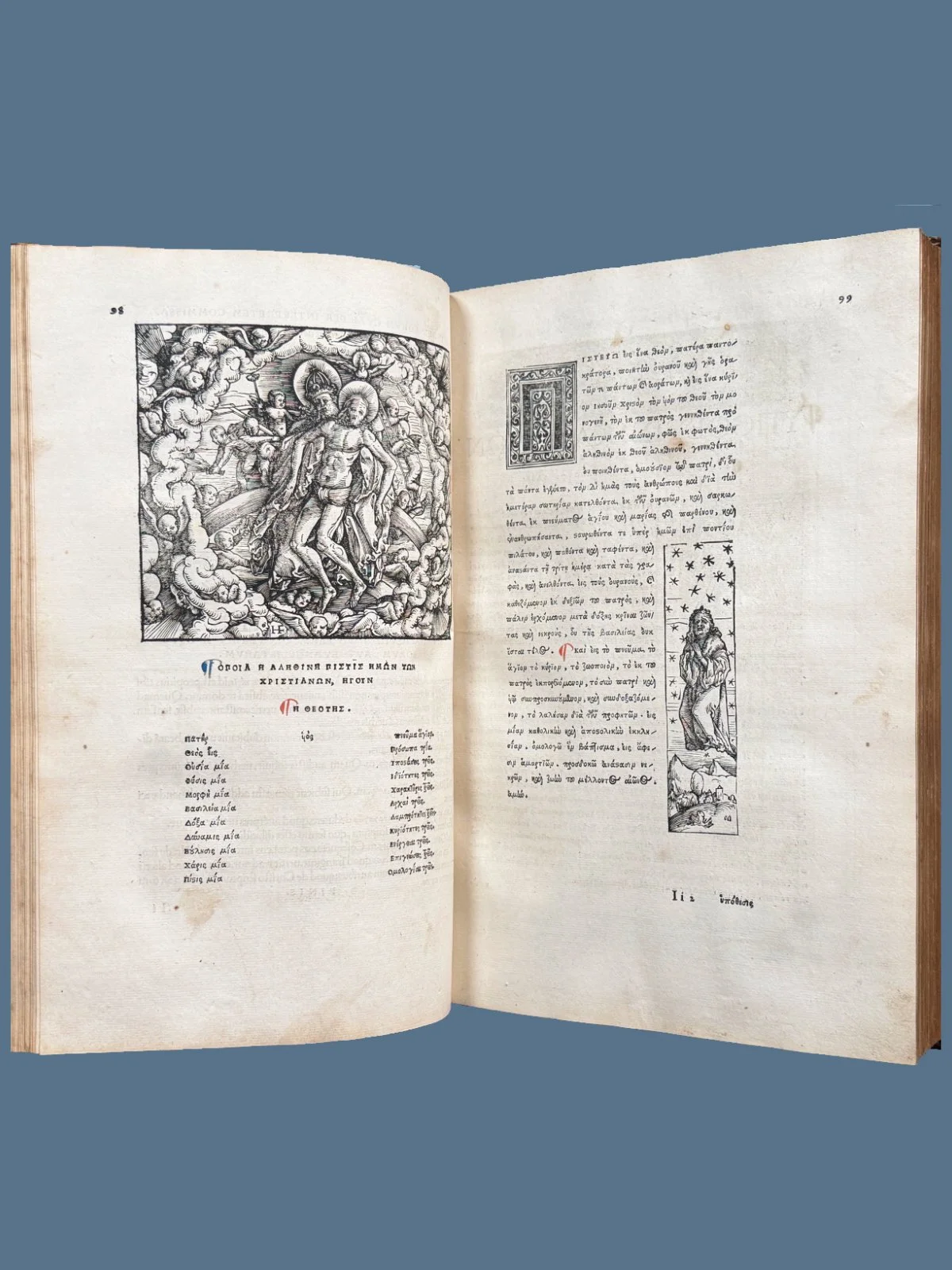 Image 13 of 25
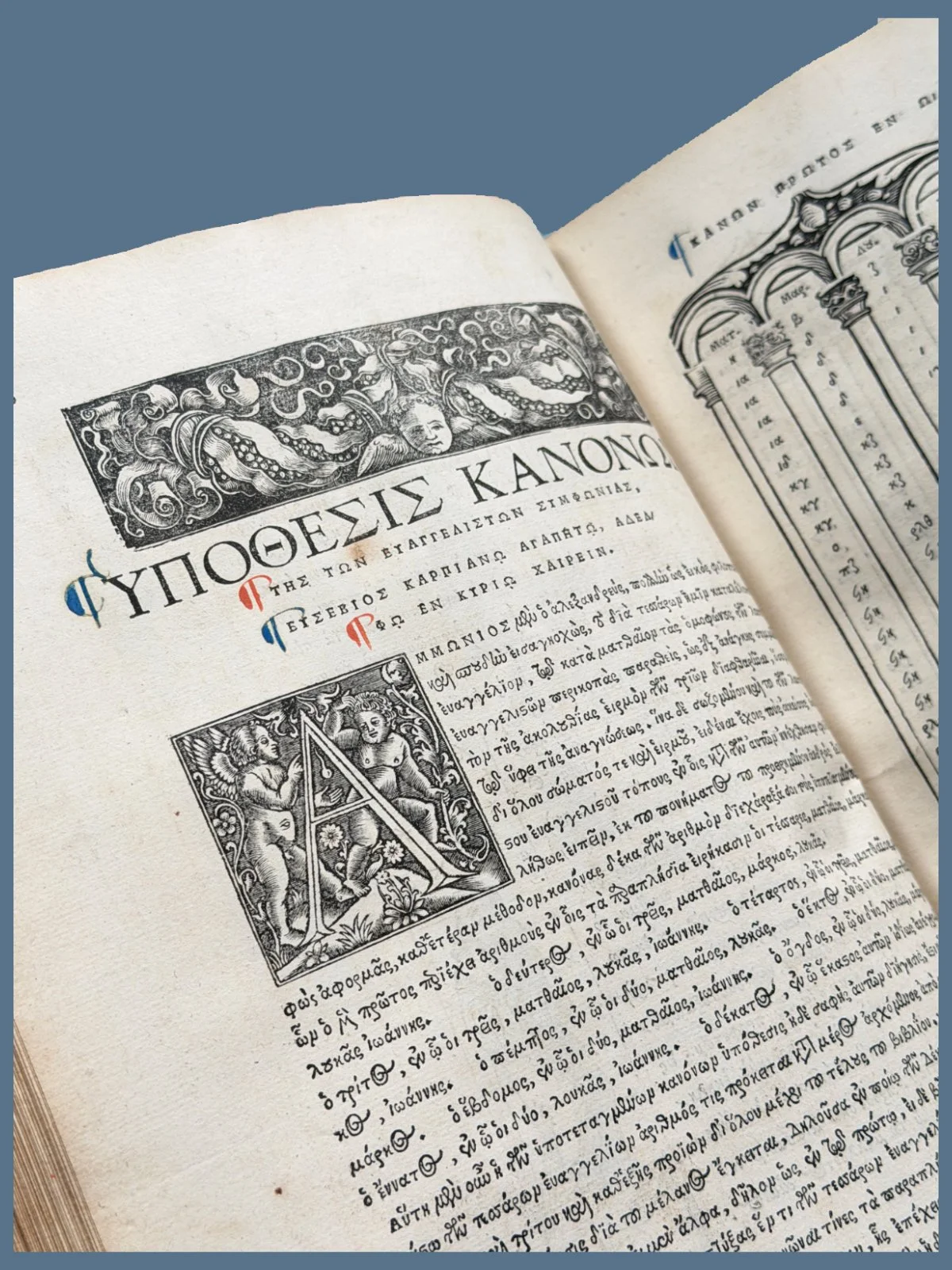 Image 14 of 25
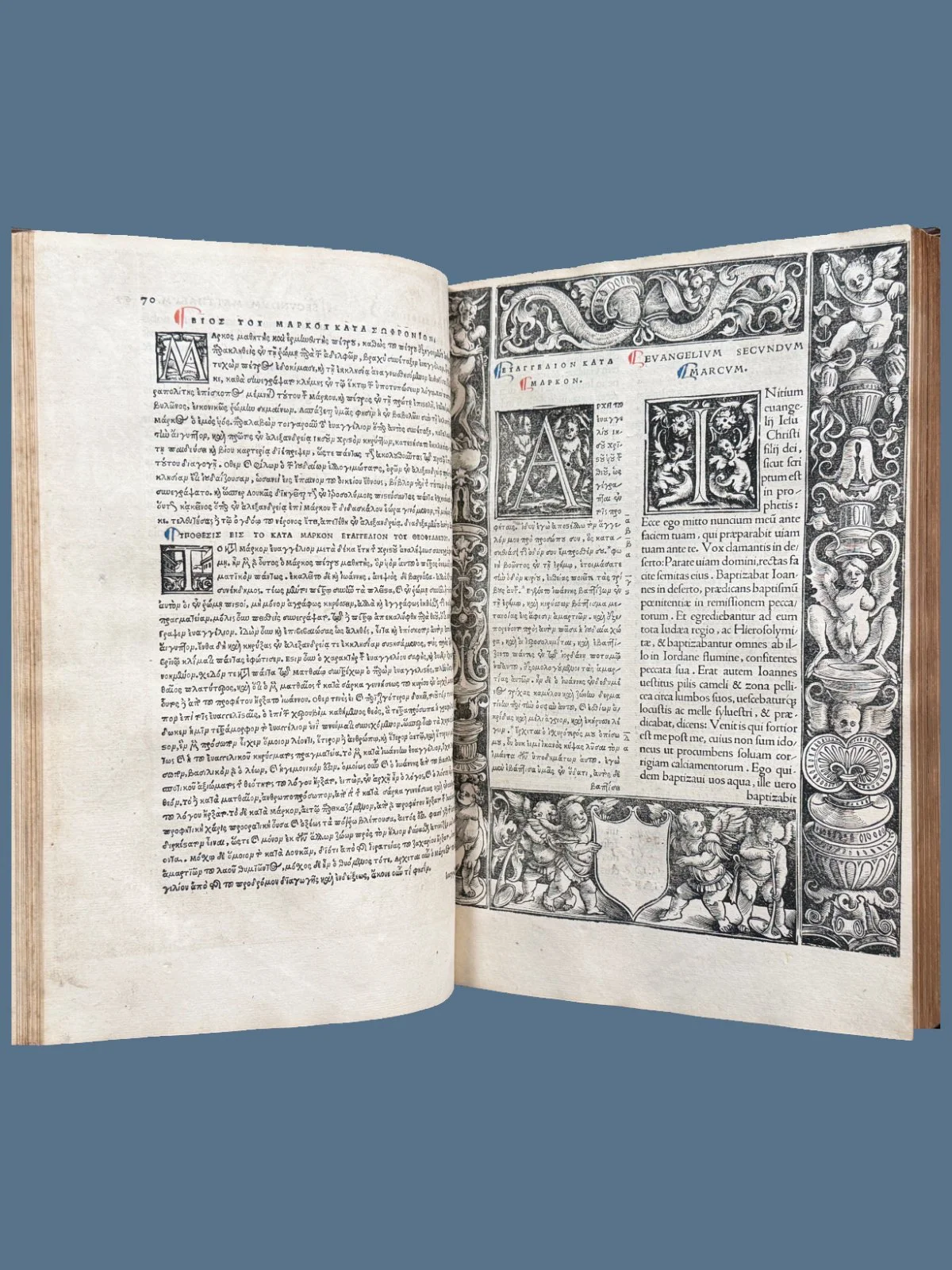 Image 15 of 25
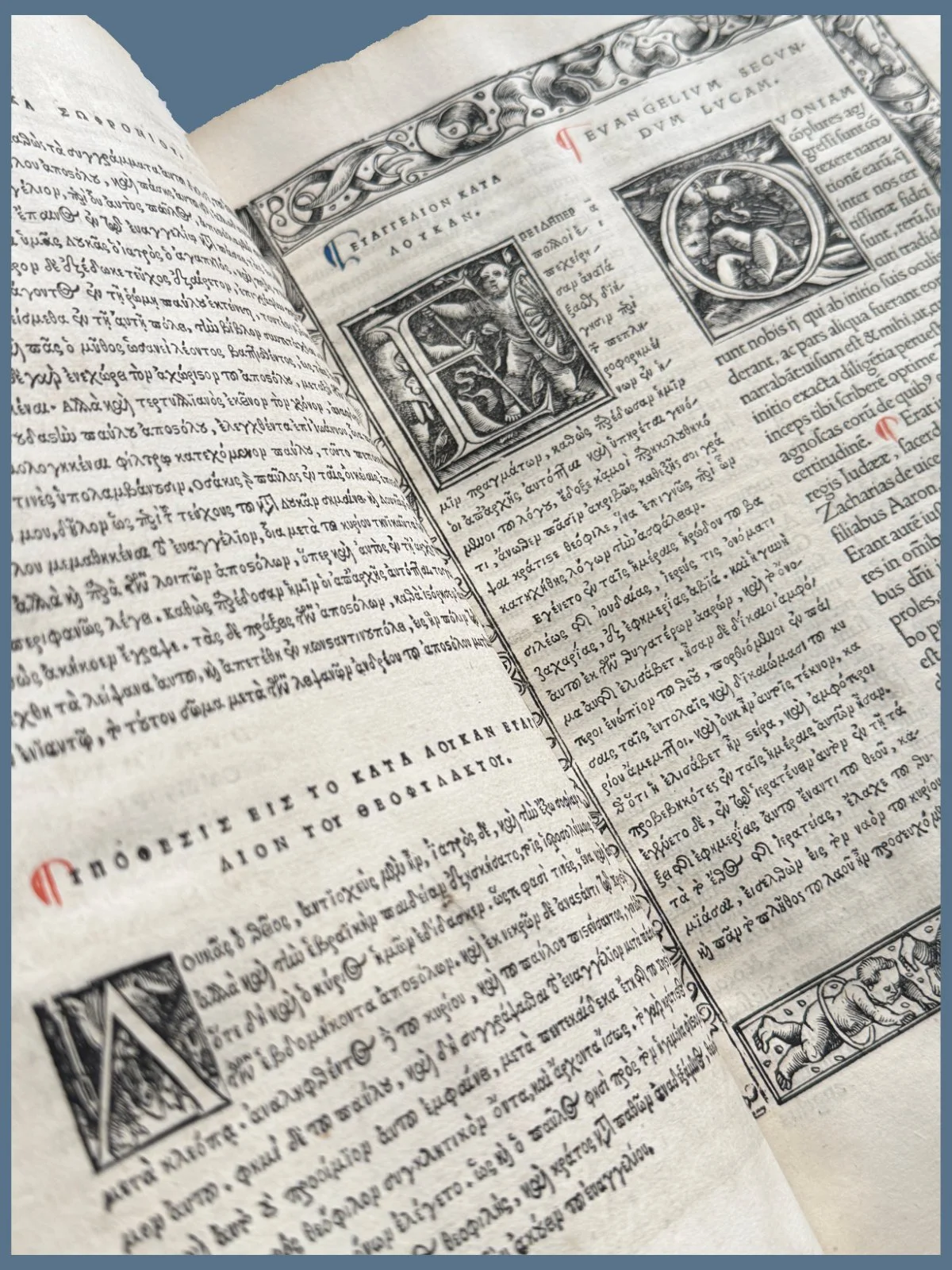 Image 16 of 25
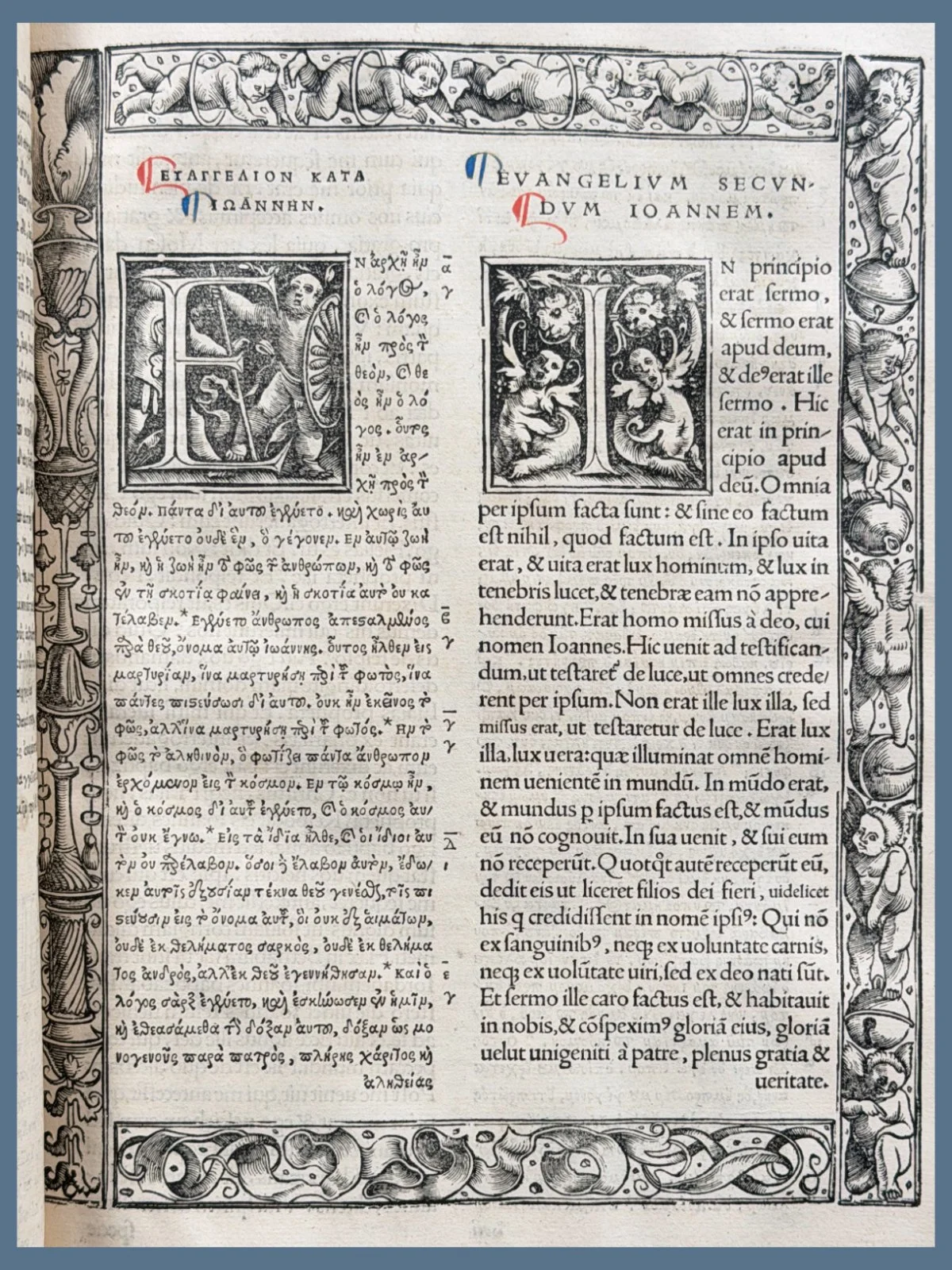 Image 17 of 25
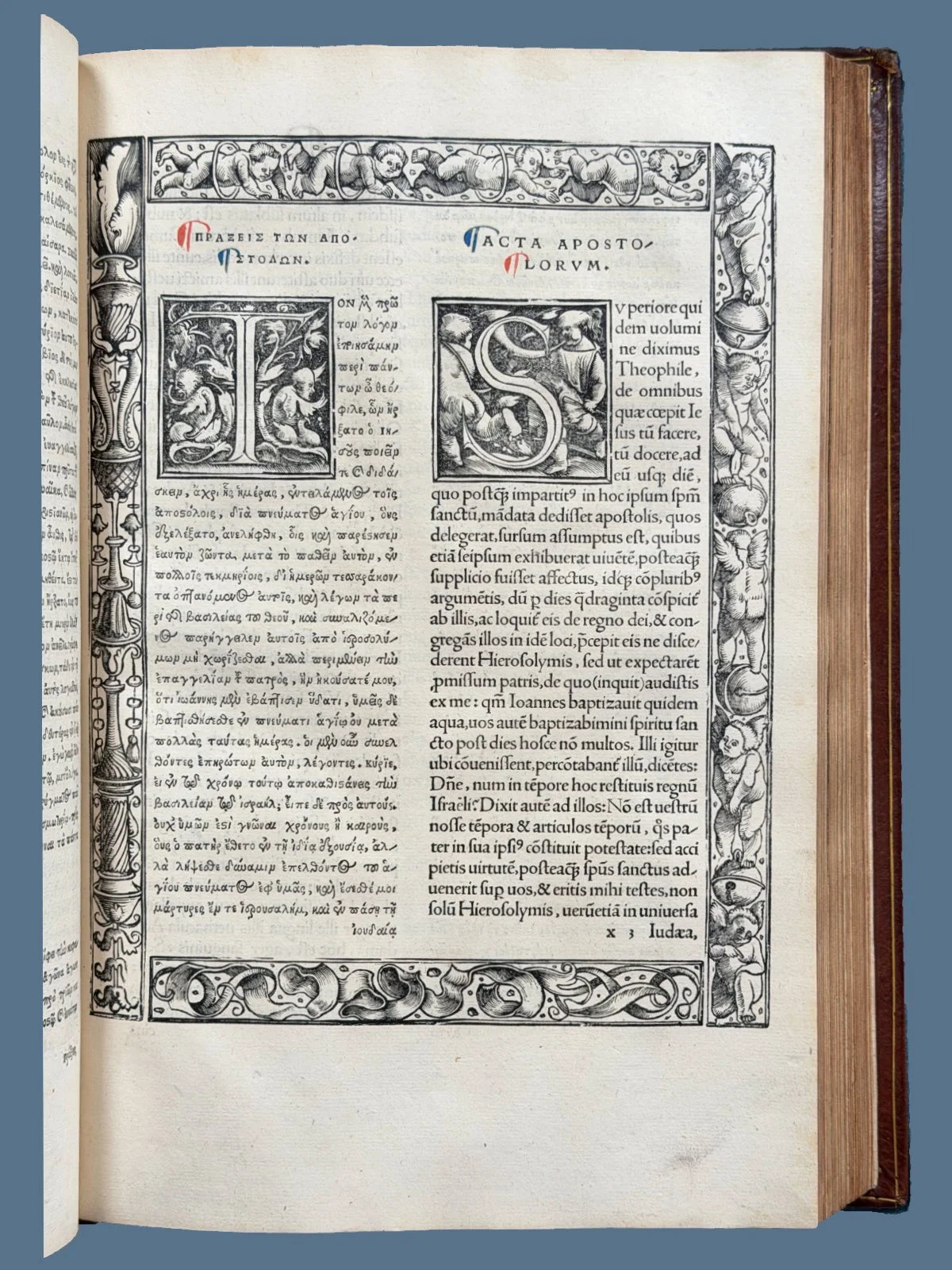 Image 18 of 25
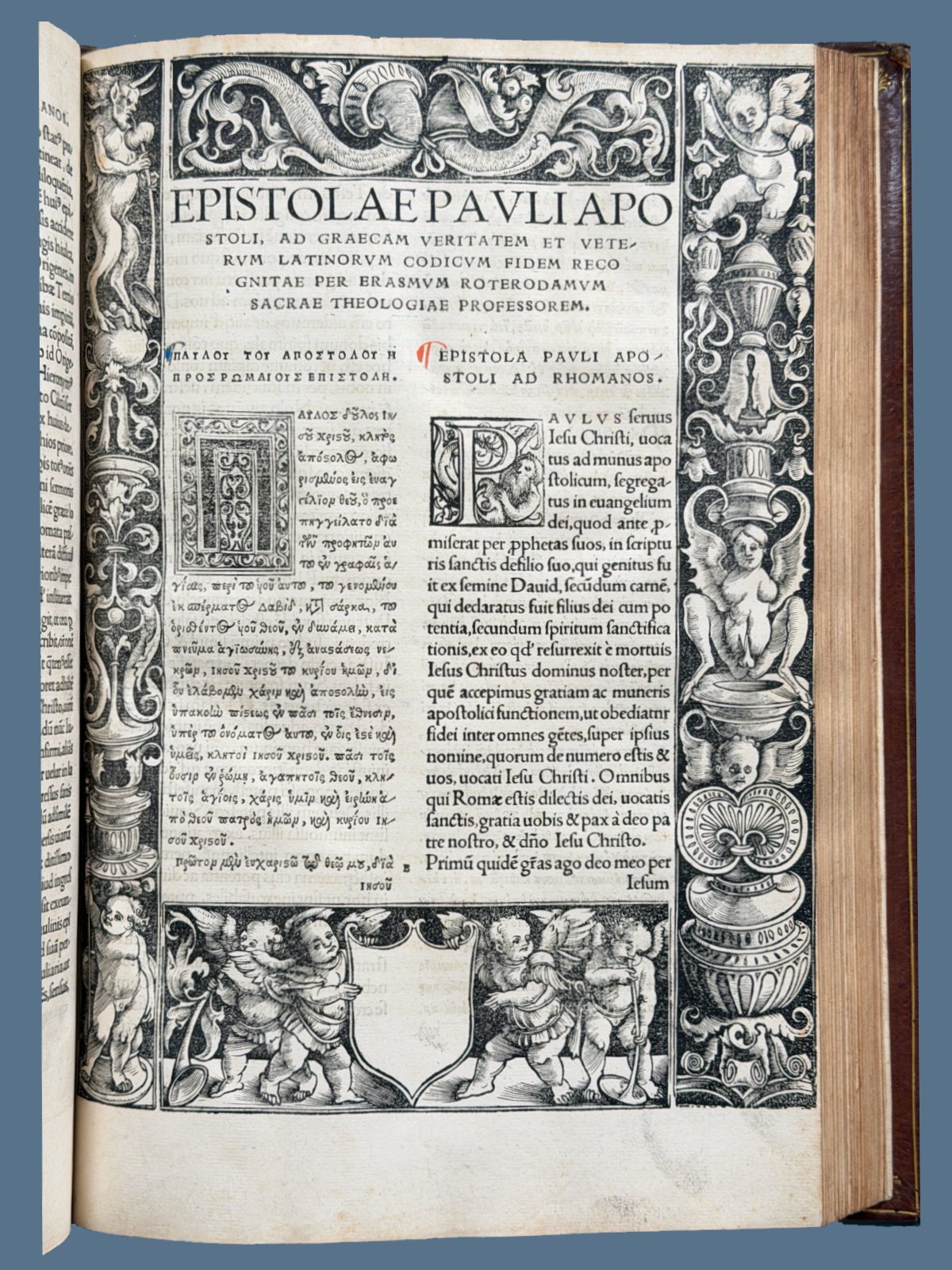 Image 19 of 25
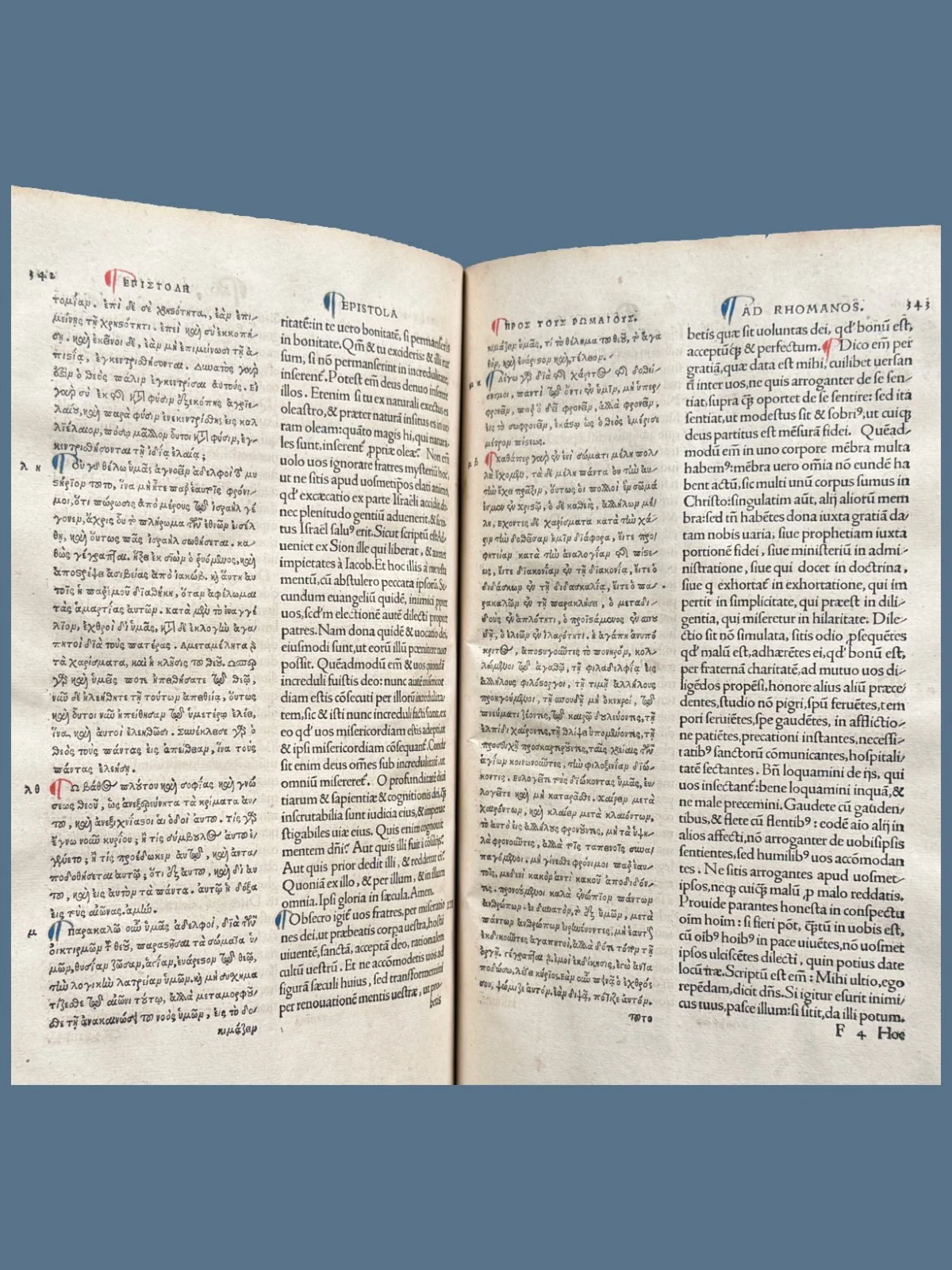 Image 20 of 25
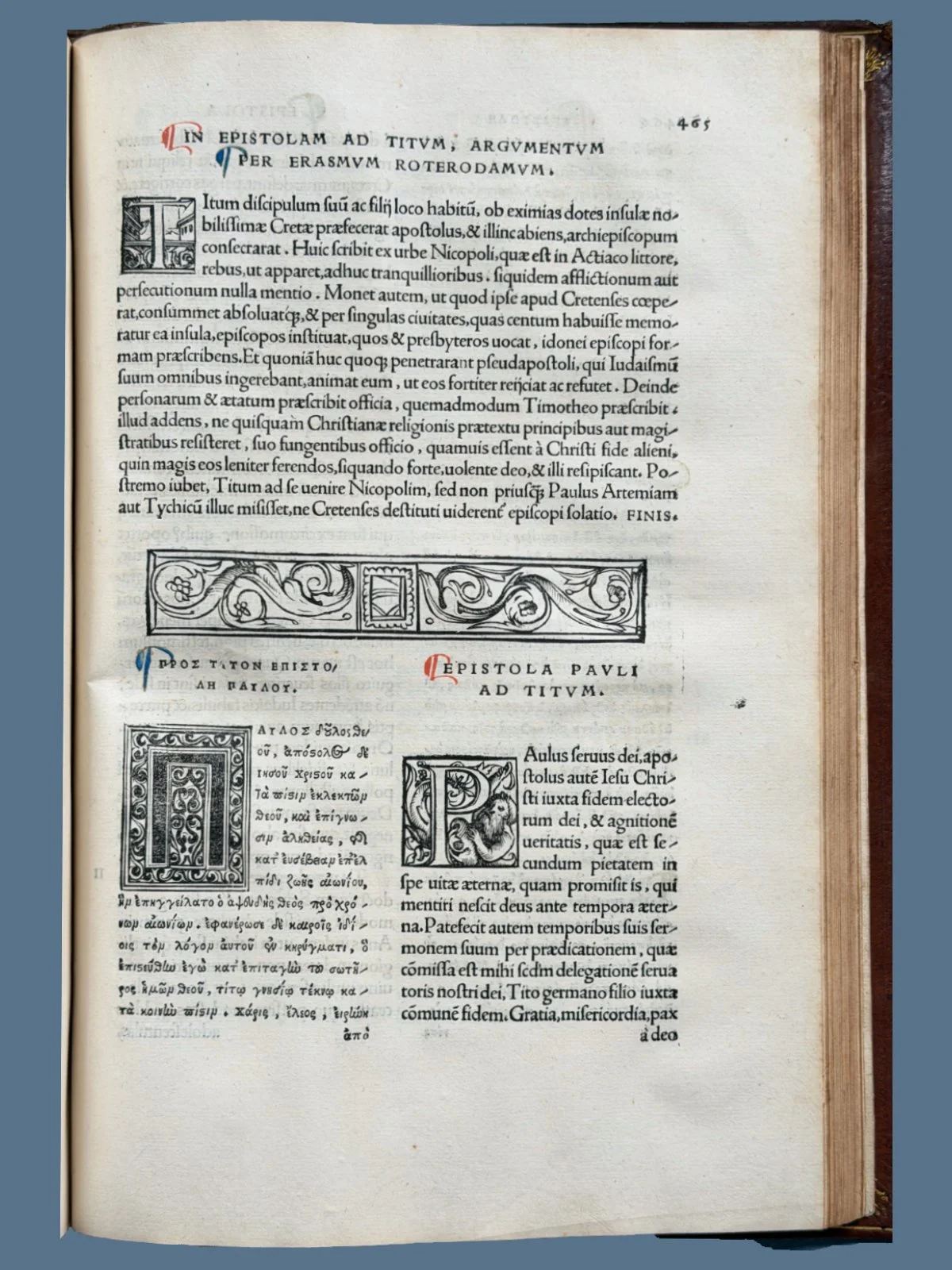 Image 21 of 25
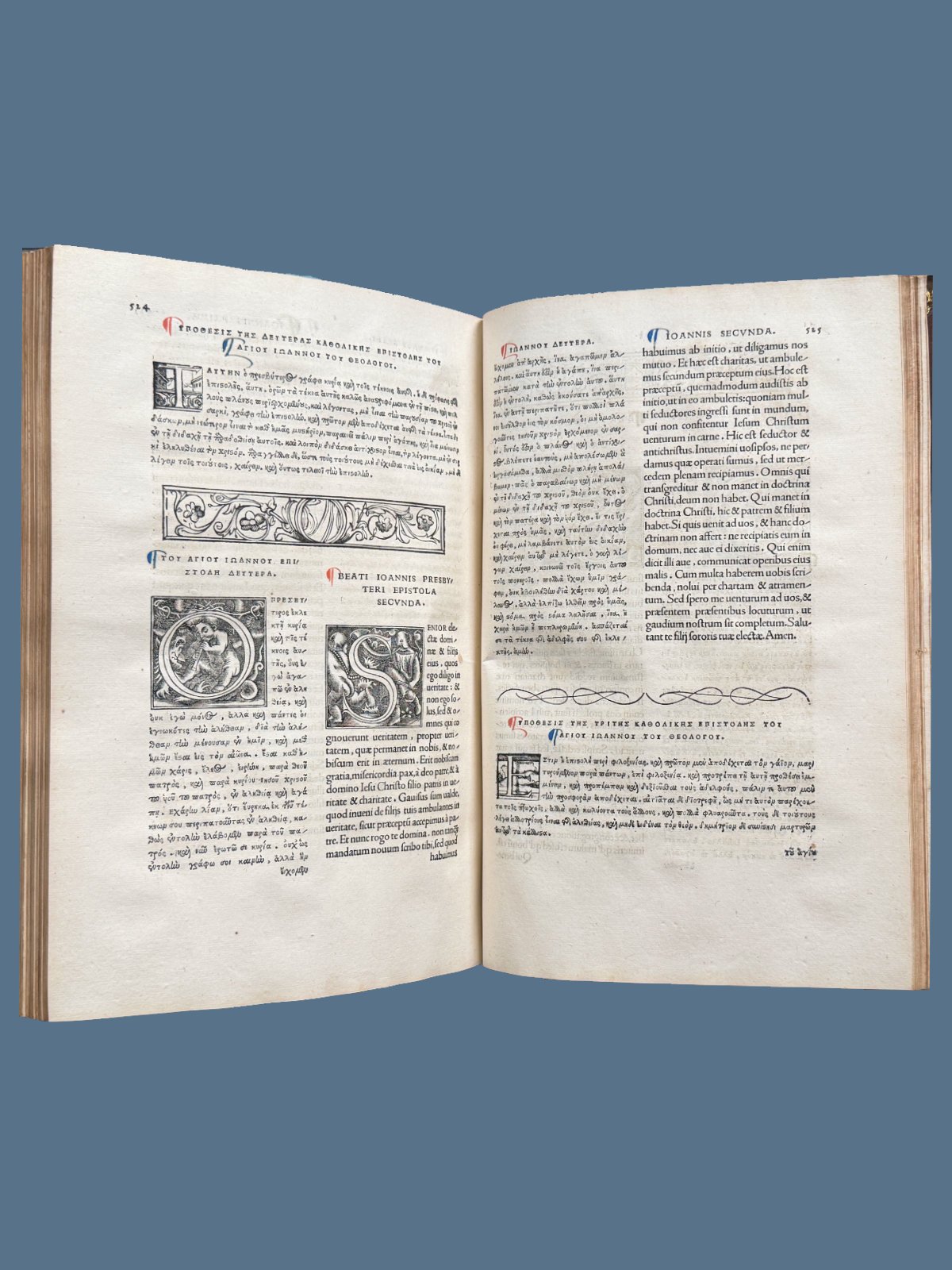 Image 22 of 25
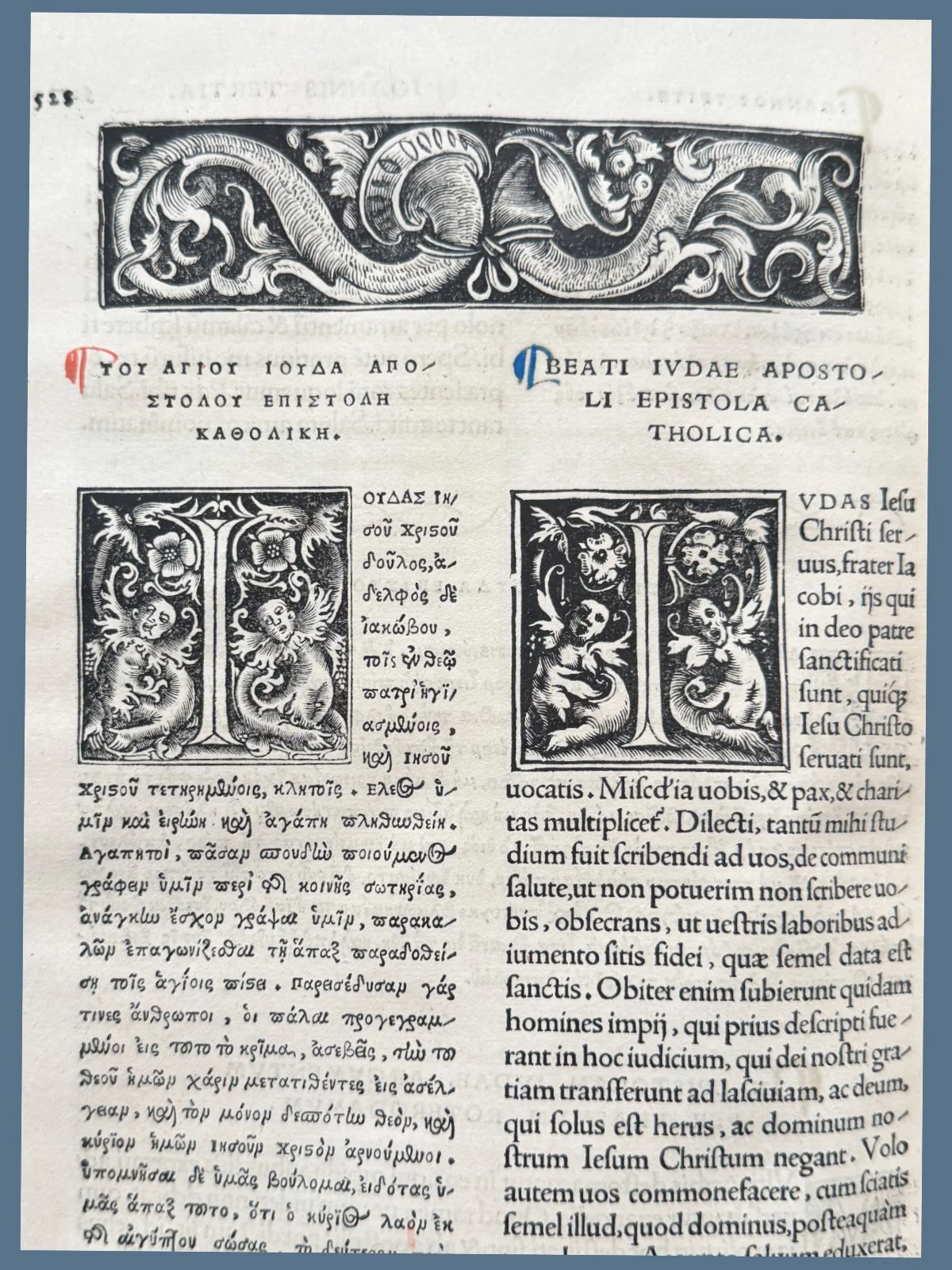 Image 23 of 25
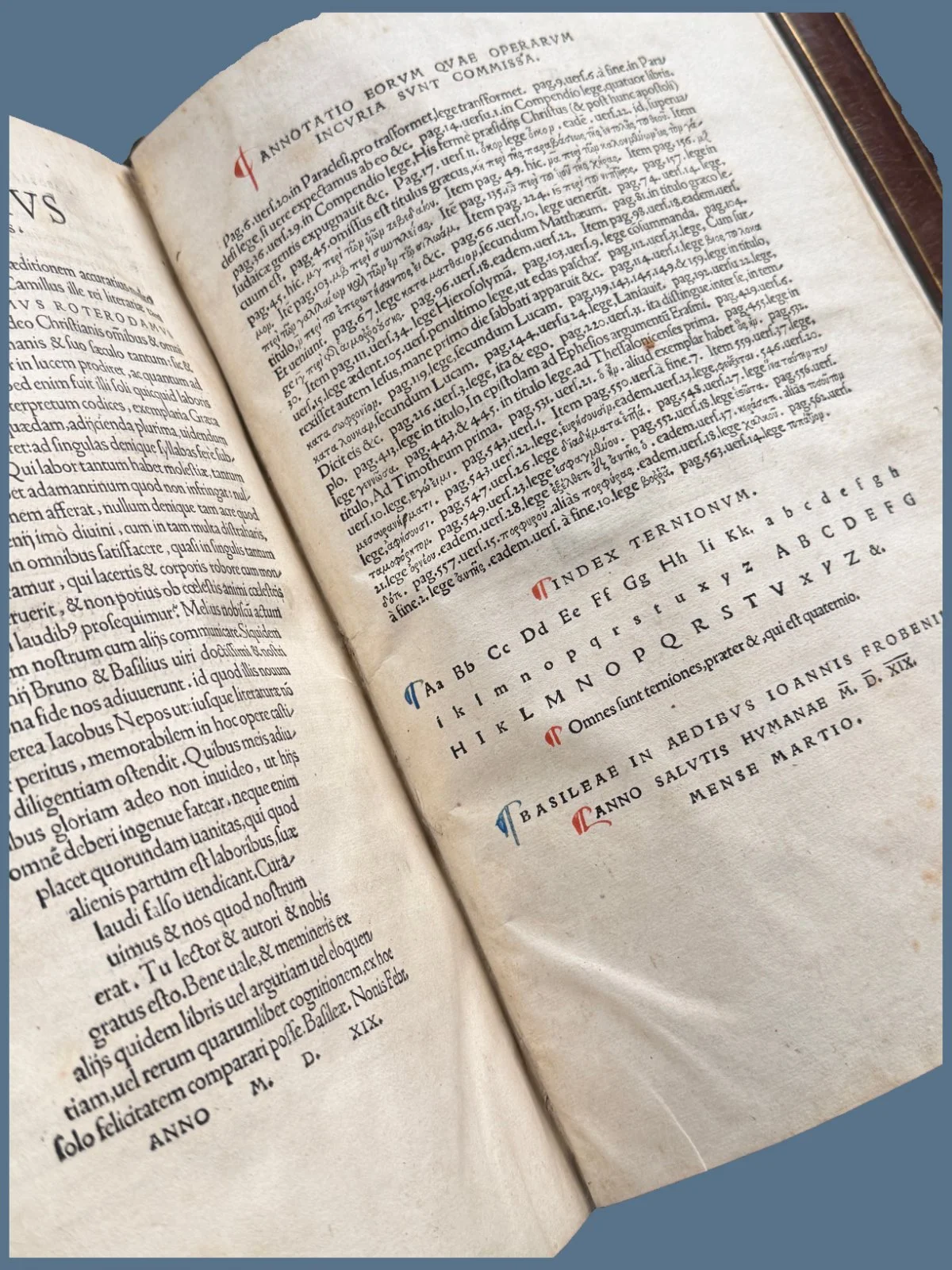 Image 24 of 25
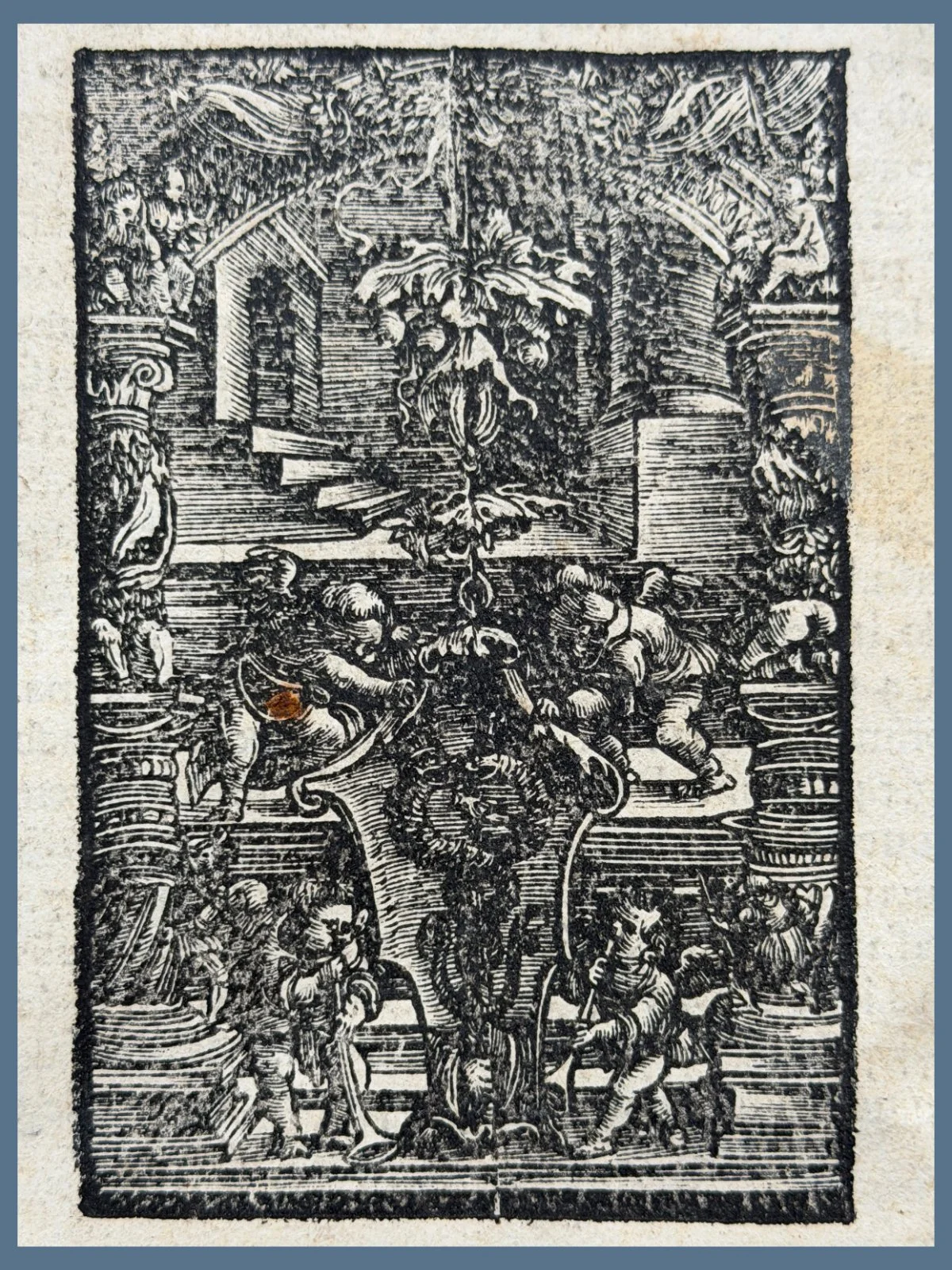 Image 25 of 25
Novum testamentum omne, multo quàm antehac diligentius ab Erasmo Roterodamo recognitum, emendatum ac translatum … Addita sunt in singulas Apostolorum epistolas Argumentum per Erasmum Rot.
Summary
The second edition of Erasmus’ New Testament with Greek and Latin in parallel columns. The influence of both the text and the introductory material on reformers such as Martin Luther and William Tyndale is difficult to overstate.
Description
Two parts in one volume. Greek and Roman types with italic types used for marginalia. New Testament text presented in parallel columns of the original Greek text, as accurately as Erasmus could edit it, with the precise Latin translation beside it that Erasmus thought Jerome should have used. Rubricated paragraph marks in red and blue throughout. Woodcut full historiated borders on title, two following pages, and opening of three books by Hans Holbein. Woodcut headpieces, borderpieces, and initials. Woodcut columns for the canon tables. Printer’s device on final verso.
Collation
Aa-Kk^6 (title page, dedications, tractates of Erasmus, canon tables, “Soloecismi”); a-z^6, A-Z^6, &^8 (New Testament; Froben to the reader, errata, quire register, colophon, device). 344 leaves. Complete with title pages and index.
Binding
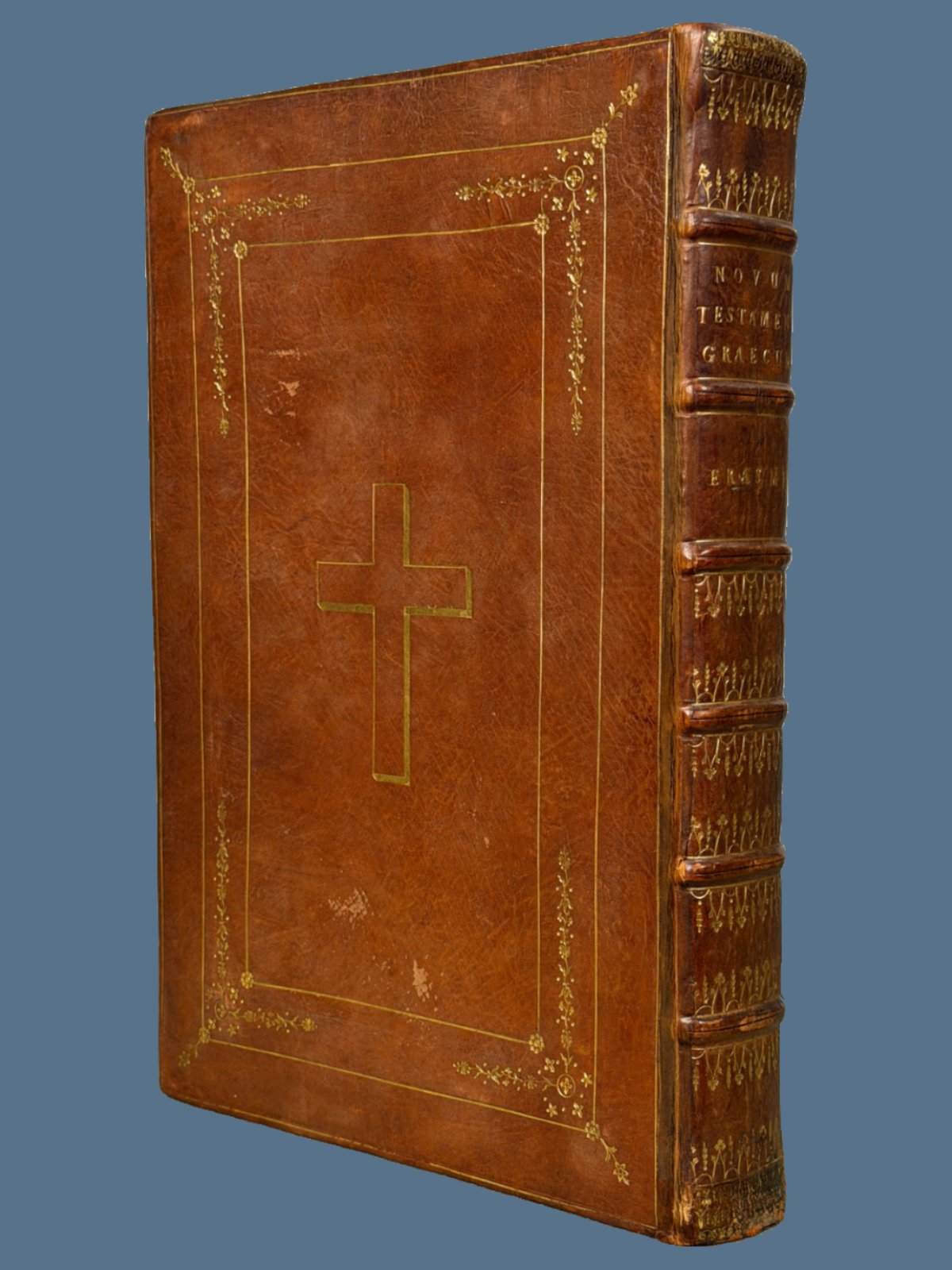
Rebacked brown goatskin by Roger Payne. Covers with double gilt panels featuring corner fleurons and drawer-handle tools around a cross centerpiece. Spine with six raised gilt-lined bands and gilt tooling to compartments with the words “Novum Testament Graecum” and “Erasmi” lettered in gilt. All edges gilt. Gilt turn-ins. Brown endpapers. Accompanied by brown buckram chemise and slipcase.
Condition
Scattered browning and infrequent staining; marginal worm track to final ten leaves; lower margin of title page strengthened; a clean and crisp copy.
Provenance
Signature of H. Plumpton to title page; Ed. Plumpton inscription with “1750 aetatis 16” to title page; inscription of William Foster Pigott, royal chaplain and fellow of Eton; bookplate of Thomas Brooke of Armitage Bridge; bookplate of Charles Ryrie.
Note
The 1519 edition greatly expands upon Erasmus’ first New Testament and corrects many typographical errors. Erasmus enlarged several sections with newly composed material and added the Lives of the Evangelists by Sophronius, introductions to the Gospels by Theophylact, and a letter from Pope Leo X expressing his pleasure that a second edition was being published.
In his three prefaces, Erasmus stressed the diligent study of the New Testament, argued that no layman or woman should be denied access to Scripture in the vernacular, and explained his desire to improve the Vulgate through closer adherence to the Greek originals. His first preface, the Paraclesis (“summons”), presents a compelling call to pursue the “philosophy of Christ” through the reading of Scripture. William Tyndale later referenced it in the preface to his Obedience of a Christian Man (1528).
Erasmus introduced roughly four hundred changes to the Vulgate text. One notable example appears in Gabriel’s greeting to Mary at the Annunciation (Luke 1:28). The traditional Vulgate reading, Ave gratia plena (“Hail, full of grace”), familiar from countless Books of Hours, was revised by Erasmus to Ave gratiosa (“Hail, gracious one” or “graceful one”). The former suggests a state of being filled with grace, whereas the latter implies grace already inherent within Mary.
Another significant revision concerns the preaching of John the Baptist in the wilderness (Matthew 3:2). Where the Vulgate reads penitentiam agite (“do penance”), Erasmus proposed resipiscite (“repent” or “be penitent”). The former implies an outward sacramental act associated with the Roman Church, while the latter emphasizes an inward spiritual turning toward God. This distinction carries significant doctrinal implications.
Erasmus’ translation of the Bible “formed the basis of the New Testament translations of both Luther and Tyndale and hence had profound influence on later Protestant versions of the Bible” (PMM).
References
D&M 4597; Adams B1680; USTC 678736; PMM 46 (1516 edition); De Hamel, Christopher. The Book. A History of the Bible; Daniel, David. The Bible in English.
This volume is included among Antique Bible’s notable sales of rare Bibles and historic manuscripts.