
 Image 1 of 19
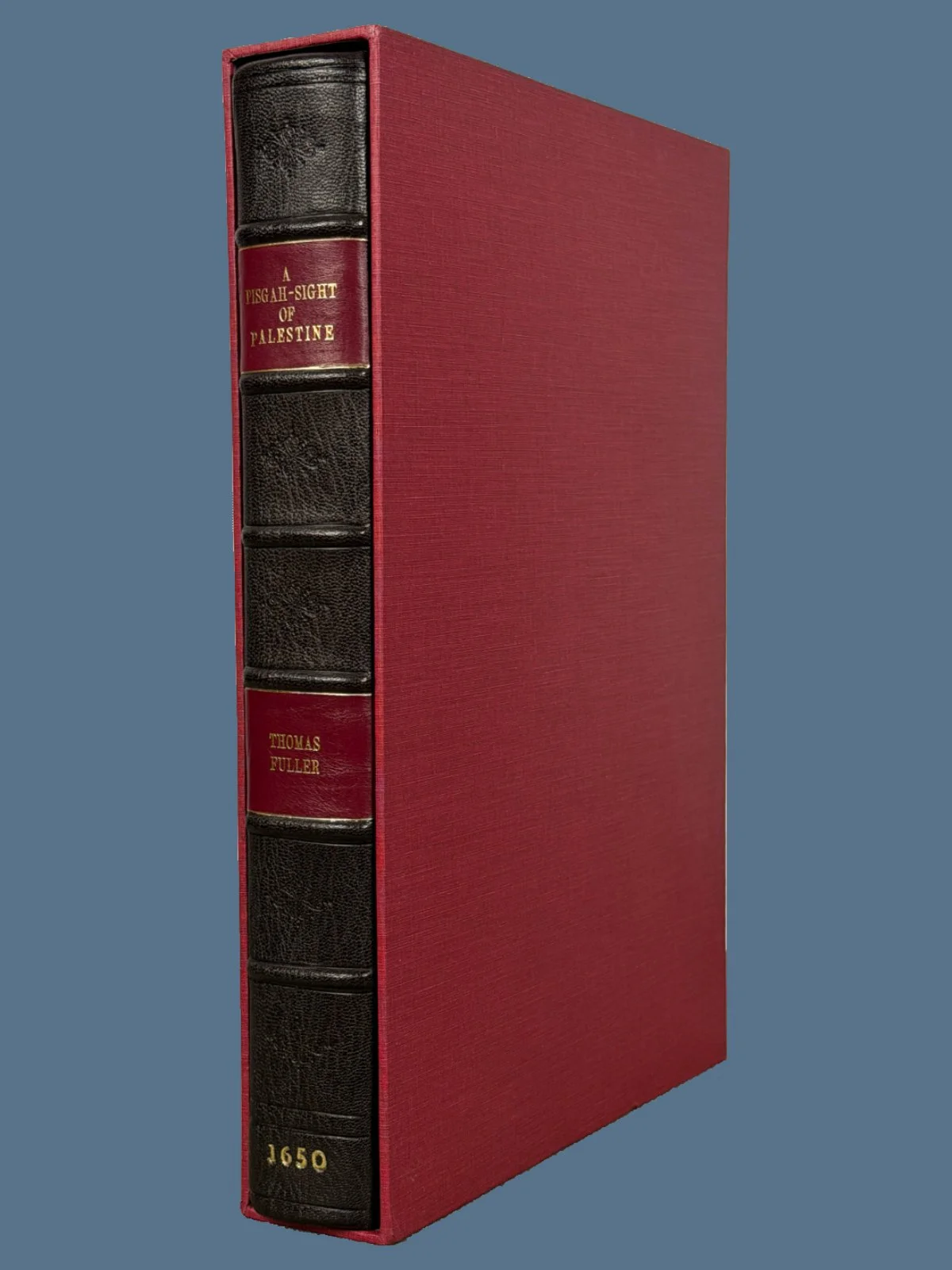 Image 2 of 19
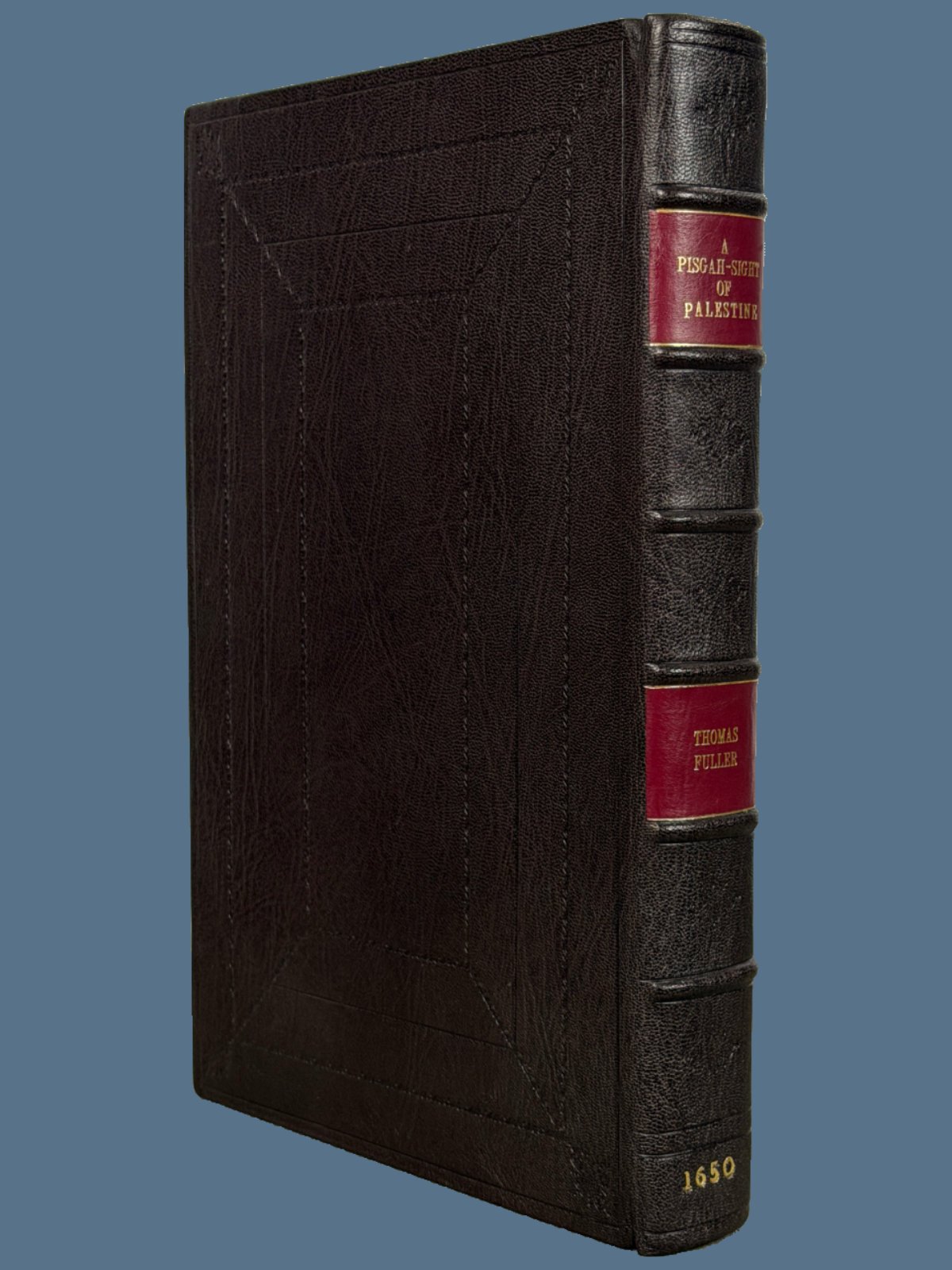 Image 3 of 19
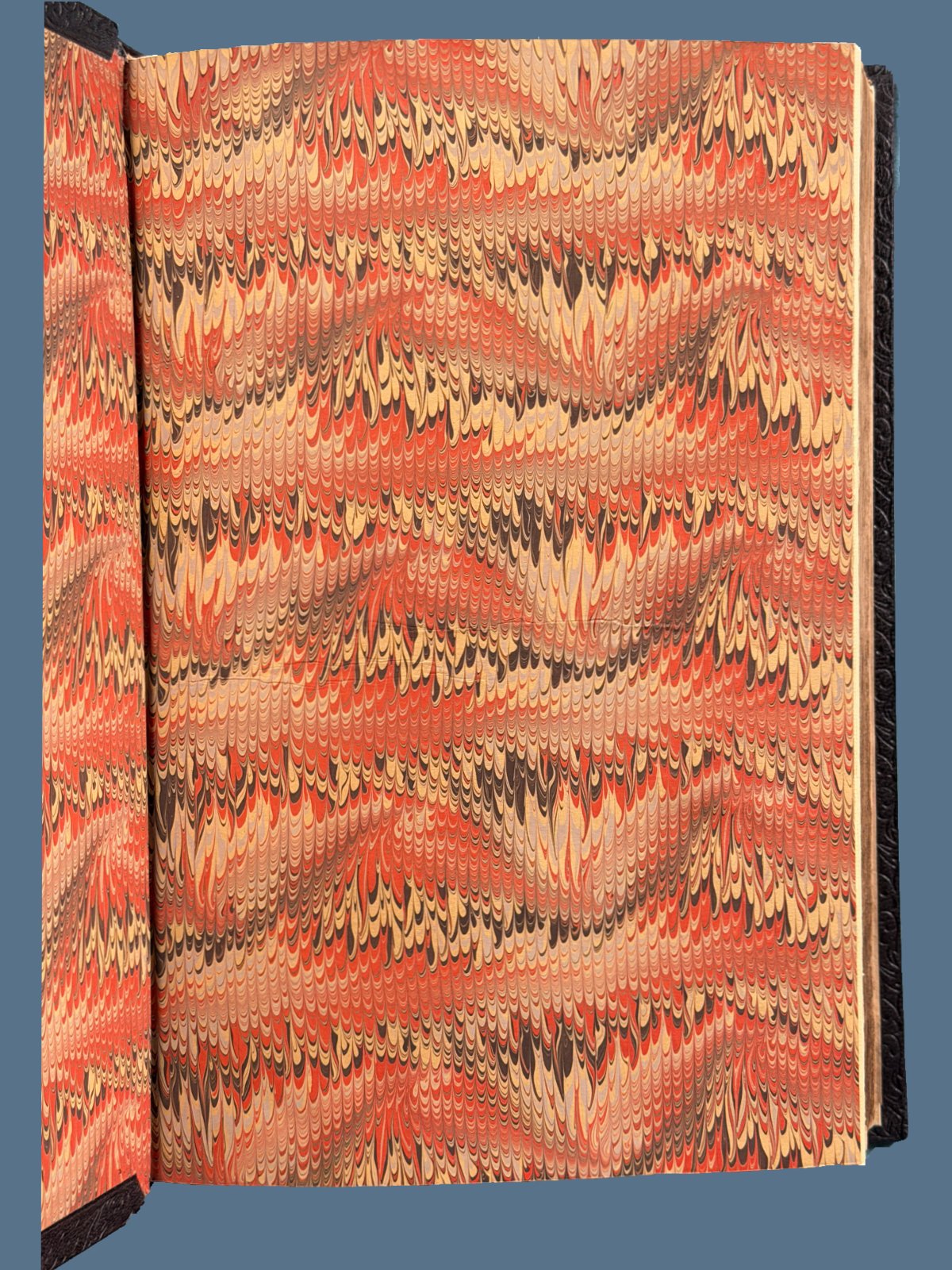 Image 4 of 19
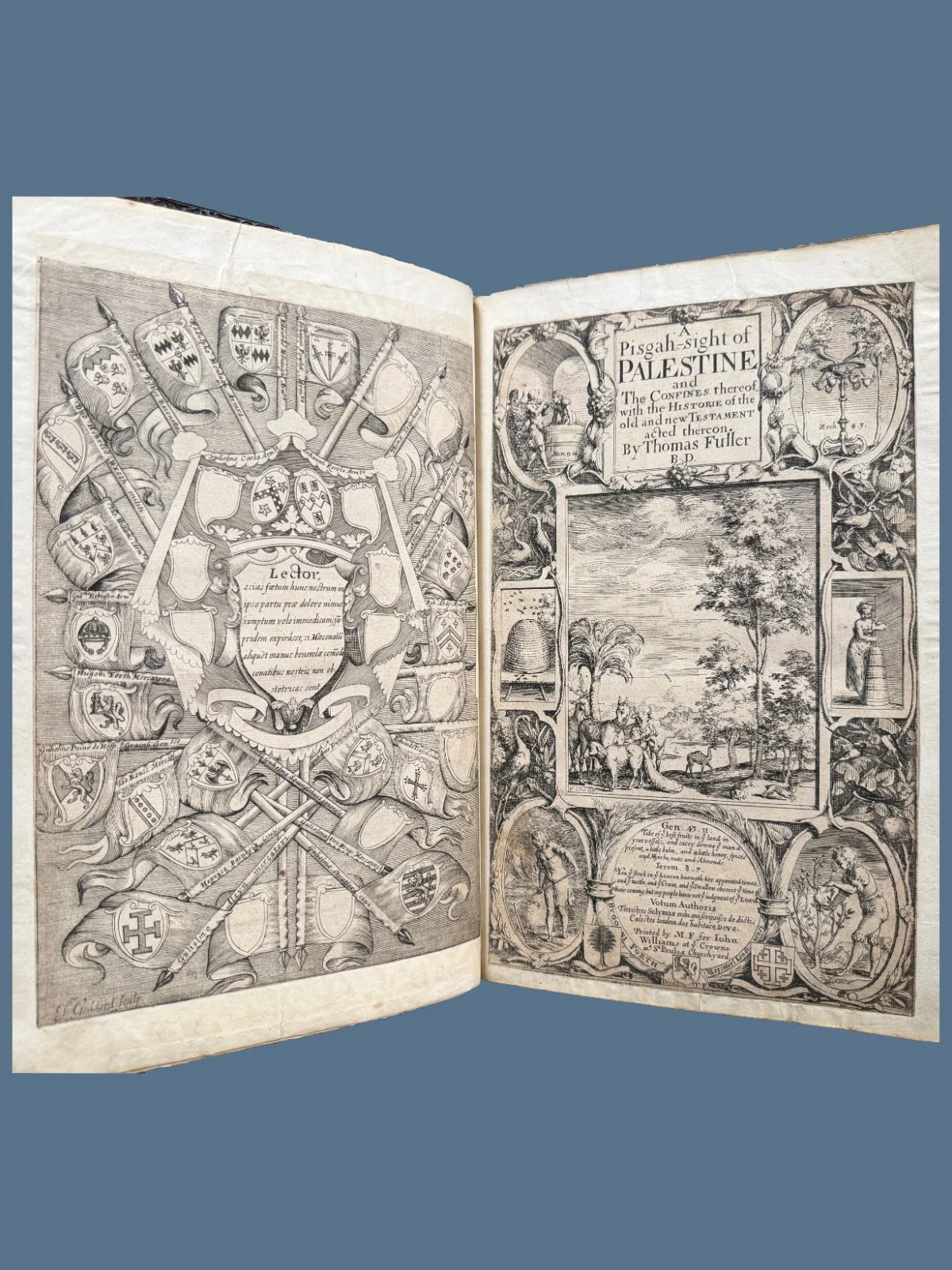 Image 5 of 19
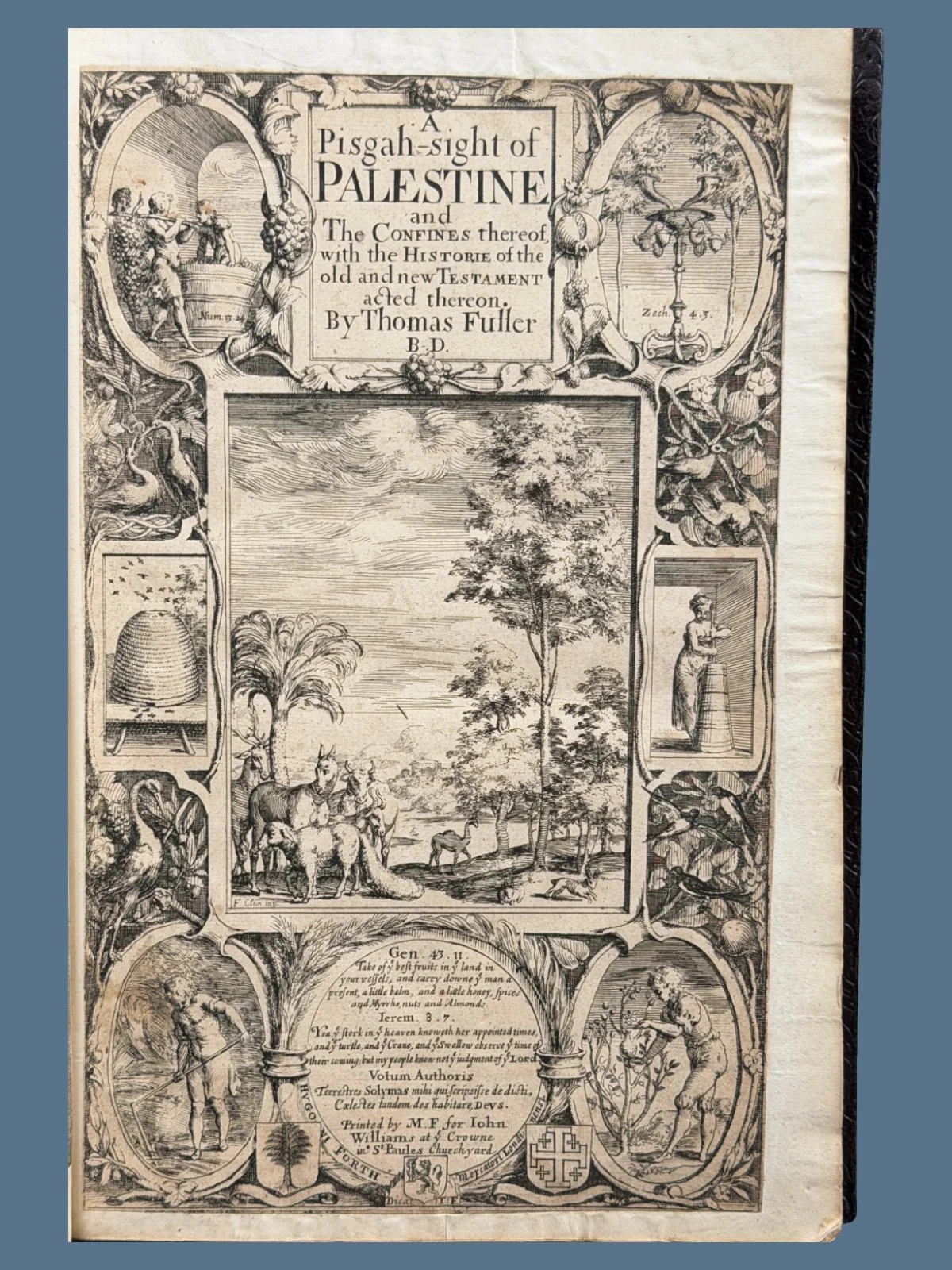 Image 6 of 19
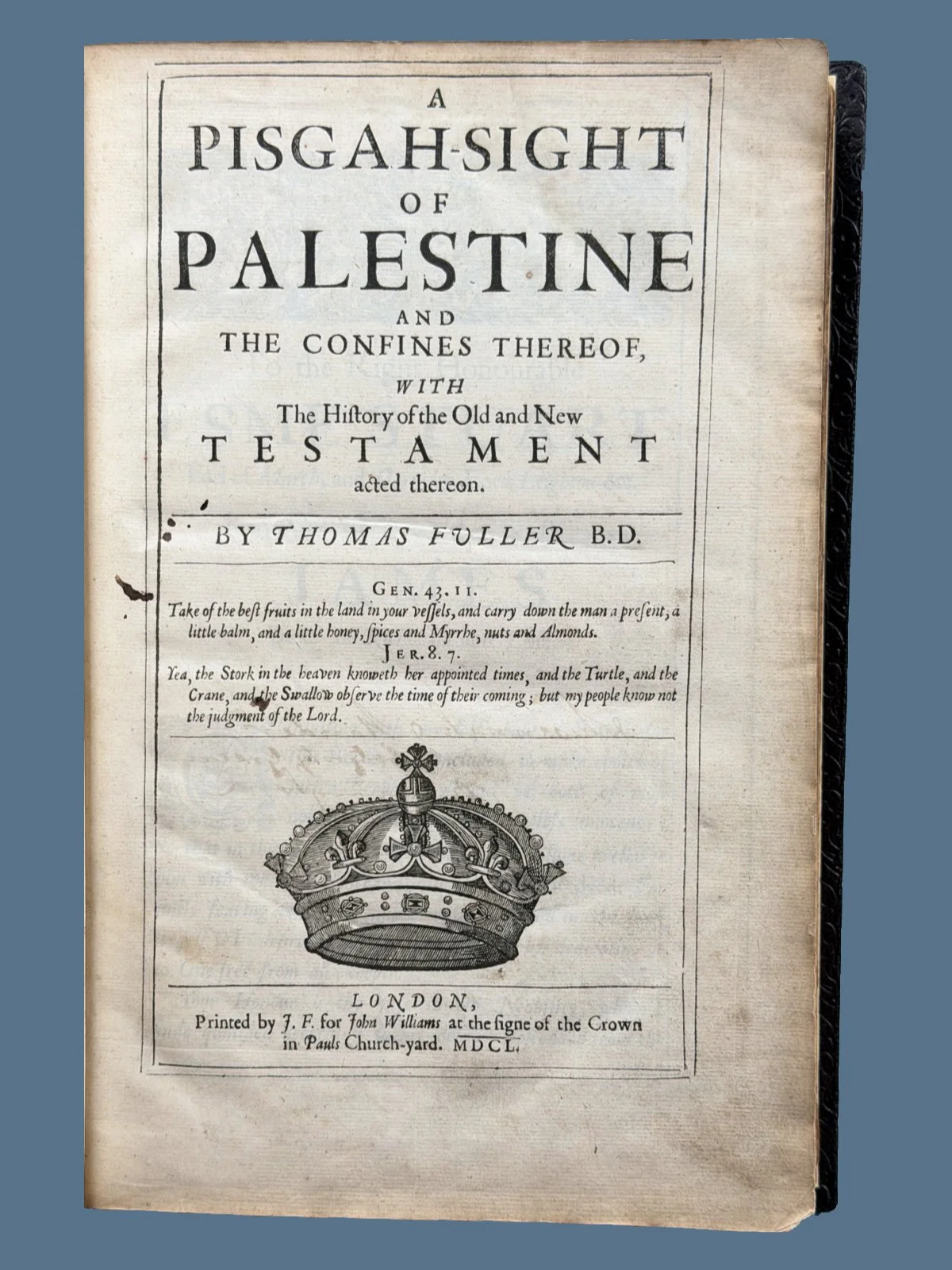 Image 7 of 19
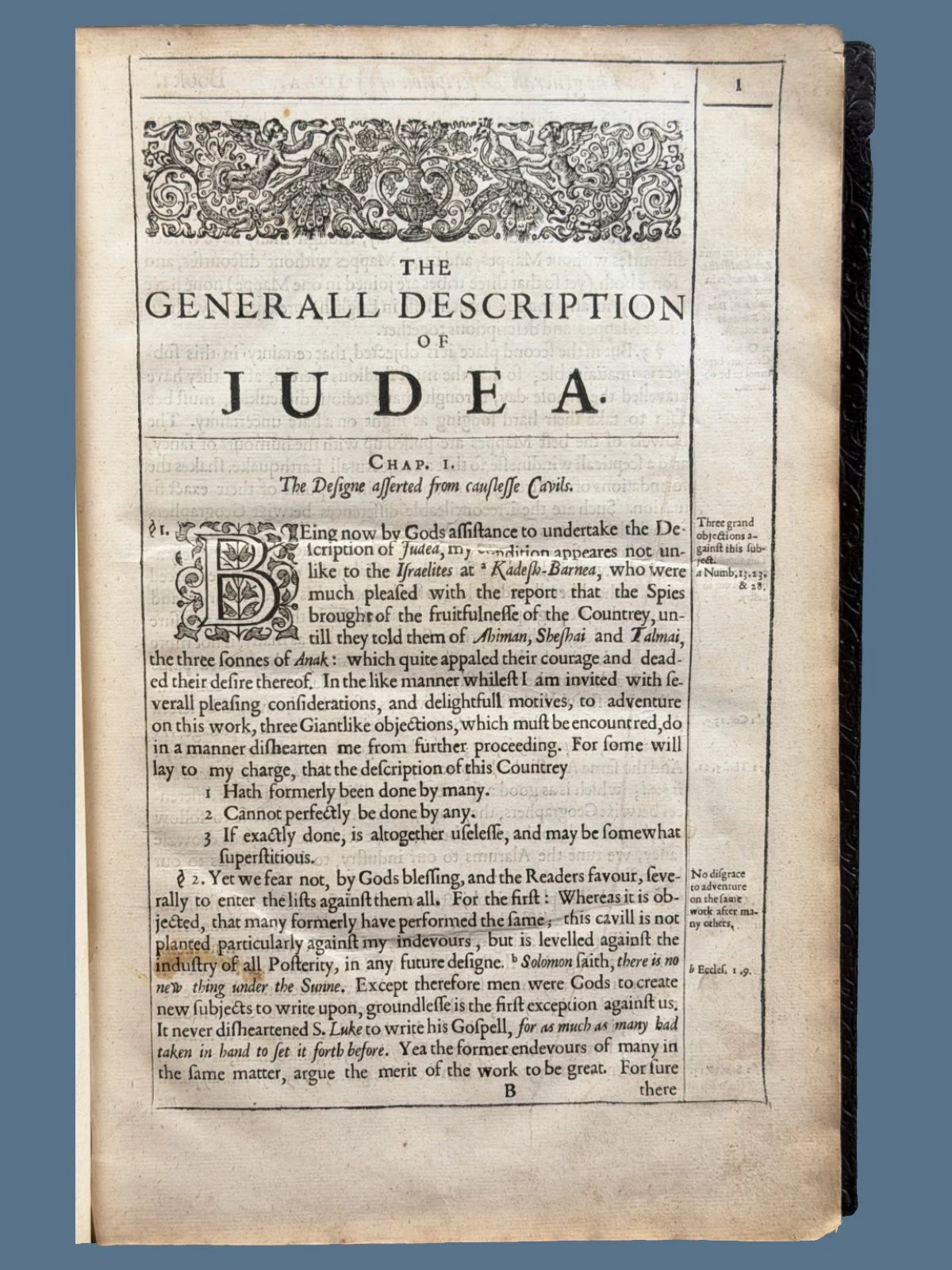 Image 8 of 19
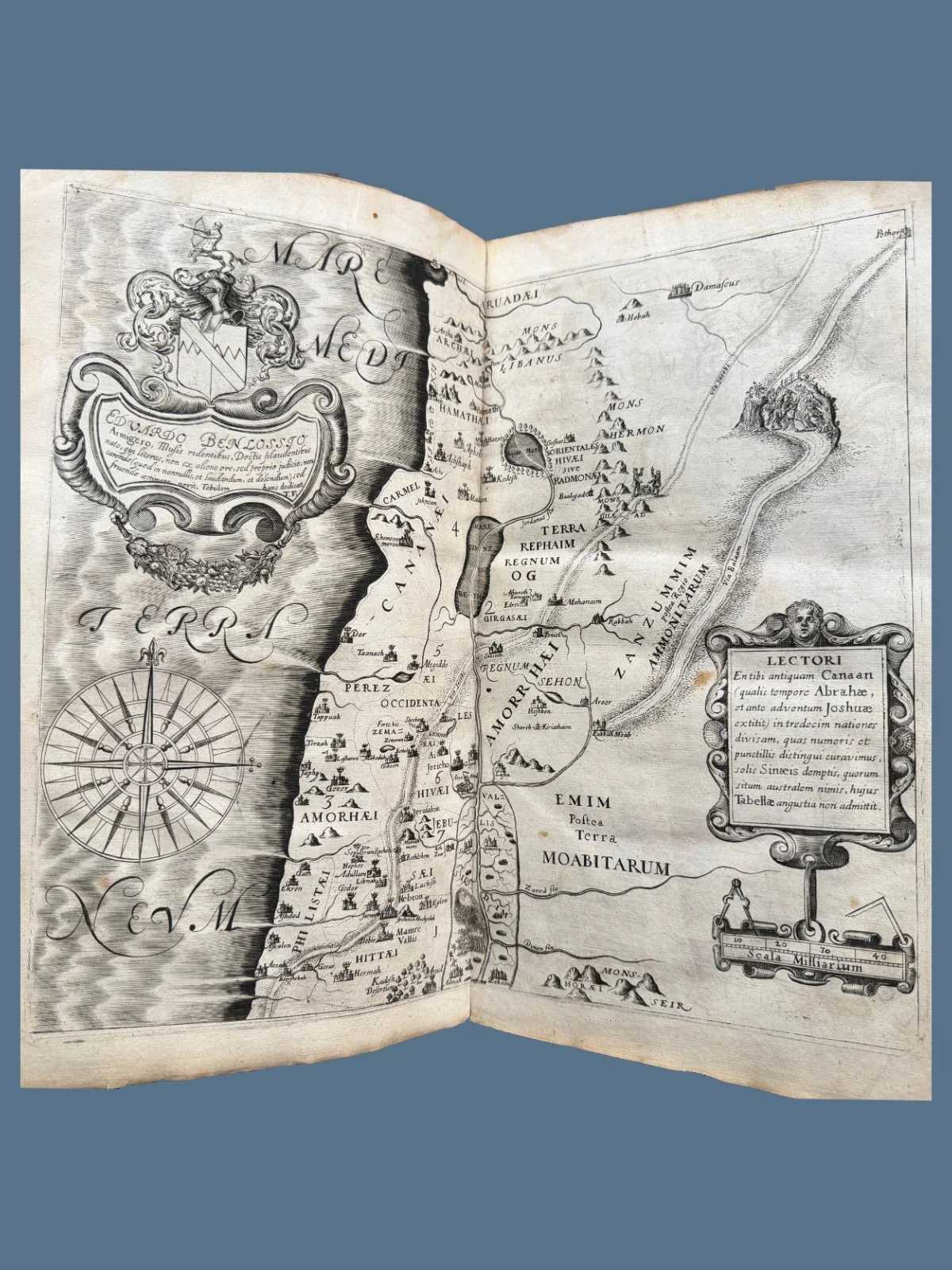 Image 9 of 19
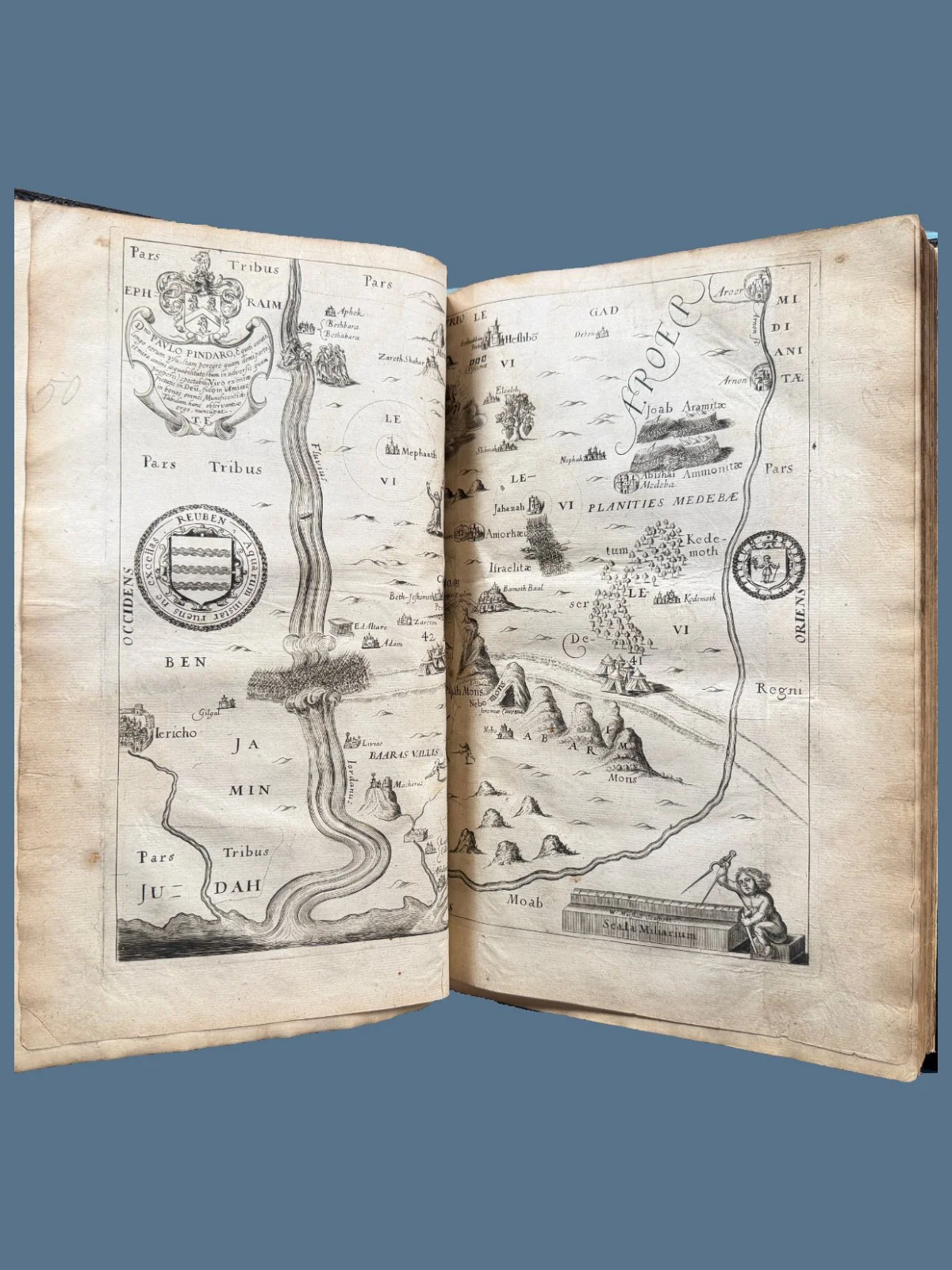 Image 10 of 19
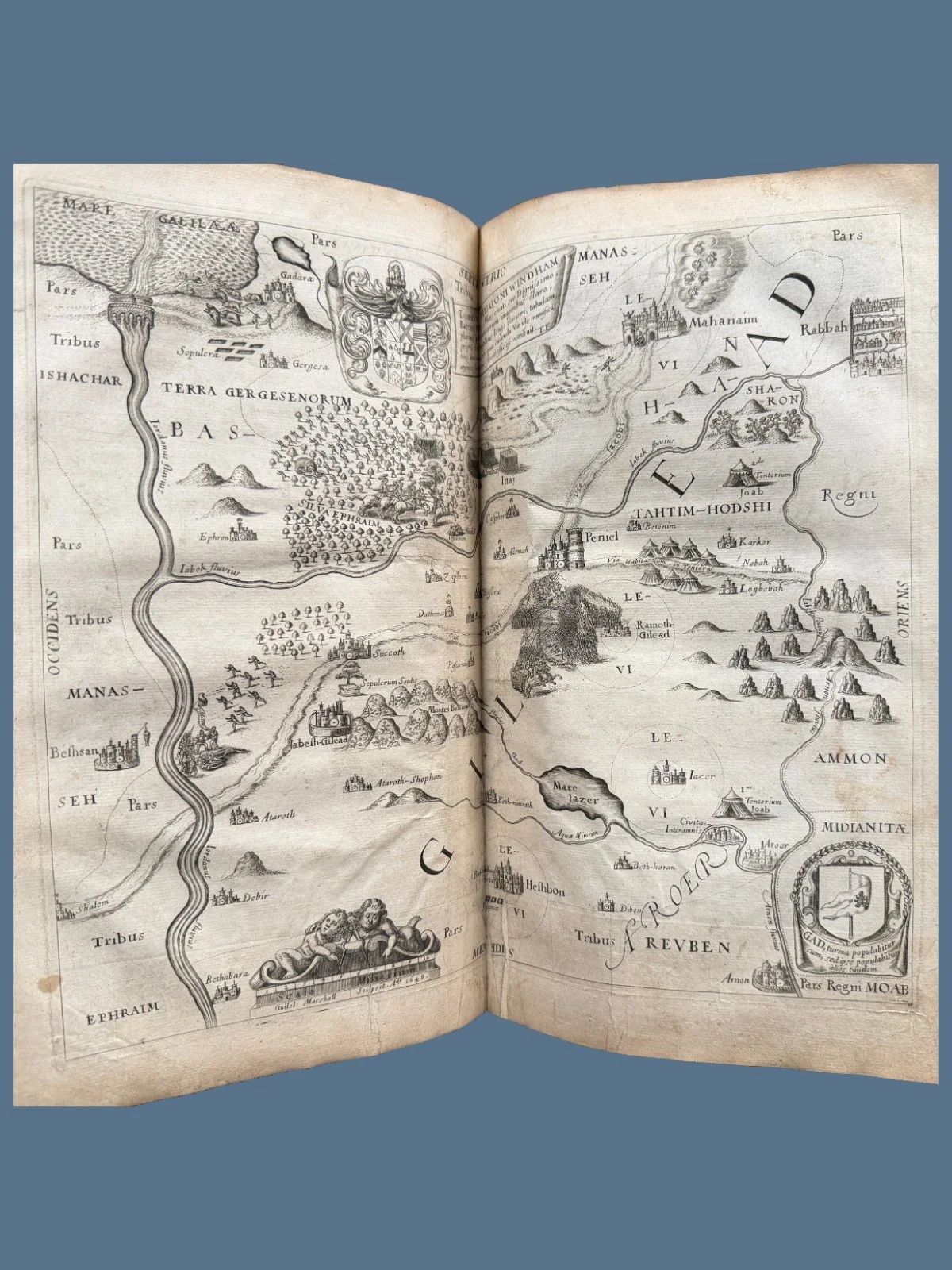 Image 11 of 19
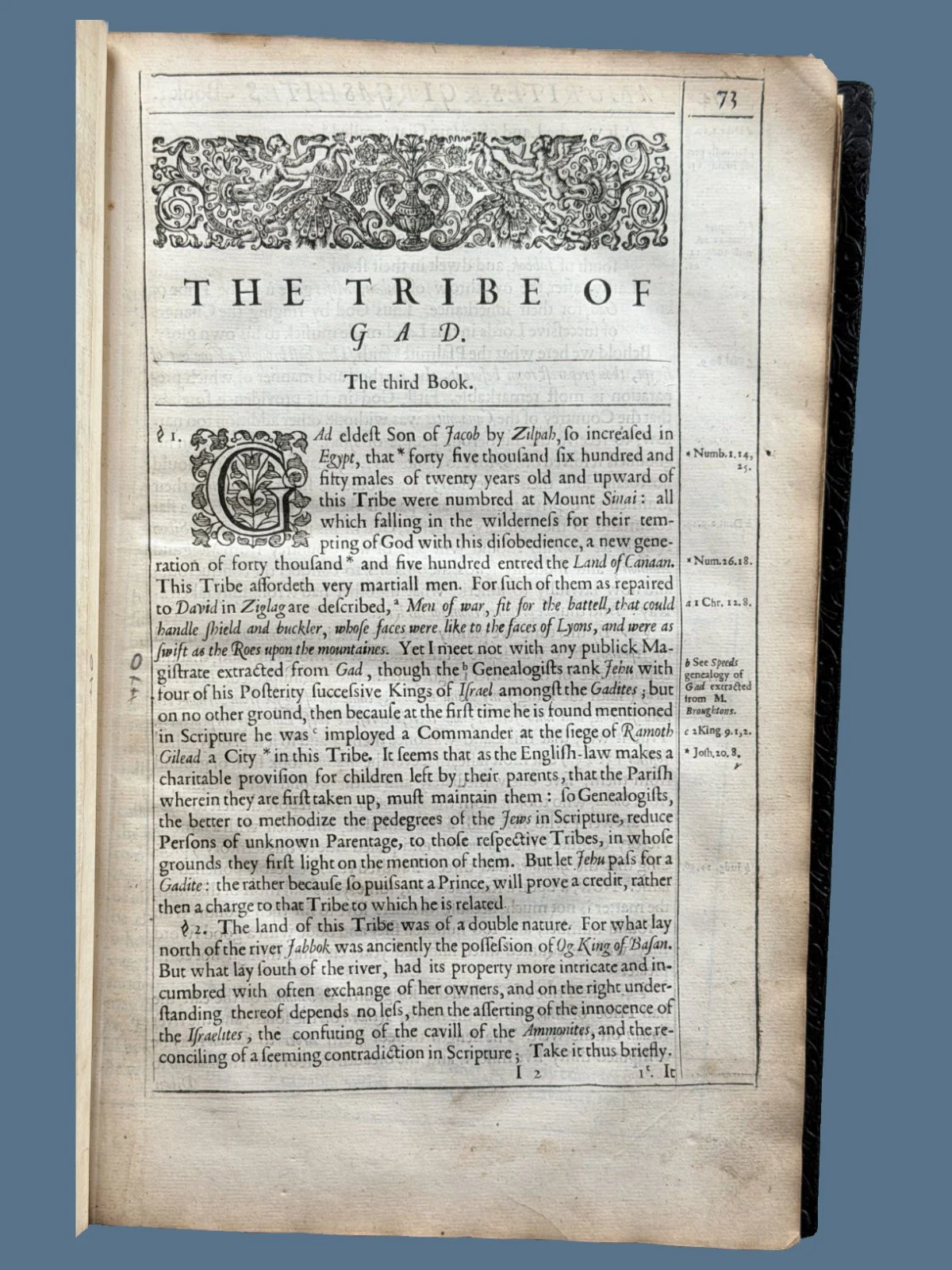 Image 12 of 19
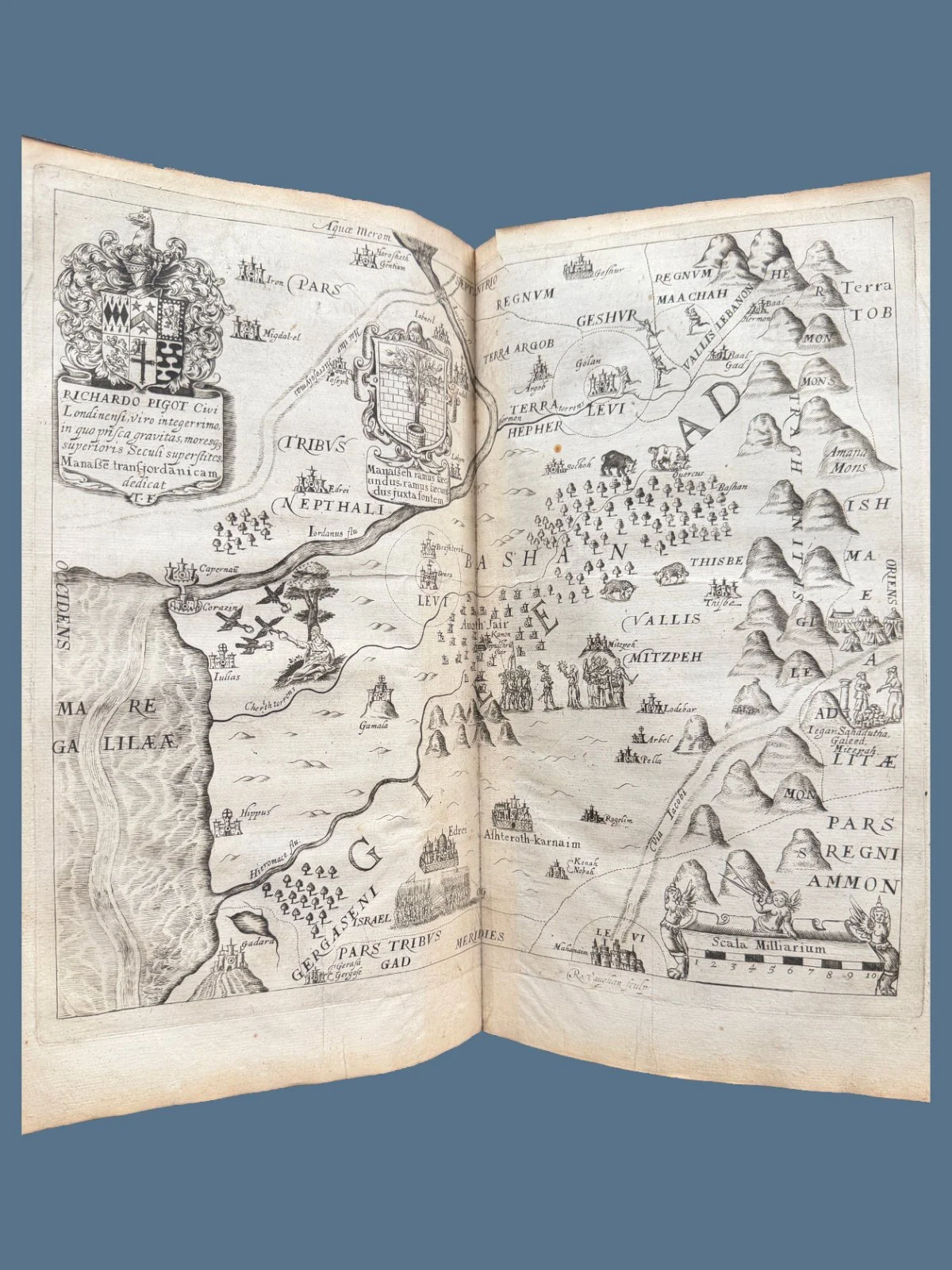 Image 13 of 19
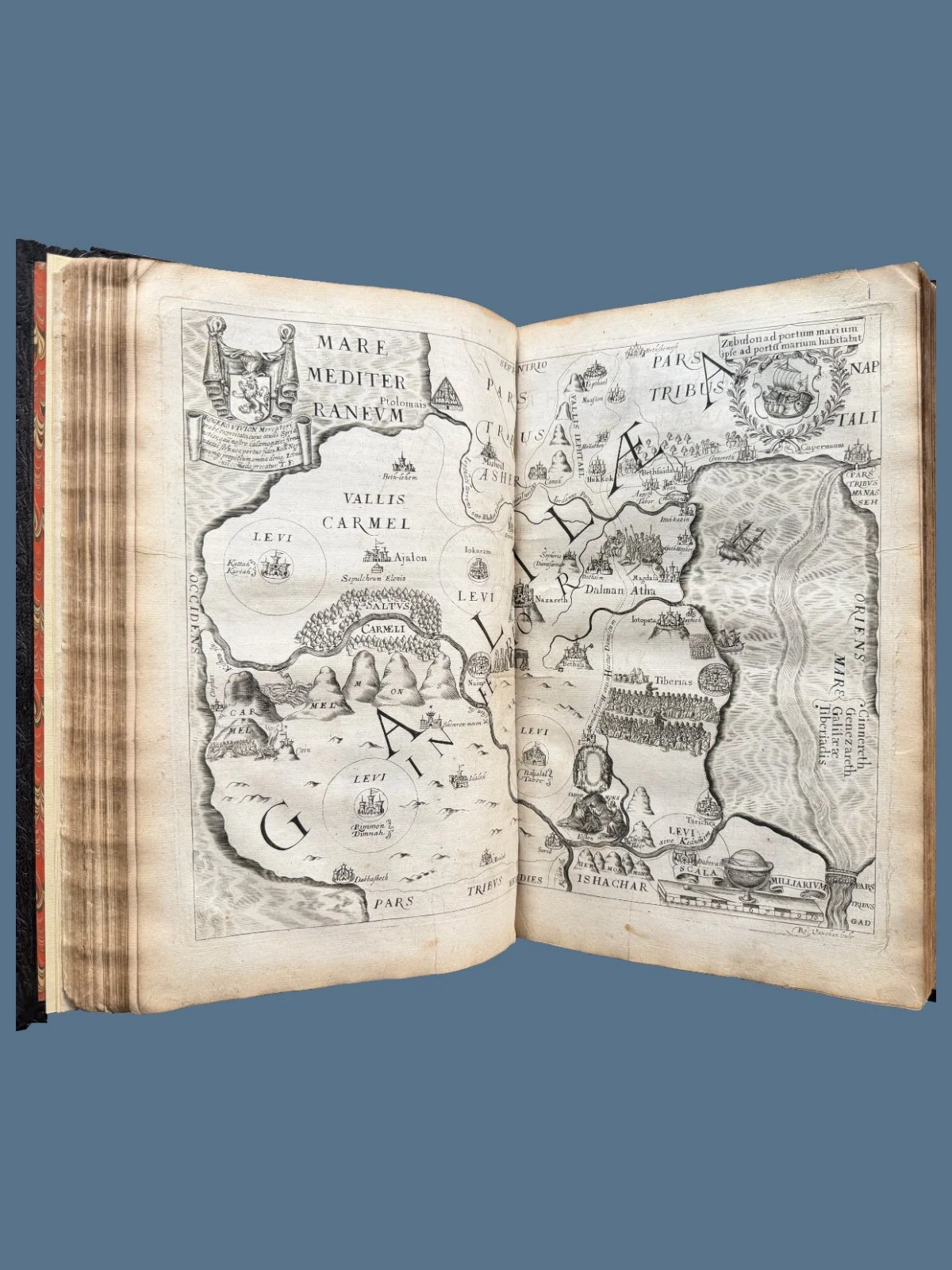 Image 14 of 19
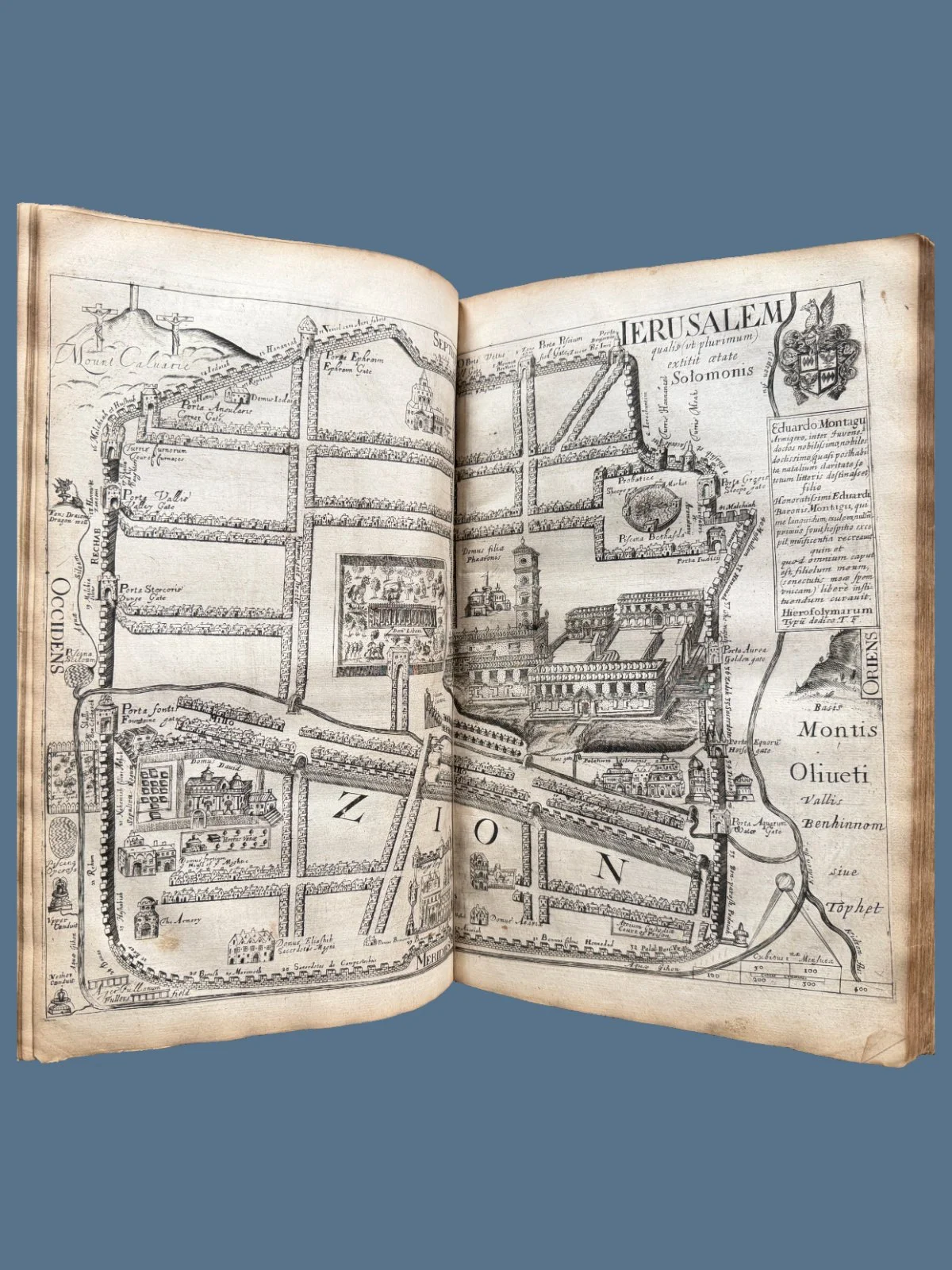 Image 15 of 19
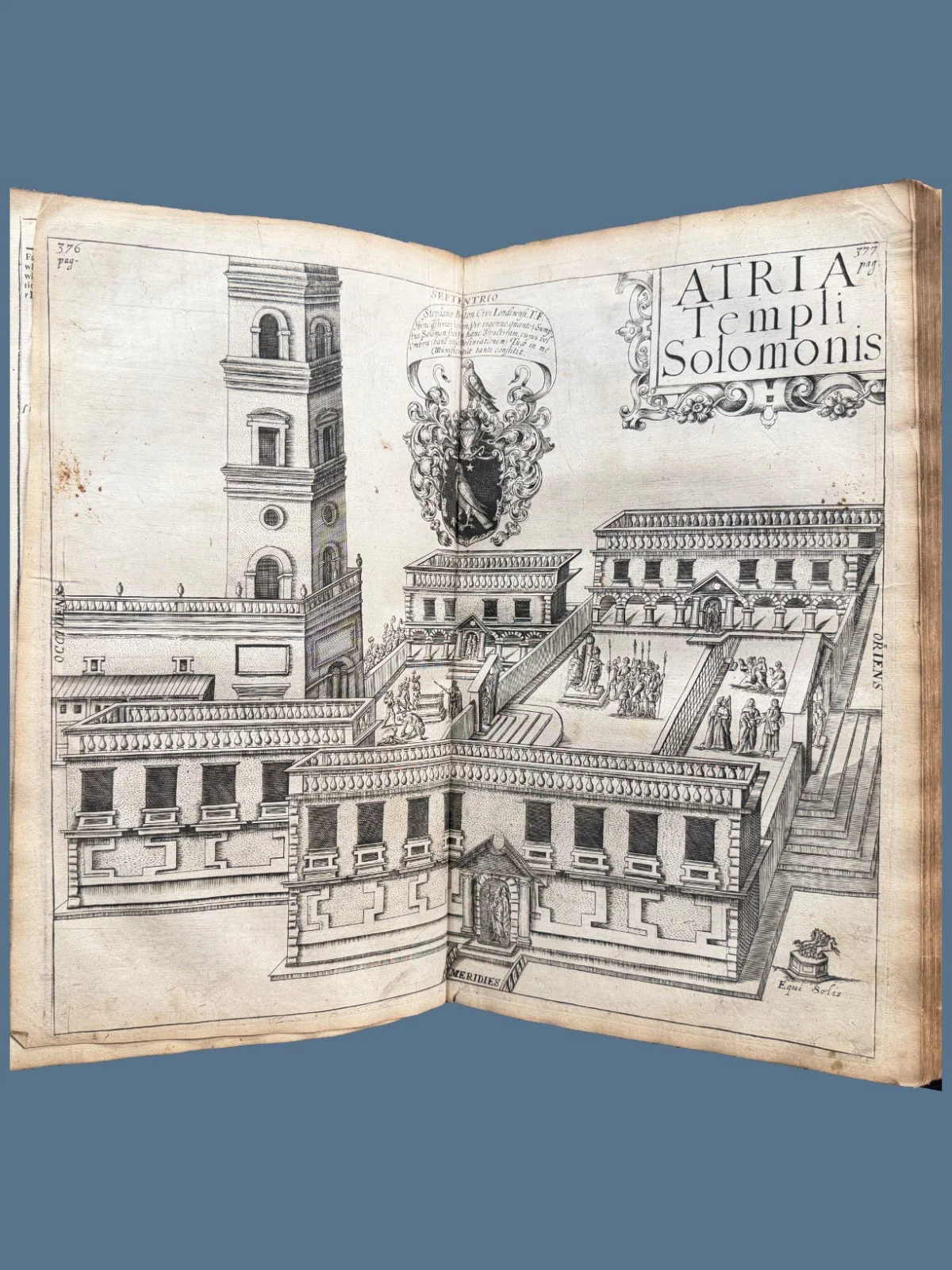 Image 16 of 19
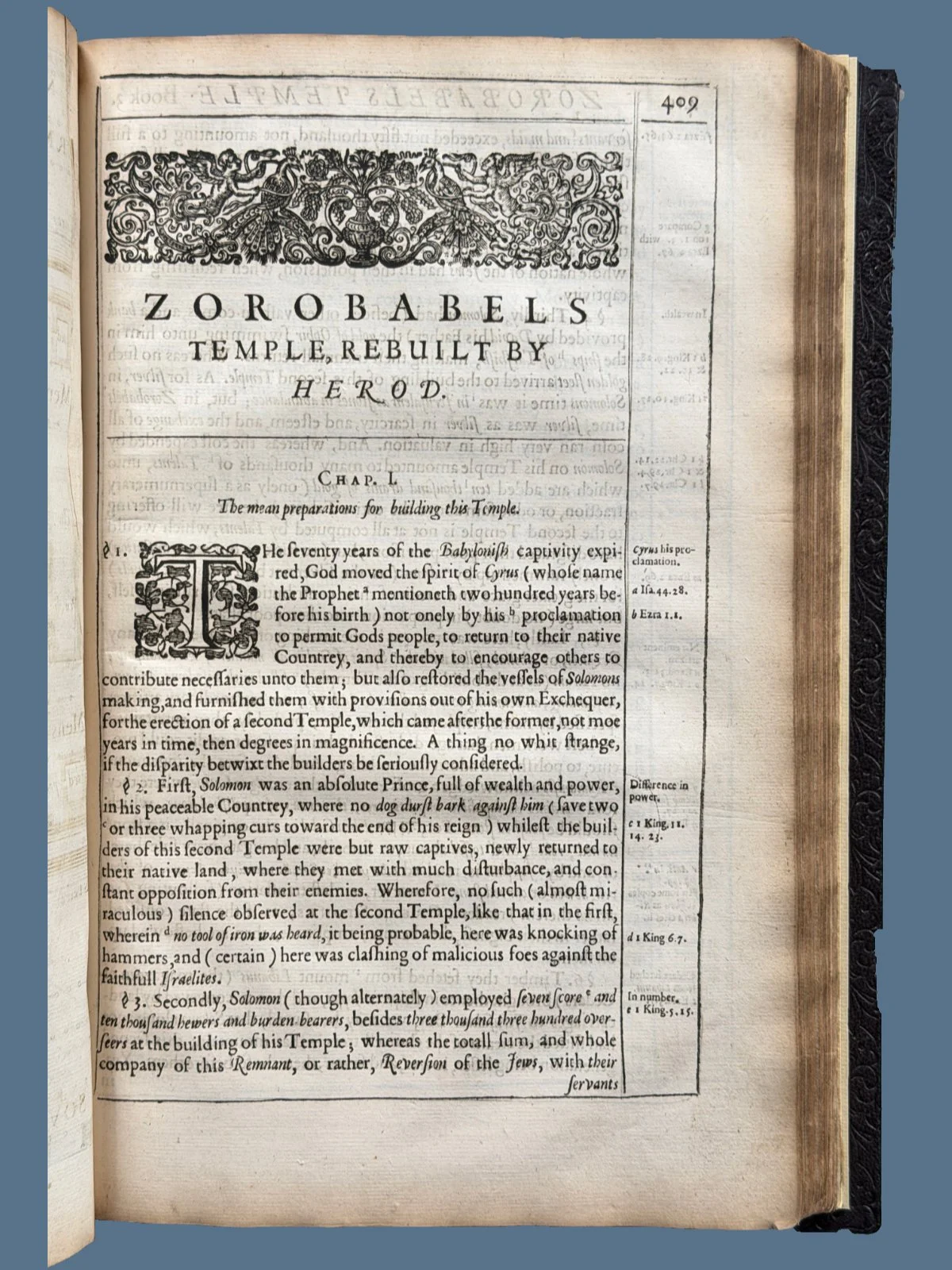 Image 17 of 19
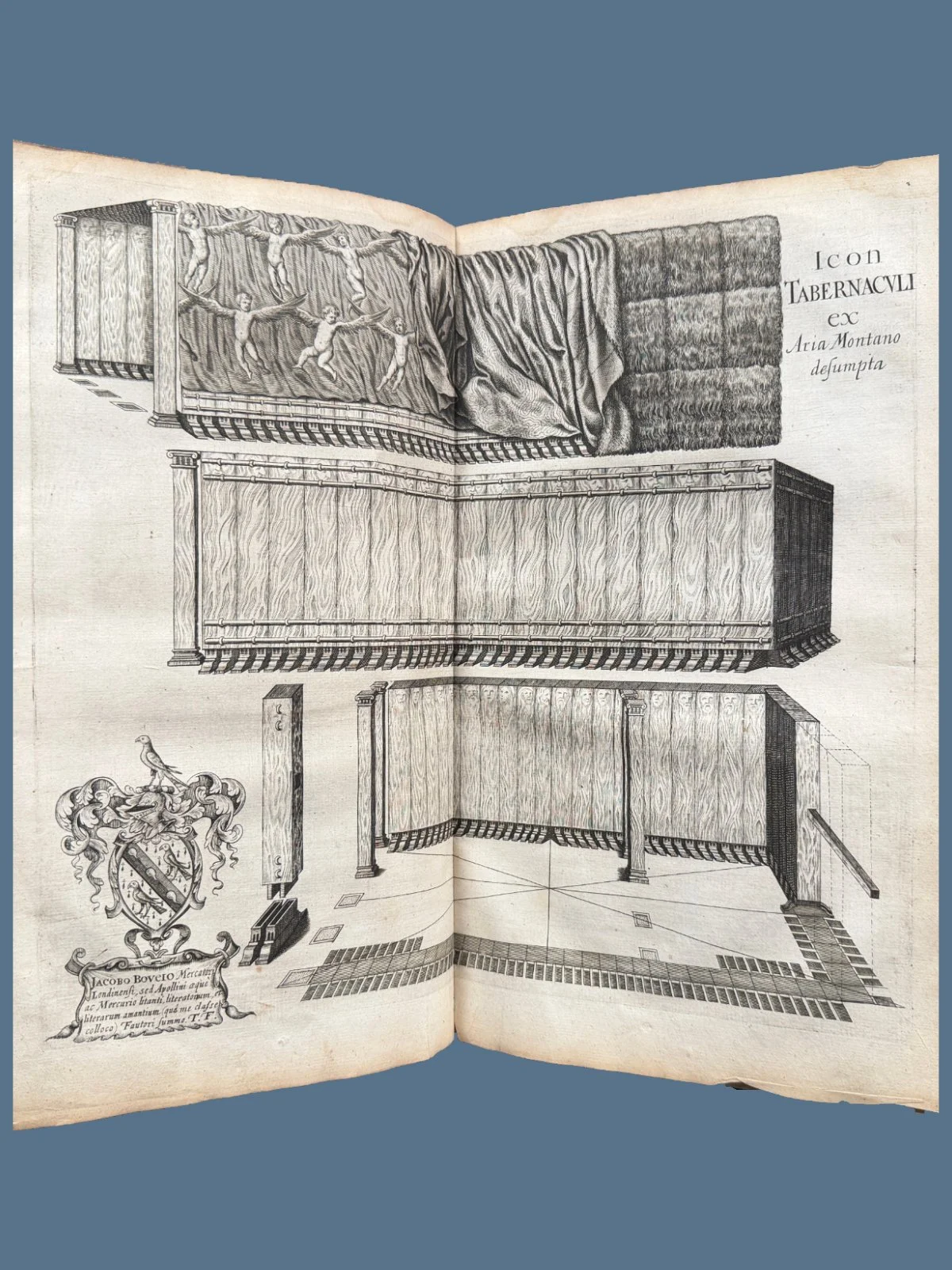 Image 18 of 19
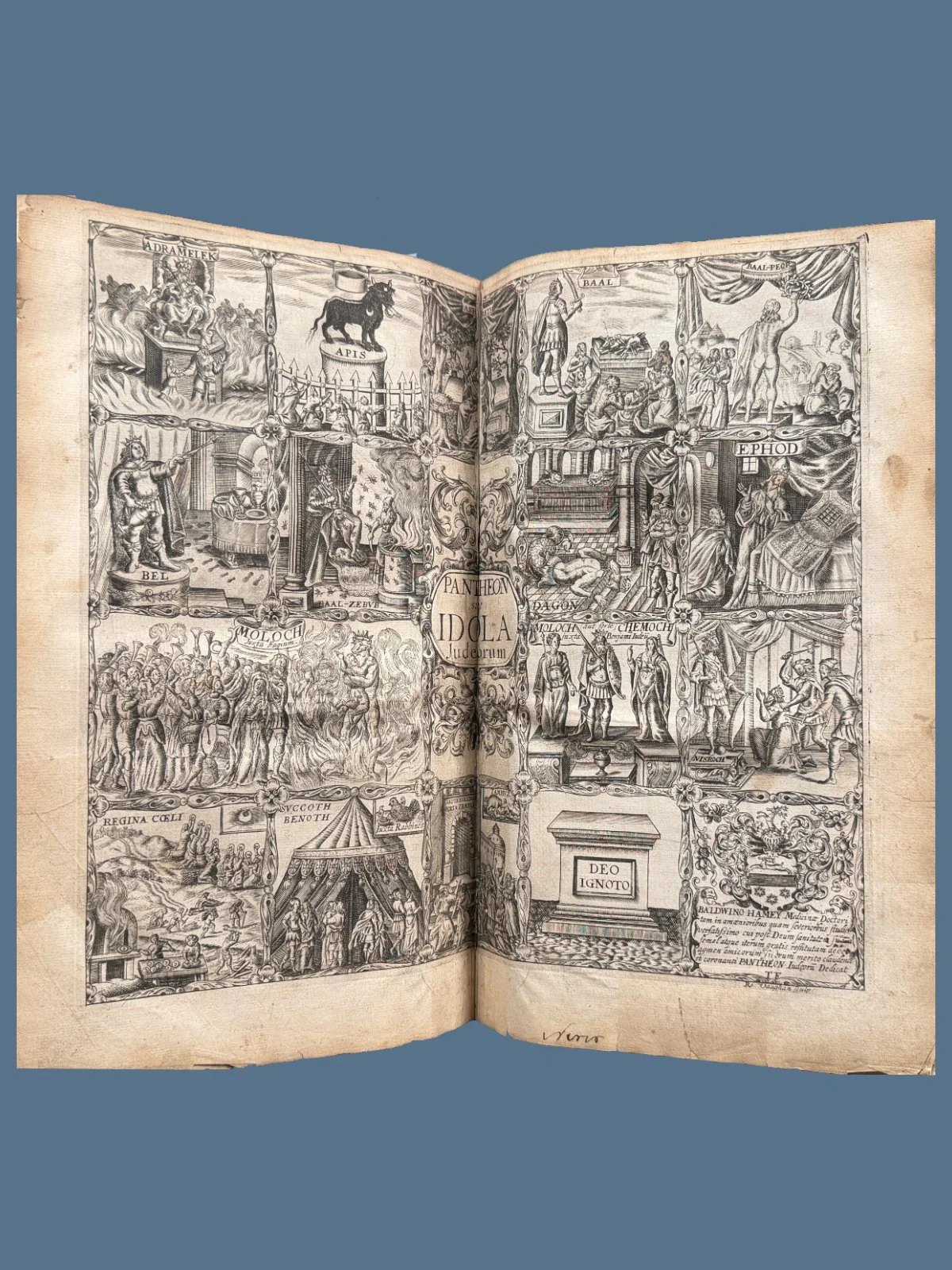 Image 19 of 19
A Pisgah-Sight of Palestine and the confines thereof, with the History of the Old and New Testament acted thereon.
Description
First edition. A richly illustrated biblical atlas and historical commentary that reconstructs the geography, sacred sites, and cultural world of the Holy Land as understood in the 17th century. The title is taken from Deuteronomy 31:1–4, which describes the moment shortly before the death of Moses when he was granted a view of the Promised Land from Pisgah, on Mount Nebo, though he was never permitted to enter it. Fuller combines 27 detailed two-page maps with plans of the Tabernacle and Temple, along with visual depictions of Jewish dress, idols, weights and measures, and heraldic elements. The maps chart key biblical regions and narratives, including the tribal allotments of Israel, Jerusalem, Judaea, Egypt, the wilderness of Paran, Moab, and other significant locations tied to Old Testament history. Accompanying text, in single column Roman font, integrates geography with biblical history and theological insight.
Collation
[unmarked]^2, A-F^4, G^6, H-Hh^4, Ii^6, Kk-Rr^4, Ss^6, Tt-Xx^4, Yy^6, Zz^2, Aaa-Bbbb^4. Text complete with all titles and 27 double-page plates. Lacks only the map of the Holy Land.
Binding
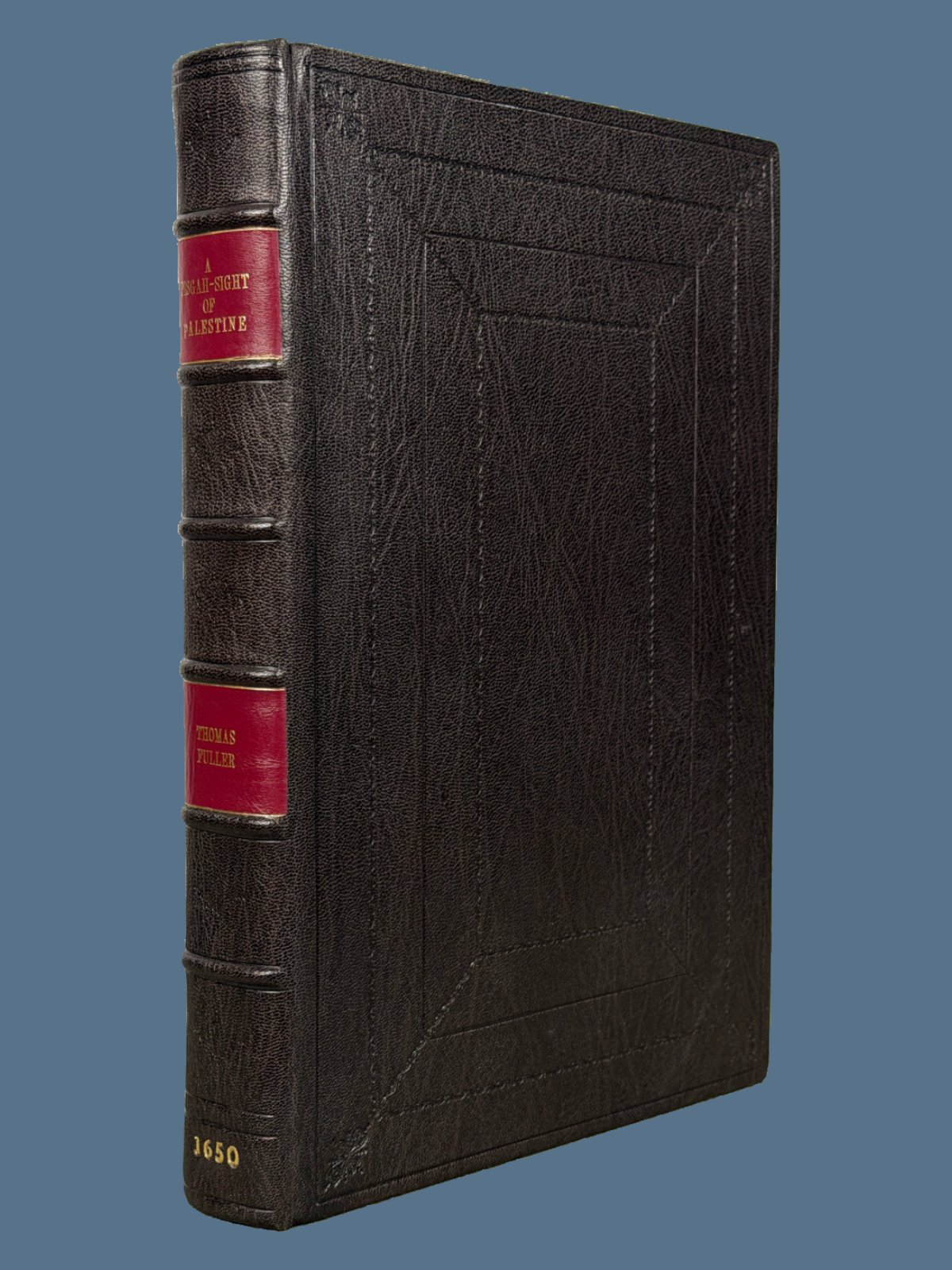
Rebound in dark paneled morocco. Boards with triple paneled border design in blind featuring corner fleurons. Spine with six raised bands and two red gilt-lined morocco labels with the words “A Pisgah-sight of Palestine” and “Thomas Fuller” lettered in gilt, with date to foot. Marbled endpapers. Inner dentelles.
Condition
Some toning, light soiling, and infrequent occasional stains, but clean overall. Engraved frontispiece and title trimmed to borders and remargined; Map of Ephraim cropped to margins; a few others with short and closed tears and infrequent fraying to edges; Hh2 lower closed marginal tear.
Provenance
Note on first leaf reads “Henry Mander and Susannah Bullock were married 1804.” Note on final leaf reads “This book was bequeathed to John Perry by his aunt Mrs. William Rennie Birmingham as part of the legacy she left him… Oct 22 1871.”
Note
Thomas Fuller, an English churchman and historian, produced Pisgah-Sight during a period of religious and political instability in mid-17th-century England. Drawing on biblical, classical, and earlier cartographic sources, he sought to create a teaching tool that would help readers better understand Scripture through geography and imagery. His approach reflects both scholarly rigor and a pastoral aim to illuminate the Bible for a broad audience, using a lively and often witty prose.
References
ESTC R18096;Wing F2455.