
 Image 1 of 18
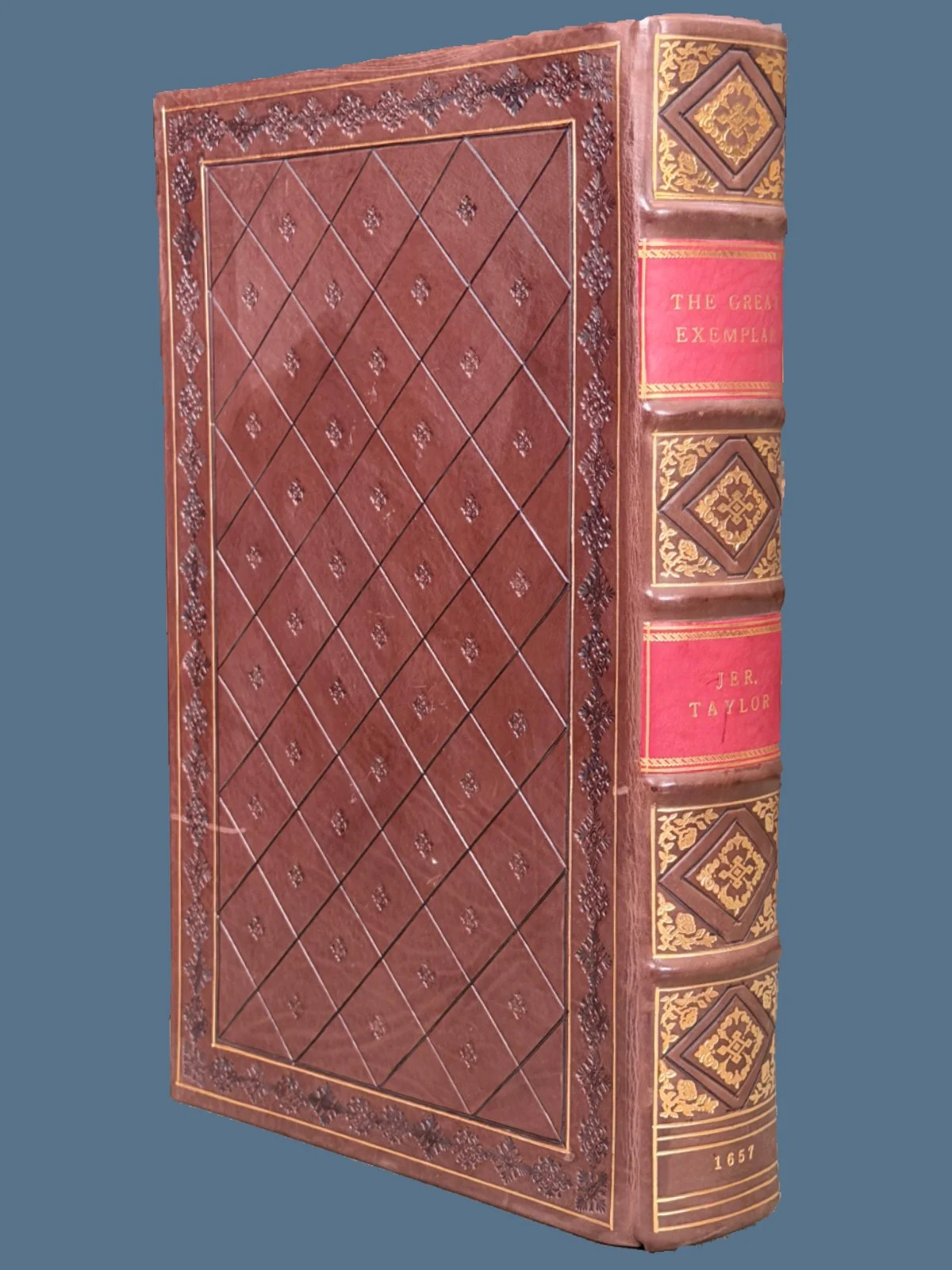 Image 2 of 18
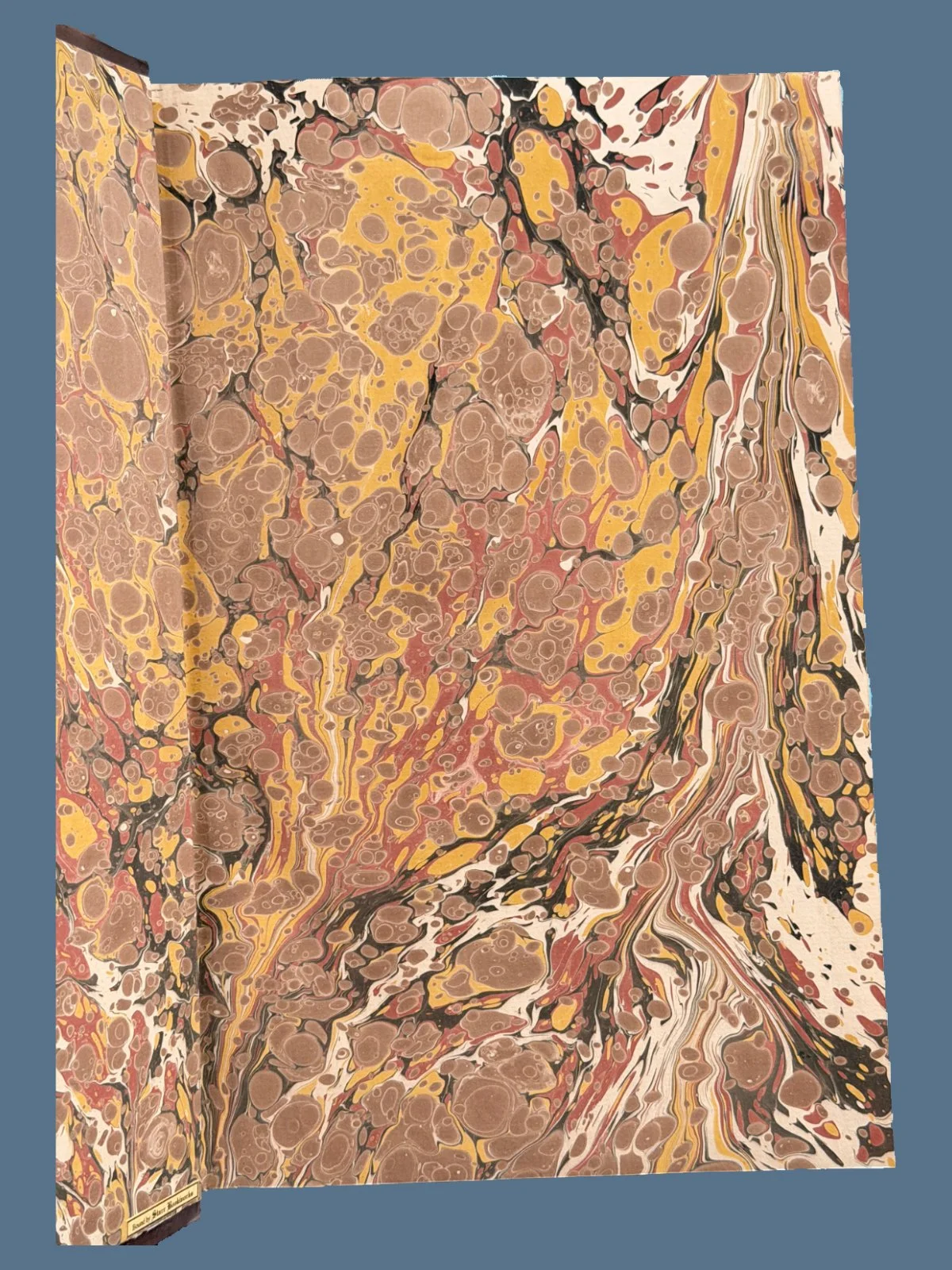 Image 3 of 18
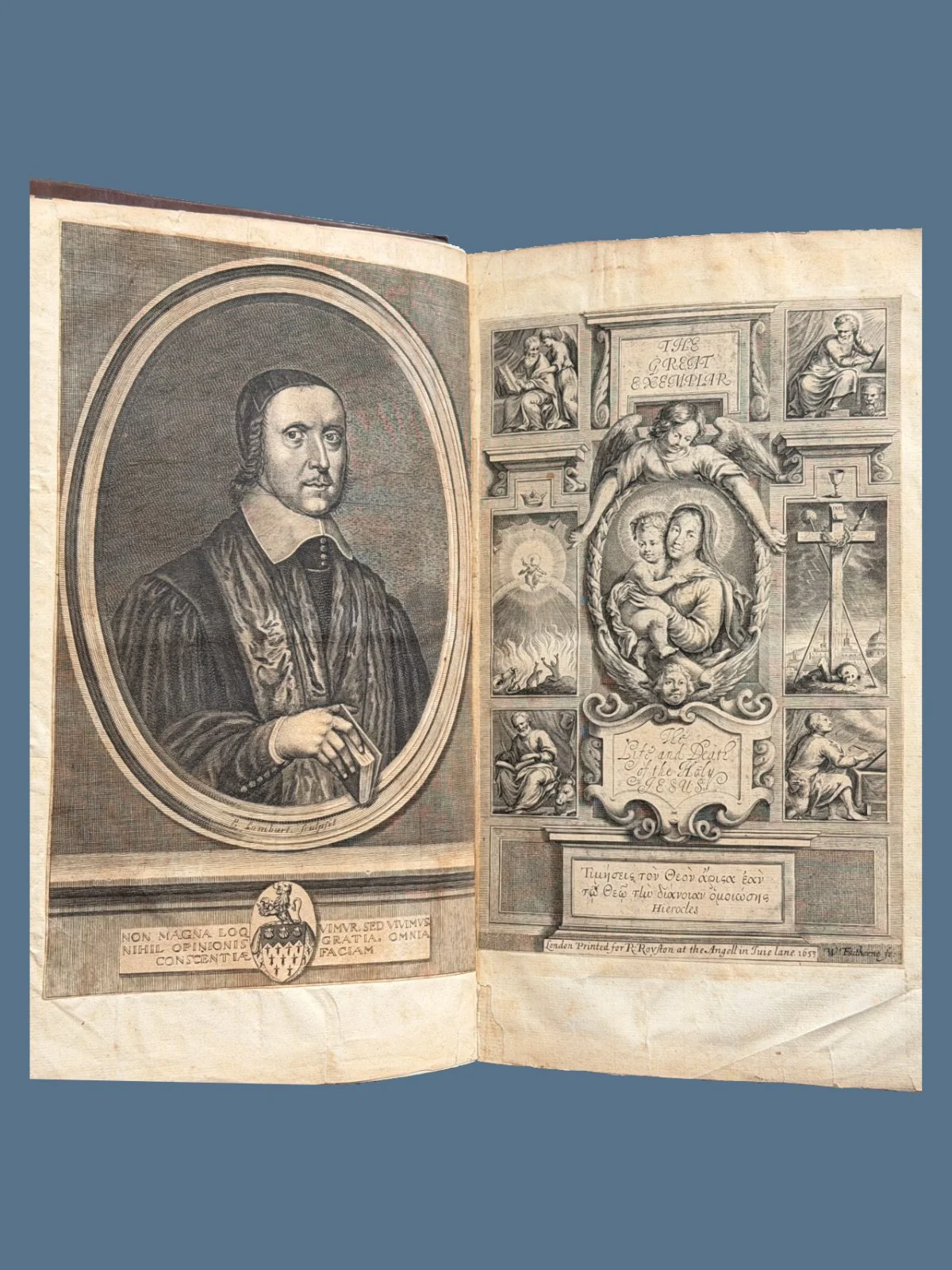 Image 4 of 18
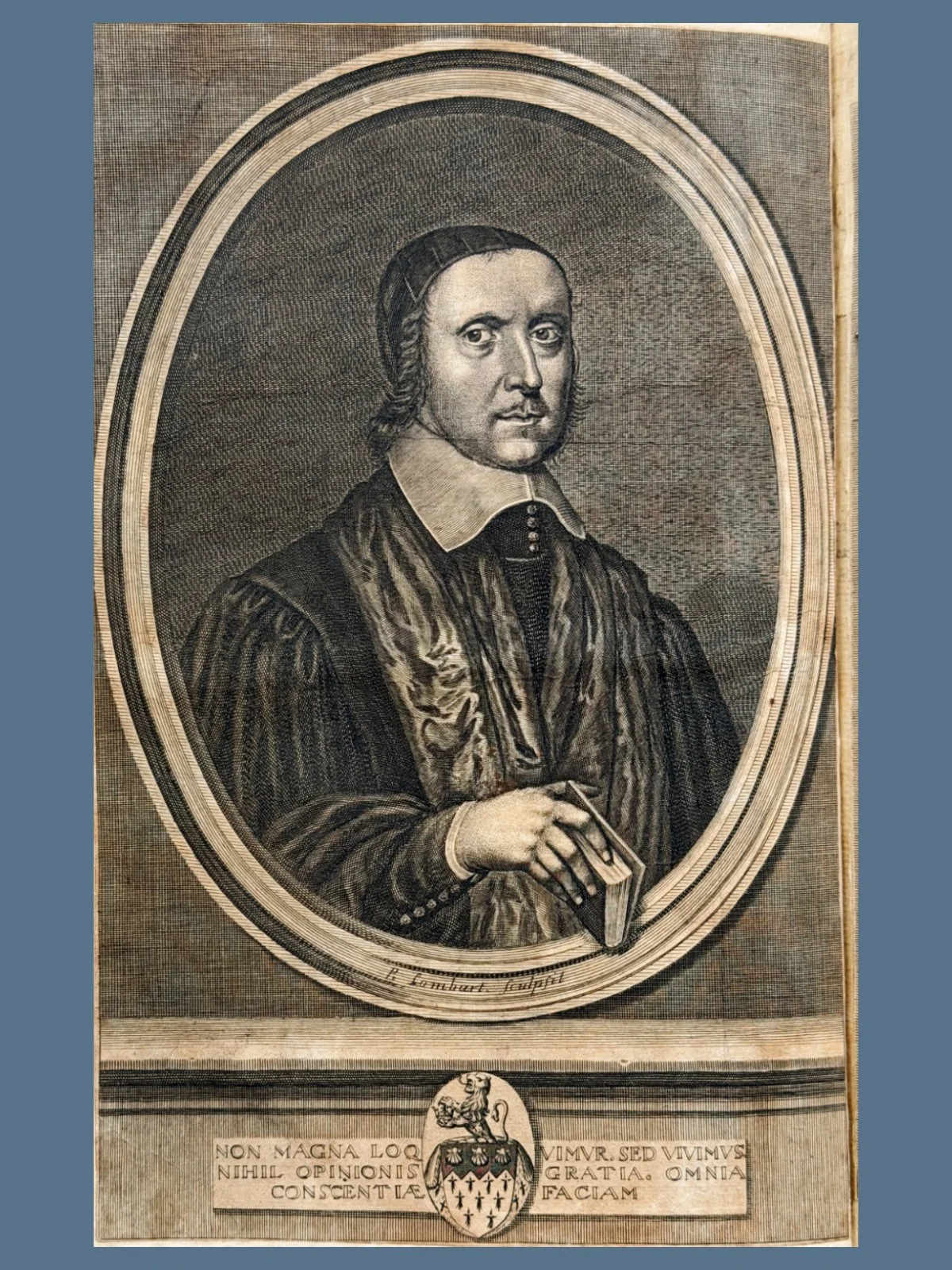 Image 5 of 18
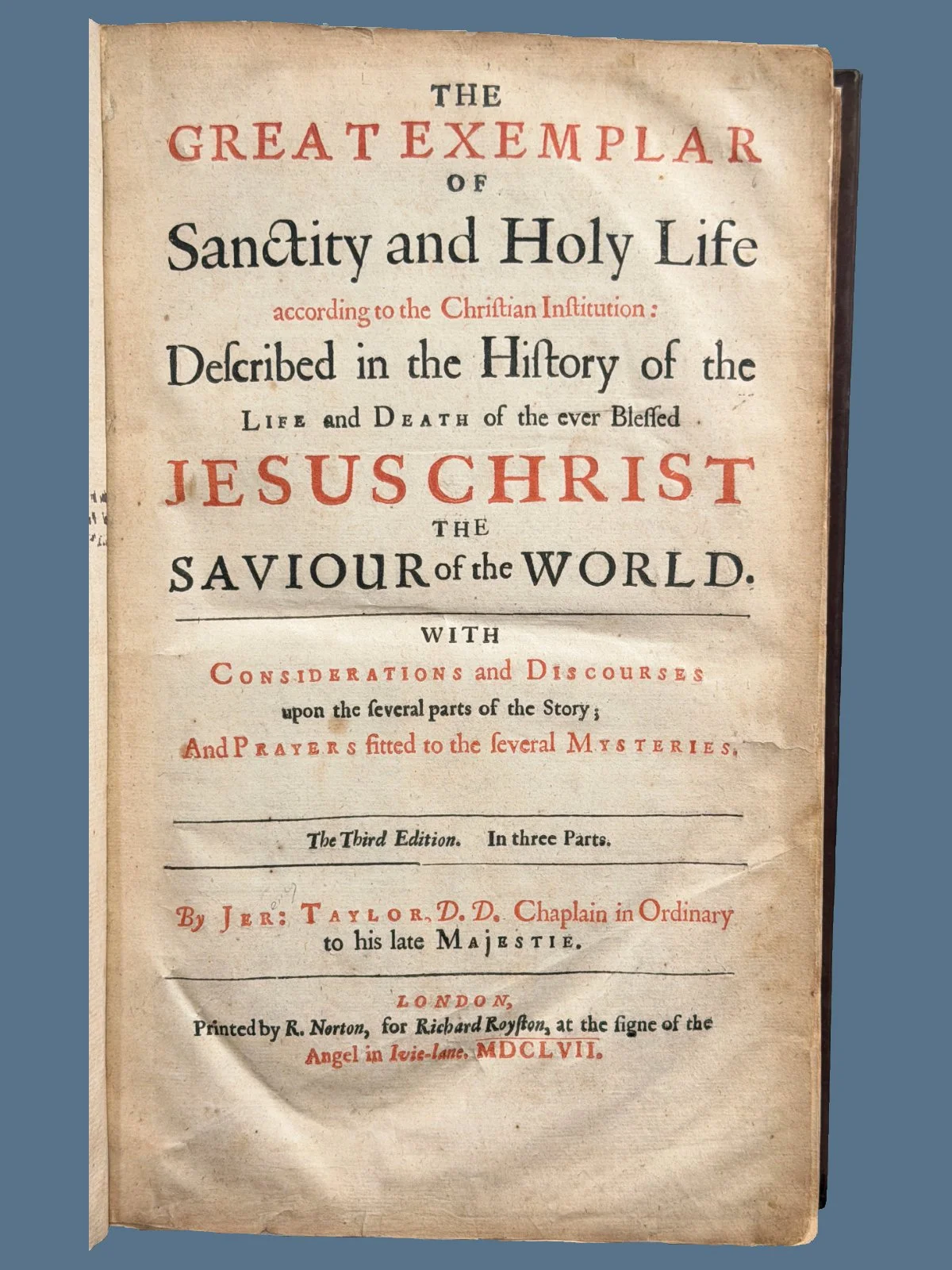 Image 6 of 18
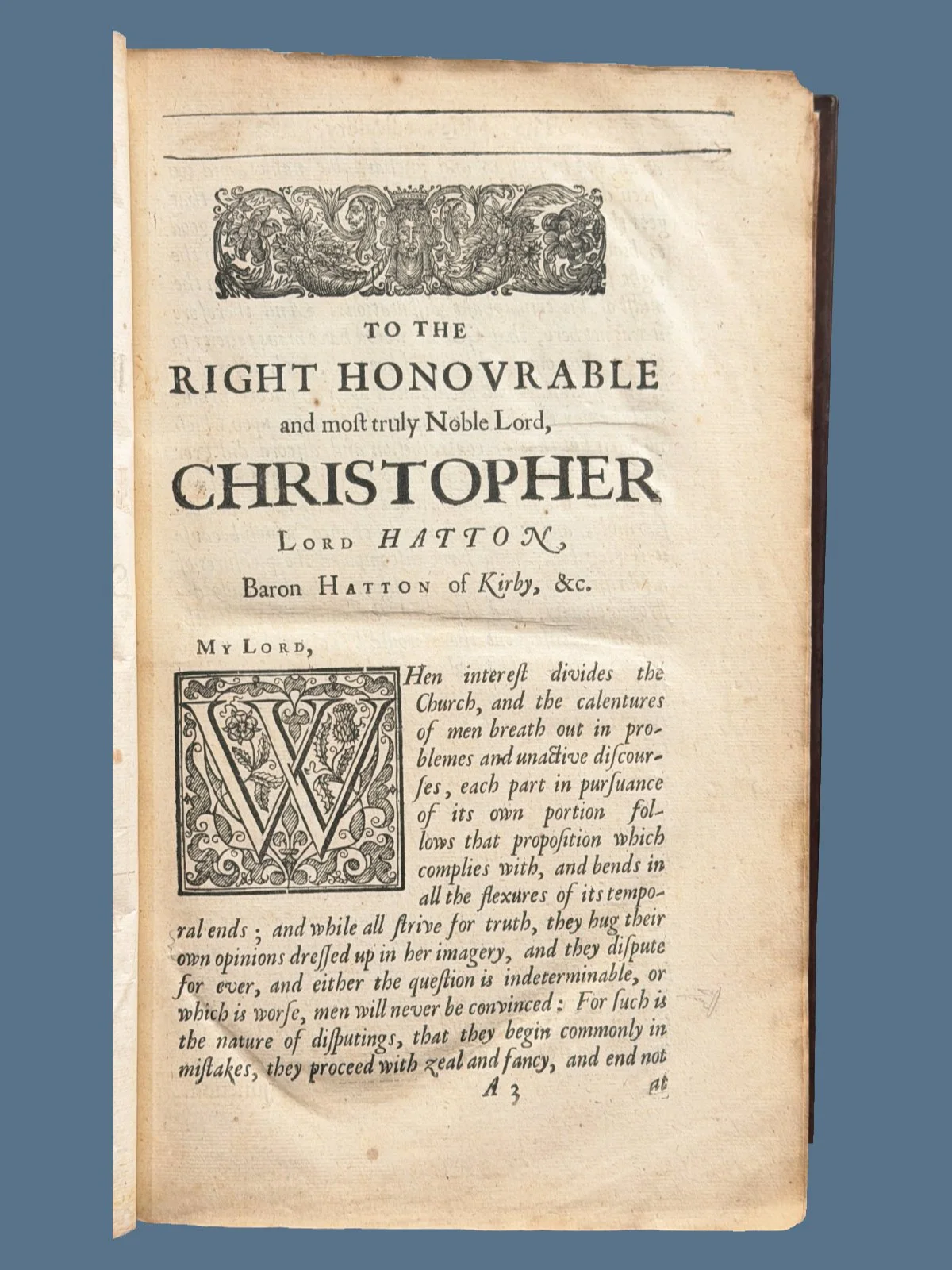 Image 7 of 18
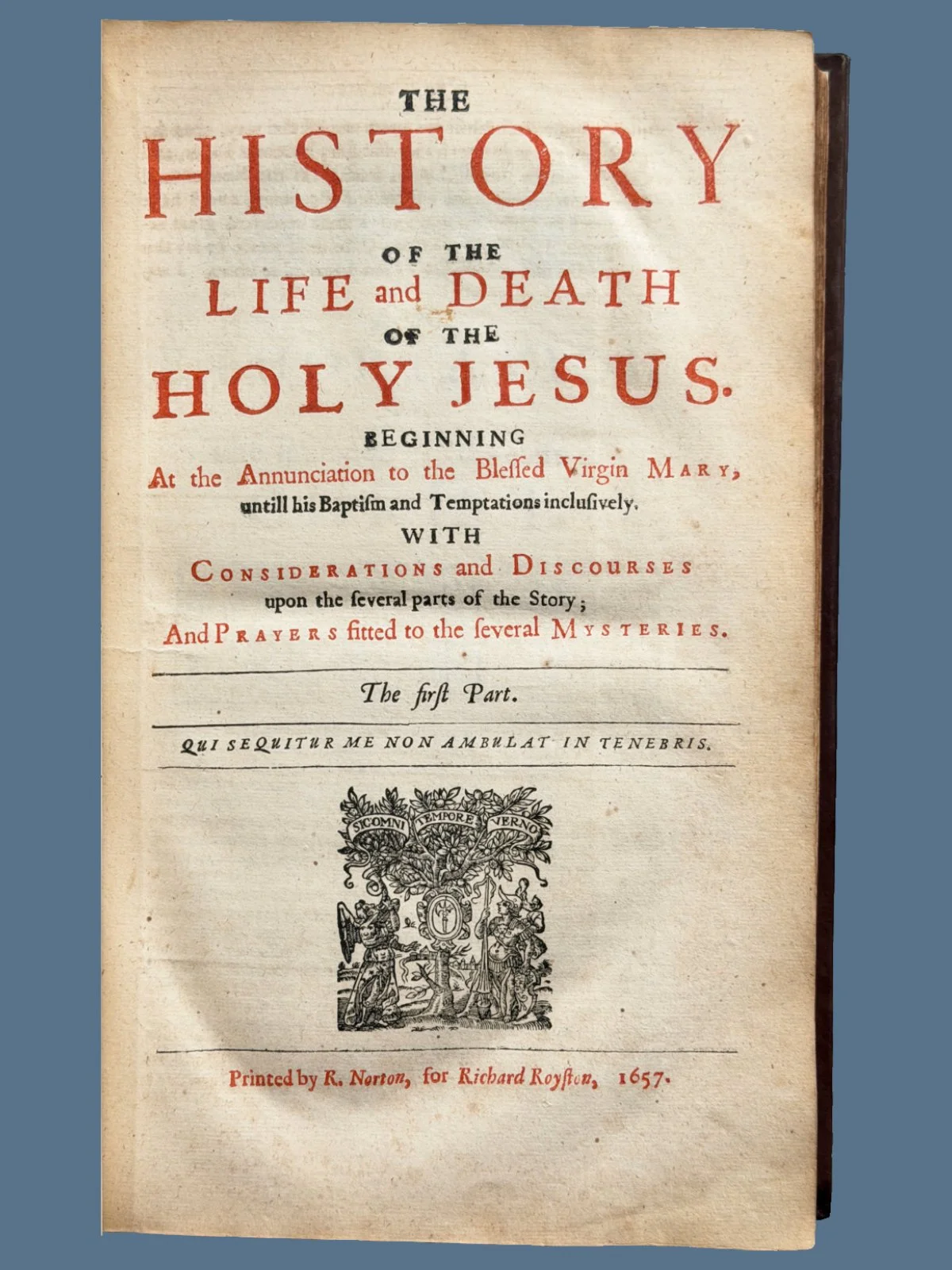 Image 8 of 18
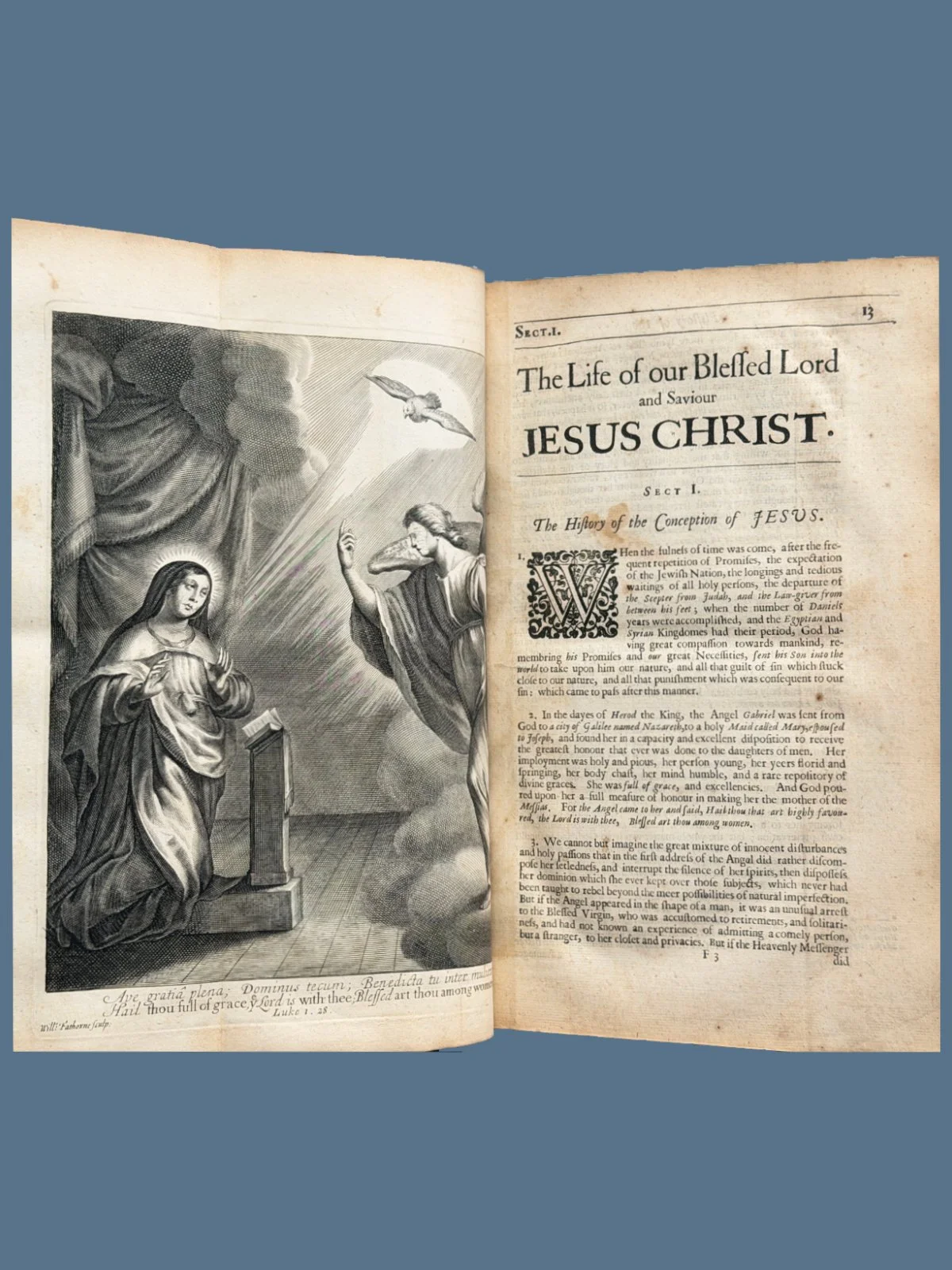 Image 9 of 18
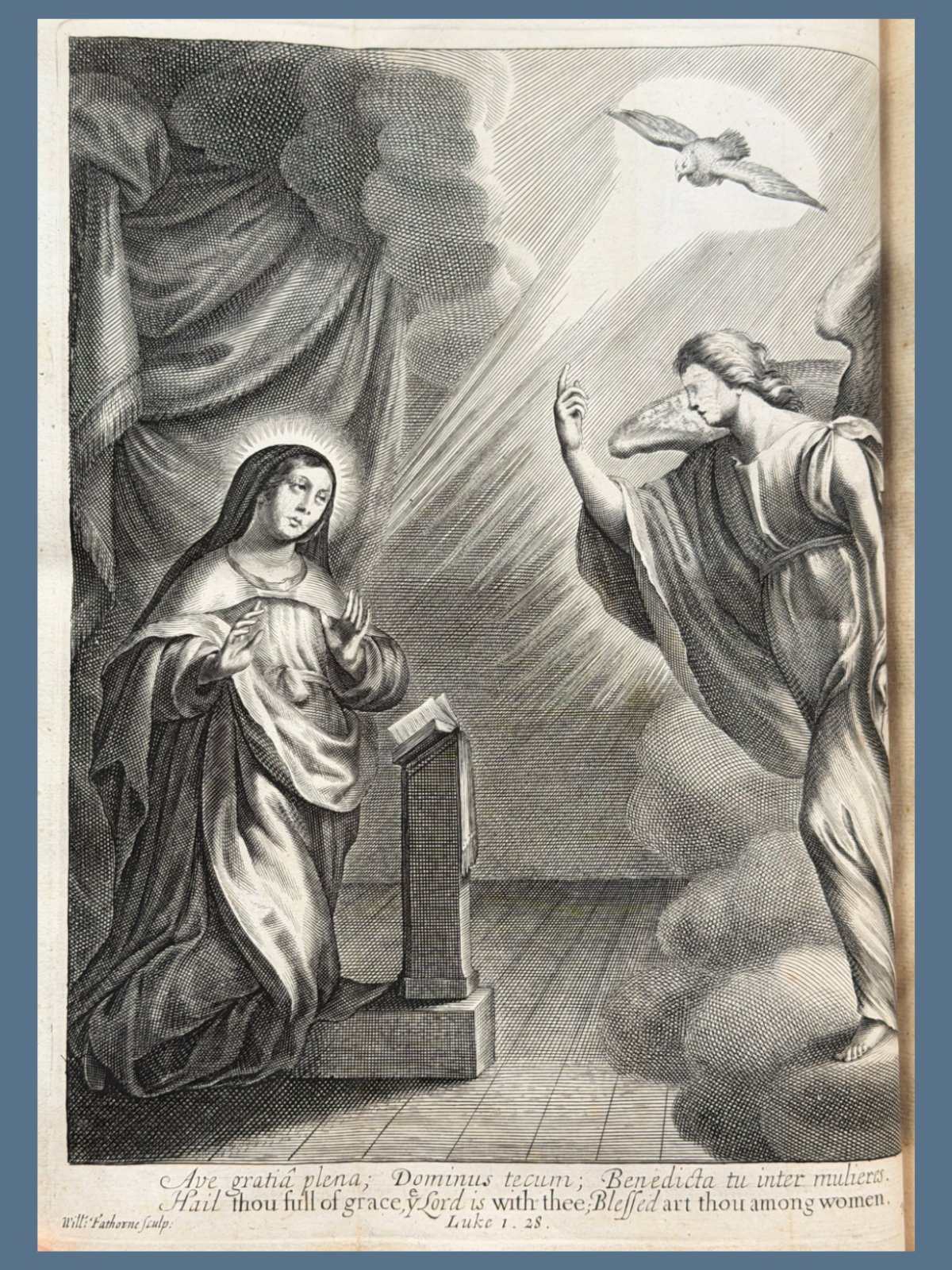 Image 10 of 18
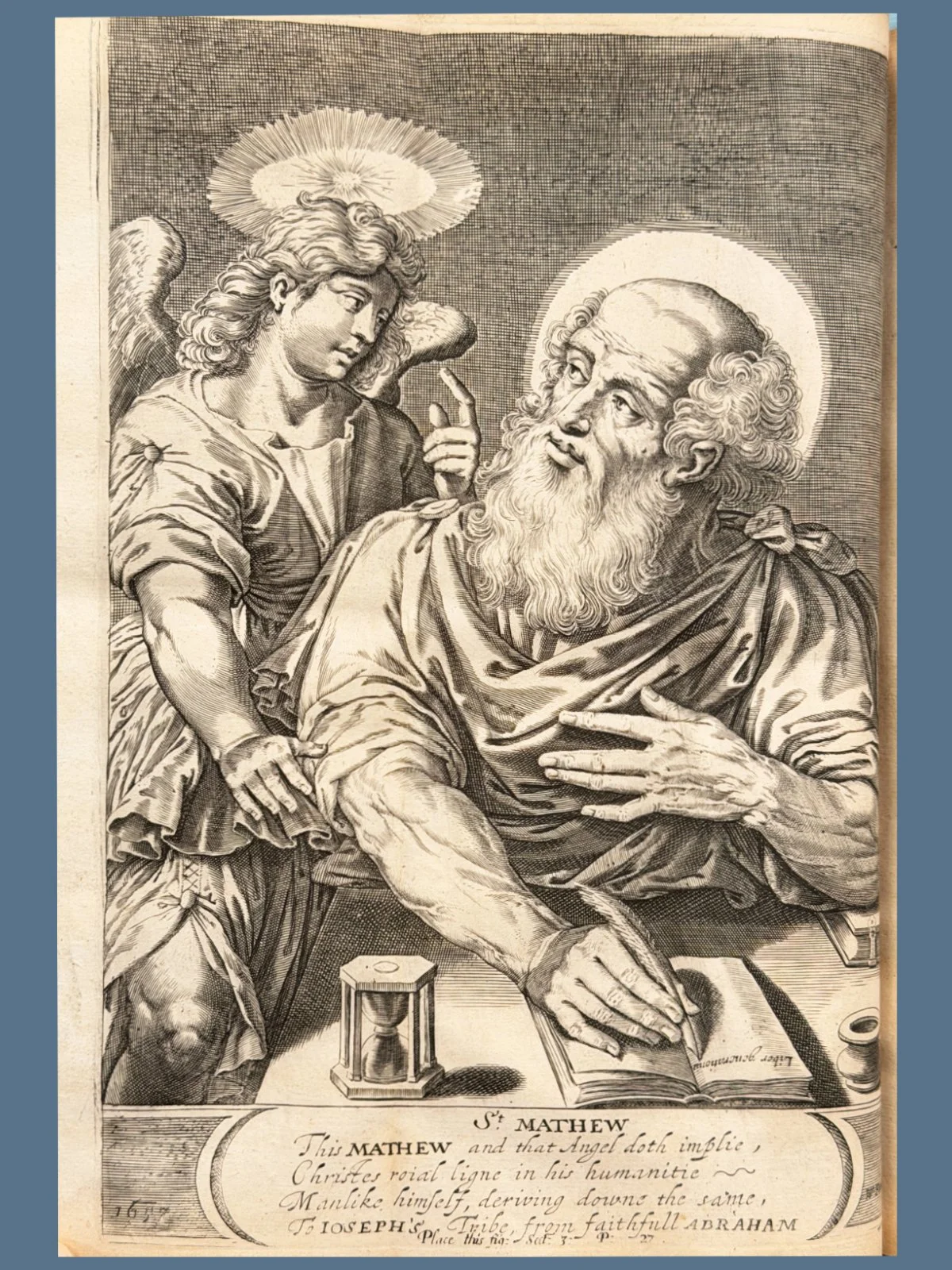 Image 11 of 18
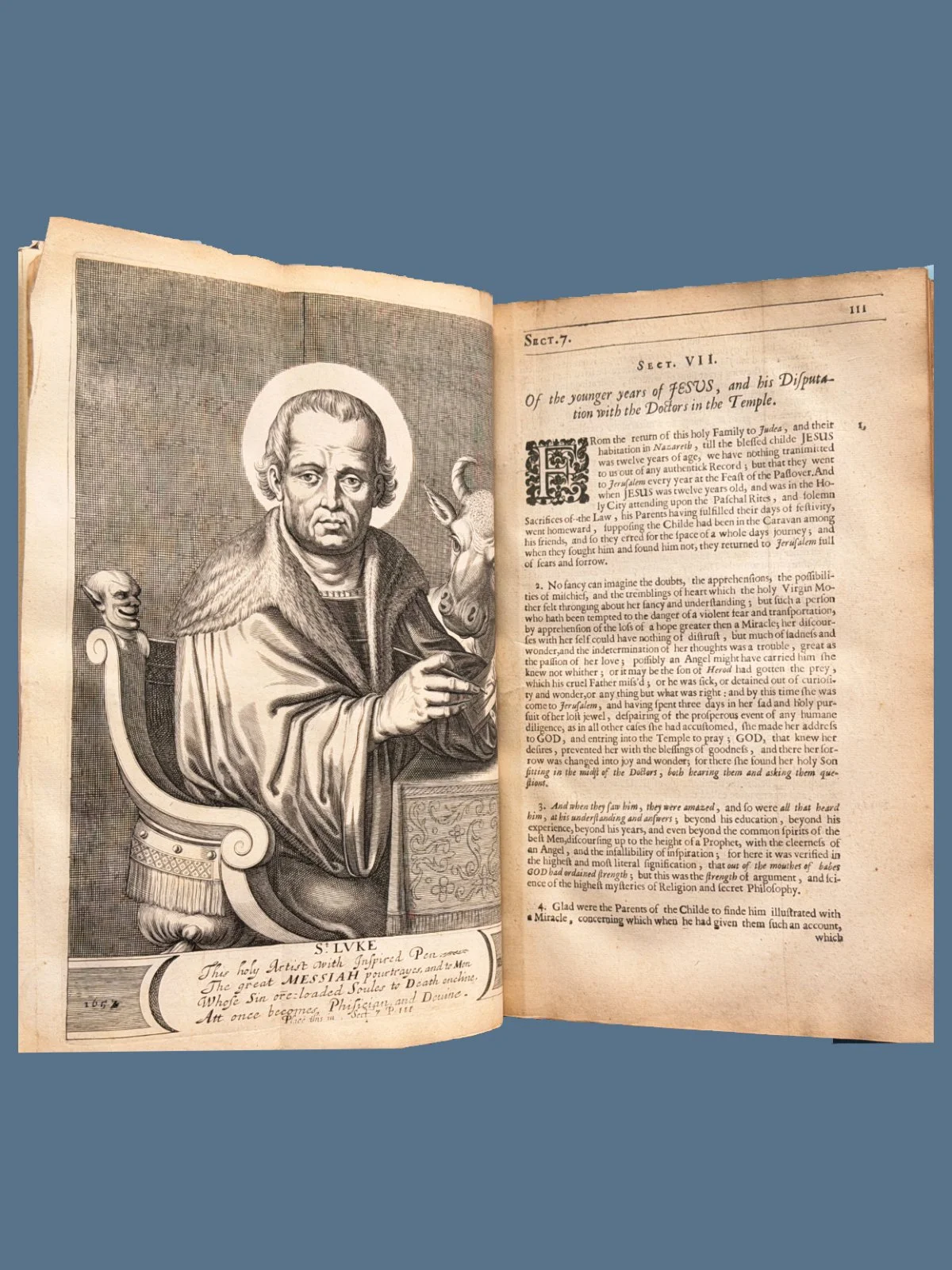 Image 12 of 18
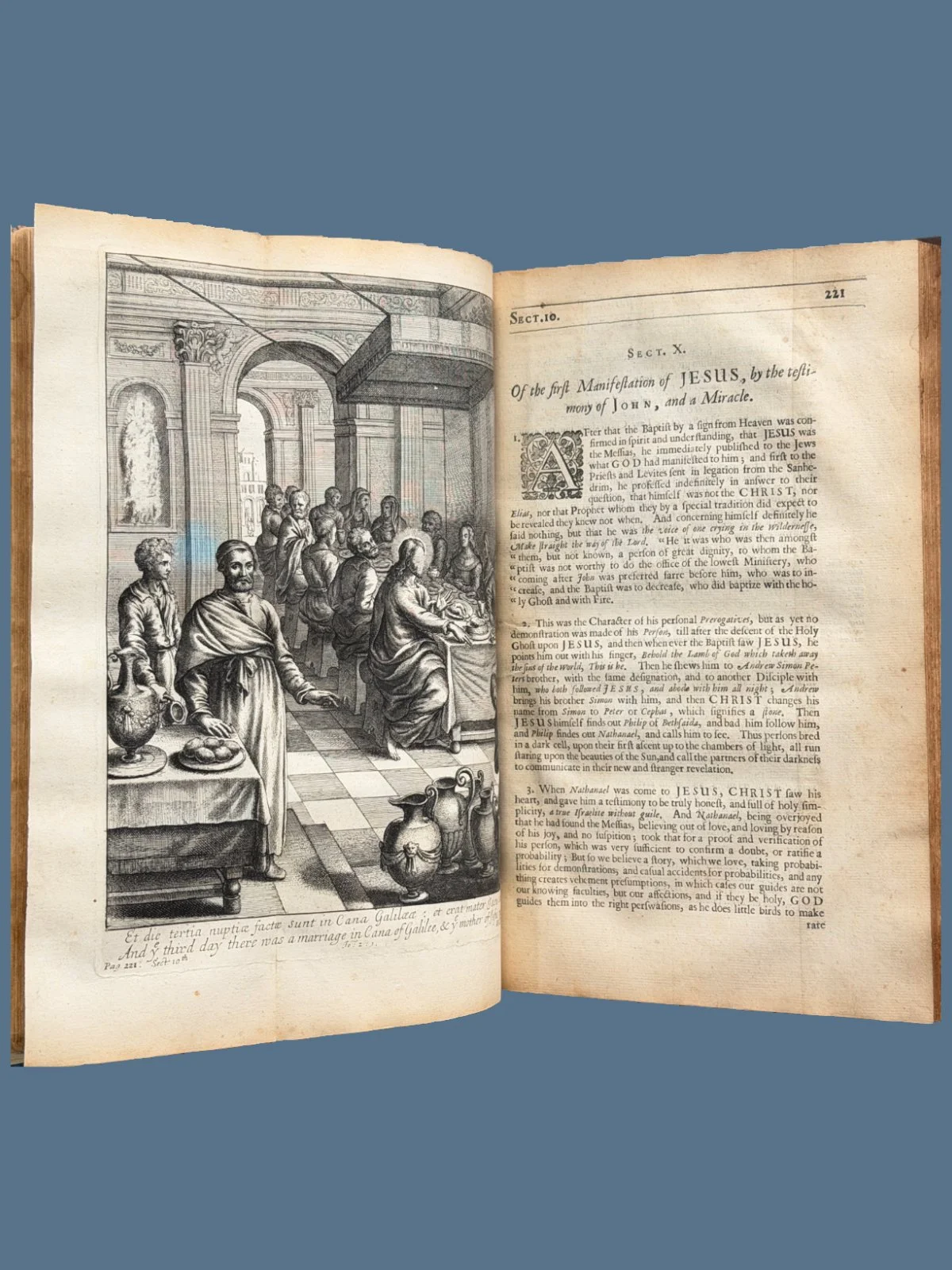 Image 13 of 18
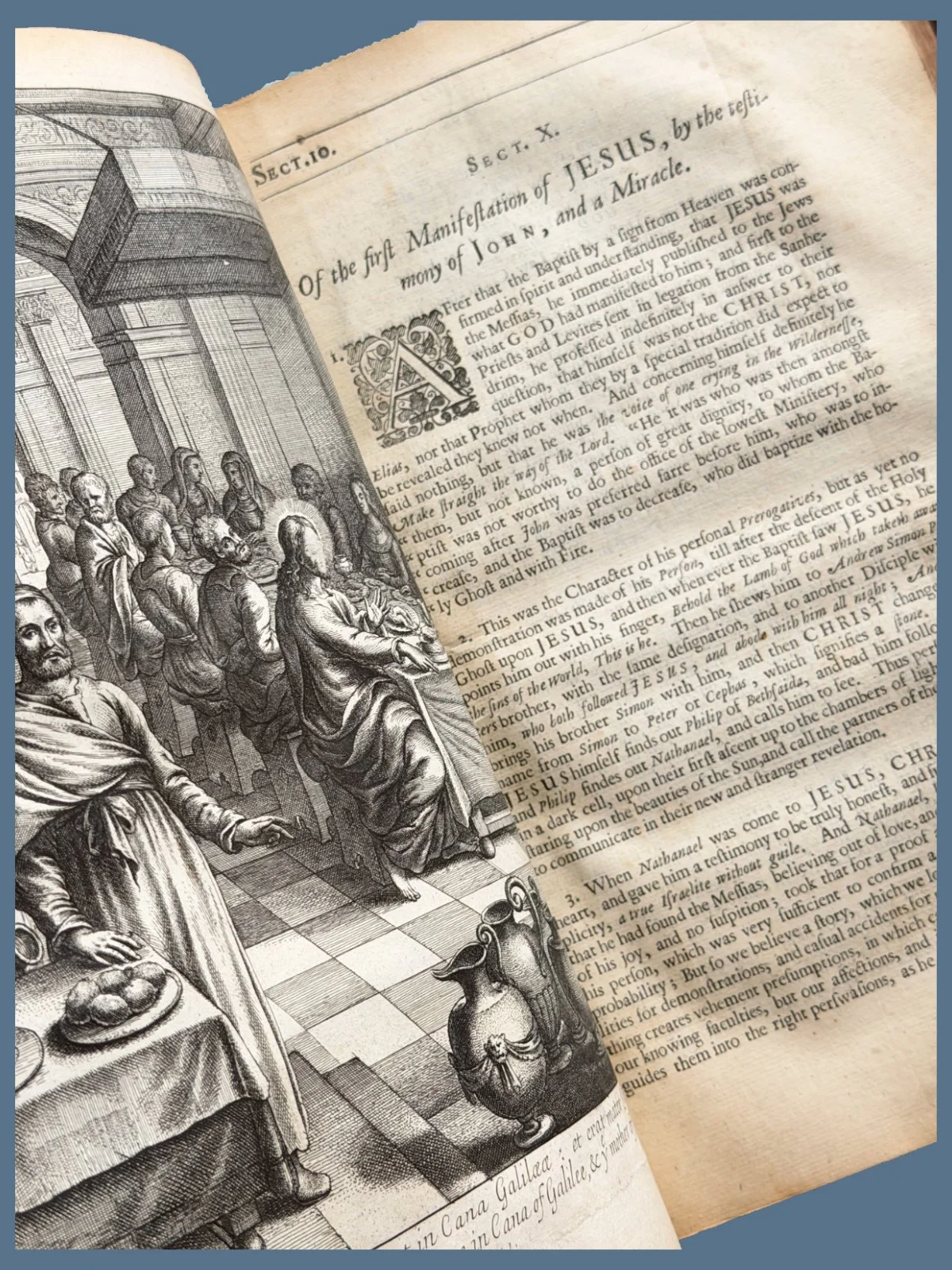 Image 14 of 18
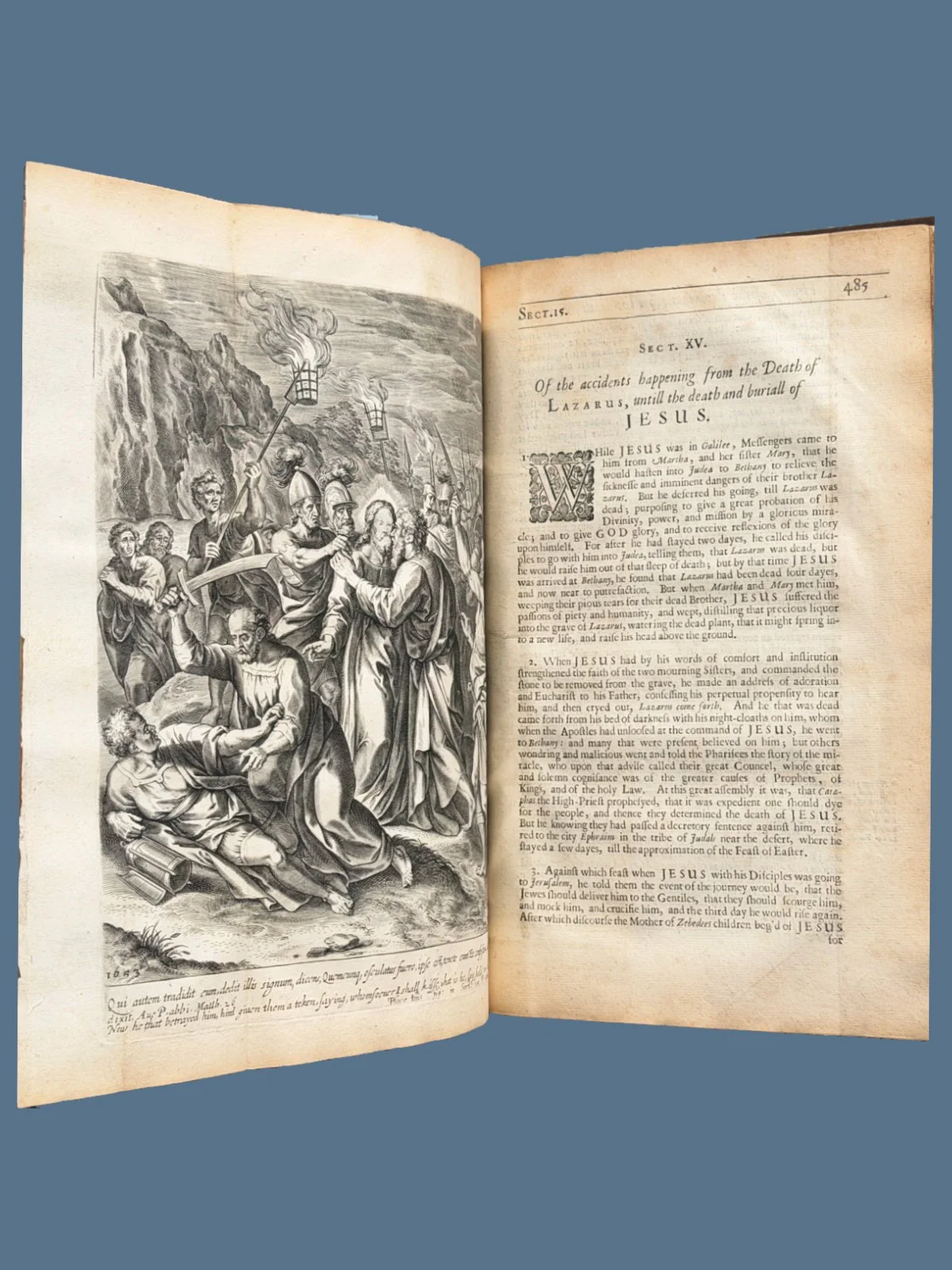 Image 15 of 18
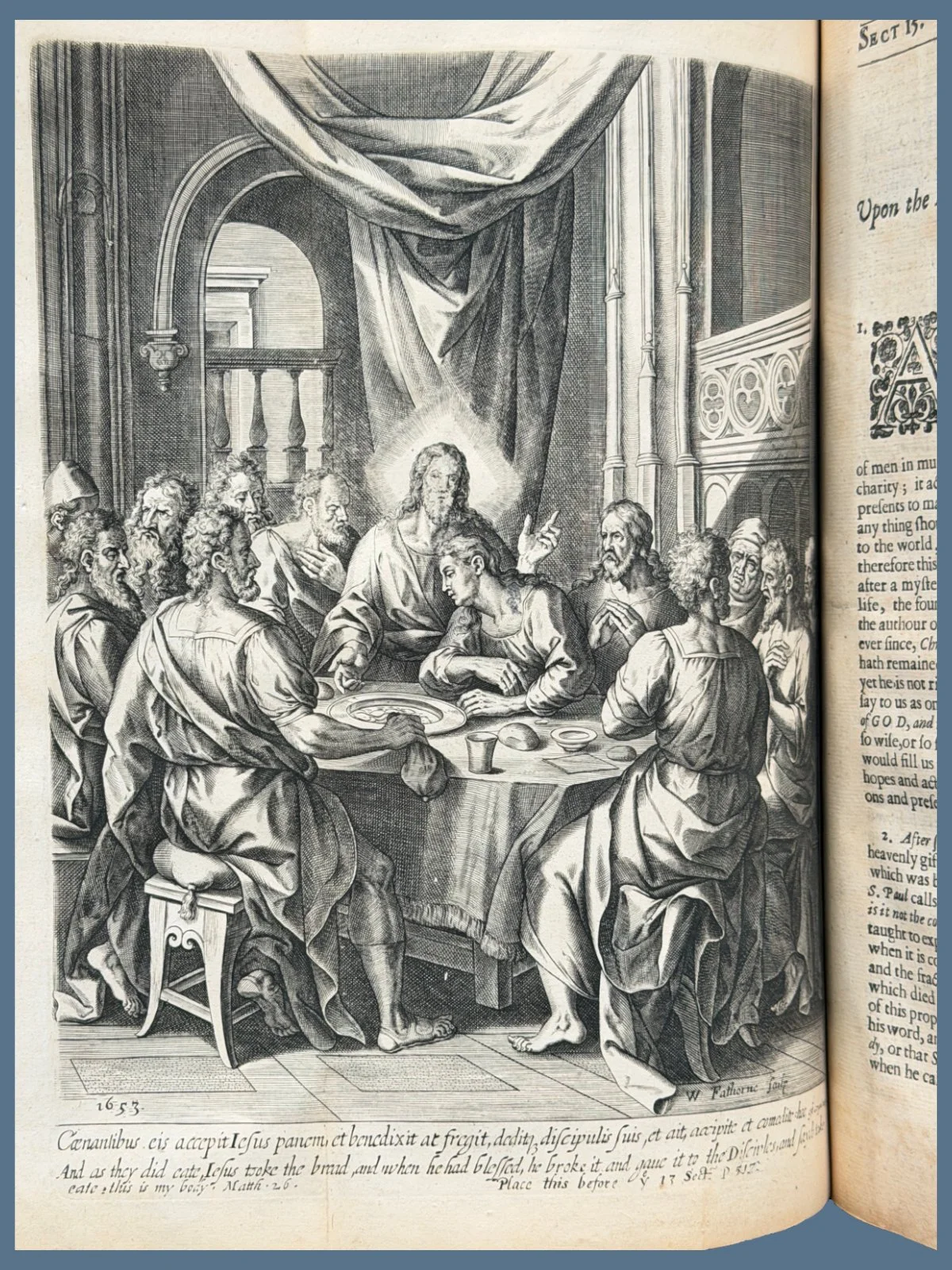 Image 16 of 18
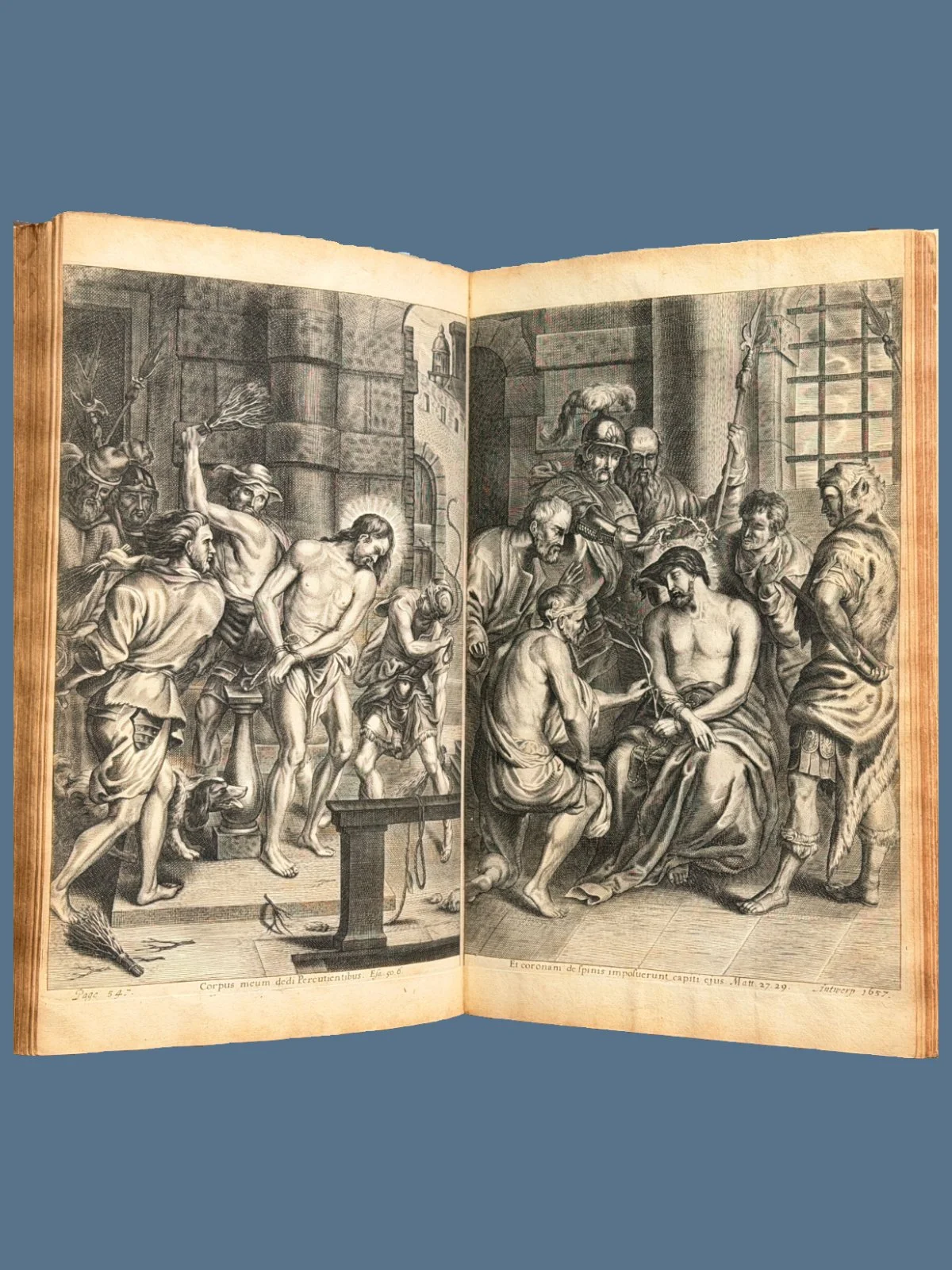 Image 17 of 18
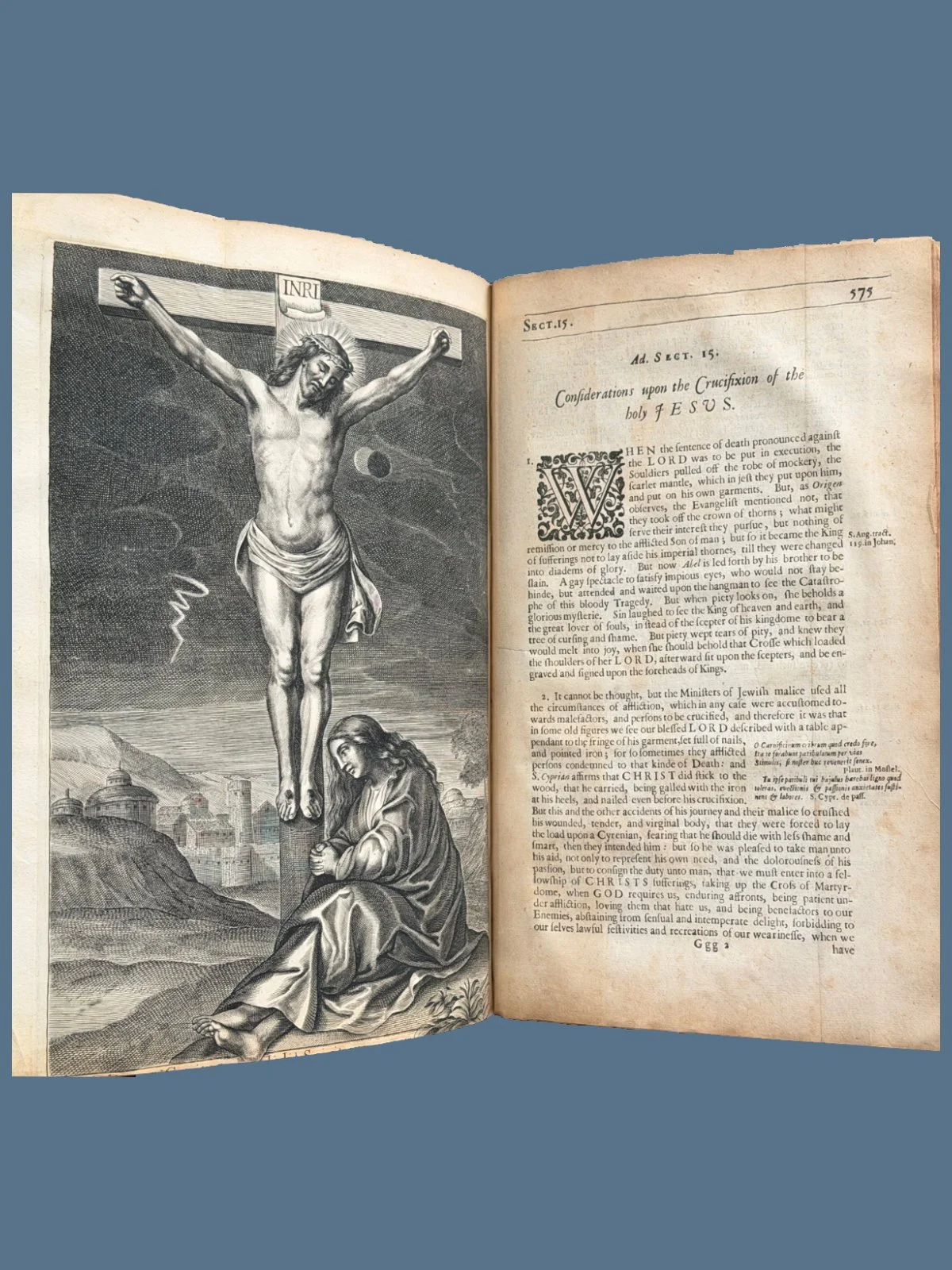 Image 18 of 18
The Great Exemplar of Sanctity and Holy Life according to the Christian Institution: Described in the History of the Life and Death of the ever Blessed Jesus Christ the Saviour of the World.
Description
The third edition in three parts. General title page (1657) printed in red and black preceded by a portrait of the author and an engraved title page. Internal title page follows the Preface reads “The History of the Life and Death of the Holy Jesus” printed in red and black (1657). The text in single column Roman font. Bound with fourteen engraved plates by Pierre Lombart and William Faithorne with the four Evangelists and scenes from the life of Christ.
Collation
A-Z^6, Aa-Zz^6, Aaa-Iii^6. Text complete with all titles, lacks one plate.
Binding
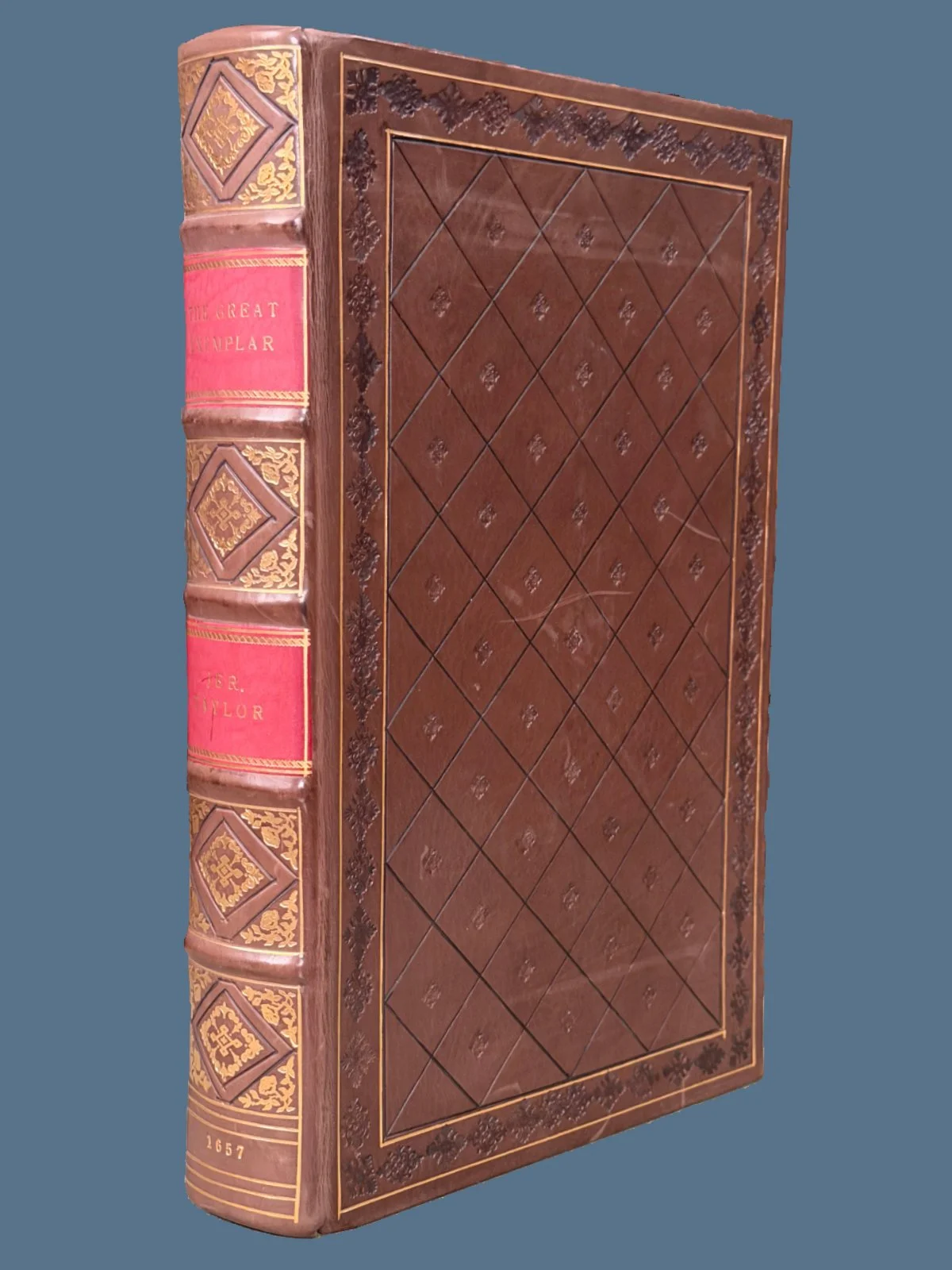
Brown paneled calf. Boards with all-over design featuring diagonal lines, drawer handle tools and blind rolls surrounded by a gilt double-paneled border. Spine with five raised bands, elaborate gilt tooling to compartments, and two gilt-lined morocco labels with the words “The Great Exemplar” and “Jer. Taylor” with a date of 1657 to foot of spine. Marbled endpapers.
Condition
Occasional spotting and staining; frontispiece and engraved title laid down; I6 with lower marginal repair; clean with good margins throughout.
Note
Jeremy Taylor’s most ambitious devotional work was first issued in 1649. In this expansive meditation on the life of Christ, Taylor presents Christ as the supreme “exemplar” of holiness, weaving together Gospel narrative, patristic reflection, moral theology, and practical devotion. Taylor was often called the “Shakespear of Divines” for the richness and cadence of his prose.
References
ESTC R11726.