
 Image 1 of 17
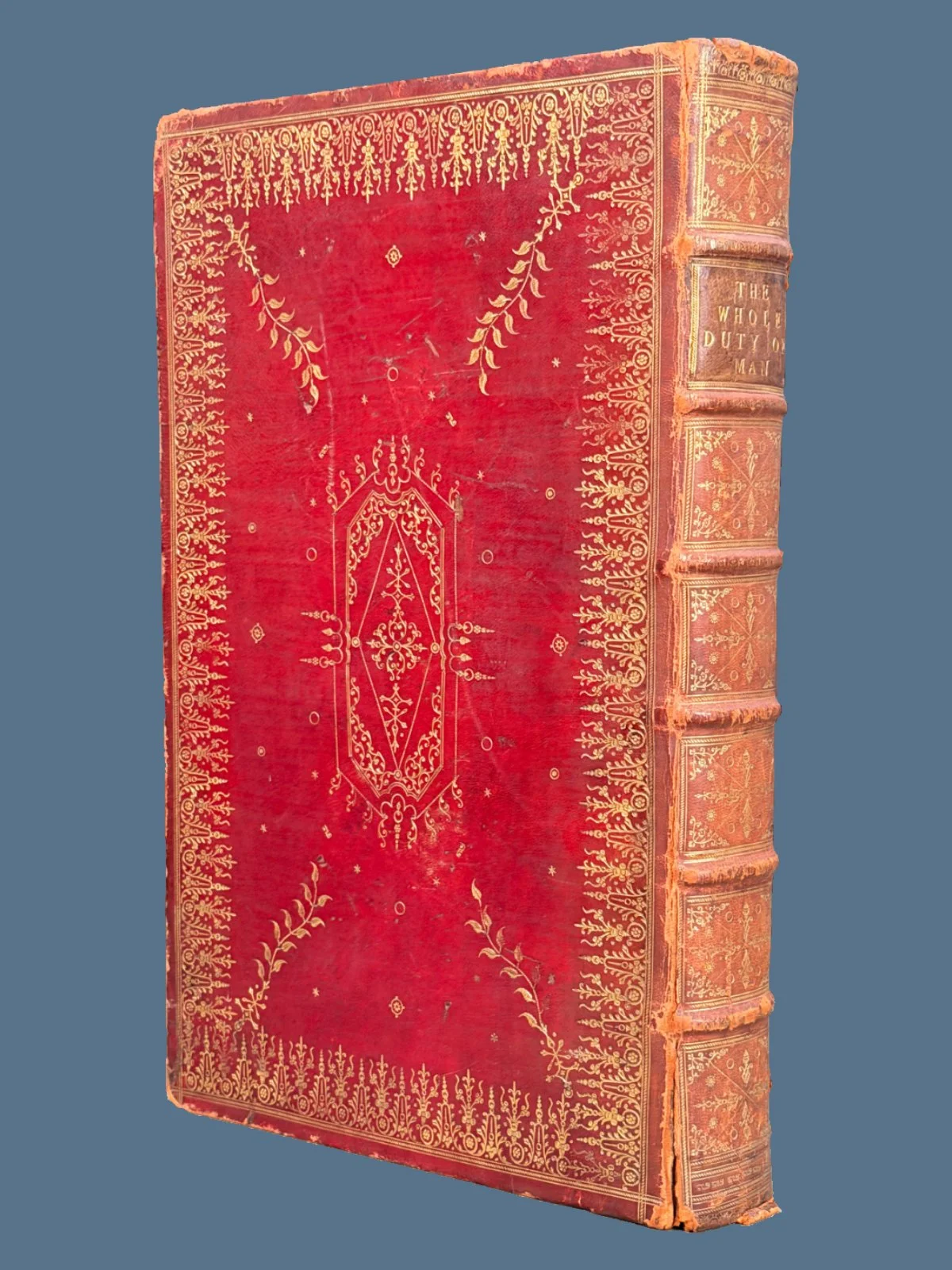 Image 2 of 17
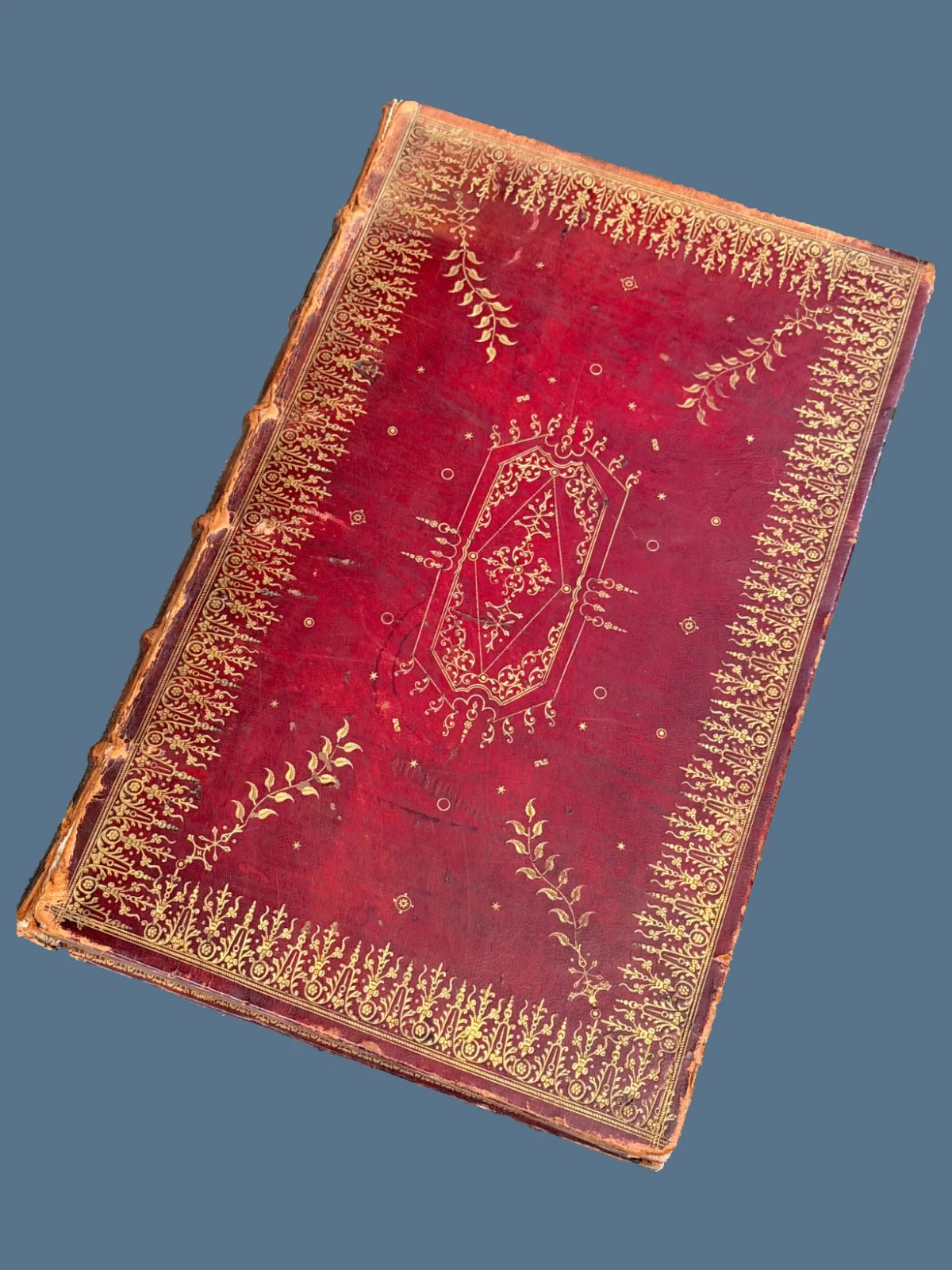 Image 3 of 17
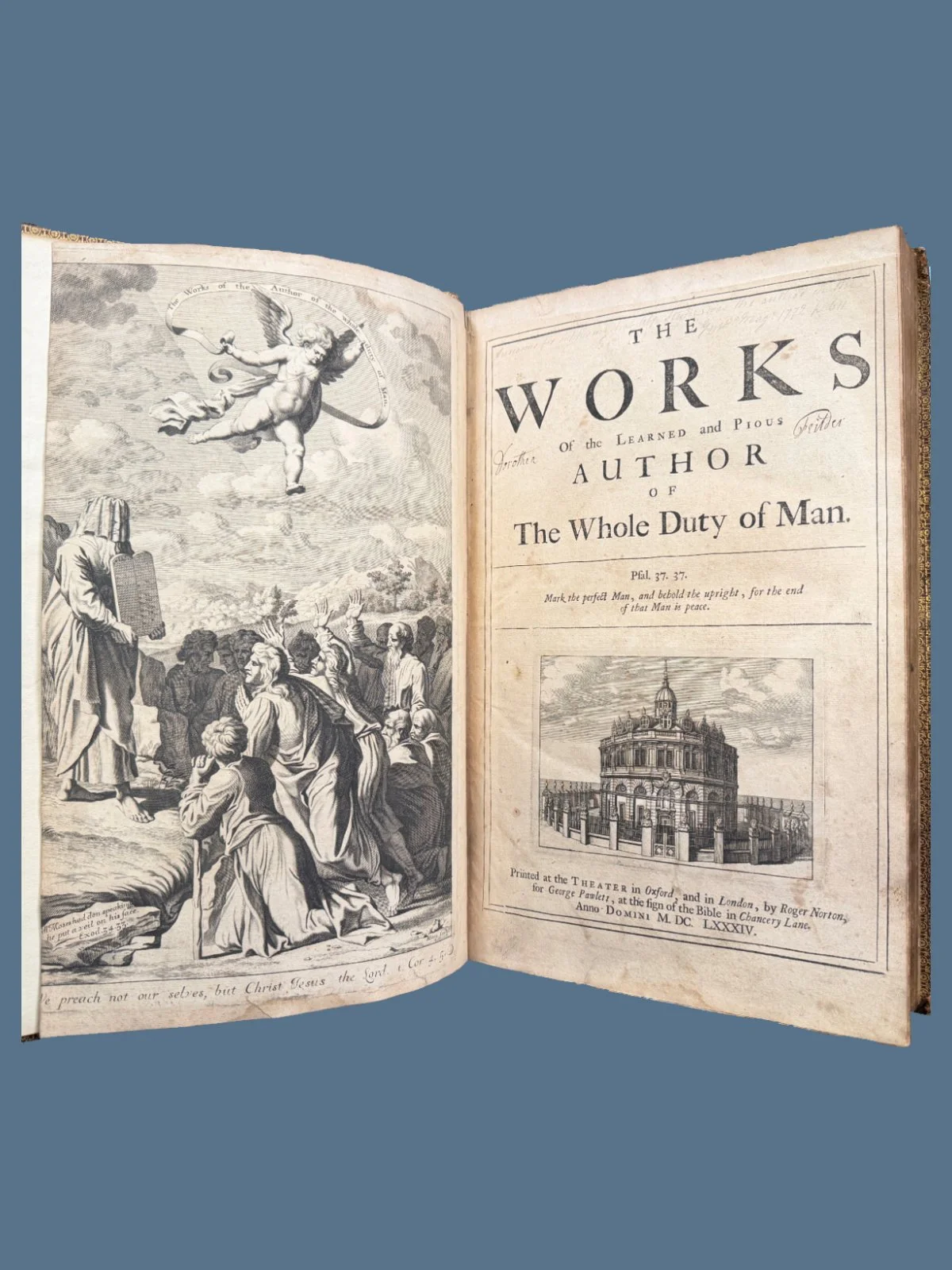 Image 4 of 17
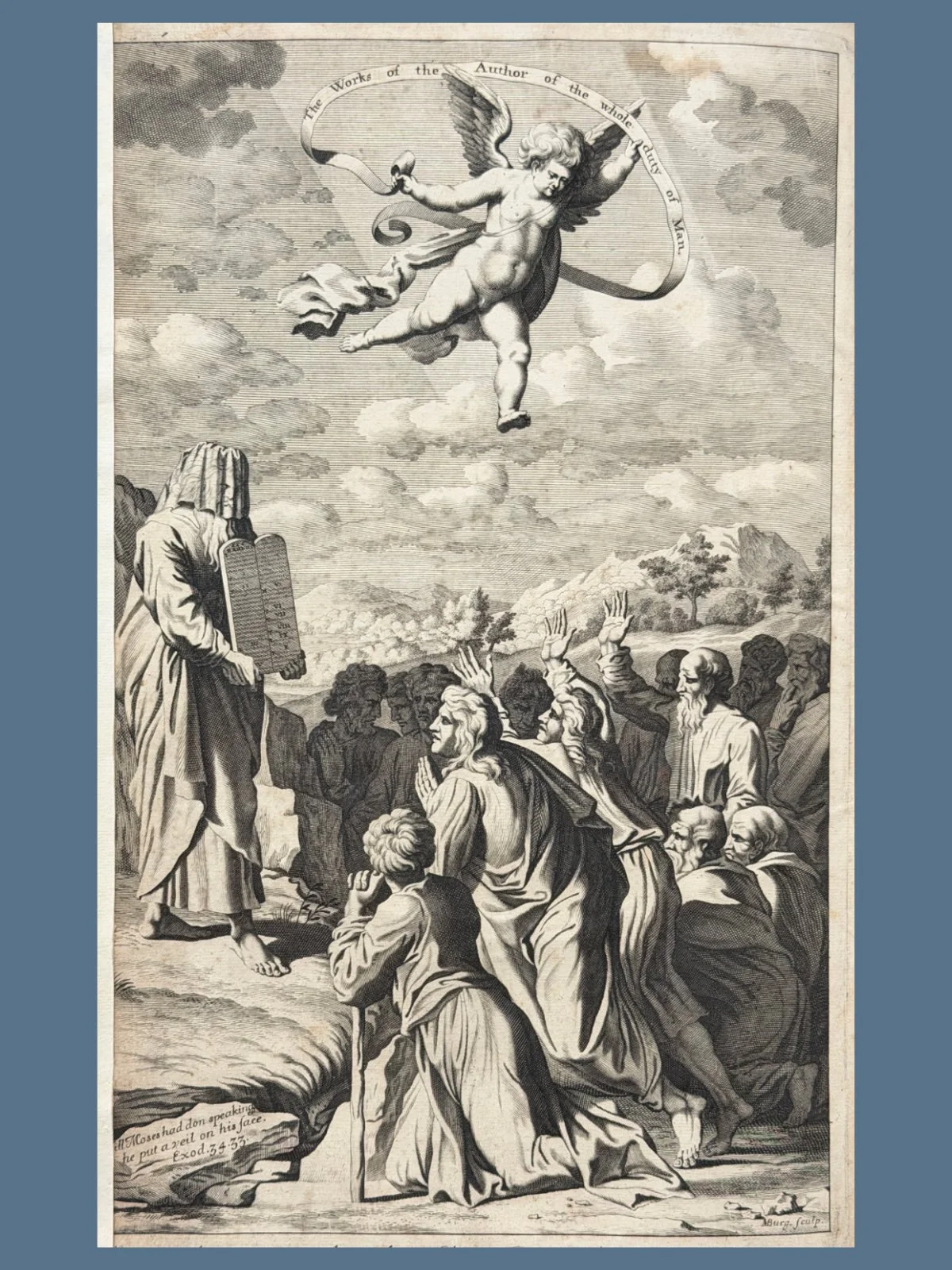 Image 5 of 17
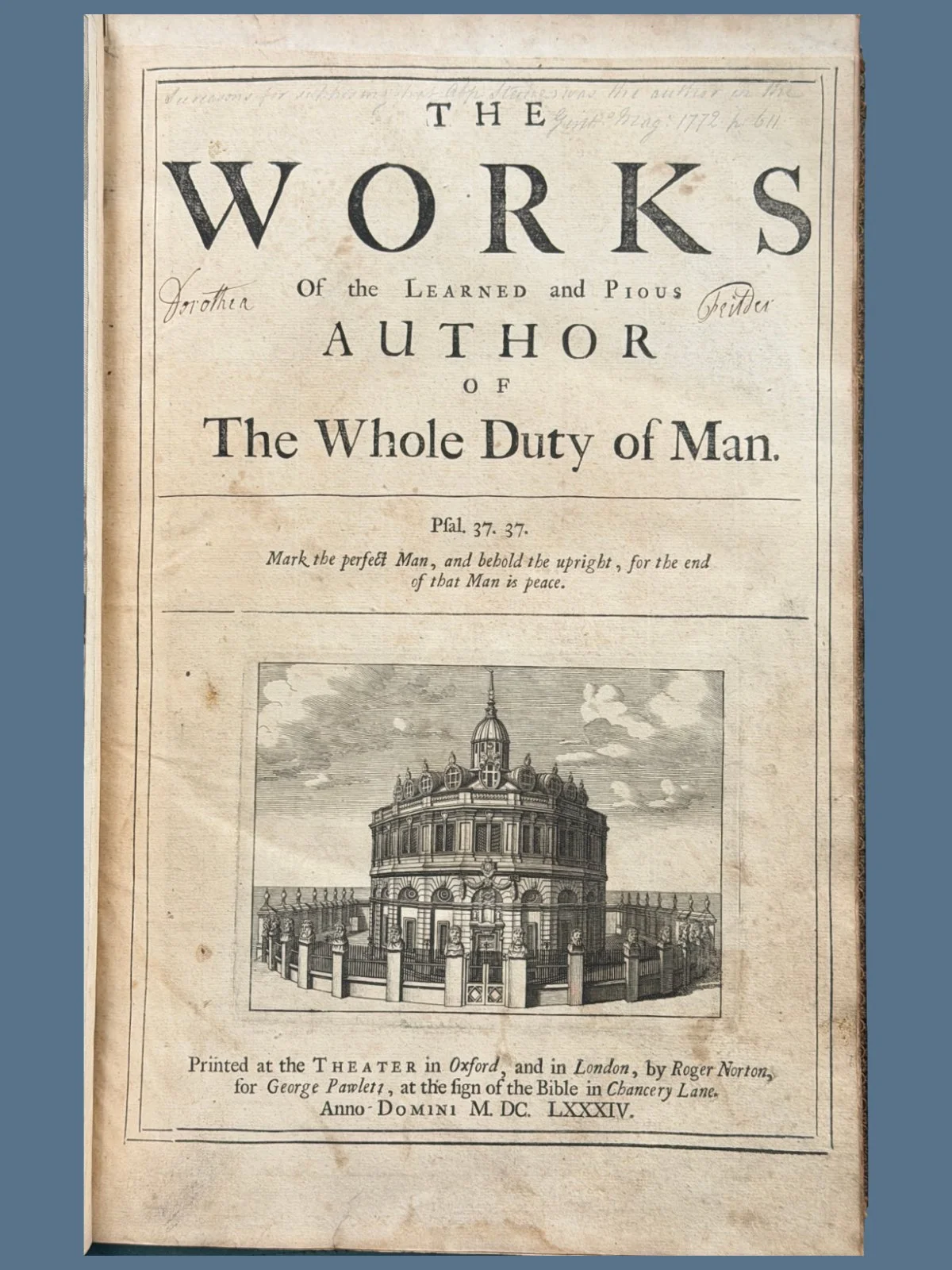 Image 6 of 17
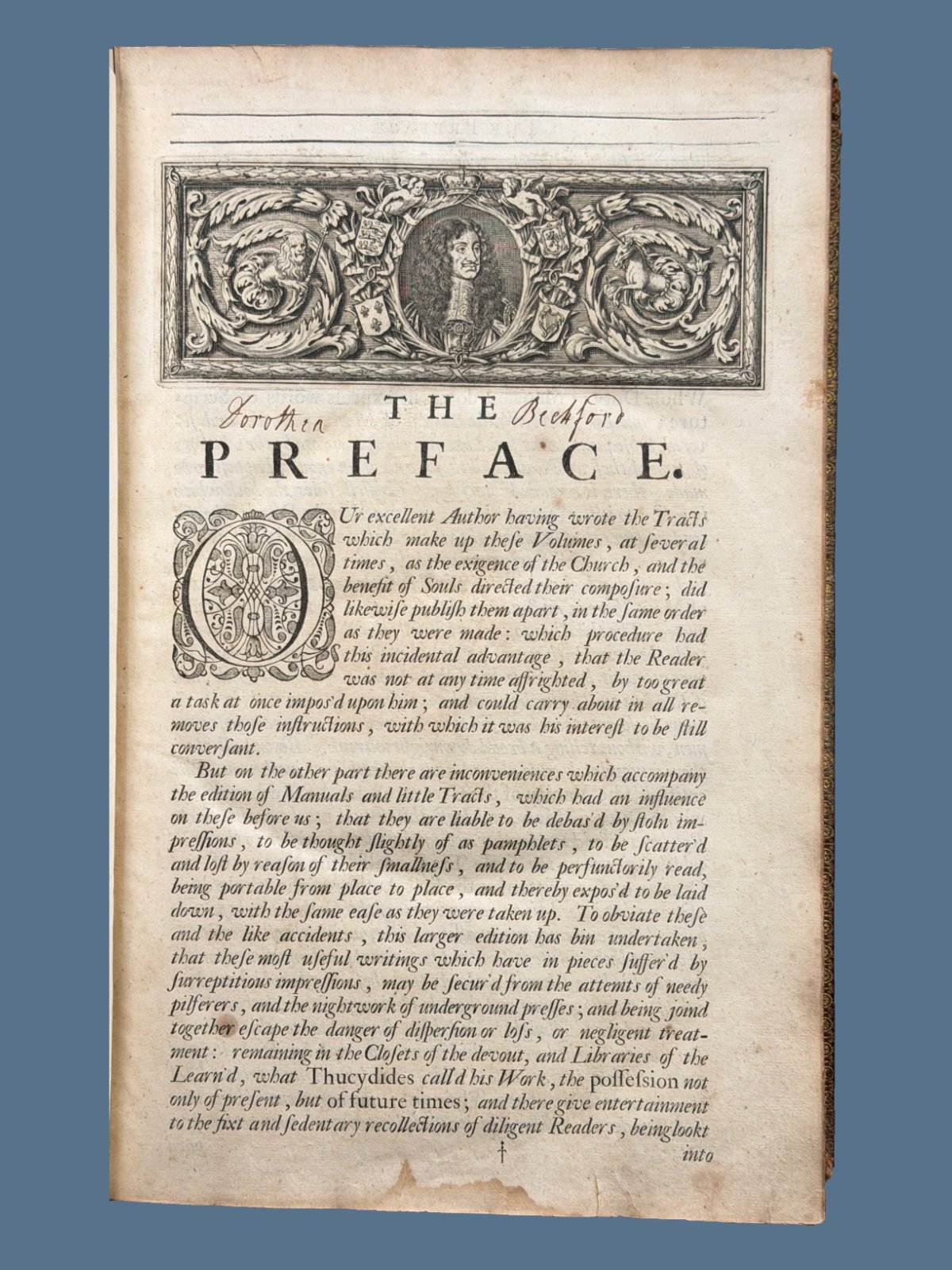 Image 7 of 17
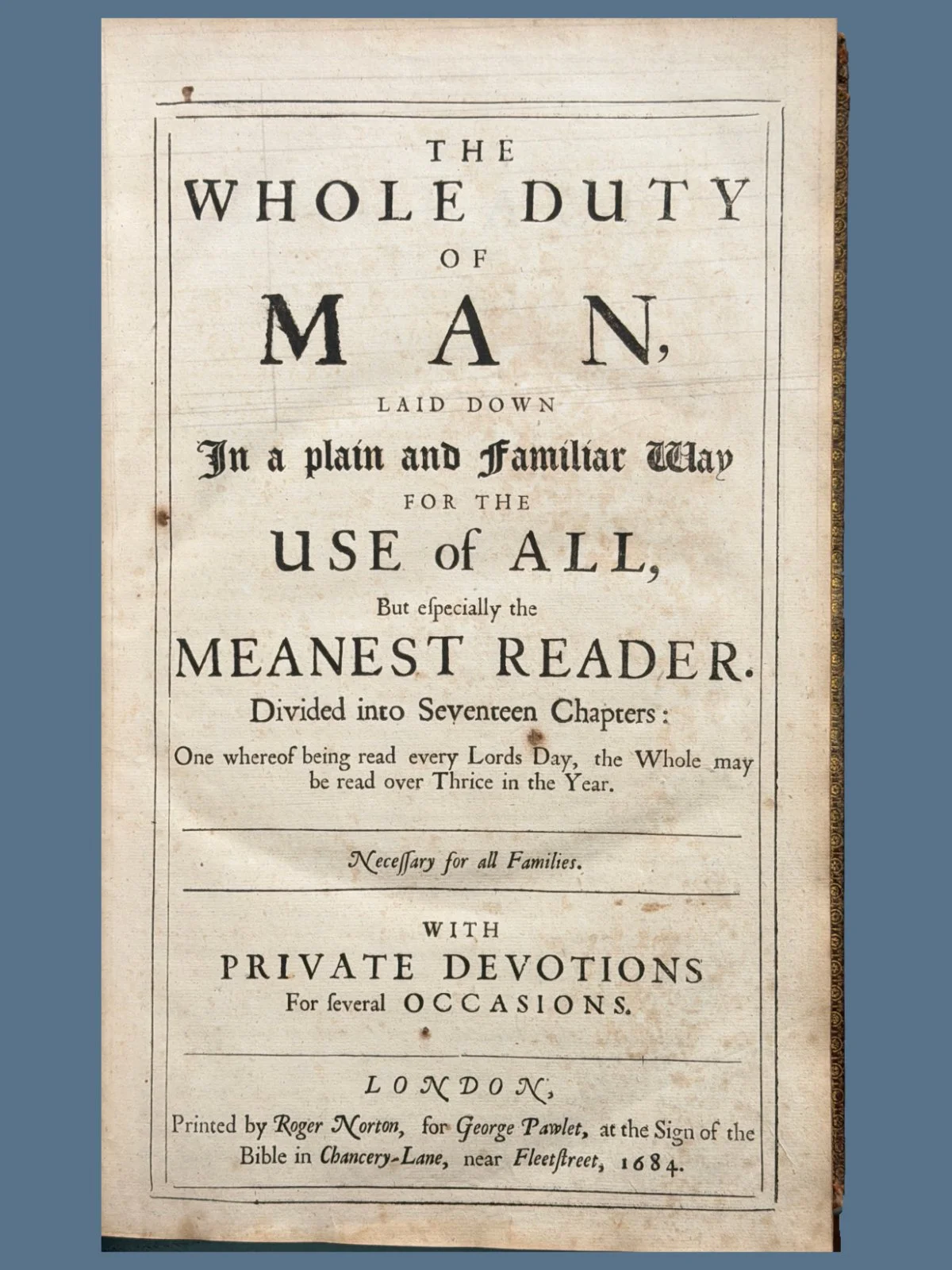 Image 8 of 17
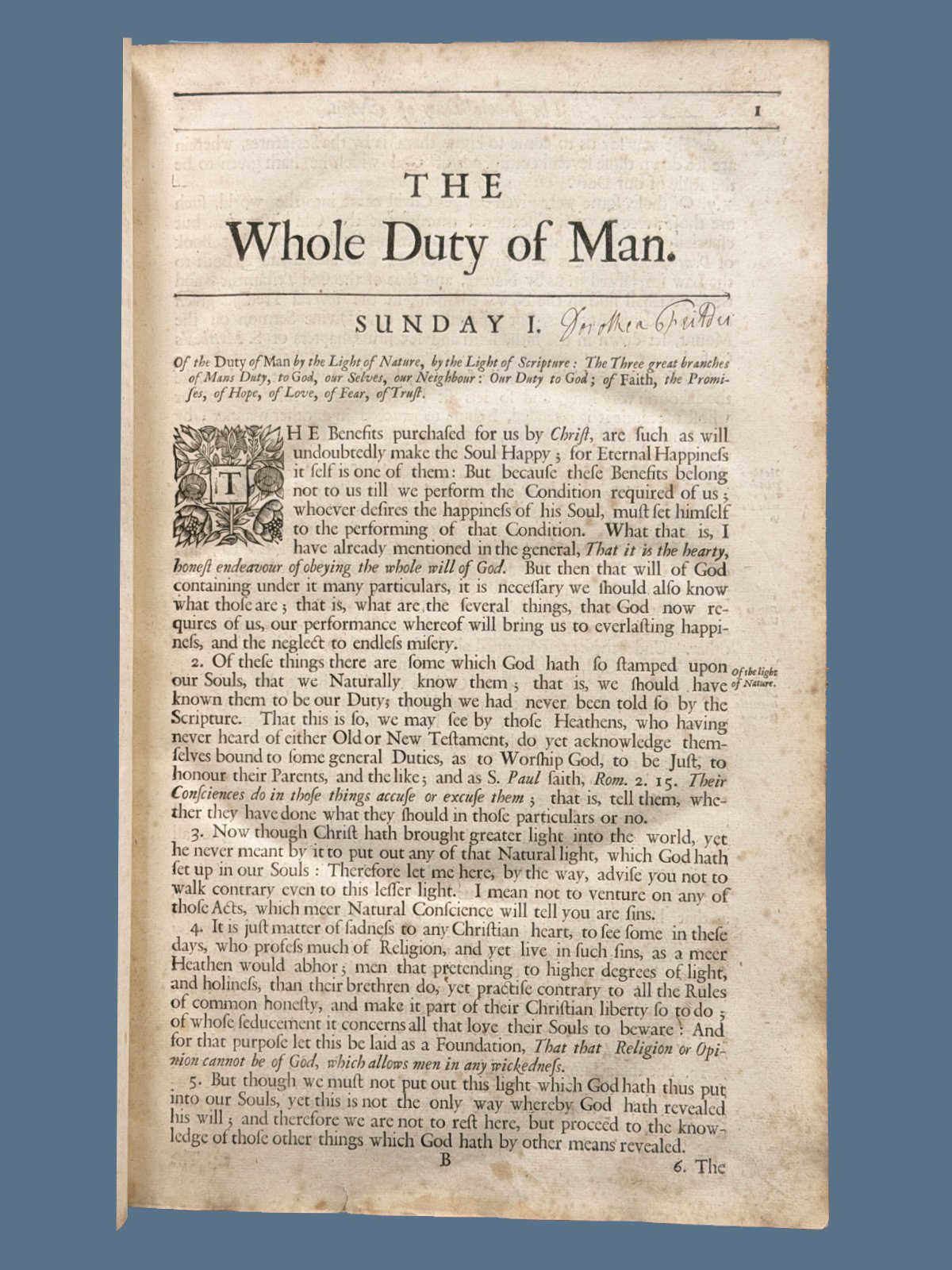 Image 9 of 17
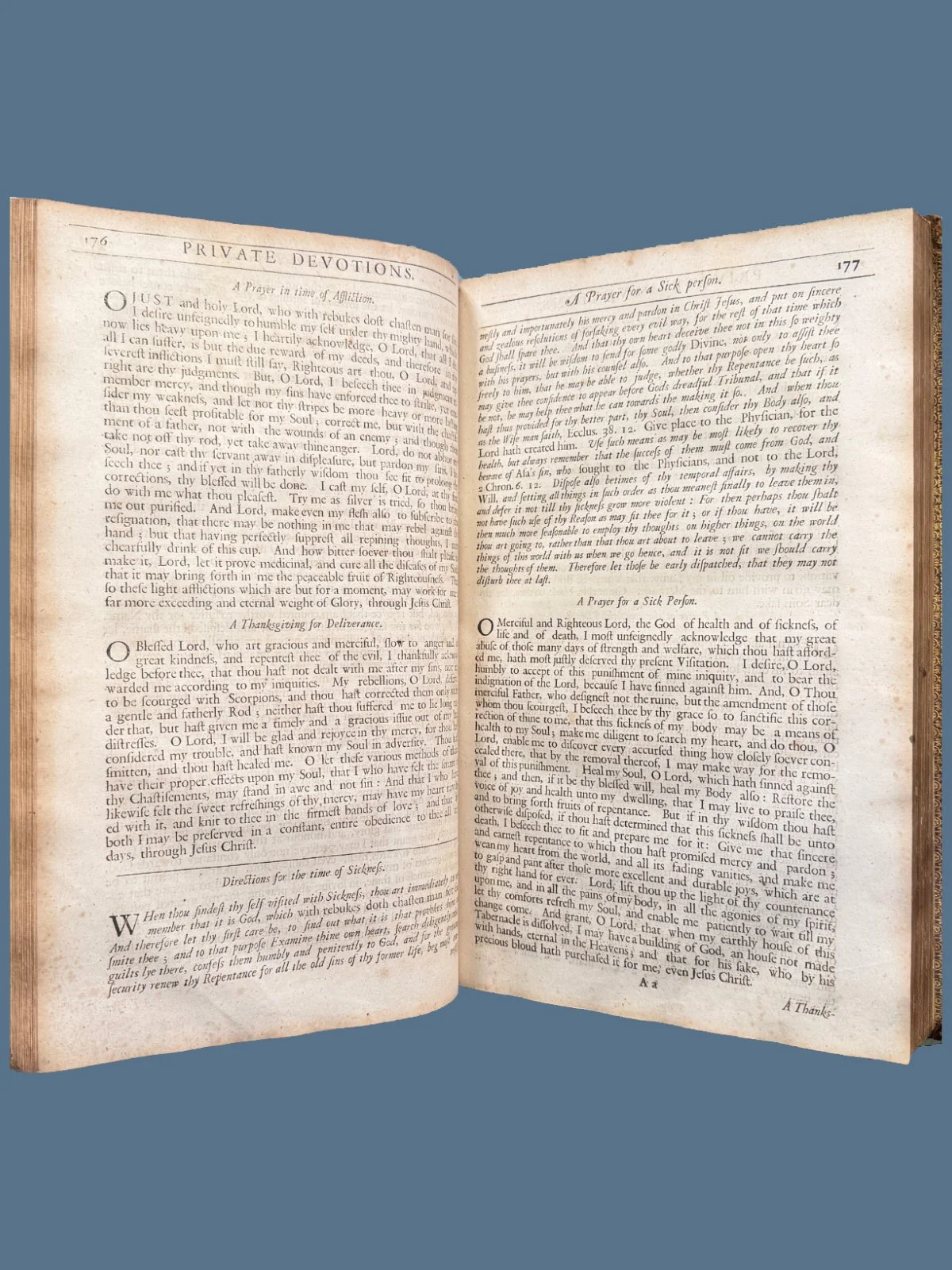 Image 10 of 17
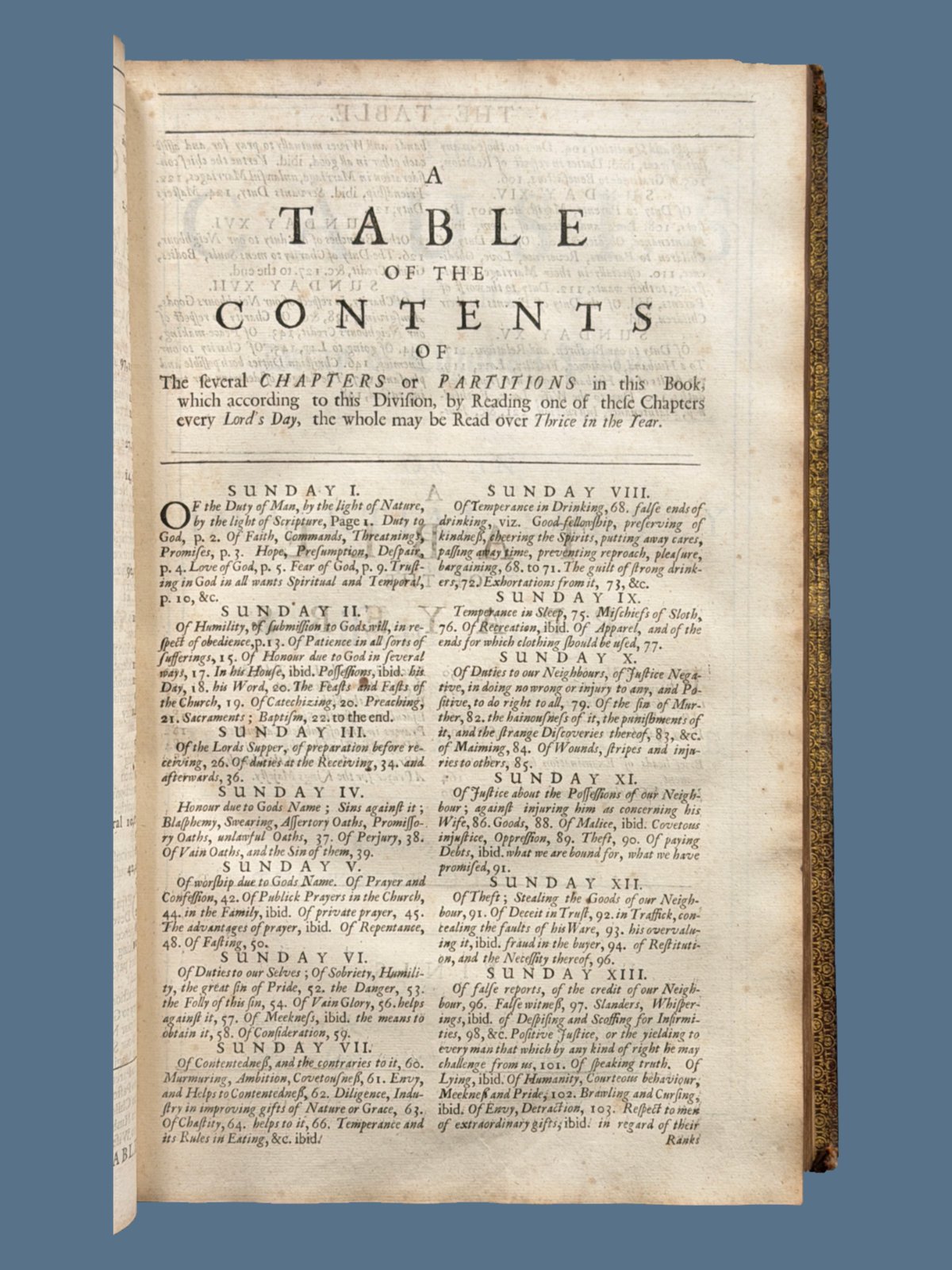 Image 11 of 17
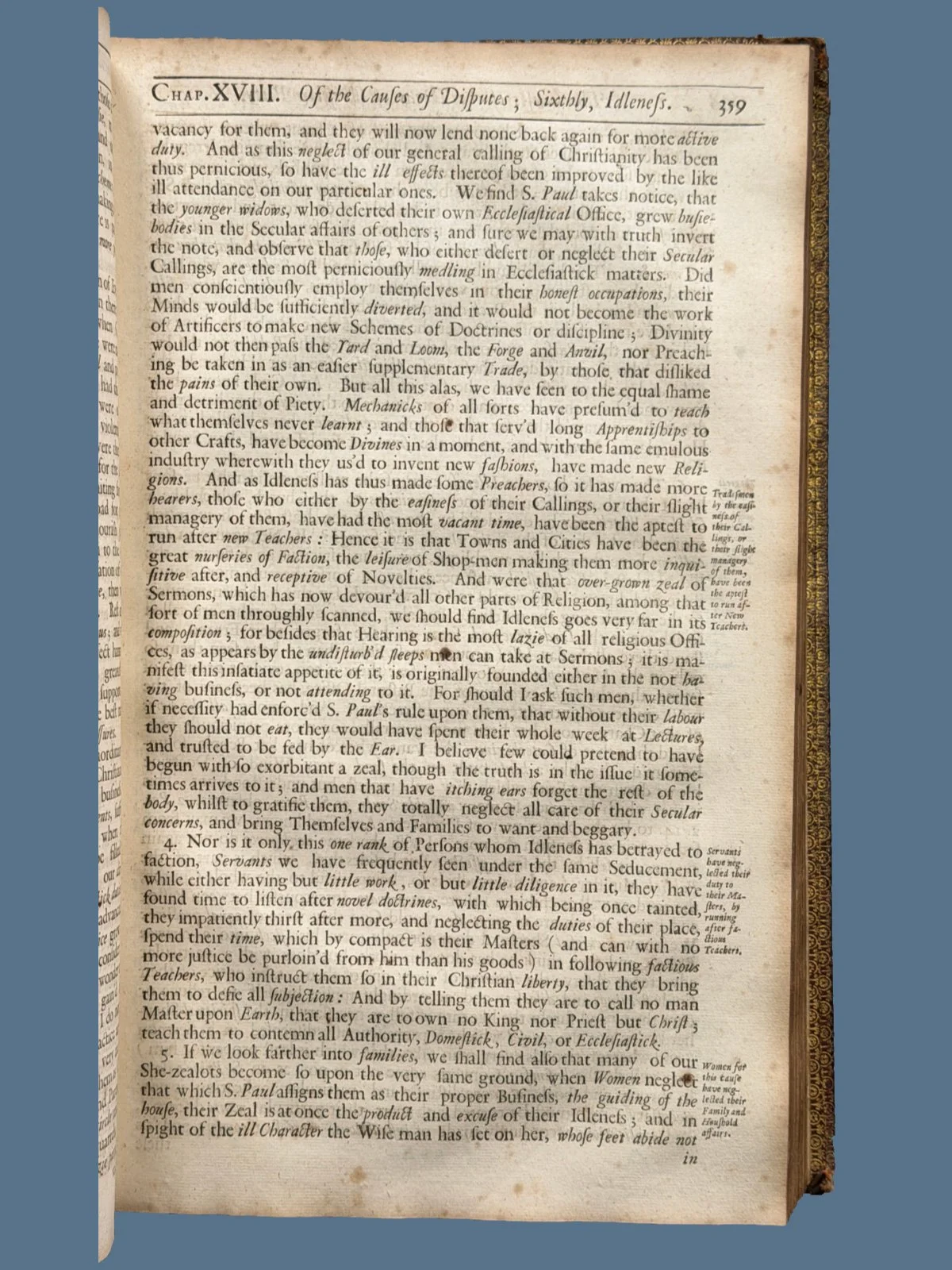 Image 12 of 17
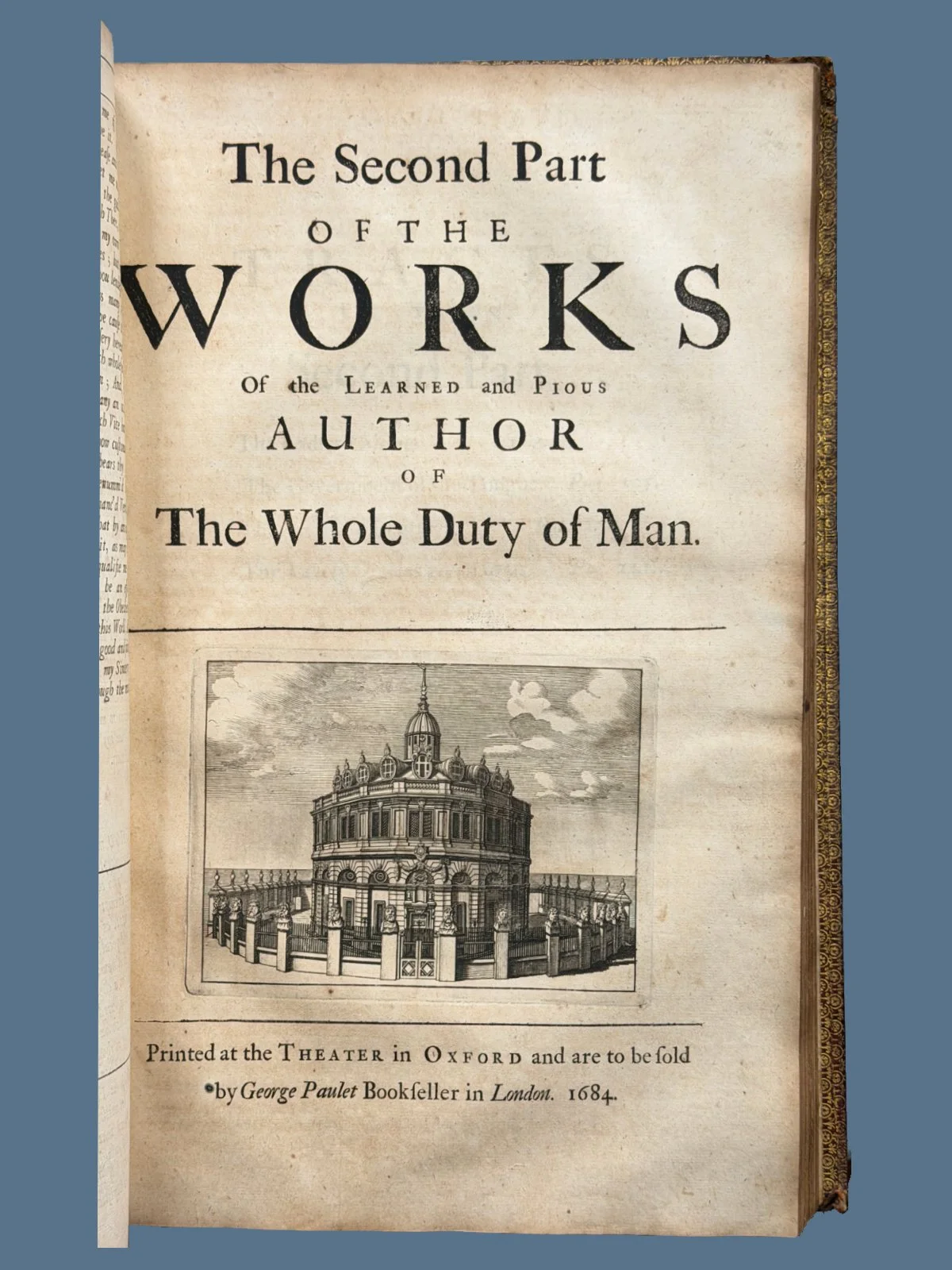 Image 13 of 17
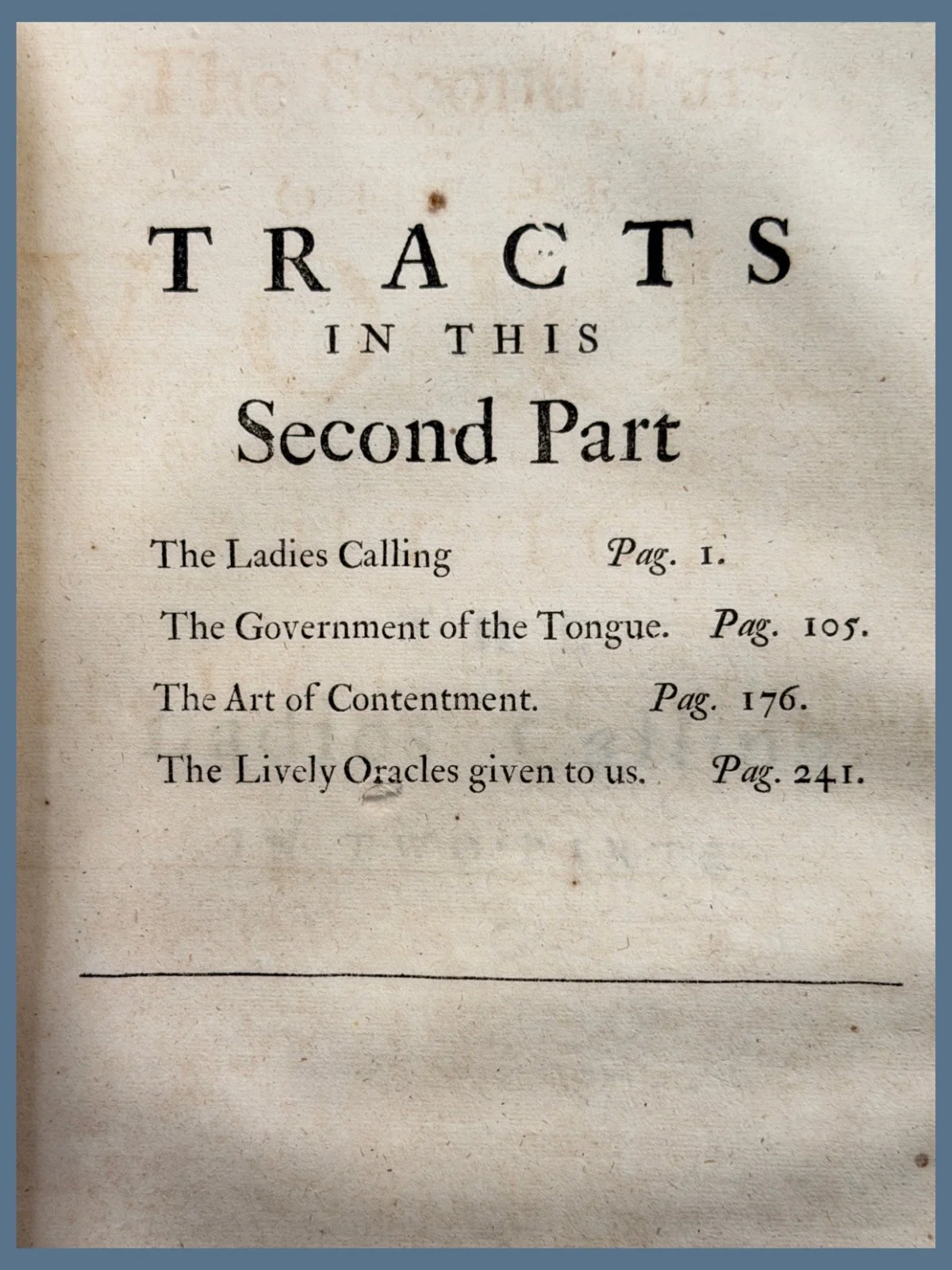 Image 14 of 17
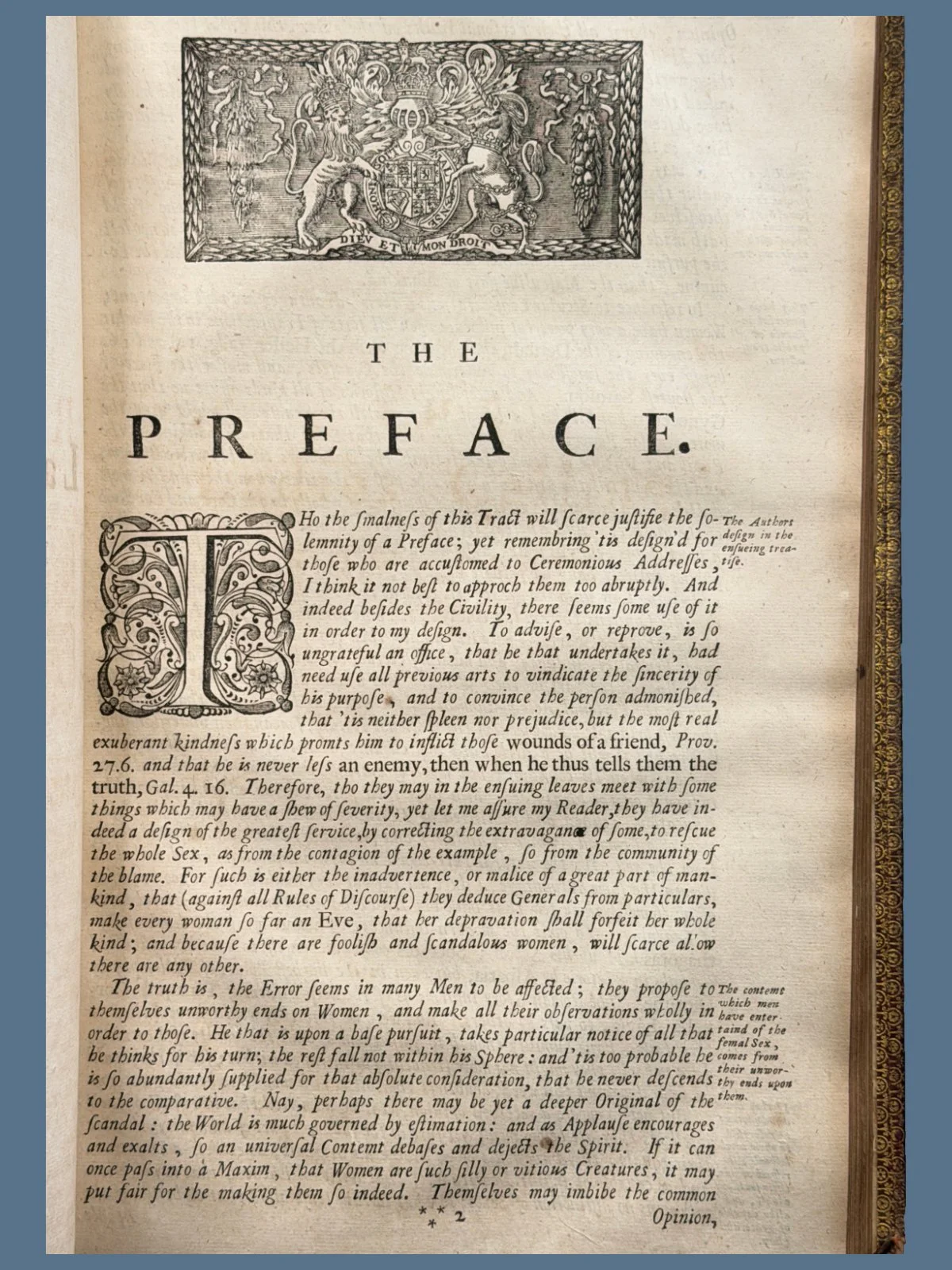 Image 15 of 17
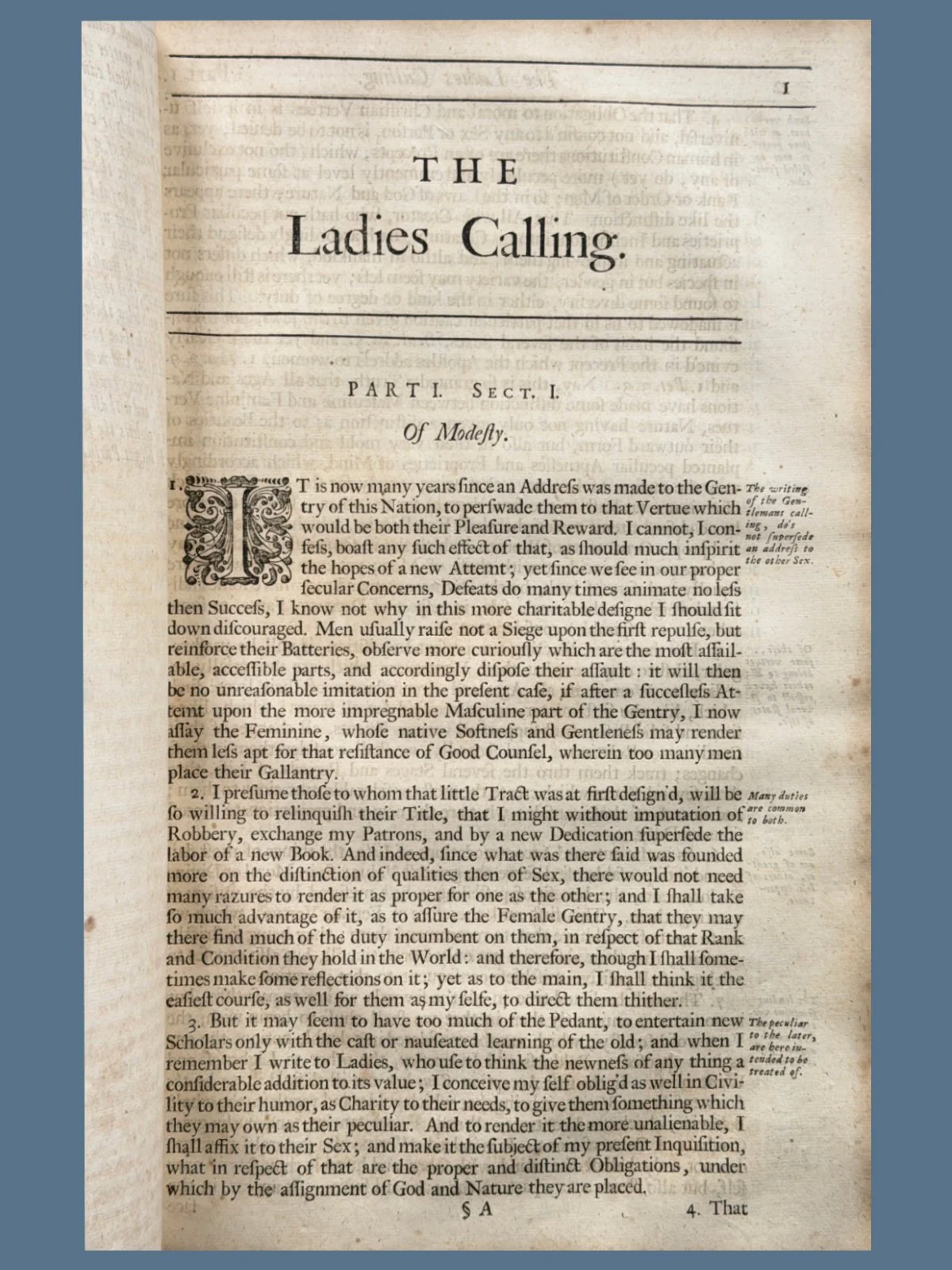 Image 16 of 17
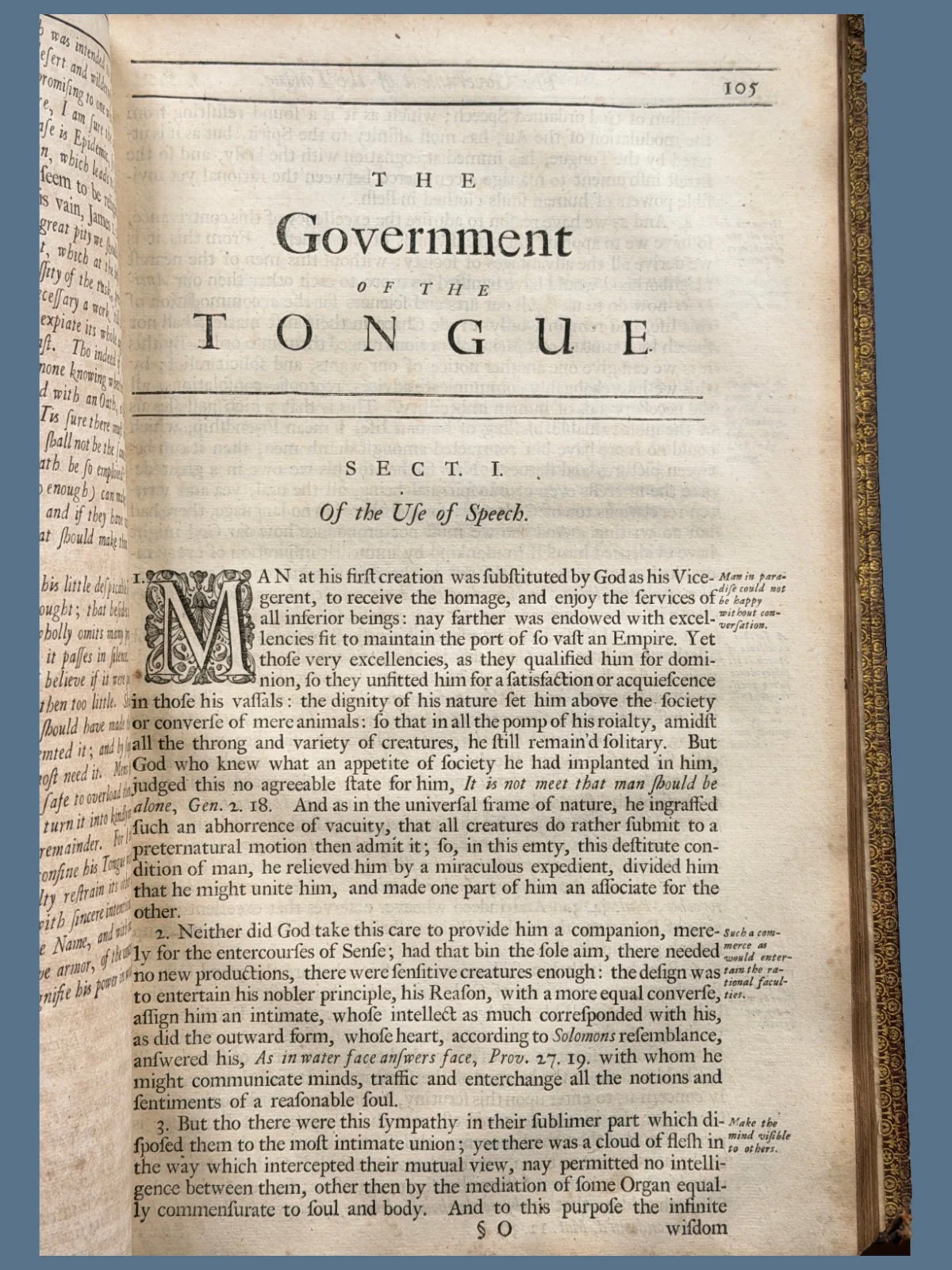 Image 17 of 17
The works of the learned and pious author of The Whole Duty of Man.
Description
Engraved frontispiece of a veiled Moses with the Ten Commandments, the caption reads “We preach not our selves, but Christ Jesus our Lord. The book gathers the principal devotional and practical writings traditionally attributed to Richard Allestree. Chief among these is The Whole Duty of Man, a comprehensive guide to moral theology arranged according to one’s duties toward God, neighbor, and self, with detailed instruction on prayer, the sacraments, repentance, charity, and obedience. The volume includes companion treatises such as The Causes of the Decay of Christian Piety, The Gentleman’s Calling, The Lady’s Calling, The Government of the Tongue, and various prayers and meditations—forming a substantial corpus of Restoration-era practical divinity aimed at shaping both private devotion and public conduct.
Pagination
[16], 456, [12], 240, [6], 241-322, [6] pp.
Binding
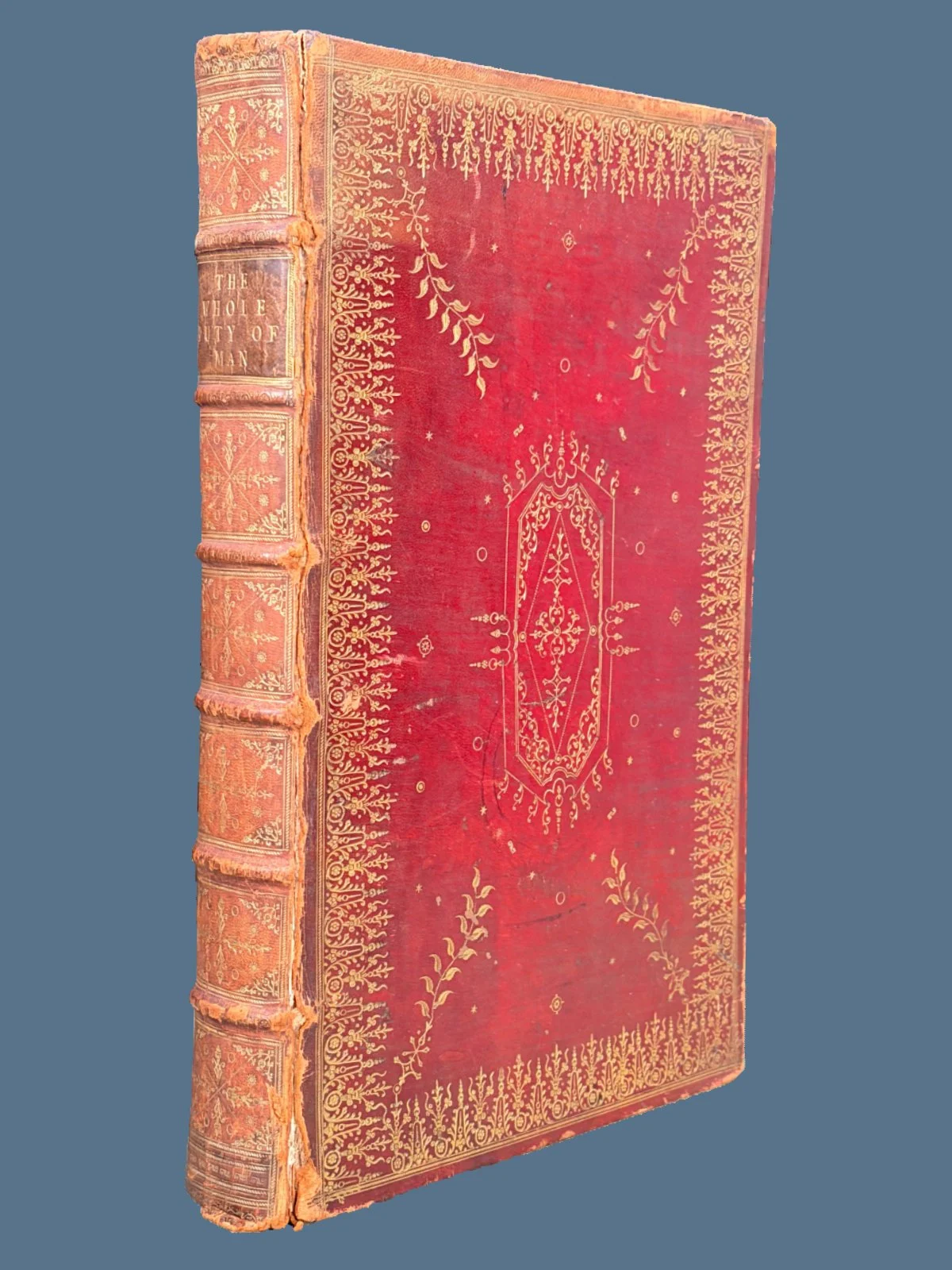
Contemporary red morocco. Boards paneled in gilt with rolls and leafy sprays and drawer handle tools of stars and circles around a central arabesque design. Spine with six raised bands, gilt tooling to compartments, and a label with the words “The Whole Duty of Man” to spine. Marbled endpapers. All edges gilt. Top joints cracked and lower joint starting. Corners bumped.
Condition
Occasional browning and spotting, but quite clean overall – a very good copy in a stunning English binding. Bookplate of Sir Wyndham Portal to front pastedown. Signature of Dorothy Beckford to title page.
Note
Long attributed to Richard Allestree (1619–1681), Regius Professor of Divinity at Oxford and a prominent Royalist churchman, these works became foundational texts of later seventeenth-century Anglican spirituality. The Whole Duty of Man in particular achieved extraordinary popularity, going through numerous editions and becoming a staple of English households for generations. Its plain style, moral earnestness, and comprehensive scope made it one of the most influential devotional manuals in the English-speaking world, helping to define the tone of post–Restoration Anglican piety and shaping lay religious practice well into the eighteenth century.
References
ESTC R20055