The Base Text of the Protestant Reformation
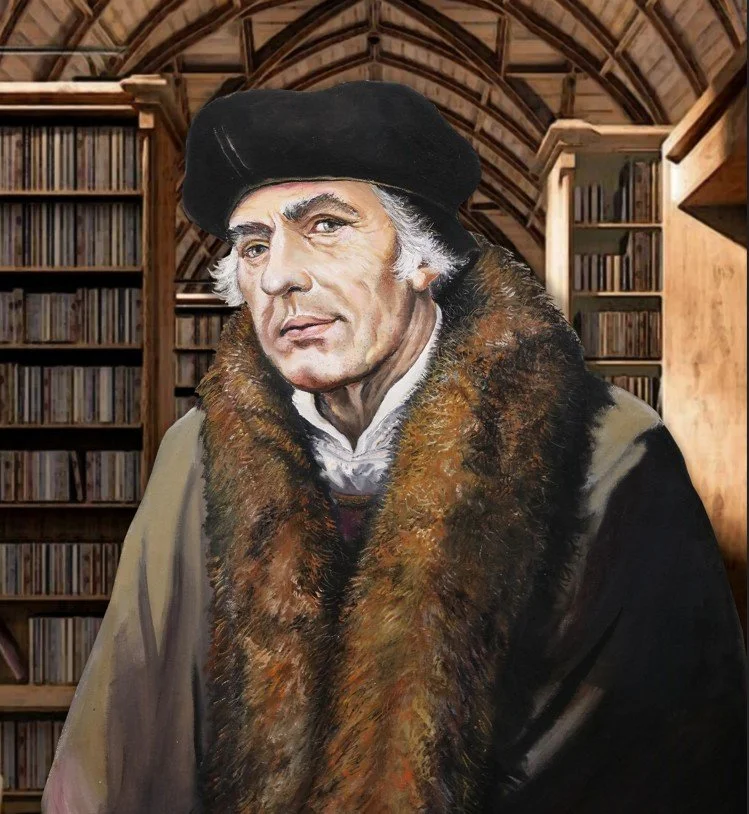
Today we’re emphasizing the text behind the text, the work of the great humanist Desiderius Erasmus. His commitment to return to the original sources, and especially his publication of the Greek New Testament, made the Scriptures newly accessible in their earliest recoverable form. That printed Greek text, placed alongside a revised Latin translation, quietly reshaped the intellectual landscape of Europe and helped lay the groundwork for the Protestant Reformation.
Two of Erasmus’ works we’re highlighting include:
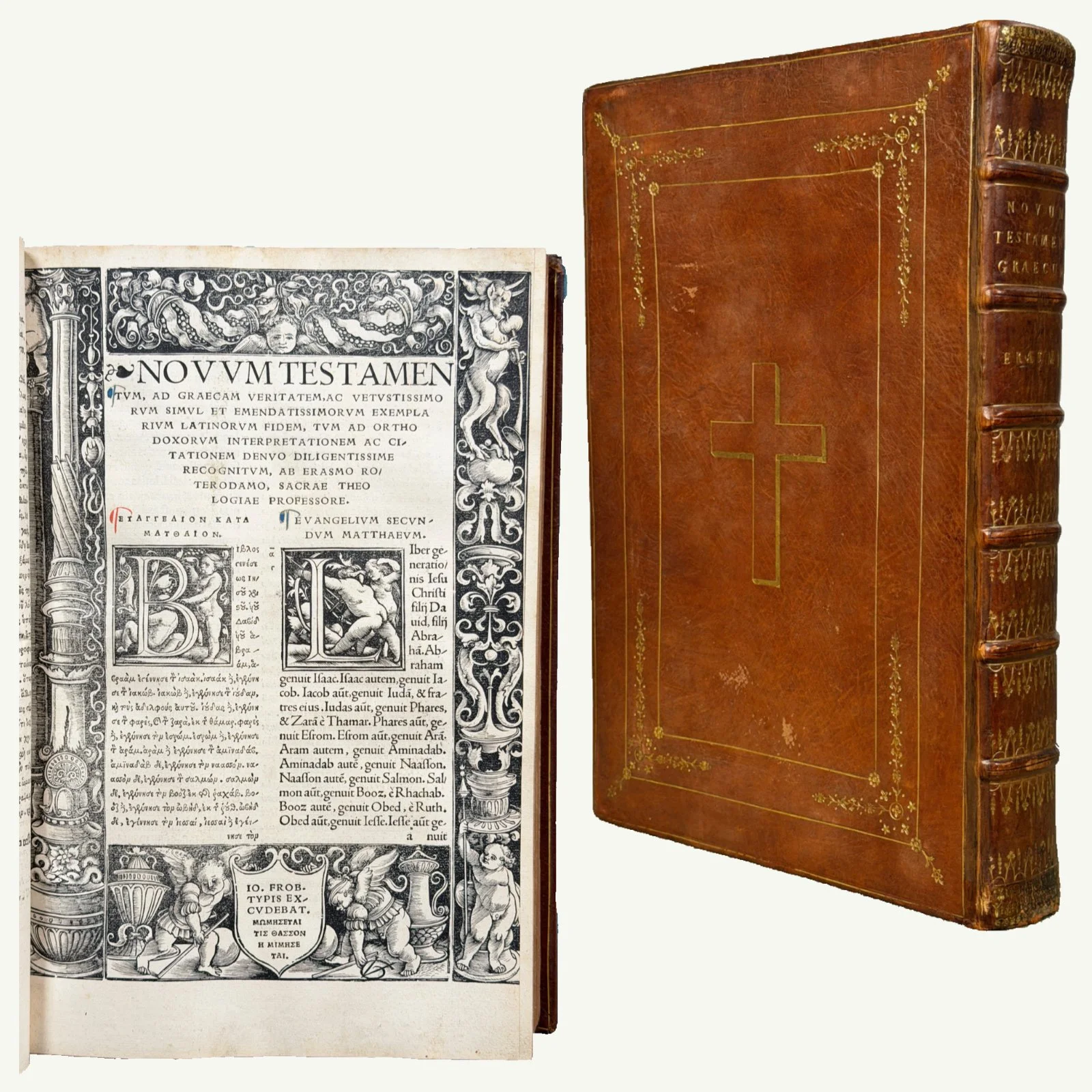
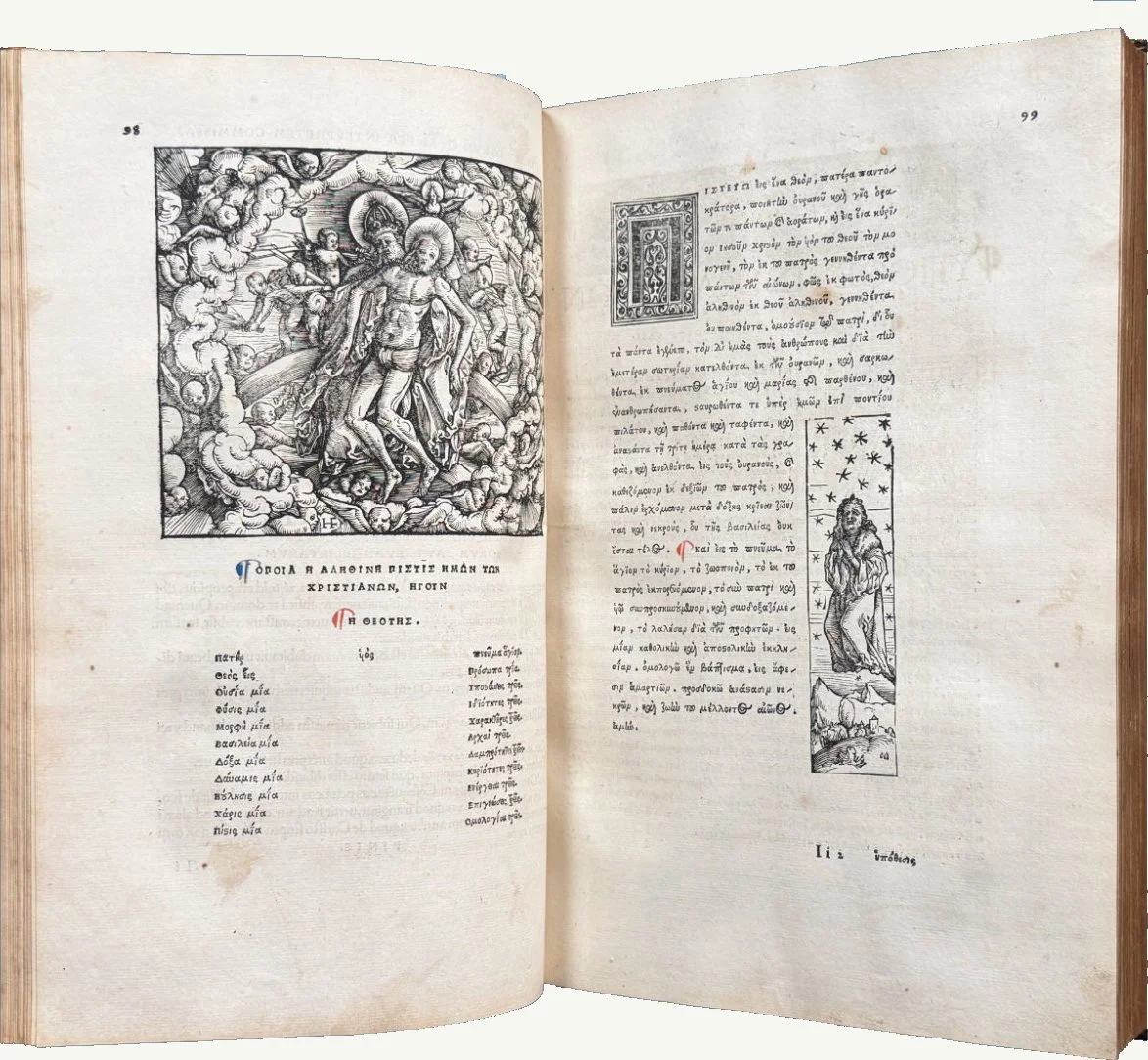
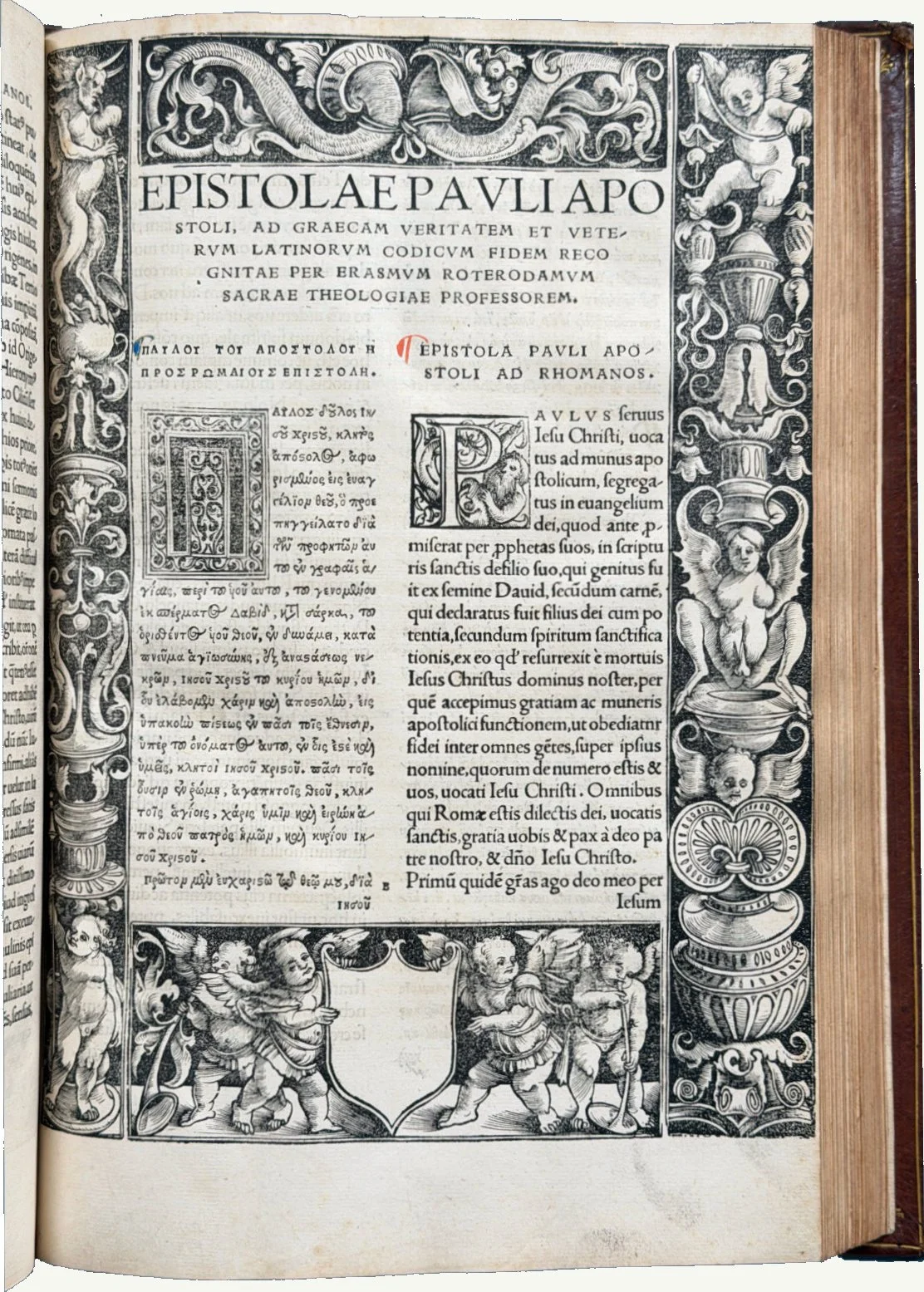
1519 Novum Testamentum Omne
The edition used by Luther and likely also Tyndale
In a Roger Payne Binding with Red and Blue Rubrication
Elaborate Woodcut Border Designs by Hans Holbein1519 Novum Testamentum … Annotationes
Greatest Scholarly Accomplishment of the Renaissance
Pushes back against Medieval Sacramental Theology
Elaborate Woodcut Border Designs by Hans Holbein
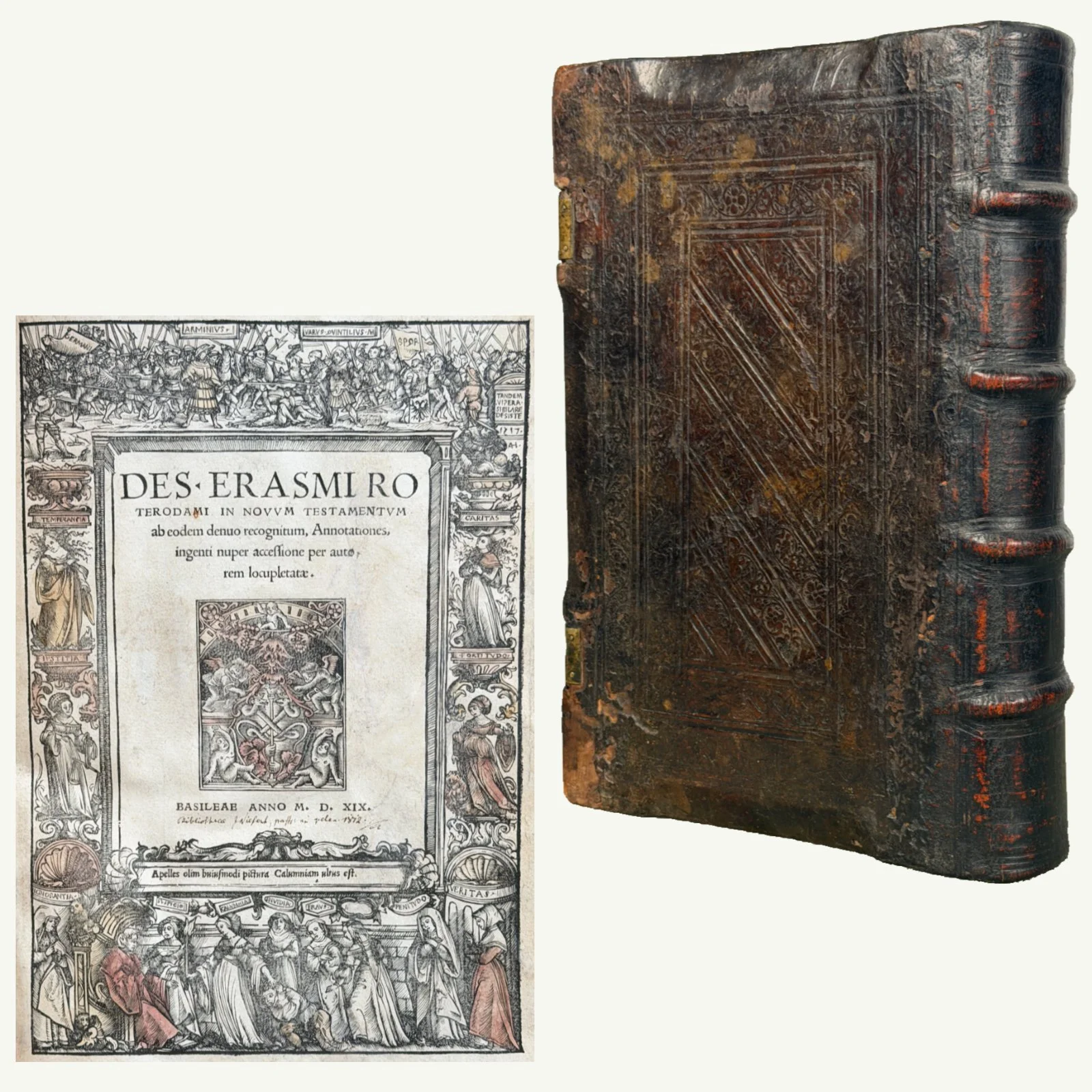
1519 Novum Testamentum Omne
Novum Instrumentum Omne was published by Desiderius Erasmus out of a distinctly humanist commitment to ad fontes: a return to the original sources of Christian antiquity. Erasmus believed that the Western Church’s Latin Bible, the Vulgate, had accumulated errors through centuries of transmission and commentary, and that it needed to be measured against the Greek manuscripts that lay behind it. His goal was not to discard the Vulgate but to correct, purify, and refine it, restoring greater linguistic and textual accuracy so that theology itself could rest on a firmer philological foundation.
To make this process visible, Erasmus printed the Greek text and his revised Latin translation in parallel columns, allowing readers to compare them directly and see where the Vulgate diverged from the Greek. This format reconfigured how Scripture was read in the West, shifting authority toward the original languages and away from the medieval Latin tradition. The impact was immediate: Martin Luther drew on Erasmus’ text in his own biblical and theological arguments, while William Tyndale used it as the foundation for the first English New Testament. Even without intending rupture, Erasmus helped create the textual conditions that made the Reformation possible, ensuring that subsequent vernacular translations carried greater authority because they were grounded in the original Greek sources rather than the inherited Latin tradition
The 1519 Edition
The 1519 edition greatly expands upon Erasmus’ first New Testament and corrects many typographical errors. Erasmus enlarged several sections with newly composed material and added the Lives of the Evangelists by Sophronius, introductions to the Gospels by Theophylact, and a letter from Pope Leo X expressing his pleasure that a second edition was being published.
In his three prefaces, Erasmus stressed the diligent study of the New Testament, argued that no layman or woman should be denied access to Scripture in the vernacular, and explained his desire to improve the Vulgate through closer adherence to the Greek originals. His first preface, the Paraclesis (“summons”), presents a compelling call to pursue the “philosophy of Christ” through the reading of Scripture. William Tyndale later referenced it in the preface to his Obedience of a Christian Man (1528).
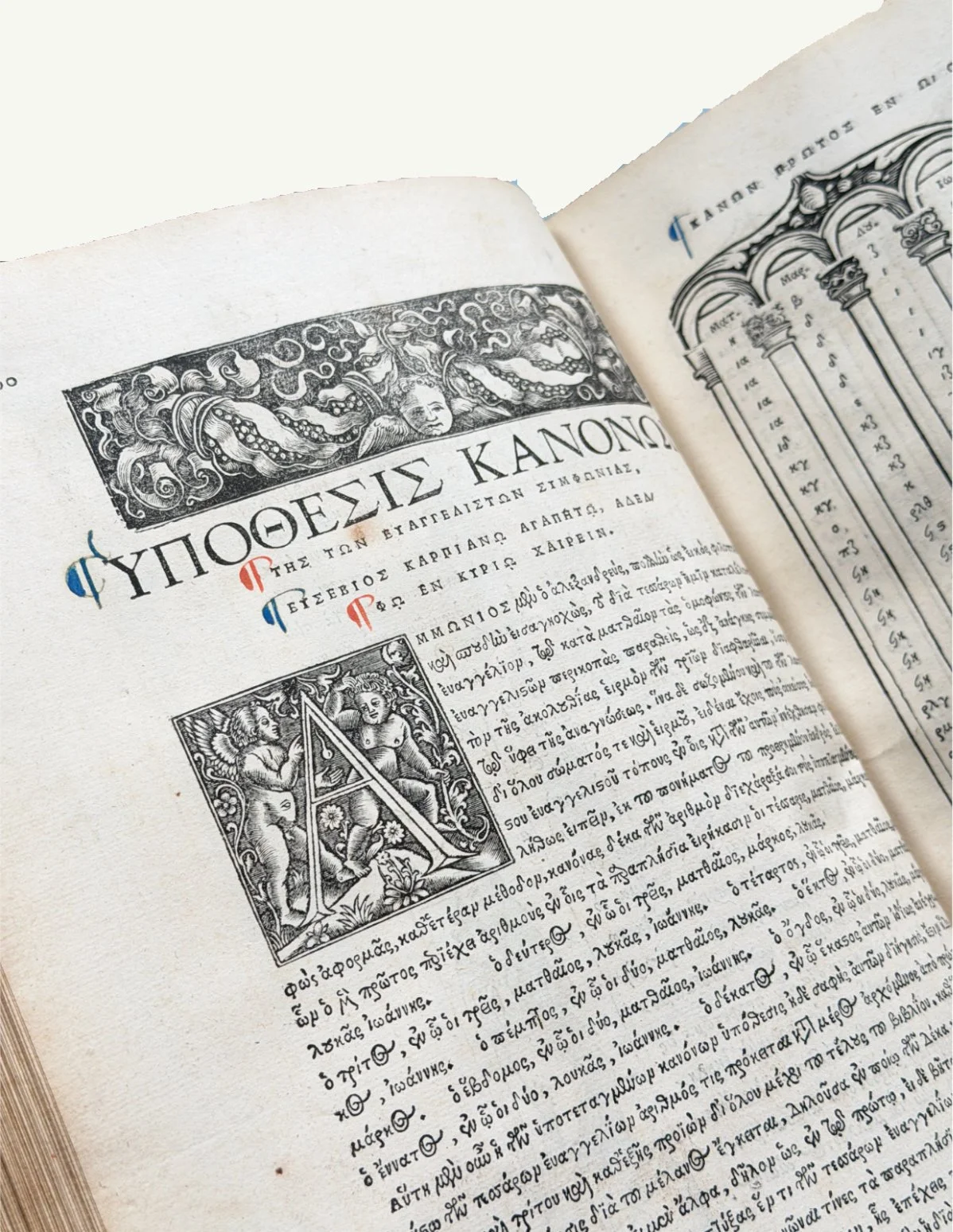
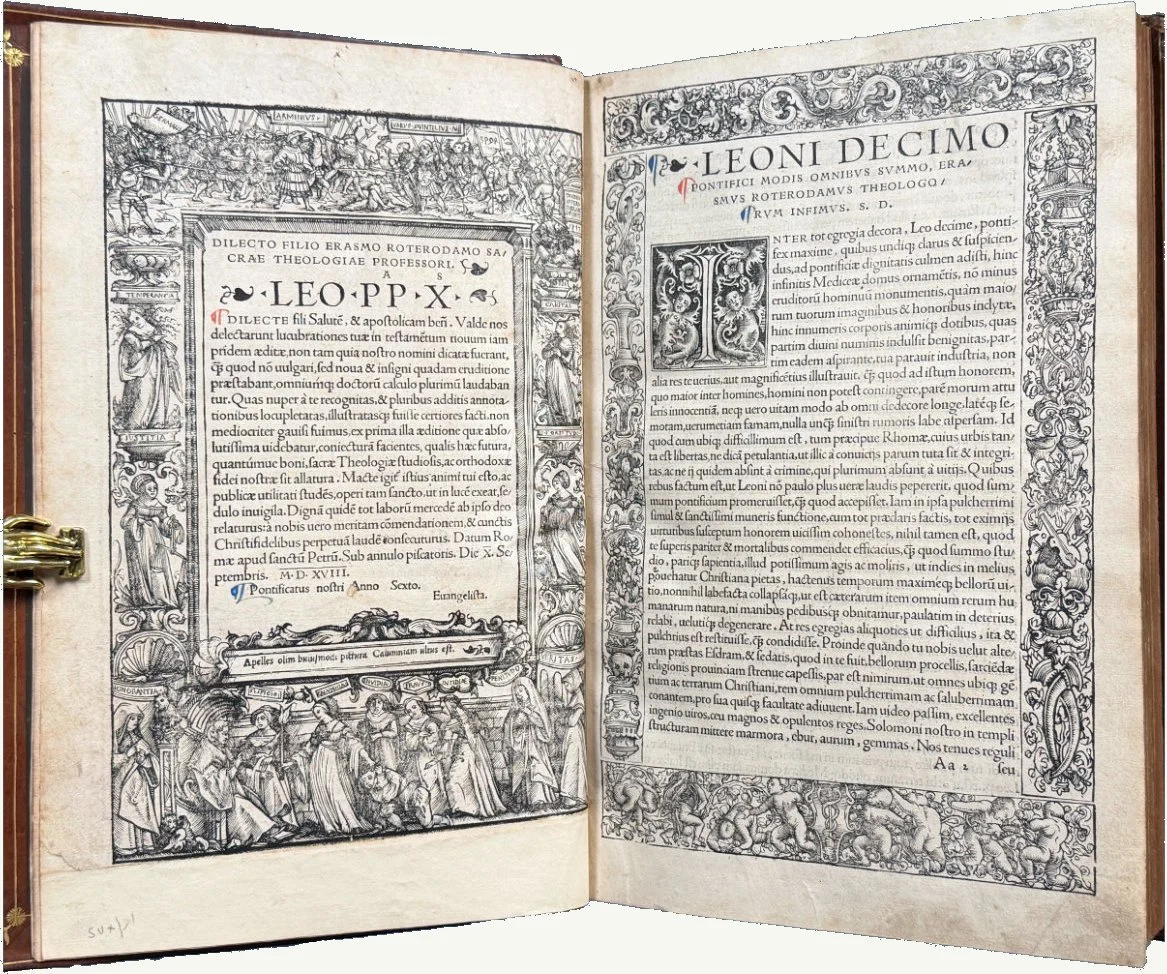
Erasmus introduced roughly four hundred changes to the Vulgate text. One notable example appears in Gabriel’s greeting to Mary at the Annunciation (Luke 1:28). The traditional Vulgate reading, Ave gratia plena (“Hail, full of grace”), familiar from countless Books of Hours, was revised by Erasmus to Ave gratiosa (“Hail, gracious one” or “graceful one”). The former suggests a state of being filled with grace, whereas the latter implies grace already inherent within Mary.
Another significant revision concerns the preaching of John the Baptist in the wilderness (Matthew 3:2). Where the Vulgate reads penitentiam agite (“do penance”), Erasmus proposed resipiscite (“repent” or “be penitent”). The former implies an outward sacramental act associated with the Roman Church, while the latter emphasizes an inward spiritual turning toward God. This distinction carries significant doctrinal implications.
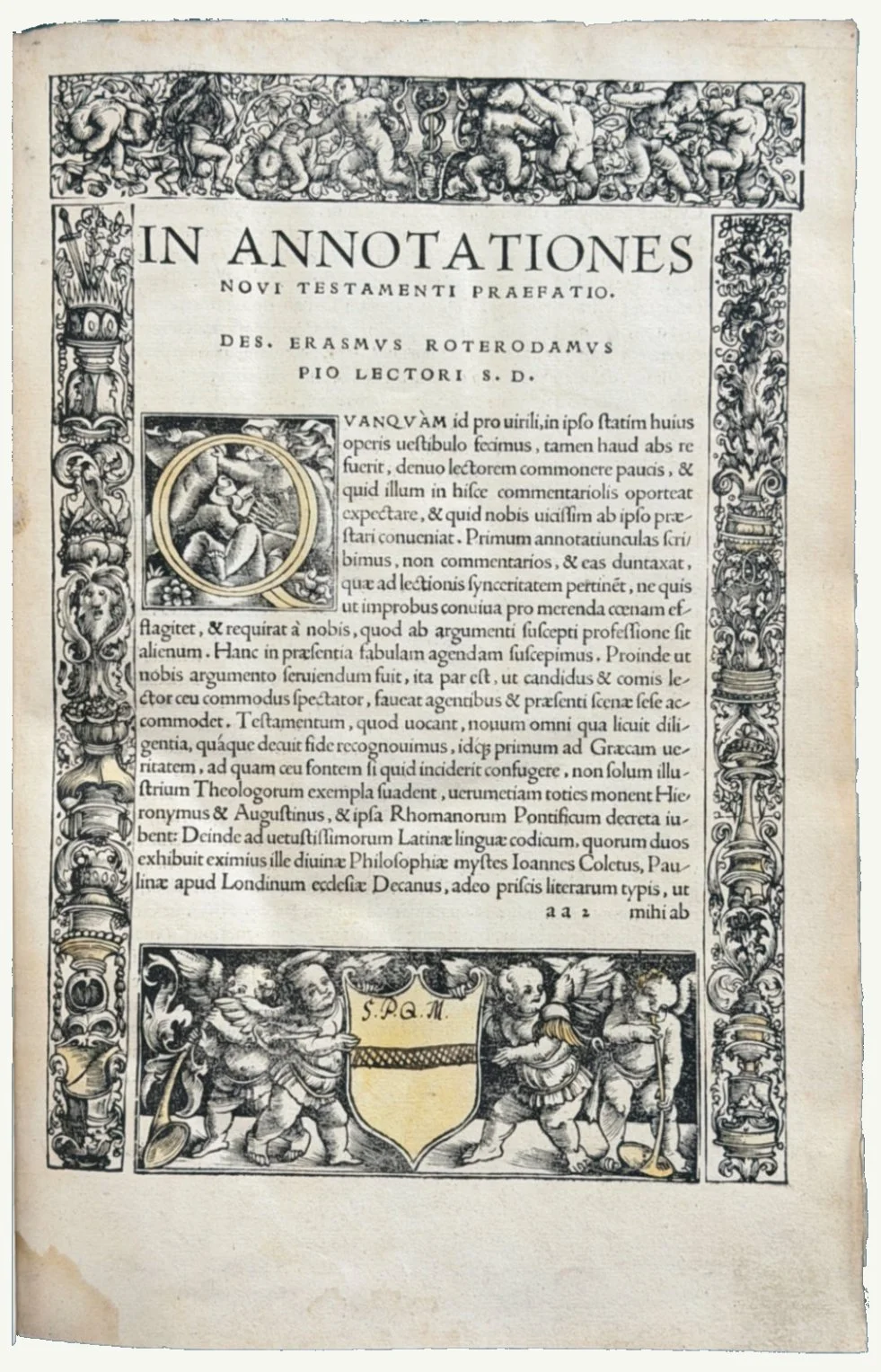
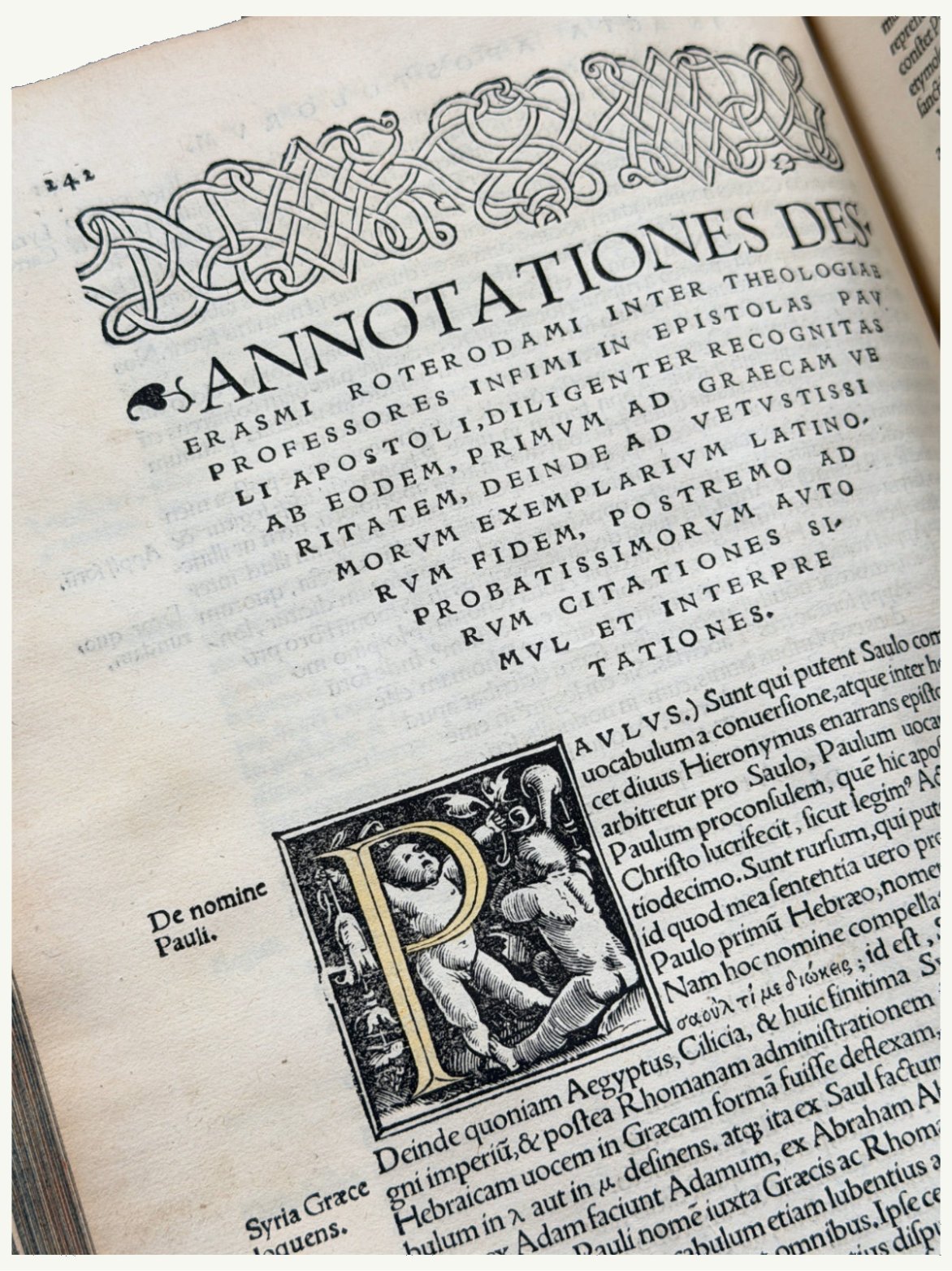
1519 Novum Testamentum … Annotationes
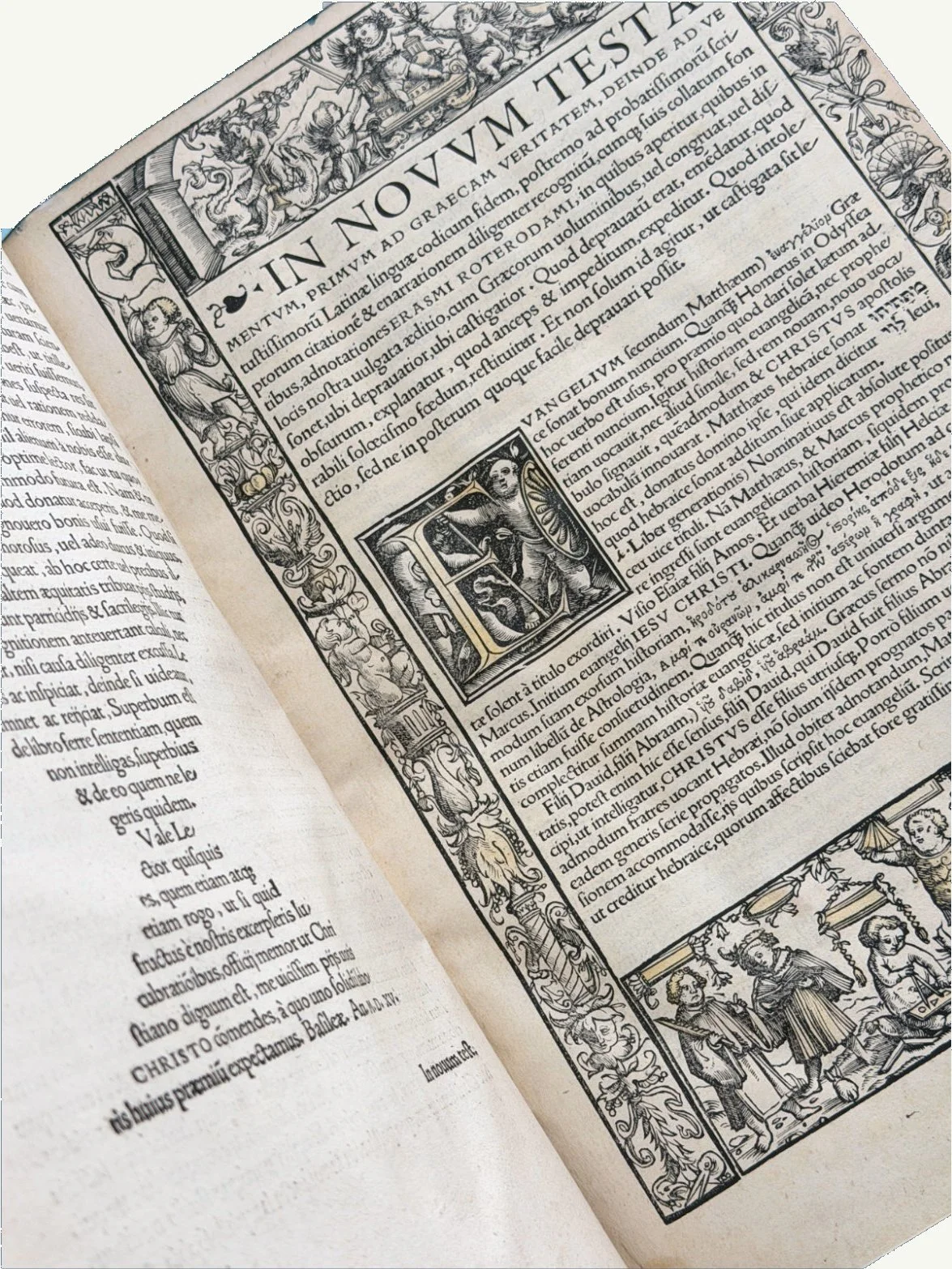
First issued here as a separate companion volume to his New Testament, the Annotations represent Renaissance scholarship at its most incisive and disruptive. Erasmus exposes accumulated mistranslations and interpretive habits that had long shaped Western theology.
He included readings that touched on key points of late medieval sacramental theology, while advancing the case for a more accurate rendering of Scripture grounded in the original languages. He repeatedly stresses that the biblical text, without scholarly aid, is exposed to misunderstanding and distortion.
The Annotations also reveal Erasmus’ own scholarly philosophy, aims, and method at work. In establishing the text and defending his readings against critics, Erasmus drew on a wide range of sources, including Greek and Latin manuscripts, classical authors, patristic writings, scholastic exegesis, and the work of earlier humanists such as Lorenzo Valla and Jacques Lefèvre d’Étaples.
He was willing to challenge even the most authoritative figures of the tradition, noting errors in Jerome and questioning established medieval authorities such as Peter Lombard.
In general, Erasmus expressed strong admiration for the early Church Fathers, while showing far less patience for many medieval commentators, whose work he often regarded as derivative or inattentive to the original sources.
The Annotations stand as a landmark of Renaissance thought: a work that reshaped biblical scholarship, influenced reformers such as Luther and Tyndale, and remains one of the defining intellectual achievements of early modern Europe.