
 Image 1 of 14
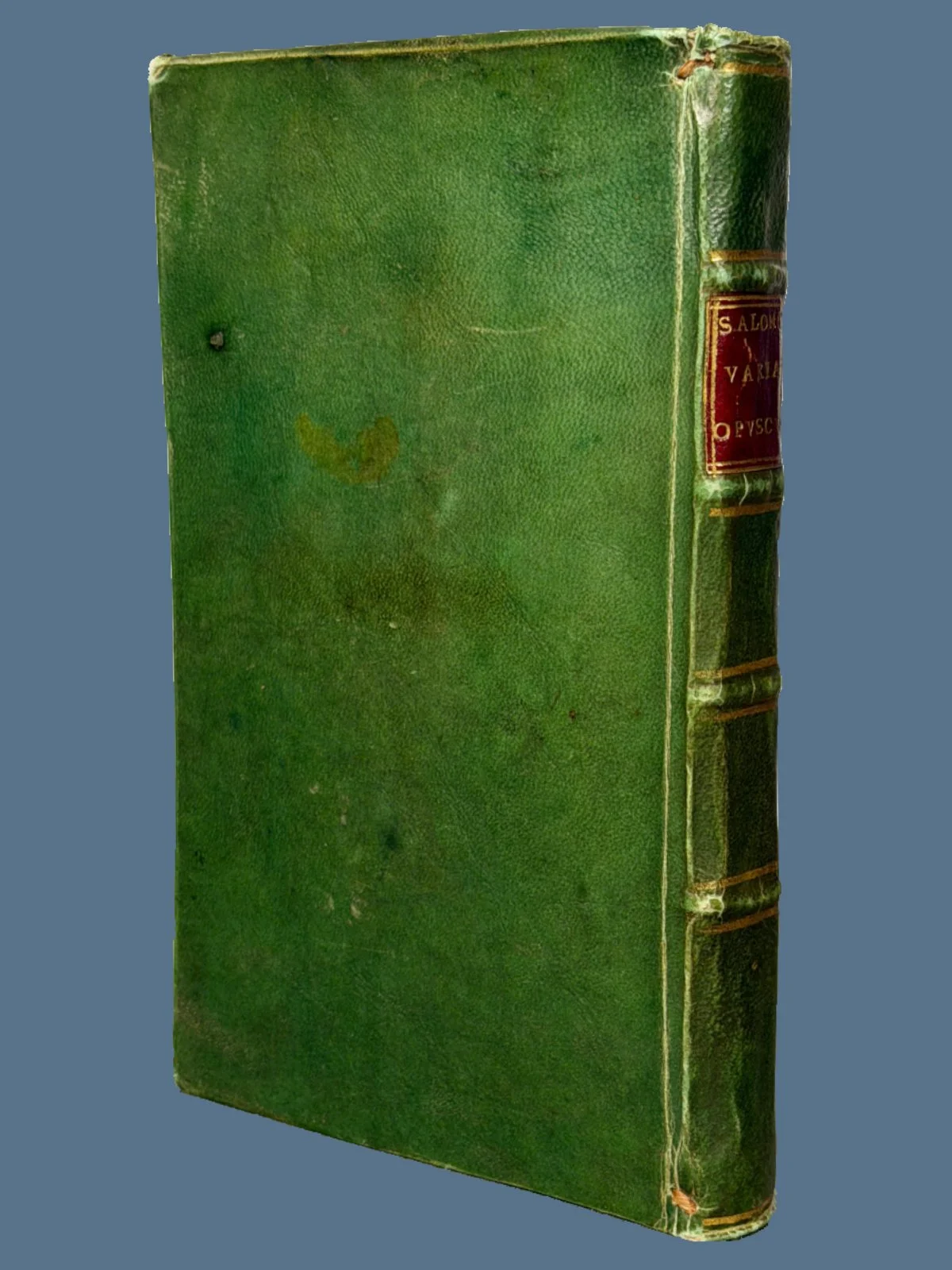 Image 2 of 14
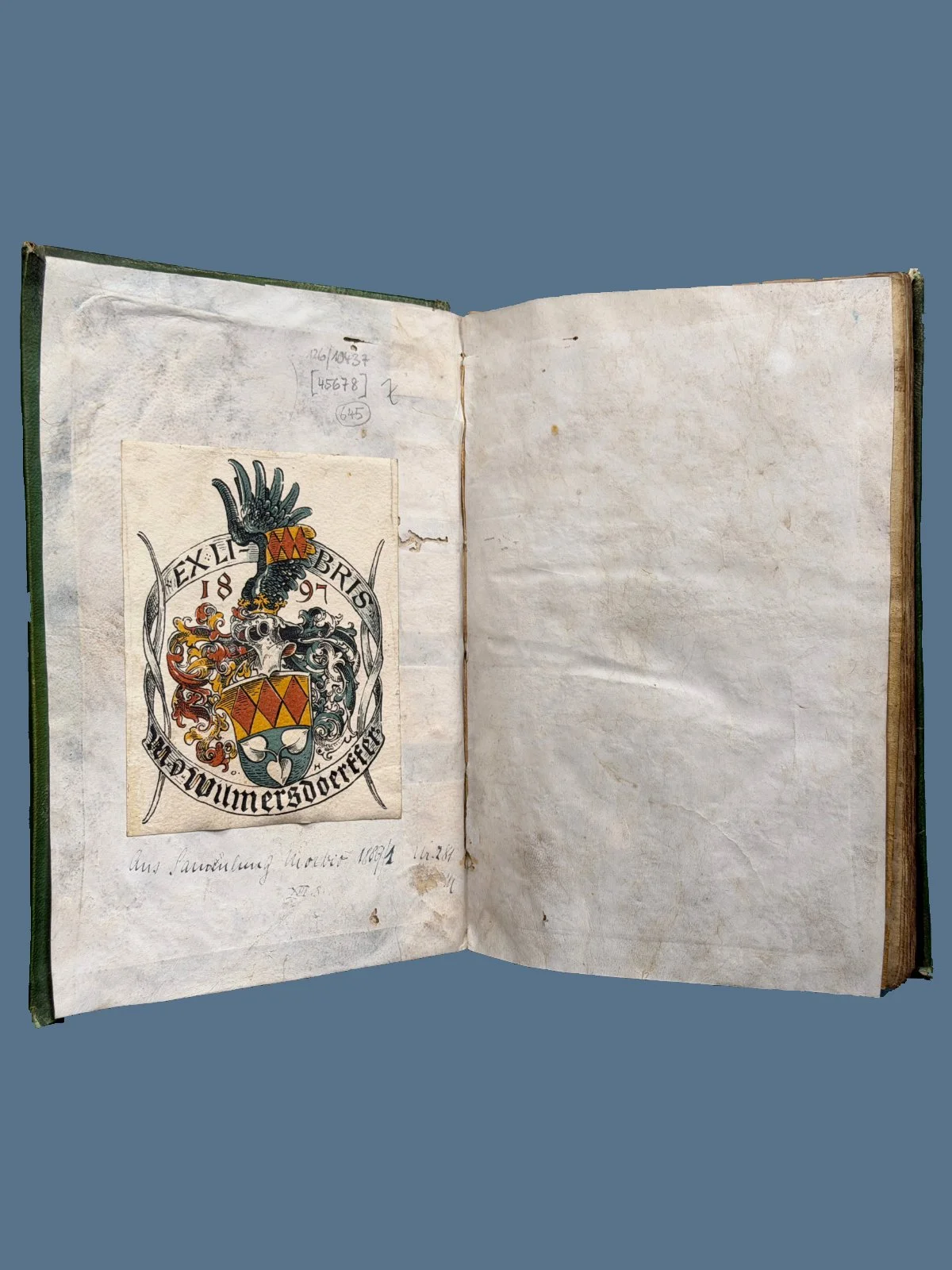 Image 3 of 14
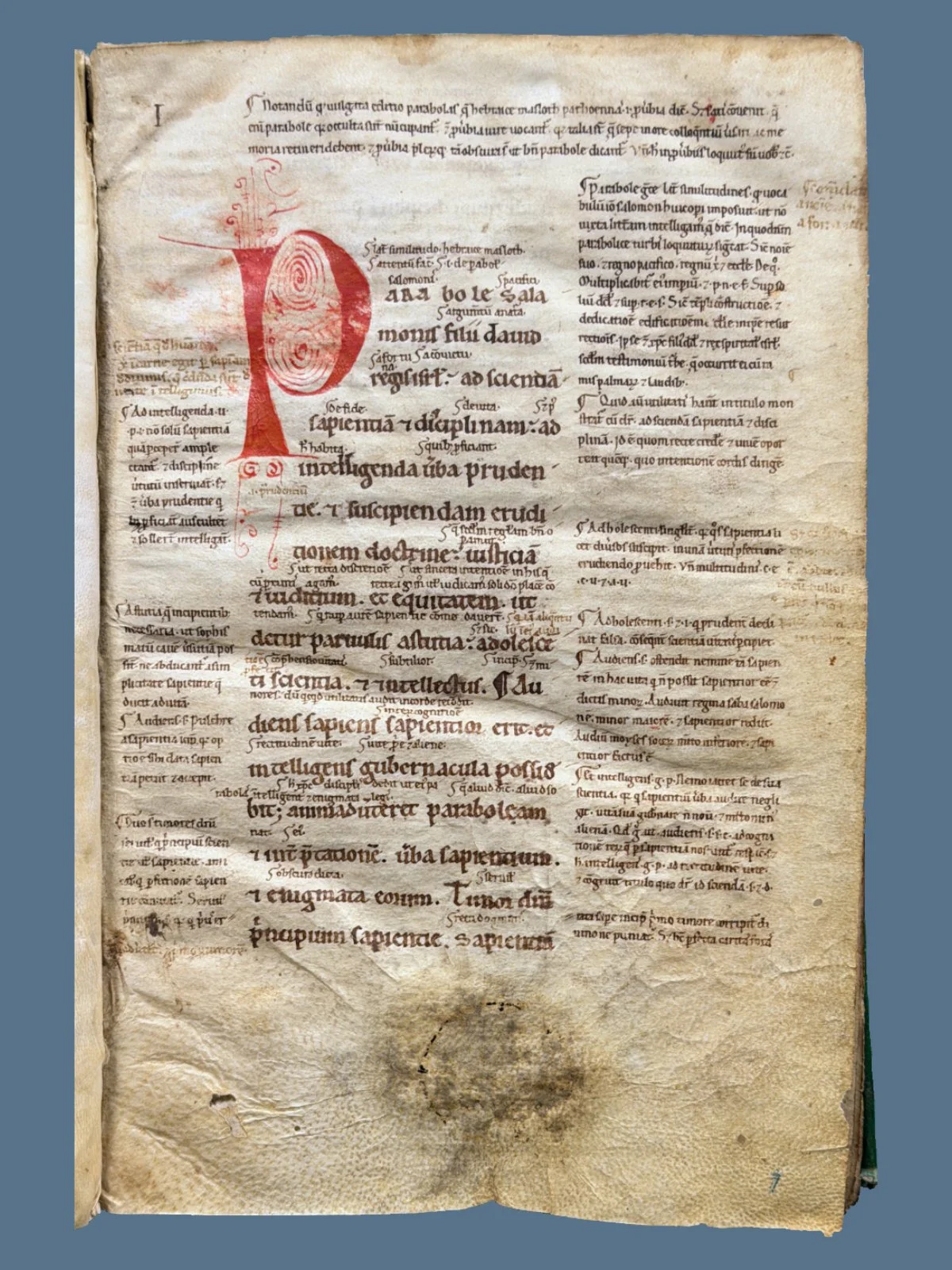 Image 4 of 14
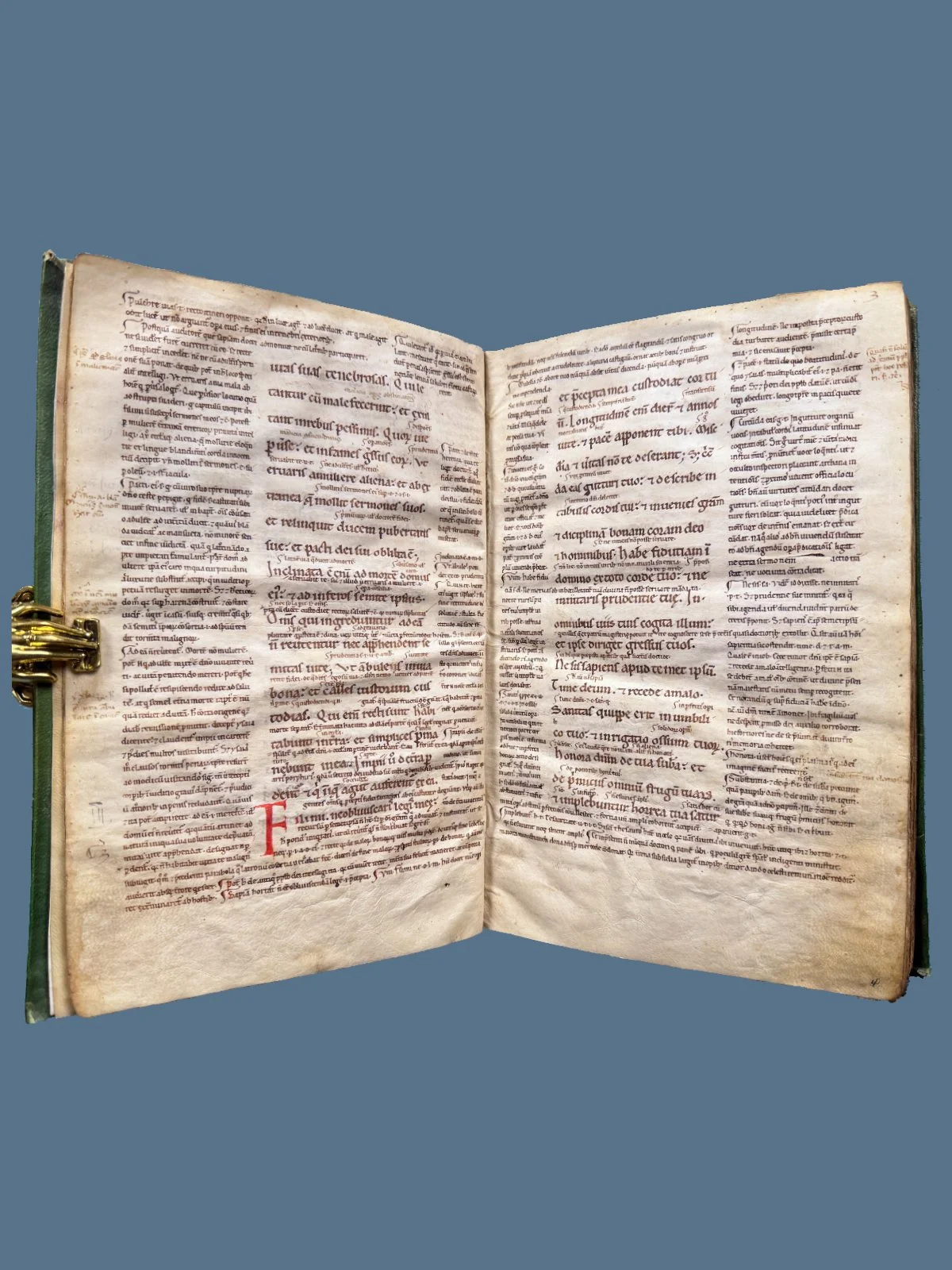 Image 5 of 14
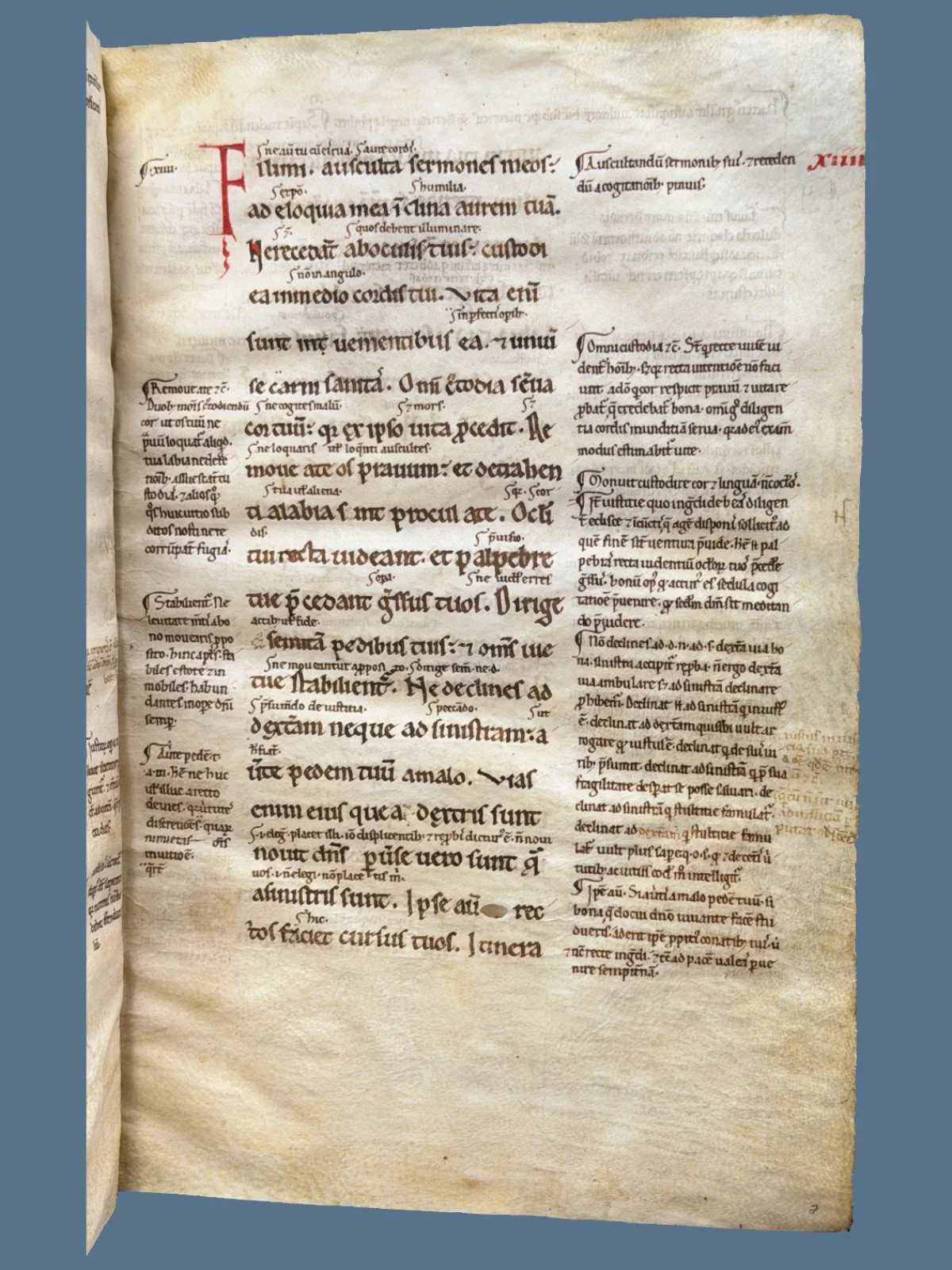 Image 6 of 14
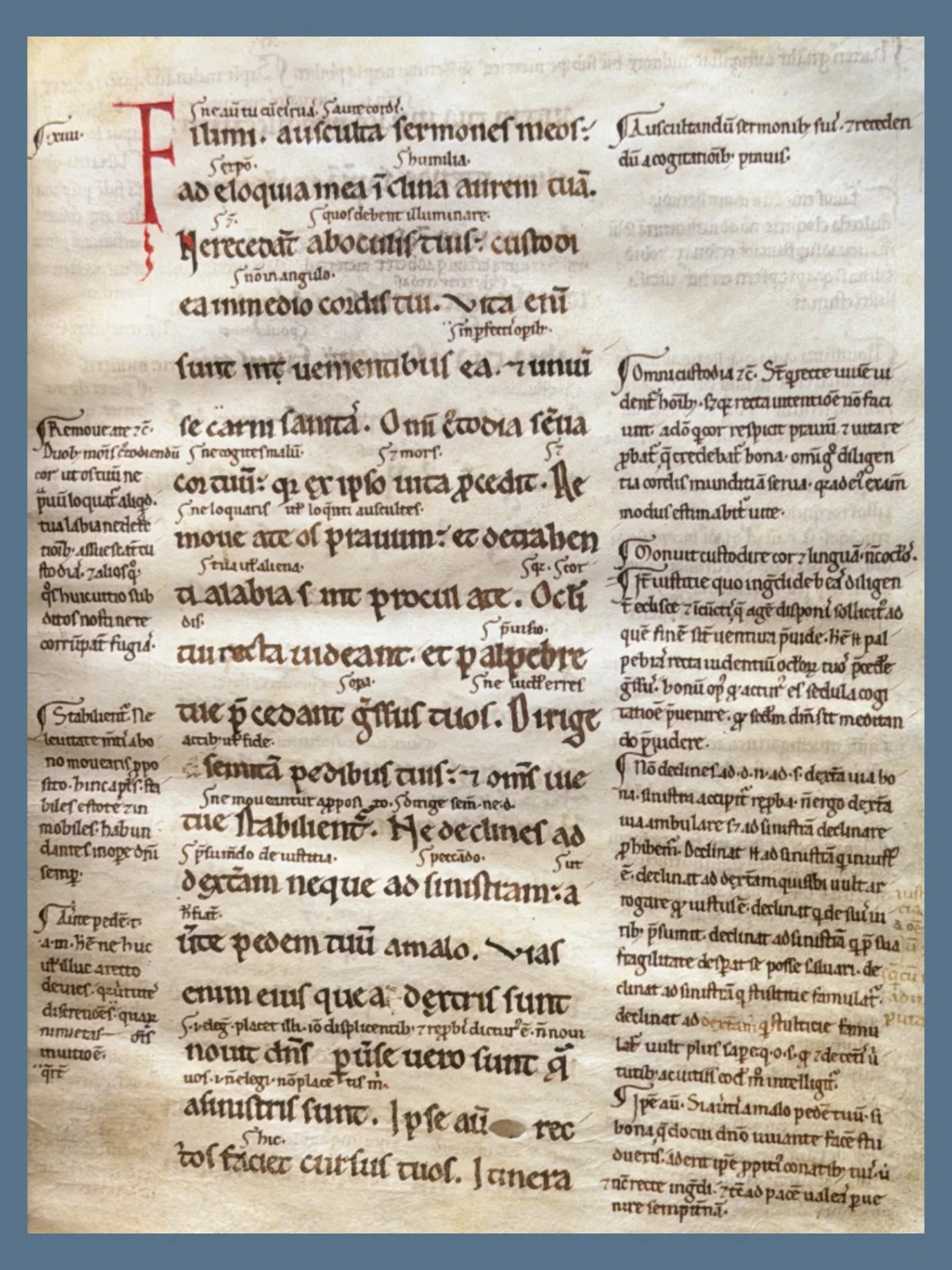 Image 7 of 14
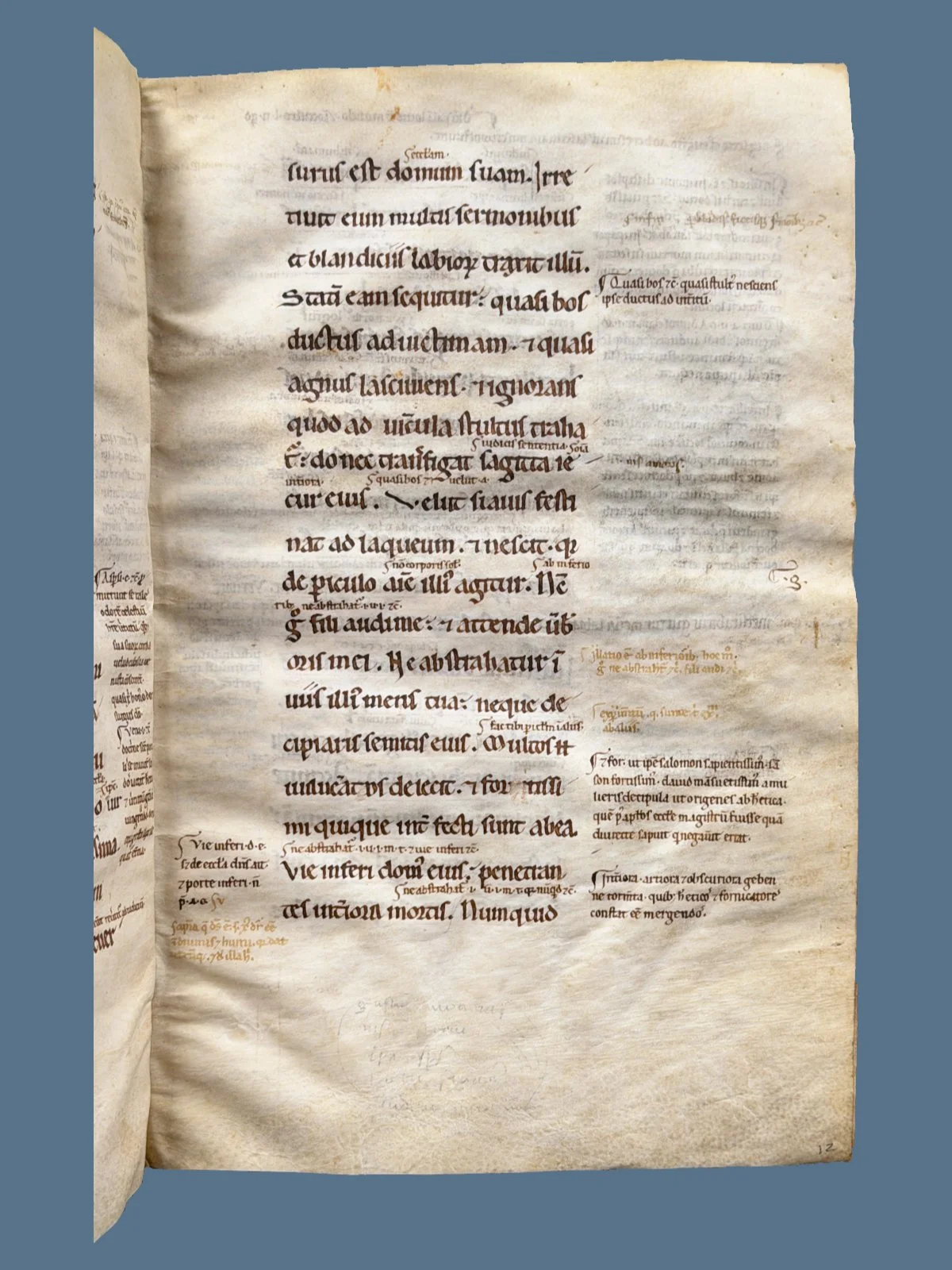 Image 8 of 14
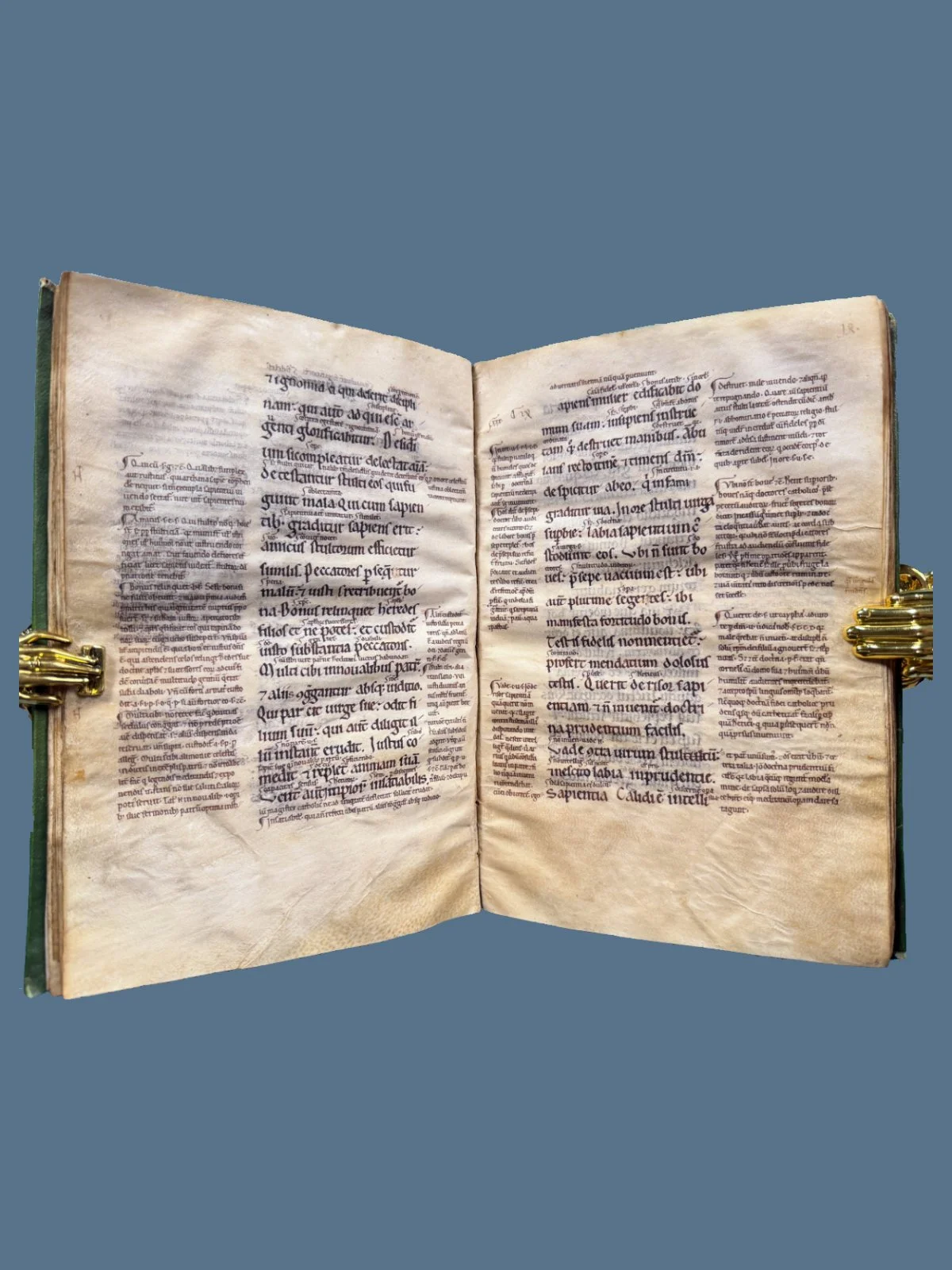 Image 9 of 14
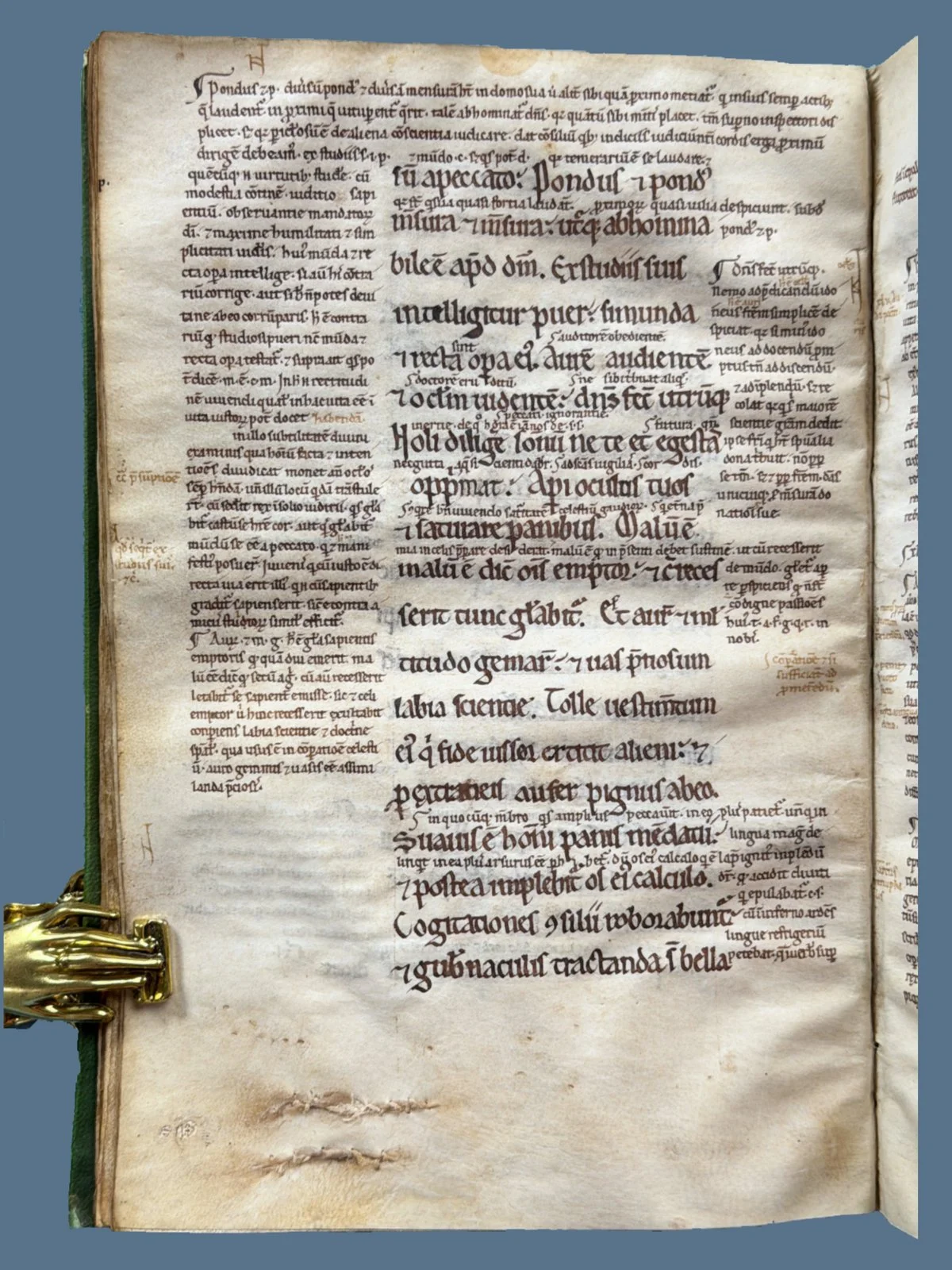 Image 10 of 14
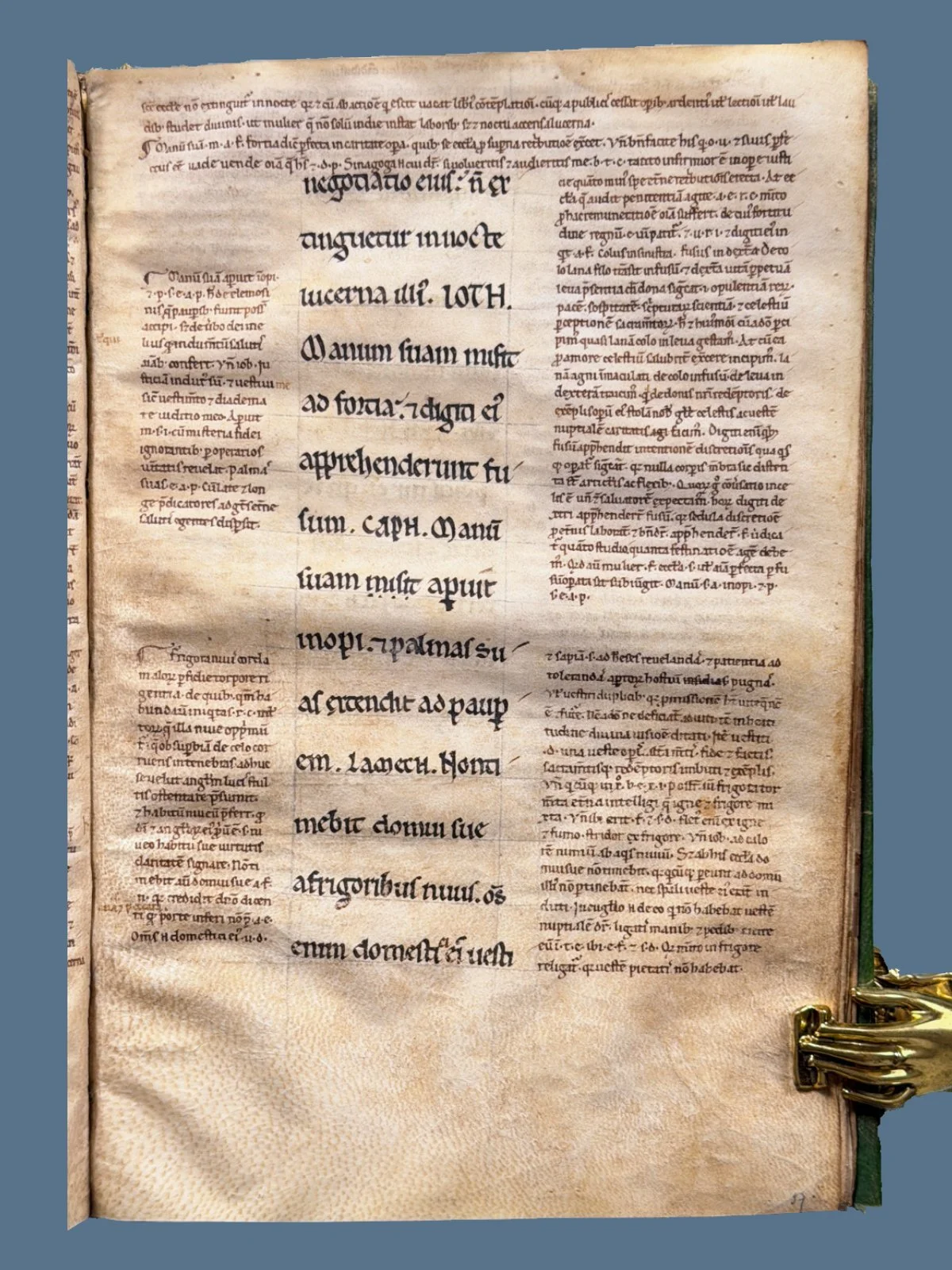 Image 11 of 14
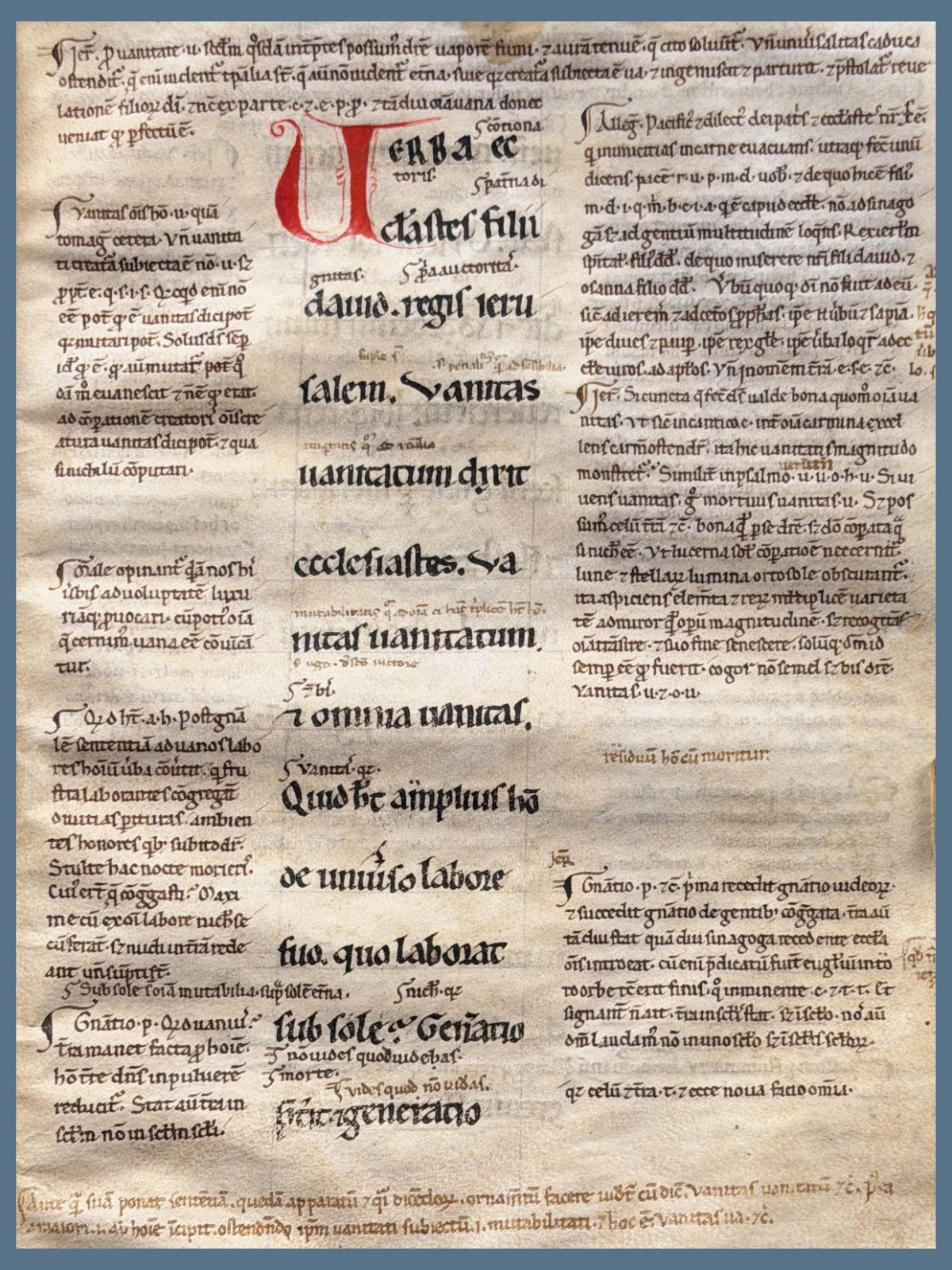 Image 12 of 14
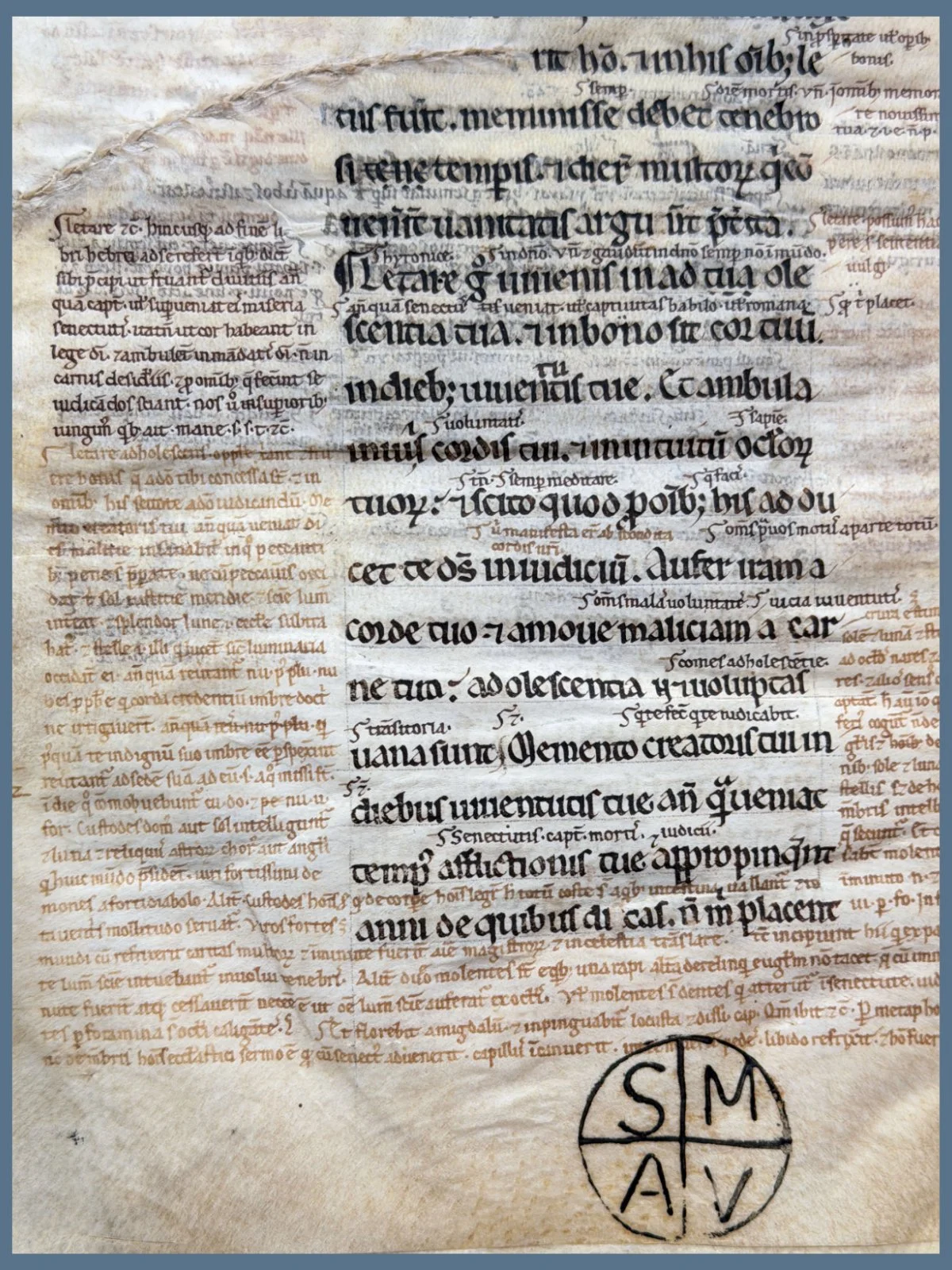 Image 13 of 14
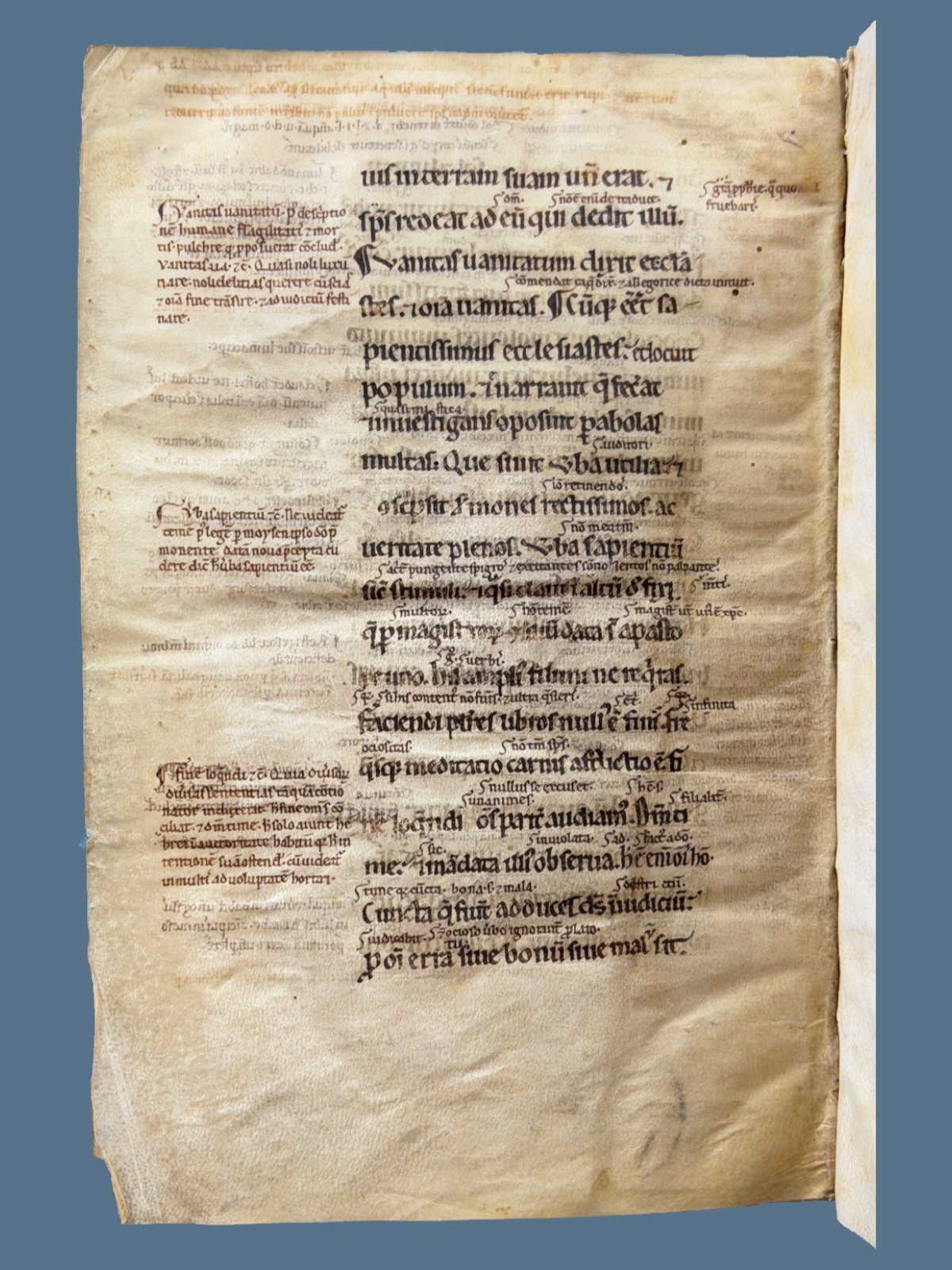 Image 14 of 14
Summary
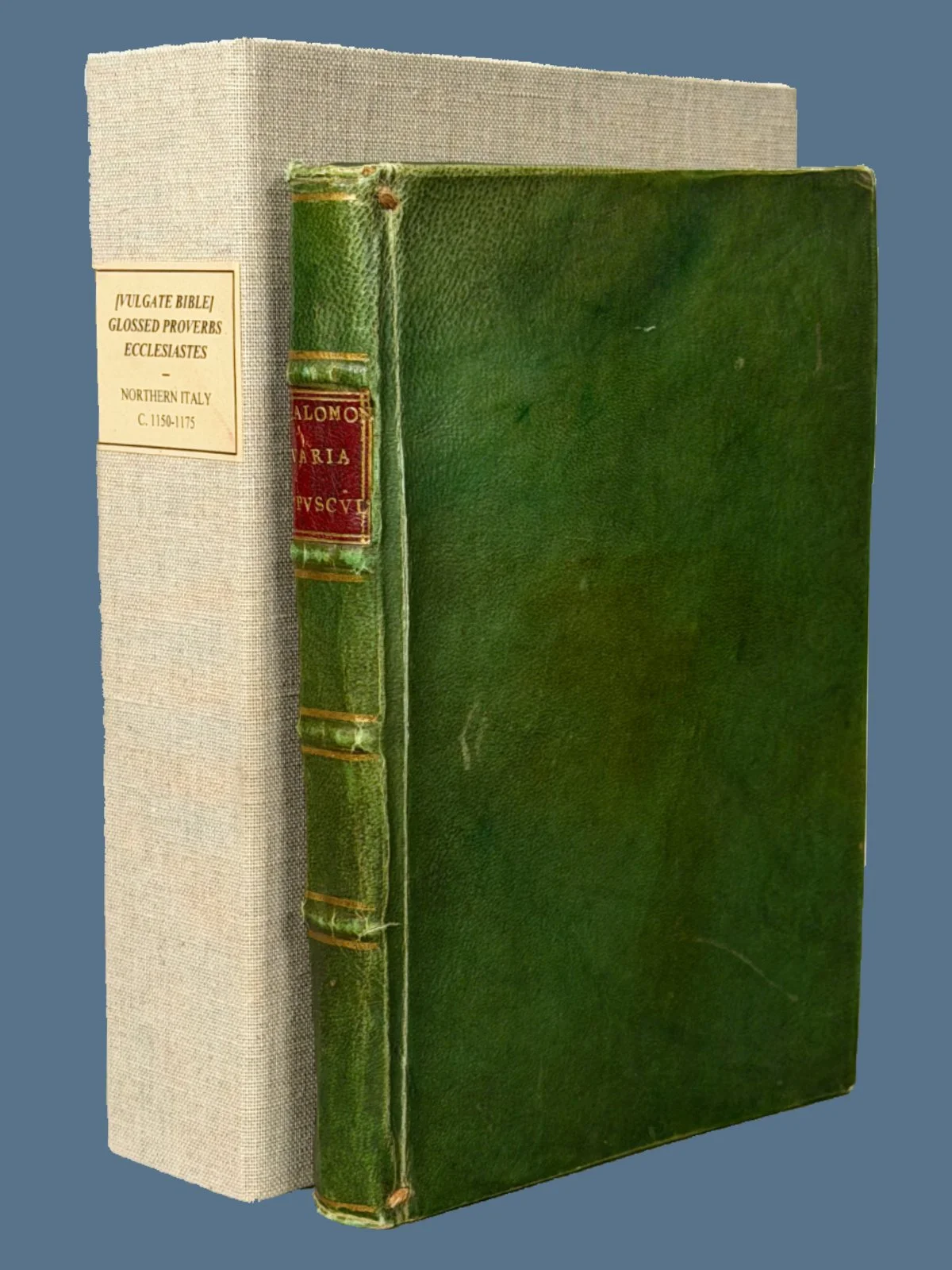
Biblia Glossa Ordinaria, Circa 1150-1175, Italy. Quarto. An exceedingly rare Glossed Bible containing the books of Proverbs and Ecclesiastes. Latin manuscript on parchment, 80 leaves.
Description
A mid to late 12th century manuscript copy of a Biblia Glossa Ordinaria, more commonly known as a Glossed Bible, containing Biblical texts and heightened profusely with contemporary commentaries.
Texts by numerous authors are reflected in the commentaries, including Church Fathers such as Jerome, Augustine, Gregory the Great, Isidore, and Bede, and, less commonly, Origen, John Chrysostom, and Ambrose, as well as later authors such as Rabanus Maurus, John Scotus Eriugena, Lanfranc and Berengar. The Bible and its Gloss gave early readers access to the complete biblical text and commentaries in one convenient location.
The present manuscript is a smaller format, early example, with the Biblical text written in a central column format of 19 long lines, while the glosses are added in a precise upright smaller script to either side of the text and between lines. The manuscript opens with a large, five-line decorated initial in red ink, with several smaller red ink initials. Bound in green vellum.
Structure
Folios 1-58v, Proverbs, biblical text, incipit, “Parabole [interlinear glosses: Latine similitudo. Hebraice masloth. Attentum facit. Id est parabolis salomonis] salamonis [pacifici] filii dauid [argumentum a natura] …”;
Folios 58v-80v, Ecclesiastes, biblical text, incipit, “Uerba ecclesiastes [interlinear gloss: concionatoris] filii [paterna dignitas] dauid [propria auctoritas] ierusalem … pro omni erra [sic, “tu” added above line] siue bonum siue malum sit”//
Folios 1-58v, [Proverbs, first gloss, upper margin], incipit, “Notandum quod uulgata editio parabolas quae hebraice masloth …”; [left margin], “Ad intelligenda uerba prudentie. Non solum sapientiam quam perceperunt amplectantur et discipline …”; “Quid autem utilitates habent …”; “Ad holescenti singulariter quia quos sapientia …”; “Ad holoscenti scientia et. Id est qui prudenter declinat …”; [right margin], “Parabole grece. Latine similitudines quod uocabulum ideo Salomon …”; “Astutia, que incipentibus neccesaria …”
Folios 58v-80v, [Ecclesiastes; introductory glosses are copied in the margins at the end of Proverbs, f. 58v; left margin], incipit, “Jeronimus. Verba ecclesiastes filii david regis id est tribus nominibus …”; [right margin], “Tradunt hebrei hunc est librum salomonis …”; “Gregorius. Quomodo hic liber sit legendus et exponendus …”; [f. 59, upper margin], “Jeronimus. Pro vanitatem vanitatum secundum quosdam interpretates possumus dicere uaporem …”; [f. 59, left margin], “Vanitas omnis homo uivens quanto magis cetera. Vnde uanitati creatura subiecta est …”; “Male opinatur quidam nos his uerbis ad uoluptatem luxuriamque …”; [f. 59, right margin], “Augustinus. Pacificus et dilectus dei patris et ecclesiastes …”; “Generatio preterit etc. Prima recedit generatio iudeorum …”;
Provenance
This manuscript has had a colorful journey in its production and ownership, beginning with the period it was copied, based on the script and layout. The use of lead for the ruling suggests a mid 12th-century or later dating, whilst the script for both the biblical text and gloss is solidly twelfth: e-cedilla is used occasionally (e.g. f. 54v and elsewhere), “et” (and) is usually abbreviated with a tironian-7, but ampersand is also used, and although “pp” are written together, other letter unions are lacking, even in the glossing script where one might expect to see them first.
The glossing is done in at least two types of contemporary hands. In Ecclesiastes, an early hand also added the name of the biblical book in a very small script in the upper margins.
Ex-libris stamp for the Franciscan monastery of Sancta Maria Annunciata at Varese, located on f. 79v. First founded circa 1469, they later sold a number of their possessions in 1725, to finance church expansions, and in 1810, the church and convent were suppressed, with the remainder of their rather large library being dispersed among various institutions and holdings, whilst others were destroyed.
Manuscript inscription from one Carlo Mòrbio (1811-1881), a scholar, bibliographer and numismatist, author of a history of Novara, and numerous studies on French manuscripts in Italy.
Armorial bookplate for Max Ritter von Wilmersdörffer (1824-1903), who purchased the manuscript from the Carlo Mòrbio collection in 1889.
The last public sale of this manuscript was at the Venator and Hanstein sale of March 22 2013, and it was owned by the US Rare Manuscript firm Les Enluminures before being privately sold.
Condition
Minimal rubbing or wear to the binding; few, marginal, contemporary or early marks of holes and slits, though several are still sewn shut; lower margin of the first leaf is stained due to the removal of one of the monastery stamps; minor, scattered staining to the upper margins.
Note
One of the great achievements of the twelfth century, the Glossed Bible was a combination of scriptural texts woven together with patristic and medieval commentaries used by students and teachers until the end of the Middle Ages, drawn mostly from the Church Fathers.
While there is no global census of existing Glossed Bibles, it is known that there are at least 400 manuscripts of the Gloss in the Bibliothèque Nationale de France in Paris, and 600 in various French Departmental libraries as well. However, the public sale of such manuscripts is still rare.
This volume is included among Antique Bible’s notable sales of rare Bibles and historic manuscripts.