Notable Sales of Rare Bibles and Manuscripts
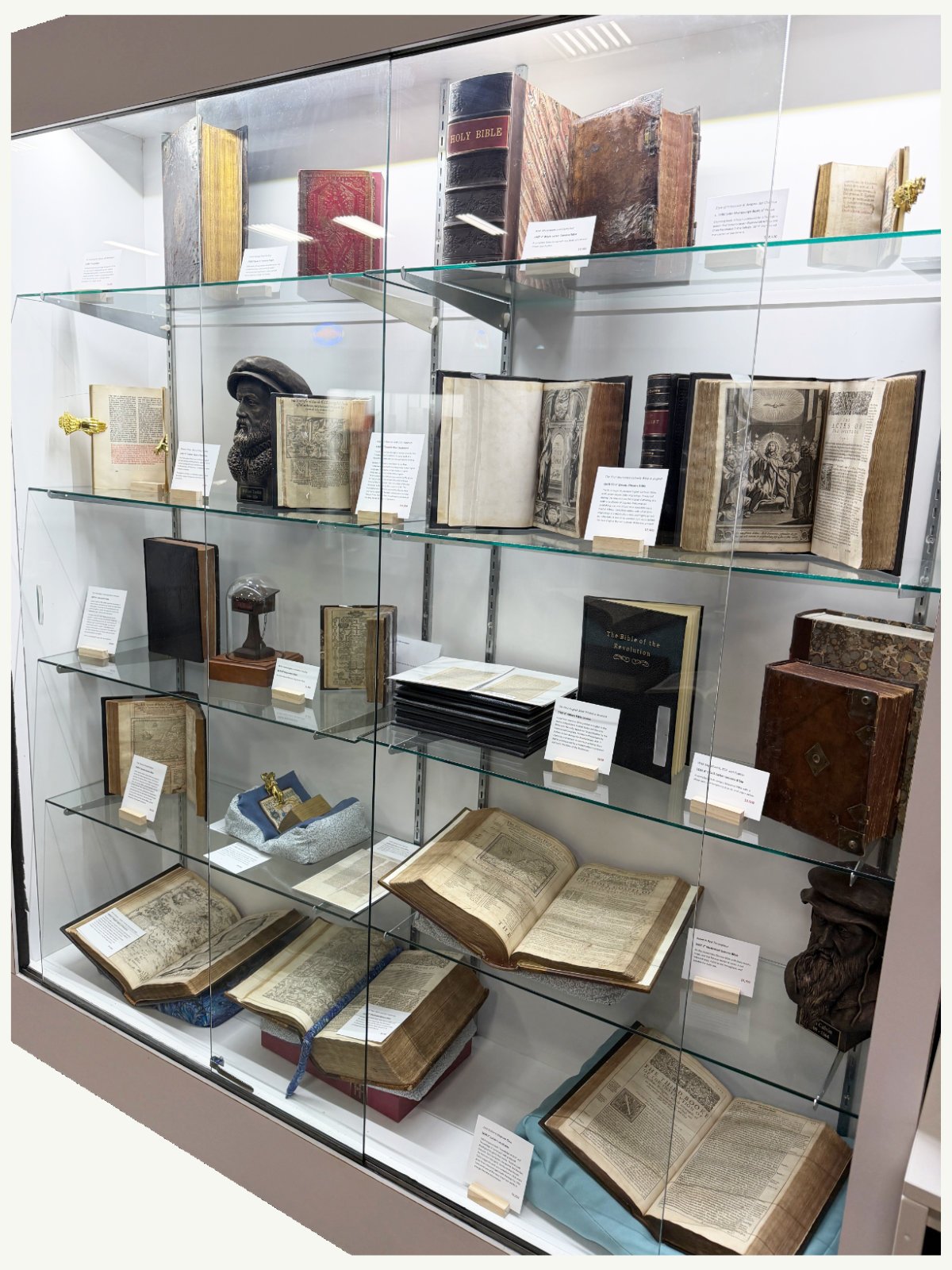
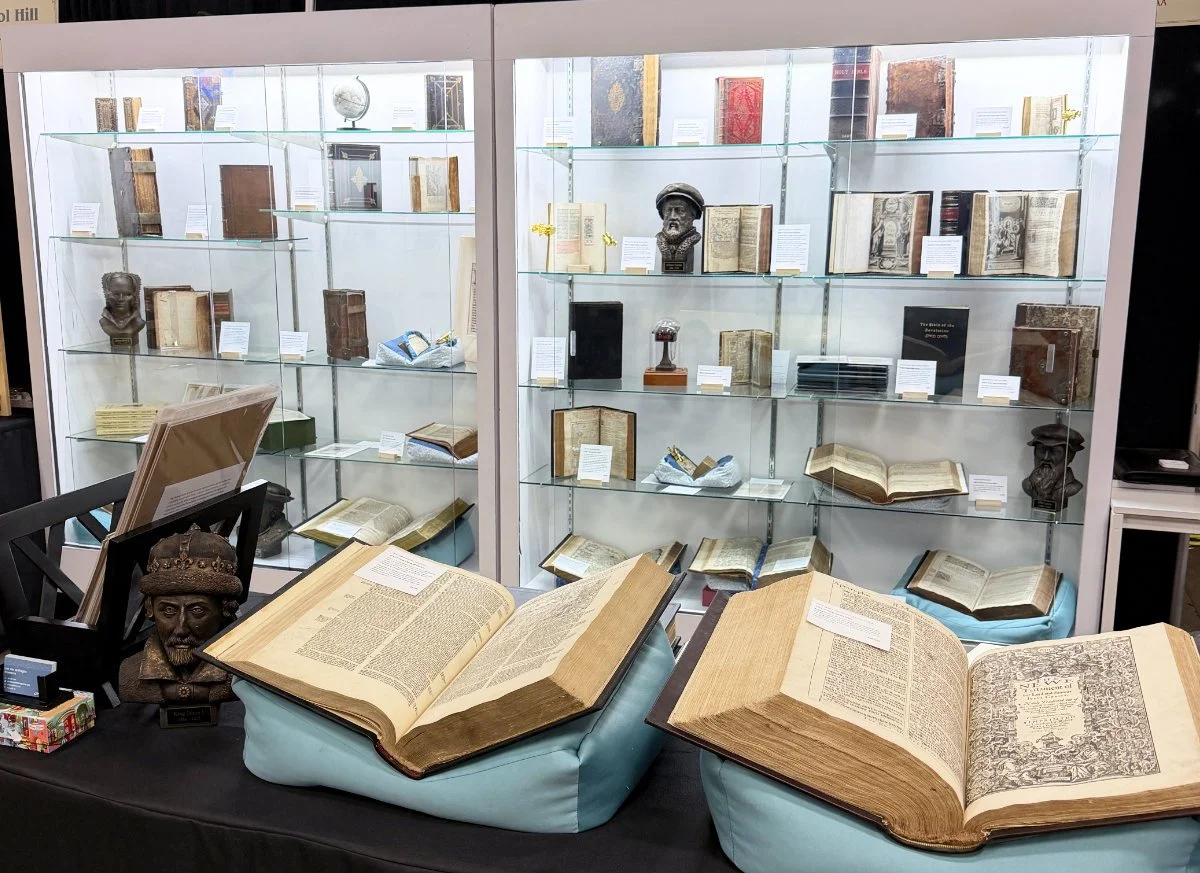
Over the years, we have had the privilege of placing exceptional rare Bibles, medieval manuscripts, and works of Reformation history into private and institutional collections. These notable sales span the twelfth through eighteenth centuries and include medieval Glossed Bibles, Tyndale New Testaments, first-edition Geneva and Bishops’ Bibles, the 1611 King James Bible, and the celebrated 1631 Wicked Bible.
Medieval Manuscripts
SOLD
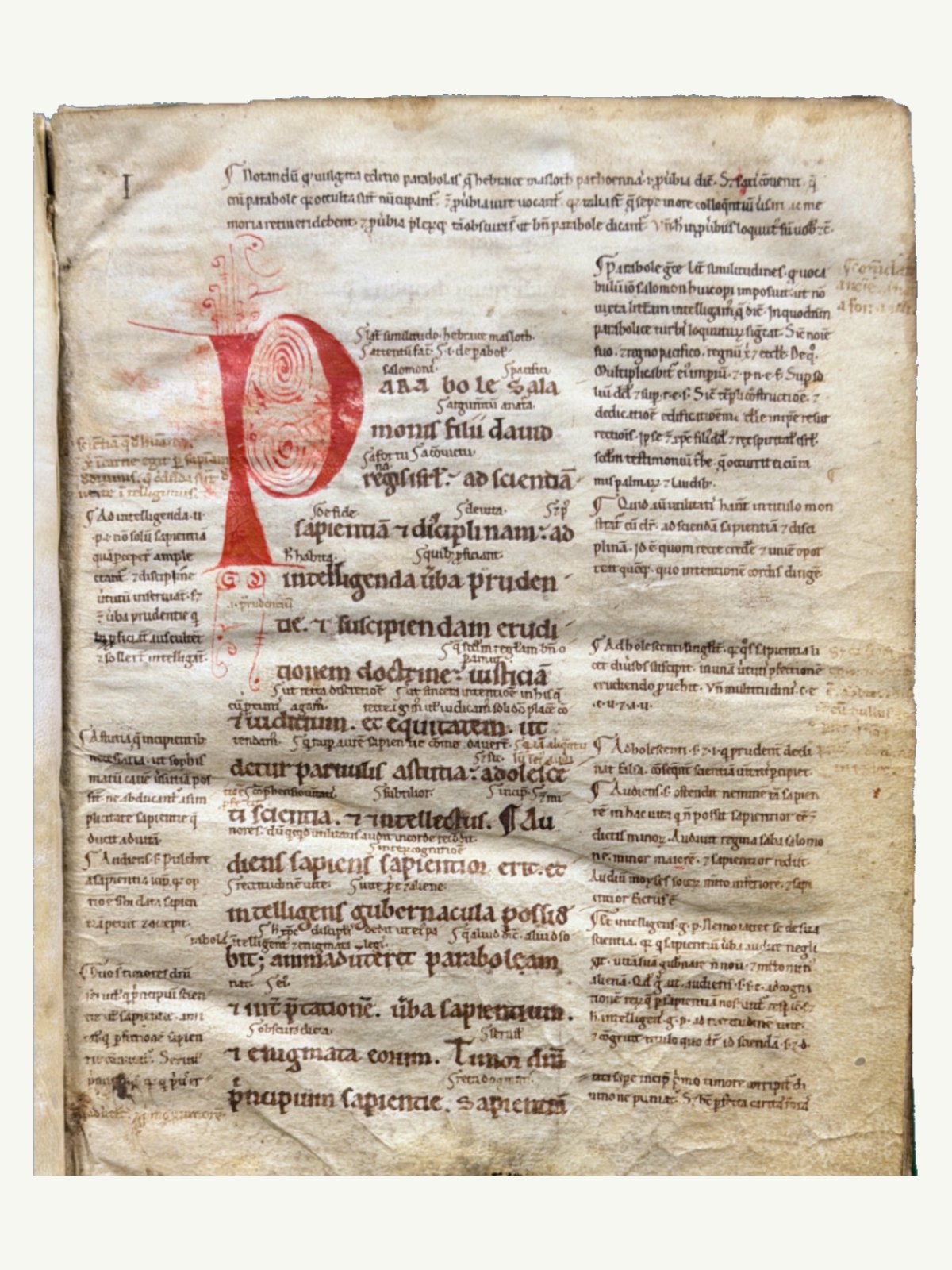
Produced in Italy around 1150–75, this exceptionally early Glossed Bible contains the complete texts of Proverbs and Ecclesiastes on eighty parchment leaves. One of the great intellectual achievements of the twelfth century, the Glossa Ordinaria placed Scripture at the center of the page, surrounded and interlined with commentaries drawn from Jerome, Augustine, Gregory the Great, Bede, and other Church Fathers. This compact quarto manuscript preserves the work of several contemporary scribes and opens with a large decorated red initial. Its distinguished provenance includes the Franciscan monastery at Varese. Manuscripts of the Glossa Ordinaria seldom appear in commerce.
SOLD
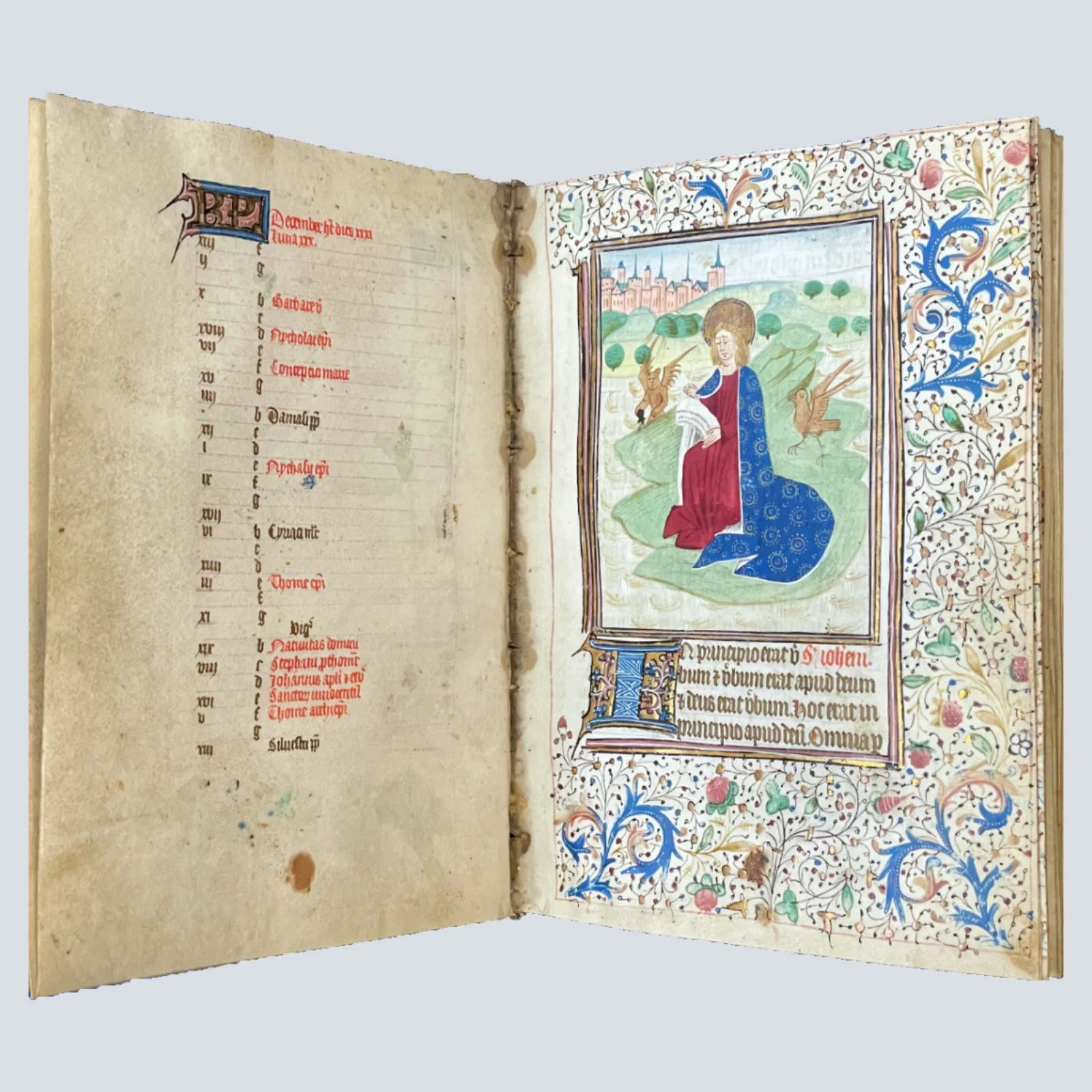
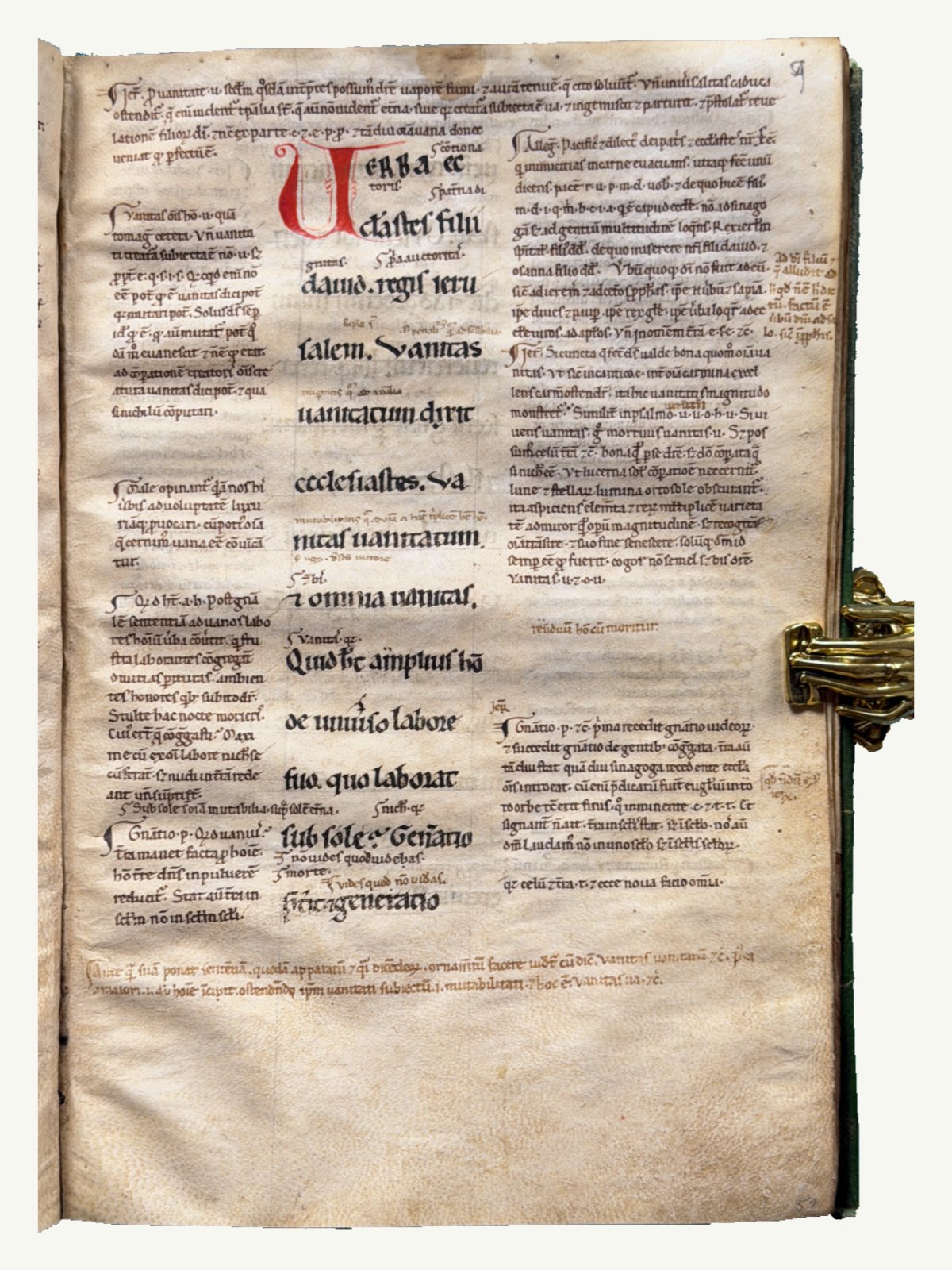
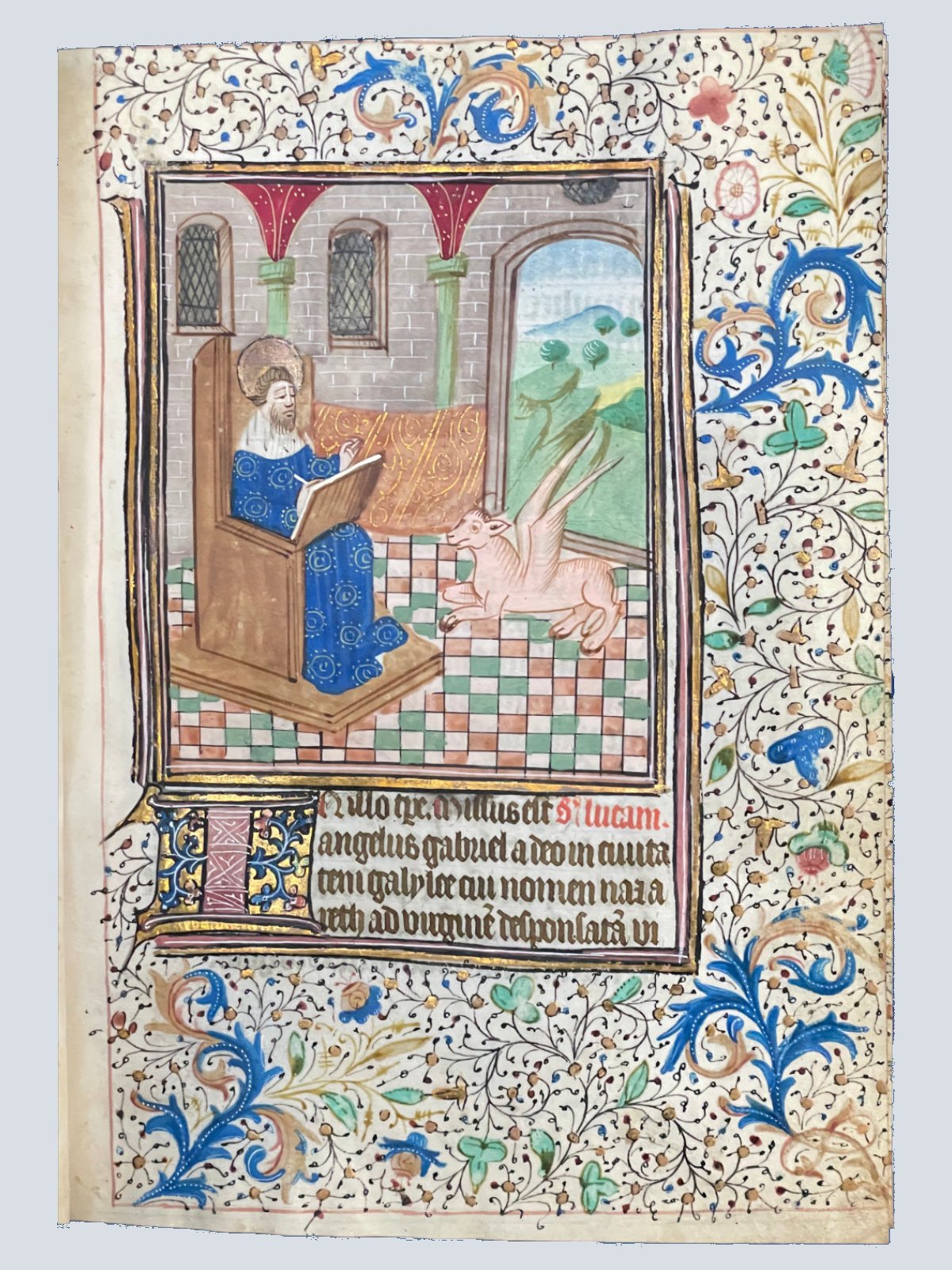
Produced in Ghent or Bruges around 1450–60, this Latin Book of Hours contains 97 parchment leaves and 22 miniatures—10 full-page and 12 smaller scenes—surrounded by elaborate borders of flowers, fruit, foliage, and gold vine leaves. Its distinctive pastel palette and characteristic figures associate it with the workshop of the Masters of the Beady Eyes. The manuscript was formerly owned by Maria Nanna Jozefina van Heurne de Puyenbeke, a noted manuscript collector whose family collection was dispersed in a celebrated 1860 sale.
Reformation Bibles and New Testaments
SOLD
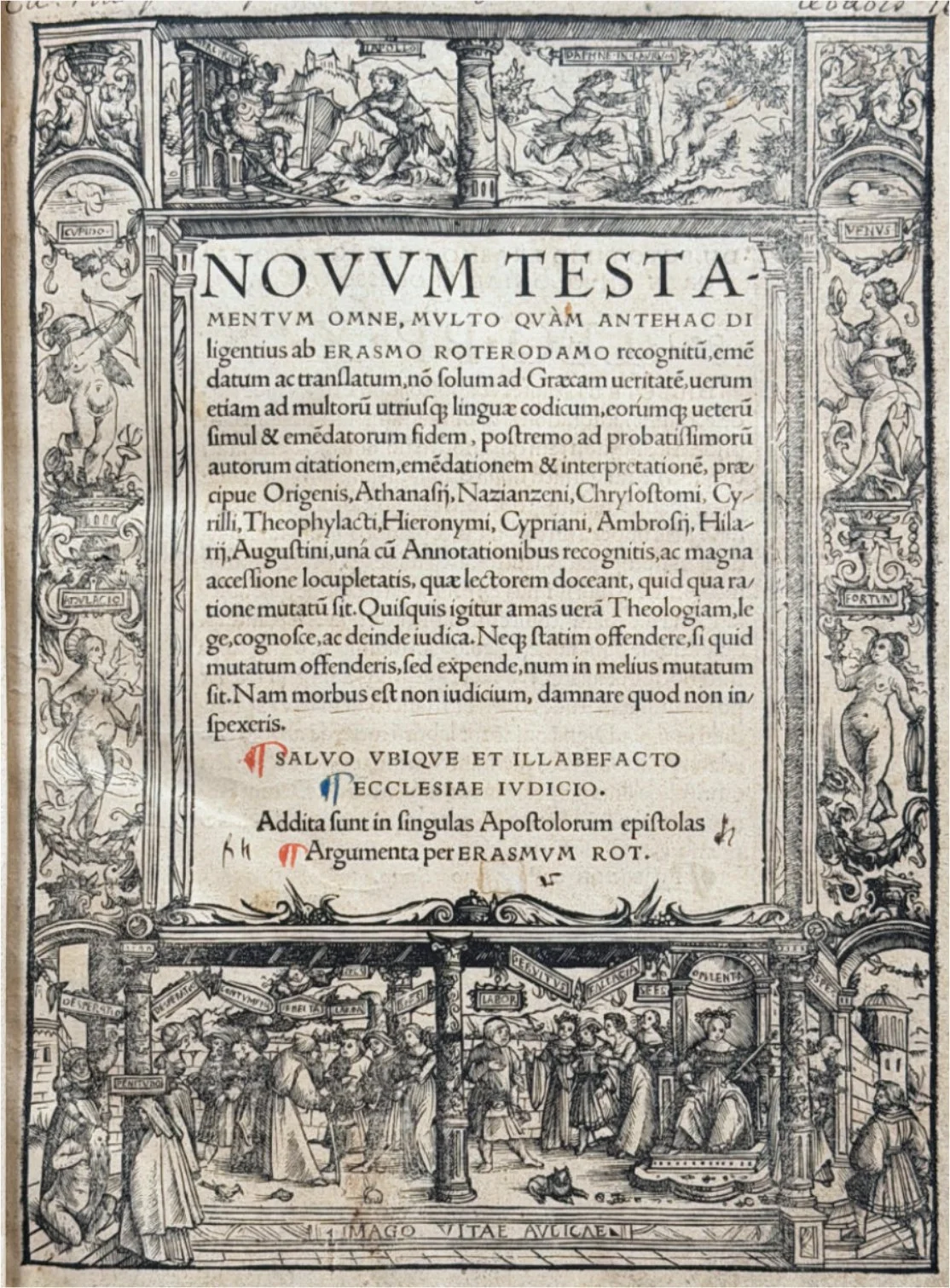
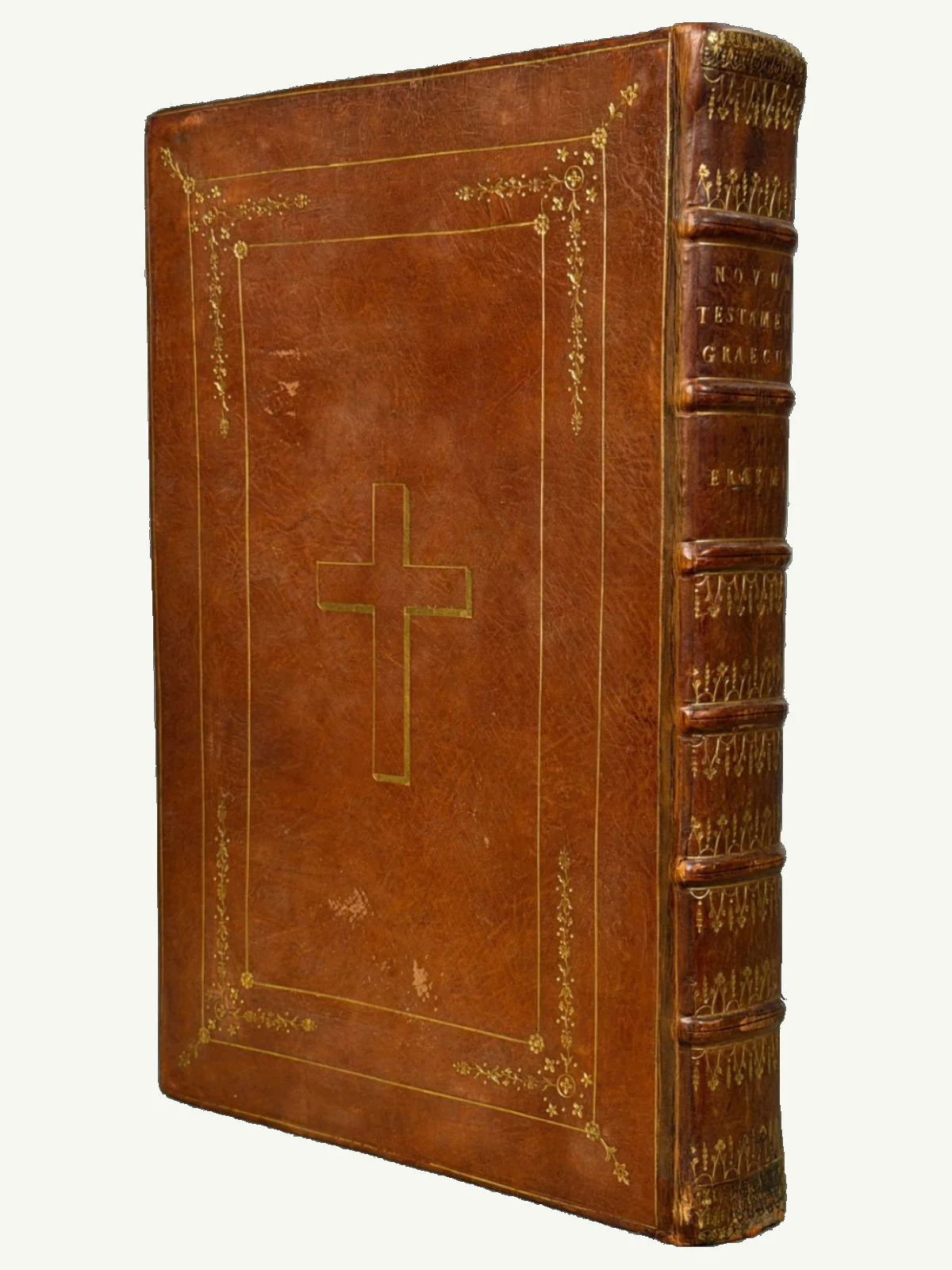
Erasmus’s 1519 New Testament was the substantially corrected and expanded second edition of his groundbreaking Greek and Latin text. Printed by Johann Froben in Basel, it placed the Greek New Testament beside Erasmus’s revised Latin translation and helped form the textual basis for the New Testaments of Martin Luther and William Tyndale. This complete folio features Renaissance woodcut borders by Hans Holbein and rubrication in red and blue. Bound in gilt goatskin by Roger Payne, it also carries distinguished provenance, including Thomas Brooke and theologian and collector Charles Ryrie.
SOLD
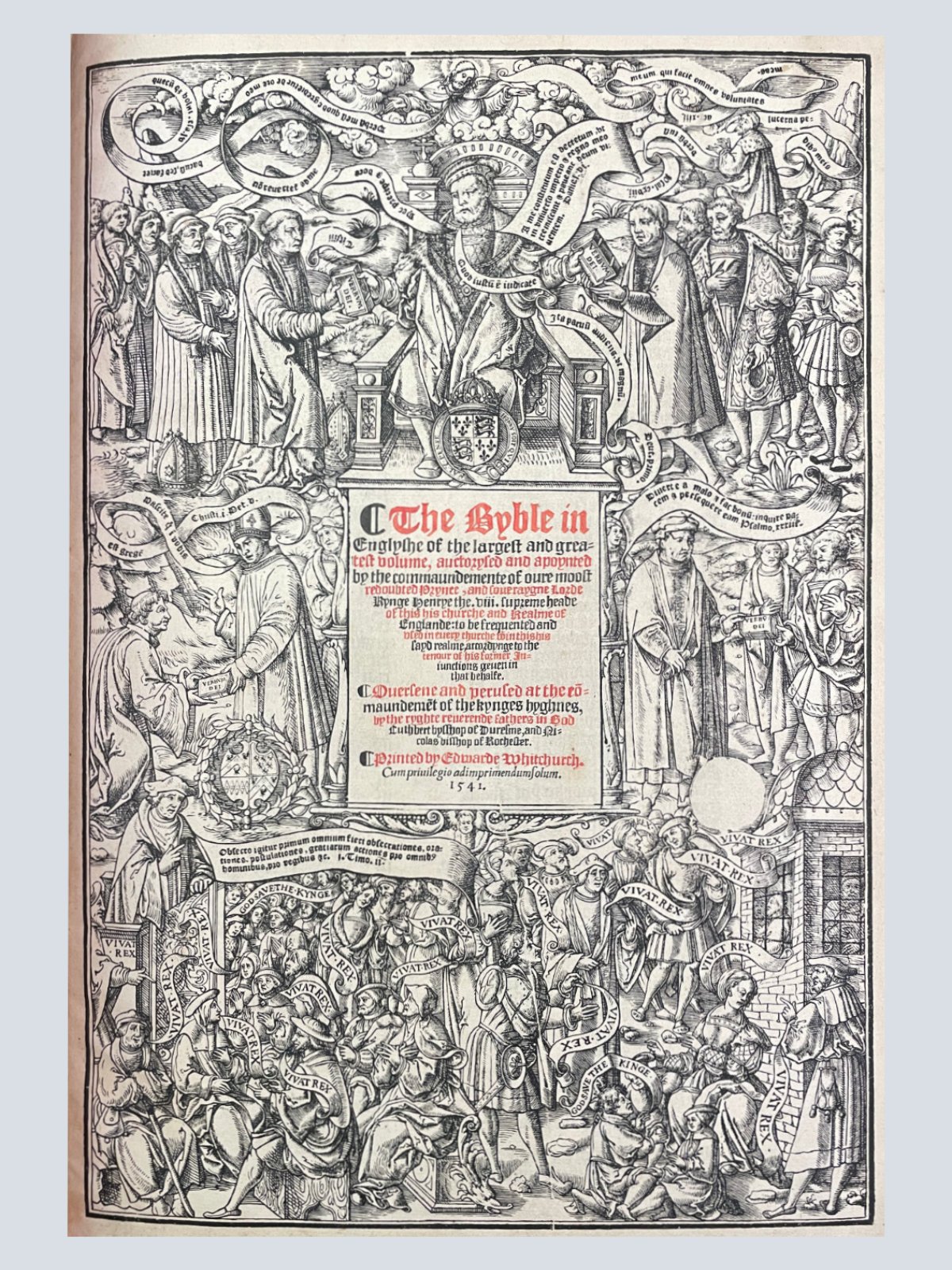
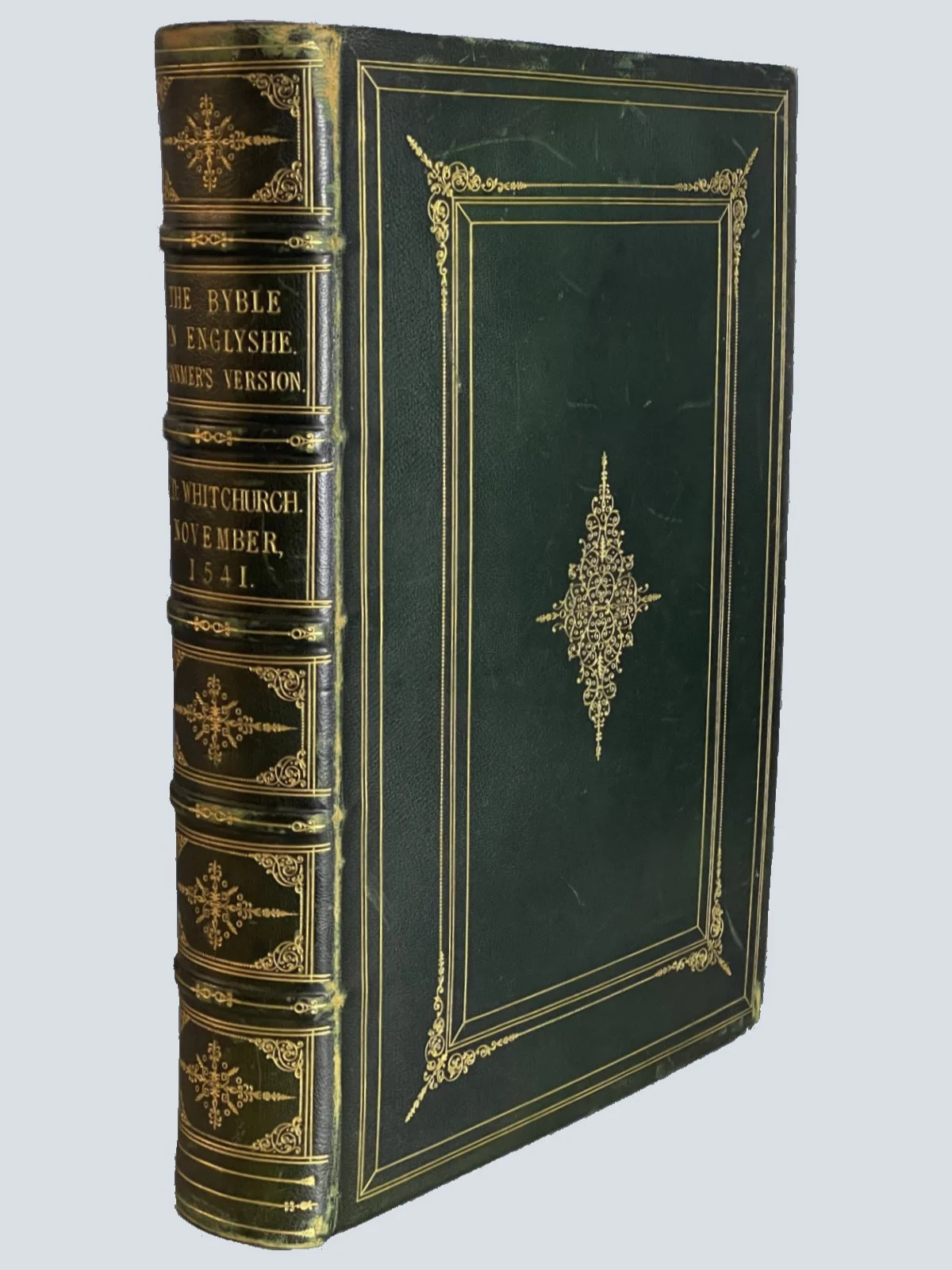
The Great Bible, first issued in 1539, was the first English Bible authorized for public use in churches. This complete 1541 edition was printed by Edward Whitchurch, and retains its five elaborate woodcut title pages and more than 70 illustrations, with the text in two-column black letter. Noted bibliographer Francis Fry personally examined every leaf, calling it a “standard copy,” and presented it to his daughter, Priscilla Anna Fry, in 1881. It was later bound in richly gilt dark-green goatskin by Cross, binder to the Queen.
SOLD
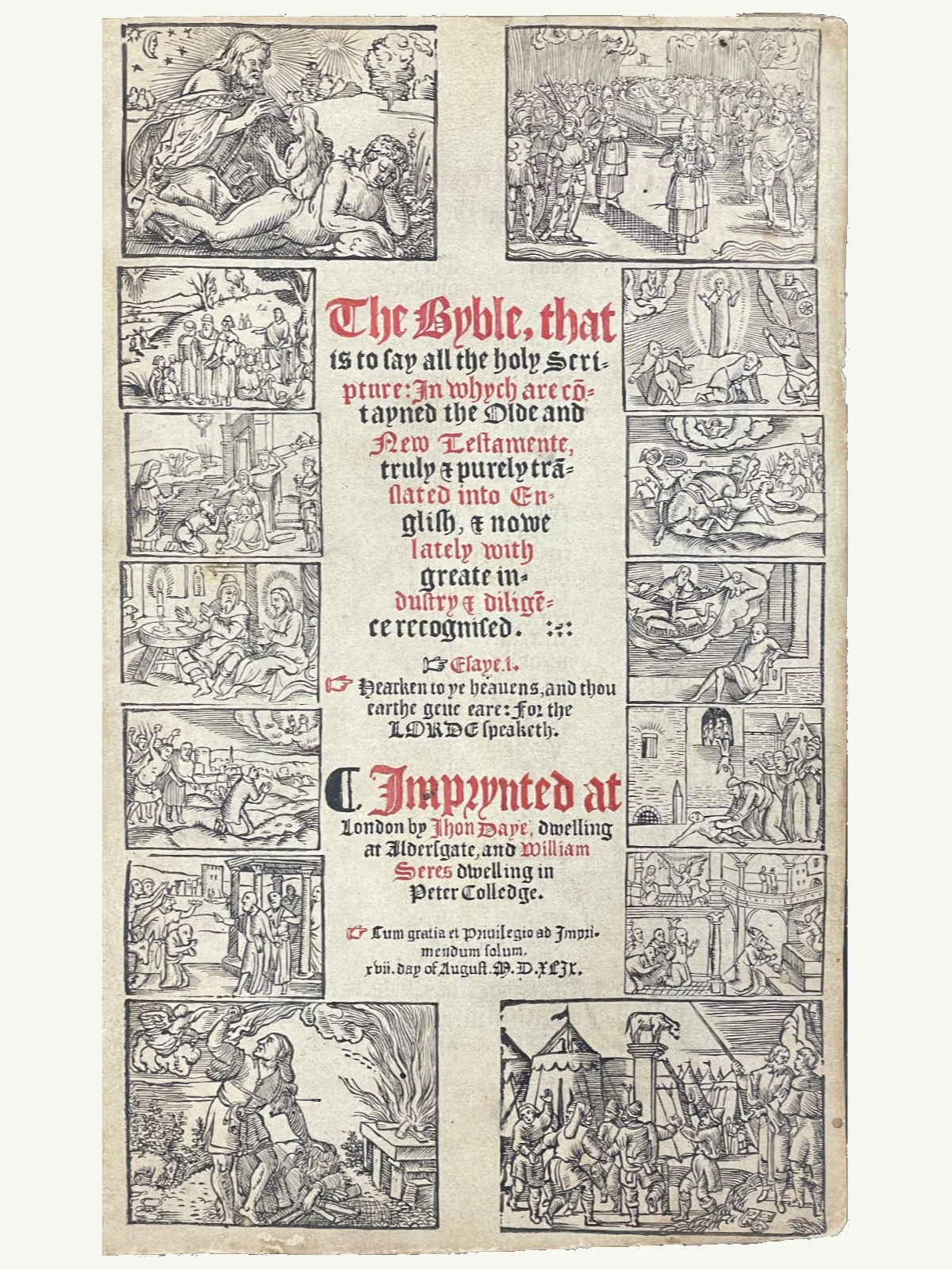
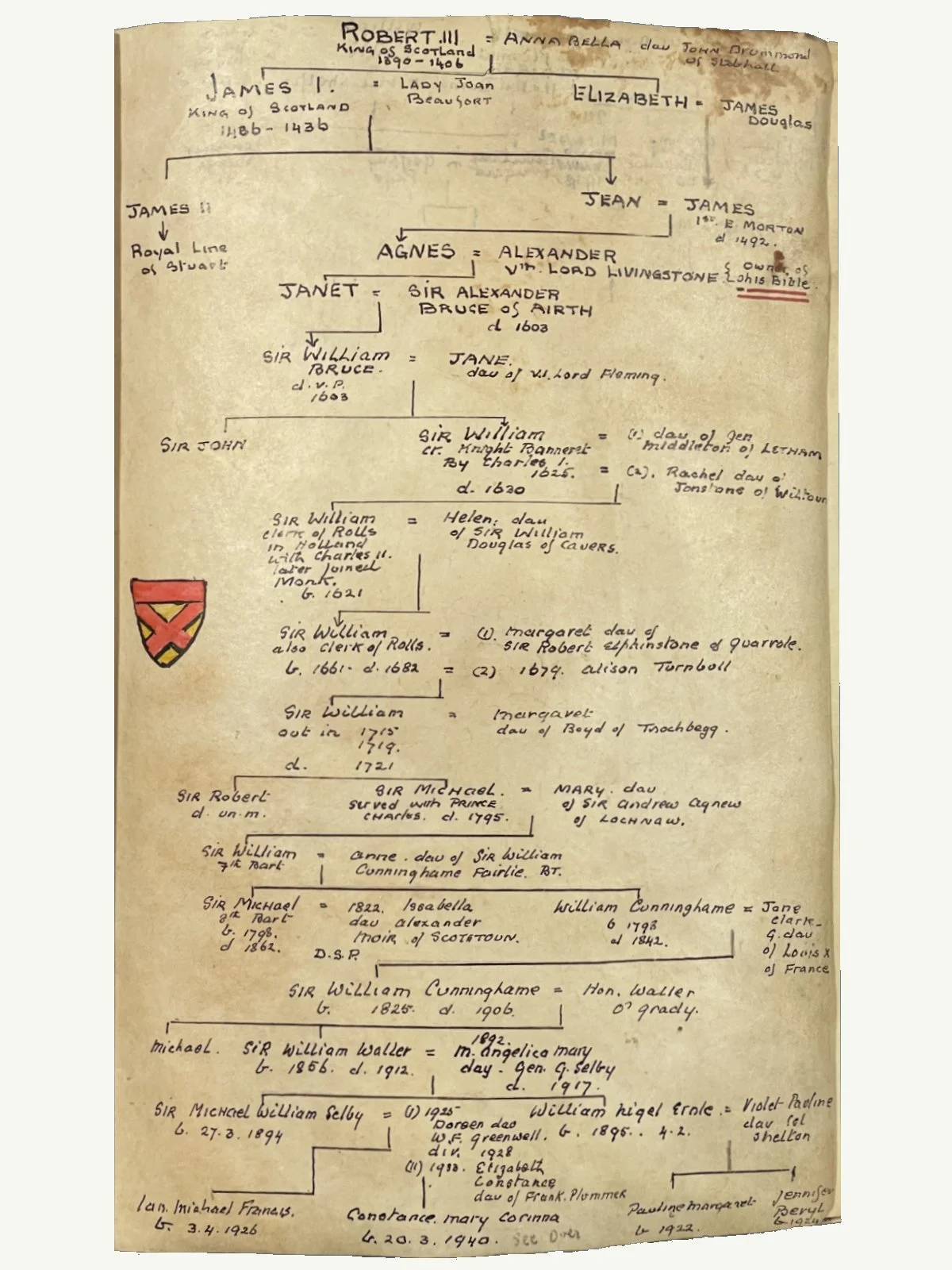
Printed in London by John Daye and William Seres, this complete 1549 folio Matthew–Tyndale Bible is the celebrated Edmund Becke revision, richly illustrated with a red-and-black title page, fourteen surrounding woodcuts, and numerous scenes throughout. It preserves the edition’s notorious annotation at 1 Peter 3 and is an exceptionally scarce complete survivor. Early signatures identify Alexander Livingston, fifth Lord Livingston—regent and guardian of the young Mary, Queen of Scots—as an early owner. Because Livingston oversaw Mary’s upbringing and education, this volume may have played a role in her instruction.
1551 Tyndale New Testament
SOLD
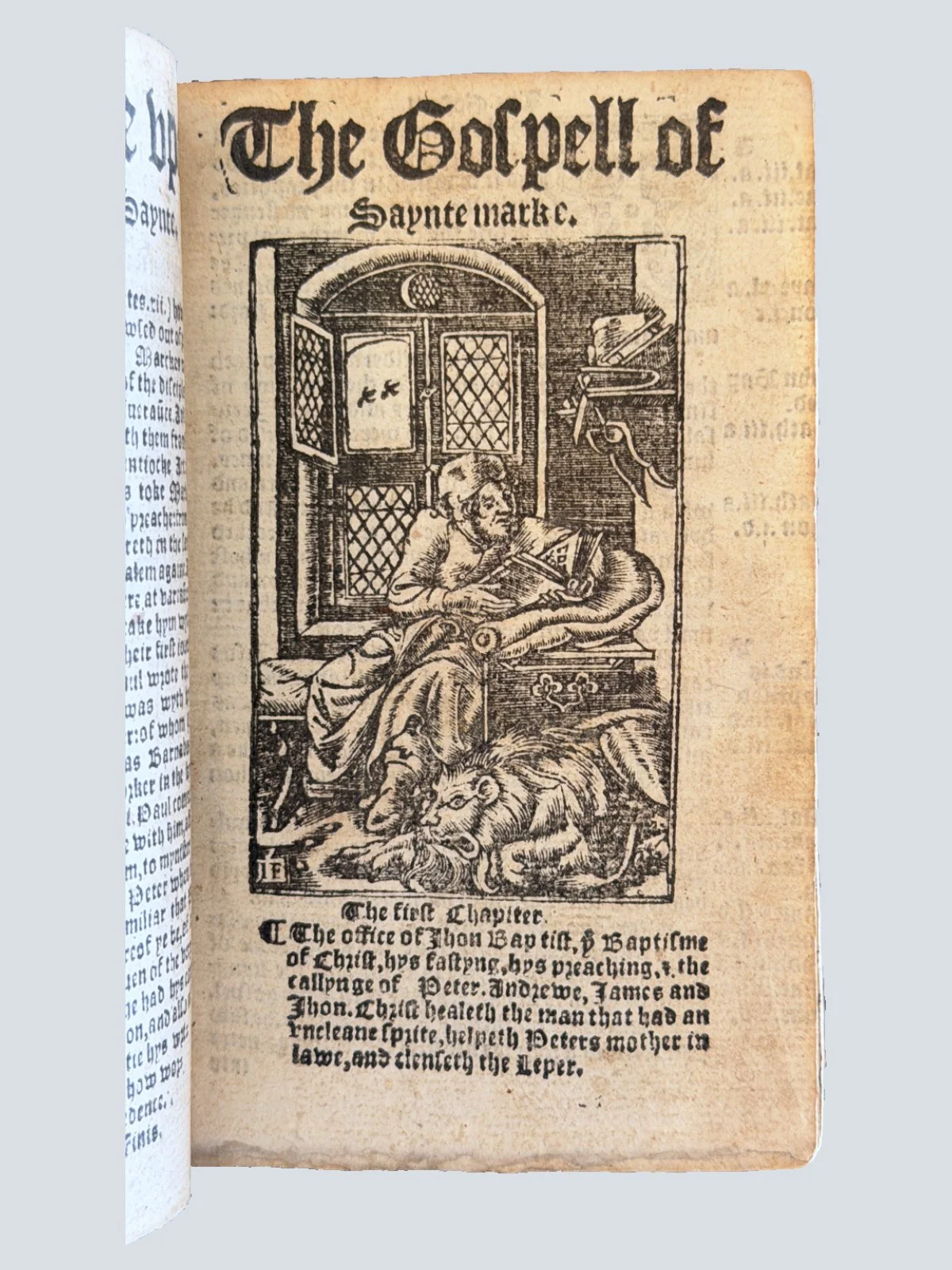
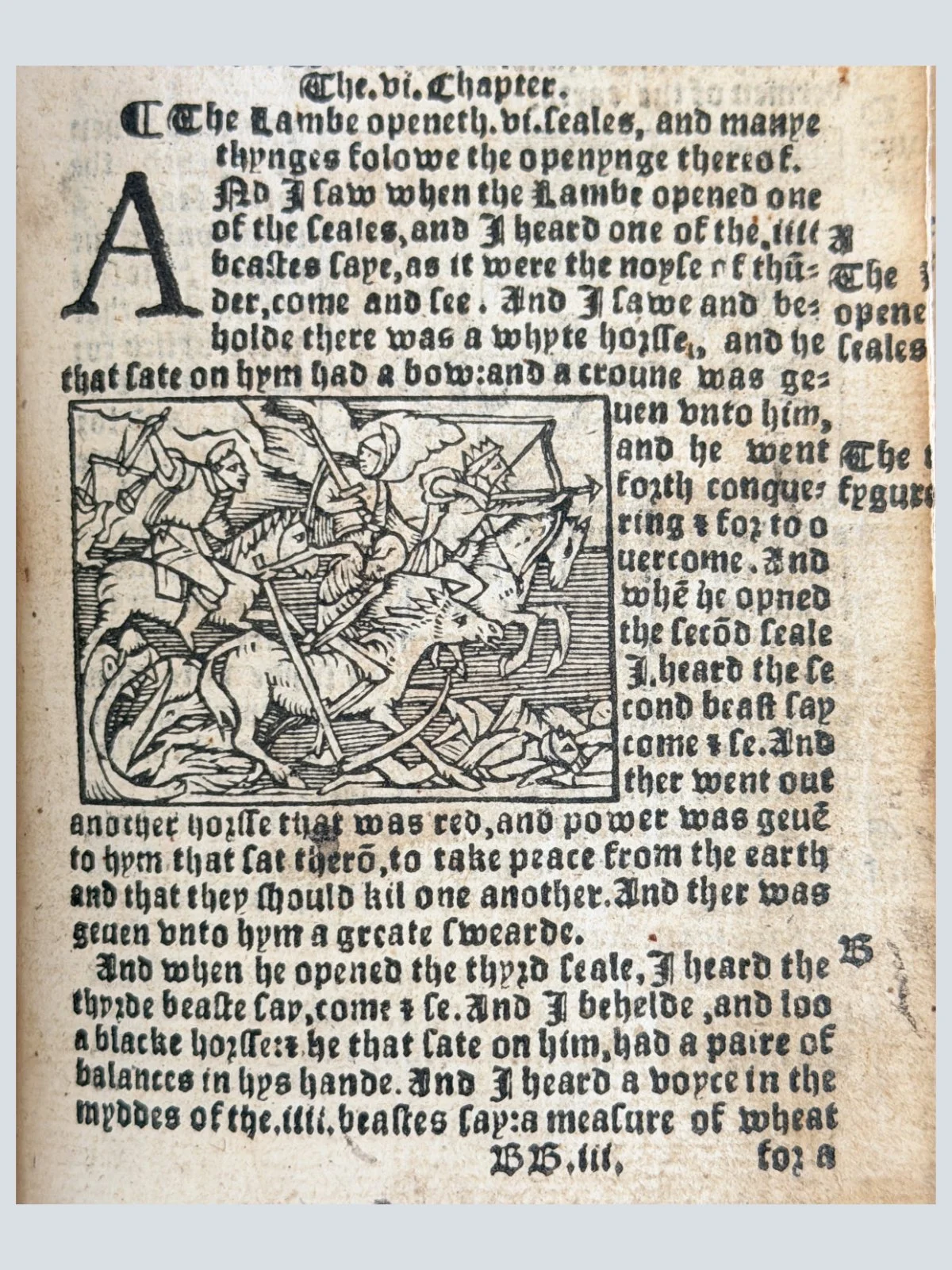
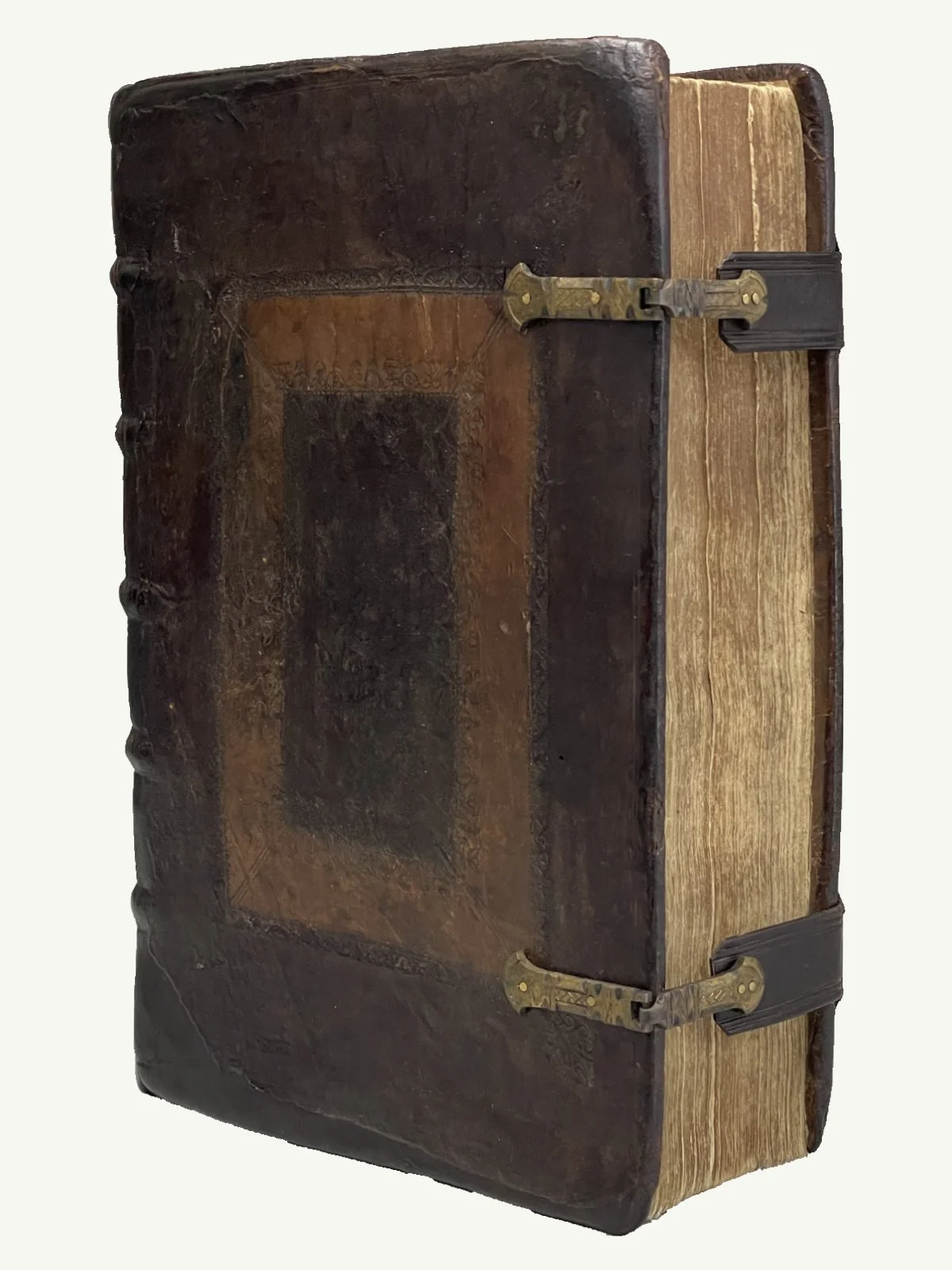
Printed in London by John Daye, this exceptionally rare octavo New Testament closely follows William Tyndale’s landmark 1534 text. Set in single-column black letter, it includes preliminary material by John Calvin, Tyndale’s chapter summaries and introduction to Romans, and woodcuts of the four Evangelists and throughout Revelation. One of only five surviving copies of this compact edition—issued in small numbers and later suppressed under Mary I—the volume retains 400 of 416 leaves; its final text leaf is supplied in facsimile and signed by renowned Bible collector Francis Fry. Provenance includes Baptist minister and British Museum librarian Andrew Gifford and Bristol Baptist College.
SOLD
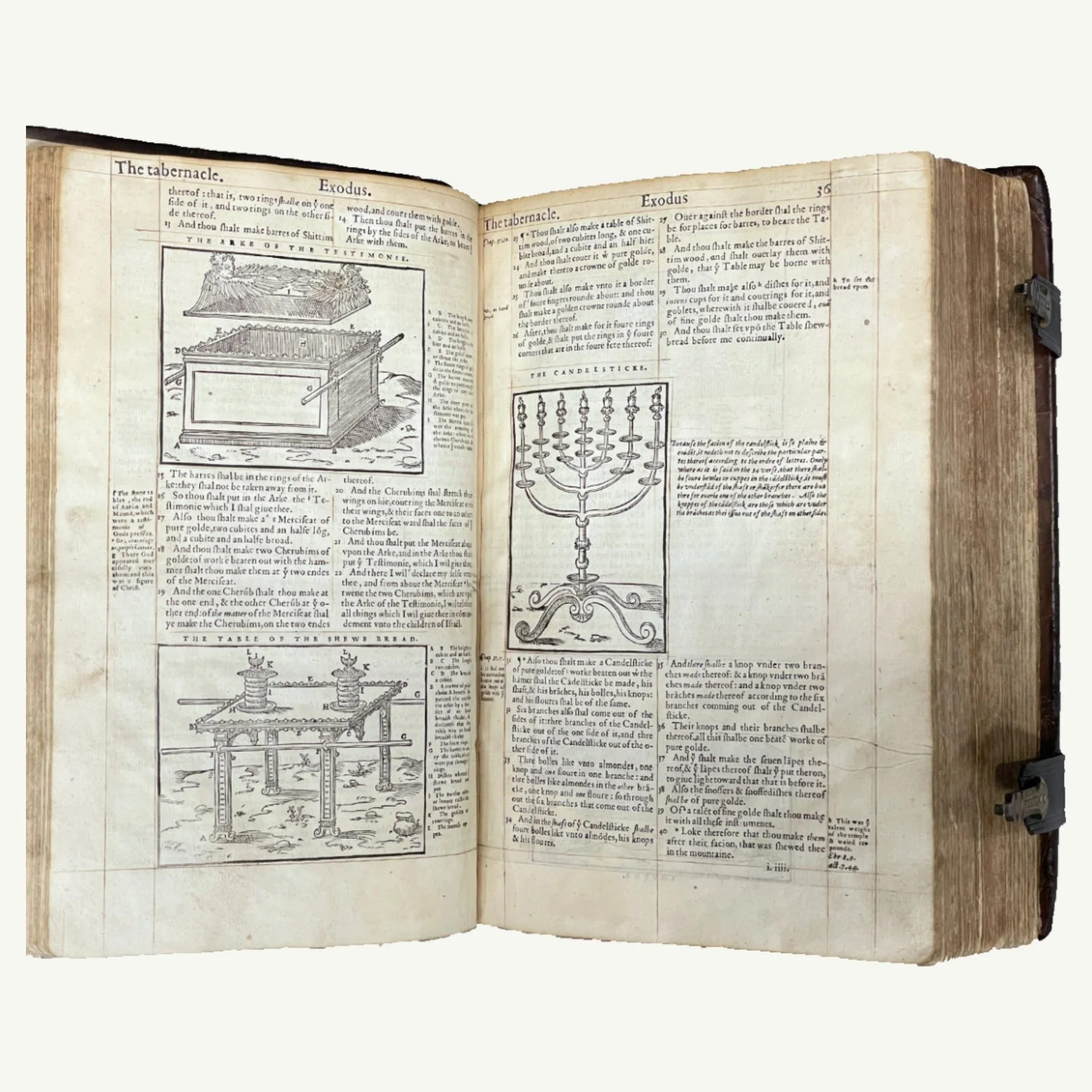
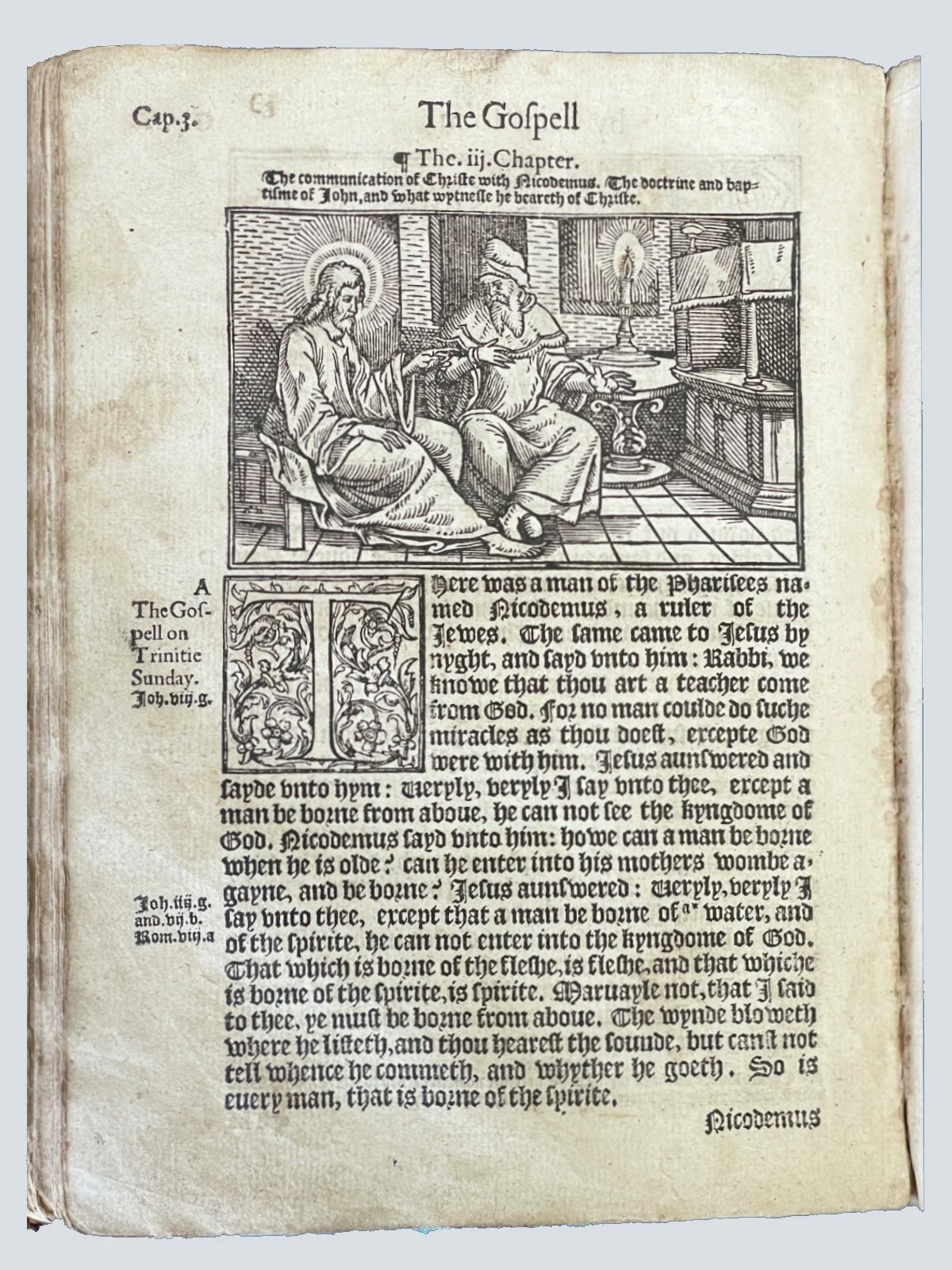
Printed in Geneva by Rouland Hall, this 1560 quarto is the first edition of the Geneva Bible—the landmark translation prepared by English Protestant exiles during the reign of Mary I. Its readable Roman type, numbered verses, extensive marginal notes, maps, and explanatory woodcuts shaped English Bible reading for generations and influenced writers from Shakespeare to Bunyan. This textually complete copy is ruled throughout in red and retains the 1560 New Testament title and a double-page map of the Holy Land. Crisp, broad-margined leaves are housed in paneled calf with metal clasps and a custom clamshell box; the general title is supplied in facsimile.
SOLD
Printed in London by Richard Jugge, this 1566 quarto is the third edition of Jugge’s revision and the final Tyndale New Testament. Its single-column black-letter text is richly illustrated with 83 woodcuts appearing 94 times, including maps of Palestine and Saint Paul’s journeys; several blocks by Virgil Solis were later reused in the Bishops’ Bible. The volume retains its exceptionally scarce, unrestored contemporary calf binding, blind-stamped with traces of gilding and early initials. Formerly owned by Doyley Gower, it is one of only 21 copies recorded by USTC.
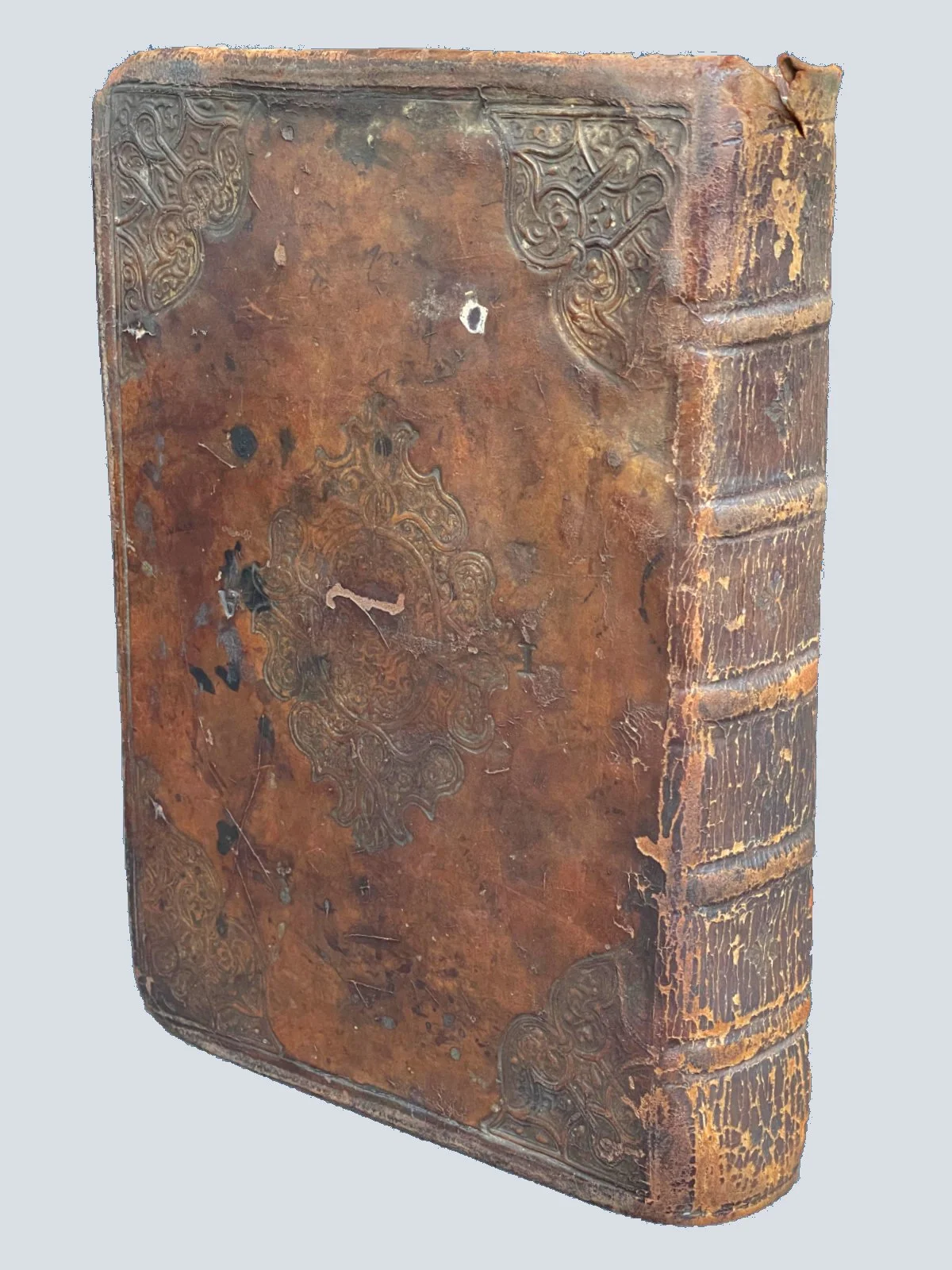
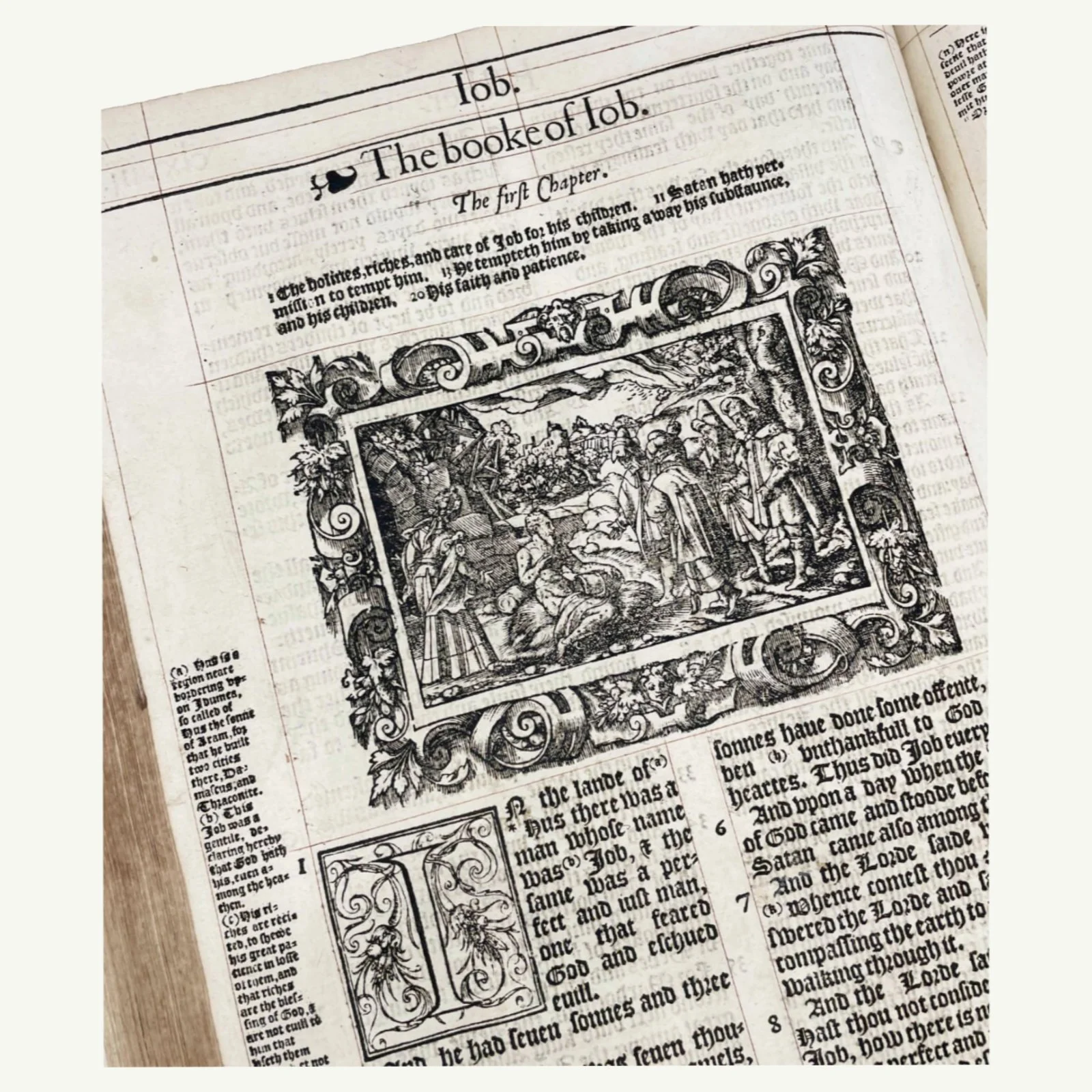
1568 First Edition Bishops’ Bible
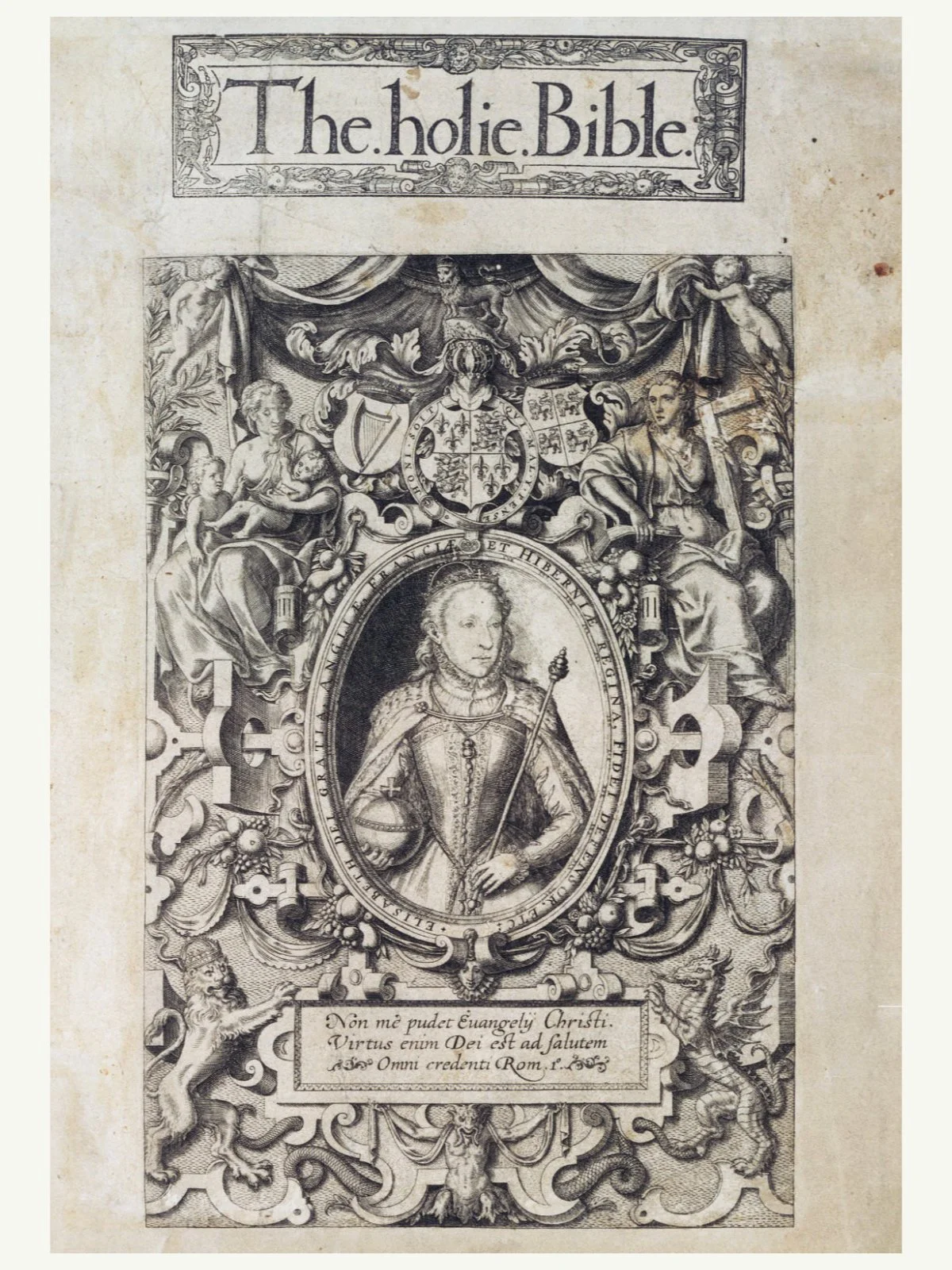
SOLD
First published in 1568, the Bishops’ Bible was one of the great monuments of Elizabethan printing and the official Bible of the Church of England. Commissioned by Archbishop Matthew Parker and translated by a company of bishops, it was intended to replace the Great Bible in churches and counter the growing influence of the Geneva Bible. Its imposing folio format, extensive woodcut illustrations, maps, portraits, and elaborate initials made it the most lavishly produced English Bible of the sixteenth century. The Bishops’ Bible remained the authorized pulpit Bible until the King James Version appeared in 1611.
Historic King James Bibles
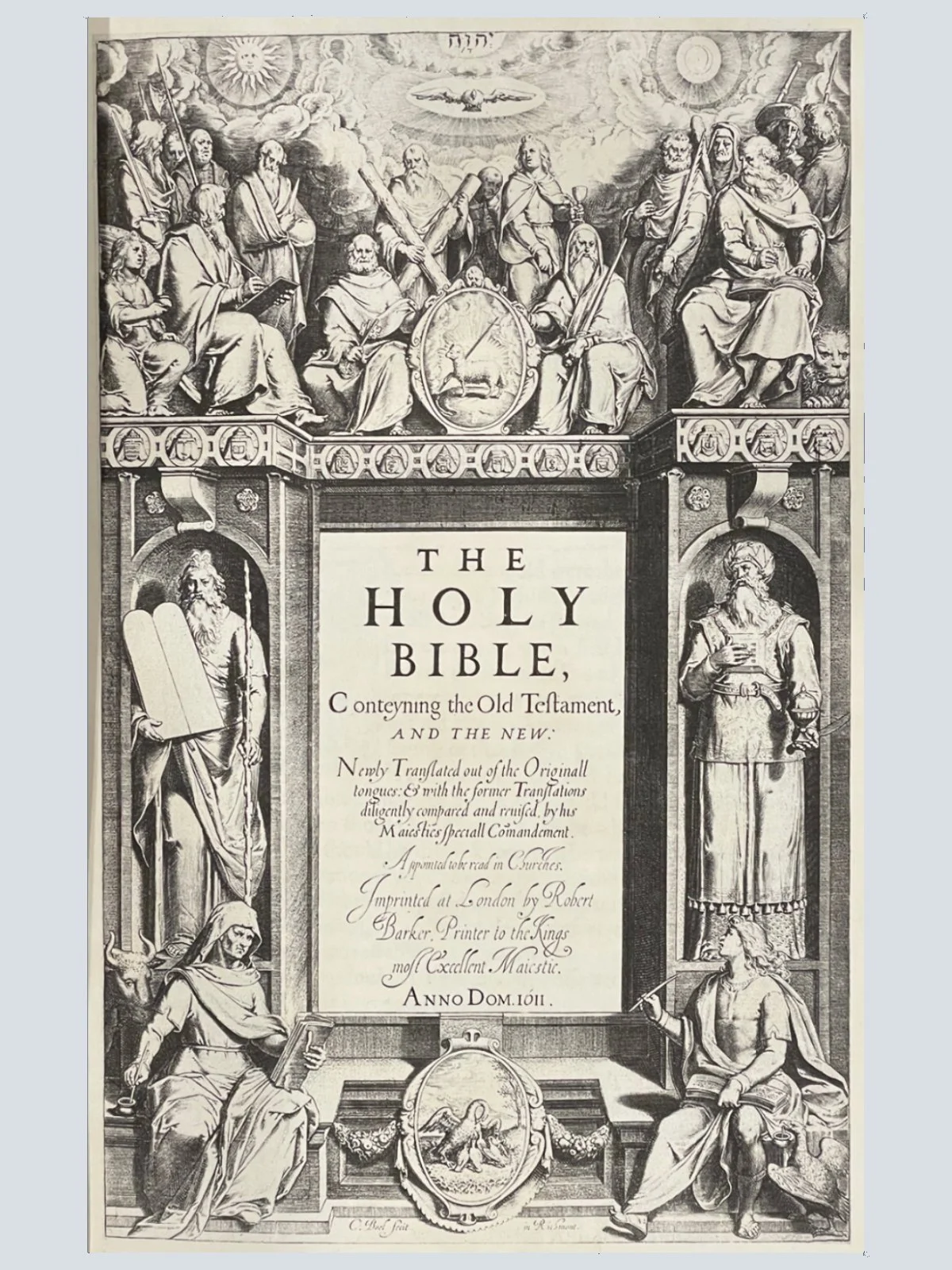
SOLD
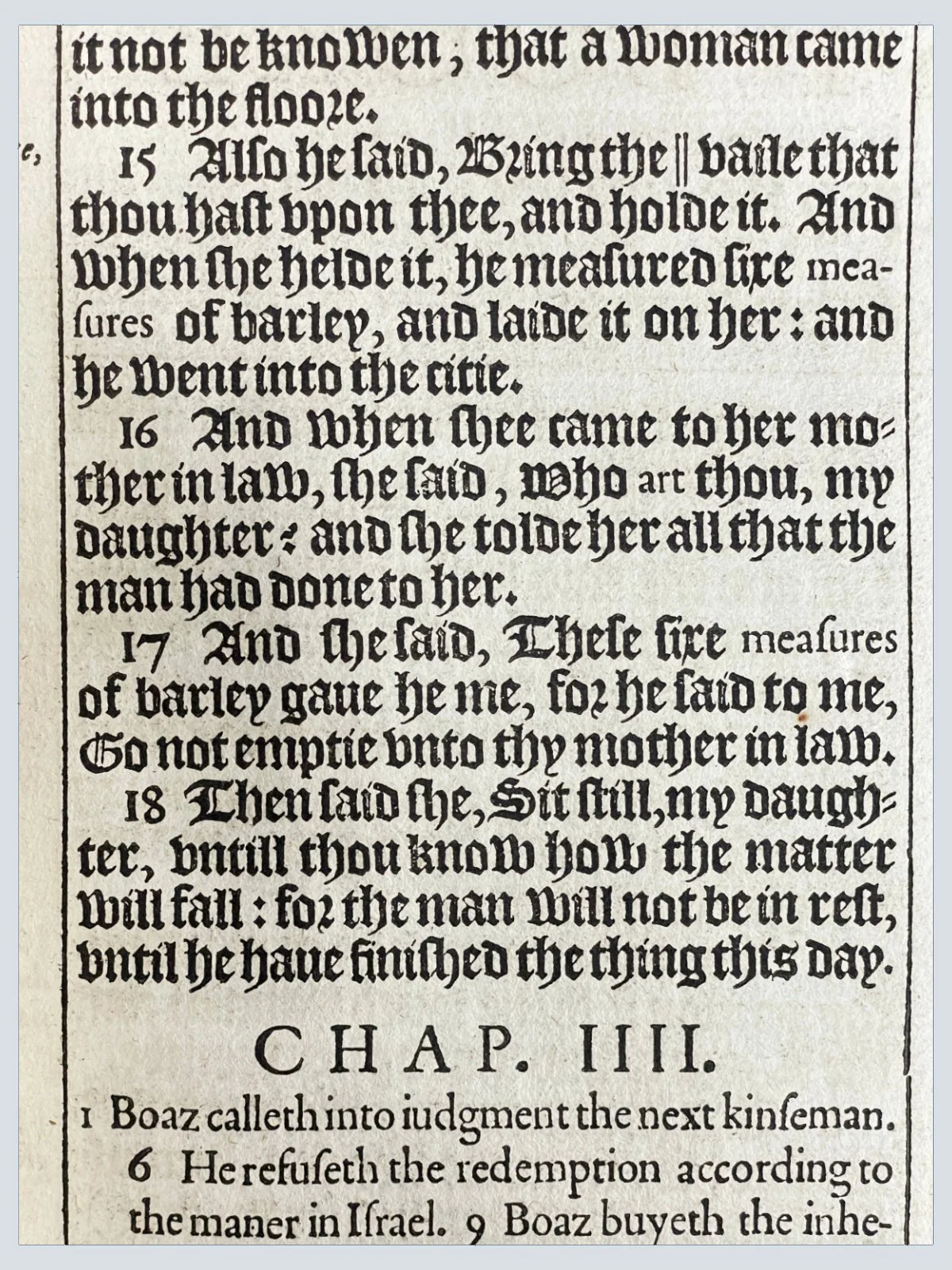
The first edition of the King James Bible—the crowning achievement of English Bible translation and one of the most influential books ever printed. Commissioned under King James I and prepared by more than fifty scholars, it drew deeply upon the work of William Tyndale and earlier English translations. Its majestic language shaped English worship, literature, and culture for more than four centuries, while its worldwide circulation carried its influence far beyond Britain. This is the celebrated first “He” issue, identified by the reading “and he went into the citie” in Ruth 3:15, and one of approximately two hundred surviving copies.
SOLD
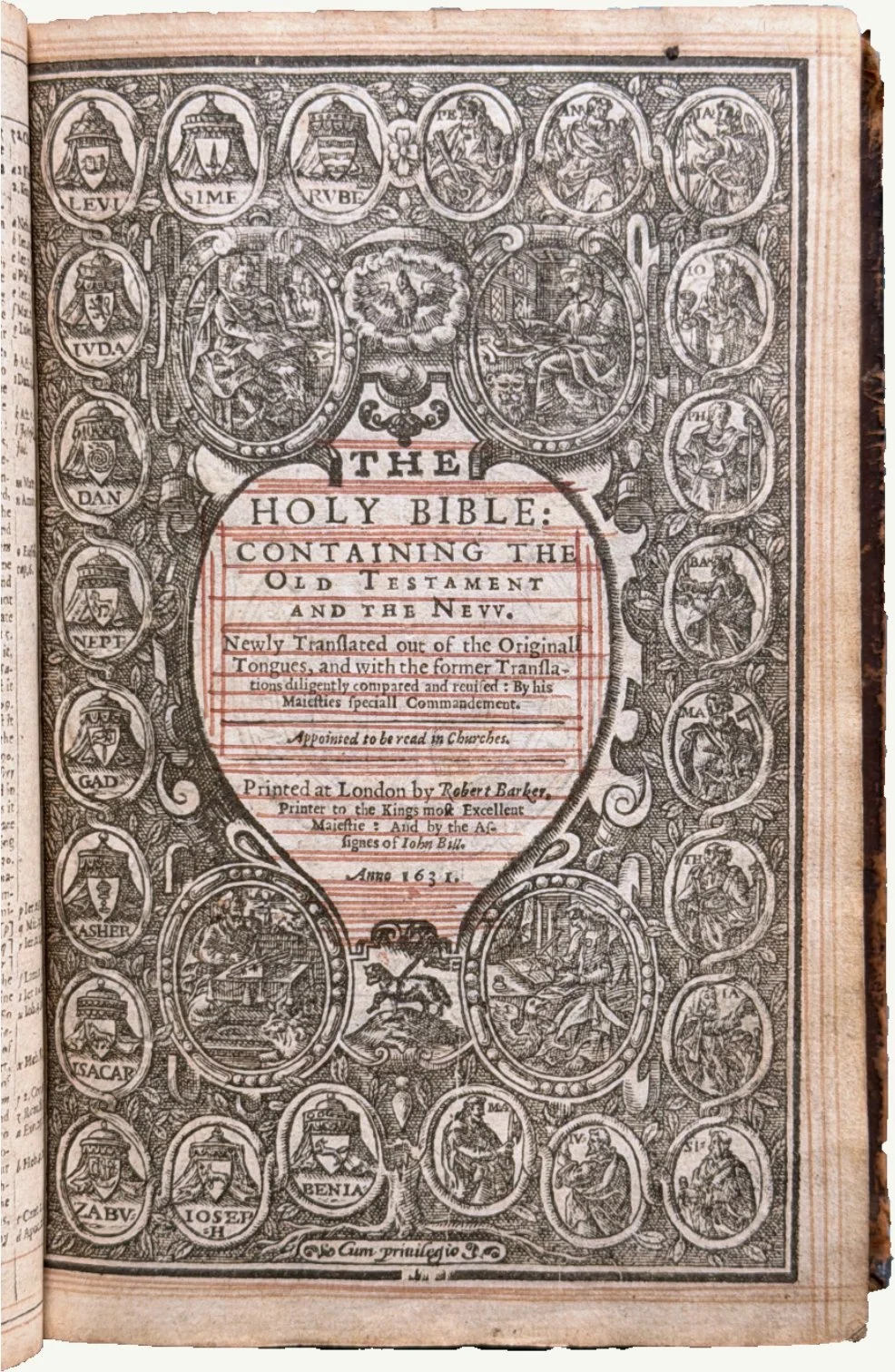
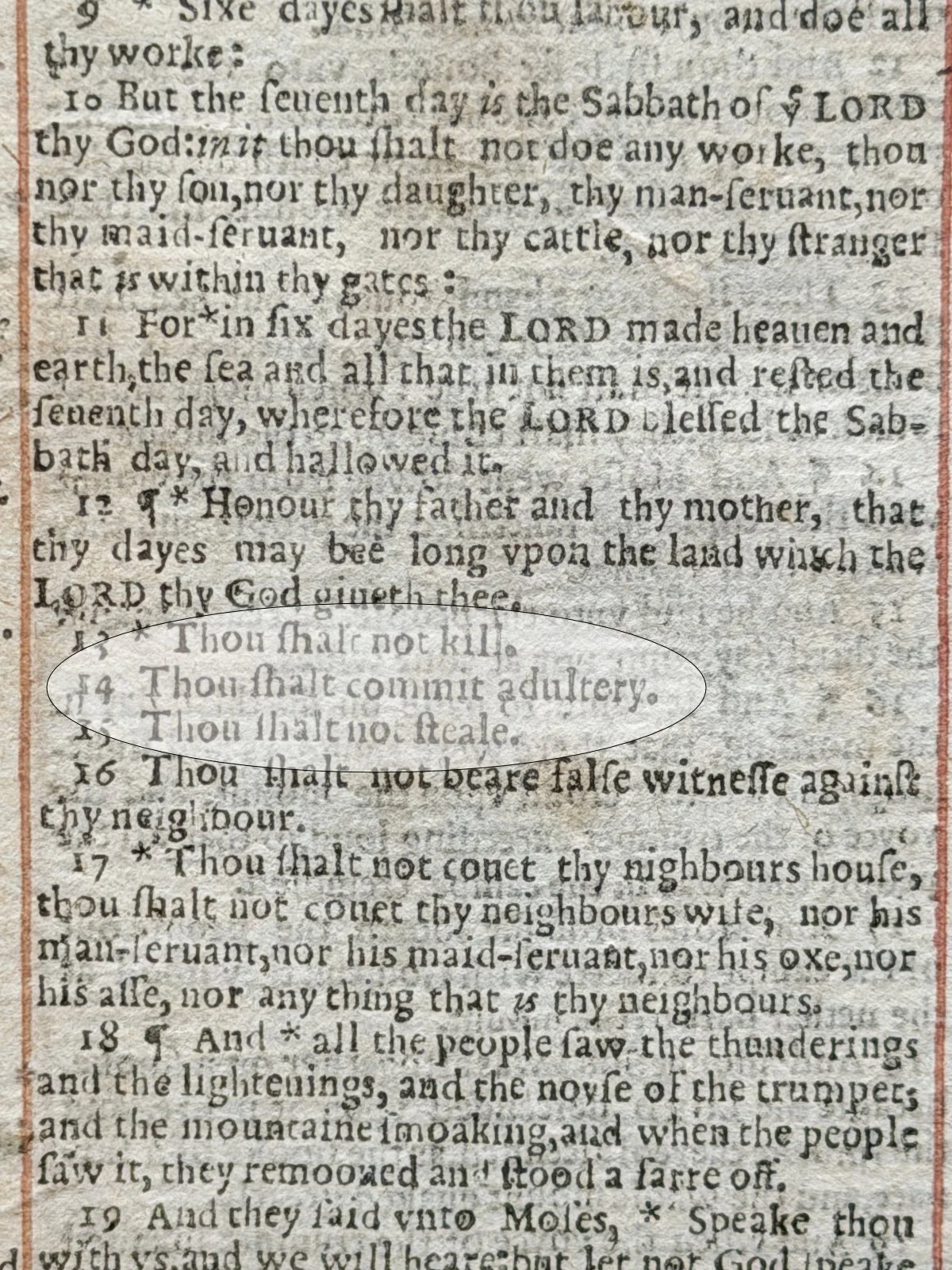
The celebrated 1631 “Wicked” Bible—the most infamous misprint in the history of the English Bible. The omission of “not” from the Seventh Commandment produced the scandalous reading, “Thou shalt commit adultery.” Printed by Robert Barker and Martin Lucas, the edition was quickly suppressed; the printers were summoned before the High Commission and heavily fined, while most copies were destroyed. Of approximately one thousand copies originally printed, only twenty-five are known to survive, eighteen in institutional collections. Complete, red-ruled throughout, and preserved in contemporary calf, this is perhaps the finest surviving copy remaining in private hands.
SOLD
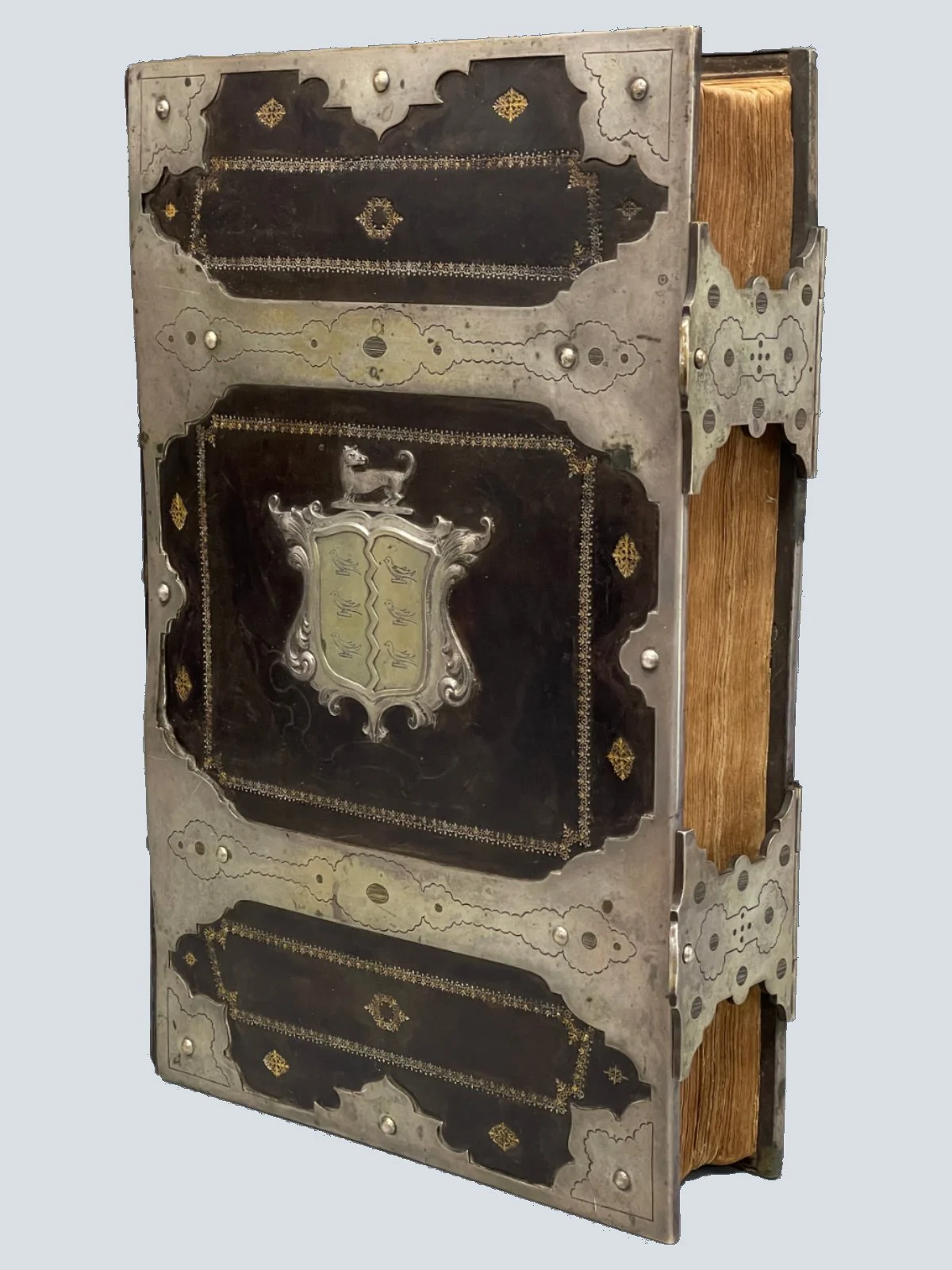
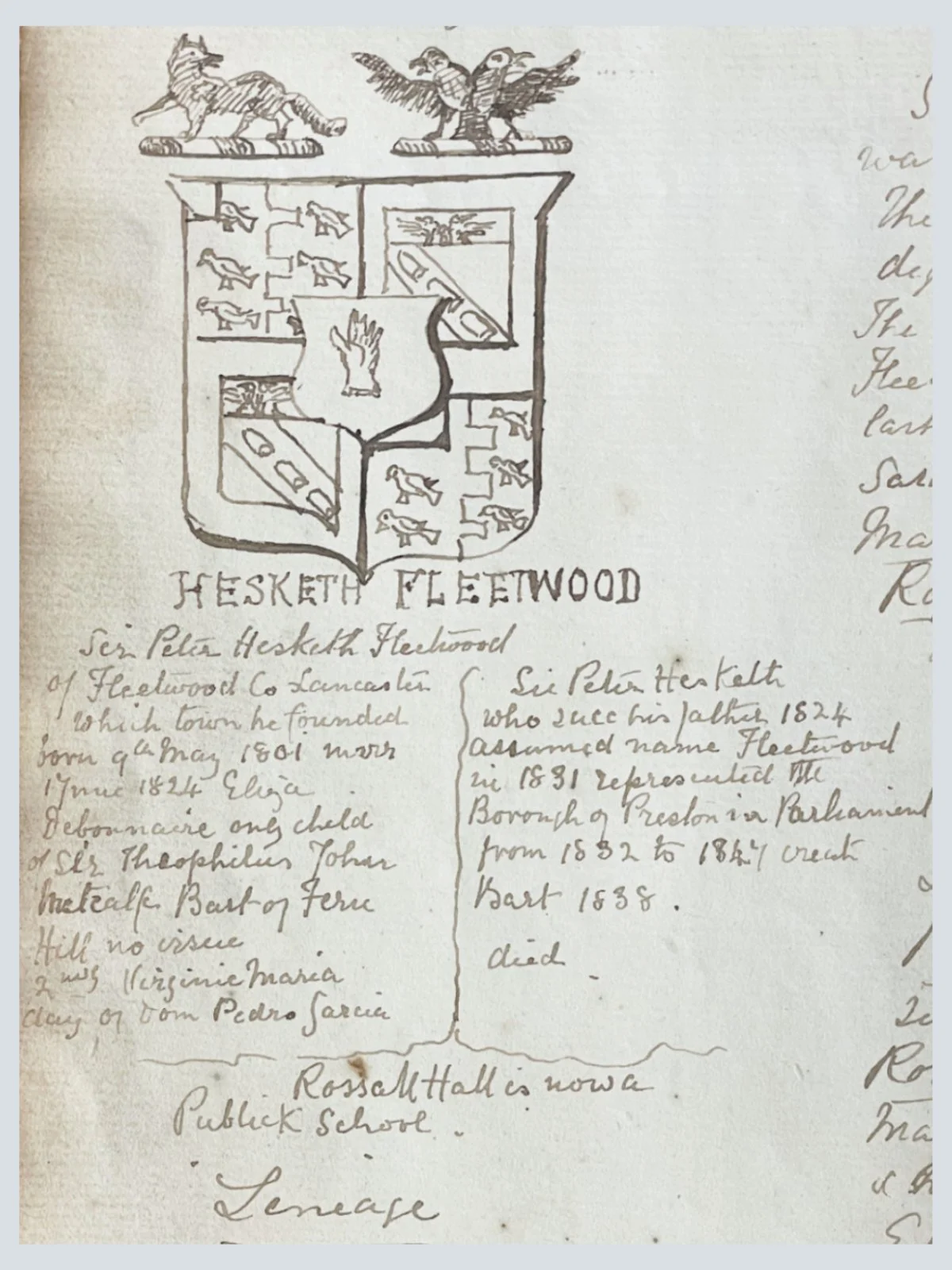
An extraordinary 1722 Edinburgh King James Bible combining elaborate craftsmanship, extra-illustration, and early Quaker provenance. Bound in decorated calf with engraved silver strapwork, heavy clasps, and the Fleetwood family’s armorial crest, it is further embellished with twenty-five copperplate engravings, including six folding plates. Nine pages of manuscript genealogies trace its descent through the Jackson and Fleetwood families and preserve a testimony concerning Richard Jackson, a former soldier converted in 1654 and buried among the Quakers in 1679. This complete folio unites biblical printing, family history, religious dissent, and aristocratic ownership.
Building or Selling a Significant Collection
We continue to acquire and place exceptional early English Bibles, medieval manuscripts, and works of Reformation history. We work with private collectors, institutions, libraries, and museums seeking historically significant material.