
 Image 1 of 17
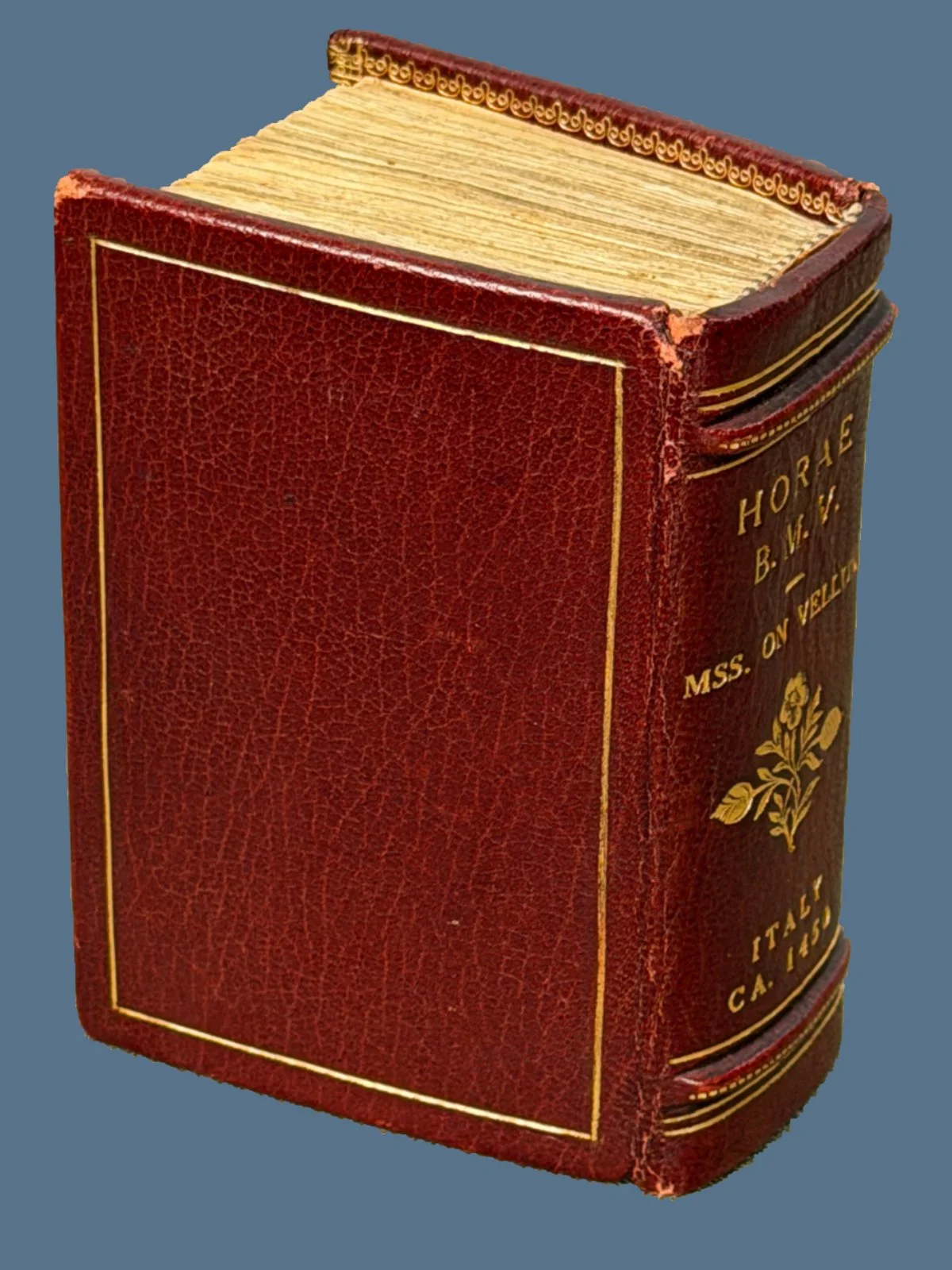 Image 2 of 17
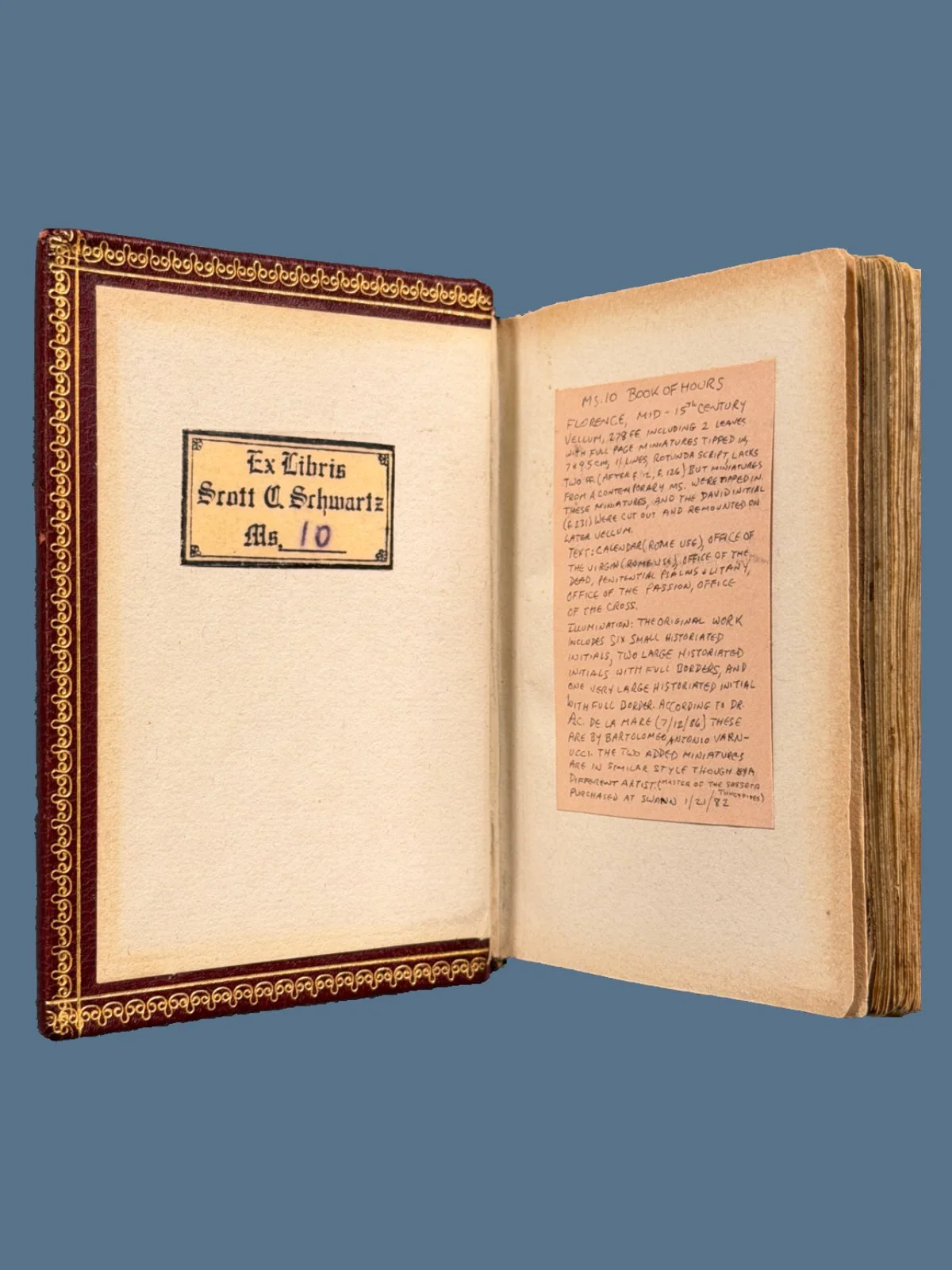 Image 3 of 17
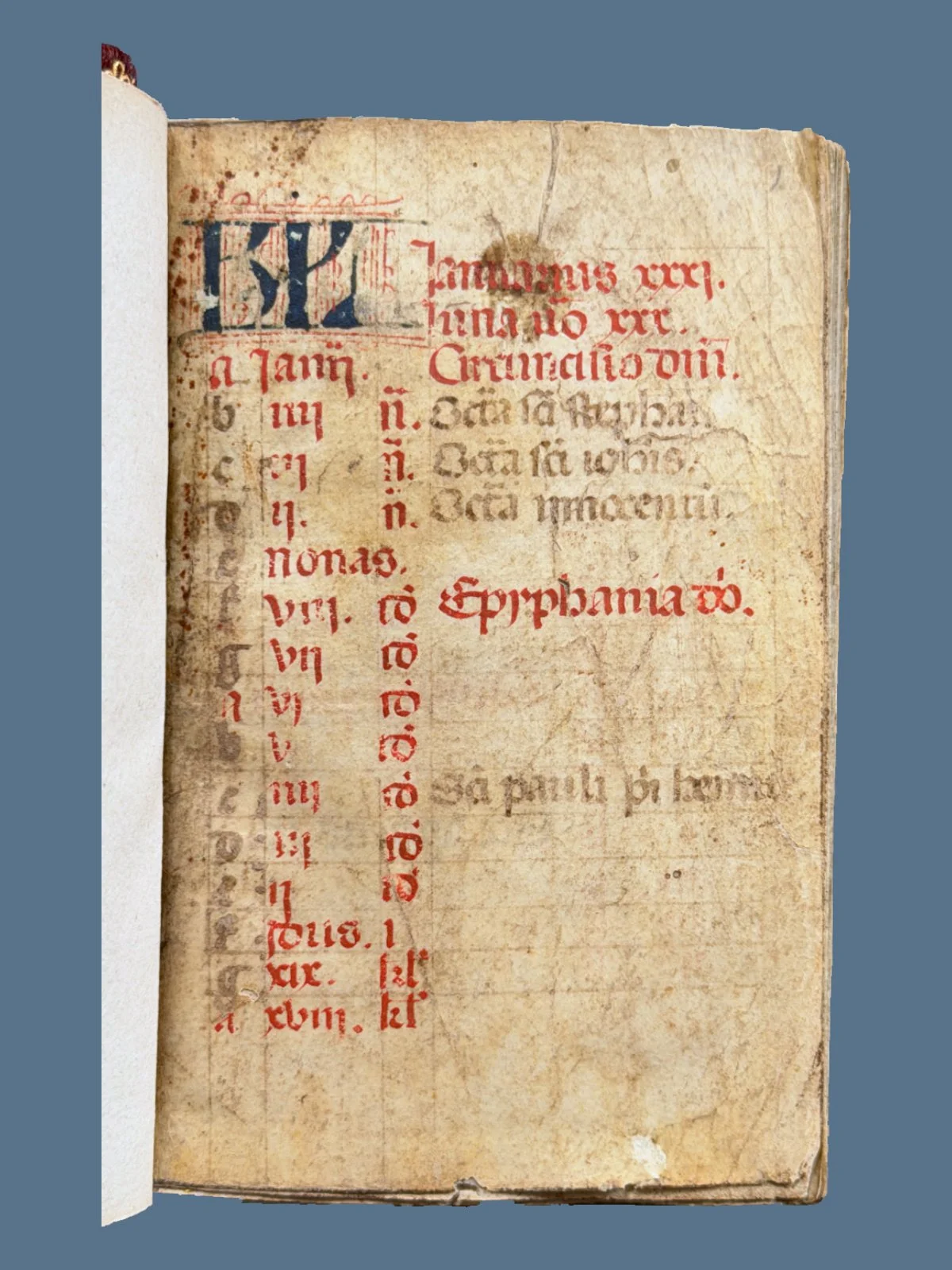 Image 4 of 17
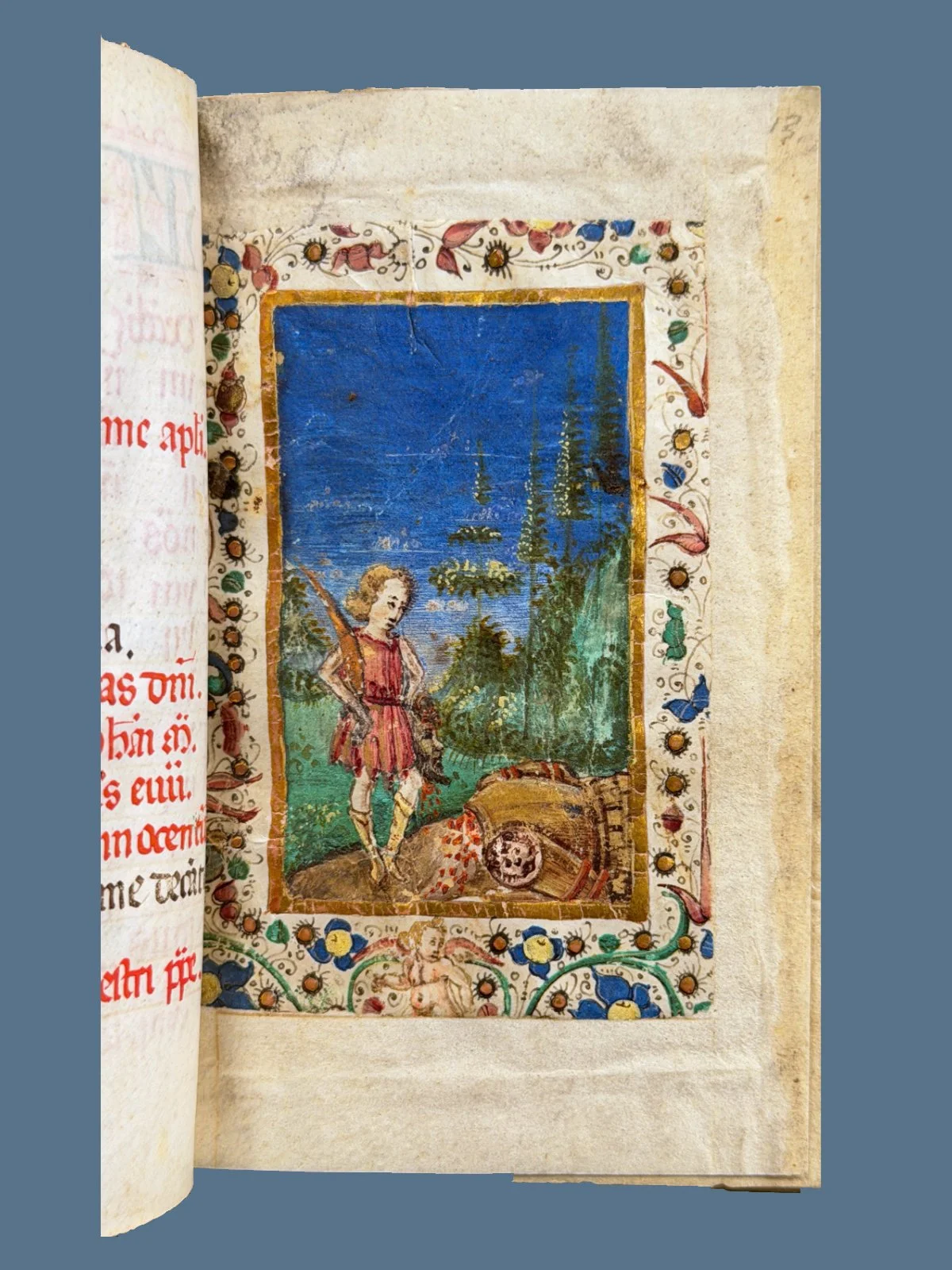 Image 5 of 17
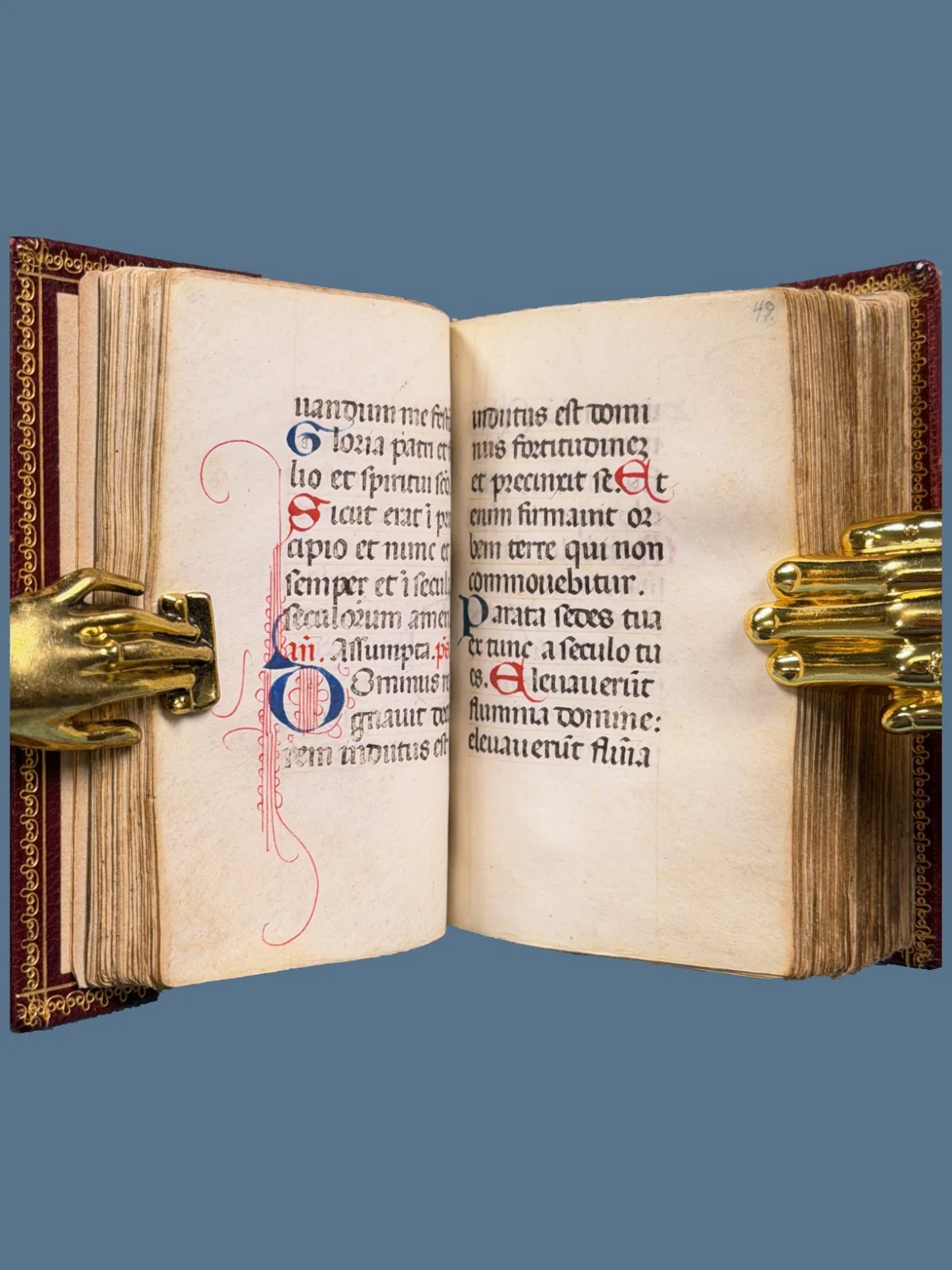 Image 6 of 17
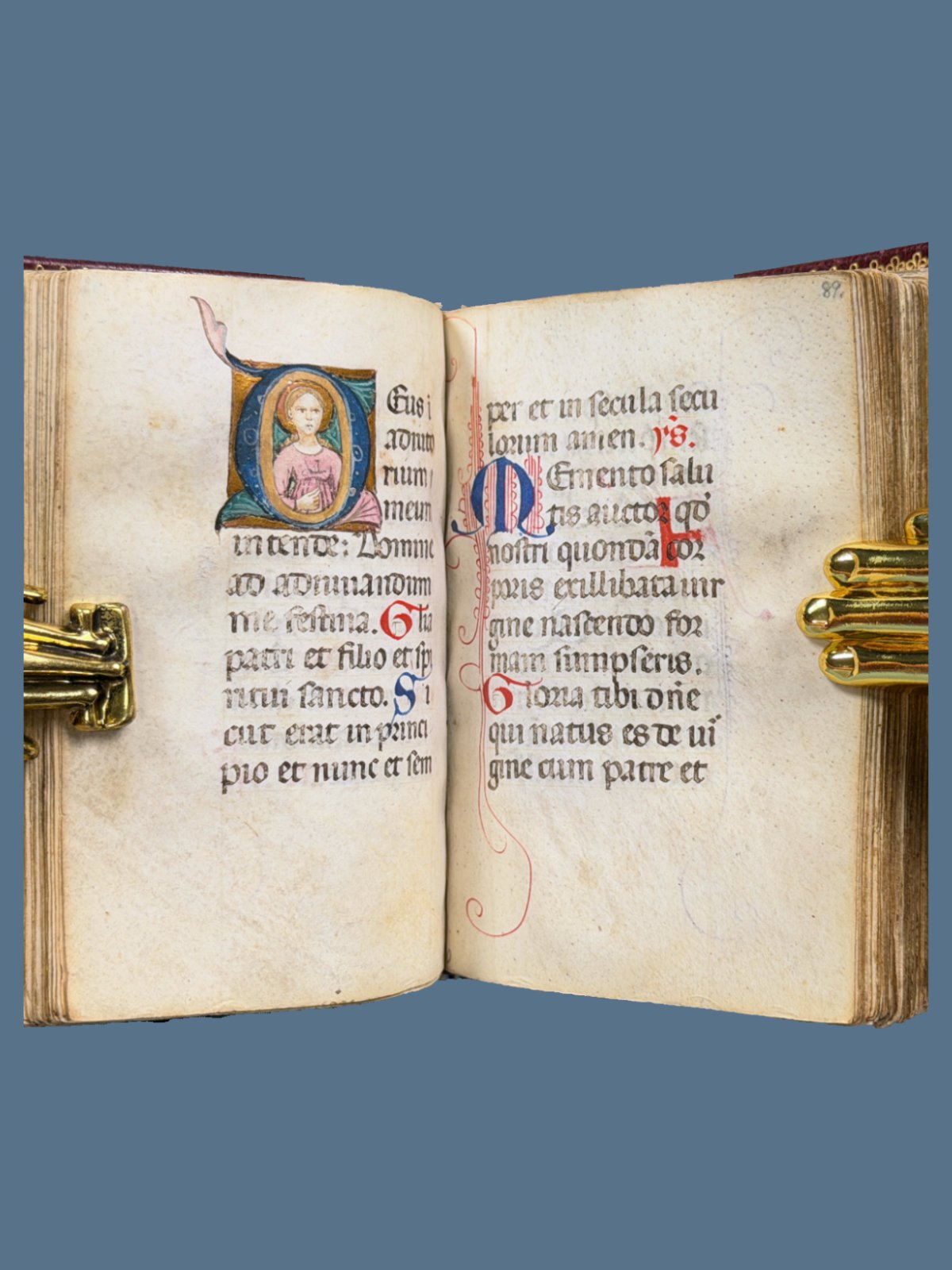 Image 7 of 17
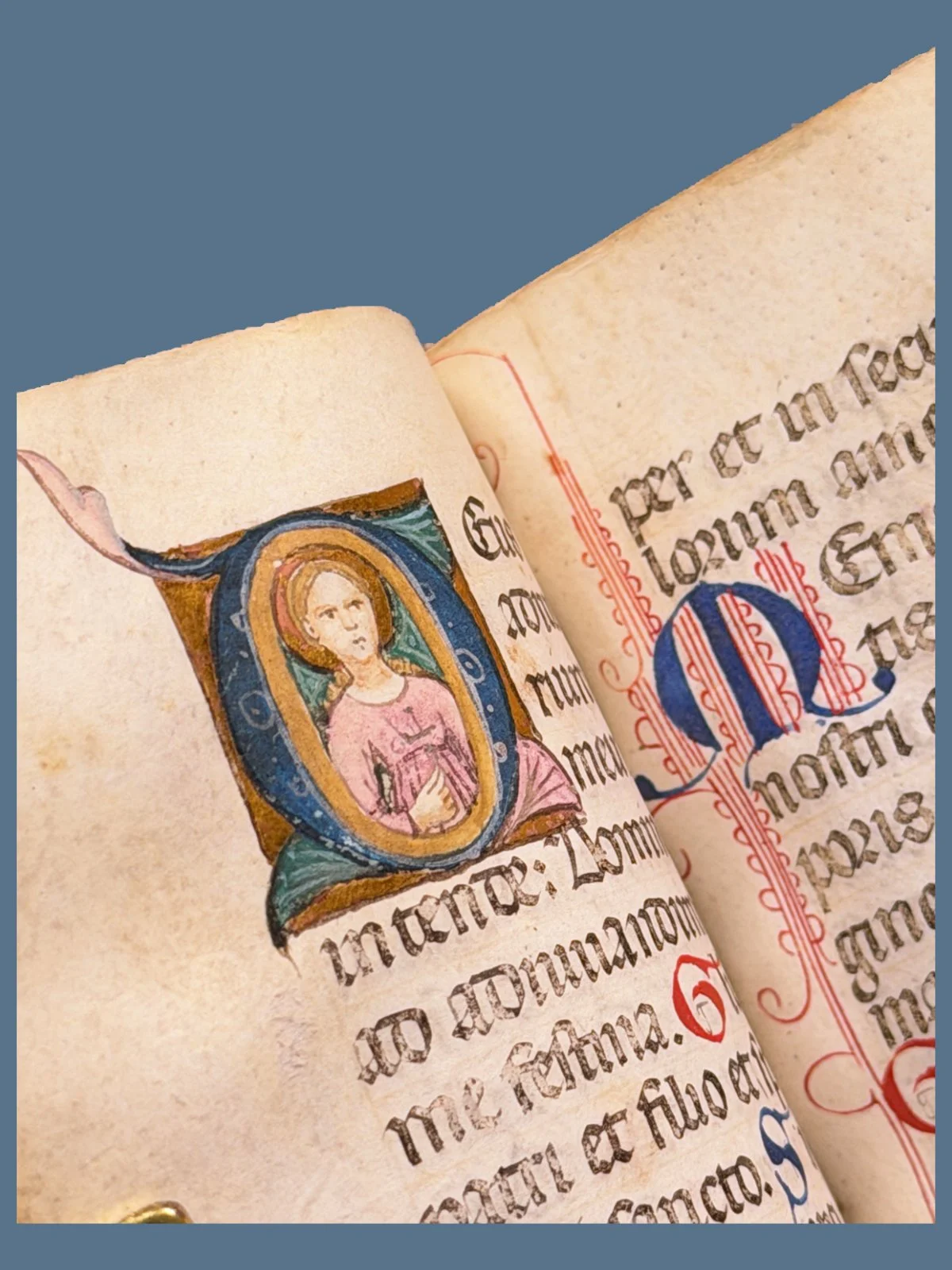 Image 8 of 17
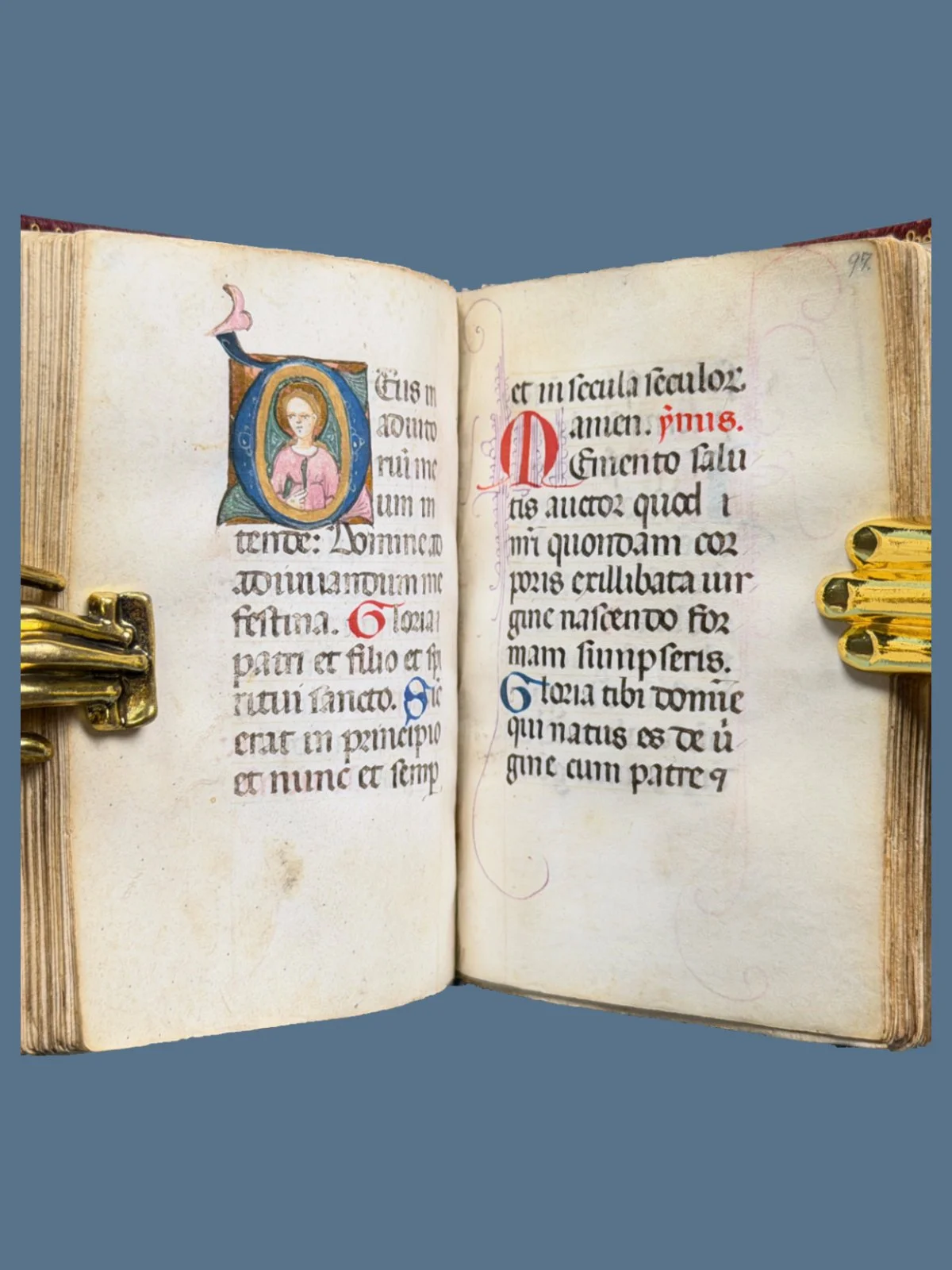 Image 9 of 17
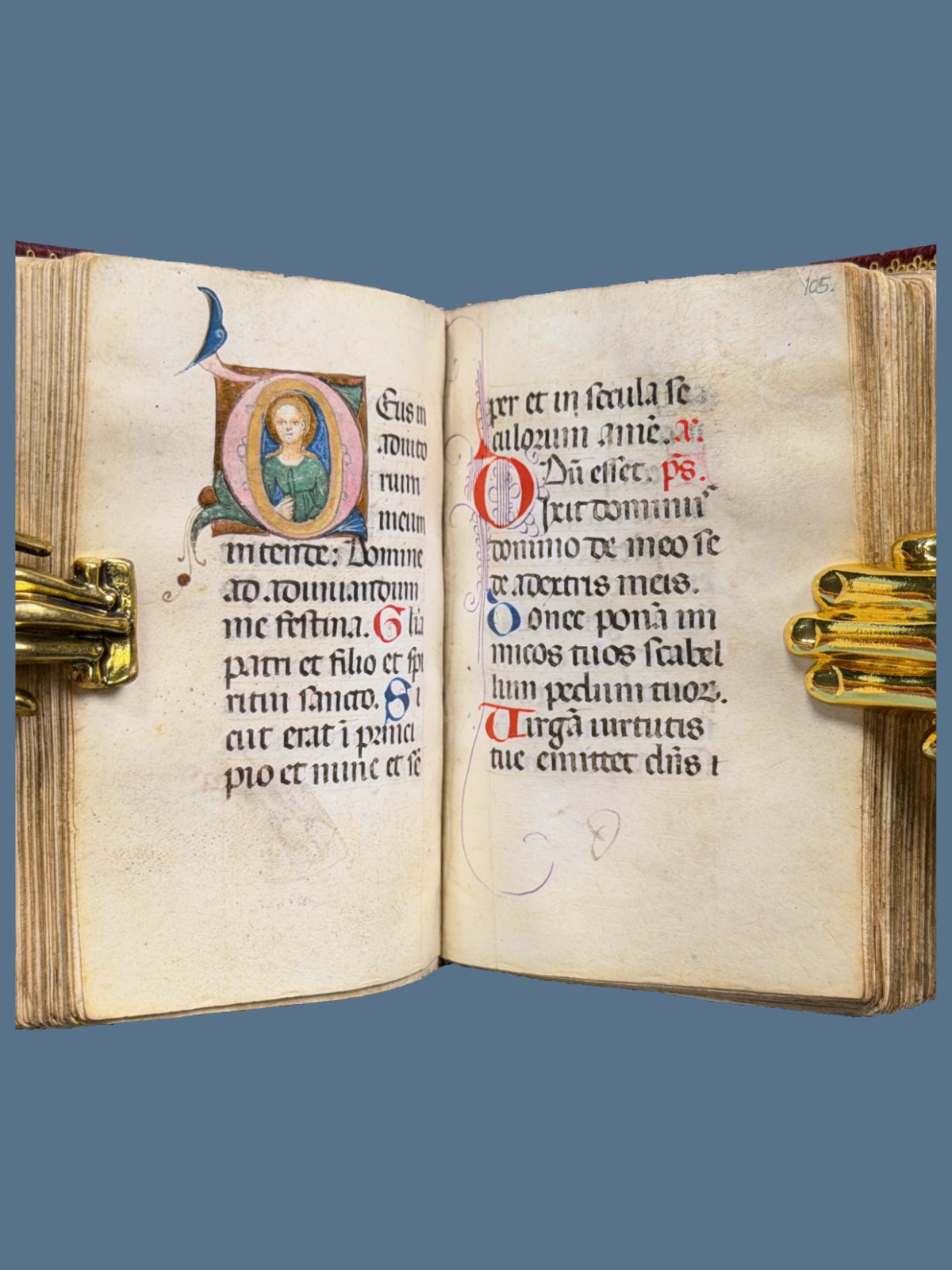 Image 10 of 17
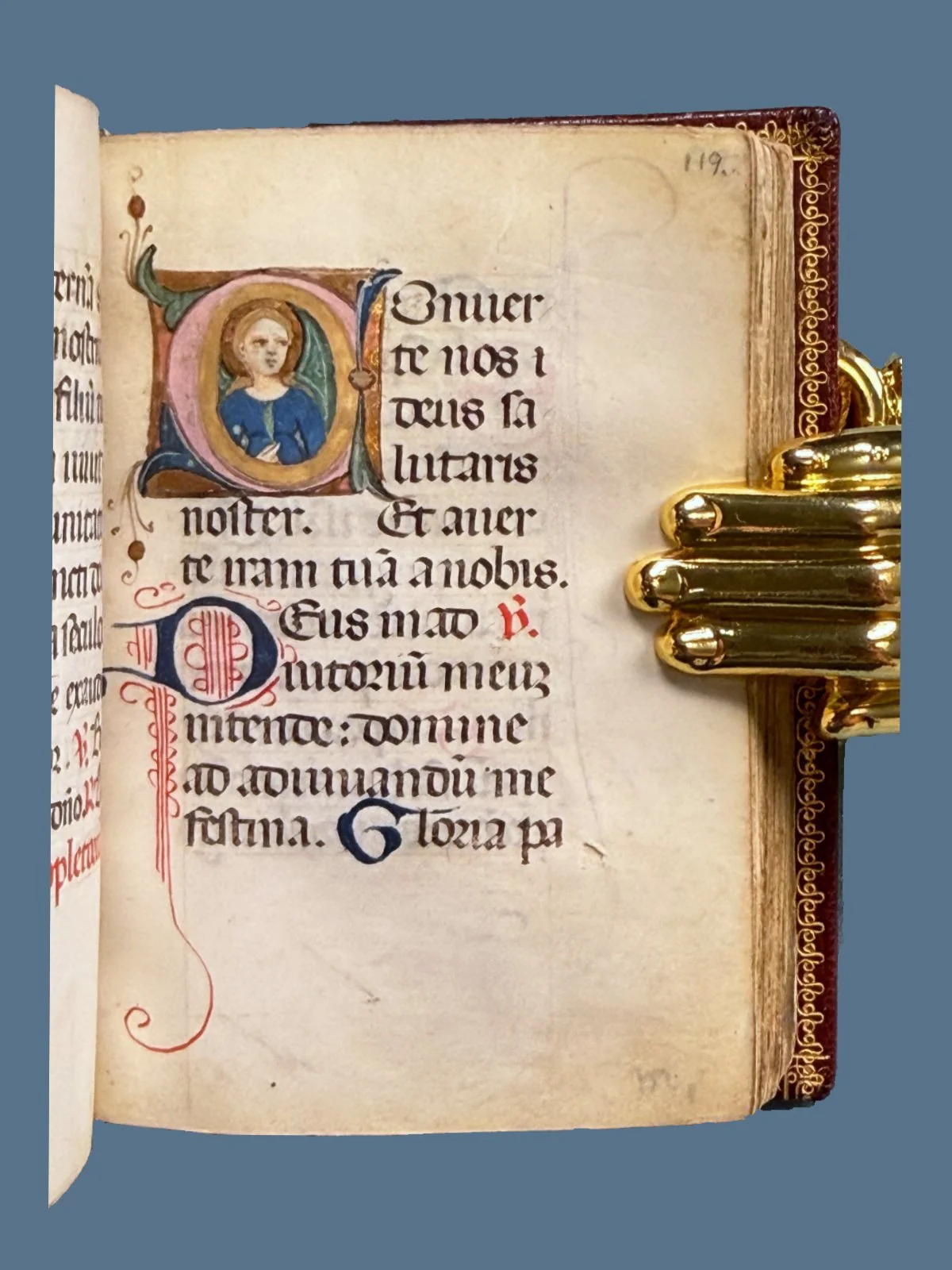 Image 11 of 17
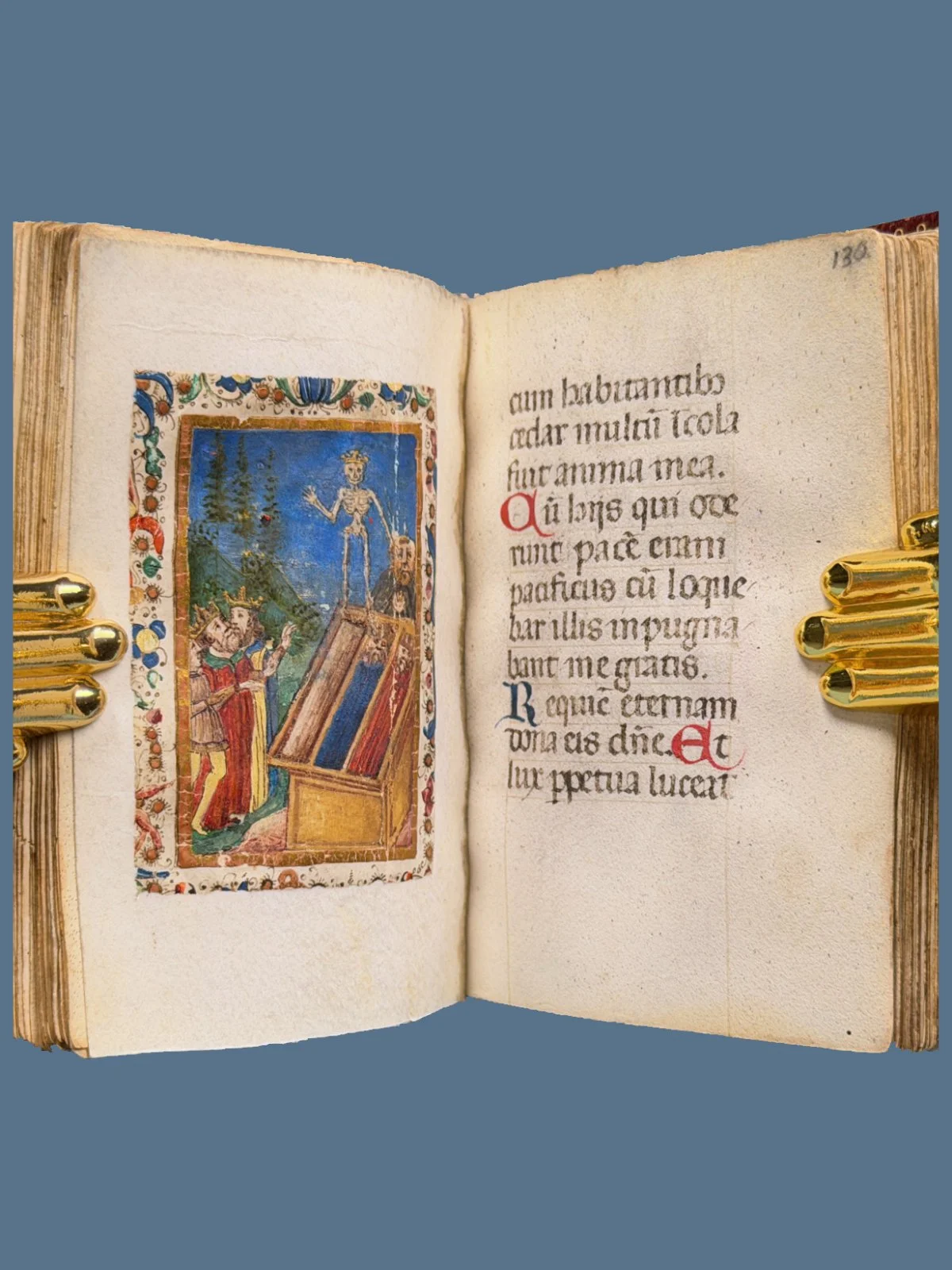 Image 12 of 17
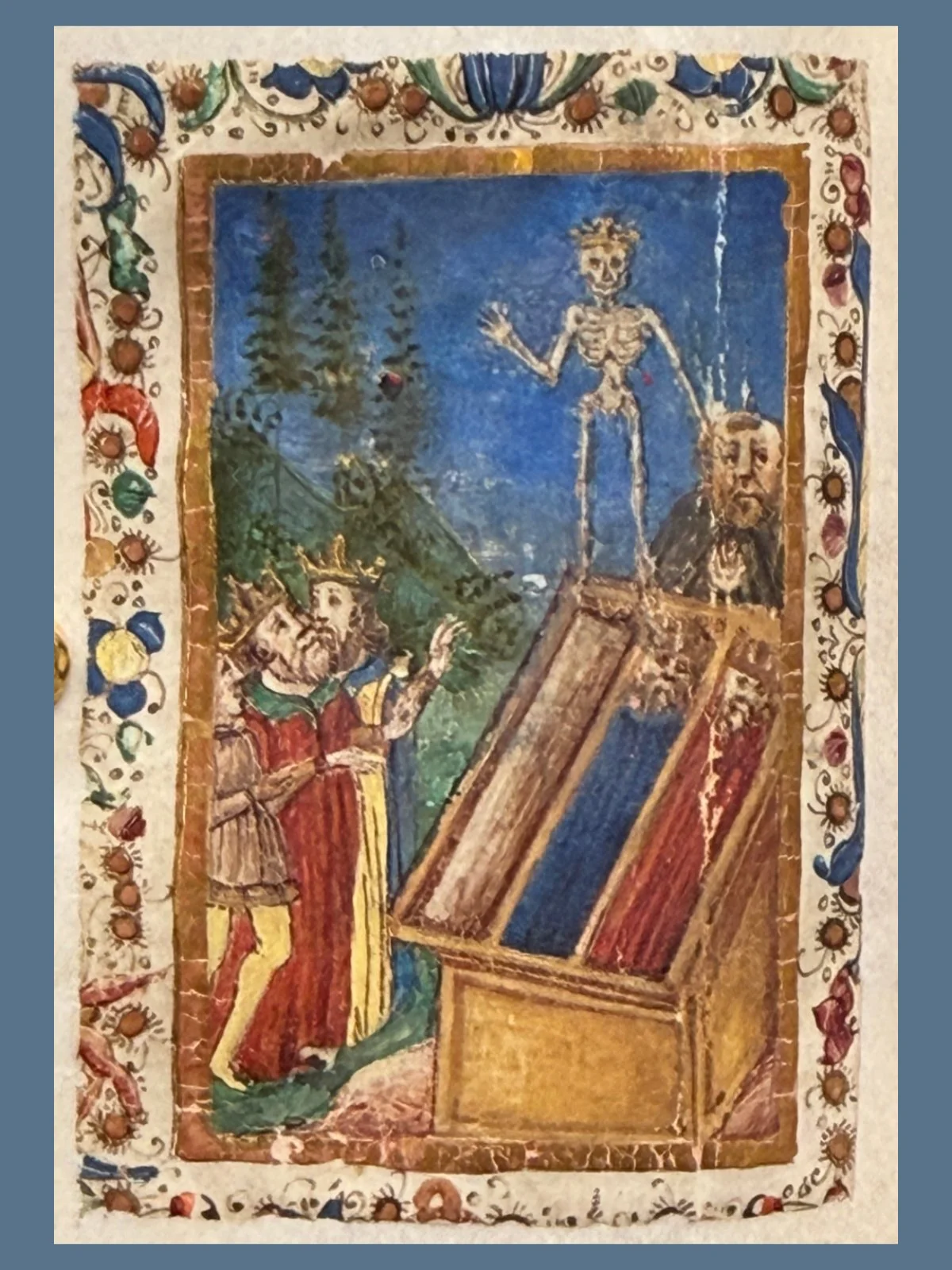 Image 13 of 17
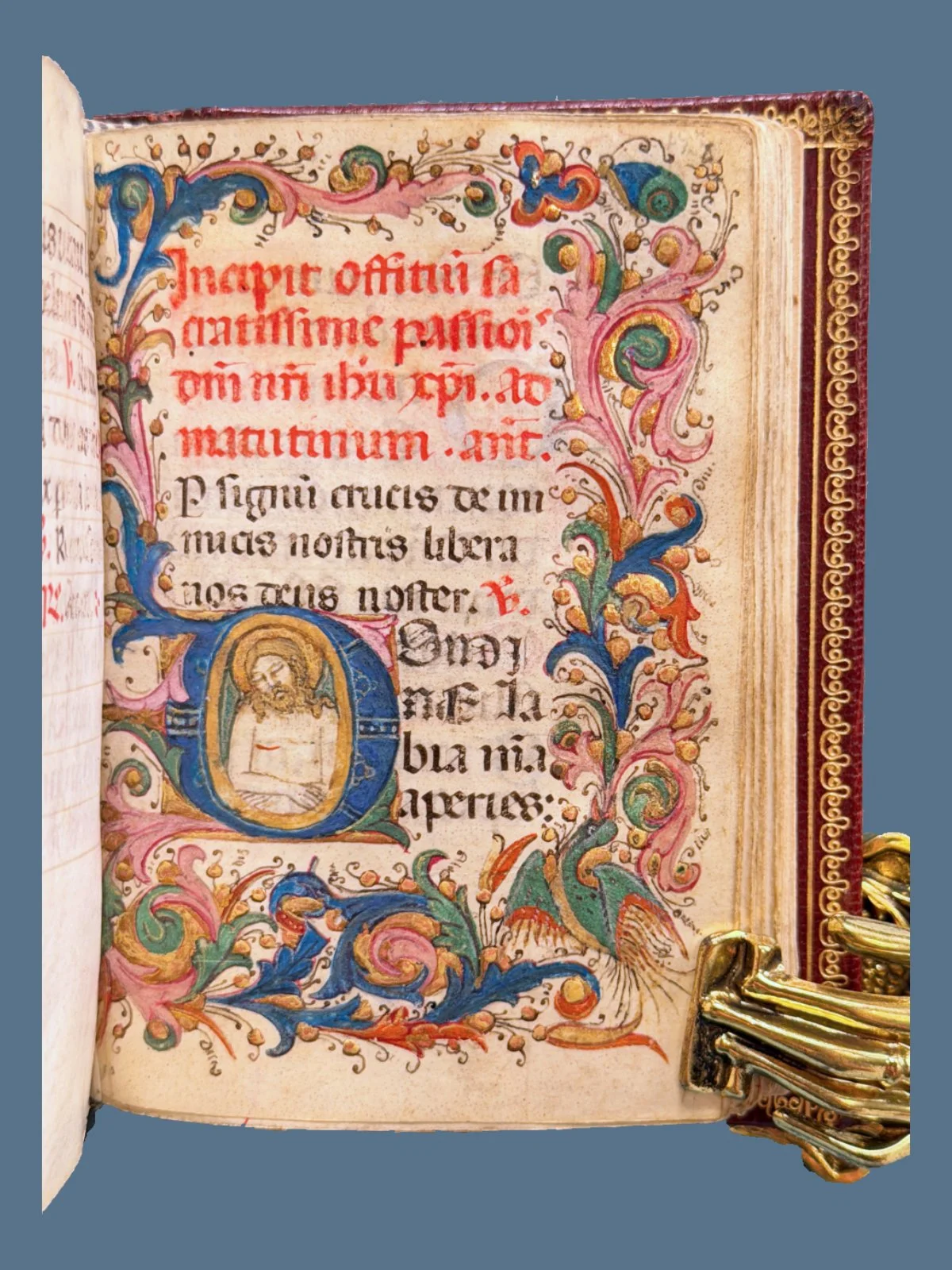 Image 14 of 17
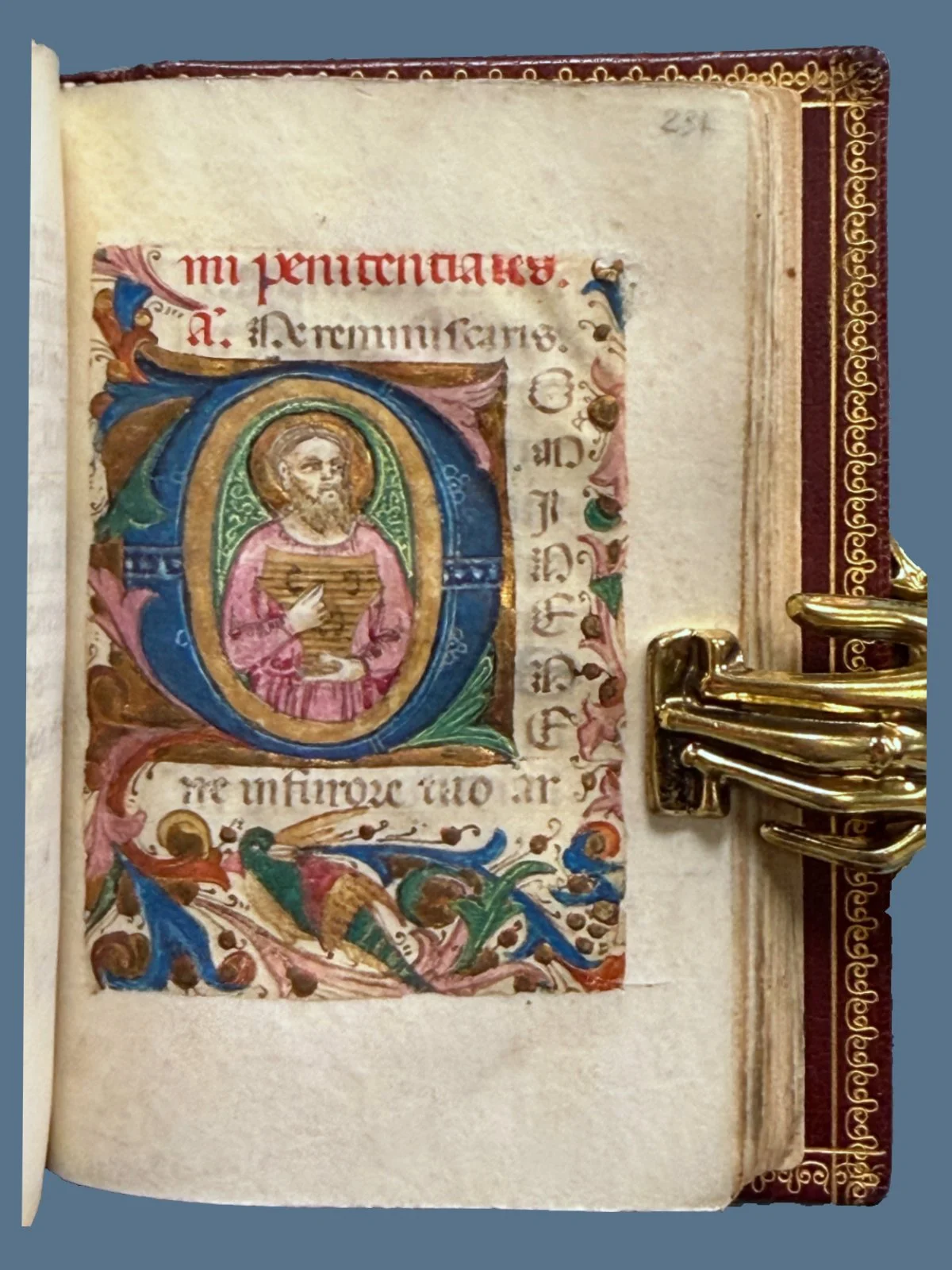 Image 15 of 17
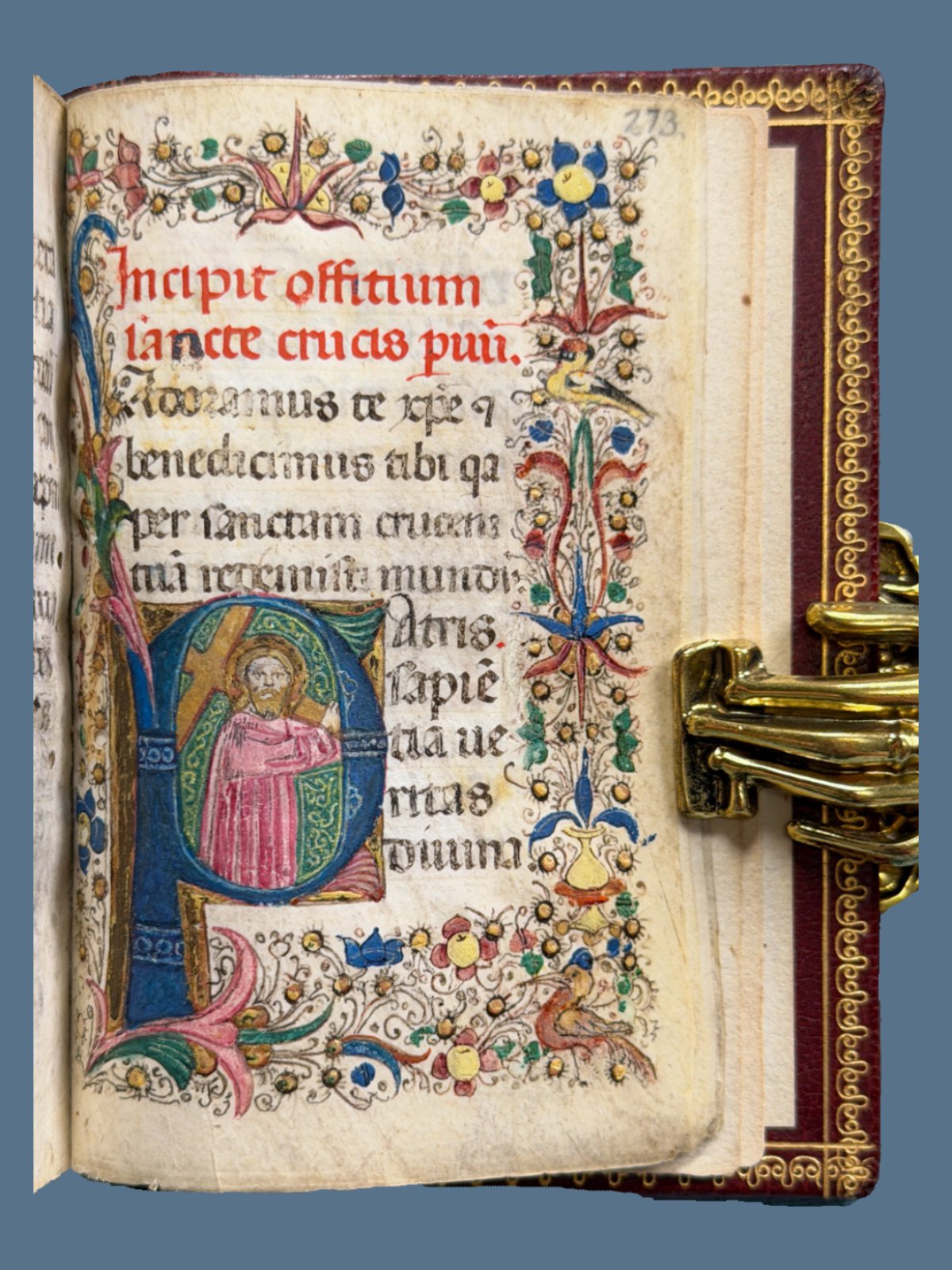 Image 16 of 17
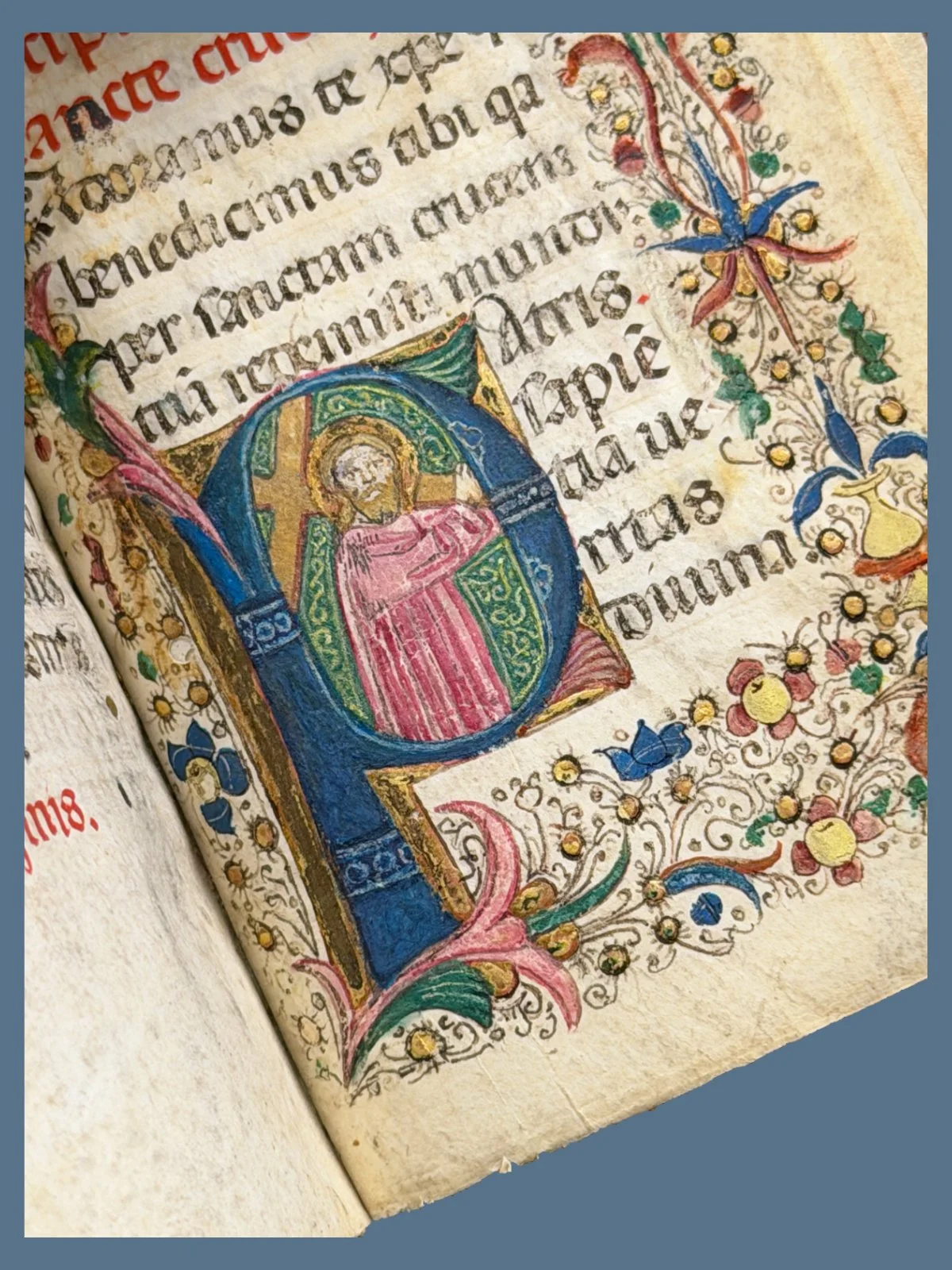 Image 17 of 17
Summary
A mid-15th century illuminated Book of Hours, inscribed in a flowing gothic rotunda script, produced in Florence, with other Italian additions, and brilliantly illuminated by a Florentine workshop, being that of Bartolomeo Varnucci, and complimented by additional work by an unknown Italian Illuminator. Altogether, there is a suite of 9 illuminated, historiated initials, and two full page miniatures within gold borders, albeit borders that have been largely trimmed away.
Description
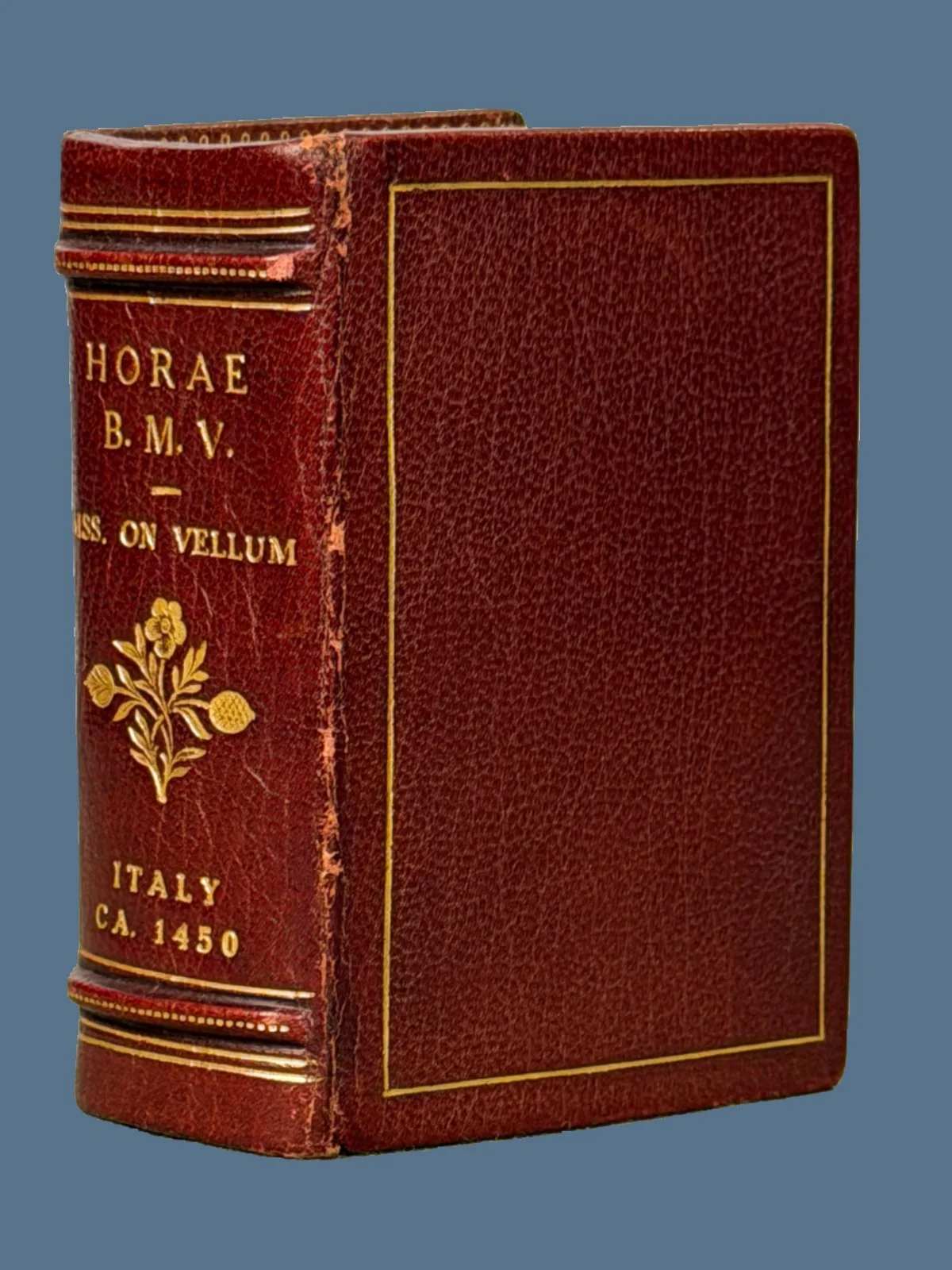
32mo (approx. 95 mm x 70 mm), 278ff. on parchment. The Book of Hours has been bound in a 19th century red Morocco leather, the covers largely plain, but framed with a simple gilt fillet near the edges, with additional decoration to the spine.
This Florentine manuscript is a rather interesting compilation of different Renaissance illuminations, showcasing examples of manuscript loss and reconstruction attempts. Albinia C. de la Mare, a mid to late 20th century English librarian and palaeographer who specialised in Italian Renaissance manuscripts, has attributed most of the illumination work to the Florentine illuminator Bartolomeo d’Antonio Varnucci, and the manuscript also contains miniatures executed slightly later by a still-unidentified painter. Varnucci’s workshop was responsible for the manuscript’s original decorative program, including the preliminary design and illumination of eight historiated initials.
At some later point however, the manuscript lost three major historiated initials marking the incipits of the Hours of the Virgin, the Office of the Dead, and the Penitential Psalms. Two of these losses were replaced, tipped in likely during the twentieth century, with full-page miniatures excised from another Book of Hours by a different illuminator, who shows the influence of Milanese illumination. Faint dealer marks visible on the first tipped-in leaf (f. 13) suggest that these inserted miniatures circulated independently on the art market before their integration into the present volume. The manuscript’s foliation was correspondingly altered after folio 127 to accommodate the inserted leaf depicting the Three Living and the Three Dead for the Office of the Dead. The third missing historiated initial, representing King David with a harp, was rediscovered, likewise probably during the twentieth century, and reunited with the manuscript as a tipped-in folio (f. 231). Mounted on a vellum guard with a carefully cut window exposing the verso text, the initial was reincorporated into the manuscript, restoring the continuity of this portion of the Hours.
Bartolomeo d’Antonio Varnucci was among the leading illuminators active in Florence during the second quarter of the fifteenth century. Working alongside his brothers Giovanni and Chimenti at the Badia Fiorentina, the Varnucci workshop produced manuscripts for many of the city’s most distinguished ecclesiastical and humanist patrons. By the 1430s, Bartolomeo had emerged as a major figure in Florentine illumination, specializing particularly in liturgical and devotional manuscripts commissioned for institutions such as the Badia Fiorentina, Florence Cathedral, and the Abbey of Monte Oliveto Maggiore. His artistic language combines both innovative and conservative tendencies. He has been associated with the introduction of the winged putto into bianchi girari decoration, while his figures often retain the flattened color fields and restrained physiognomic variety characteristic of an earlier Florentine tradition.
Bartolomeo’s career intersected with some of the most important intellectual and political circles of Renaissance Florence, and the present Book of Hours, executed in miniature, was likely made for a patron in that milieu. During the Council of Florence in 1439, he worked for several eminent patrons, including Tommaso Parentucelli, the future Pope Nicholas V, Pope Eugenius IV, and the humanist Antonio Rosselli, whose Monarchia sive tractatus de potestate imperatoris et papae was presented to Emperor Sigismund of Luxembourg (Paris, Bibliothèque nationale de France, MS lat. 4237).
This Book of Hours is illuminated throughout, with a suite of 8 illuminated, historiated initials on a four-line format, brightly illuminated and shining, decorated in in shades of soft pink, blue, and green against gold, with marginal extensions of restrained acanthus foliage and penwork tendrils, one of these with full foliate borders of lively, curling acanthus scrolls in saturated blue, green, and pink, enriched with gold bezants and fine black penwork tendrils, accompanied by naturalistic bird. There is a 9th historiated initial in a seven-line format, on a tipped in singleton leaf, mounted on a vellum guard with a window cut to expose the verso text, in blue on a burnished gold ground with white penwork infill on green, and with full borders, now mostly trimmed away, originally decorated with acanthus scrollwork in blue and lilac embellished with birds. There are also two full-page miniatures, each also on a tipped in singleton leaf within gold frames, and bearing what were once full borders, now mostly trimmed away, executed in a slightly different aesthetic scheme, with more restrained, geometric acanthus scrollwork accented by dark penwork outlining, gold bezants and putti. Asides from that, there are numerous 2 and 3-line Lombard initials throughout, with penwork embellishments and extensions, and hundreds of capital letters in alternating red and blue ink.
A special thanks to Sandra Hindman and Peter Bovenmyer for researching and providing the majority of information.
Structure
Calendar (ff. 1r-12v); Additional leaf tipped in (f. 13); Hours of the Virgin, beginning imperfectly with Lauds (ff. 14r-48r); Lauds (ff. 48r-70v); Prime (ff. 71r-79v); Terce (ff. 80r-88r); Sext (ff. 88v-96r); None (ff. 96v-104r); Vespers (ff. 104v-118v); Additional prayers (ff. 119r-126v); Additional leaf tipped in (f. 127); Office of the Dead, beginning imperfectly (ff. 128r-194v); Office of the Passion (ff. 195r-230); Seven Penitential Psalms (ff. 231-254v); Various Litanies and supplications (ff. 255r-272v); Hours of the Cross (ff. 273-278).
Miniatures
David holding the head of Goliath and gazing at the decapitated body, beginning the Hours of the Virgin (f. 14v); Portraits of the Virgin in alternating blue, green, and pink robes, in initials ‘D’ and ‘C’, opening each hour of the Virgin, except for Lauds, which begins with a large Lombard initial (ff. 71, 80, 88v, 96v, 104v, 119); The Three Living and the Three Dead, with a skeleton standing atop coffins and a monk beside him, facing the viewer, and beginning the Office of the Dead (f. 127r); the Man of Sorrows in a historiated initial ‘D’, beginning the Hours of the Passion (f. 195r); king David with a harp in a historiated initial ‘D’, beginning the Penitential Psalms (f. 231r); Christ bearing the Cross in a historiated initial ‘P, beginning the Hours of the Cross (f. 273 r.).
Condition
Very good, minimal rubbing and wear to the binding. The singleton leaf tipped in at f127 is detached and loose within the text block. There is minor pigment loss to both half-page miniatures, and some discoloration to the initial and terminal leaves. There is minor soiling and rippling to the parchment throughout, with minor text fading in places.
Provenance
Likely commissioned for a Florentine client, this manuscript bears several notes of provenance, the first several 17th century inscriptions in a secretary hand, repeating the same instruction that no commemoration of the saints is to be made at certain points among the hours, or “non a fa commemorazione de santi”. It was then sold at Swann Galleries, at the sale of January 21st 1982. Lastly, the manuscript was acquired from the private collection of Dr. Scott Schwartz of New York, his bookplate and catalog number “MS 10” to the front pastedown.