
 Image 1 of 17
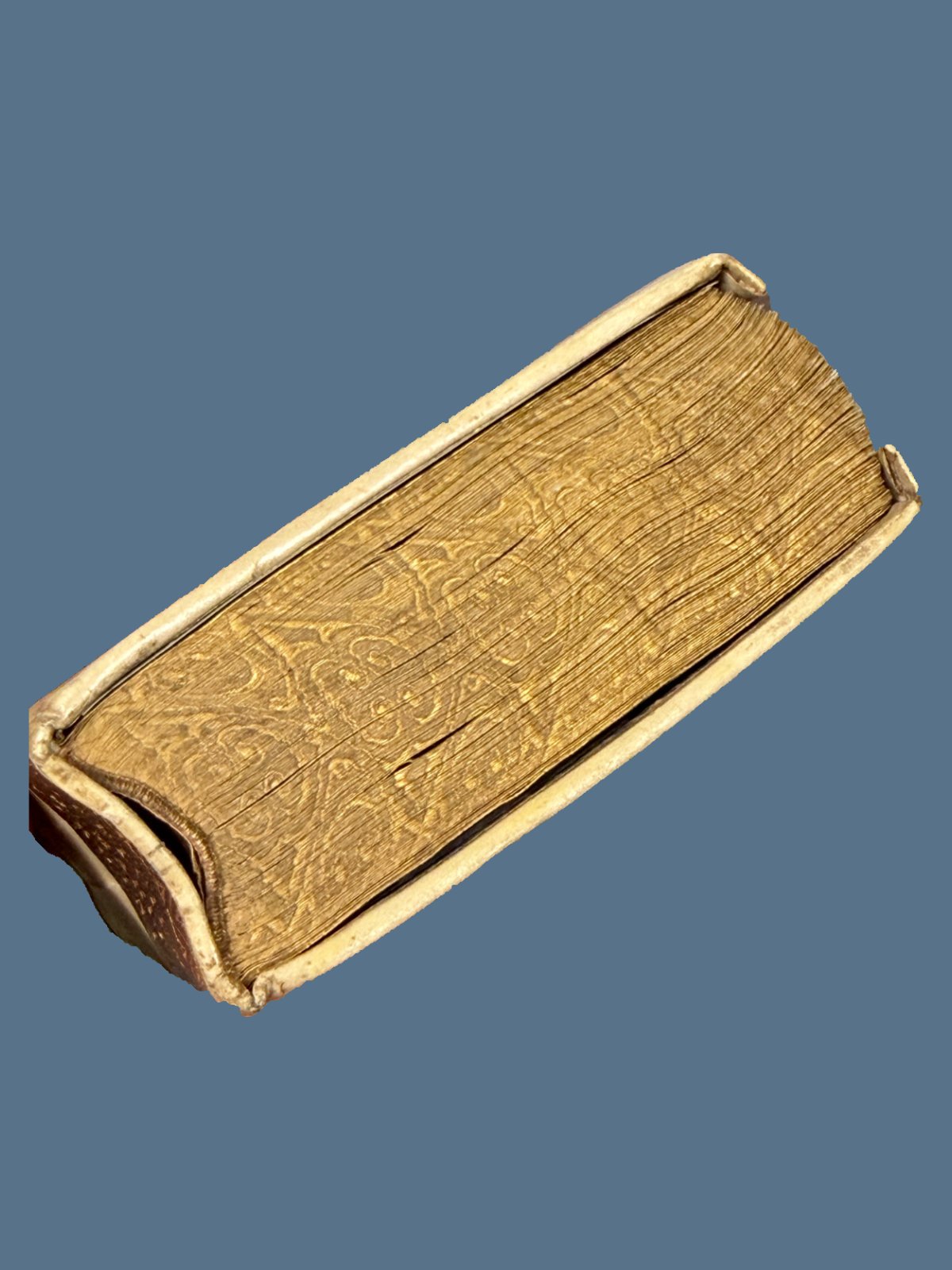 Image 2 of 17
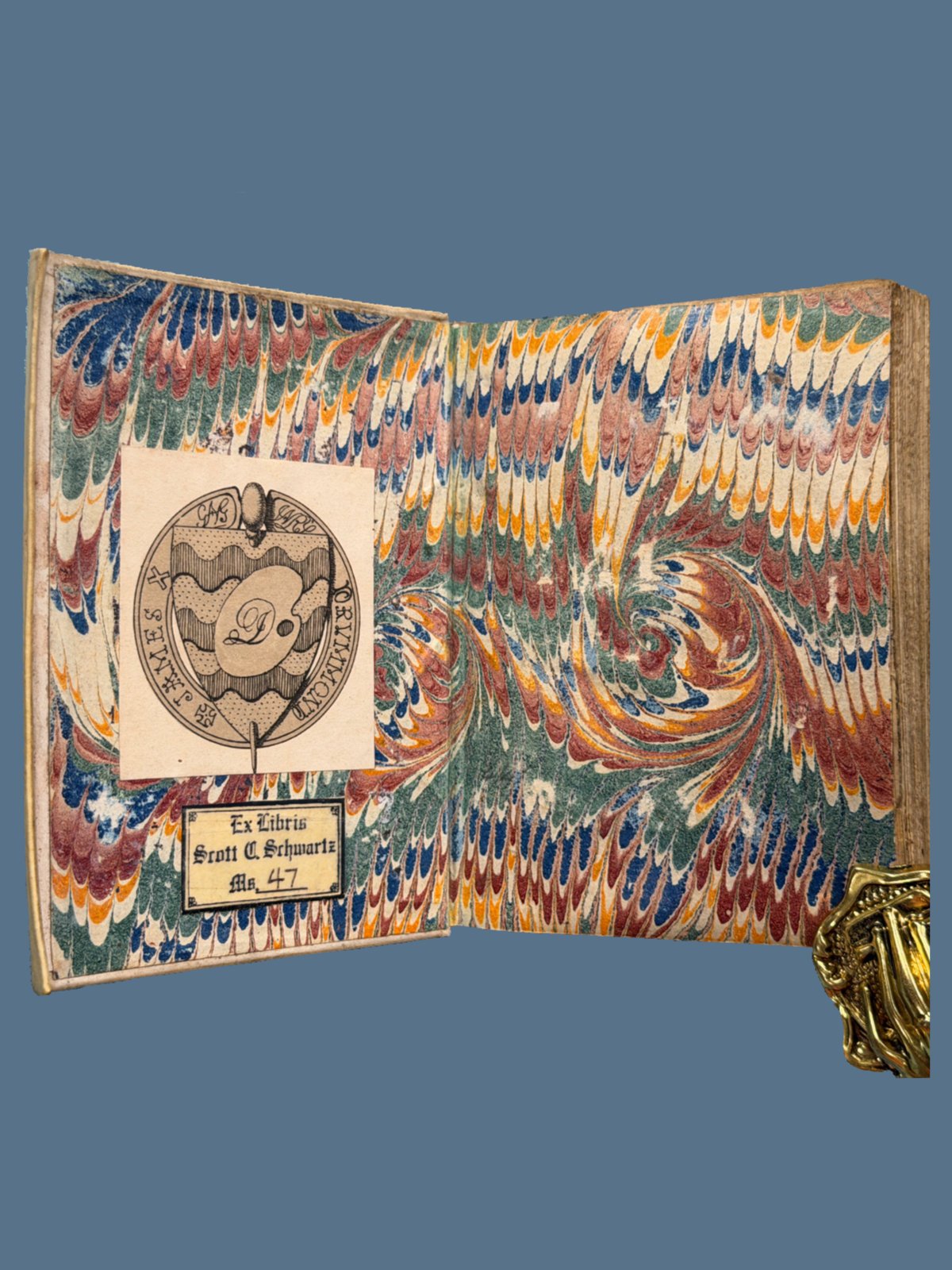 Image 3 of 17
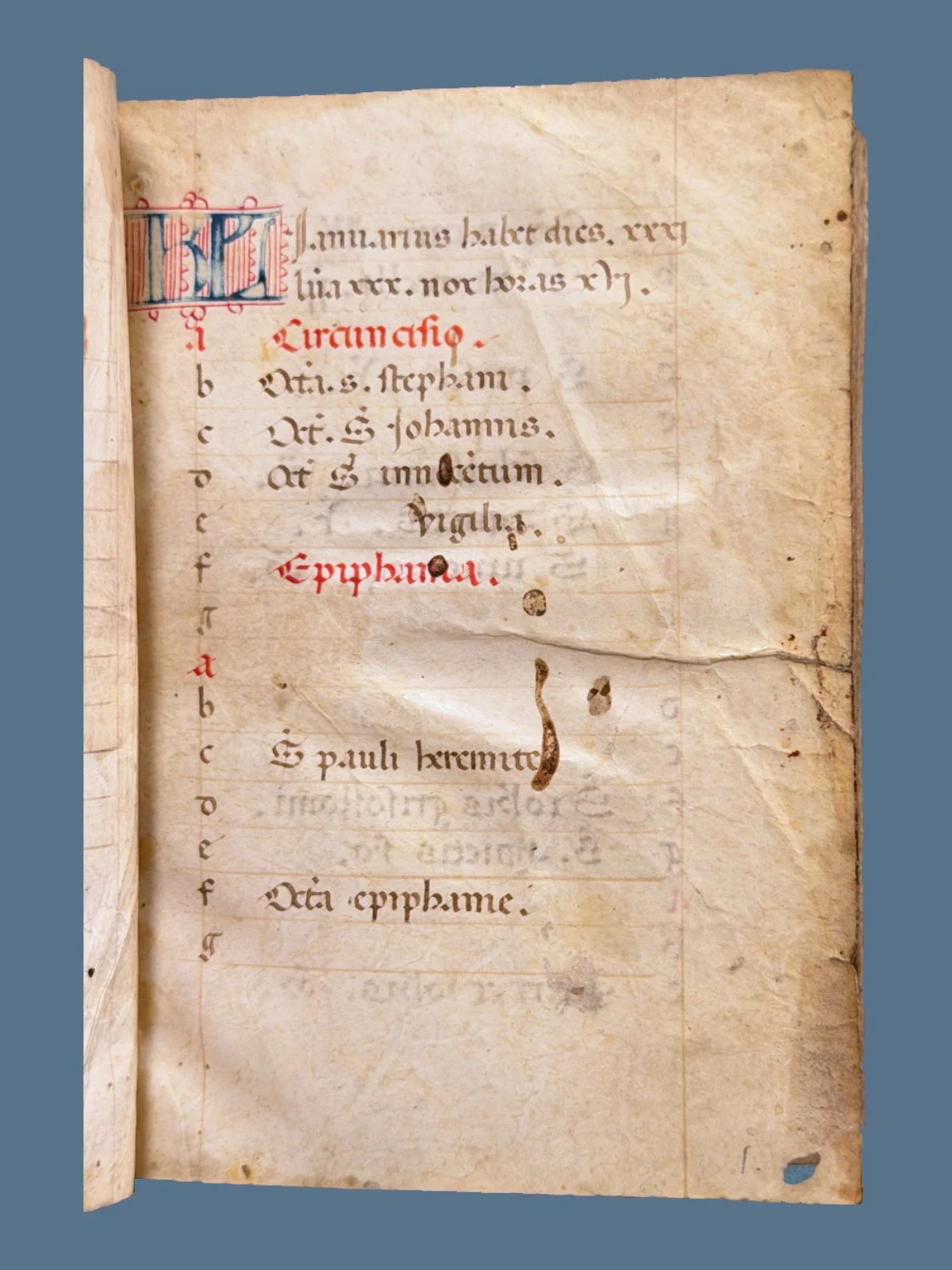 Image 4 of 17
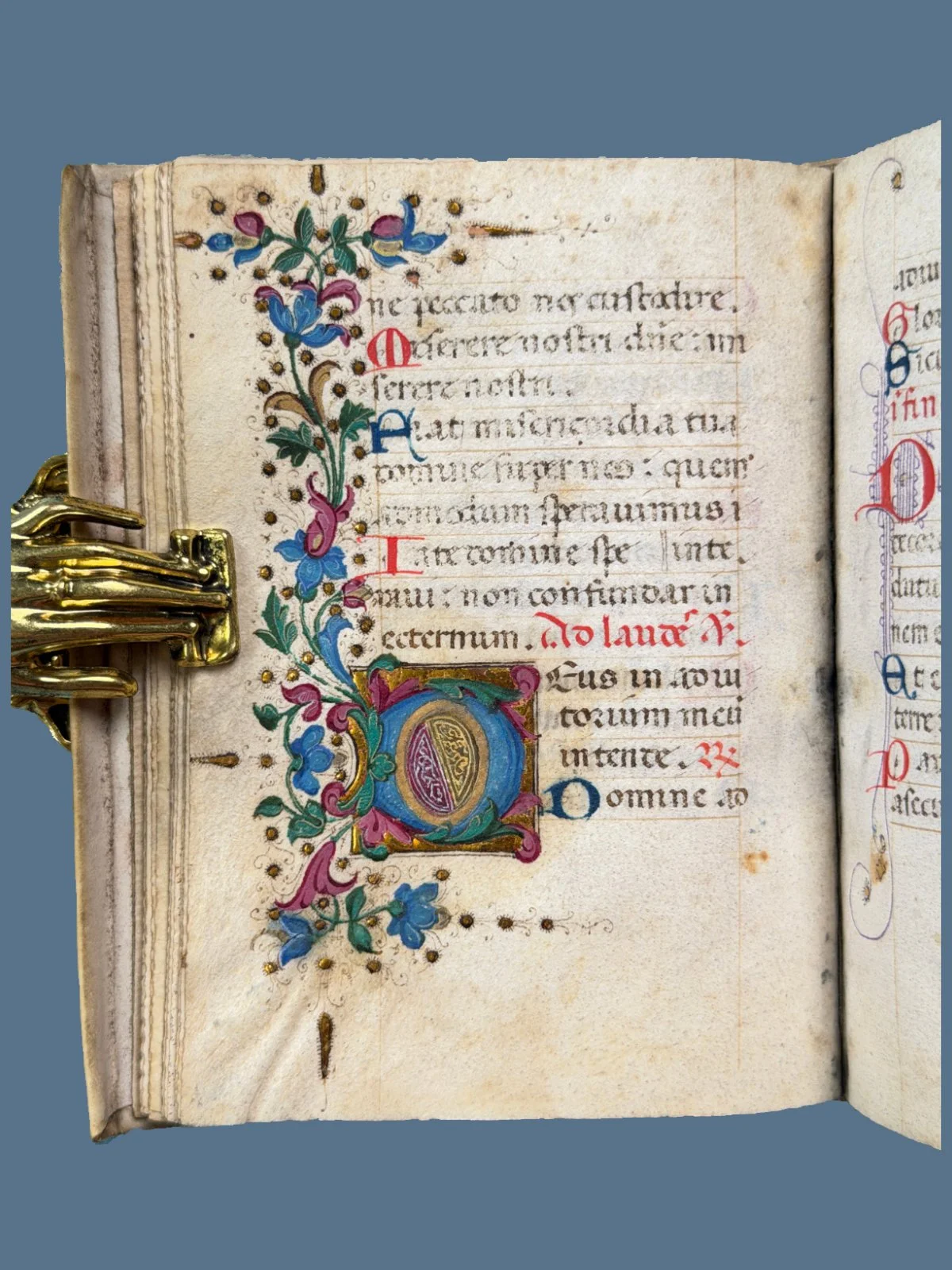 Image 5 of 17
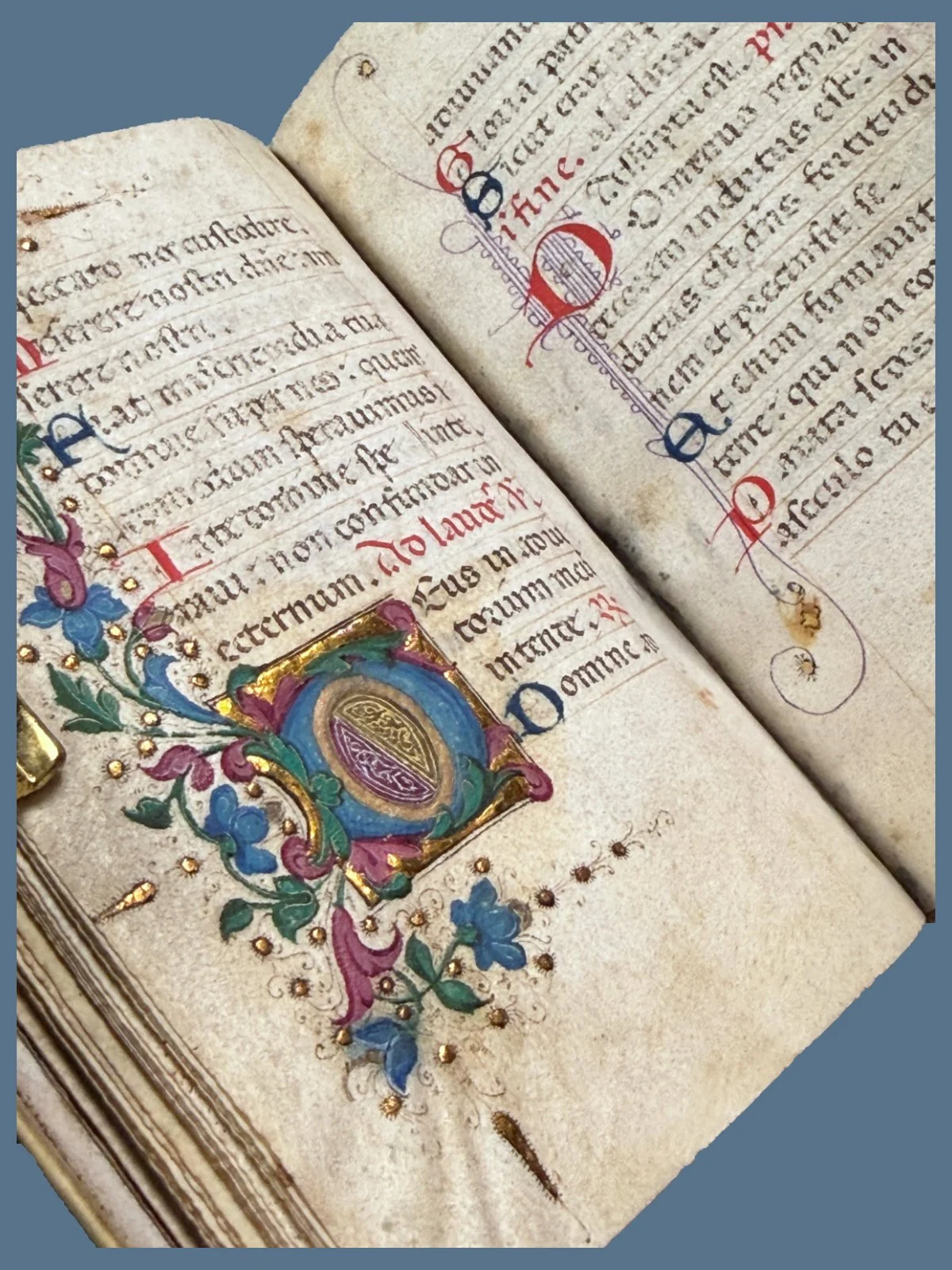 Image 6 of 17
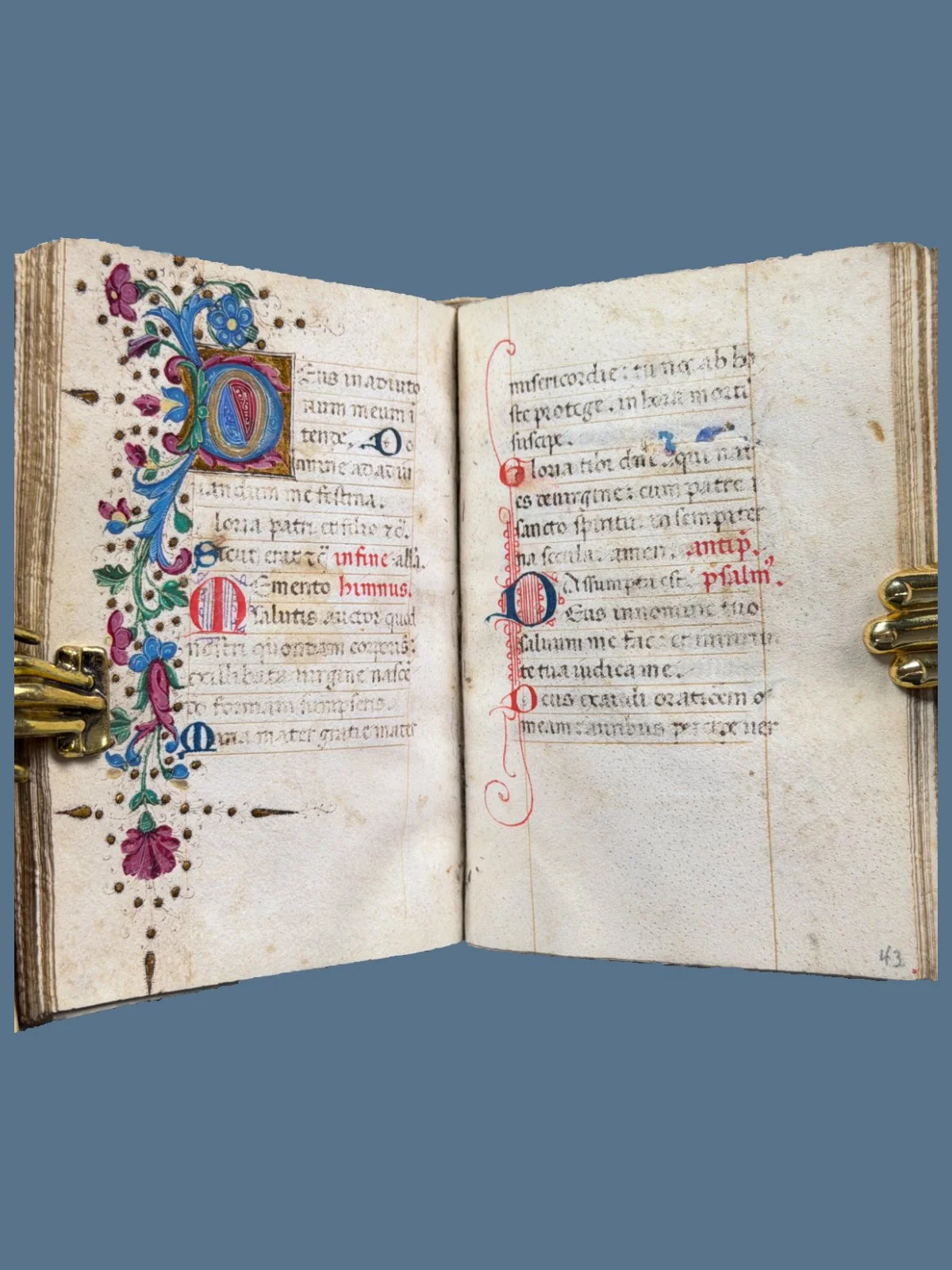 Image 7 of 17
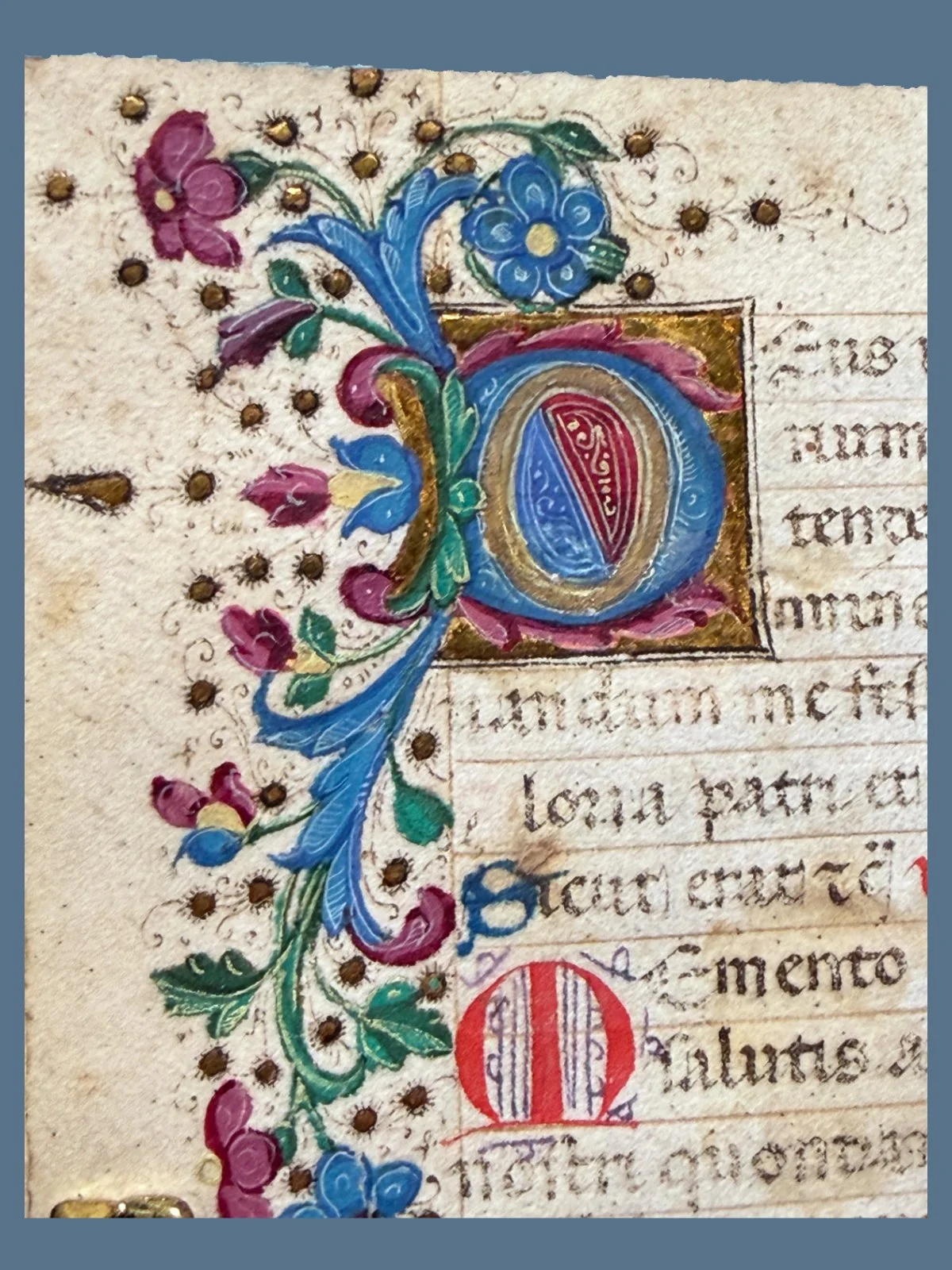 Image 8 of 17
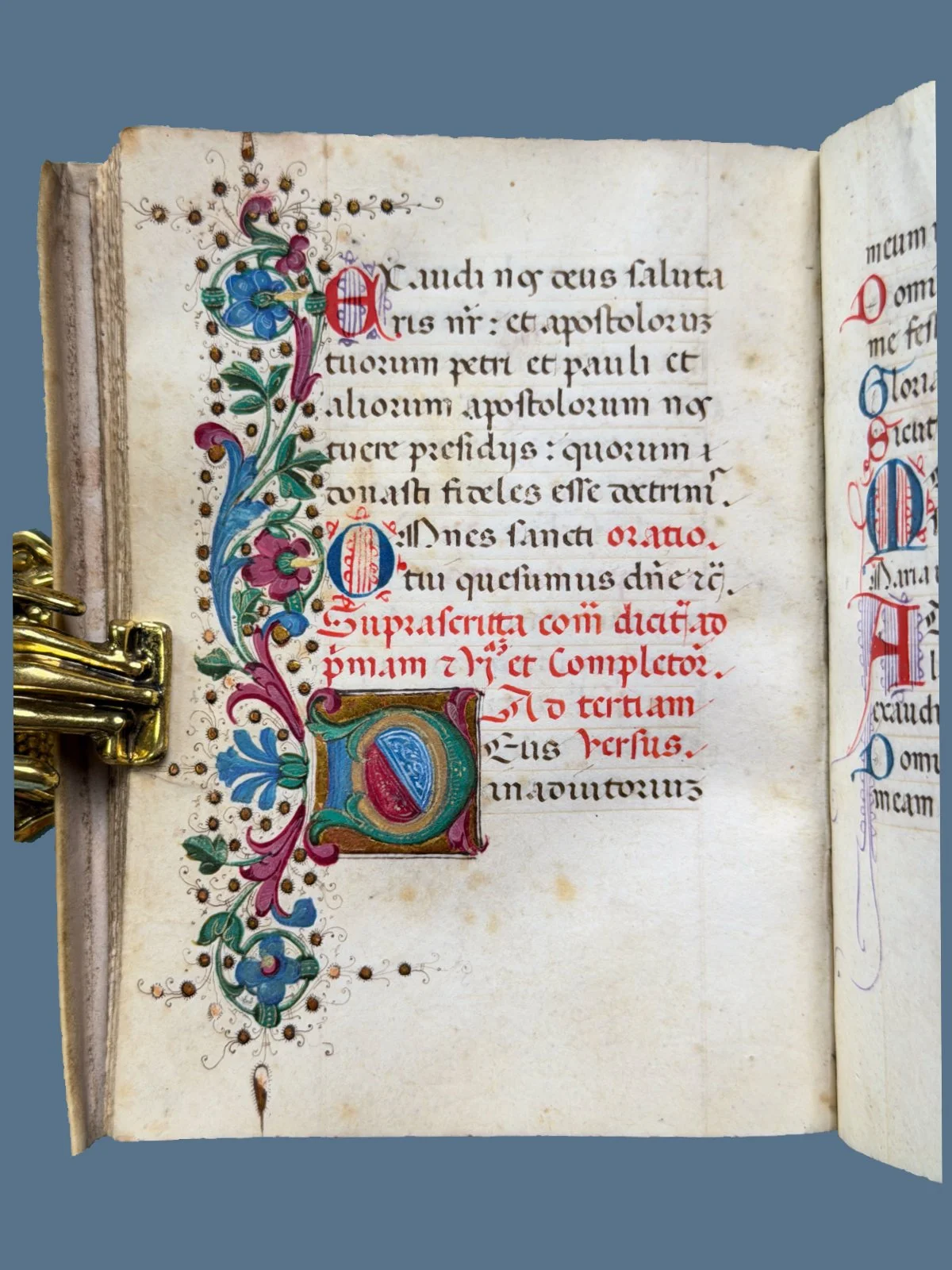 Image 9 of 17
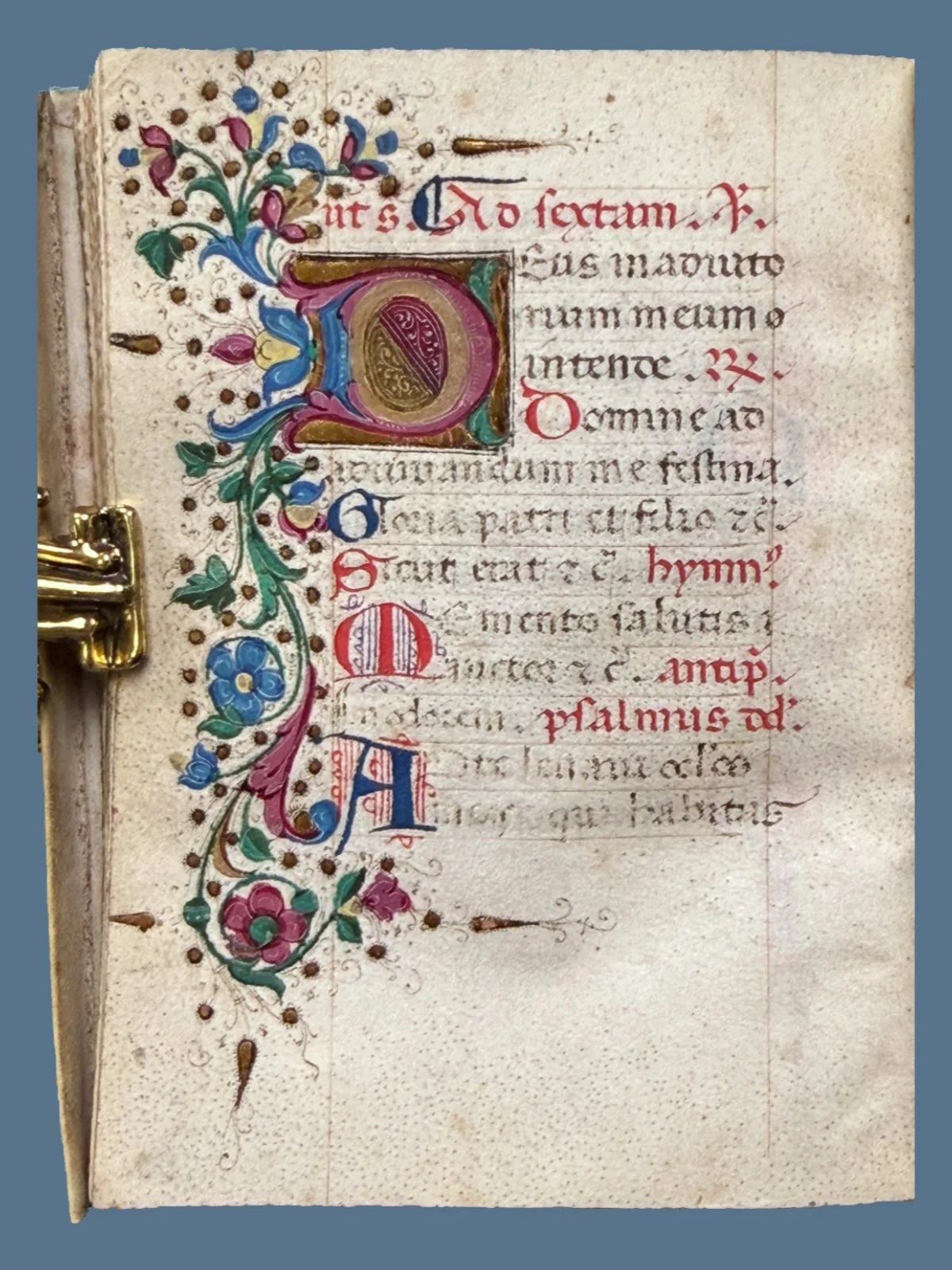 Image 10 of 17
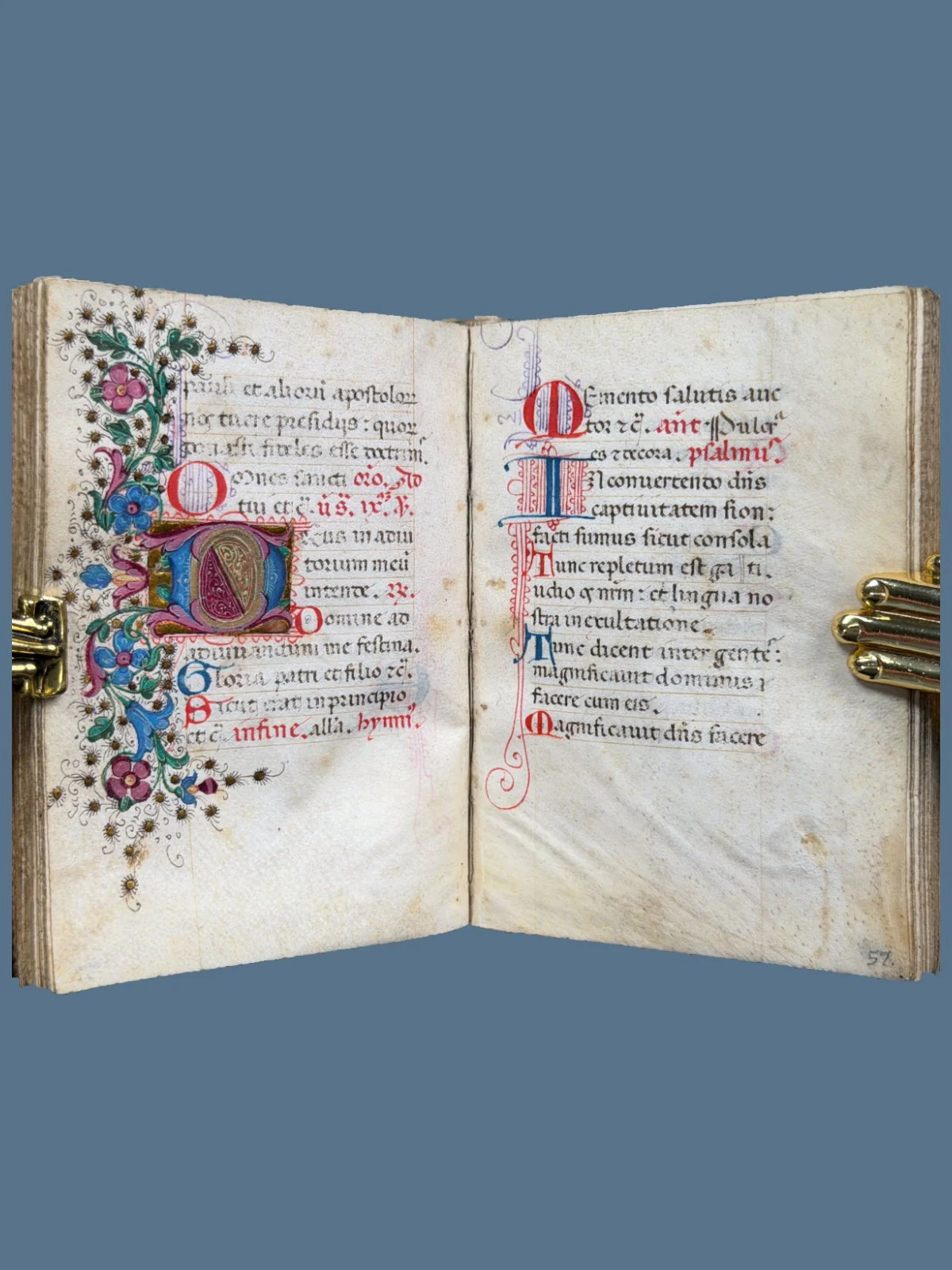 Image 11 of 17
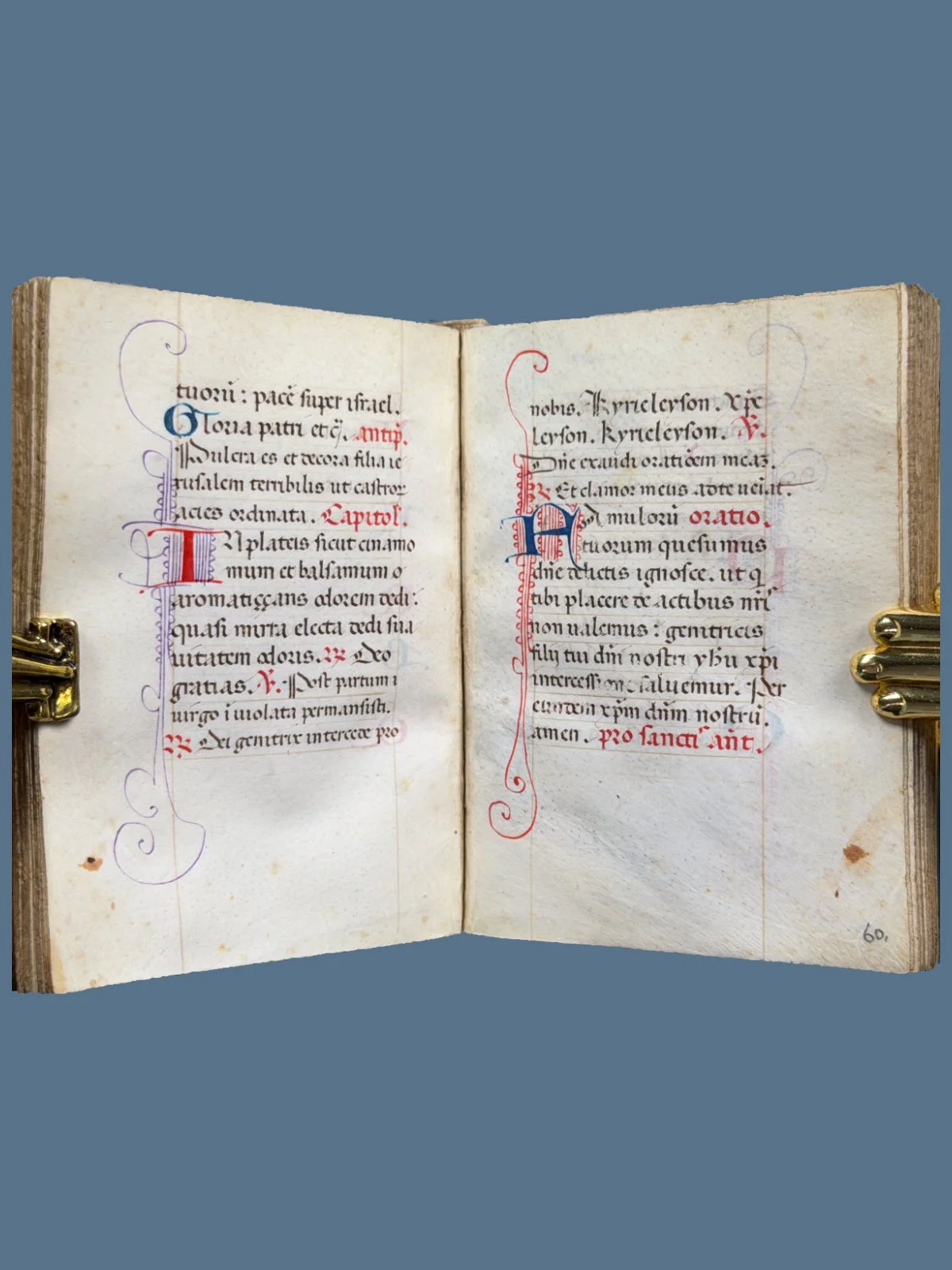 Image 12 of 17
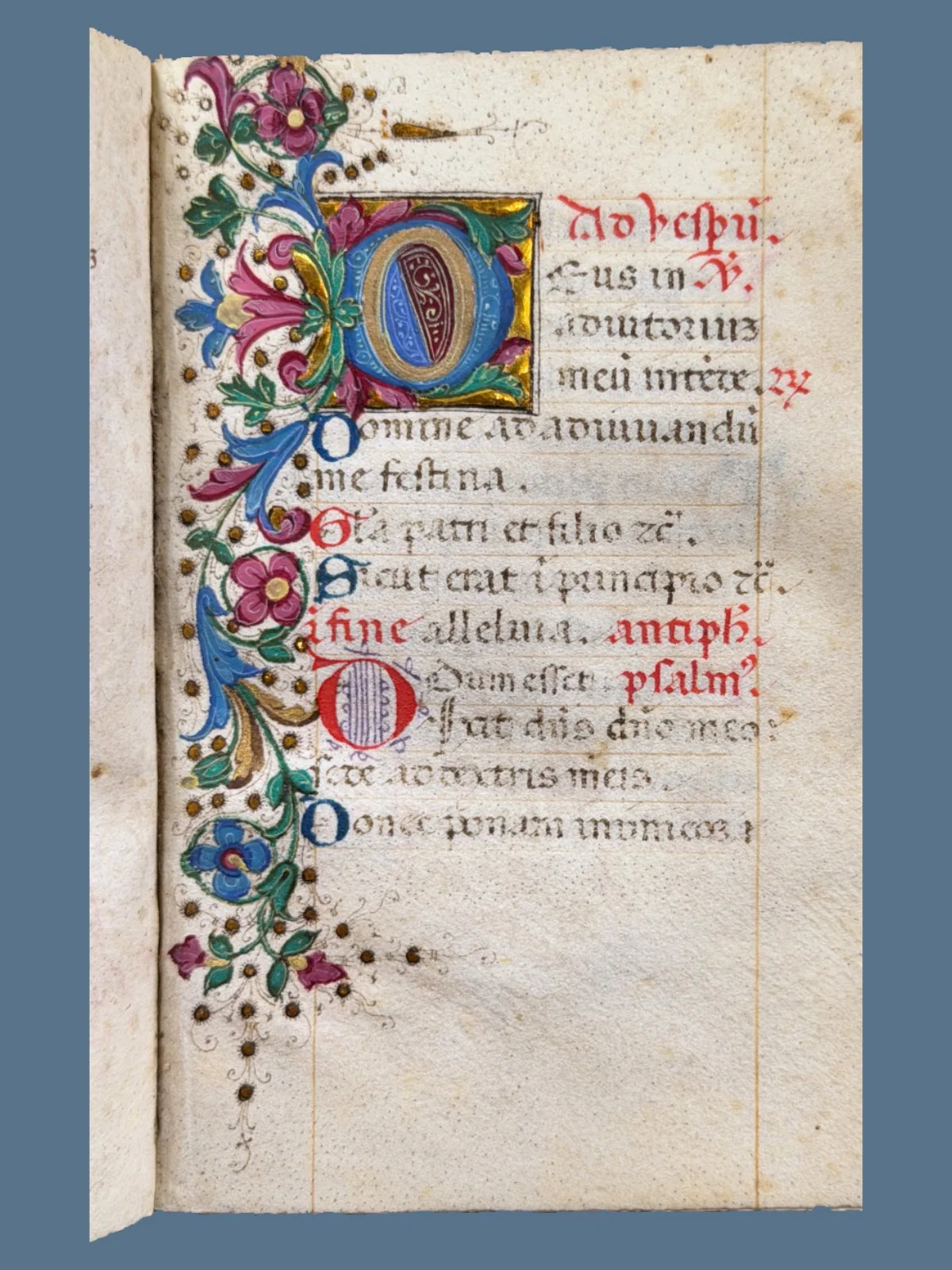 Image 13 of 17
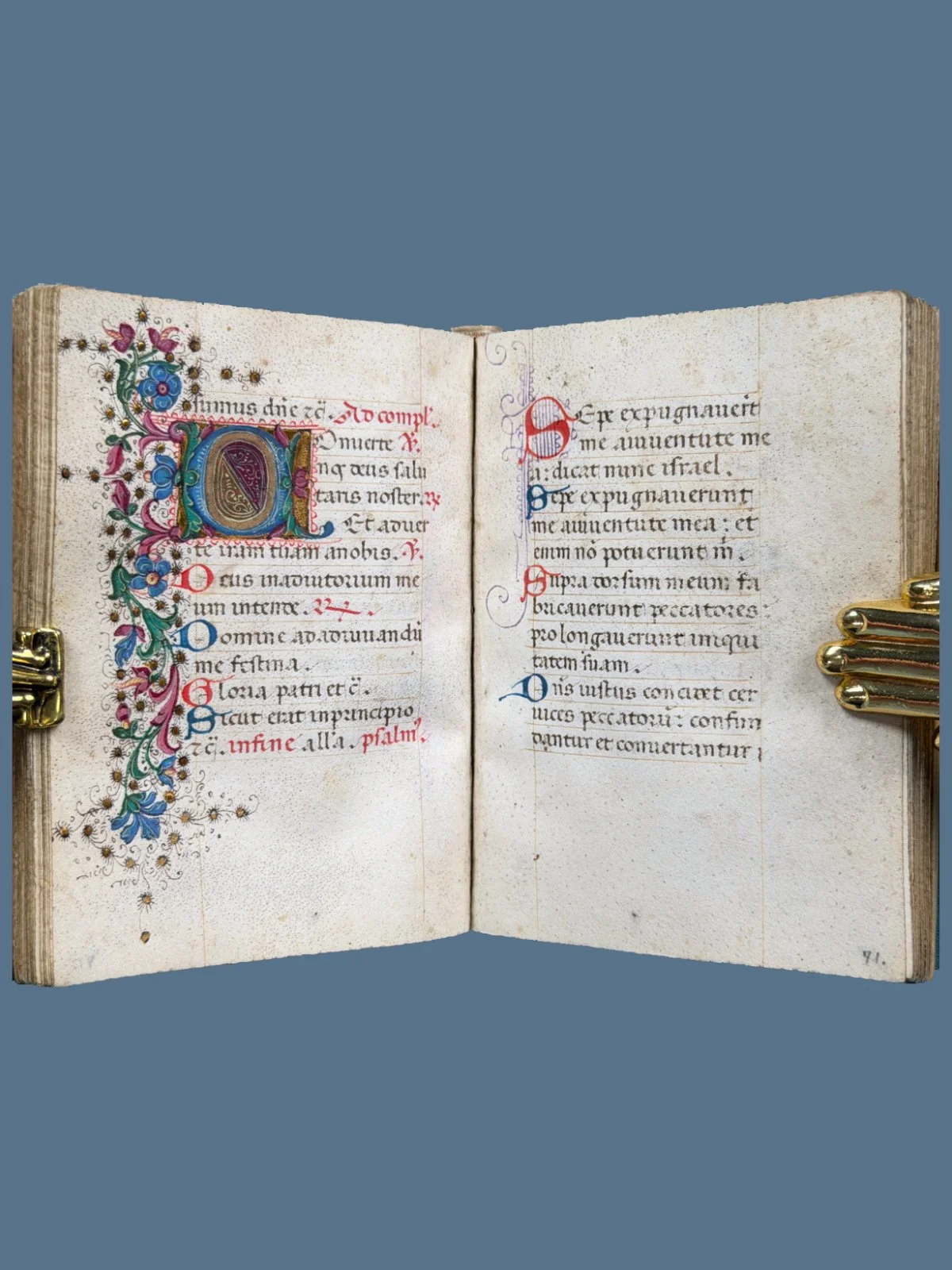 Image 14 of 17
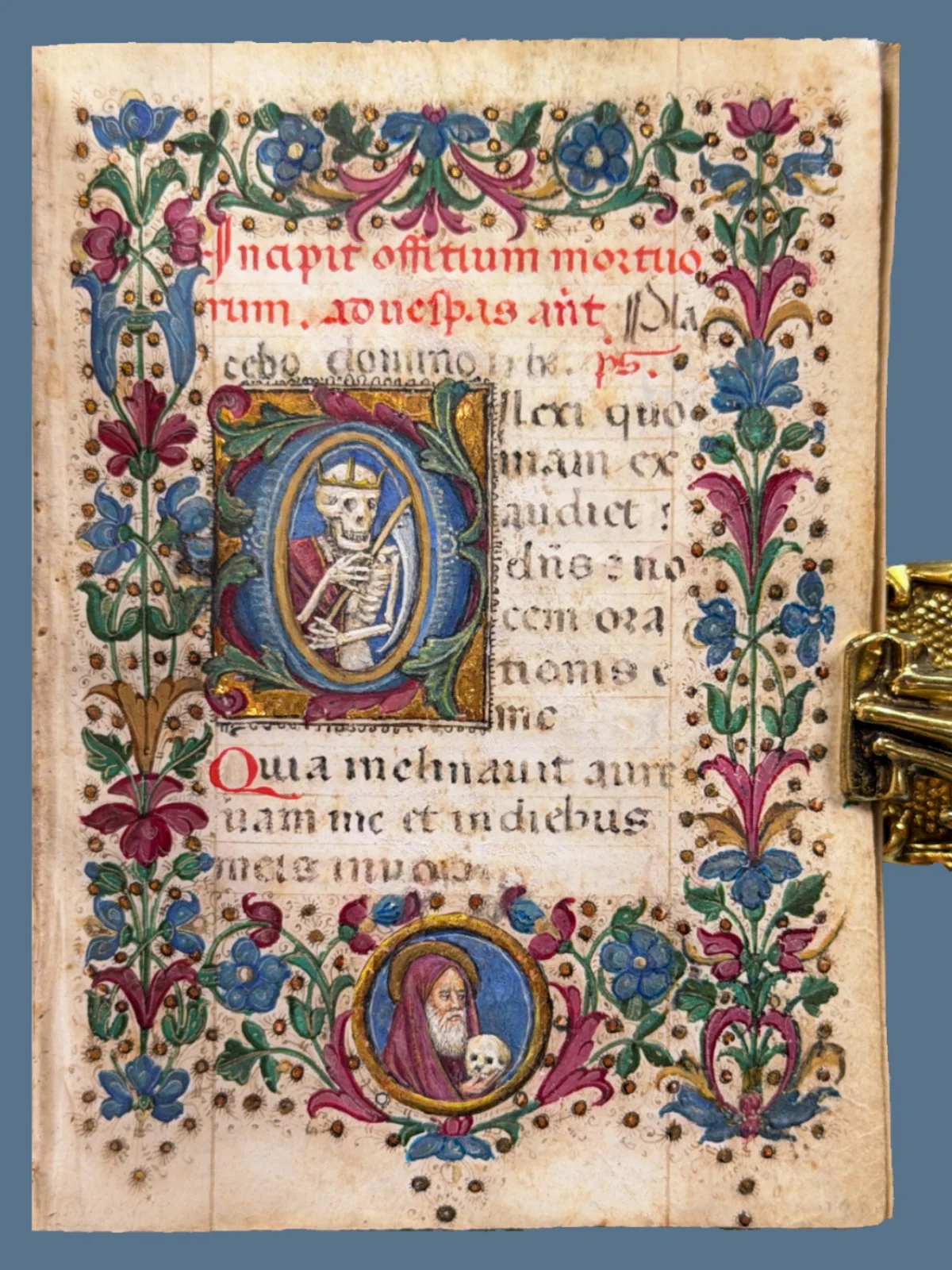 Image 15 of 17
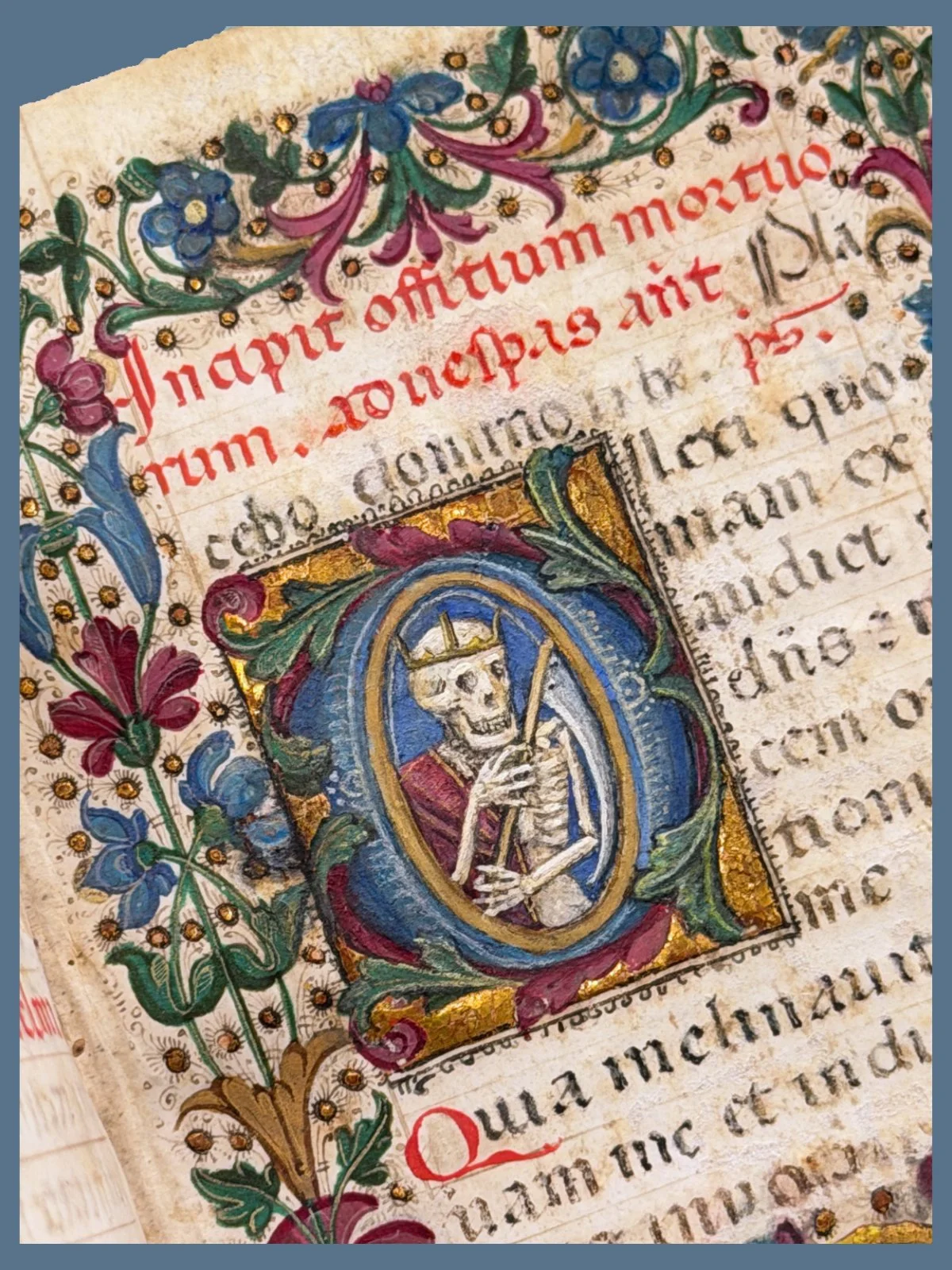 Image 16 of 17
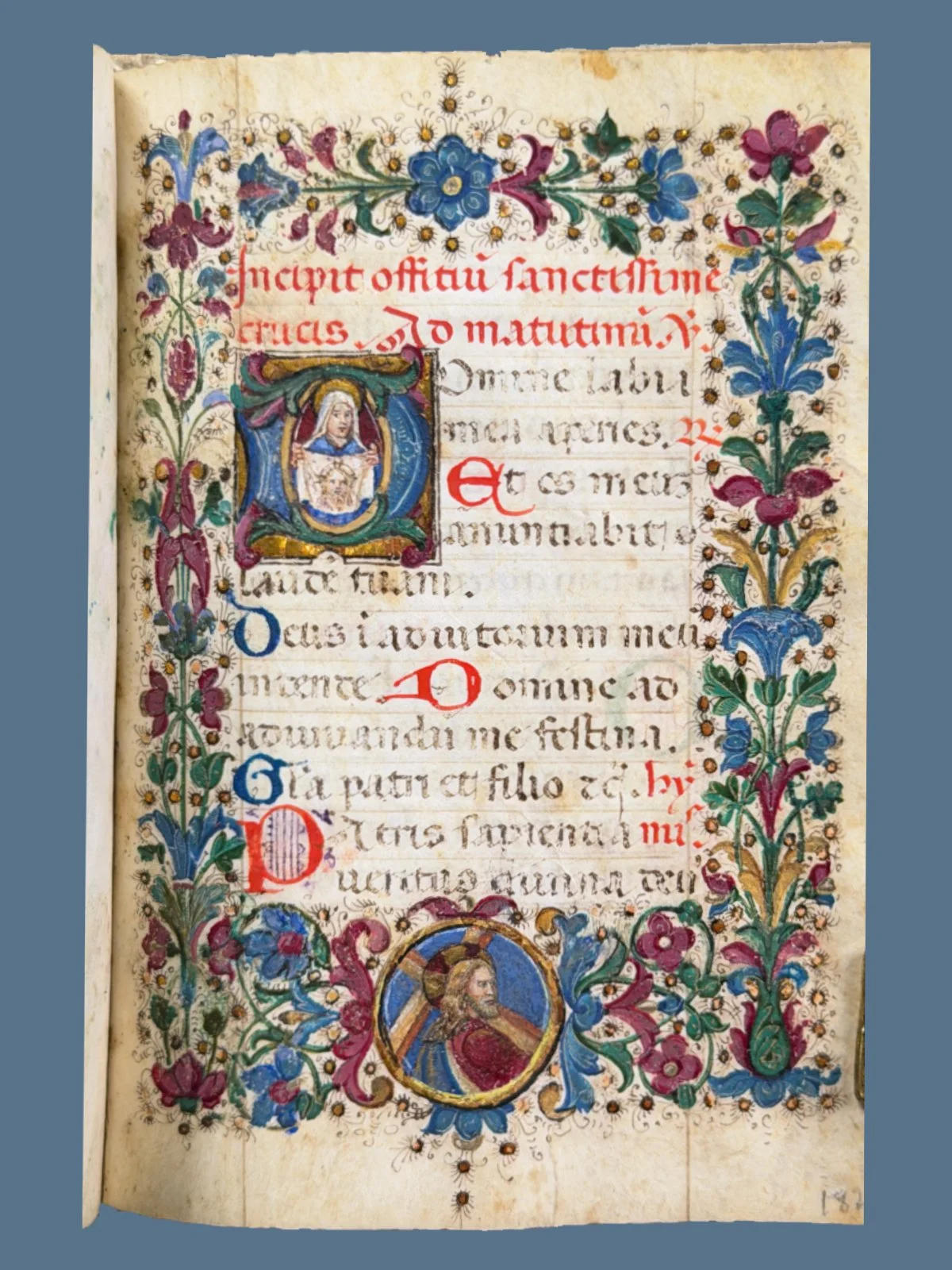 Image 17 of 17
Summary
A late 15th century illuminated Book of Hours, inscribed in a littera rotunda script, produced in Florence. Altogether, there is a suite of seven illuminated initials and three historiated initials.
Description
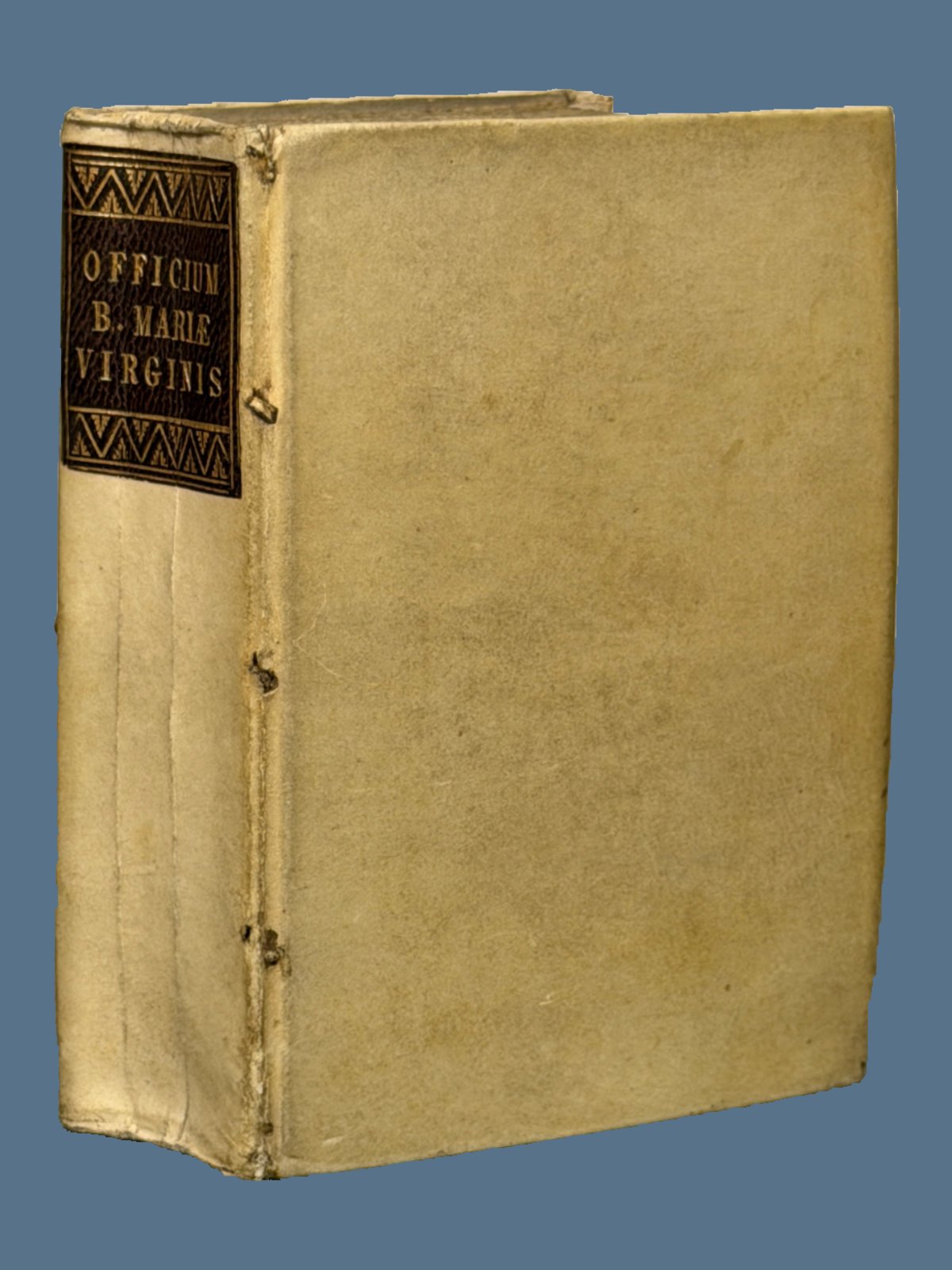
32mo (approx. 113 mm x 82 mm), 187ff. on parchment. Nineteenth-century vellum binding over thin boards, unembellished and rounded at edges, on raised supports laced into boards, spine with black leather label gilt-tooled “OFFICIUM B. MARIE VIRGINIS” within geometric border, edges gilt, marbled endpapers.
This petite Book of Hours was almost certainly produced for a Florentine patron, as suggested by the inclusion of Saint Zenobius, first bishop and patron saint of Florence, in the Litany (f. 167v). Several leaves are now wanting, likely including full-page miniatures that originally formed facing openings with the surviving decorated folios. These losses correspond to major textual divisions, including the beginnings of the Hours of the Virgin, the Office of the Dead, and the Hours of the Cross. The illumination belongs broadly within the refined Florentine tradition of the later fifteenth century and especially recalls the artistic milieu of Francesco di Antonio del Chierico. The historiated initials, with compact yet animated figures set within luminous letterforms on burnished-gold grounds, may be compared with manuscripts such as the Morgan Library, MS M.361, where figures similarly press against, and at times seem to emerge from, the architectural confines of the initial. Particularly close is a group of historiated initials also preserved in the Morgan Library (MS W.26), painted by an associate of del Chierico. These share the same delicate manipulation of line and modeling, combining firm, calligraphic contours with softer, more painterly treatment of faces, flesh tones, and hair. The present manuscript thus reflects the continuing influence of del Chierico’s work on the practices of Florentine illumination in the last decades of the fifteenth century and its evolution among the next generation of painters.
This Book of Hours is illuminated throughout with capitals in alternating red and blue ink, double-line lombard initials with filigree penwork and marginal bar extensions. There are seven illuminated initials on burnished gold ground, with bipartite red and blue infills heightened with white tracery, issuing a partial border of curling acanthus and stylized flowers in blue, green, and mauve with scattered gold bezants and pendant floral terminal. There are three 7-line historiated initials on burnished gold ground, set within a full border of scrolling acanthus leaves and stylized flowers in blue, green, and mauve, densely sprinkled with gold bezants, with circular medallions in lower margins enclosing figures.
A special thanks to Sandra Hindman and Peter Bovenmyer for researching and providing the majority of information.
Structure
Calendar, Use of Rome (ff. 1-12) Office of the Virgin, beginning imperfectly with Matins (ff. 13-26); Lauds (ff. 26v-42); Prime (ff. 42v-47v); Terce (ff.47v-52); Sext (ff. 52v-56v); None (ff. 56v-60v); Vespers (ff. 61-70); Compline (ff. 70v-76); Ferial Cycle (ff. 76v-87v); Seasonal Variants (ff. 87v-97v); Penitential Psalms (ff. 98-114v); Litanies and Suffrages (ff. 114-127v); Office of the Dead, ending imperfectly (ff. 128-181v); Hours of the Cross, ending imperfectly (ff. 182-189v).
Illumination
The three historiated initials depict: David with harp in initial ‘D’, accompanied by a medallion showing the head of Goliath (f. 98); A crowned skeleton holding a scythe in an initial ‘D’, accompanied by a medallion showing Saint Jerome contemplating a skull (f. 128); Saint Veronica holding the vernicle in an initial ‘D’, accompanied by a medallion of Christ bearing the Cross (f. 182).
Condition
Clean and well preserved, with minimal staining or discoloration; text faded or smudged in places, else in excellent condition.
Provenance
Likely commissioned for a Florentine client, this manuscript bears several notes of provenance, the first is a 17th century inscription that reads “Ex Joanne Thi(?)/(?)erio” to the front flyleaf. It then passed to James Drummond (1816-1877) with his armorial bookplate. Drummond was a Scottish history painter, antiquary, and book collector whose detailed visual reconstructions of historic Edinburgh established him as an important chronicler of Scotland’s architectural and cultural past. His career combined fine art, historical research, and curatorial service within Scotland’s major art institutions. It passed to J. Lindsey with his inscription to the rear flyleaf in a twentieth century hand. It was then sold at Sotheby’s, London, 12 July 1992, lot 73. Lastly, the manuscript was acquired from the private collection of Dr. Schwartz, New York, his bookplate and catalog number “MS 47” to front pastedown.