
 Image 1 of 15
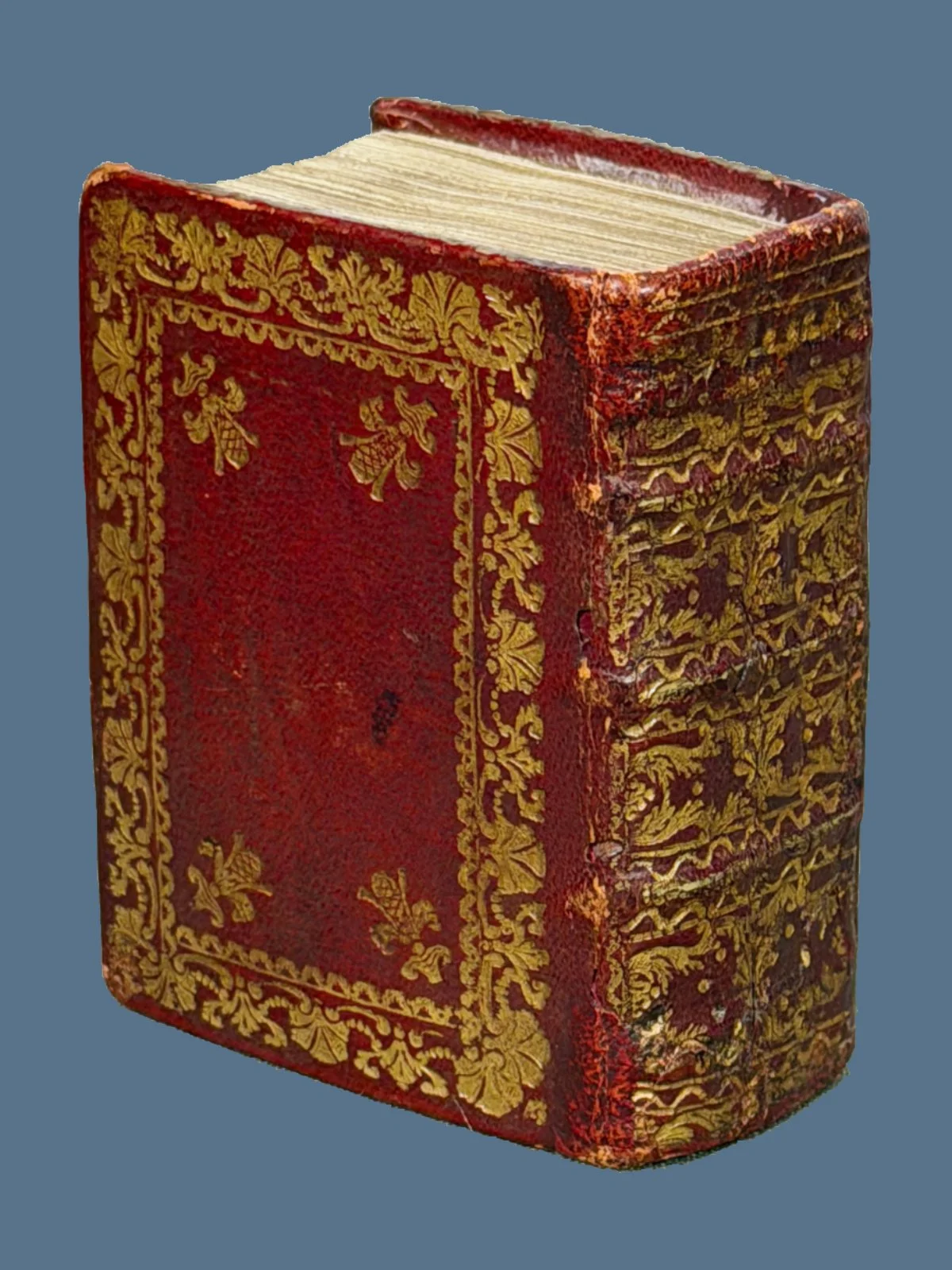 Image 2 of 15
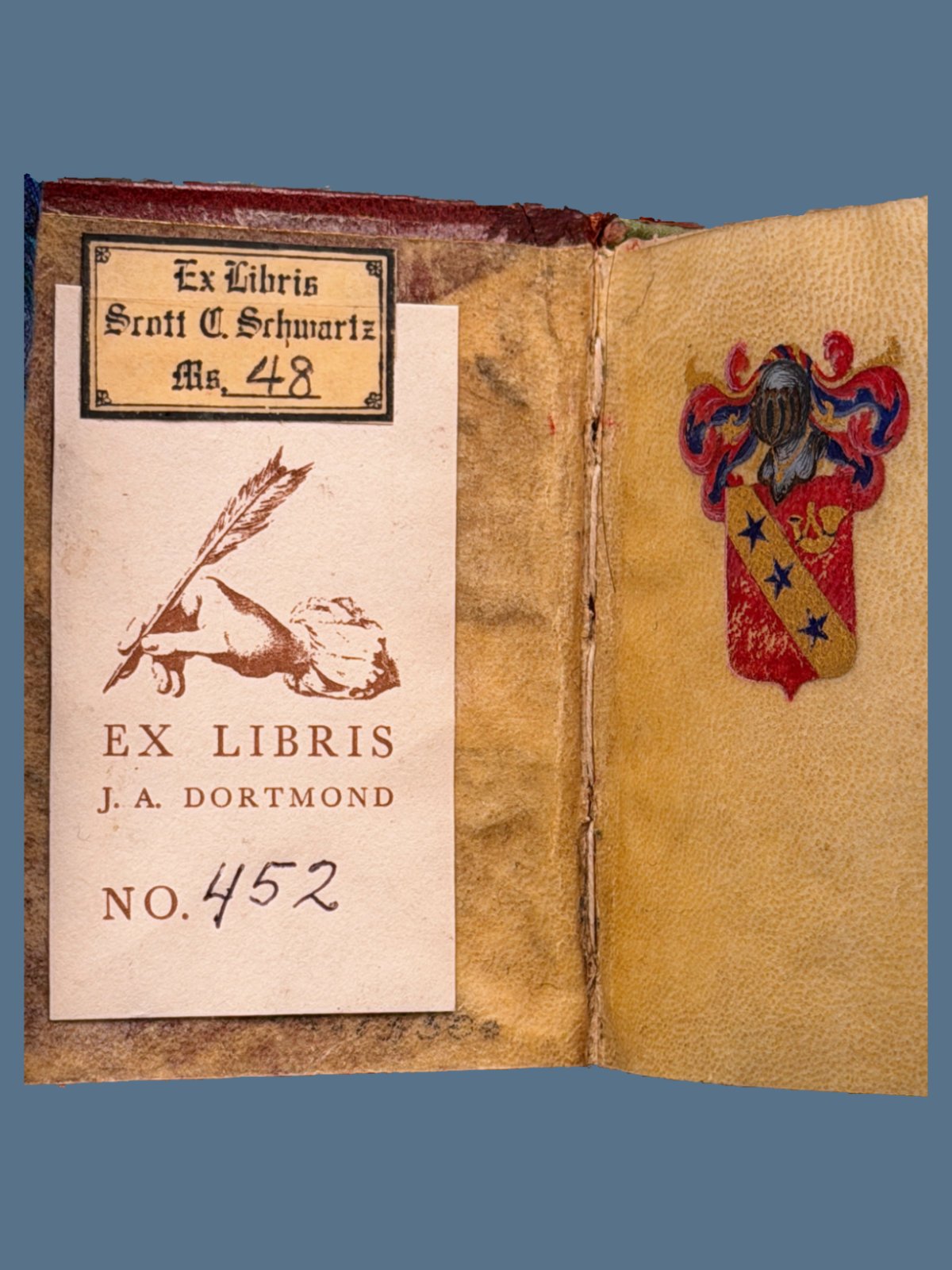 Image 3 of 15
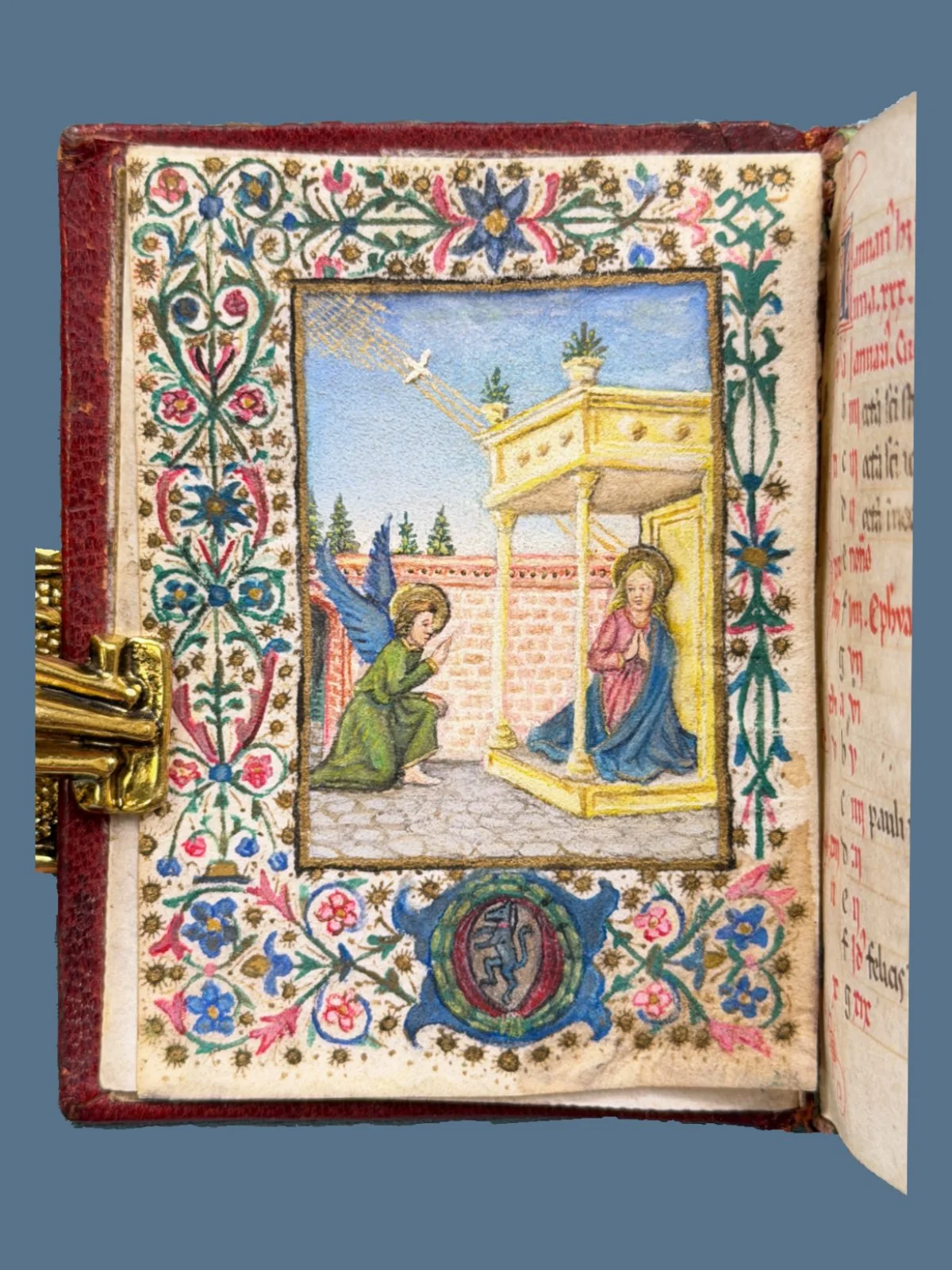 Image 4 of 15
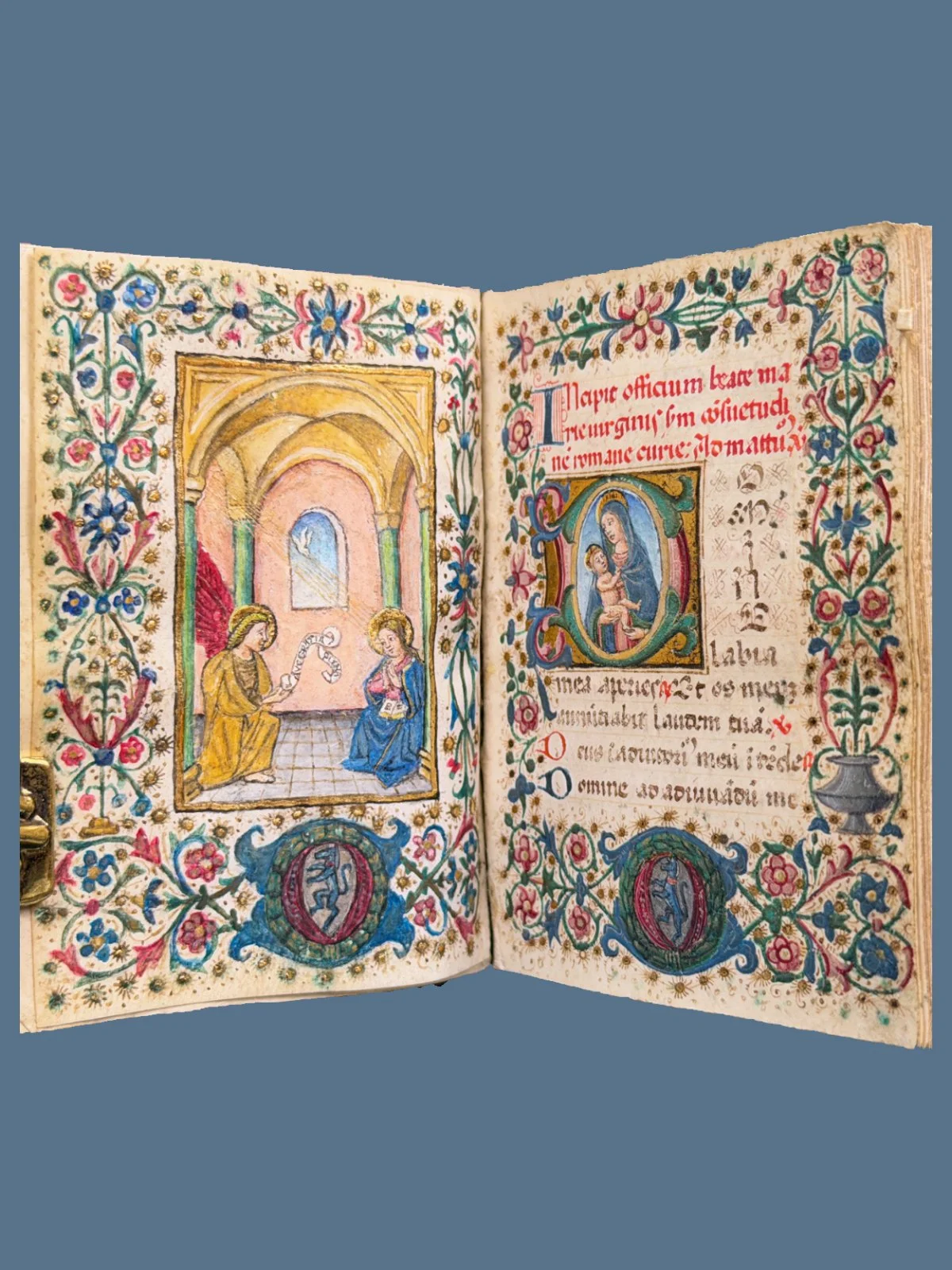 Image 5 of 15
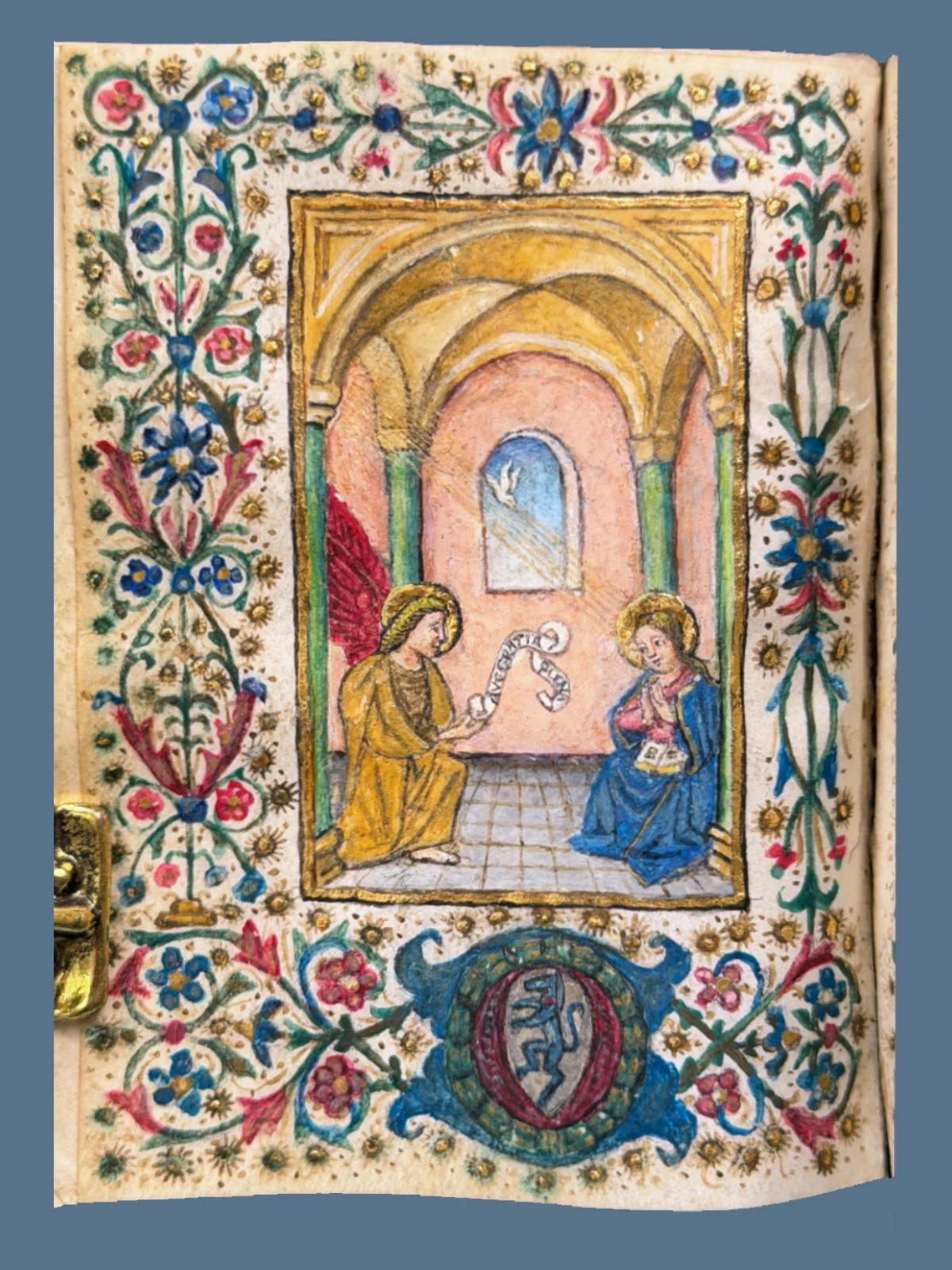 Image 6 of 15
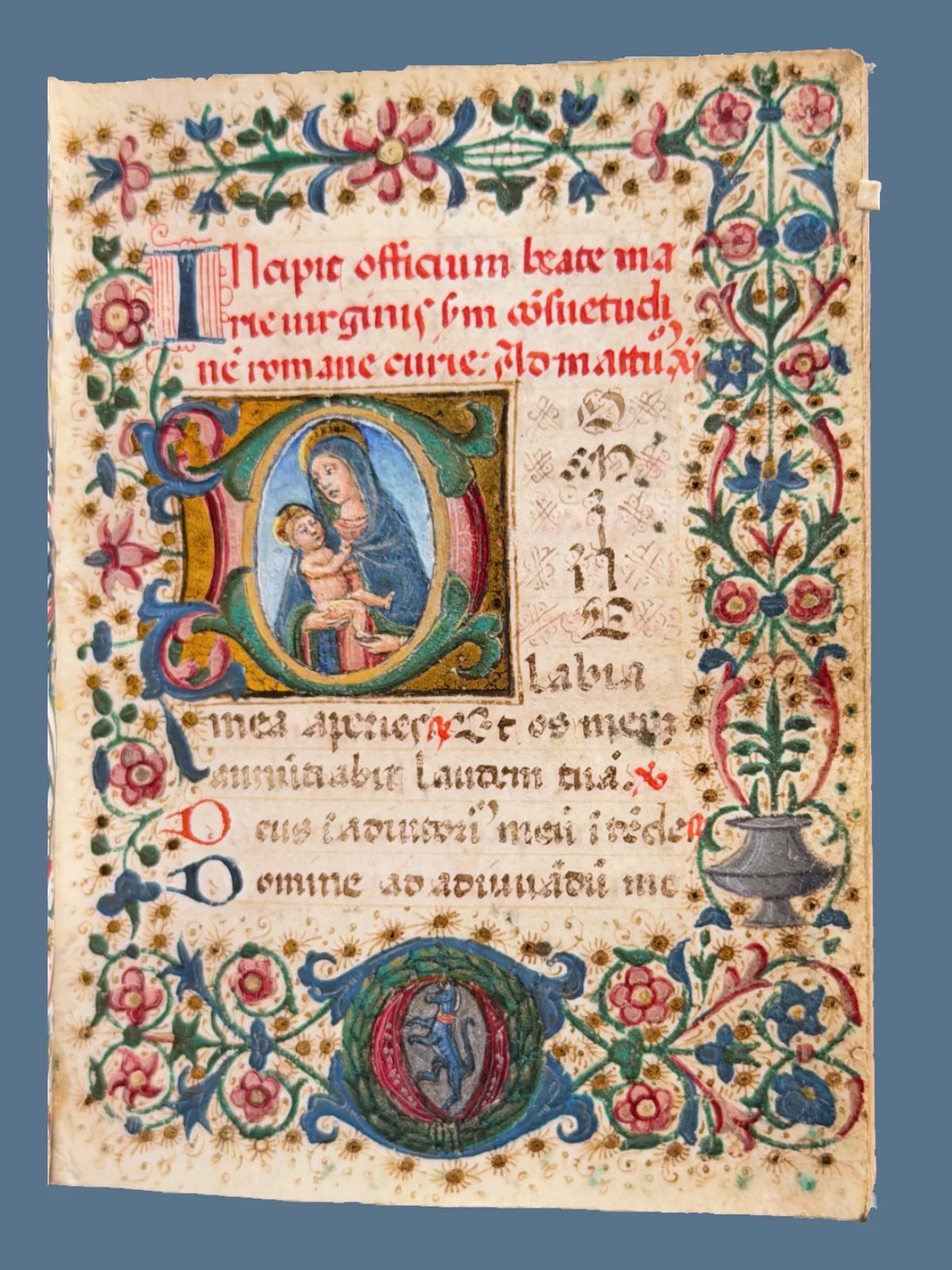 Image 7 of 15
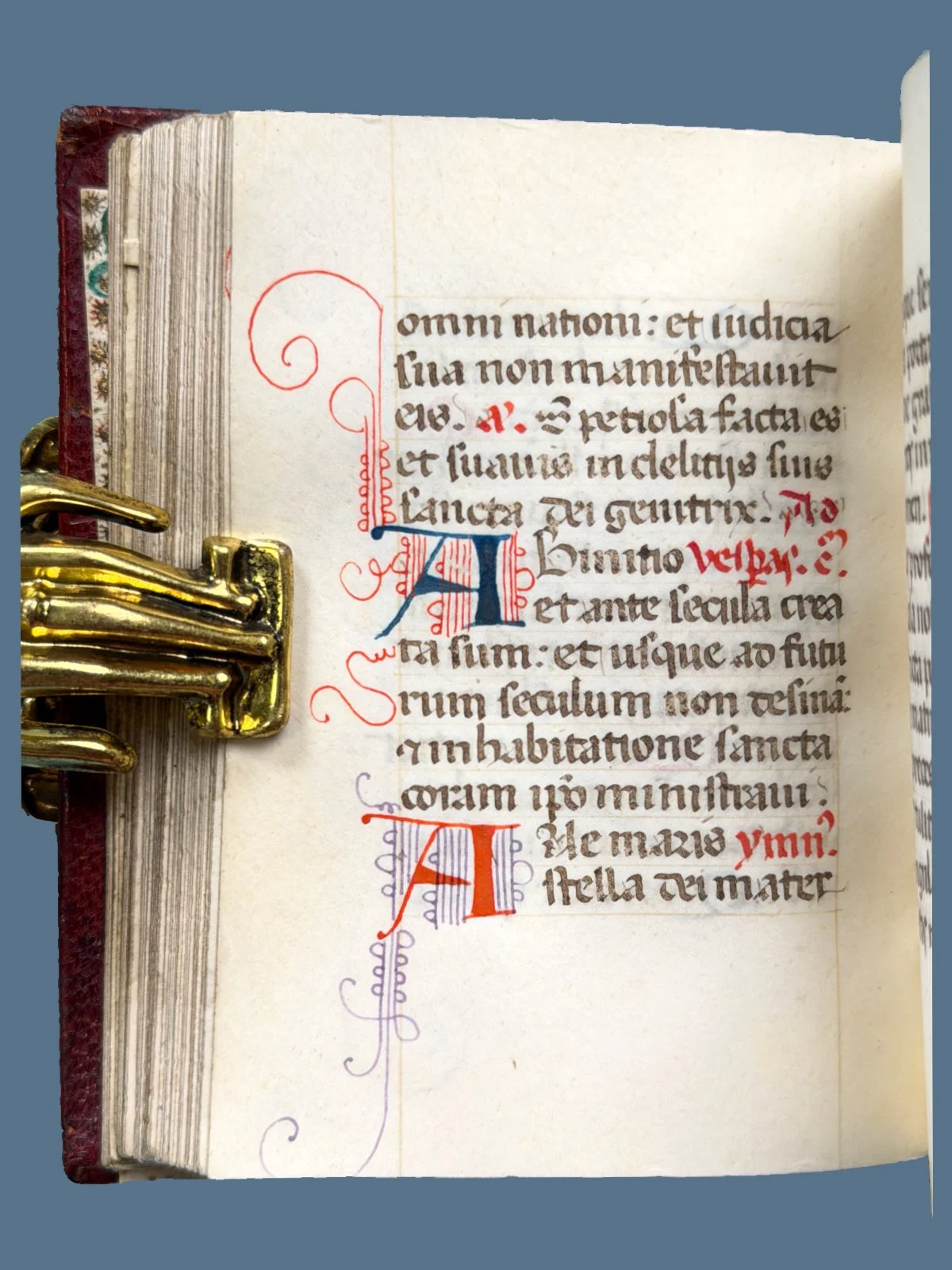 Image 8 of 15
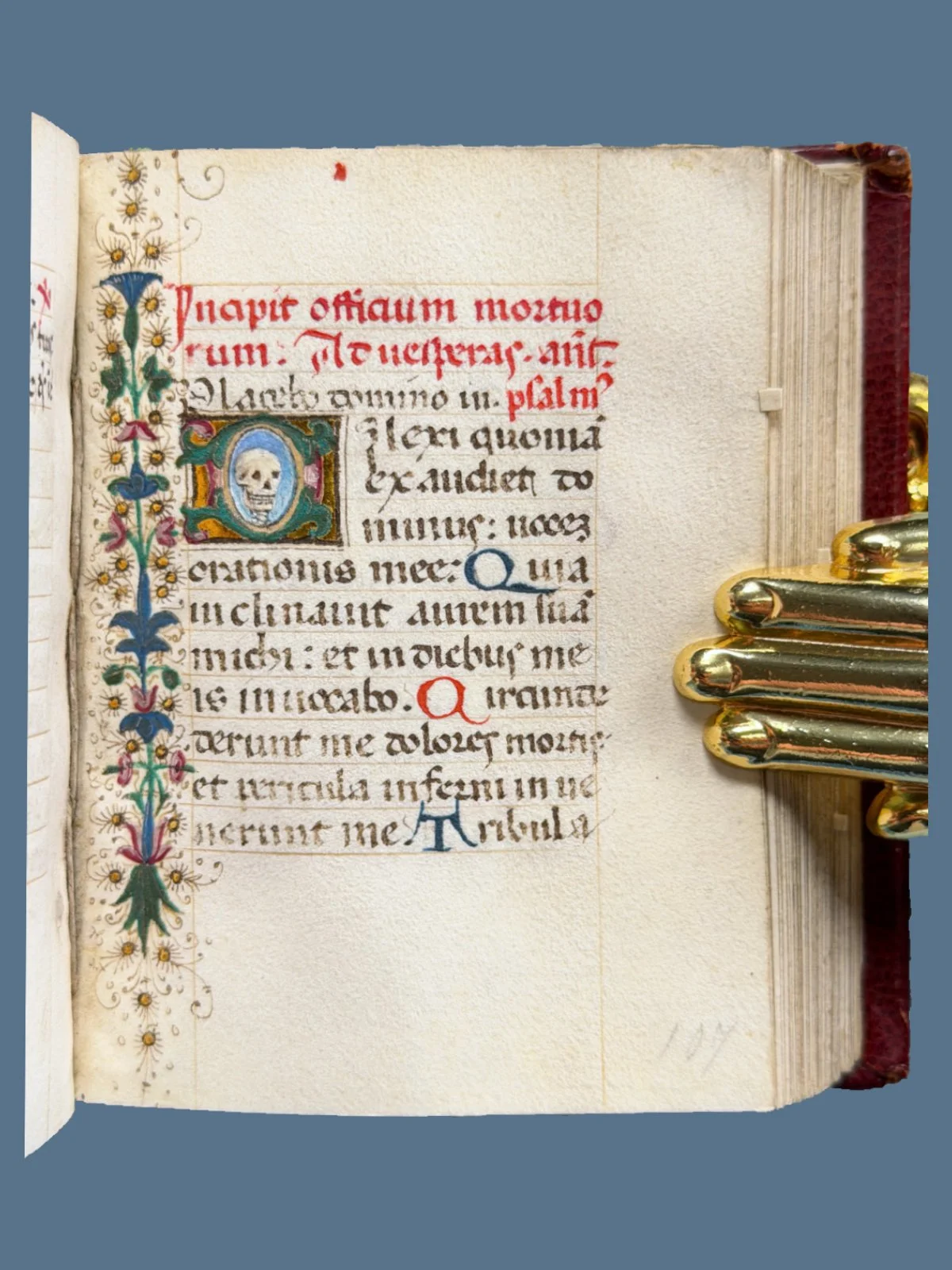 Image 9 of 15
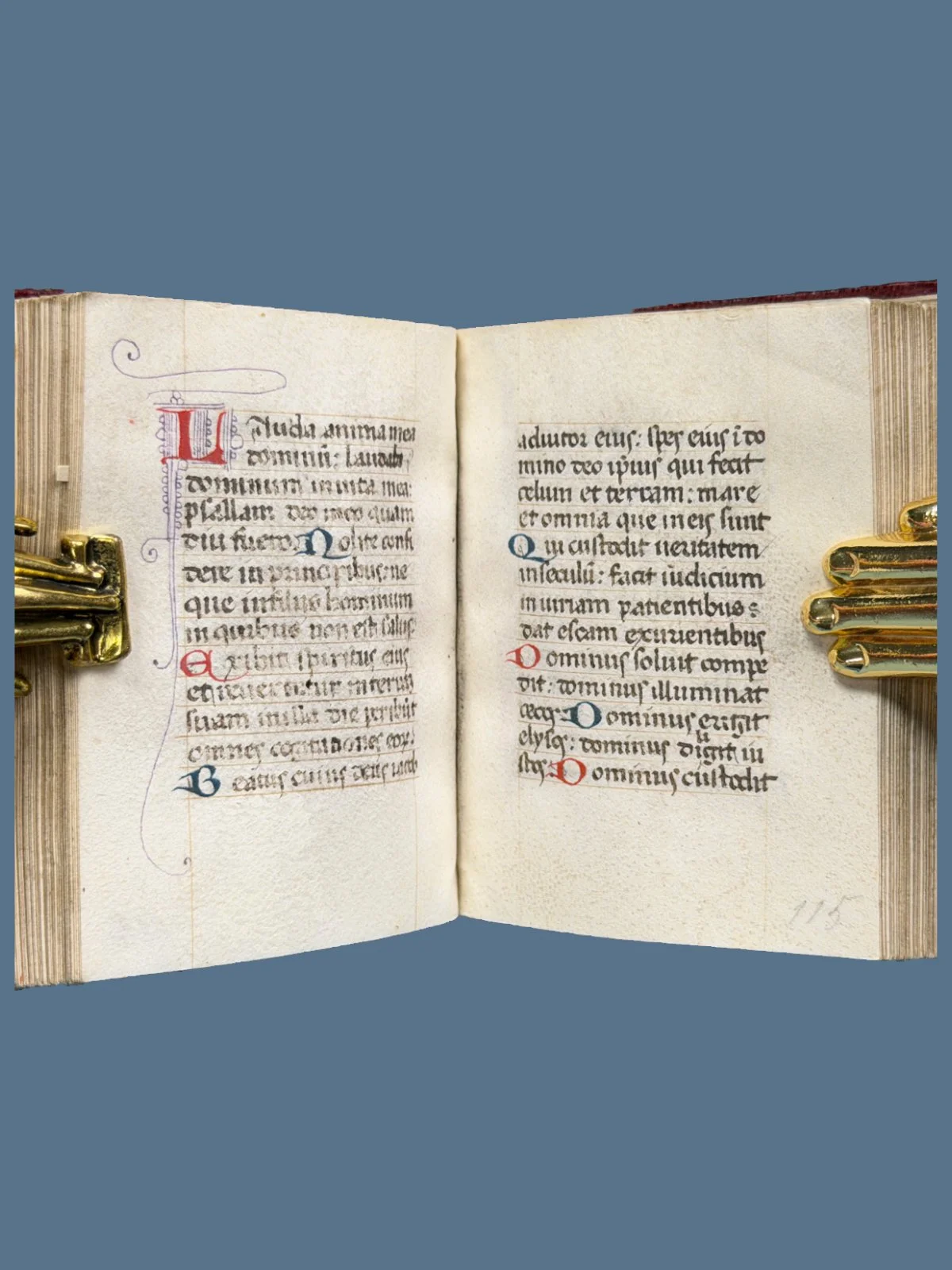 Image 10 of 15
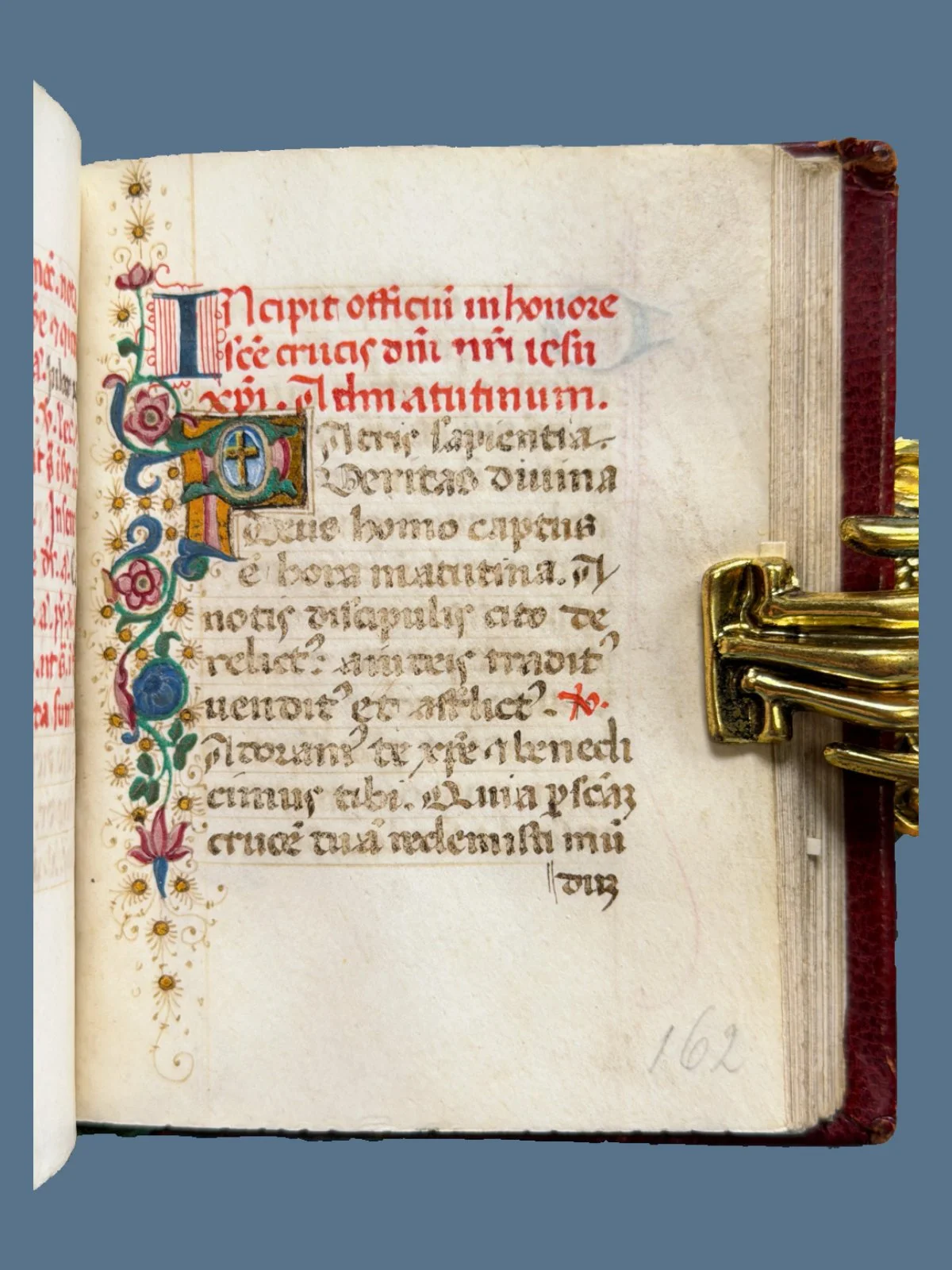 Image 11 of 15
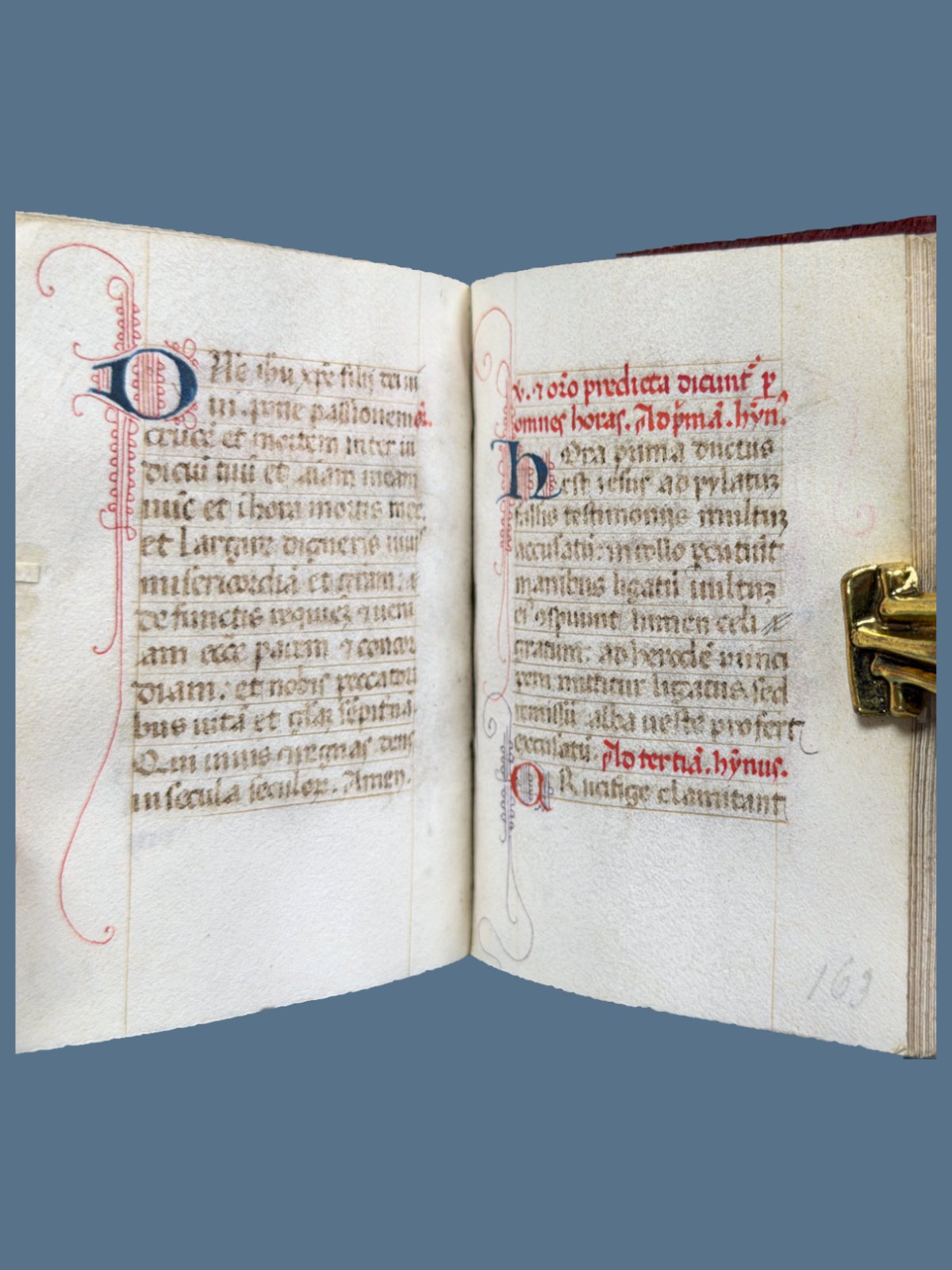 Image 12 of 15
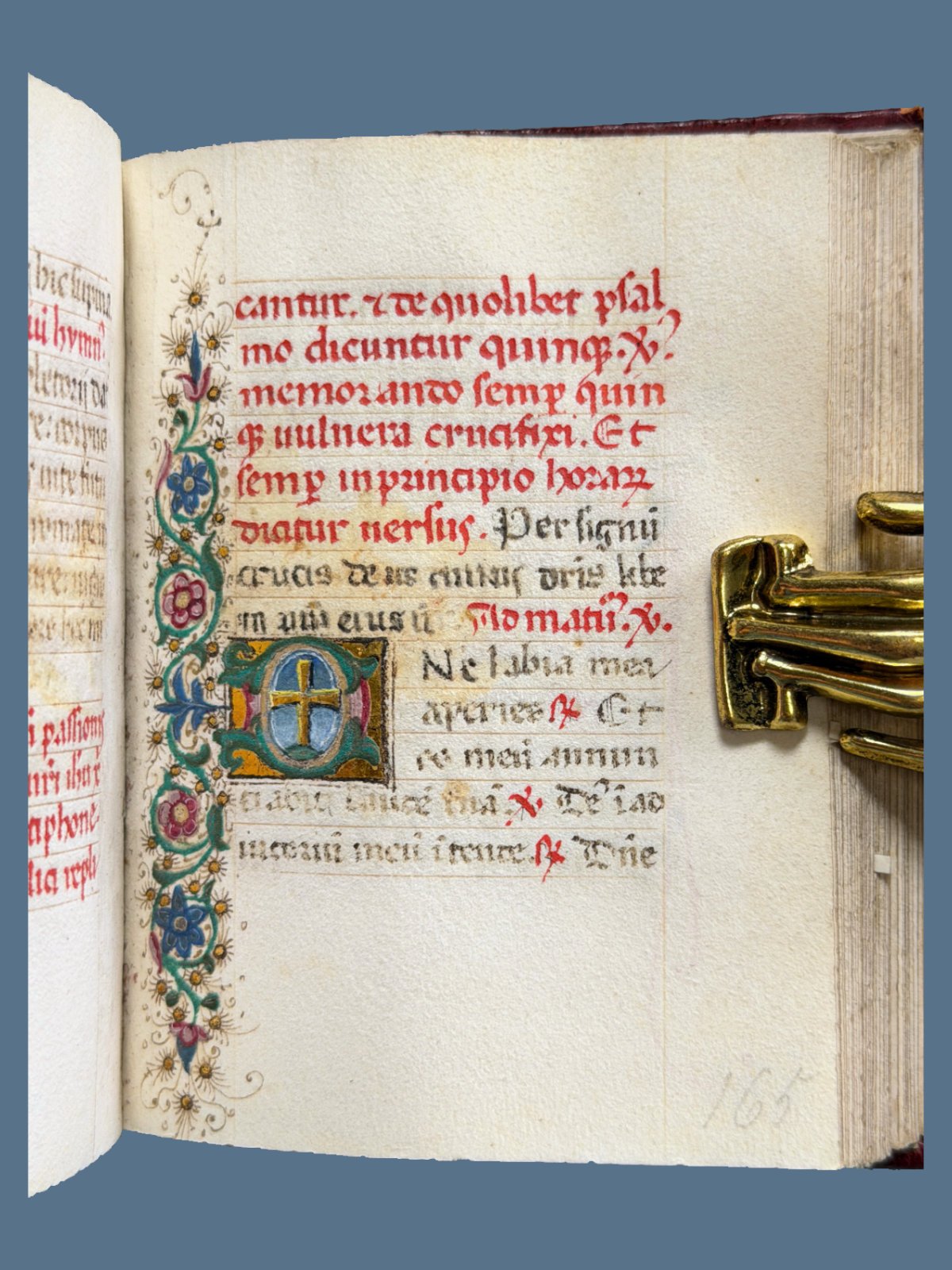 Image 13 of 15
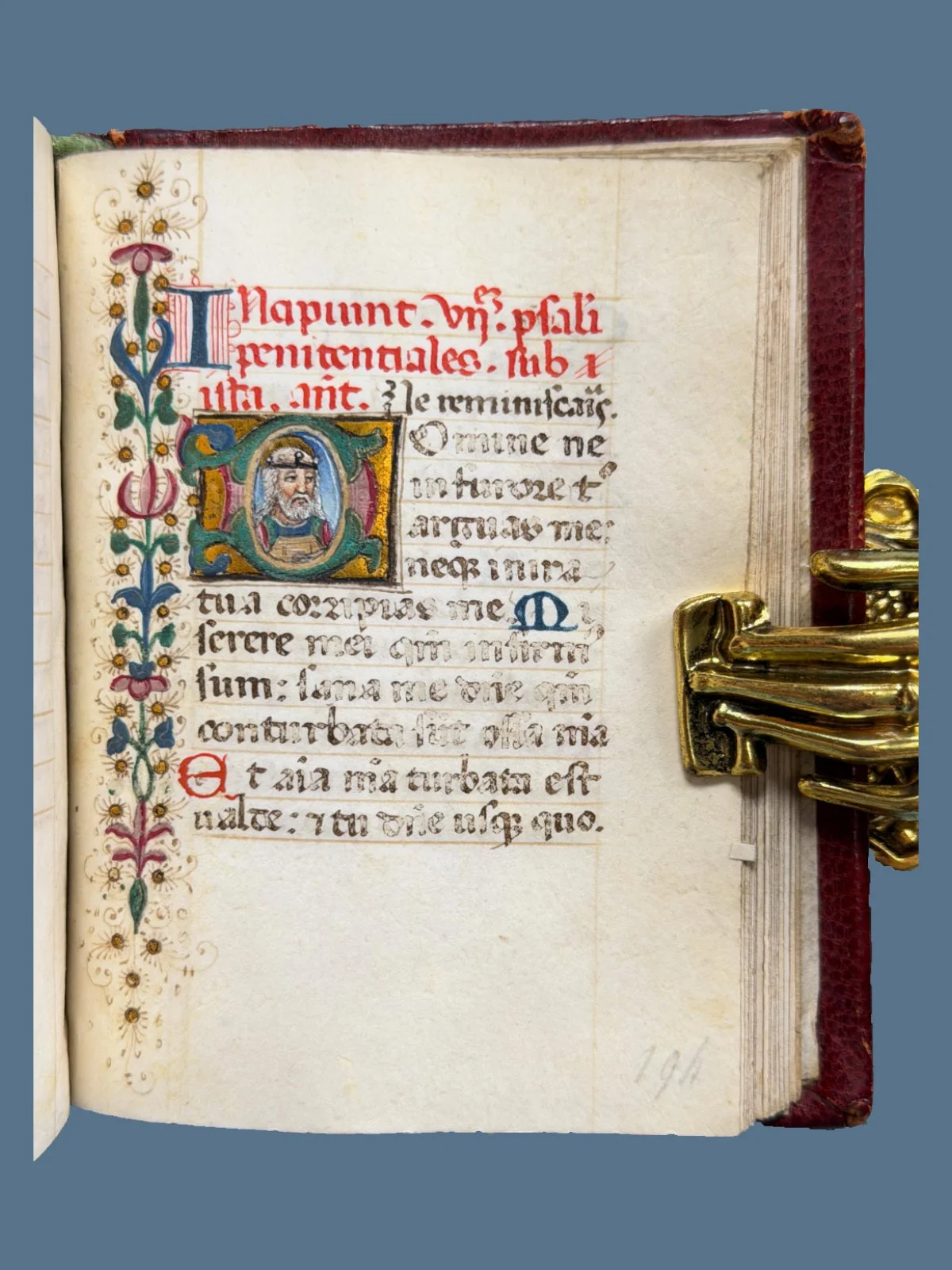 Image 14 of 15
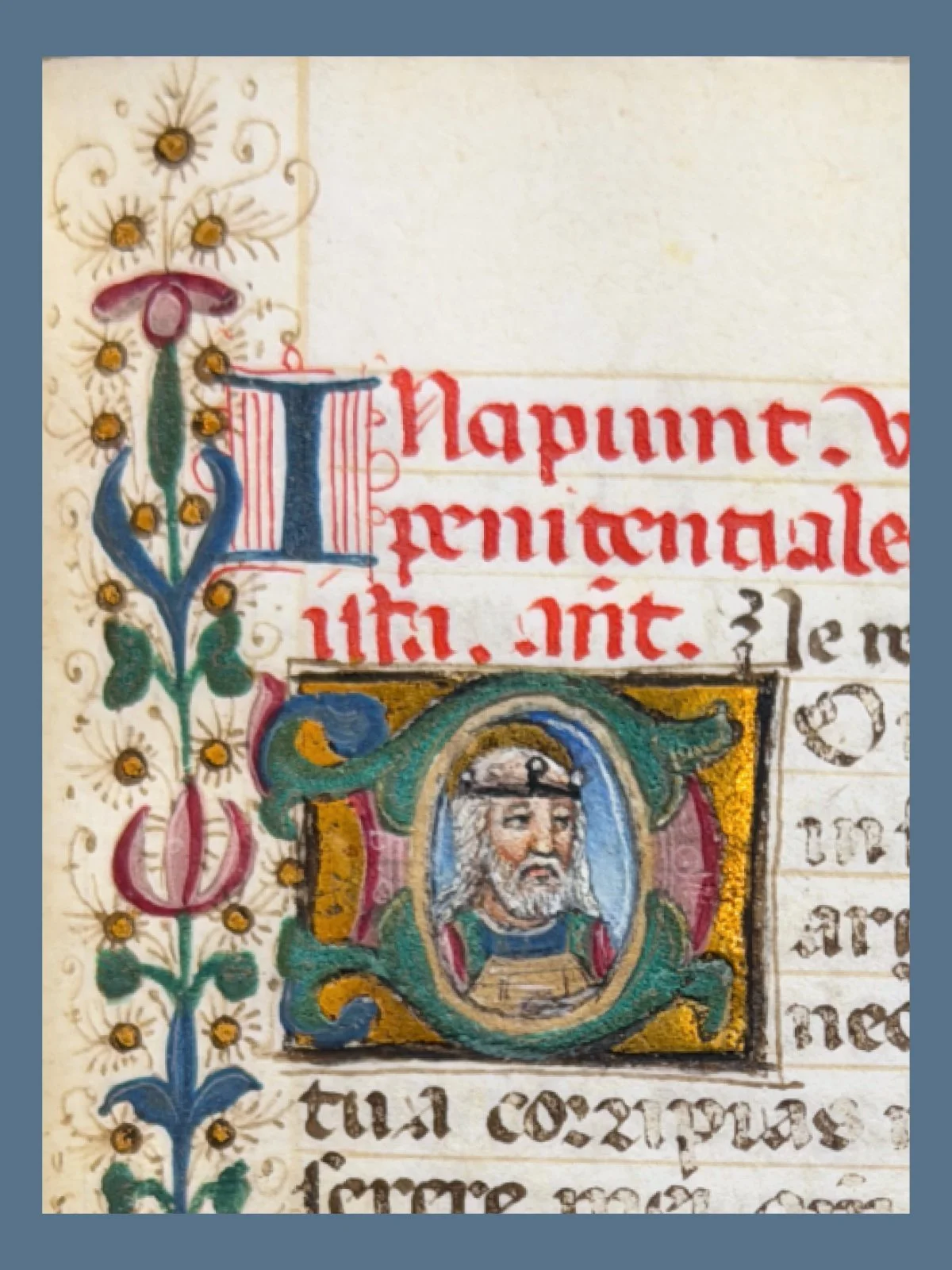 Image 15 of 15
Summary
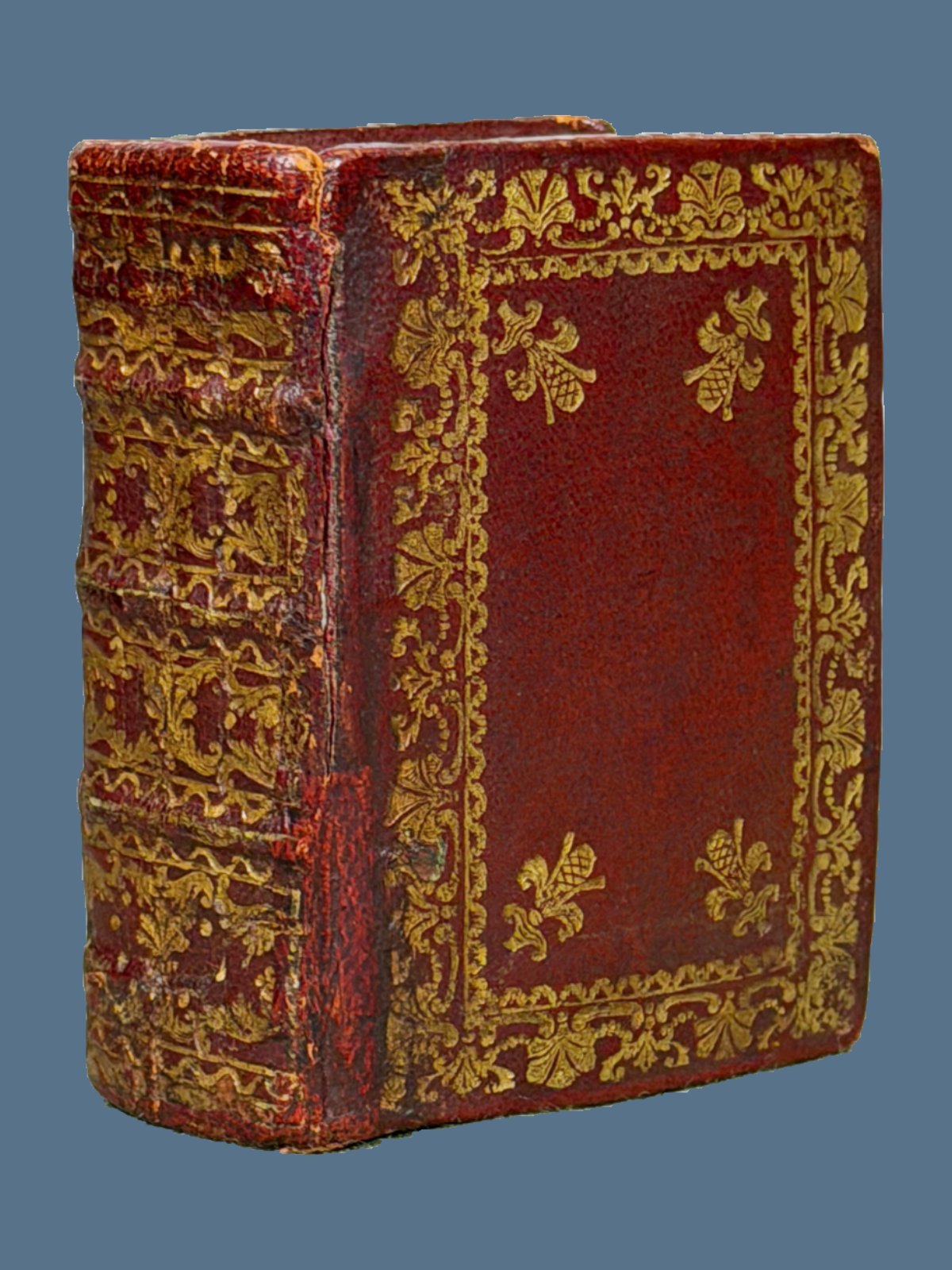
A late 15th century illuminated Book of Hours, inscribed Gothic rotunda script, produced in Florence. Altogether, there is a suite of four small historiated initials, one large historiated initial, and two full page miniatures with full borders.
Description
32mo (approx. 88 mm x 66 mm), 279 ff. on parchment. Bound in red goatskin over boards, with a double fillet border enclosing a panel of corner and central floral tools, spine with raised bands and compartments densely tooled in gilt with scrolling foliage, edges gilt and tooled with small repeating punches.
Illuminated throughout with rubrics in red, capitals in red and blue ink, two line Lombard capitals with penwork extensions. The four historiated initials are three and four lines in blue with white filigree and green infill on burnished gold, accompanied by partial borders of slender acanthus stems supporting alternating gold bezants and stylized blossoms in green, blue, and rose. The large historiated initial is six lines painted in blue with white penwork filagree, green infill, and gold edging, with curling terminals extending outward into margins, accompanied by full borders of florals and acanthus rose, green, blue, gold bezants and a decorative urn, with heraldic cartouche in lower margin. The two full-page miniatures are presented in a double-page spread with full borders of acanthus, florals, and bezants, with heraldic cartouche in lower margins, painted and added by the owner.
Structure
Calendar, Use of Rome (ff. 1-12) Hours of the Virgin, beginning with Matins (ff. 13-26); Lauds (ff. 26v-41v); Prime (ff. 41v-47v); Terce (ff.47v-53v); Sext (ff. 53v-58v); None (ff. 58v-64v); Vespers (ff. 64-74); Compline (ff. 74v-80); Seasonal Variants (ff. 80-104); Office of the Dead (ff. 104-161v); Hours of the Cross (ff. 162-164). Hours of the Passion (ff. 165-193); Penitential Psalms (ff. 207v-218); Litanies and Supplications (ff. 207v-218); Zenobius (f. 210); Reparata (f.210v).
Miniatures and Initials
The subjects of the two miniatures and five historiated initials are as follows: unfoliated (following f. 12), two half-page miniatures of the Annunciation (the second on a loose folio); f. 13, the Virgin and Child in an initial ‘D’ (opening the Hours of the Virgin); f. 104, a skull in an initial ‘D’ (opening the Office of the Dead); f. 162, a cross in an initial ‘P’ (opening the Hours of the Cross); f. 165, a cross in an initial ‘D’ (opening the Hours of the Passion); f. 194, King David in an initial ‘D’ (opening the Penitential Psalms).
Condition
Folio with second miniature detached and now loose within the manuscript, minor scuffing and staining to a few leaves, but vellum remains crisp and clean overall, in excellent condition.
Provenance
This manuscript was written and produced in Florence for a client whose arms appear three time in oval cartouches at the preface to the Hours of the Virgin: a lion rampant azure, on an or field, encircled by a wreath. Possibly those of the Acciaioli family, an important Italian noble family from Florence, whose members were the ruling Dukes of Athens. The work contains an early Italian inscription to the final verso regarding the passion narrative: “... male ... eglisi recegua con … gli giotorono e heisu schierno dimandar lo a chiagro alla ... che dice li giovani…”. There is an additional, likely sixteenth century, painted coat of arms to the front flyleaf gules, a bend Or charged with three mullets (of five points) sable, with a bugle-horn Or in the field. The manuscript once belonged to J.A. Dortmund, with his bookplate and catalog number “452” on front pastedown. Johannes A. Dortmond (1912–1988) was a prominent Dutch antiquarian book collector and wholesale dealer in stationery and office materials based in Amsterdam. He is most renowned for his extensive collection of materials related to the history of writing and scripts, which eventually led to the establishment of the J. A. Dortmond Museum of Script, now housed in the Allard Pierson collection of manuscripts and early printed books in Amsterdam. The manuscript was then sold at Sotheby’s, London, 12 September 1992, lot 74. Lastly, the book was acquired from the private collection of Dr. Scott Schwartz, New York, his bookplate and catalog number “MS 27” on front pastedown.