
 Image 1 of 14
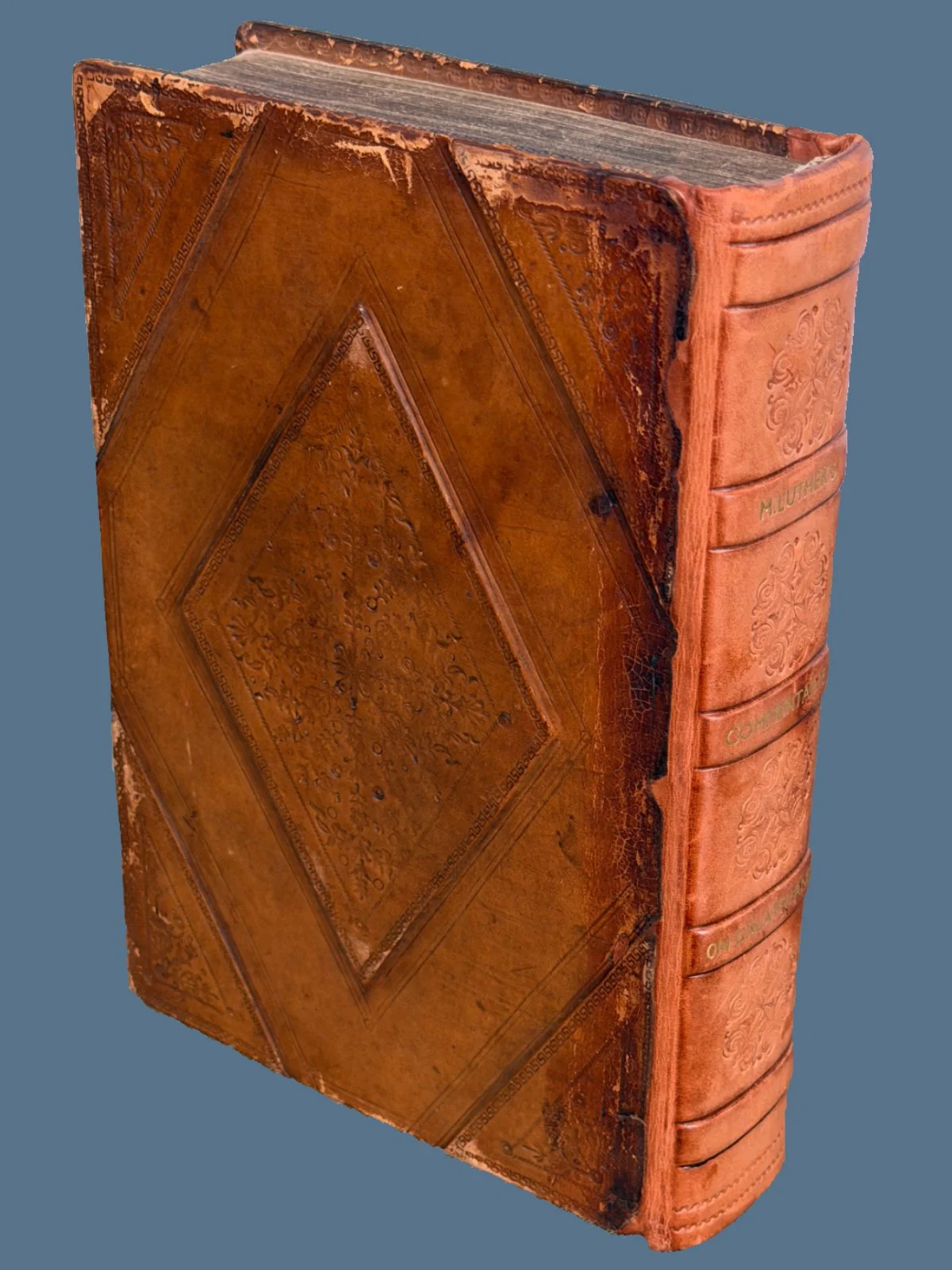 Image 2 of 14
 Image 3 of 14
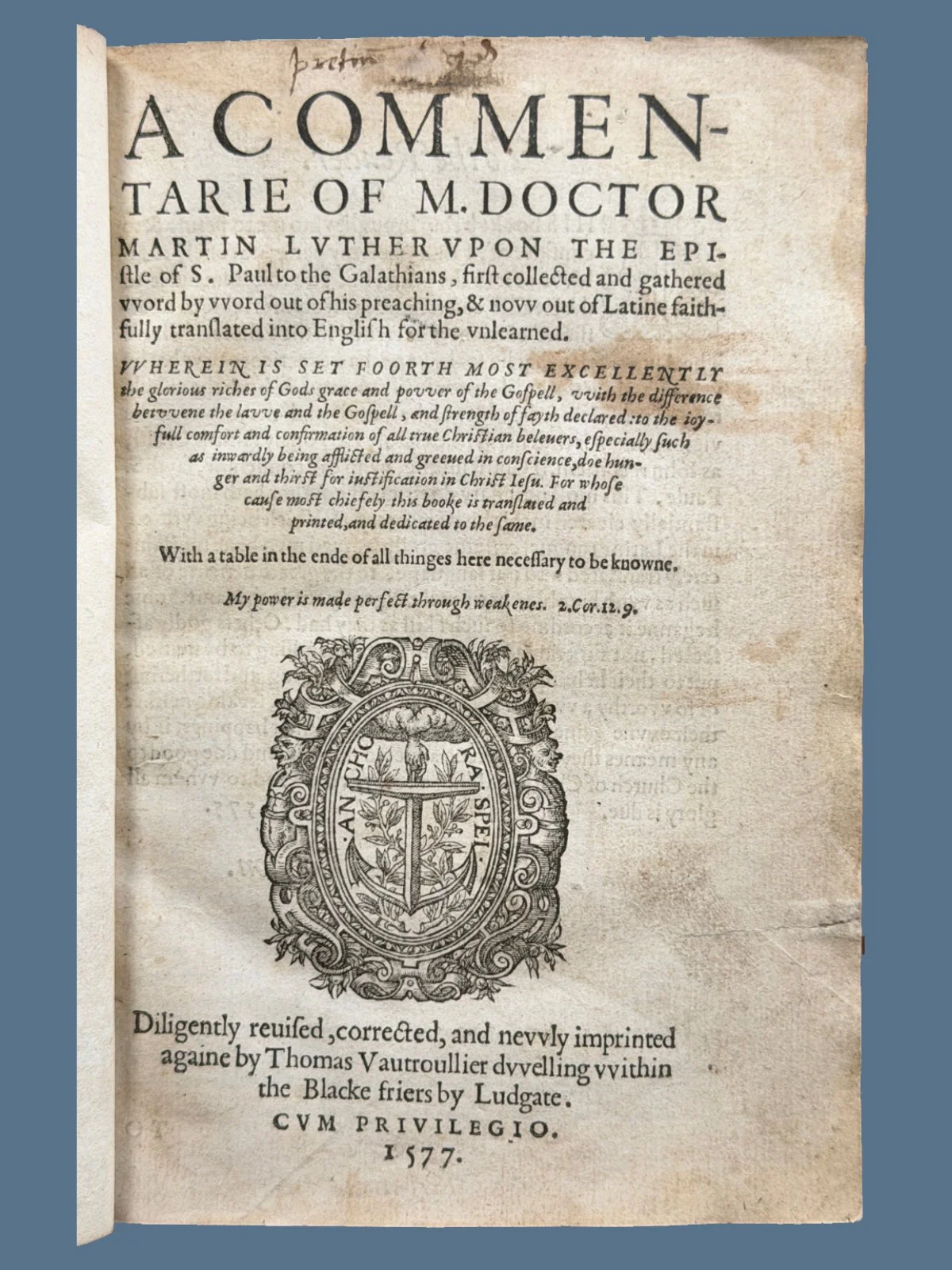 Image 4 of 14
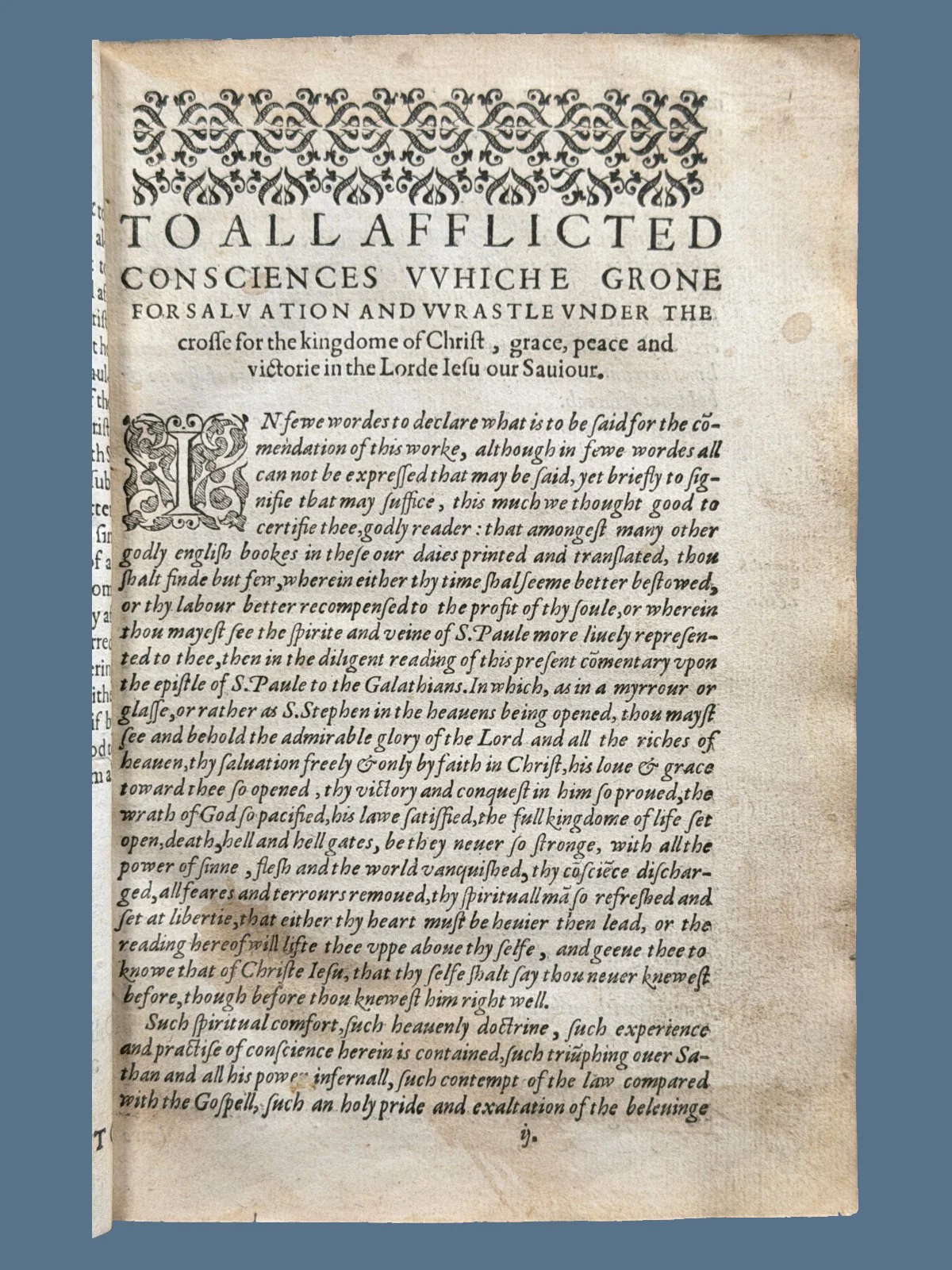 Image 5 of 14
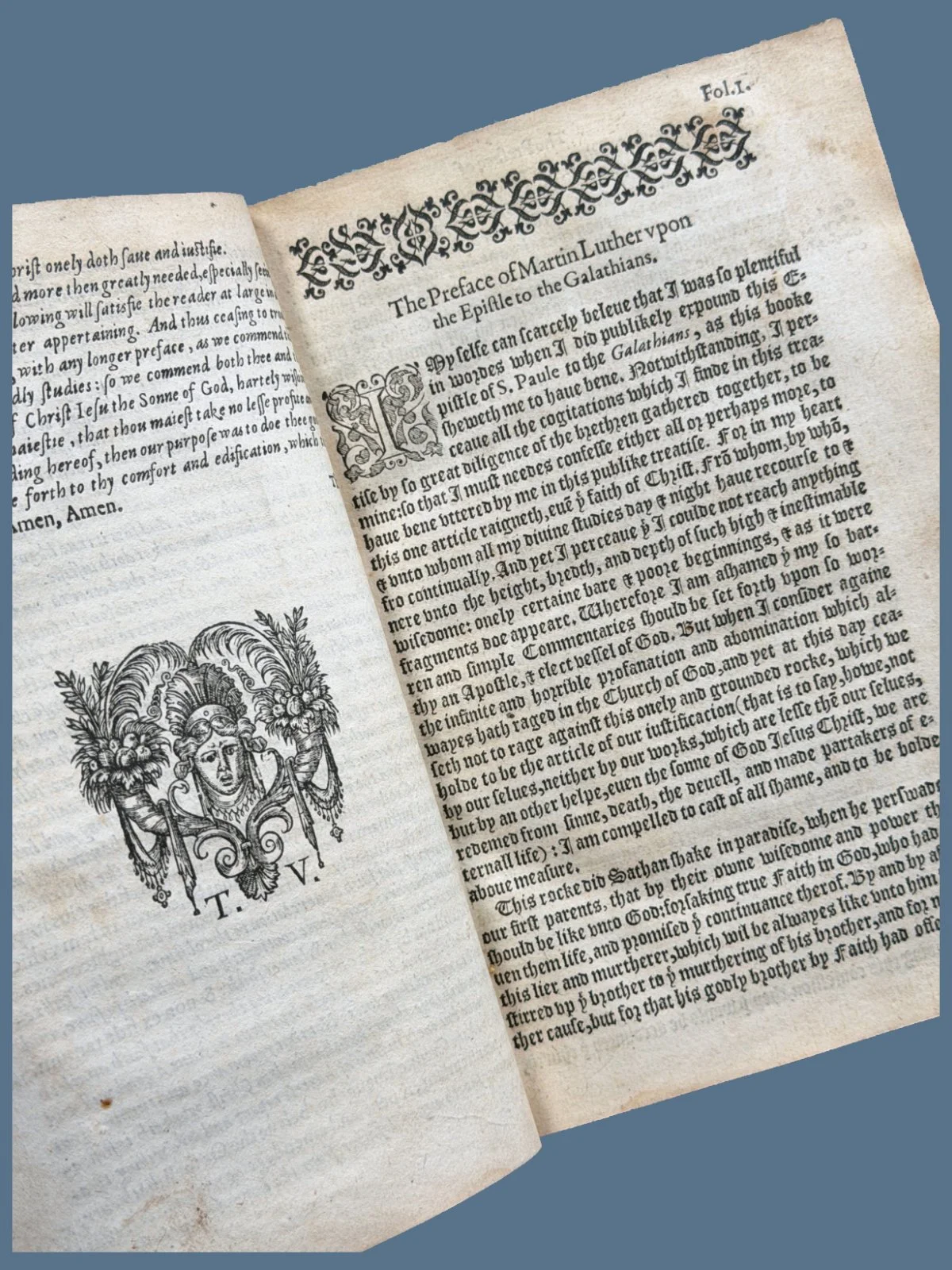 Image 6 of 14
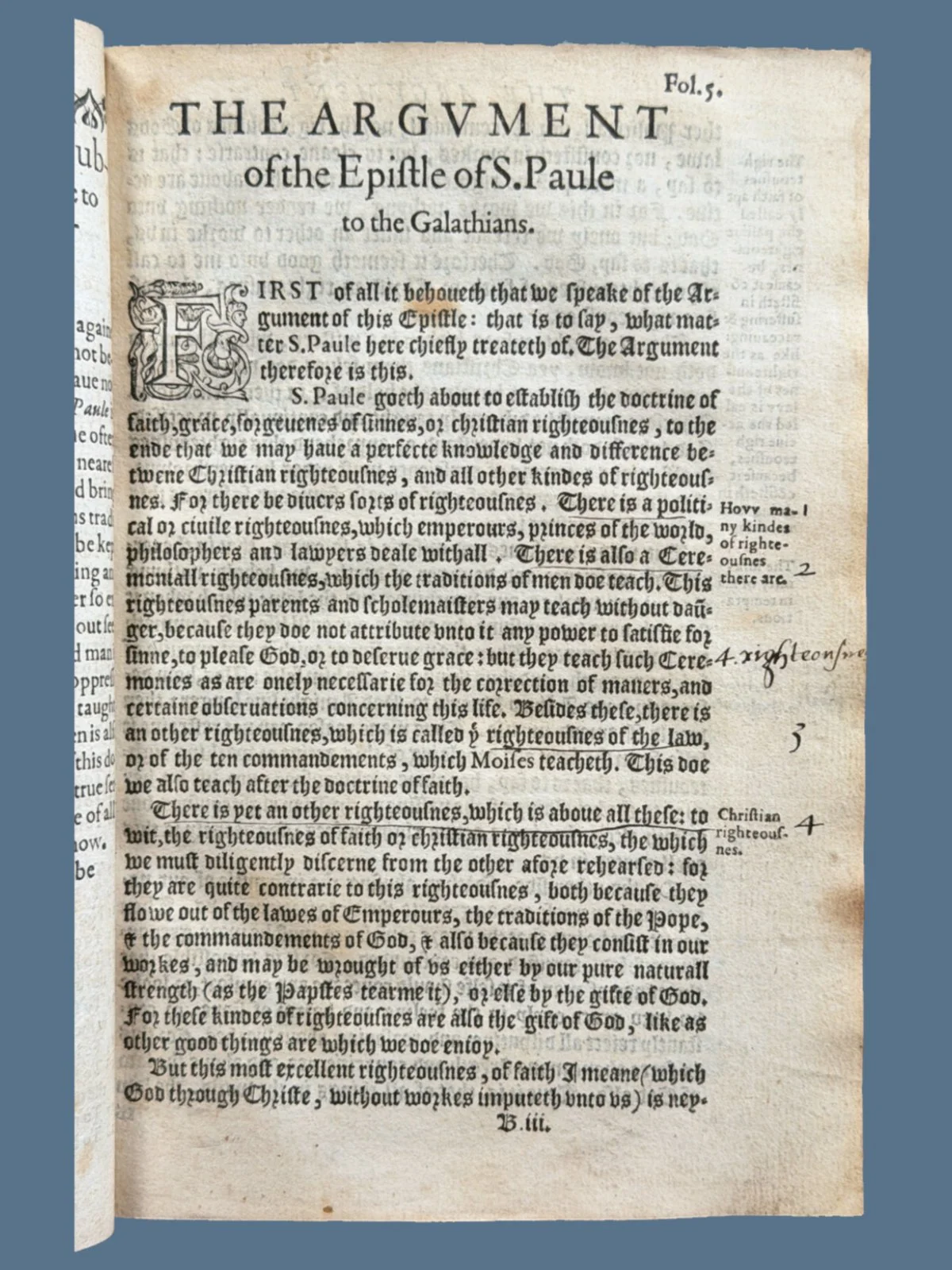 Image 7 of 14
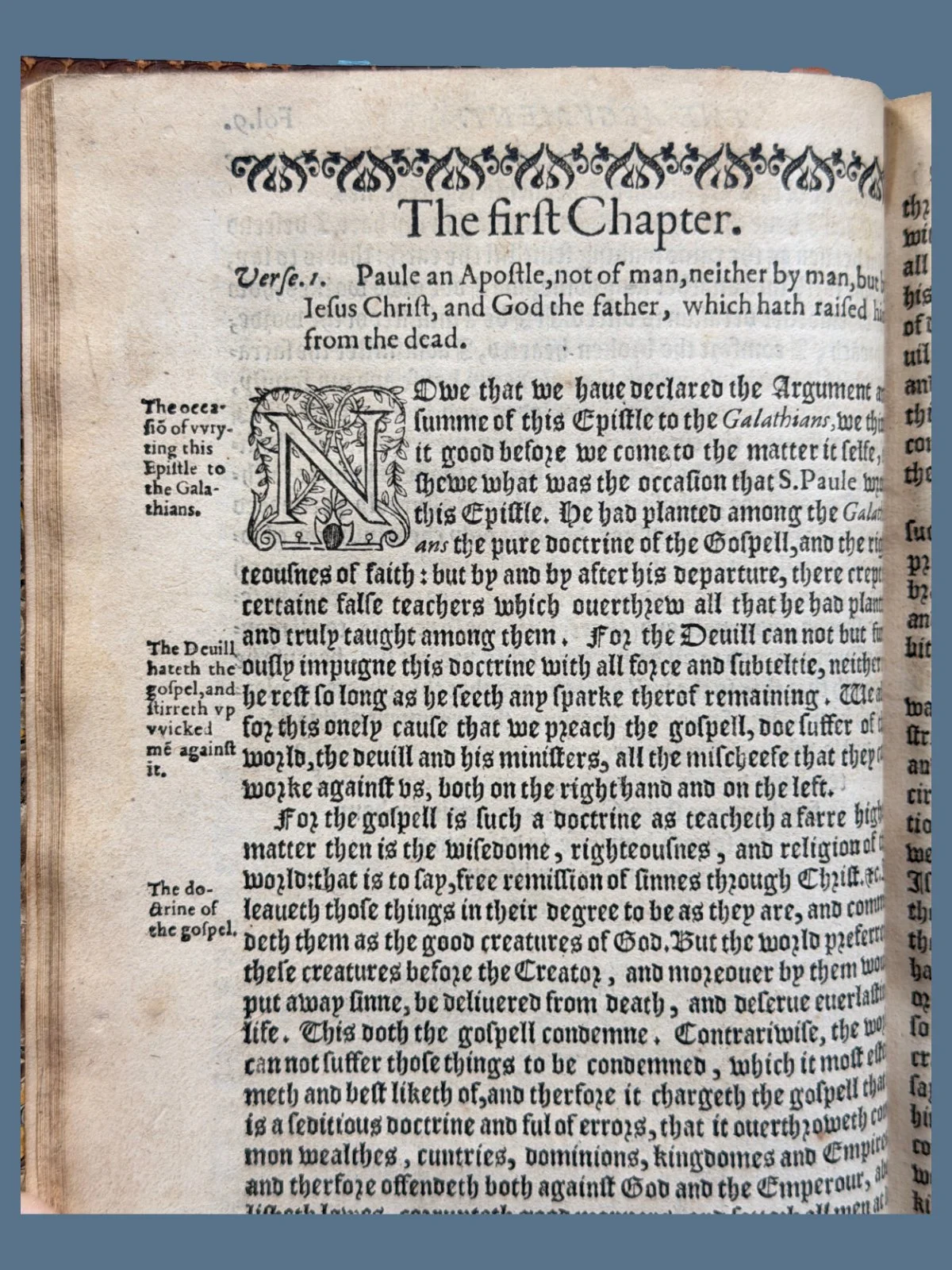 Image 8 of 14
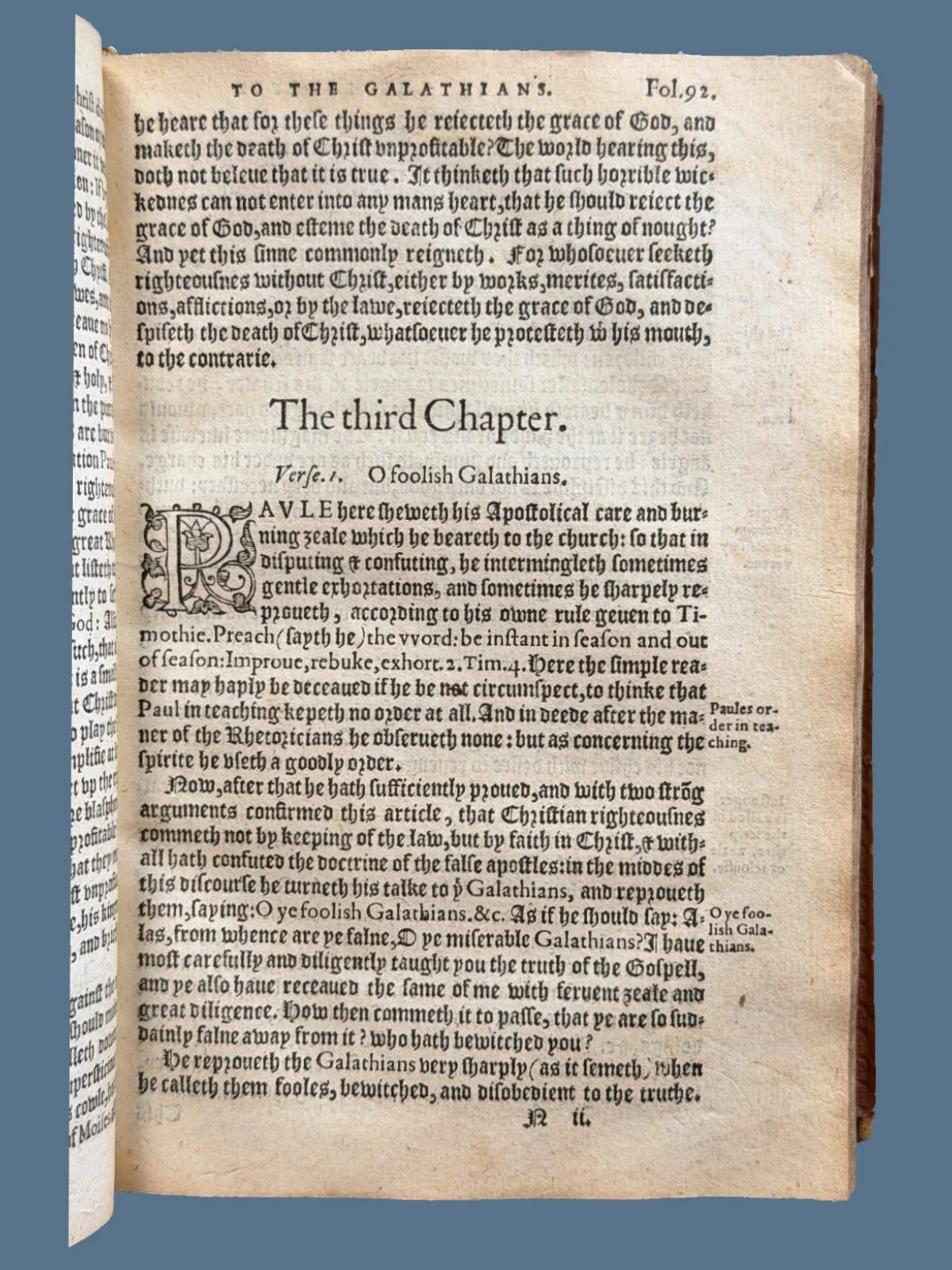 Image 9 of 14
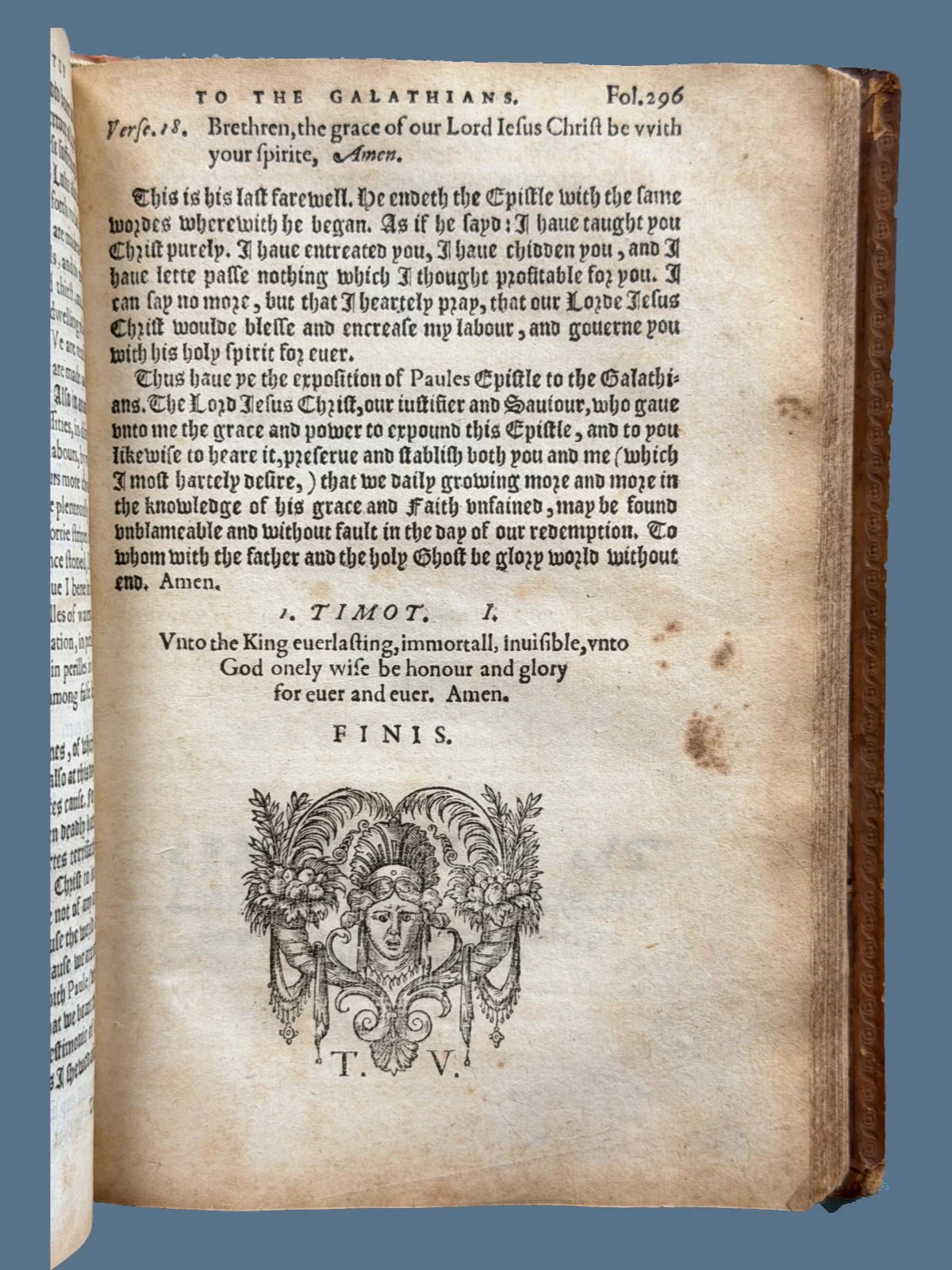 Image 10 of 14
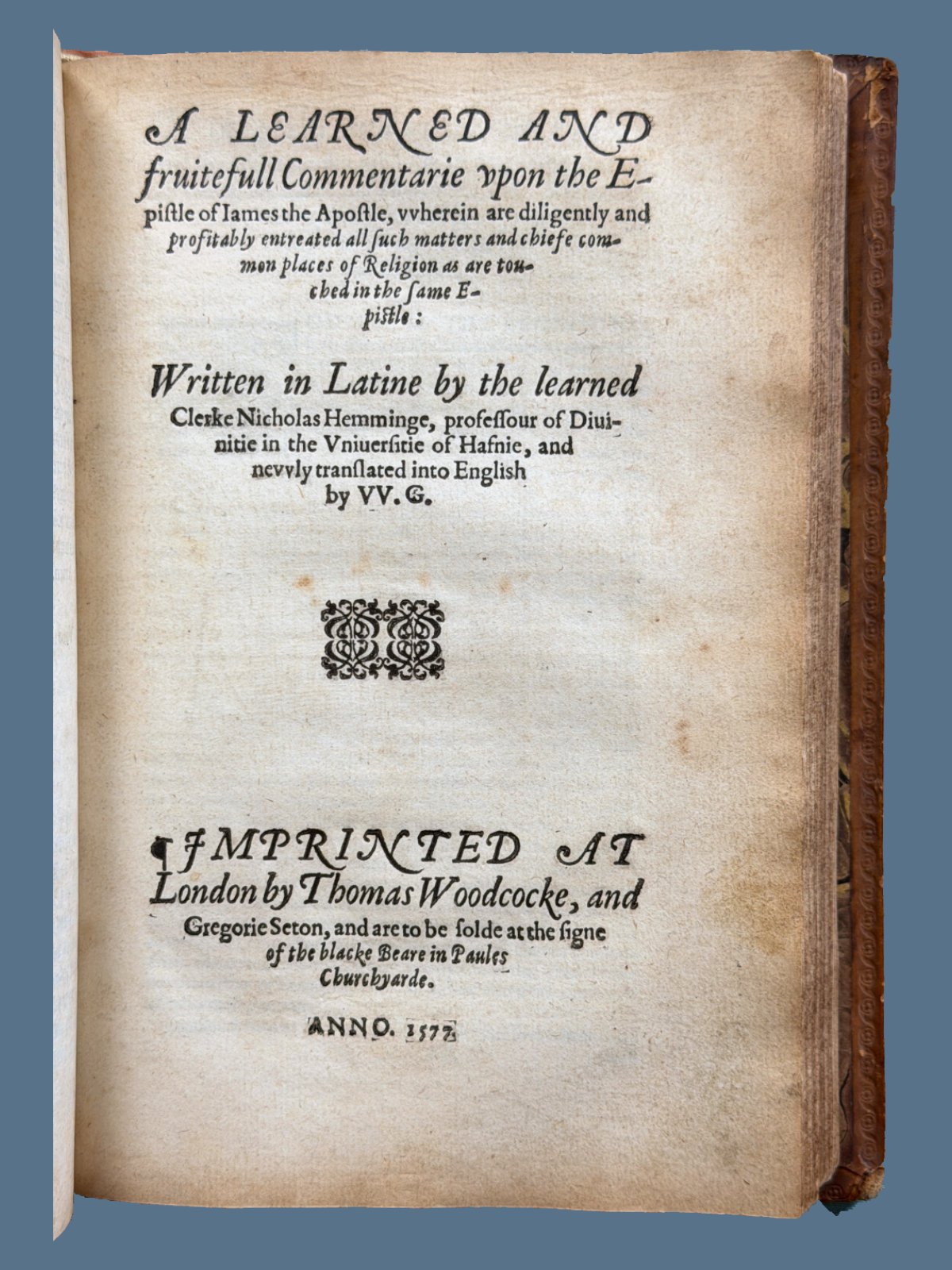 Image 11 of 14
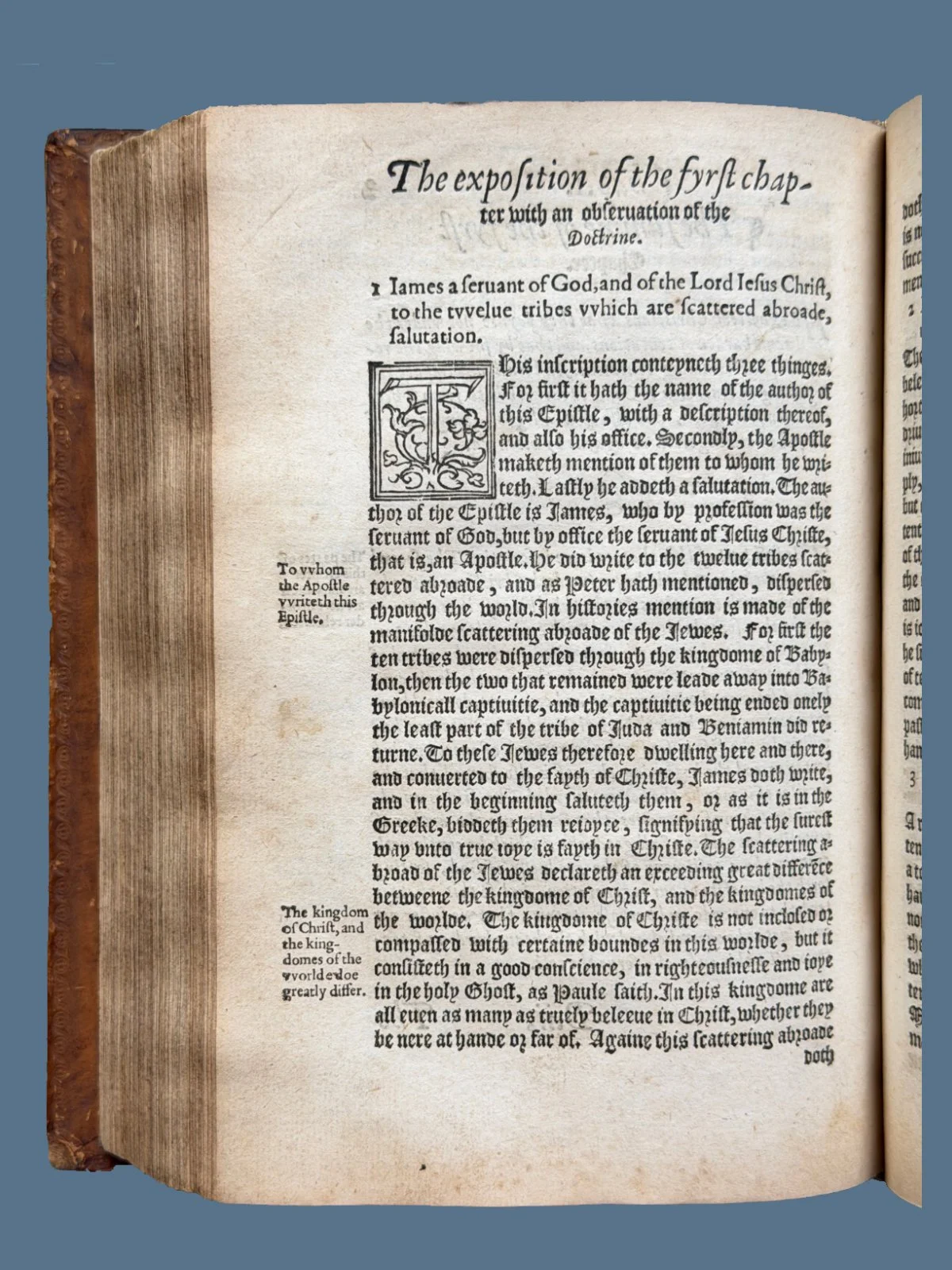 Image 12 of 14
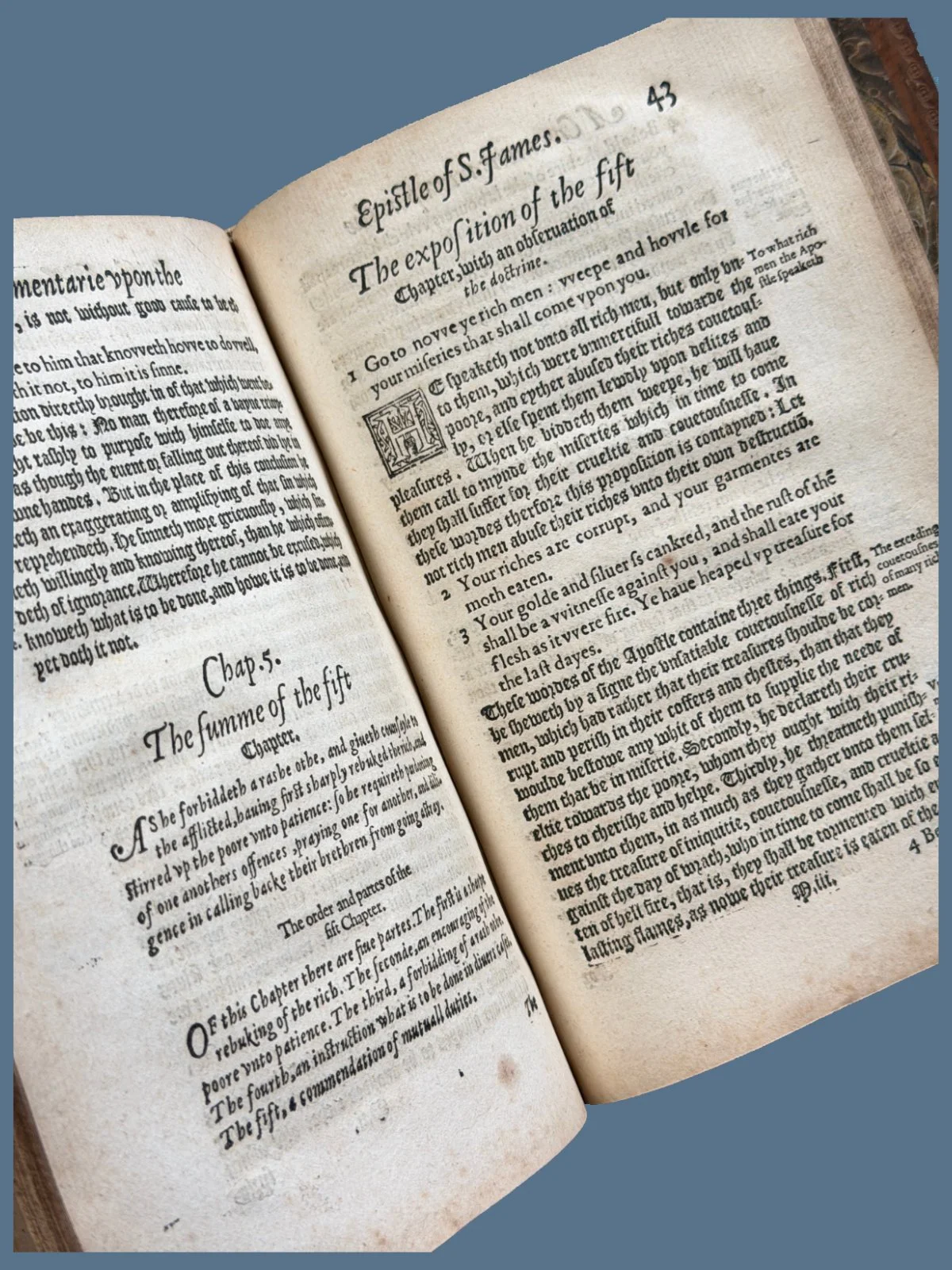 Image 13 of 14
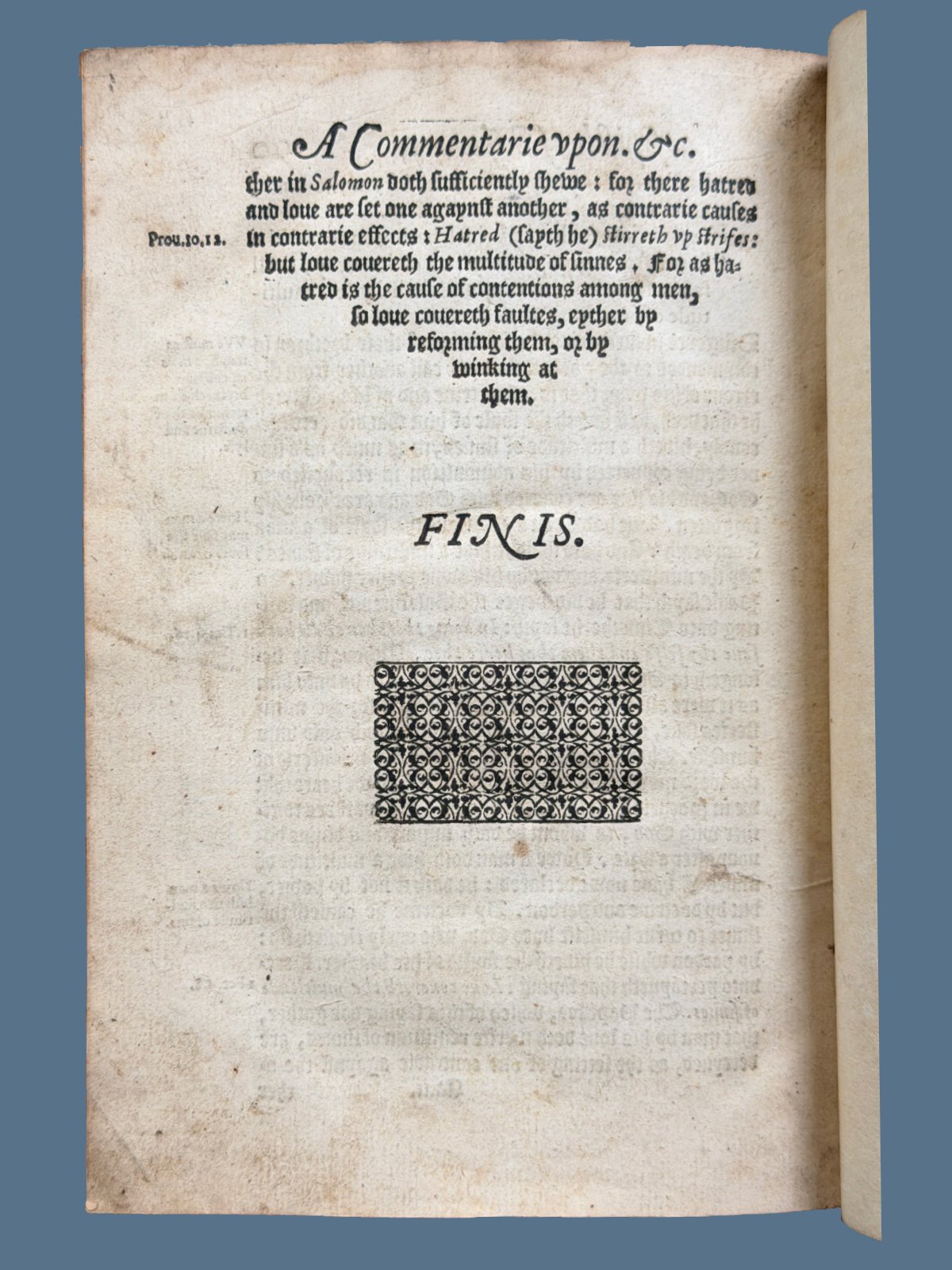 Image 14 of 14
A commentarie of M. Doctor Martin Luther vpon the Epistle of S. Paul to the Galathians, first collected and gathered vvord by vvord out of his preaching, & novv out of Latine faithfully translated into English for the vnlearned. Wherein is set forth most excellently the glorious riches of Gods grace... [Bound With] A learned and fruitefull commentarie vpon the Epistle of Iames the Apostle, vvherein are diligently and profitably entreated all such matters and chiefe common places of religion as are touched in the same epistle: written in Latine by the learned clerke Nicholas Hemminge, professour of diuinitie in the Vniuersitie of Hafnie, newly translated into English by W.G.
Description
Title page printed with printer’s device (1577). Introduction, preface, and argument to Galatians, followed by Luther’s commentary. Text in single column black letter. Bound with Neils Himmingsen’s commentary on James (1577). Text is also printed in single column black letter.
Collation
A-Z^8, Aa-Oo^8, Pp^6; A-Z^4, Aa^2. Complete with title page to each commentary.
Binding
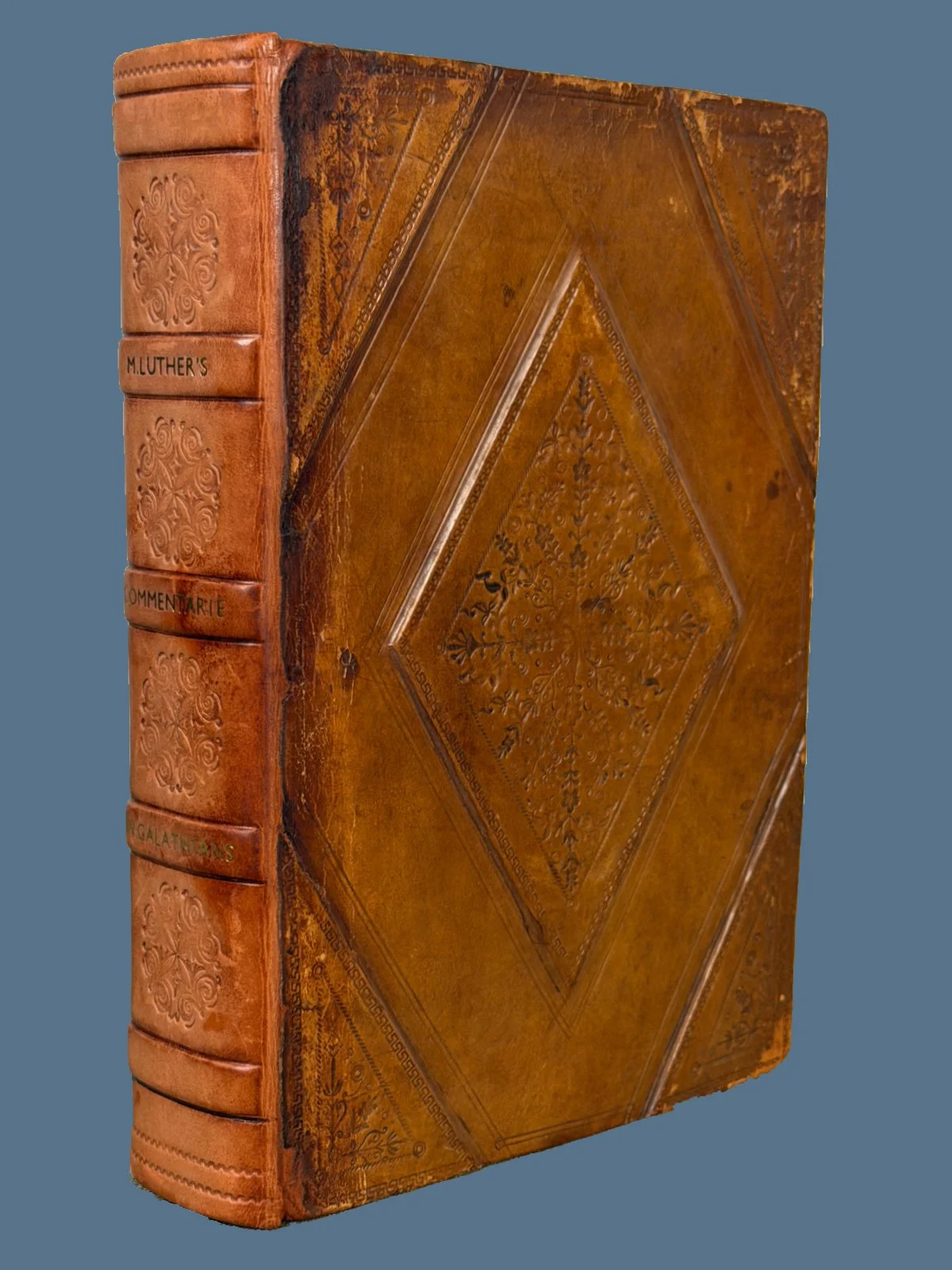
Early nineteenth century calf. Covers lightly raised and paneled with elaborate decoration in blind using tools, rolls, and stamps. Rebacked to style with four raised bands, blind tooling to compartments and the words “M. Luther’s Commentarie on Galathians” in gilt to raised bands. Hinges reinforced. Later marbled endpapers.
Condition
C8 with upper loss to two lines of text; Aside from the occasional note or mark in an early hand through chapter 2, the text is clean and bright.
Note
Galatians is Luther’s favorite book: the subject of his lectures in 1519 and again in 1523. Luther has stated: “The Epistle to the Galatians is my epistle. To it I am as it were in wedlock… It is my Katherine [i.e. Luther’s wife].” The significance of this commentary upon Protestantism is difficult to overstate. Over and above all of Luther’s writings it represents the crux of justification by faith alone in the strongest and clearest sense.
References
ESTC S108981; ESTC S103941.