 Image 1 of 20
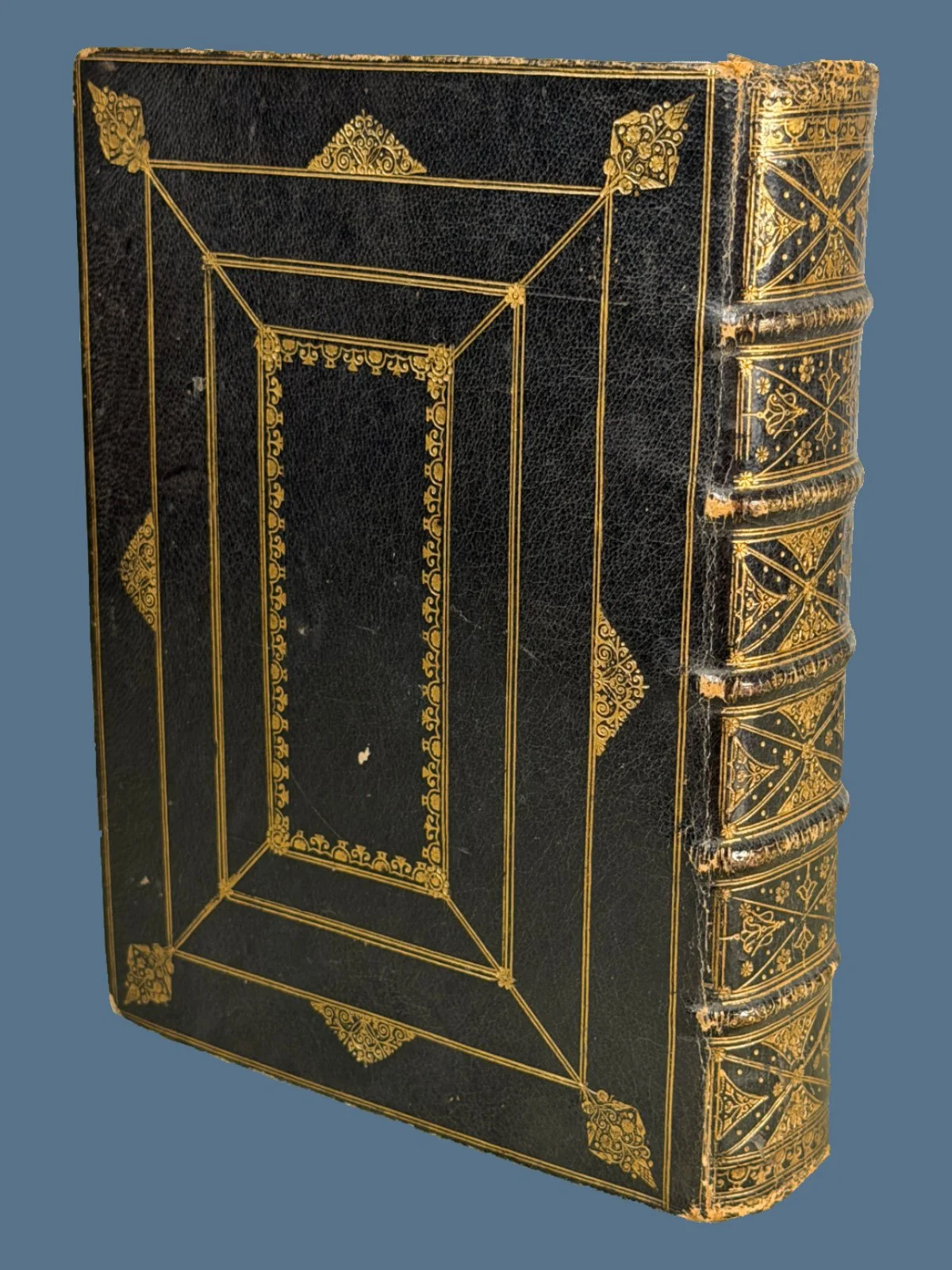 Image 2 of 20
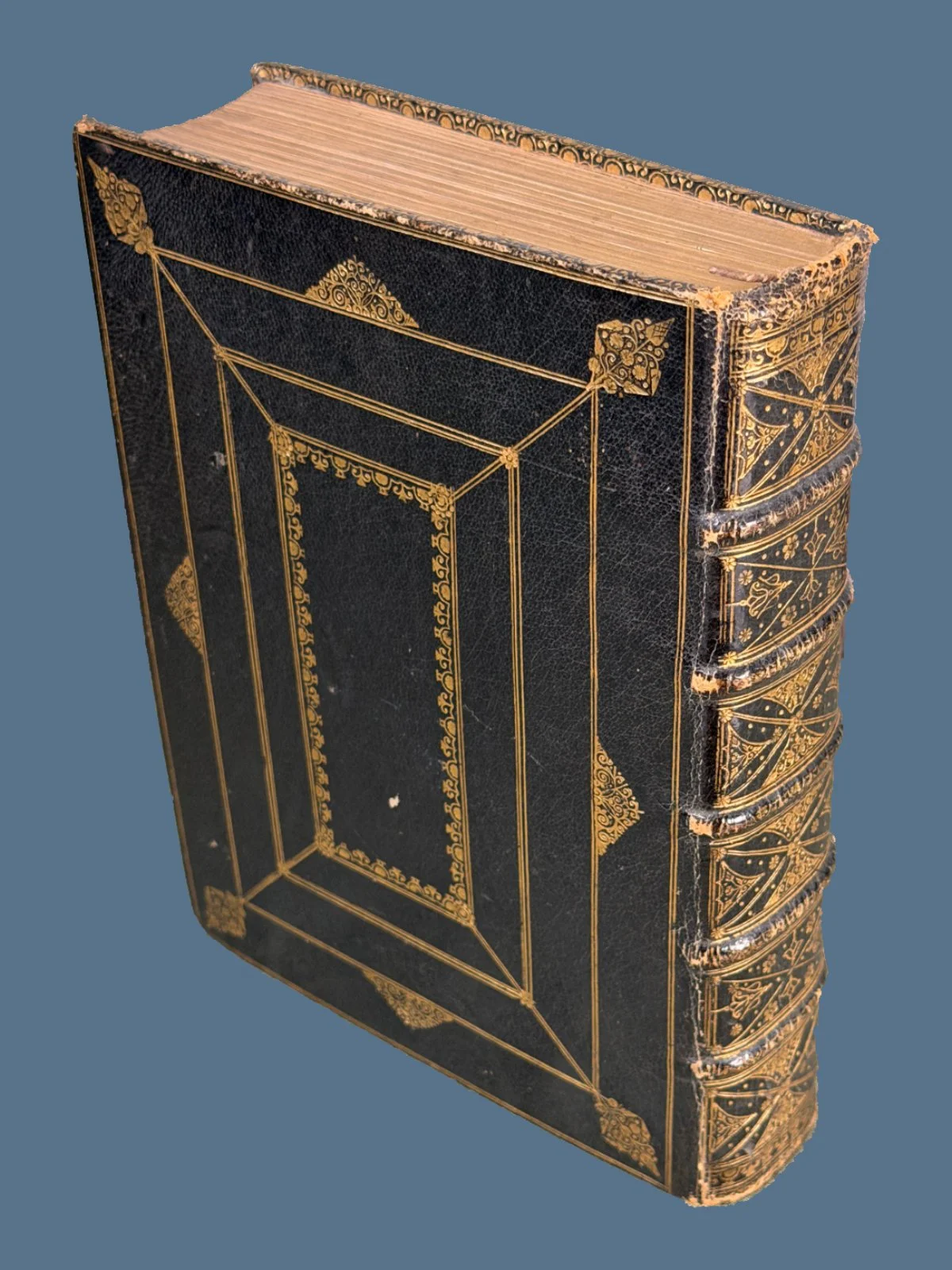 Image 3 of 20
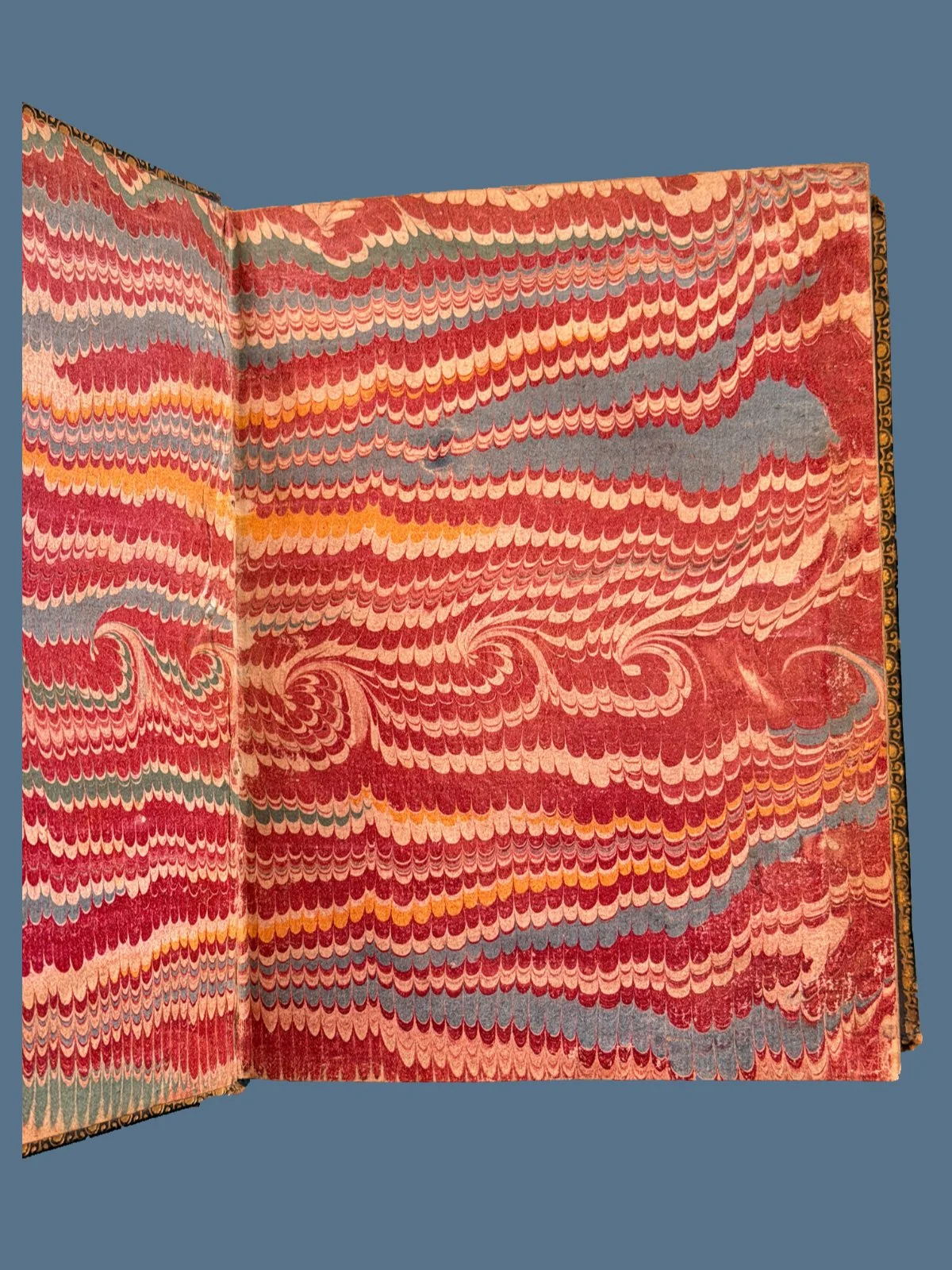 Image 4 of 20
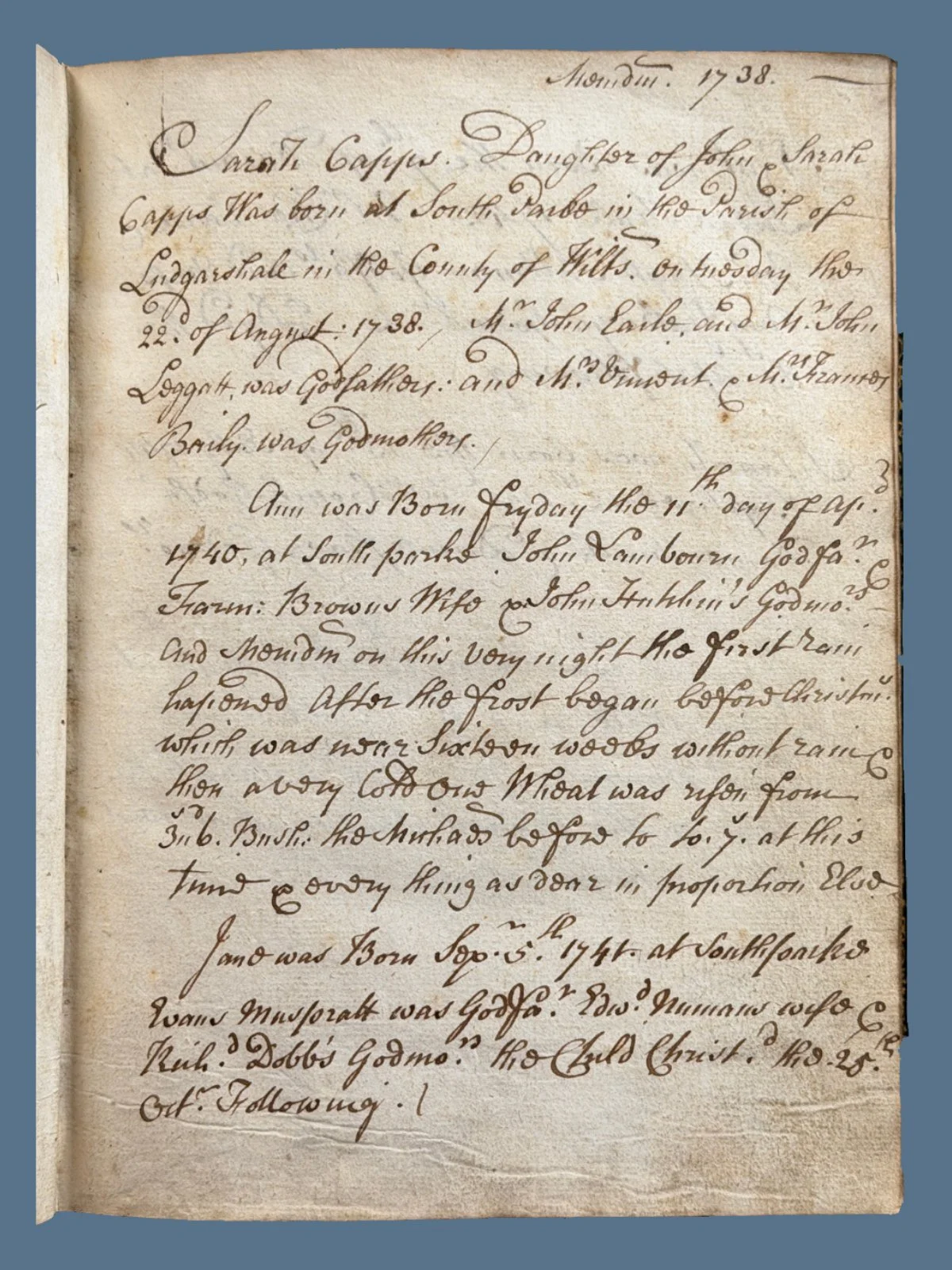 Image 5 of 20
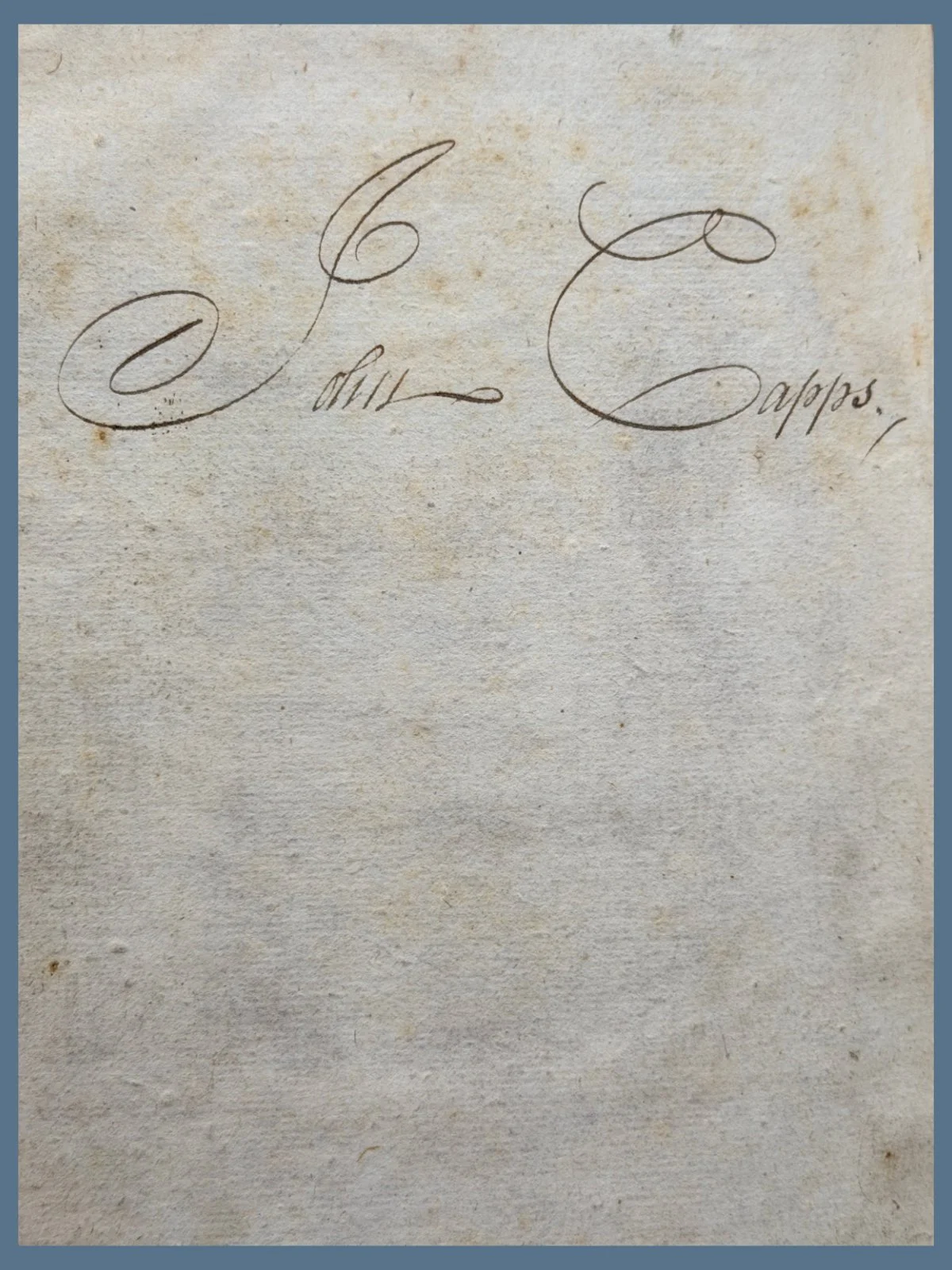 Image 6 of 20
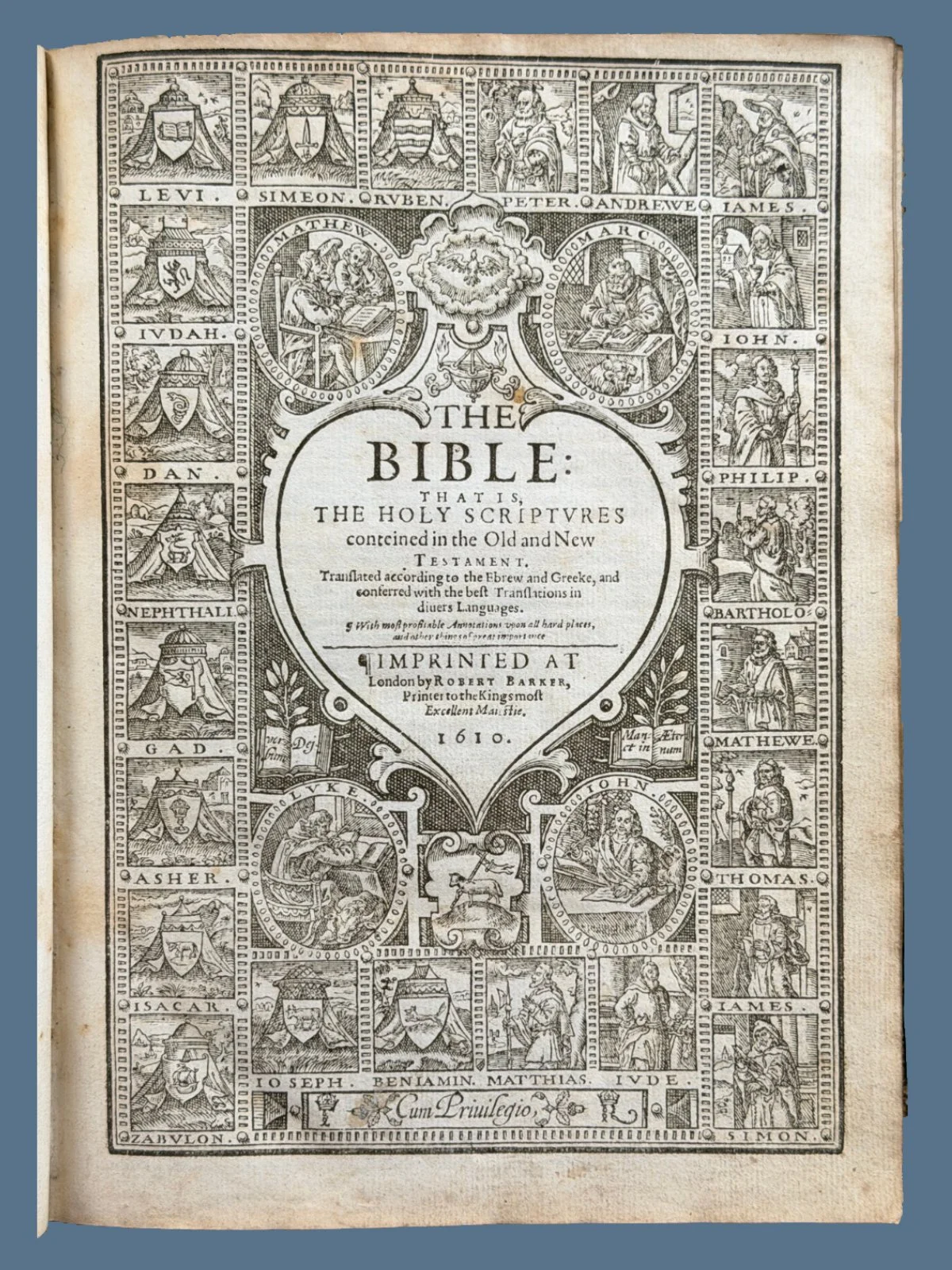 Image 7 of 20
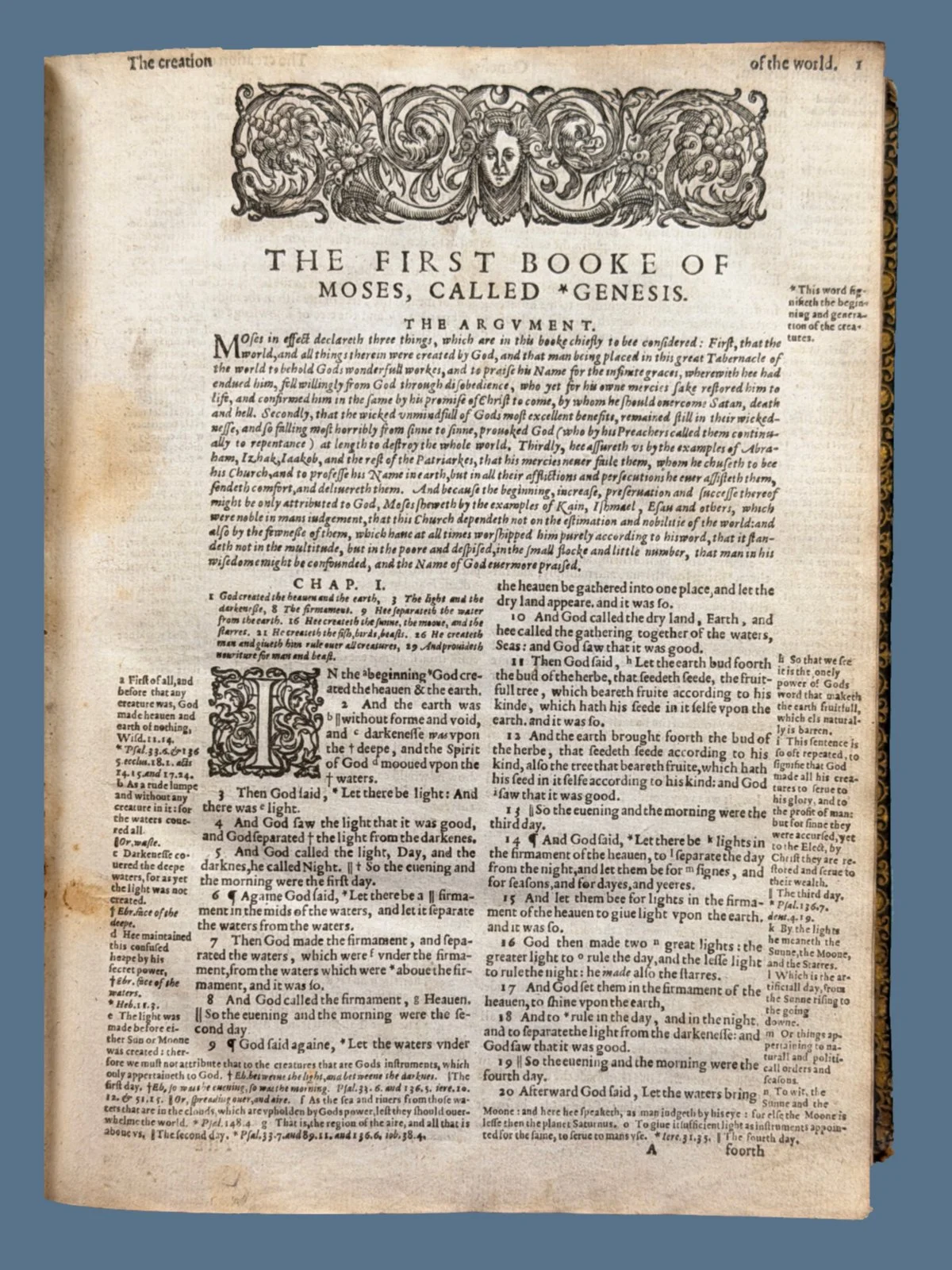 Image 8 of 20
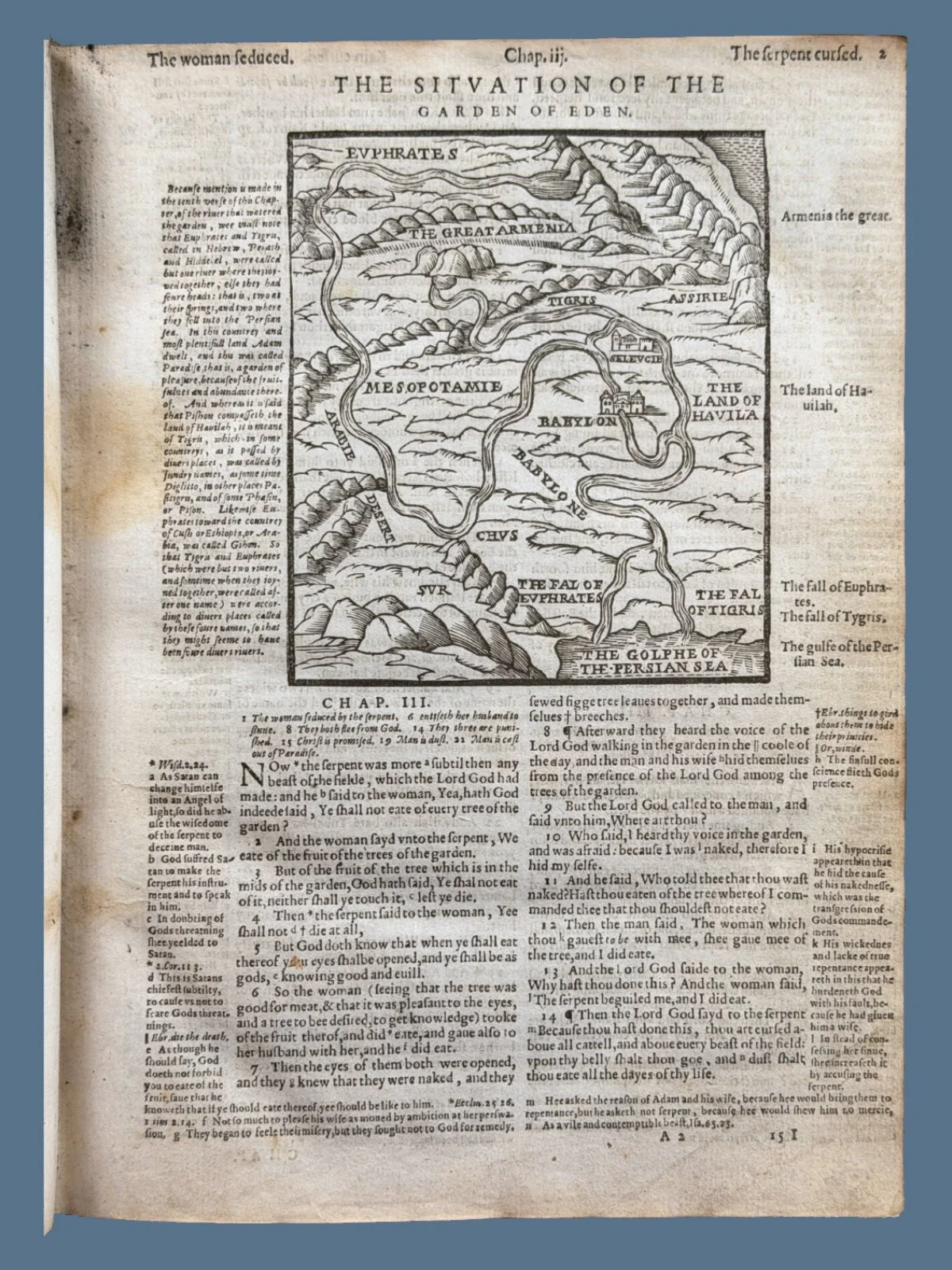 Image 9 of 20
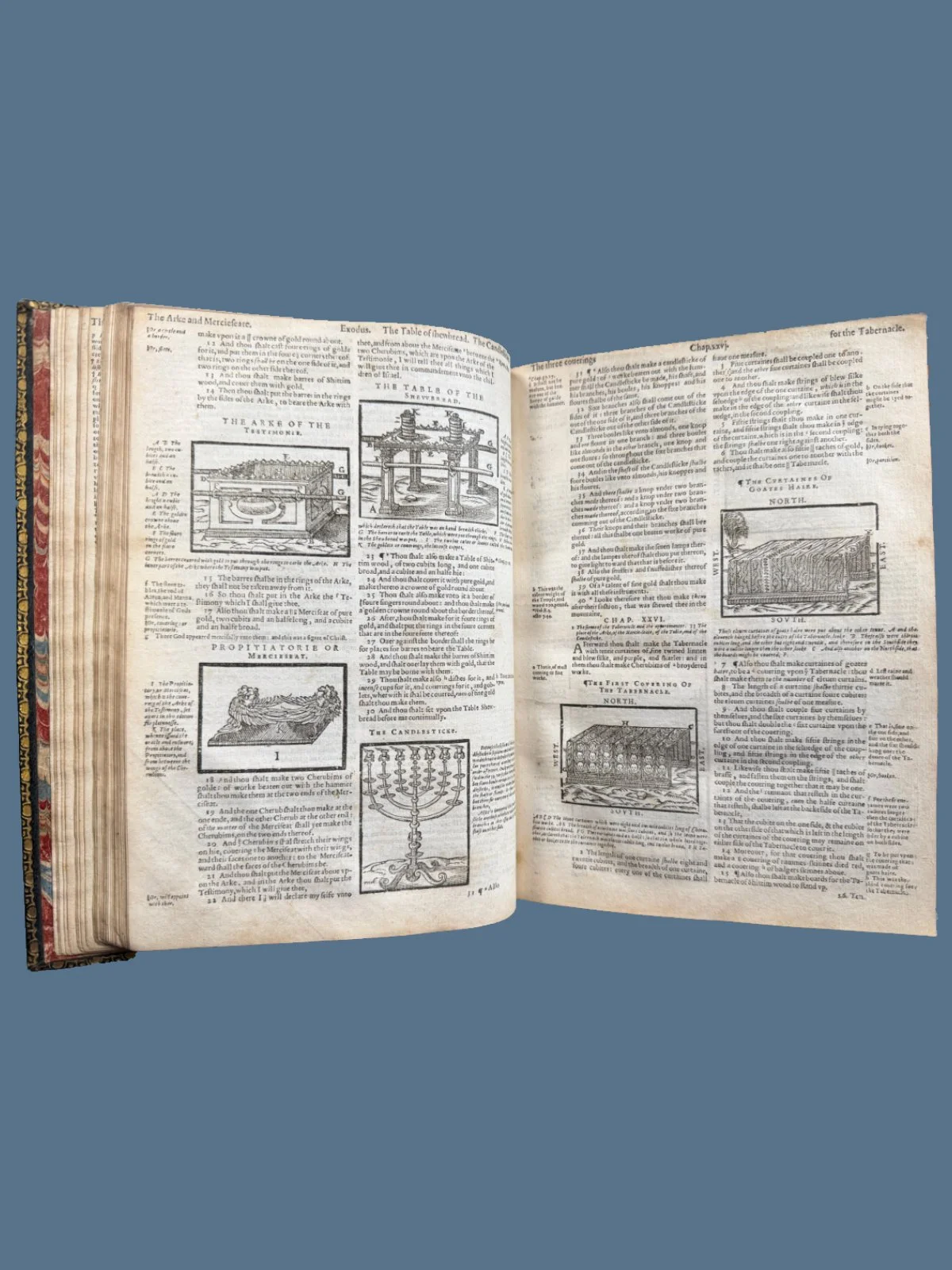 Image 10 of 20
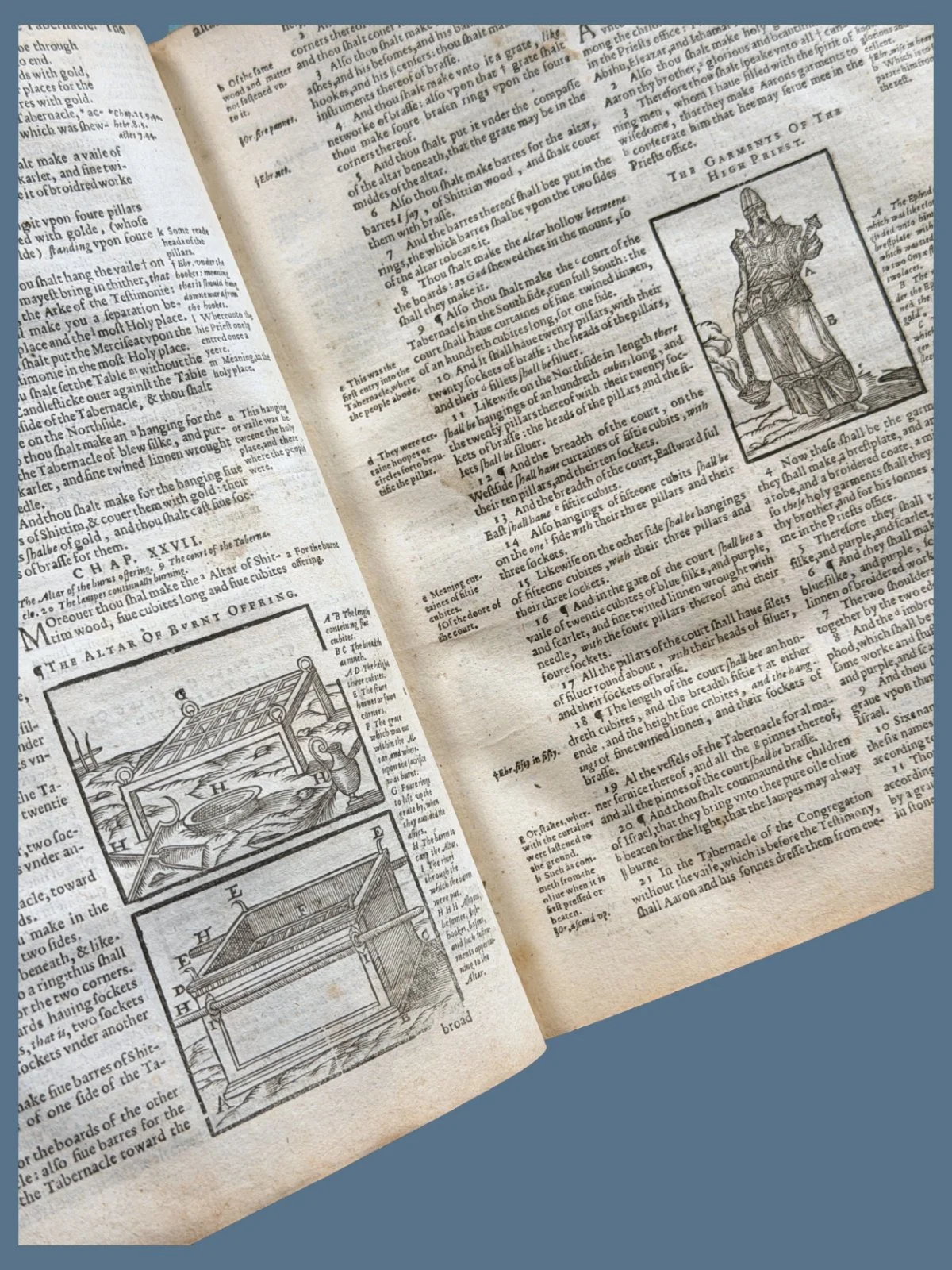 Image 11 of 20
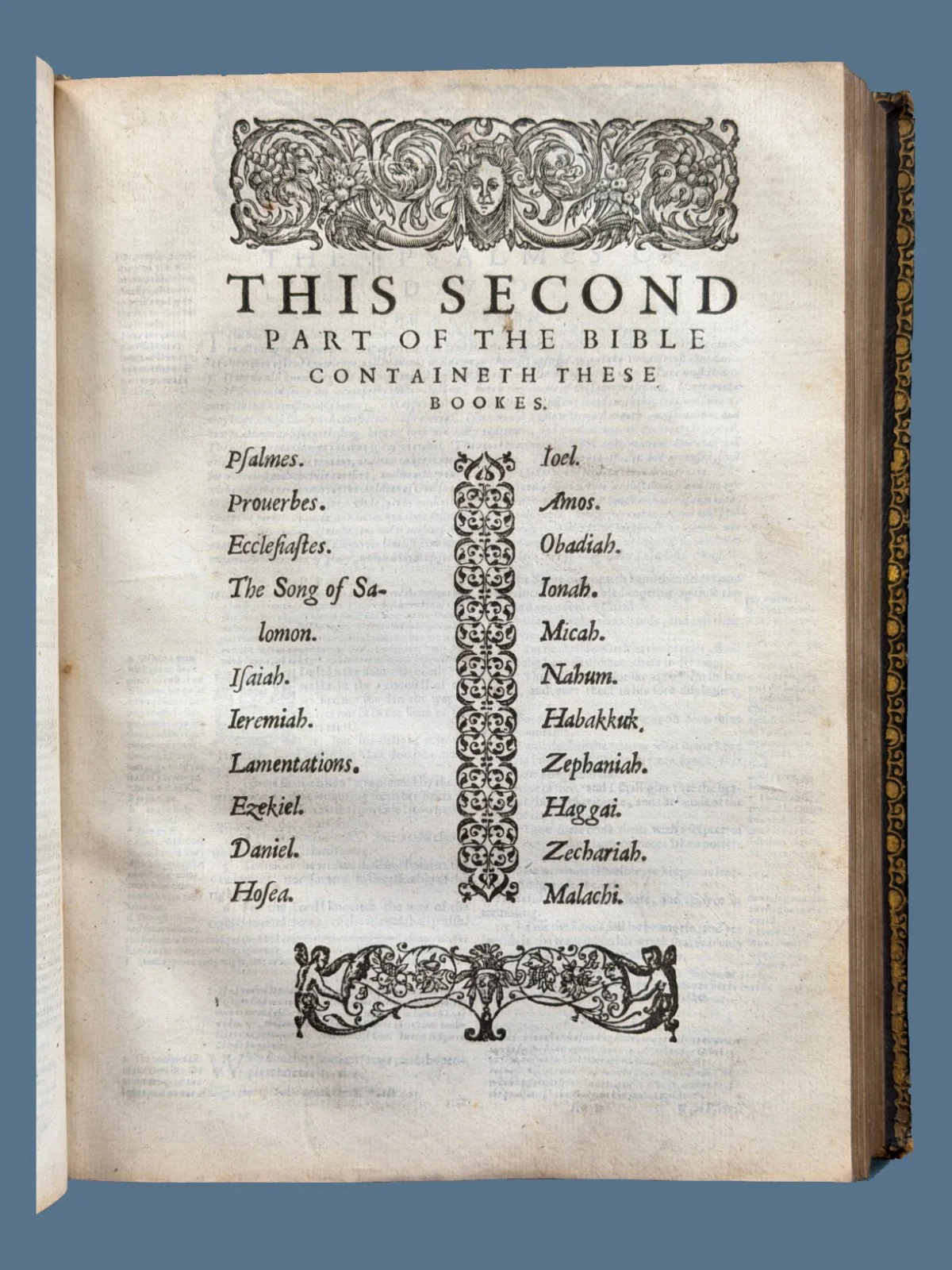 Image 12 of 20
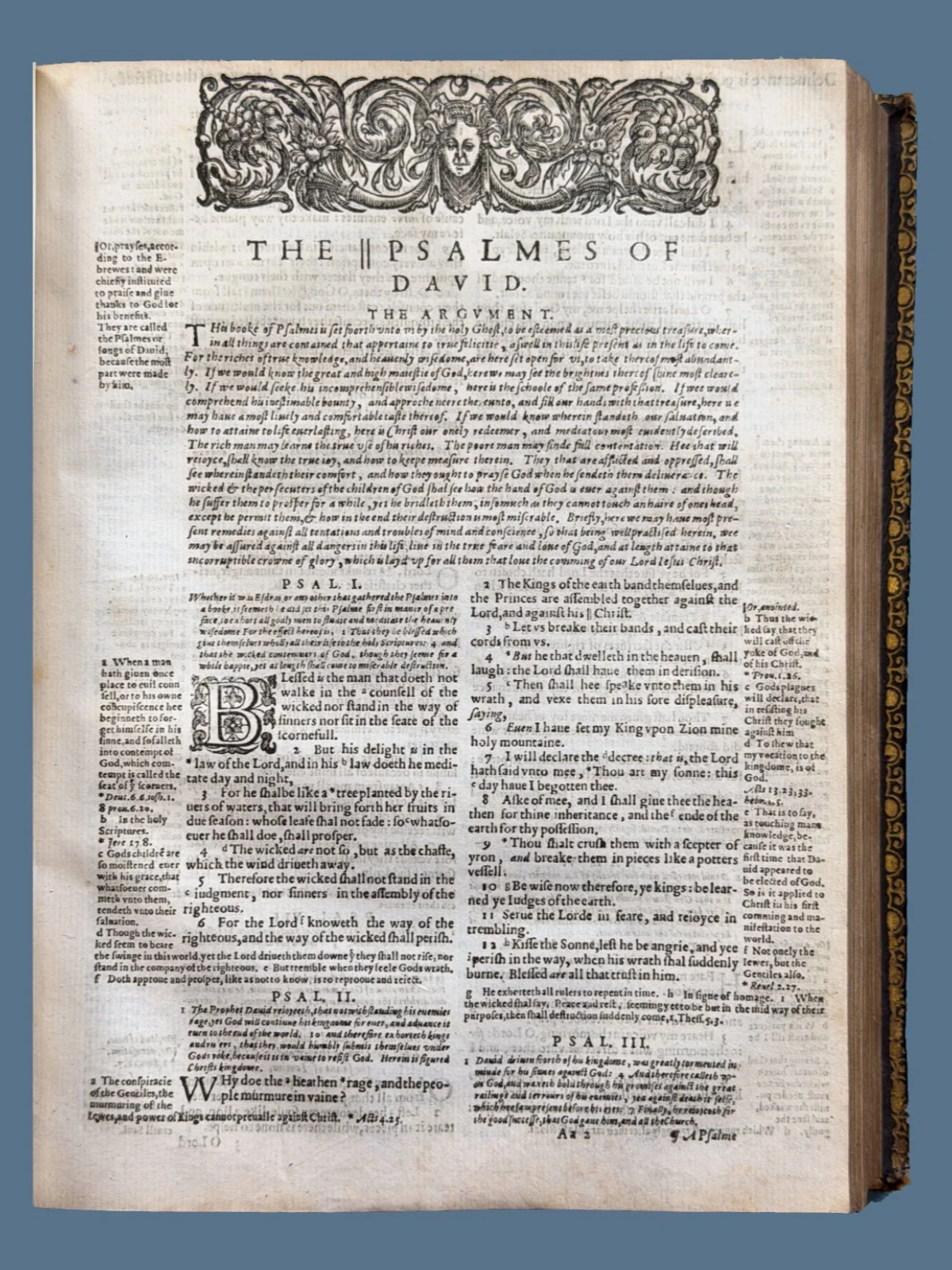 Image 13 of 20
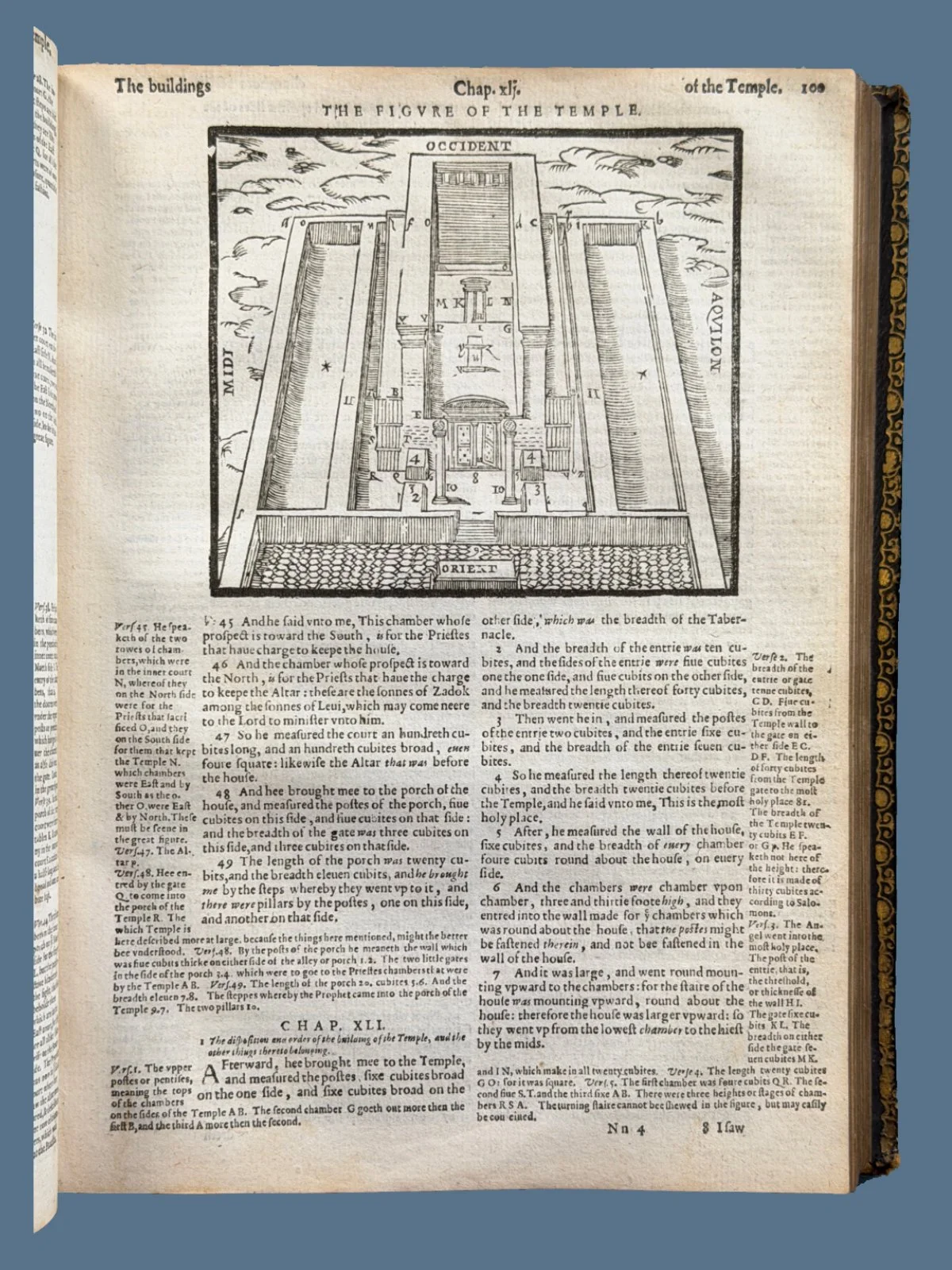 Image 14 of 20
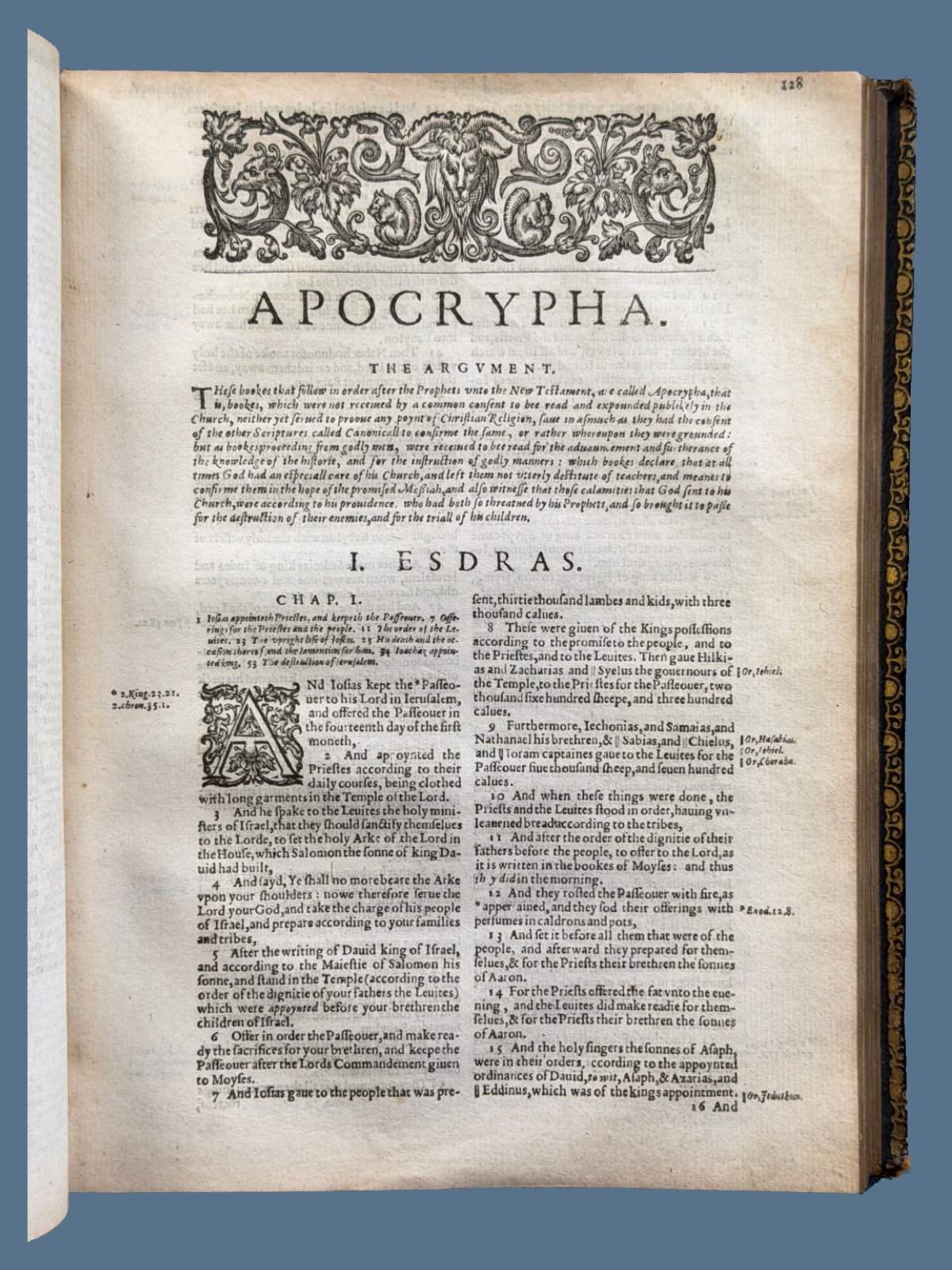 Image 15 of 20
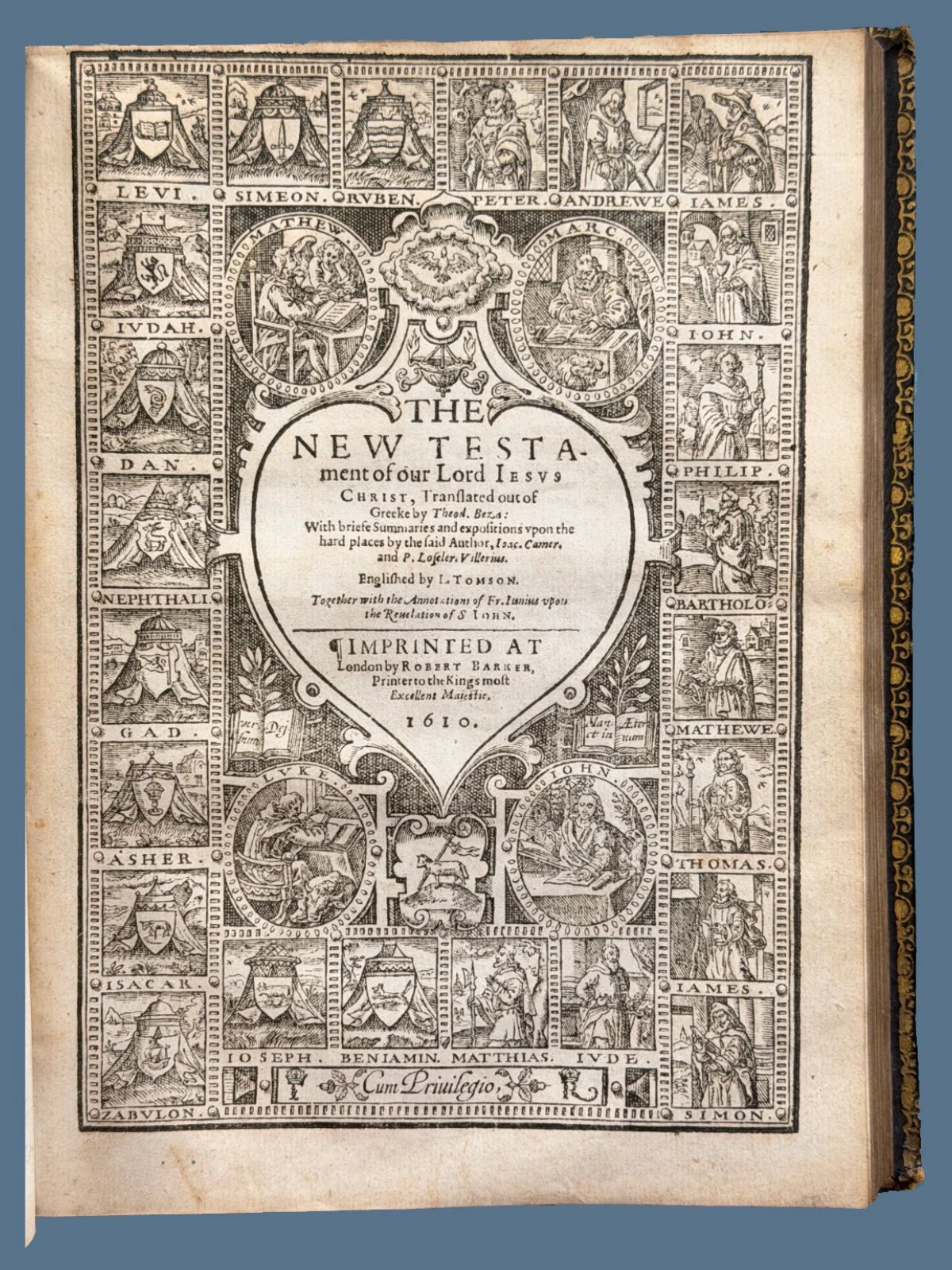 Image 16 of 20
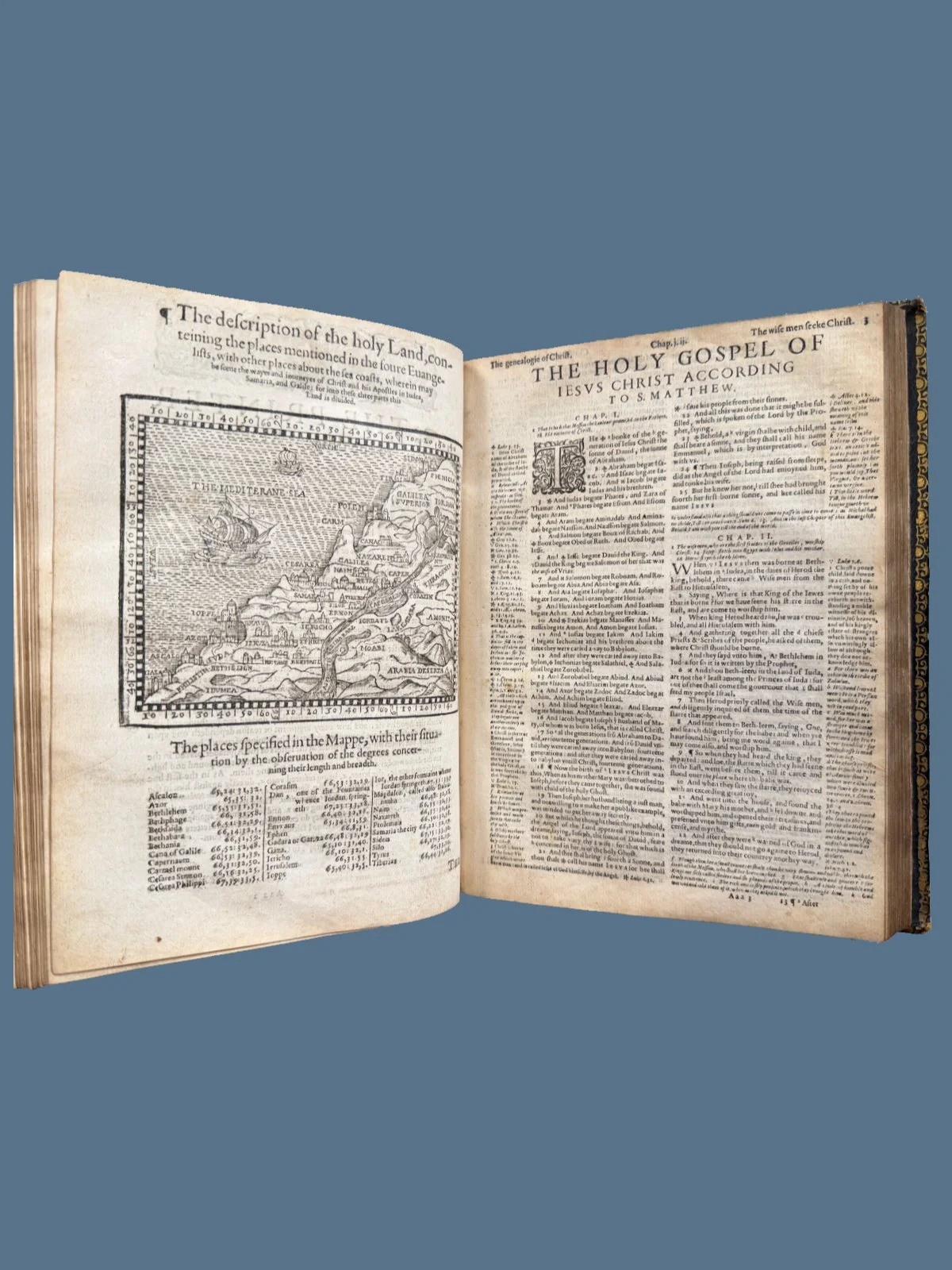 Image 17 of 20
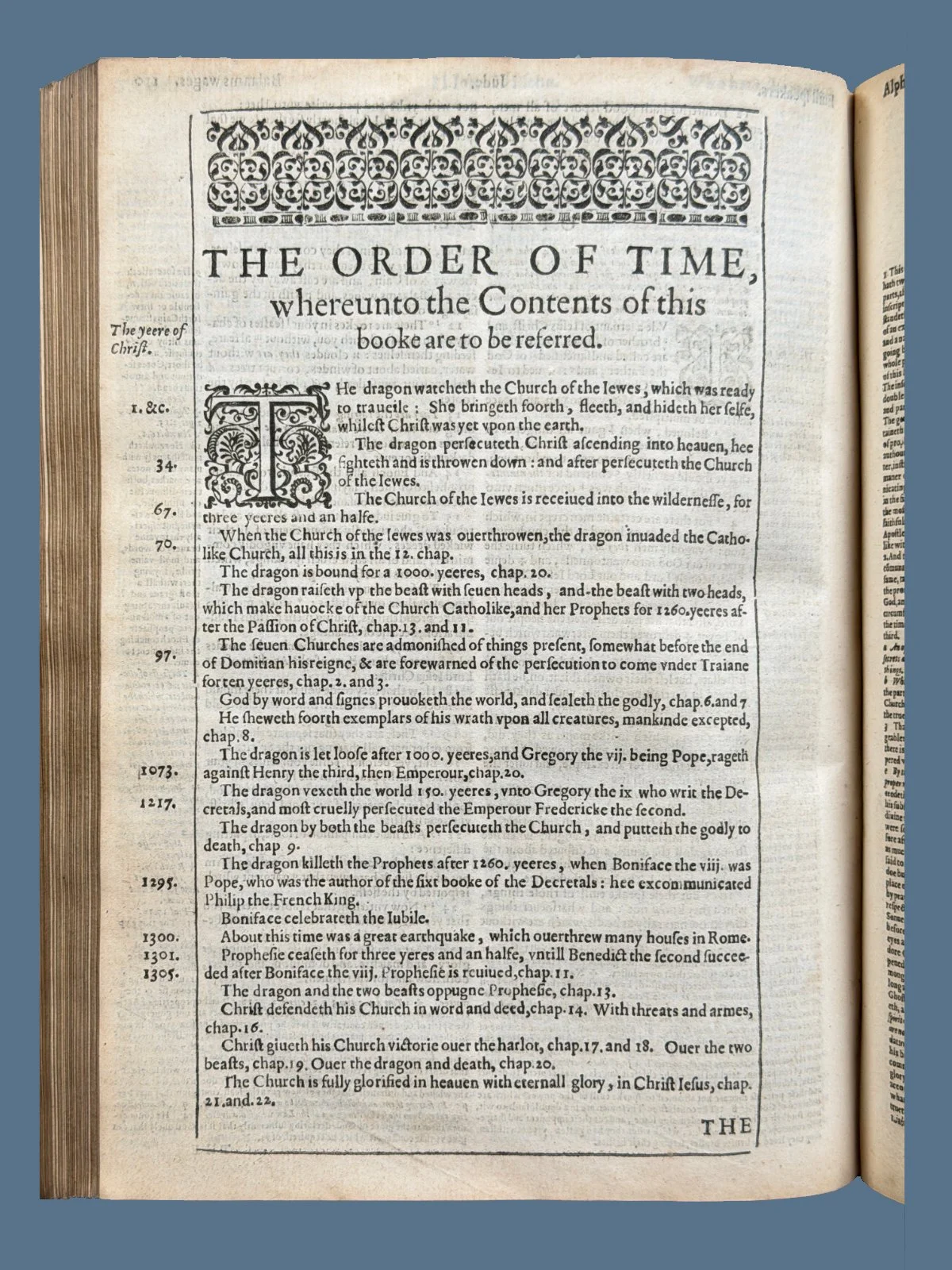 Image 18 of 20
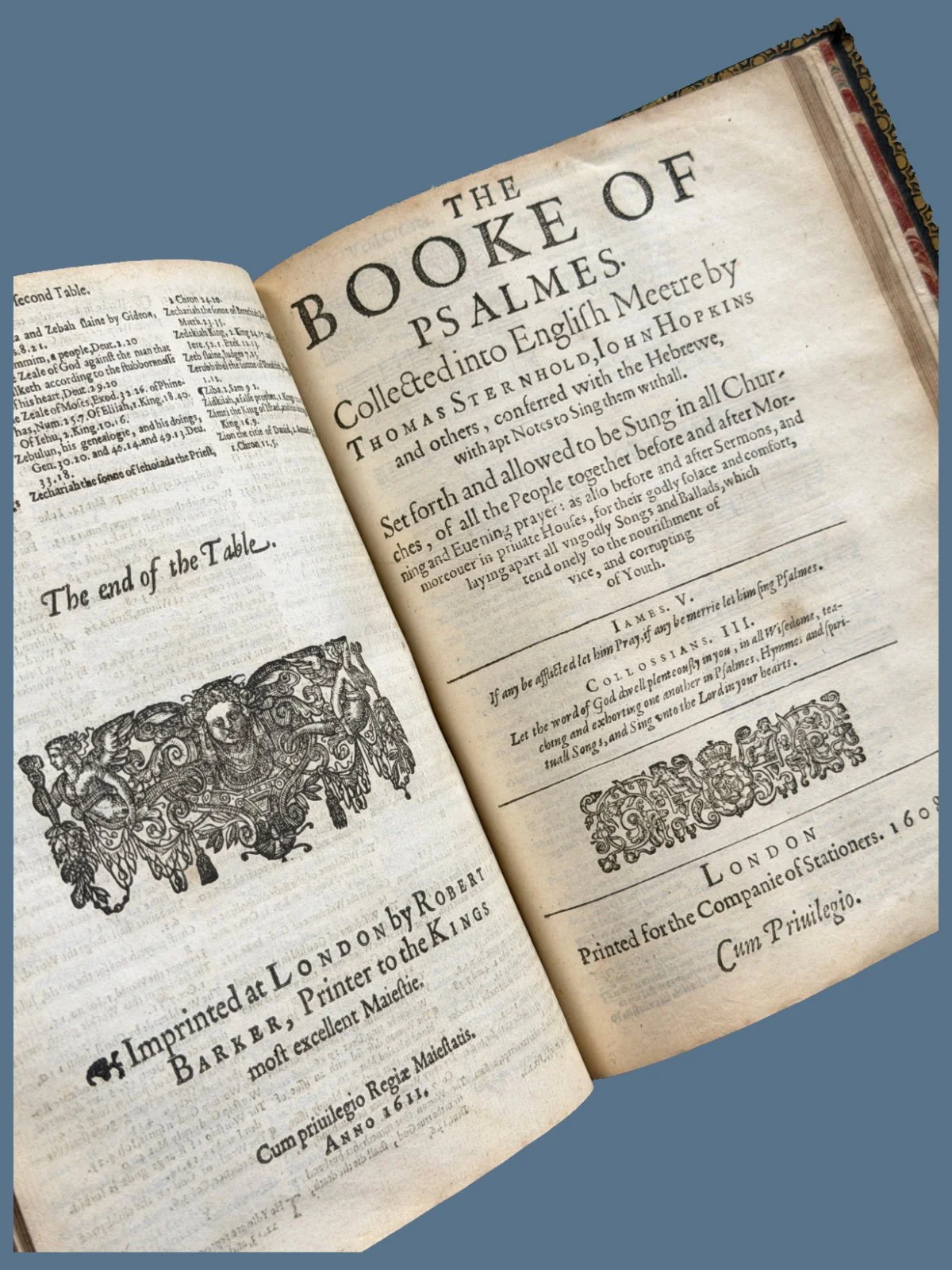 Image 19 of 20
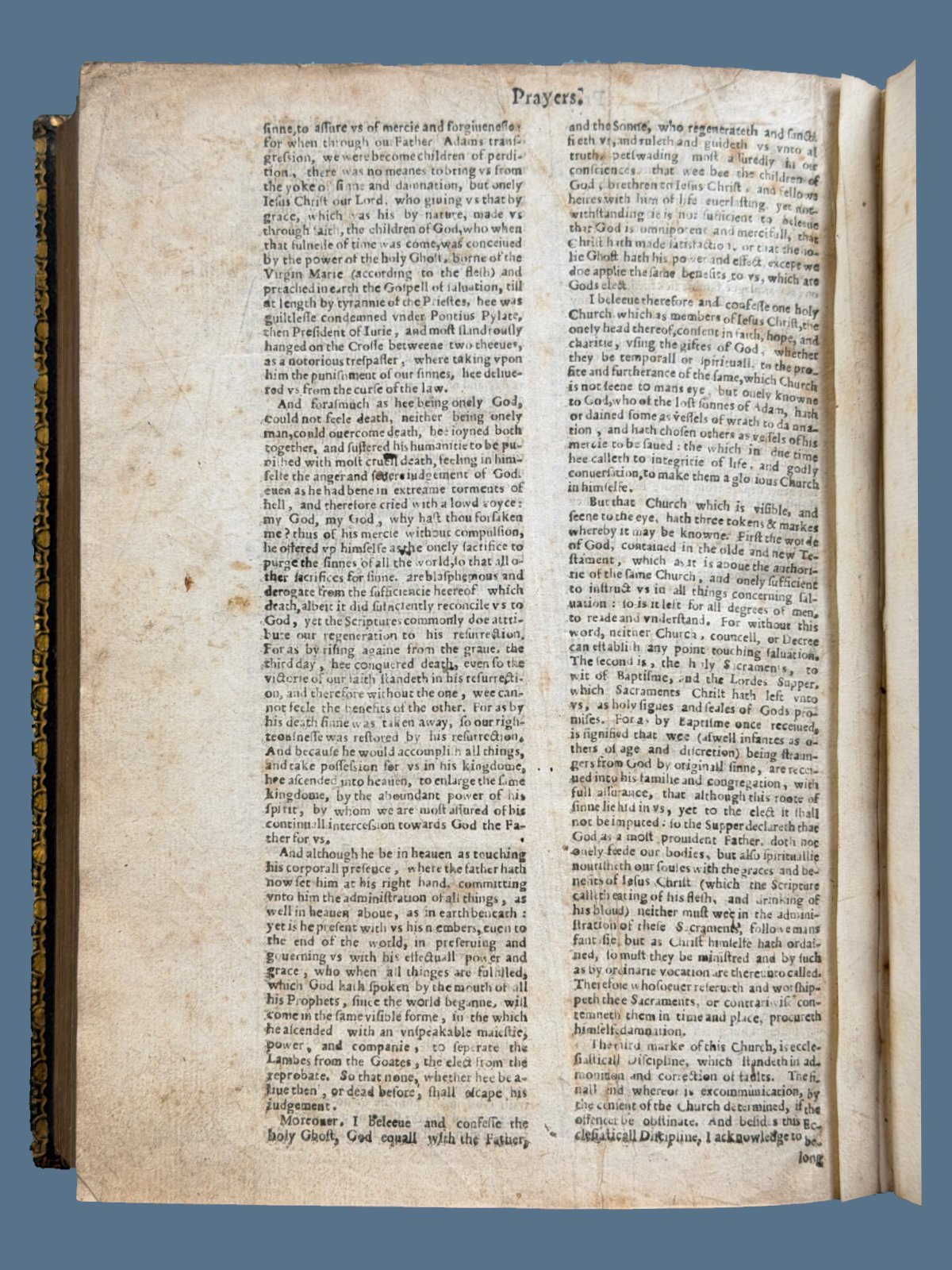 Image 20 of 20
The Bible, That is, the Holy Scriptures conteined in the old and new testament. Translated according to the Ebrew and Greeke, and conferred with the best translations in divers Languages. With most profitable Annotations…
Summary
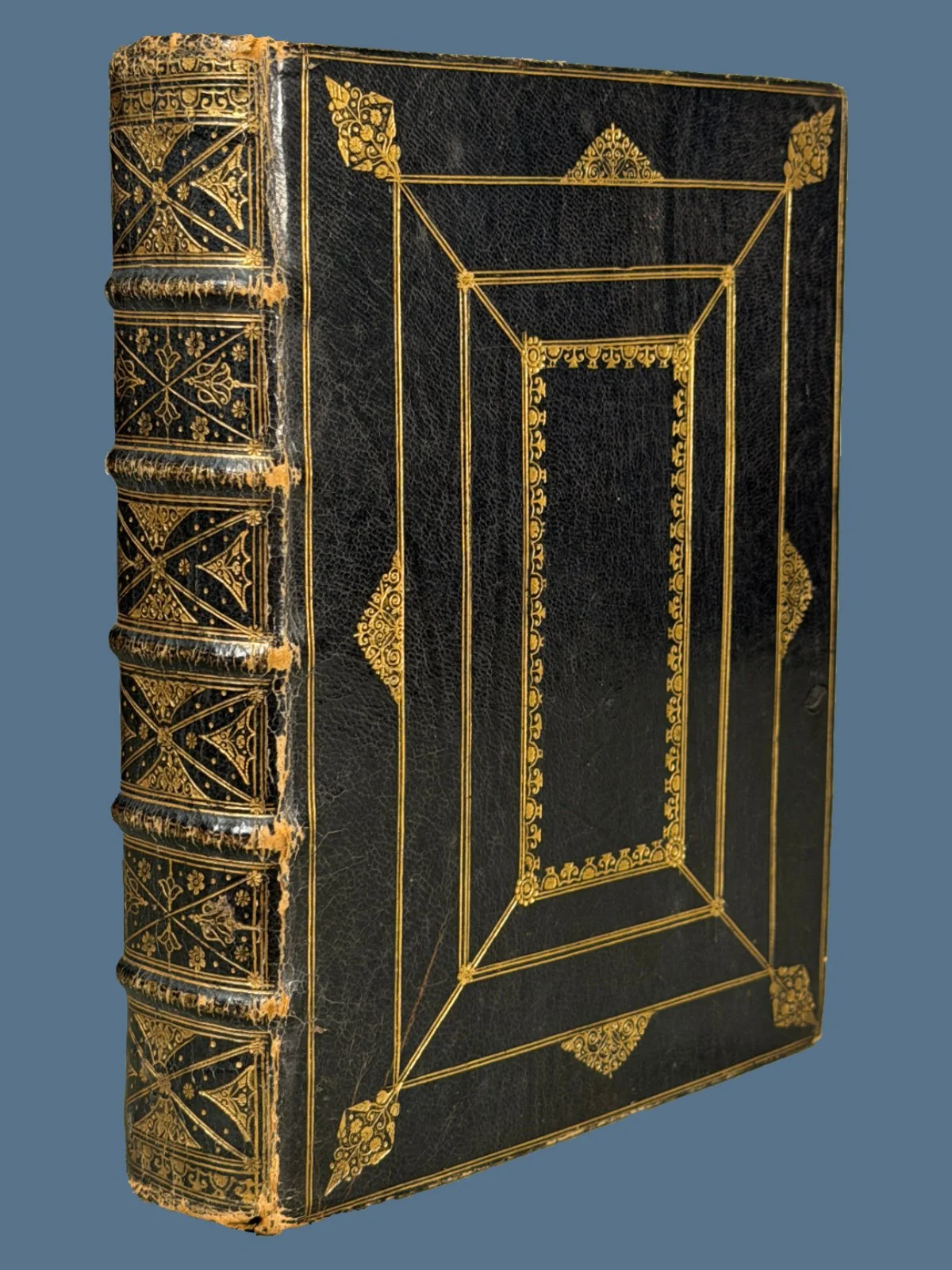
A complete quarto Geneva Bible in with all title pages and the complete set of illustrations and maps. Beautifully bound in late seventeenth century gilt-paneled goatskin.
Description
The general title page (1610) with woodcut border comprising twenty-four small compartments showing the tents of the twelve tribes as well as the figures of the twelve apostles. Text in two column Roman font with the full set of Geneva illustrations and maps. Title to the Second Part (n.d.) with decorated head- and tailpiece. Bound with the Apocrypha. New Testament title page (1610) with similar design as general title. John 6:67 reads “Then said Judas to the twelve” instead of “then said Jesus to the twelve.” Concludes with the Two Tables and dated colophon (1611). Bound with the Booke of Psalms with printed title page (1608). Woodcut first chapter initials and decorated head and tailpieces throughout..
Collation
[par]^4, A-Z^8, &^6, Aa-Yy^8, Zz^10 (Old Testament); Aaa-Qqq^8, Rrr^4 (New Testament). Bible text complete with both title pages.
Binding
Late seventeenth century black morocco. Covers triple paneled in gilt with corner fleurons, and gilt rolls. Spine with five raised bands and extensive gilt tooling to compartments. Inner dentelles. All edges gilt. Marbled endpapers.
Condition
Text is clean and bright throughout with good margins; Lightly rubbed; Psalter lacks the final leaf of Prayers, as common; a near fine copy of a stunning Geneva Bible. Eighteenth century family records of John and Sarah Capps to front endpapers.
Note
A lovely Geneva Bible with the sought-after Judas misprint. Collectors and bibliographers note such errors with special interest and misprints are highly collectible. As with the famous “Vinegar Bible” (1717), where a single word slip turned “The Parable of the Vineyard” into “The Parable of the Vinegar,” these typographical accidents have become part of the charm and lore of Bible printing history.
References
Herbert 306; STC 2212.