 Image 1 of 29
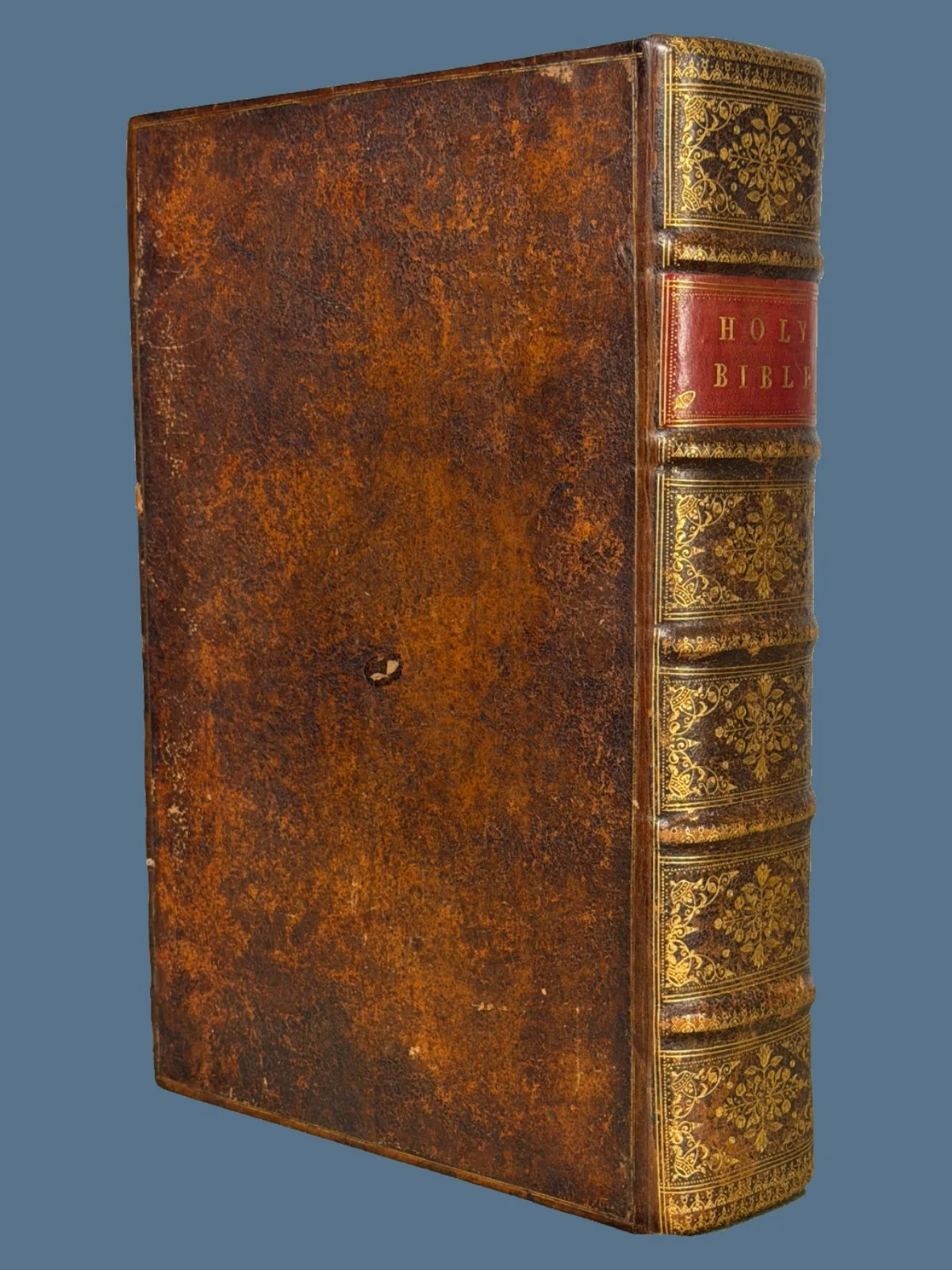 Image 2 of 29
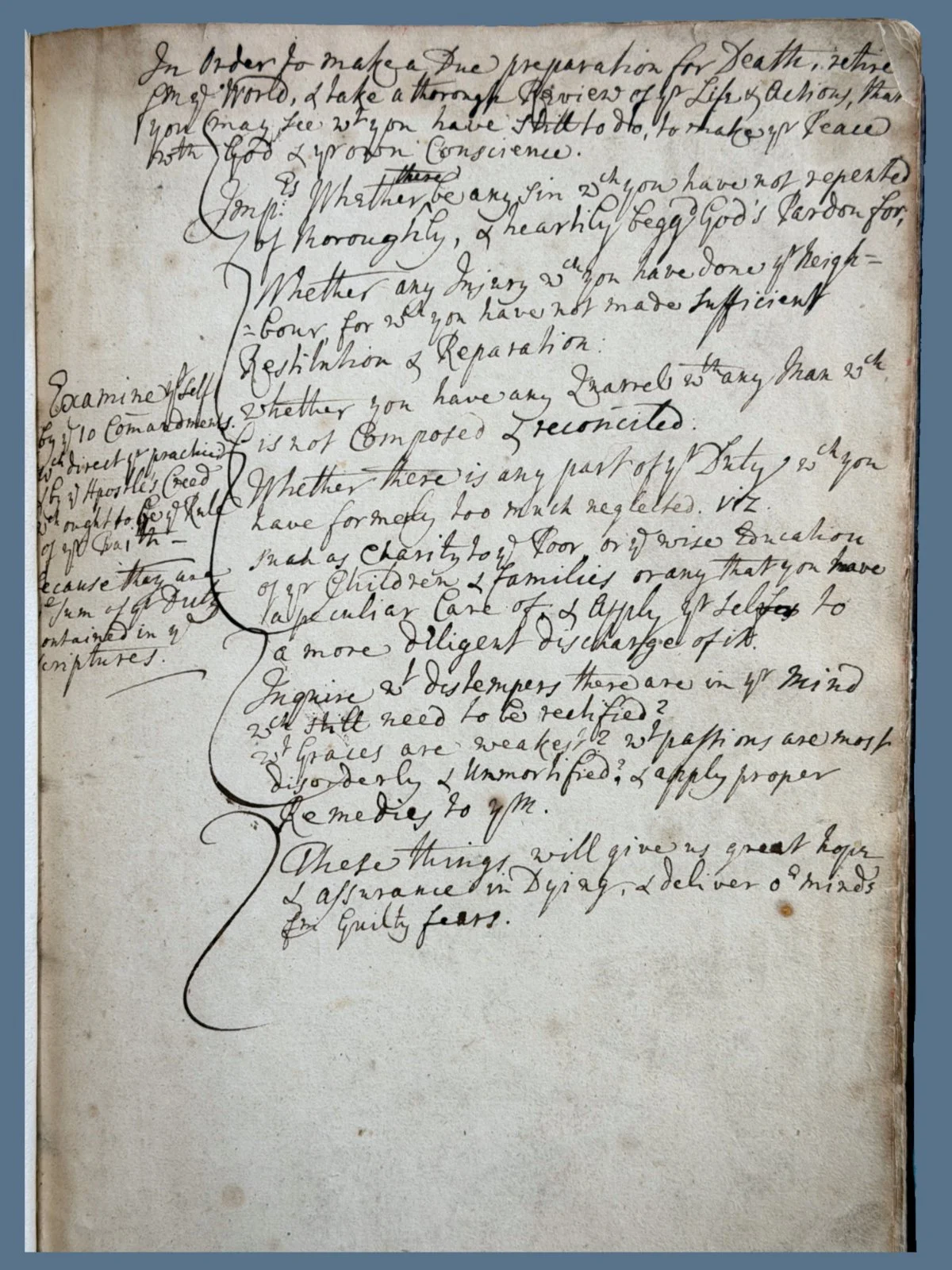 Image 3 of 29
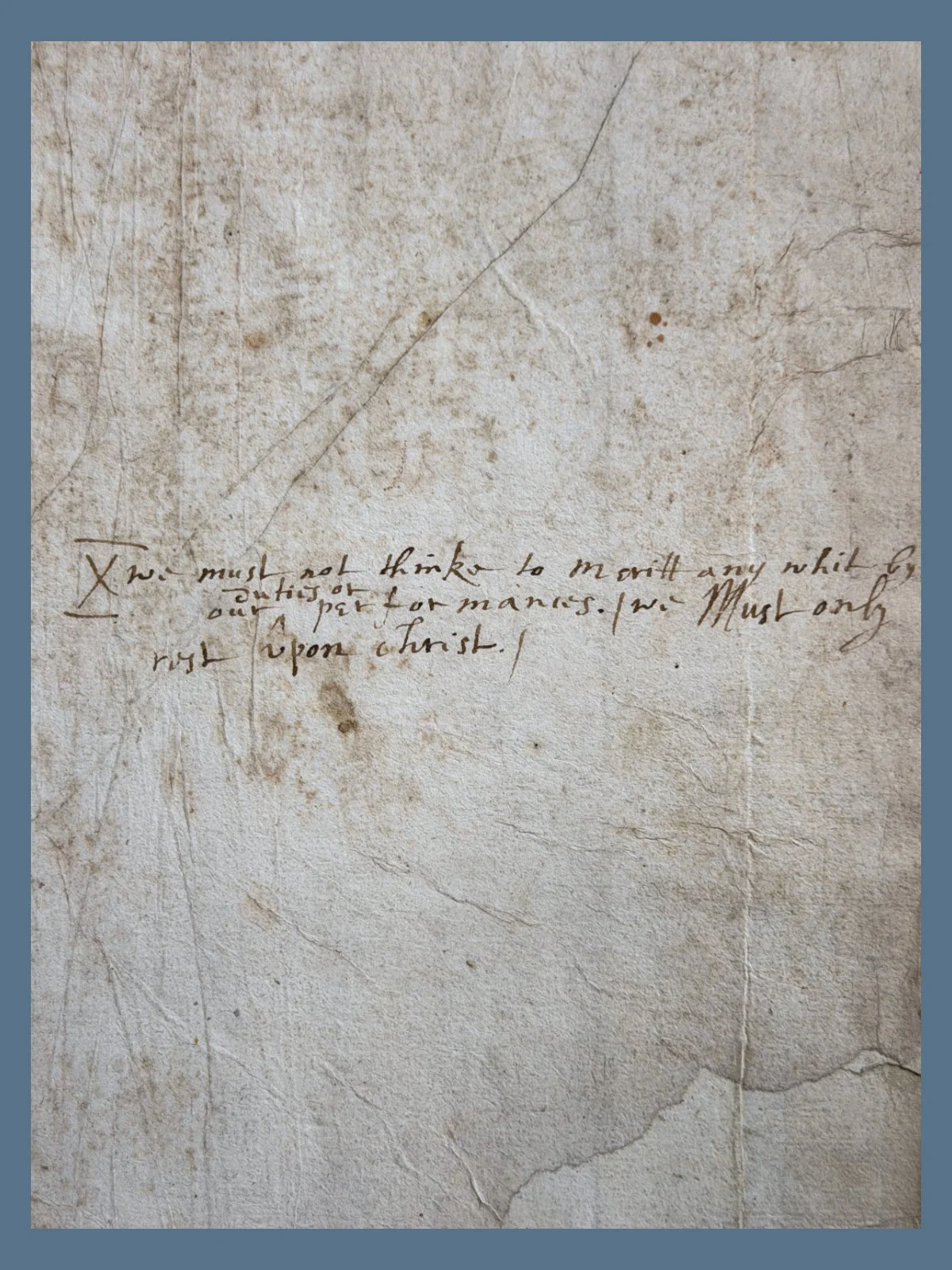 Image 4 of 29
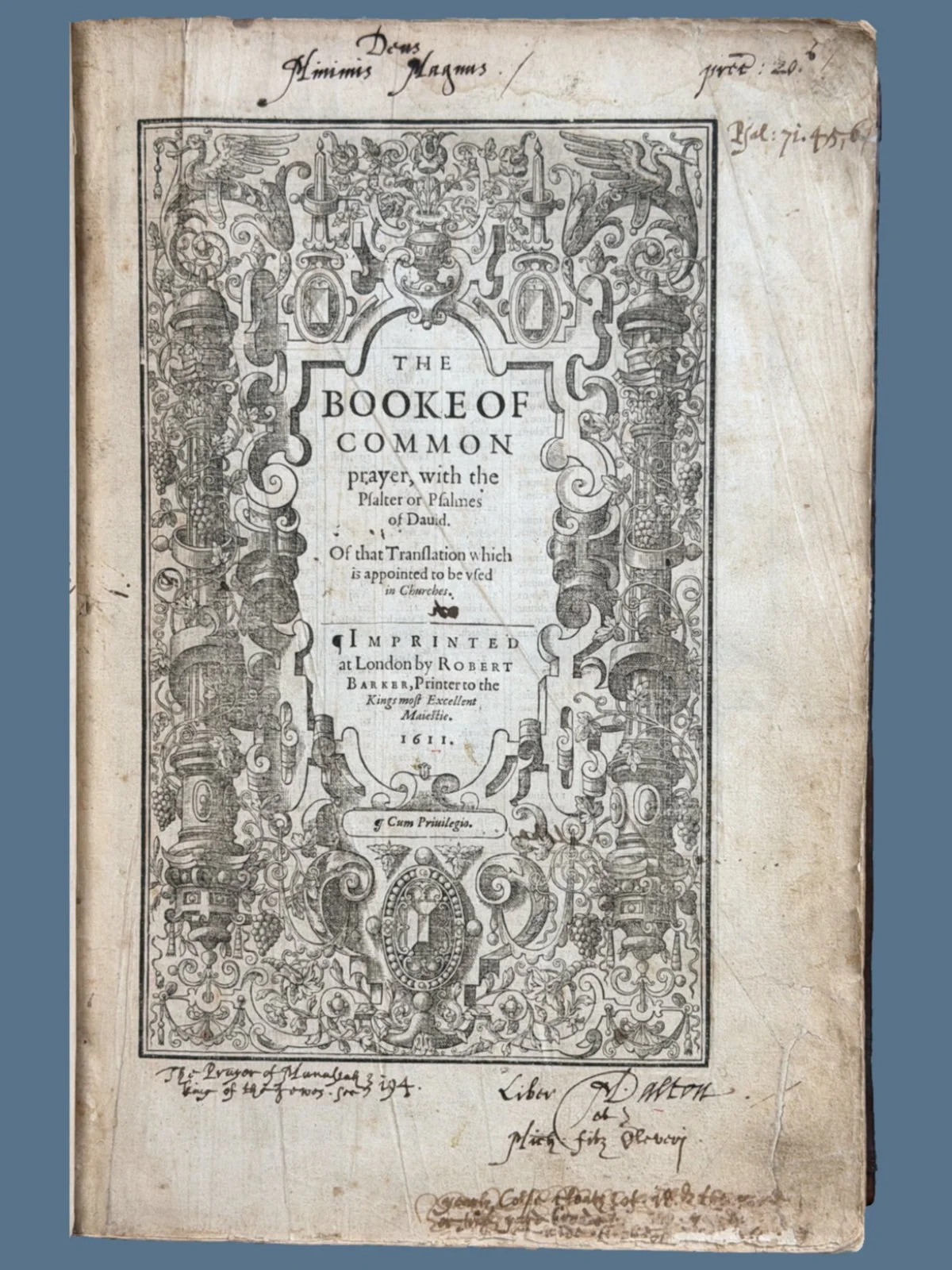 Image 5 of 29
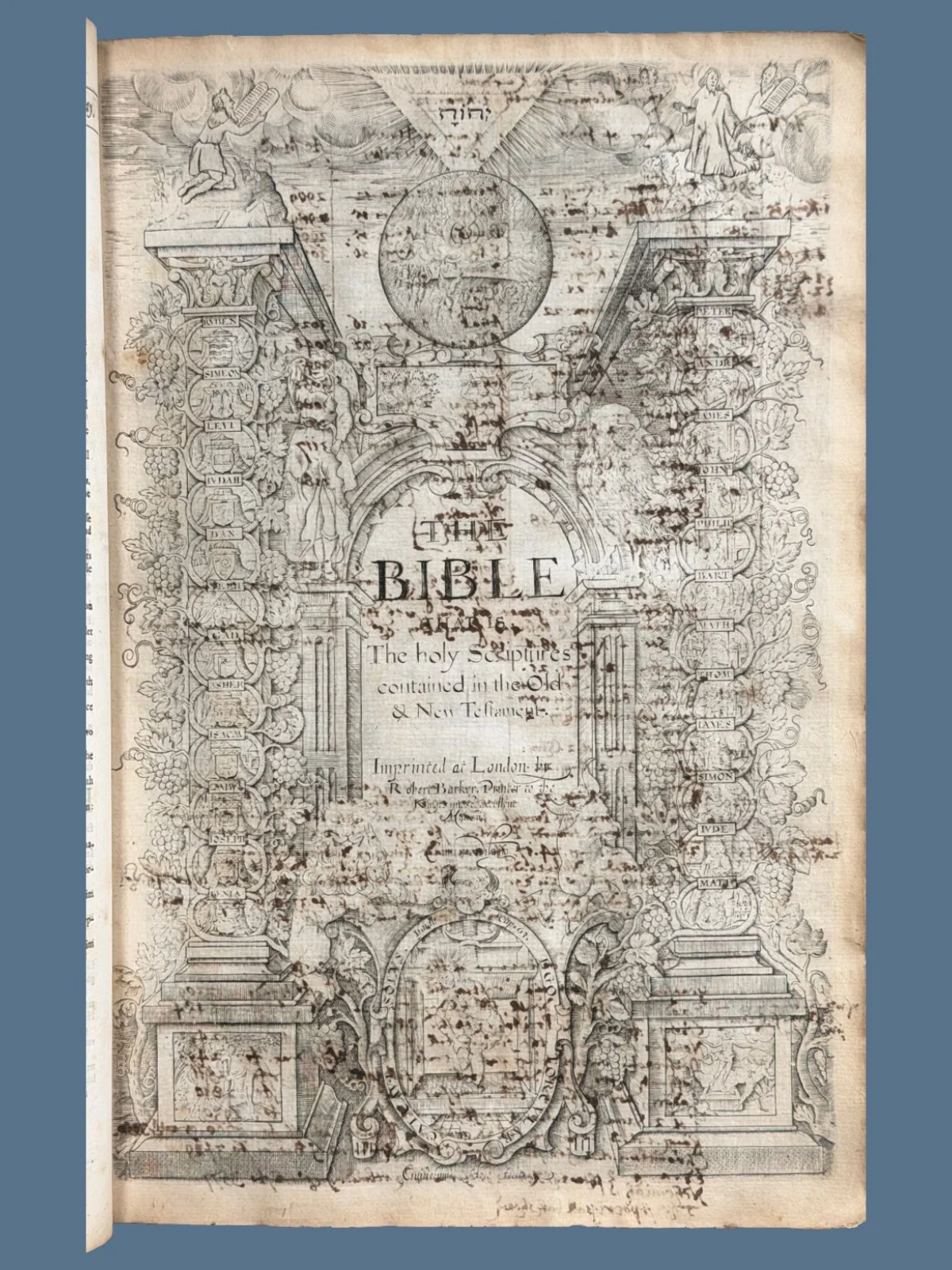 Image 6 of 29
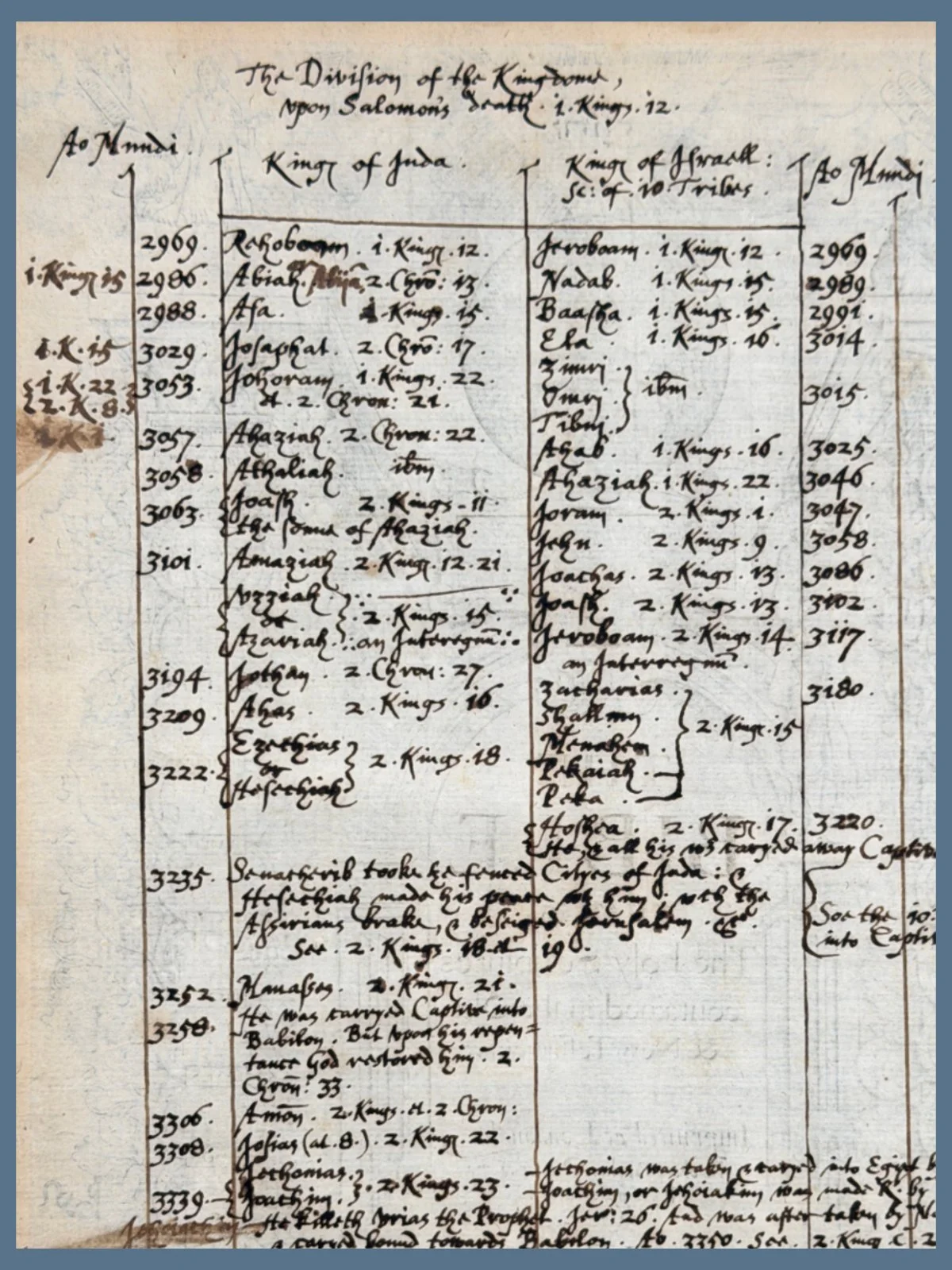 Image 7 of 29
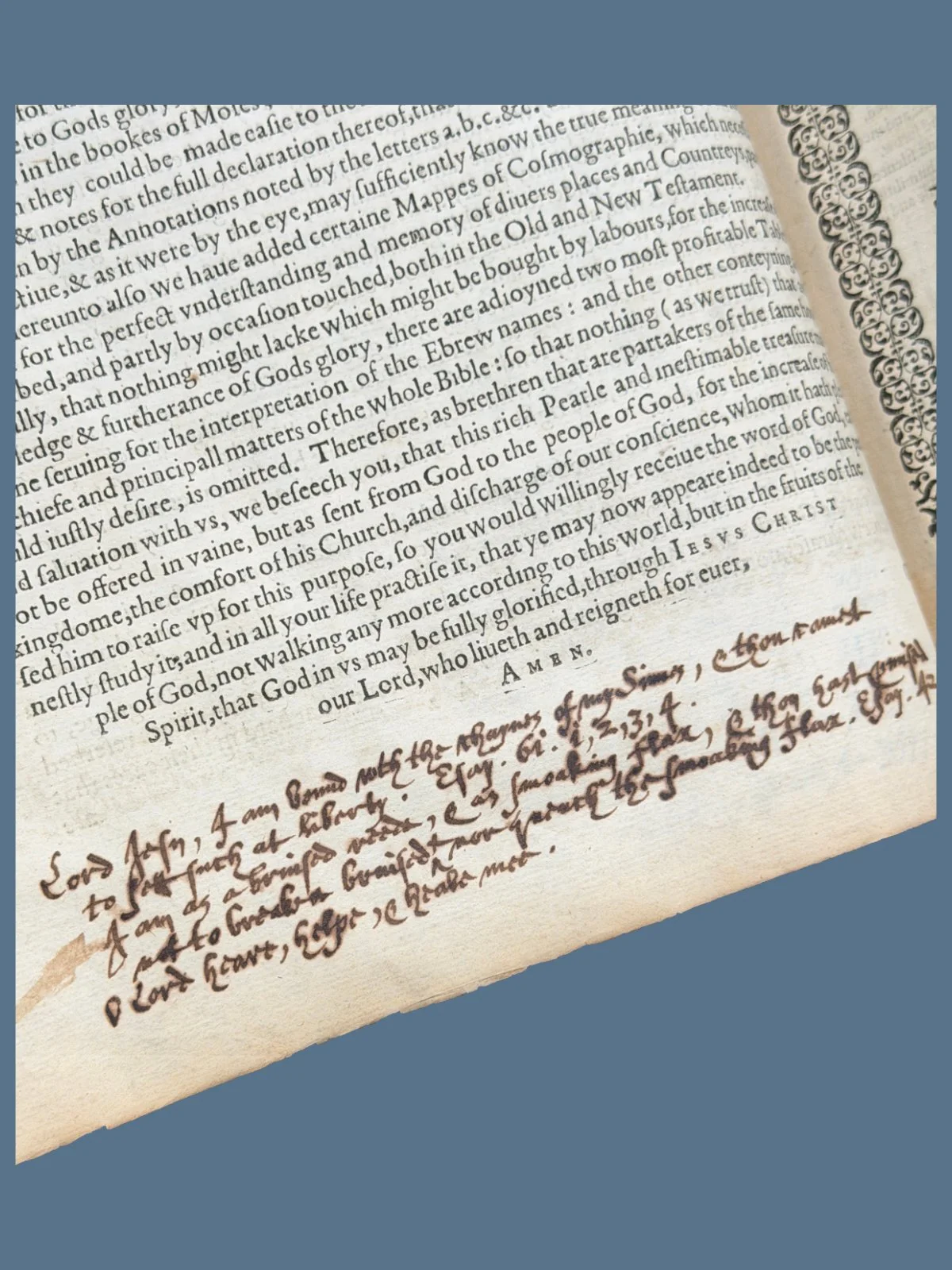 Image 8 of 29
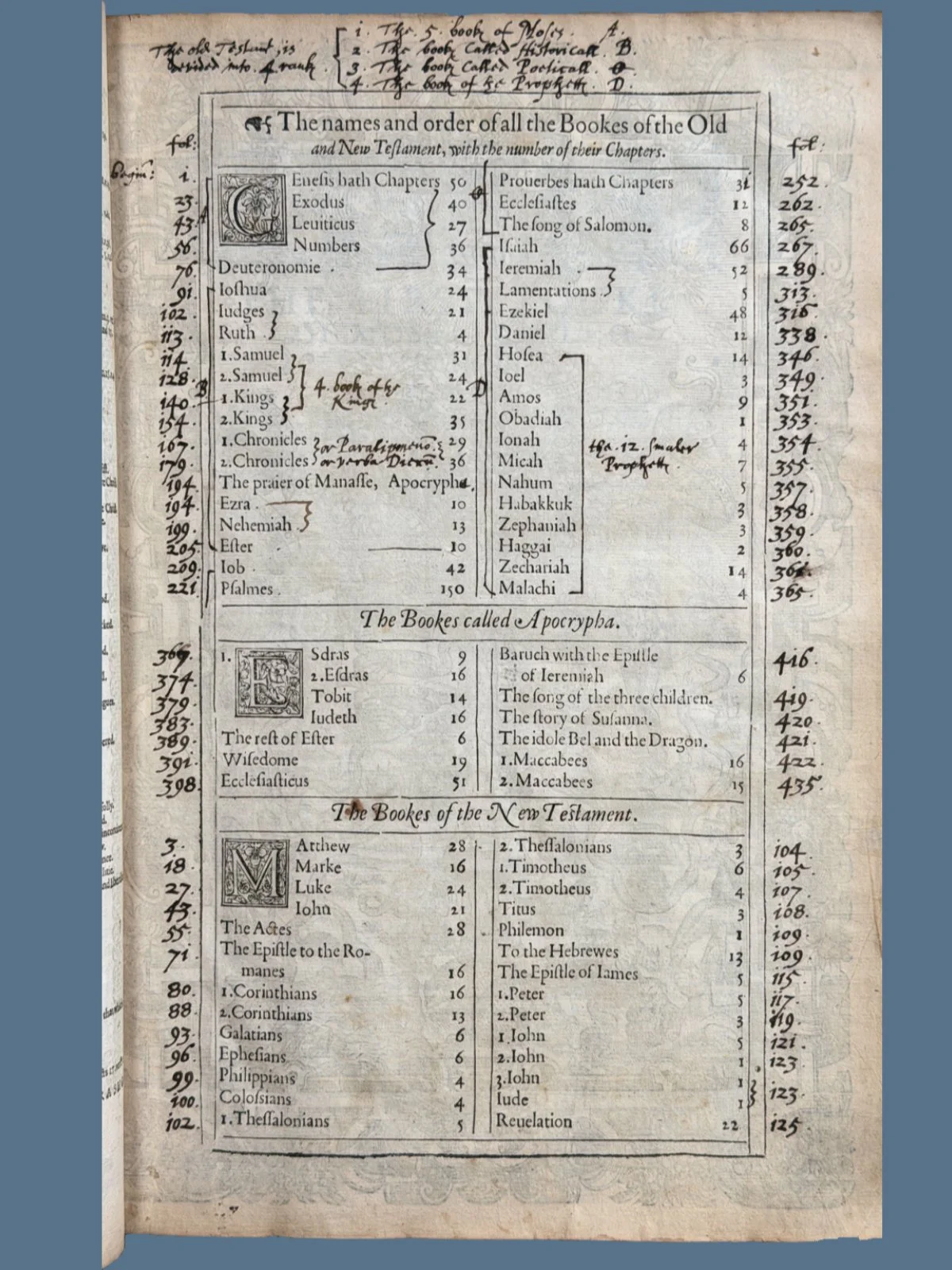 Image 9 of 29
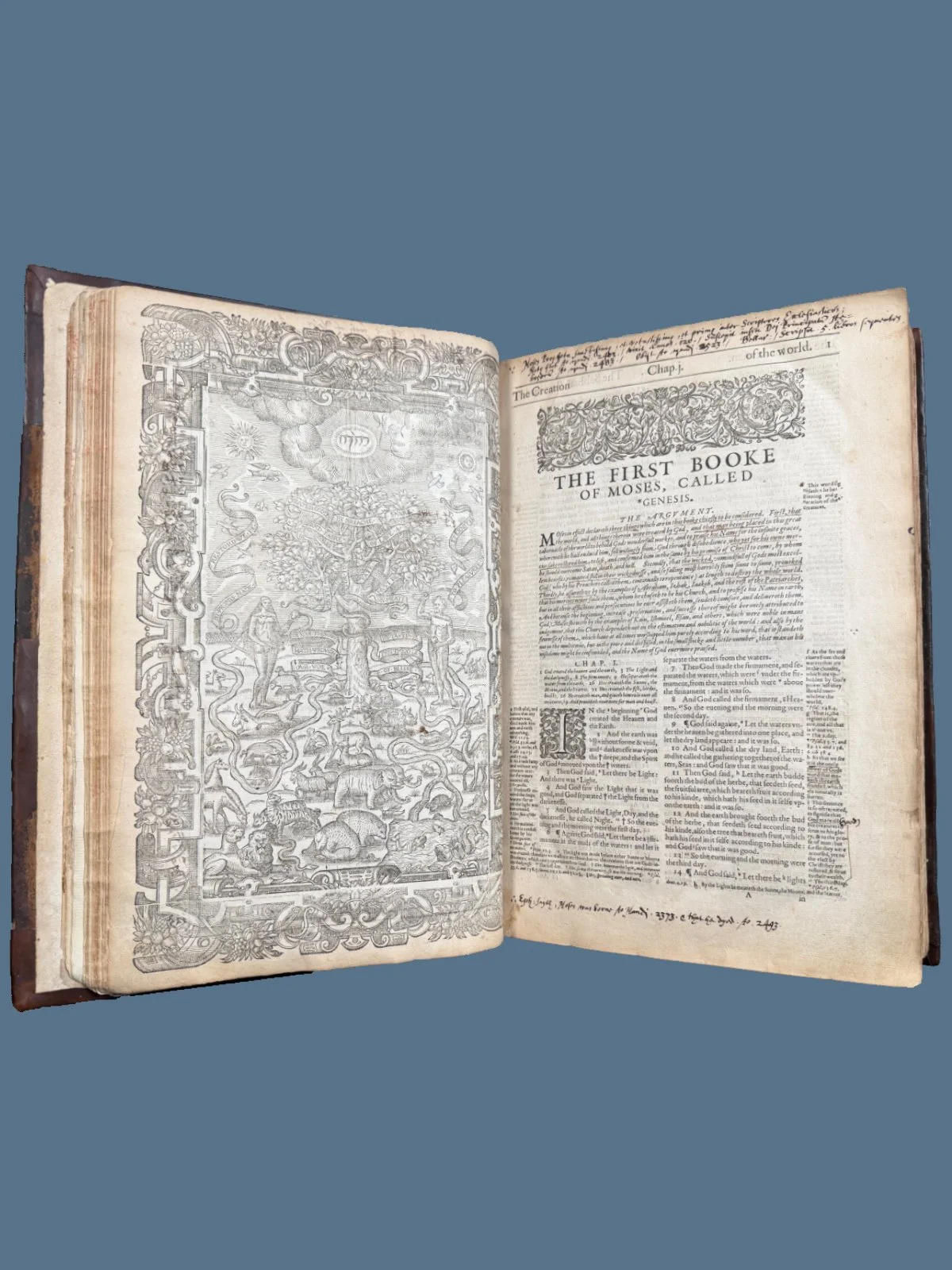 Image 10 of 29
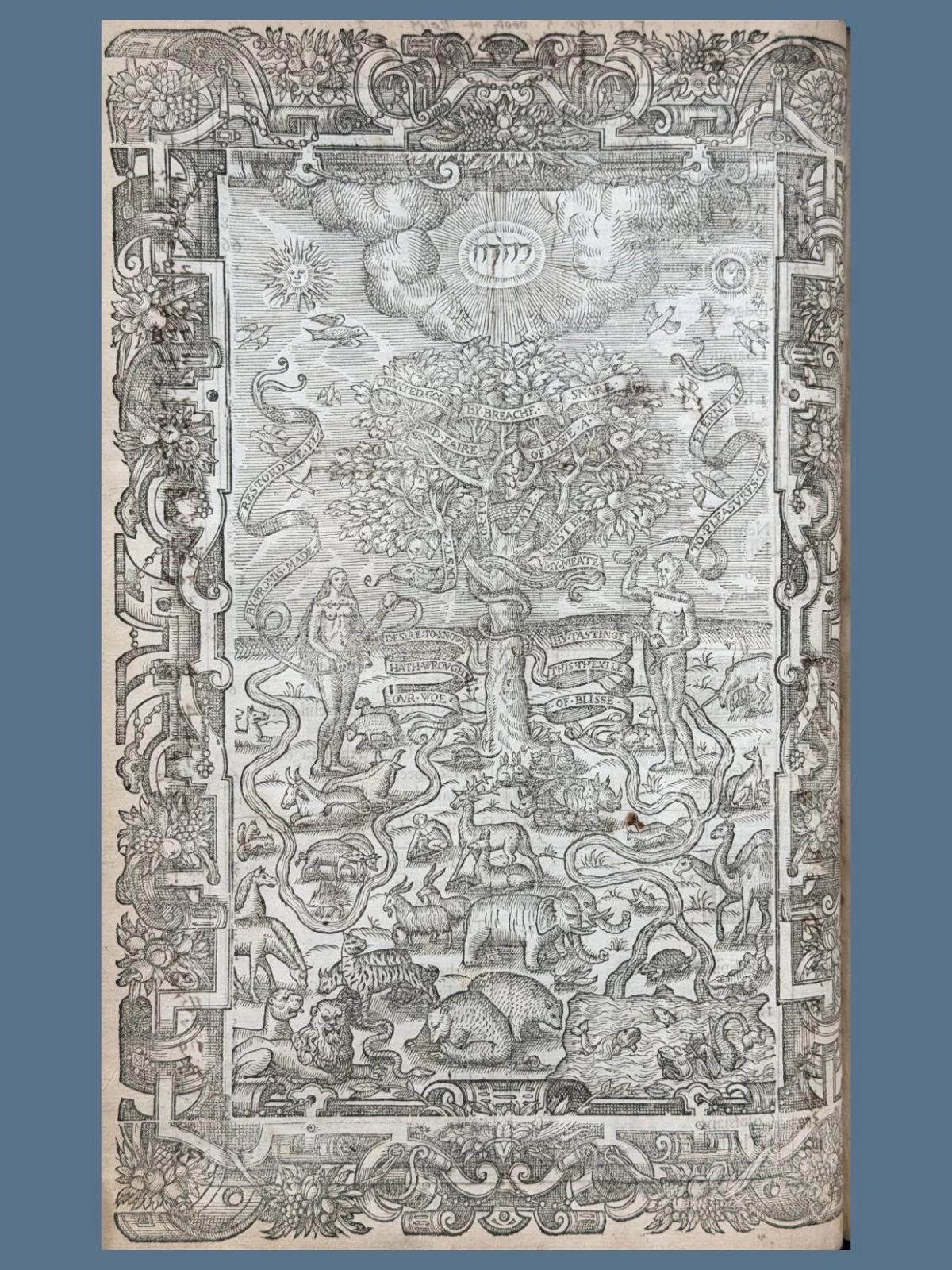 Image 11 of 29
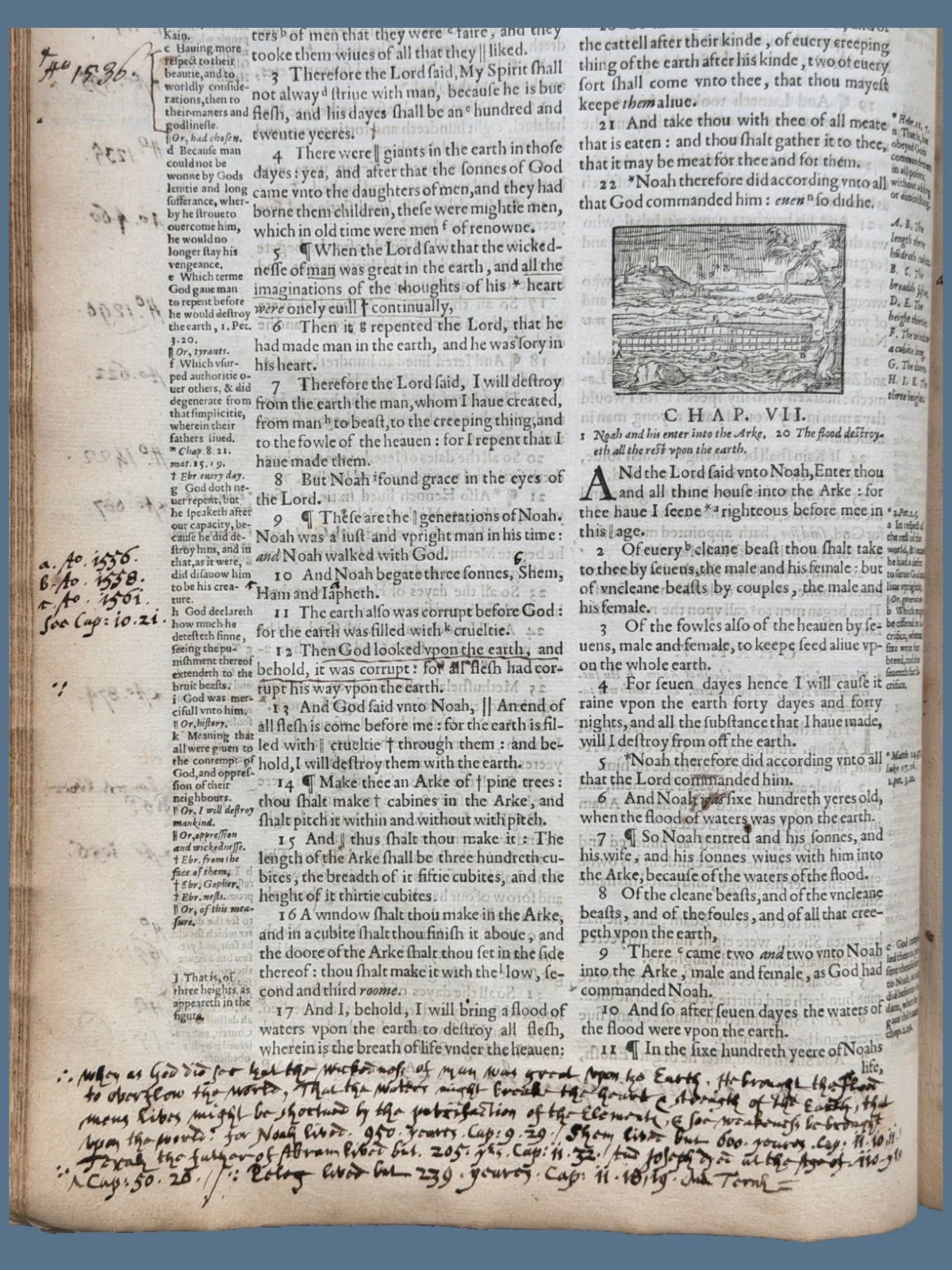 Image 12 of 29
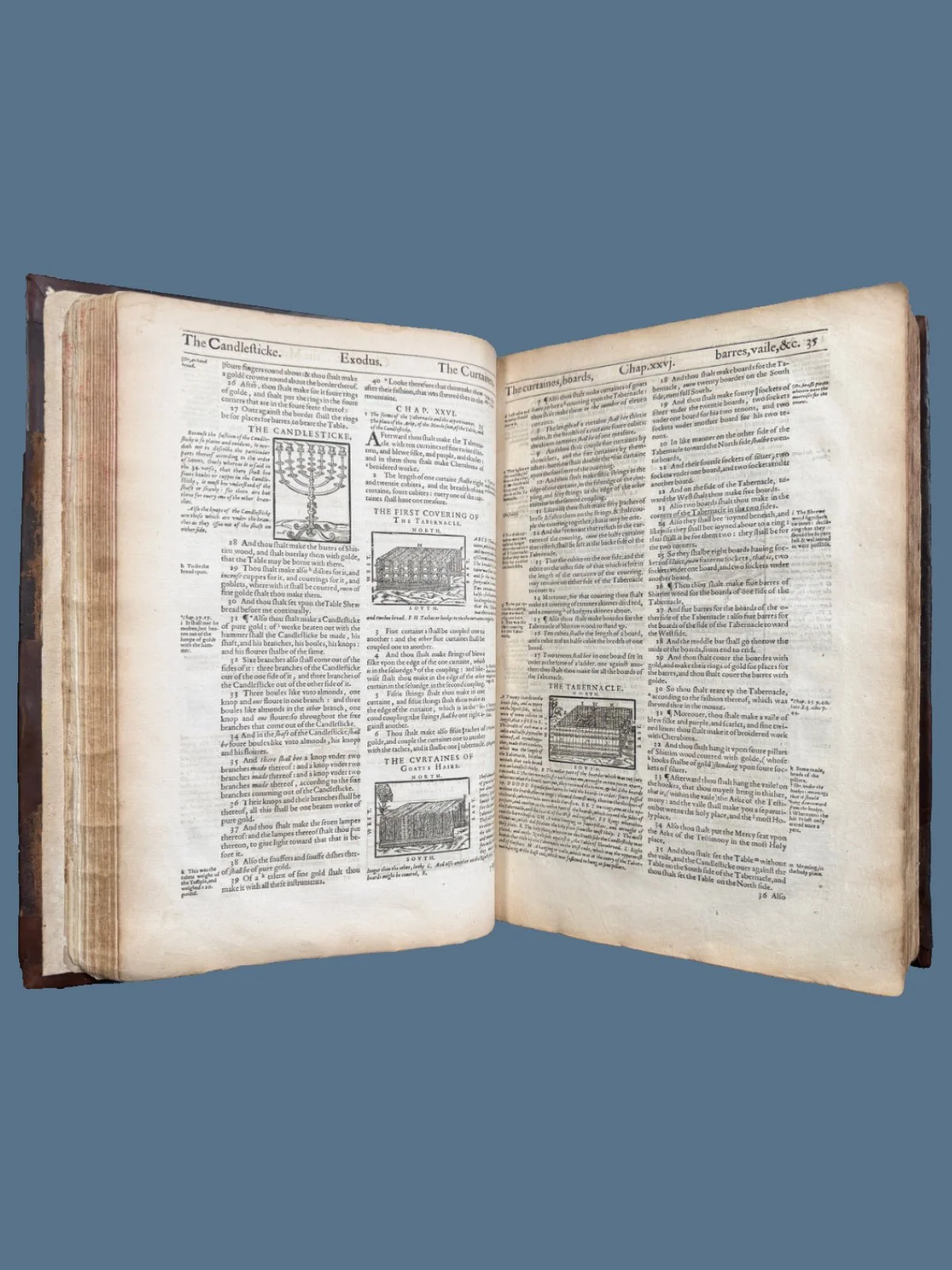 Image 13 of 29
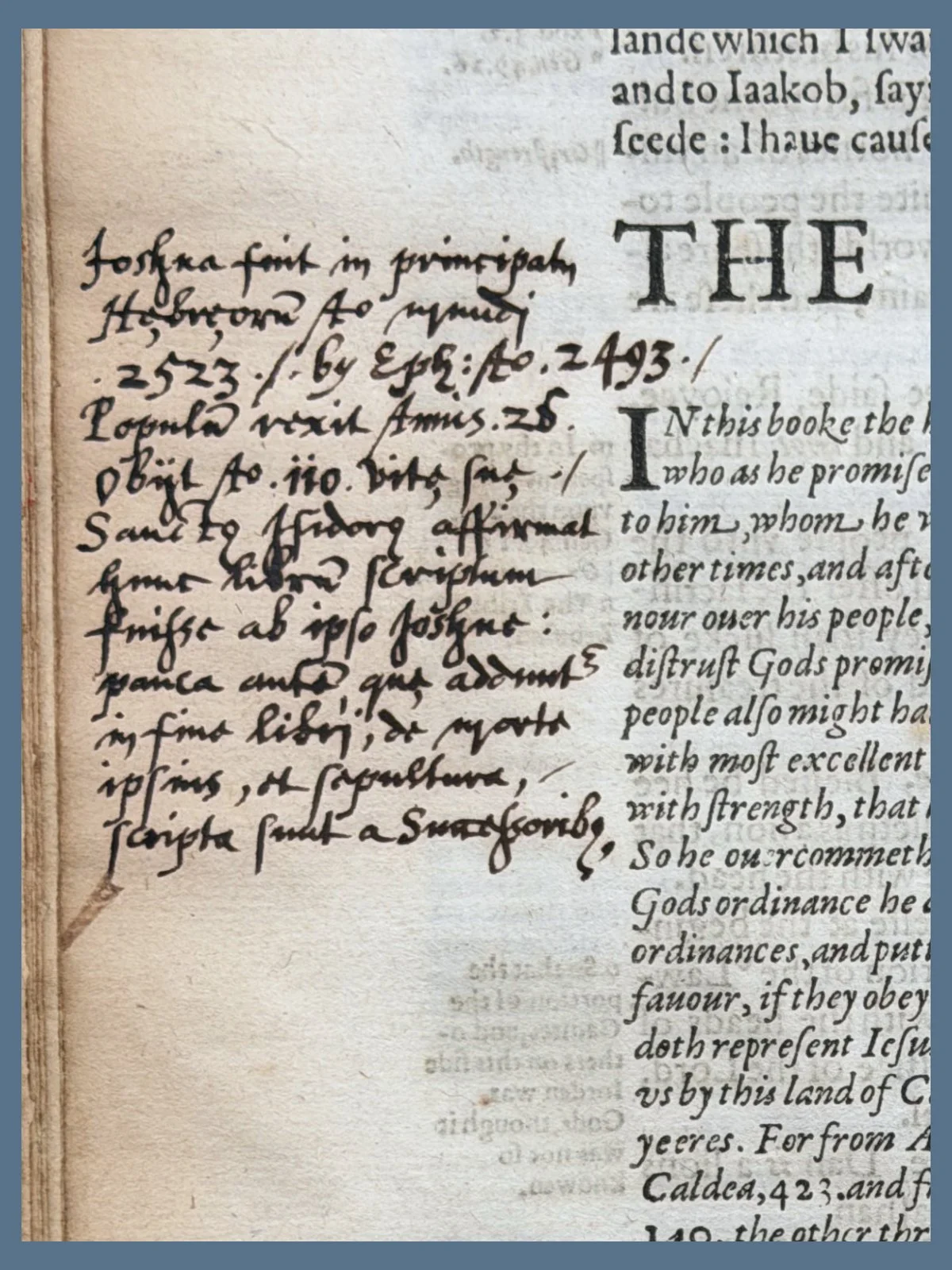 Image 14 of 29
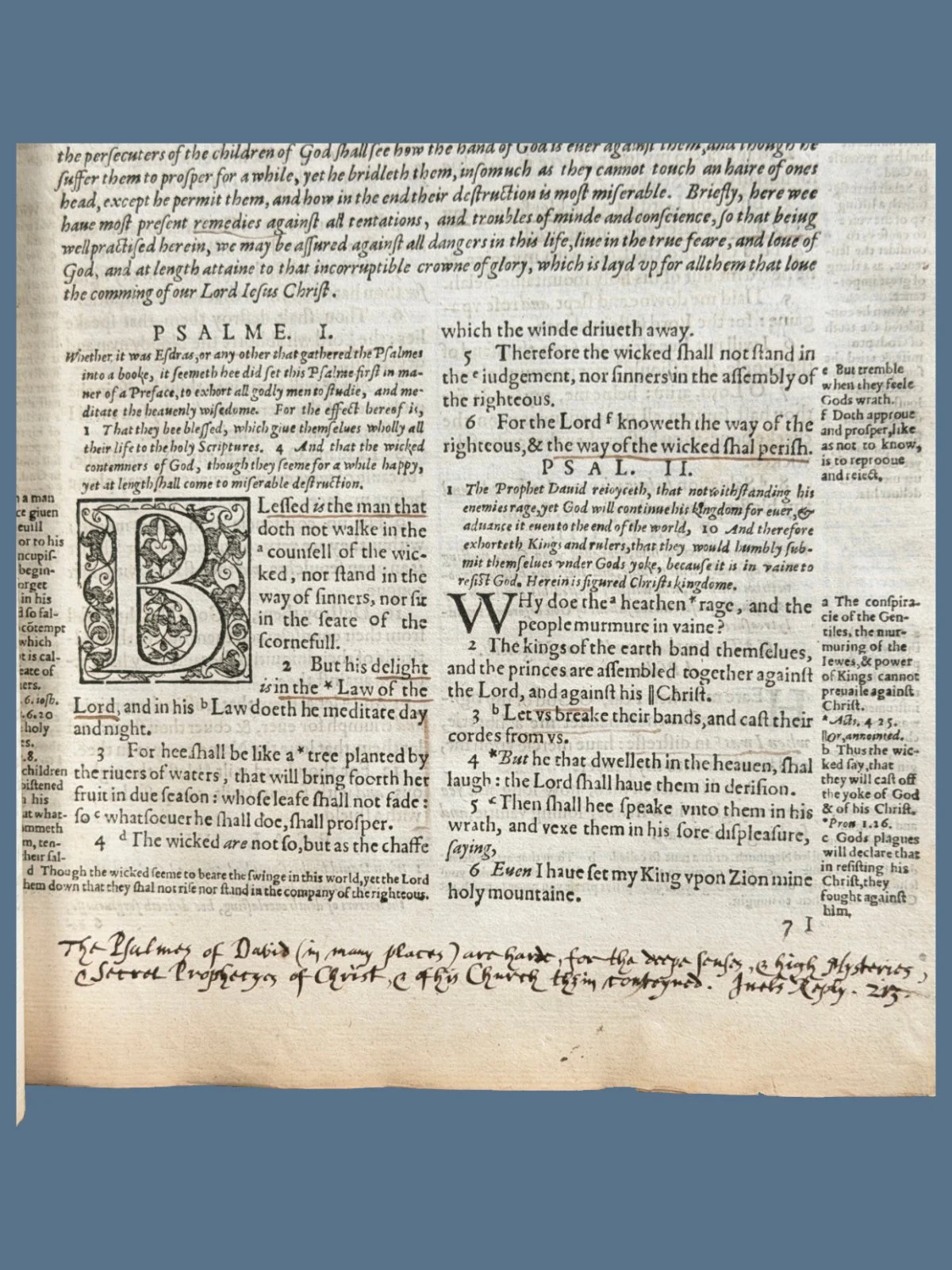 Image 15 of 29
 Image 16 of 29
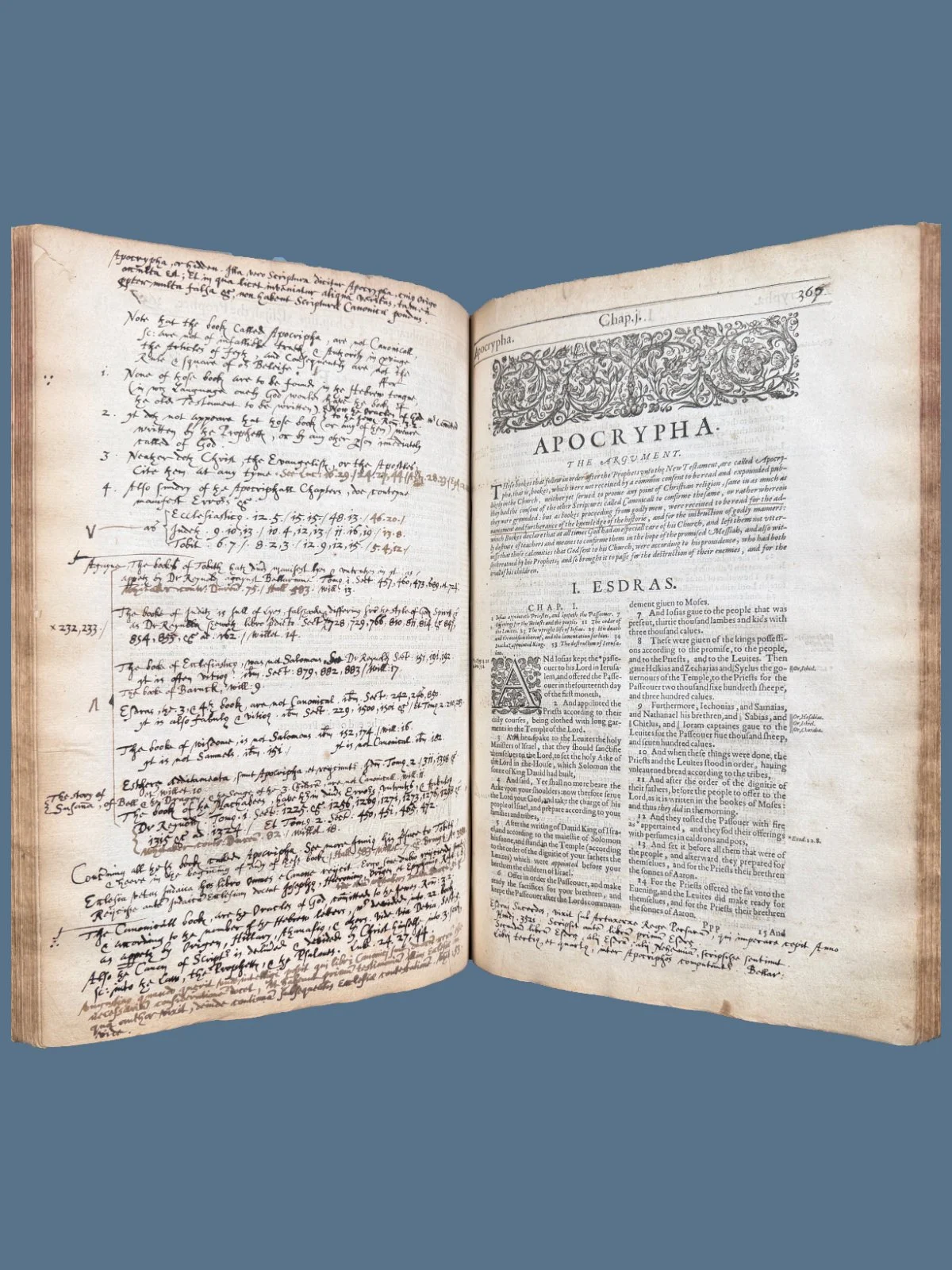 Image 17 of 29
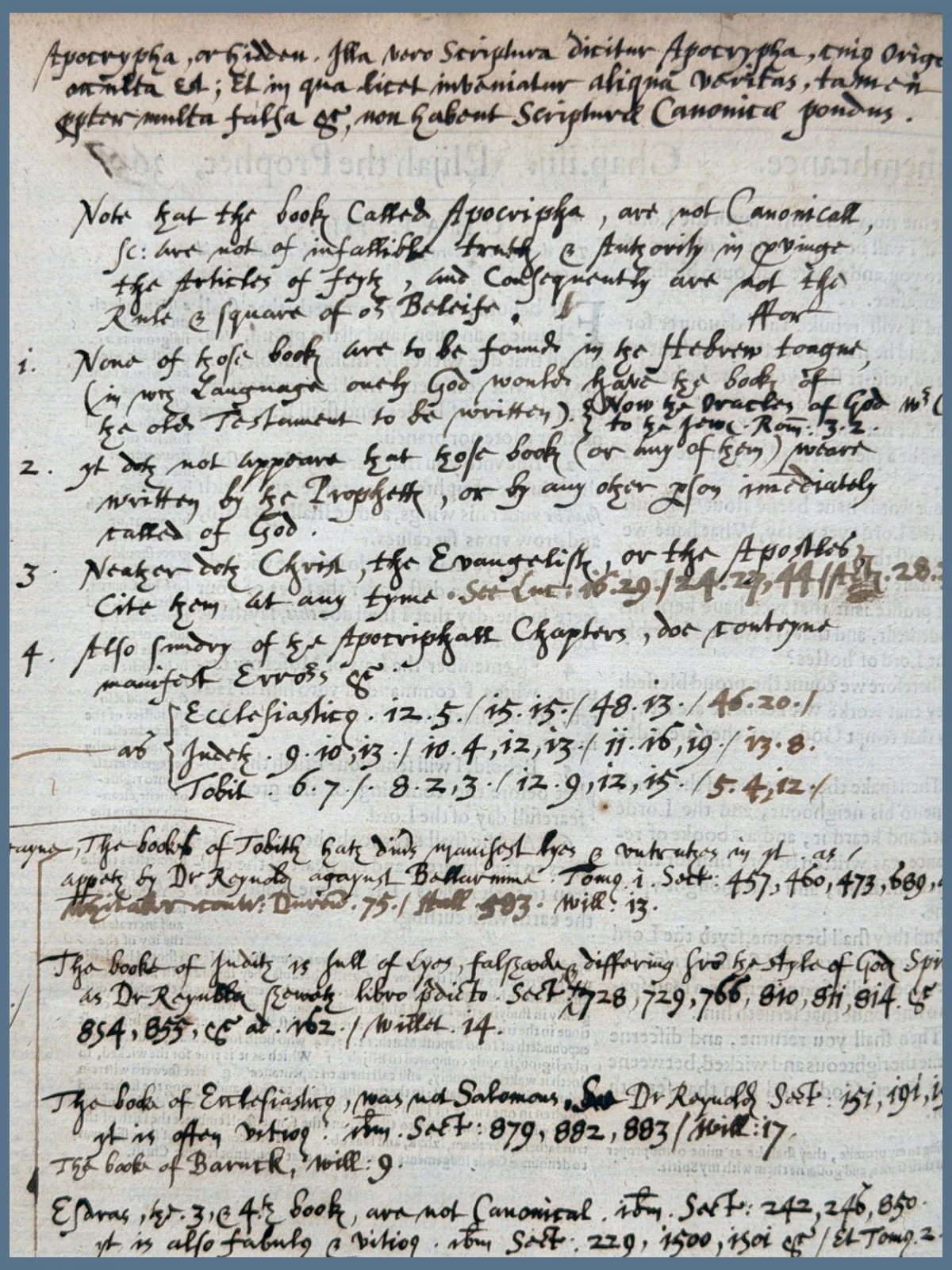 Image 18 of 29
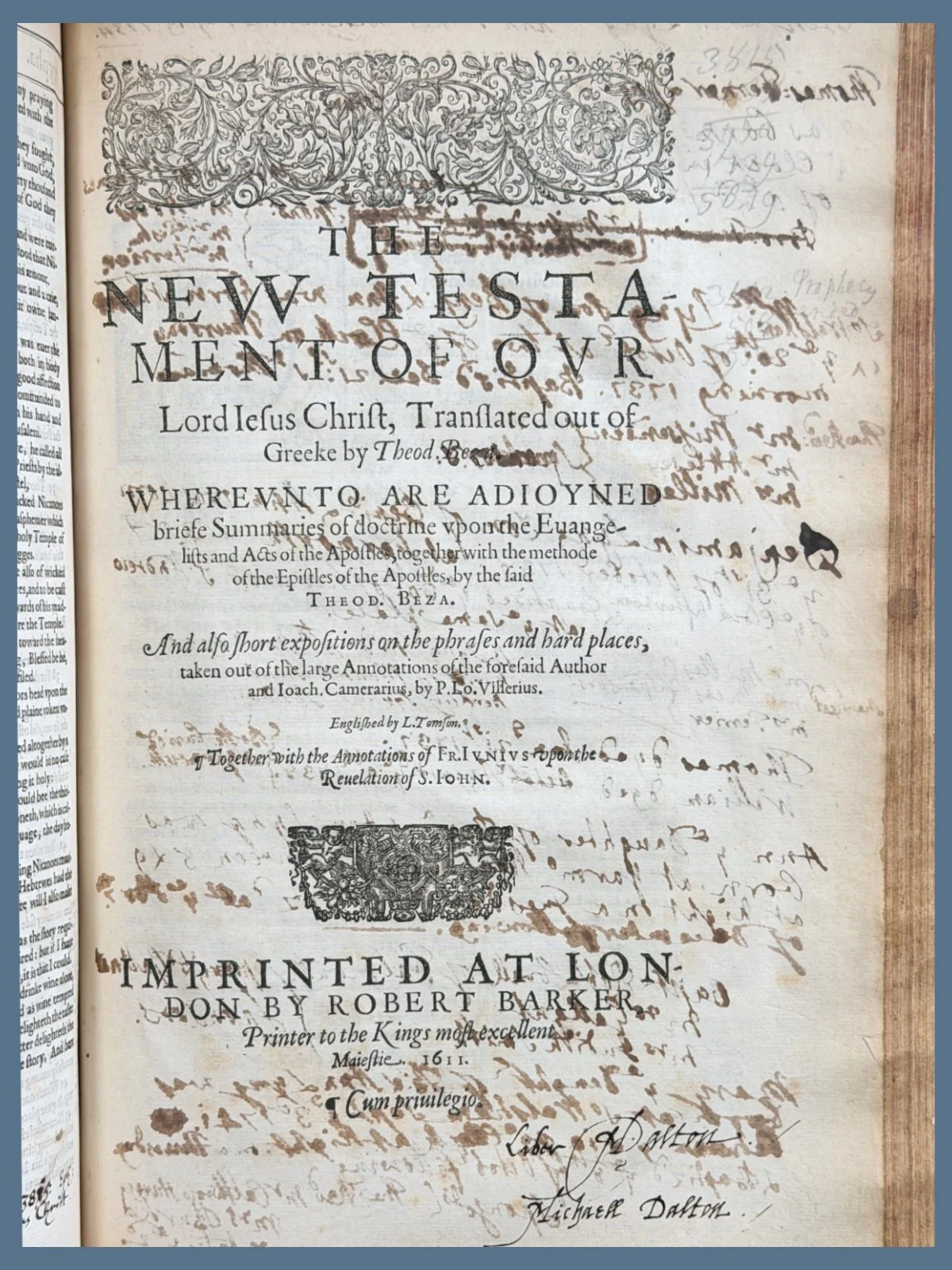 Image 19 of 29
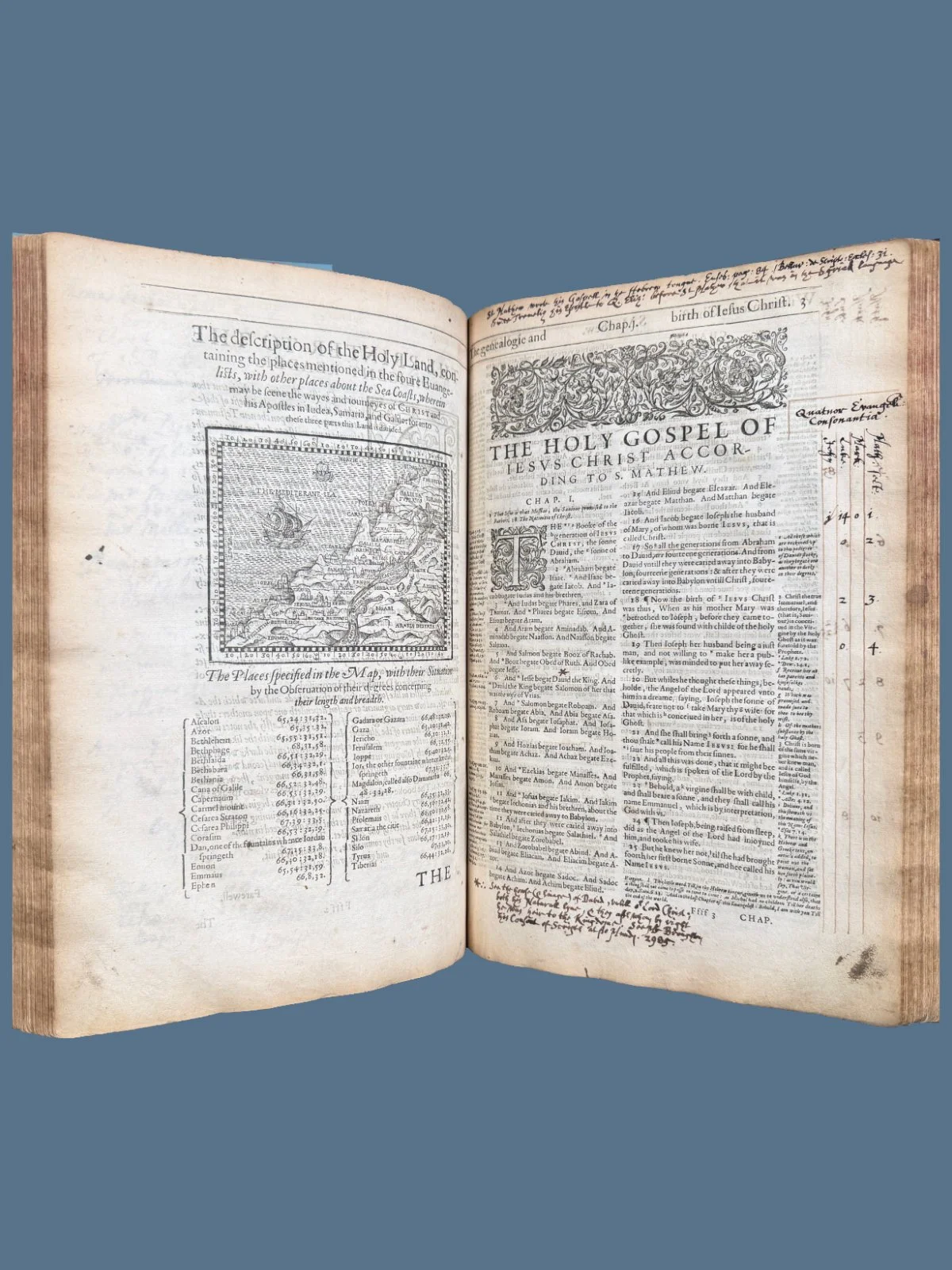 Image 20 of 29
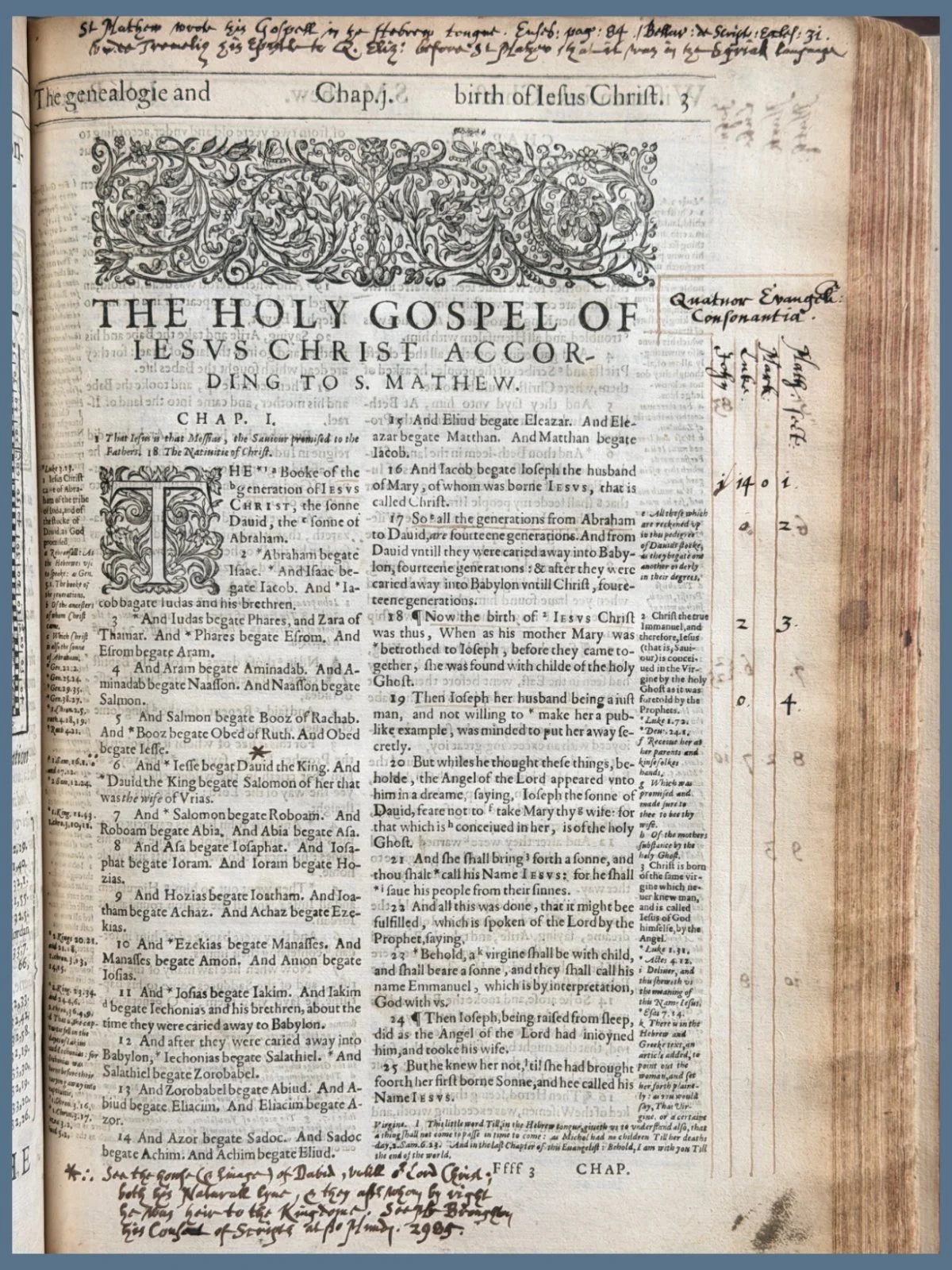 Image 21 of 29
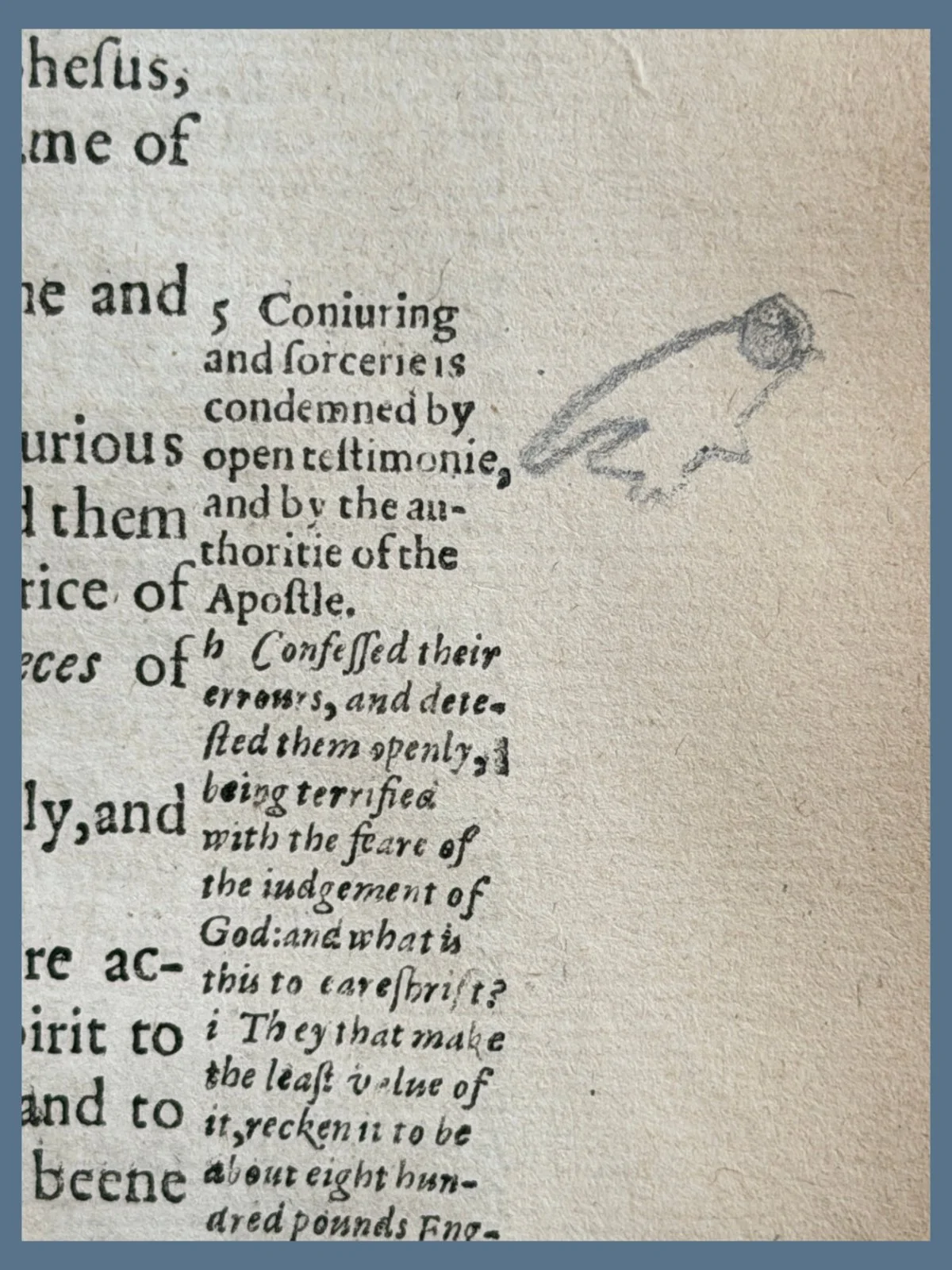 Image 22 of 29
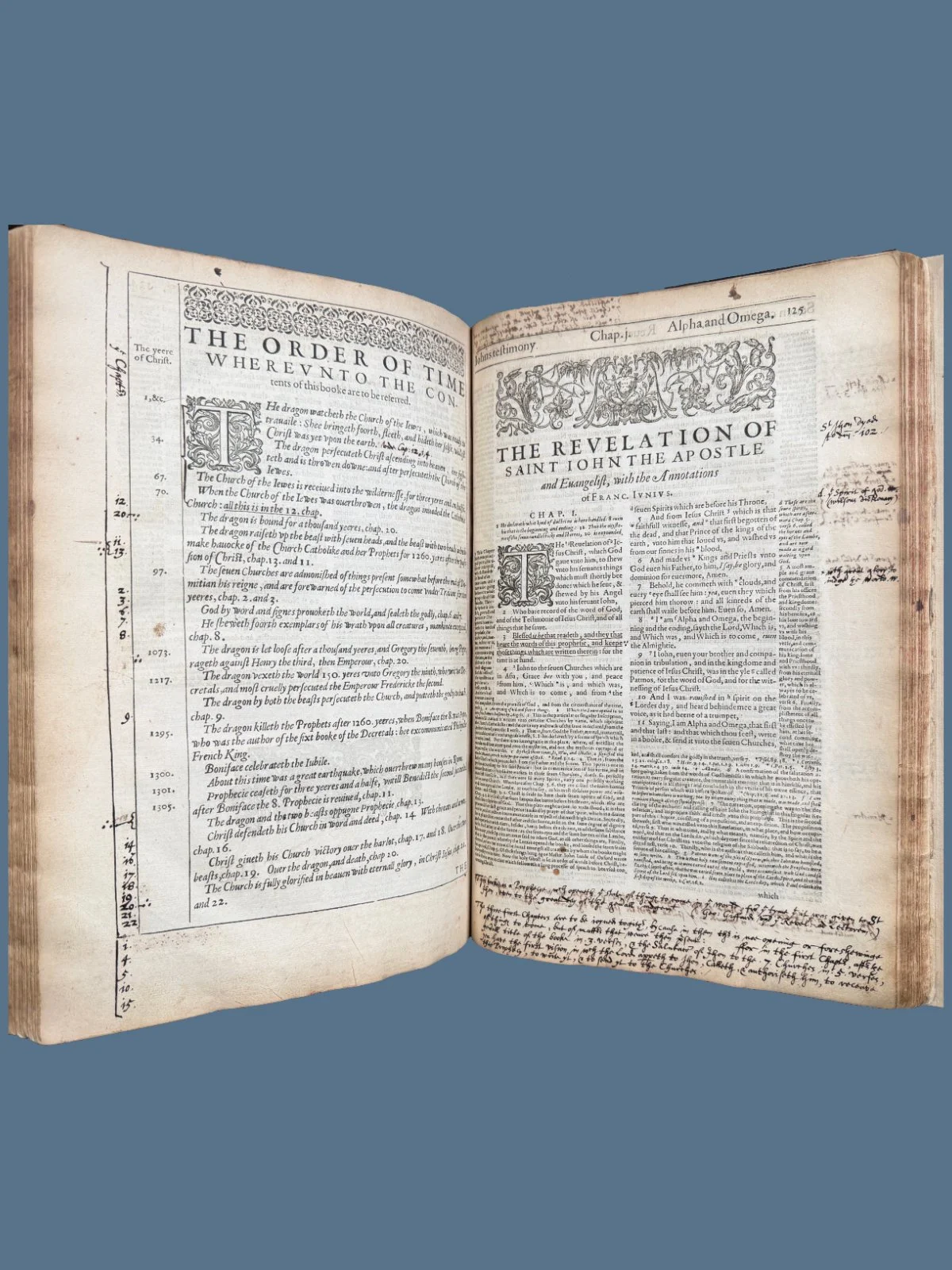 Image 23 of 29
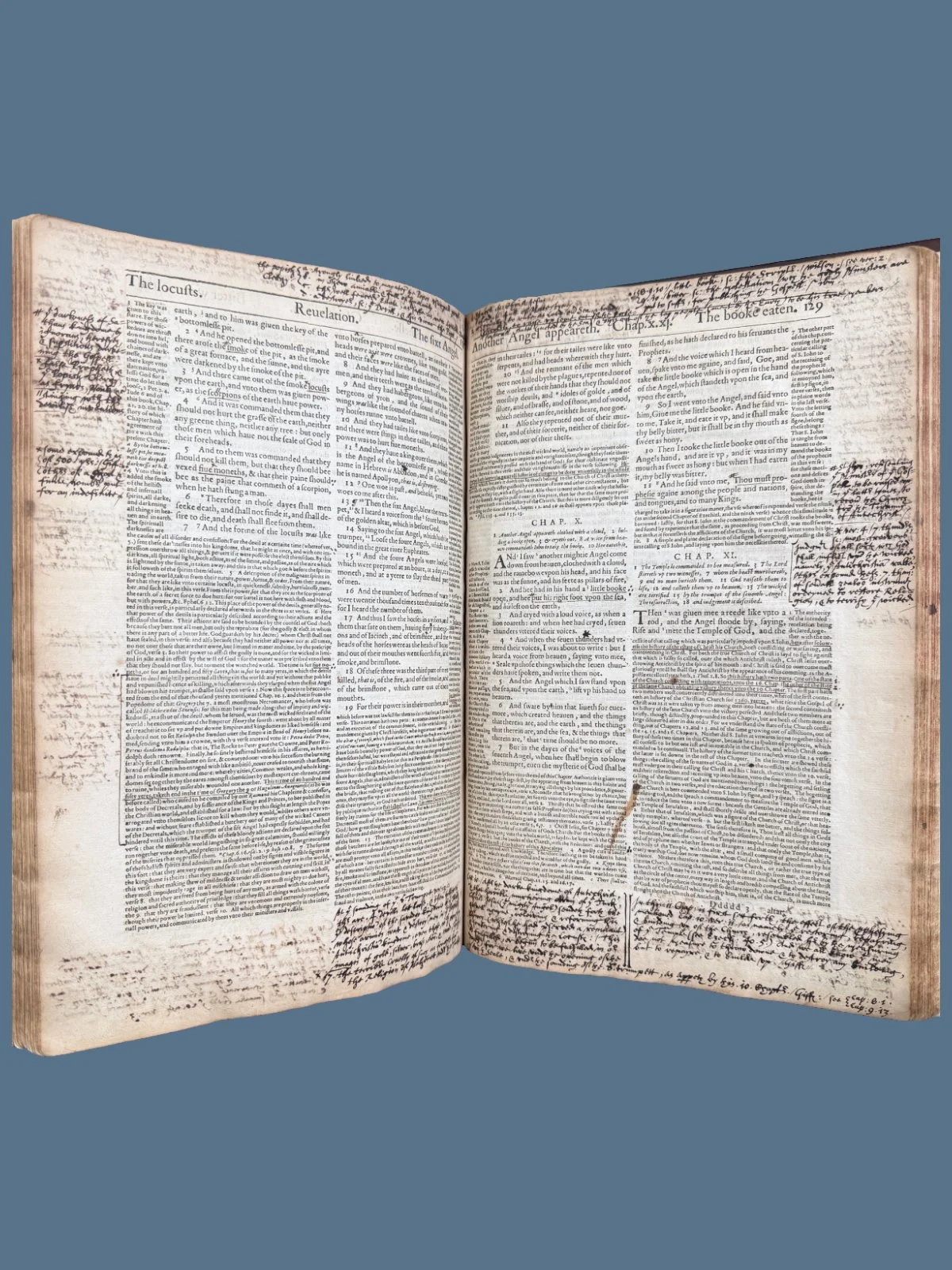 Image 24 of 29
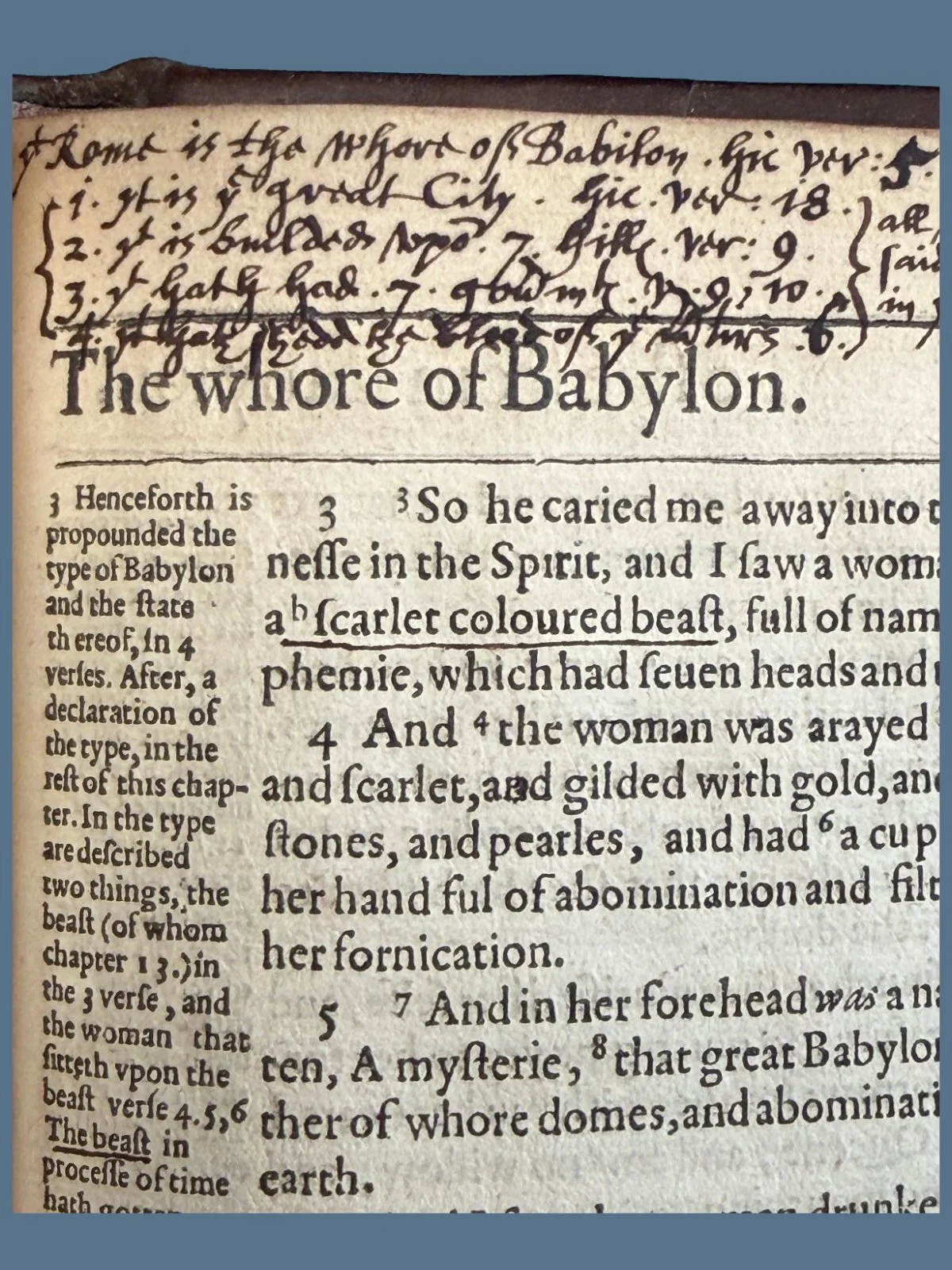 Image 25 of 29
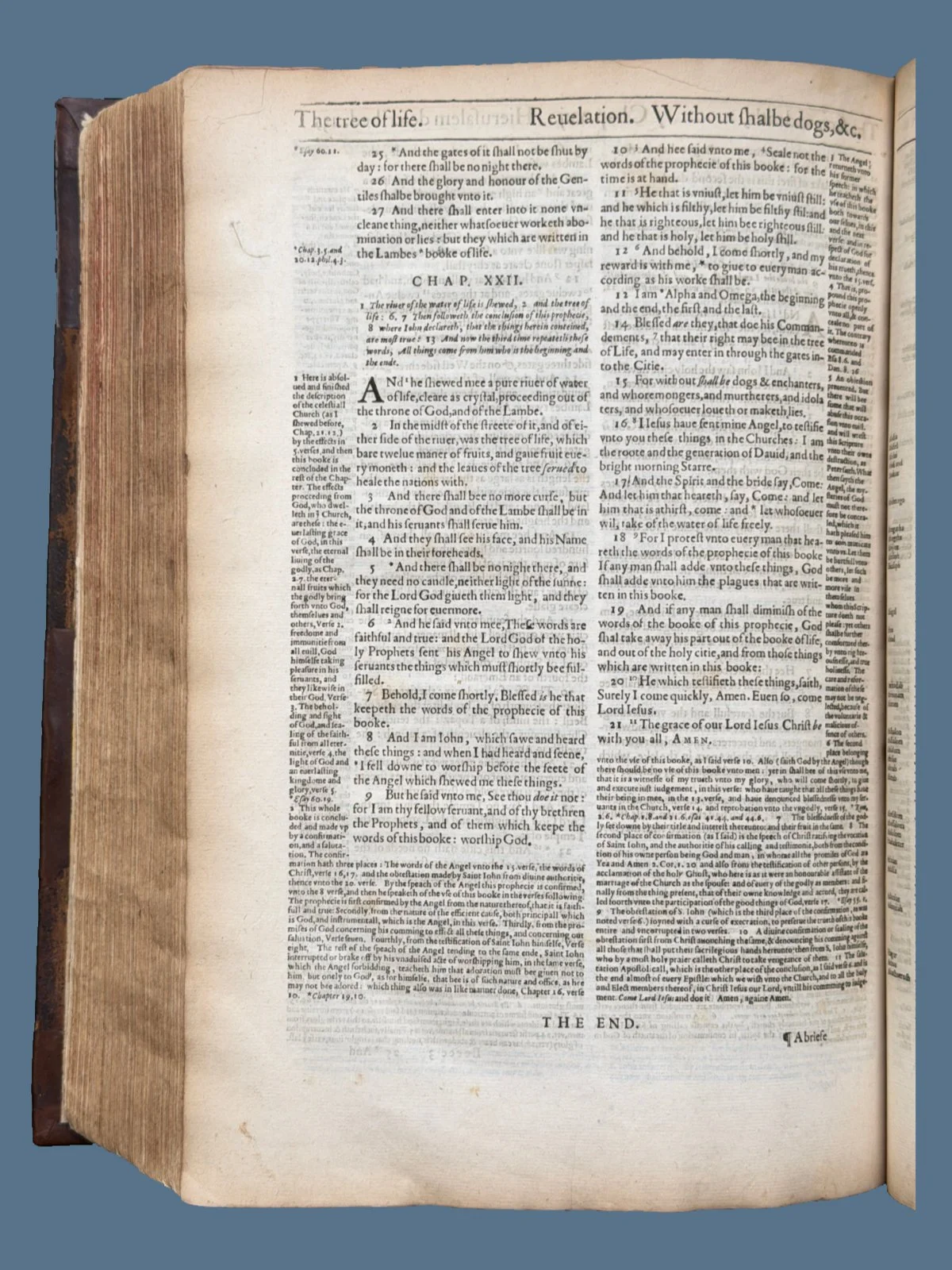 Image 26 of 29
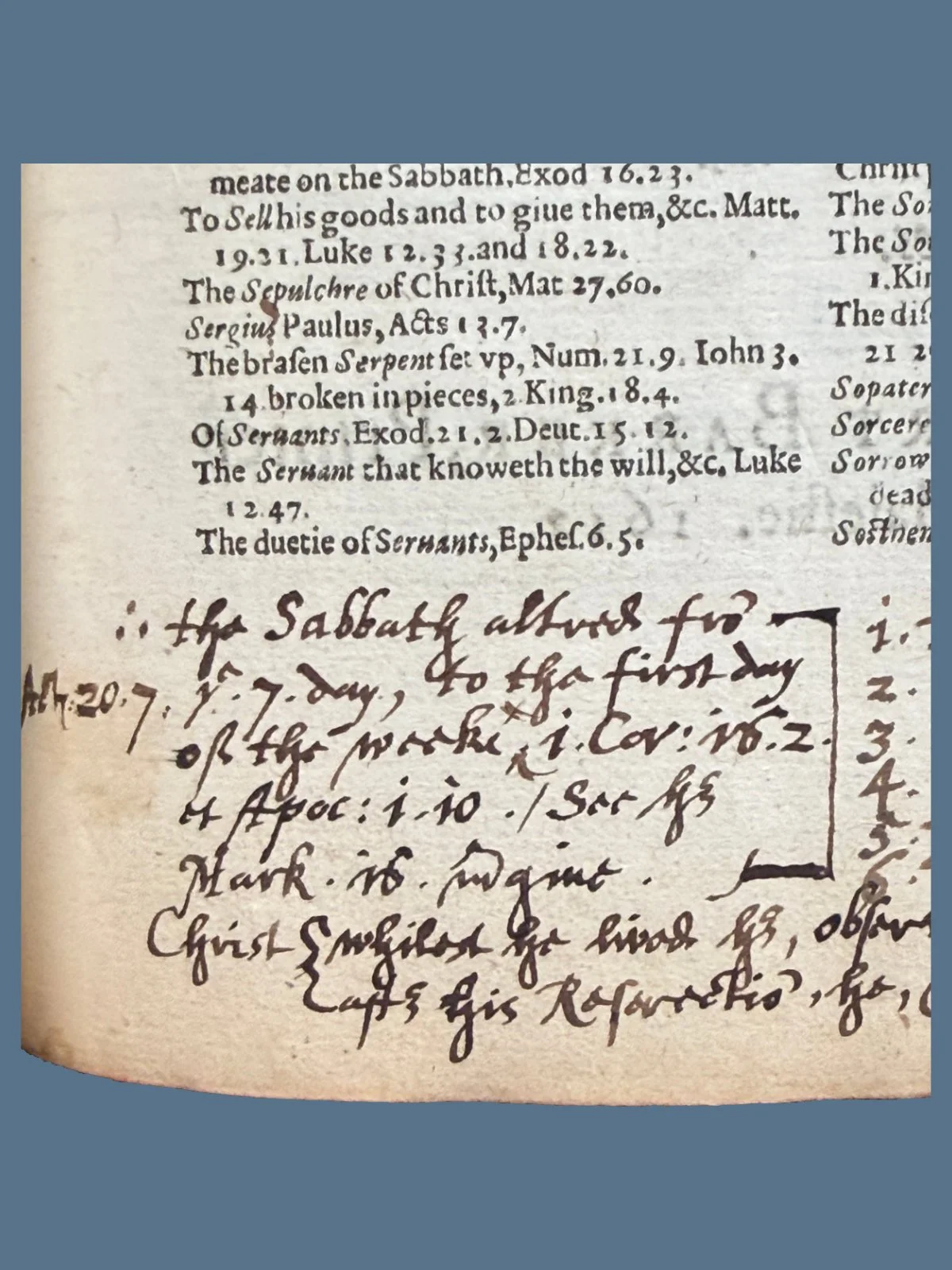 Image 27 of 29
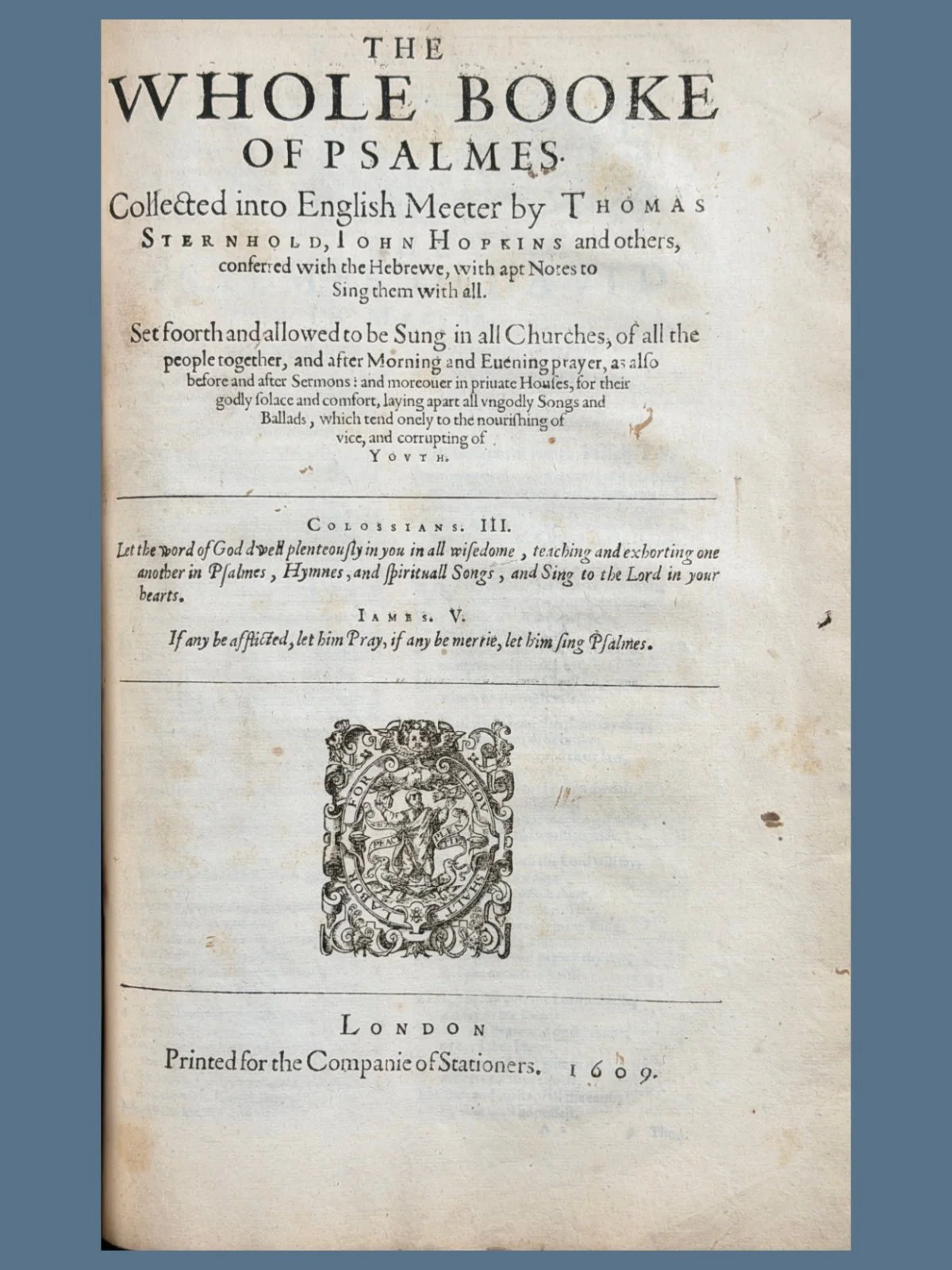 Image 28 of 29
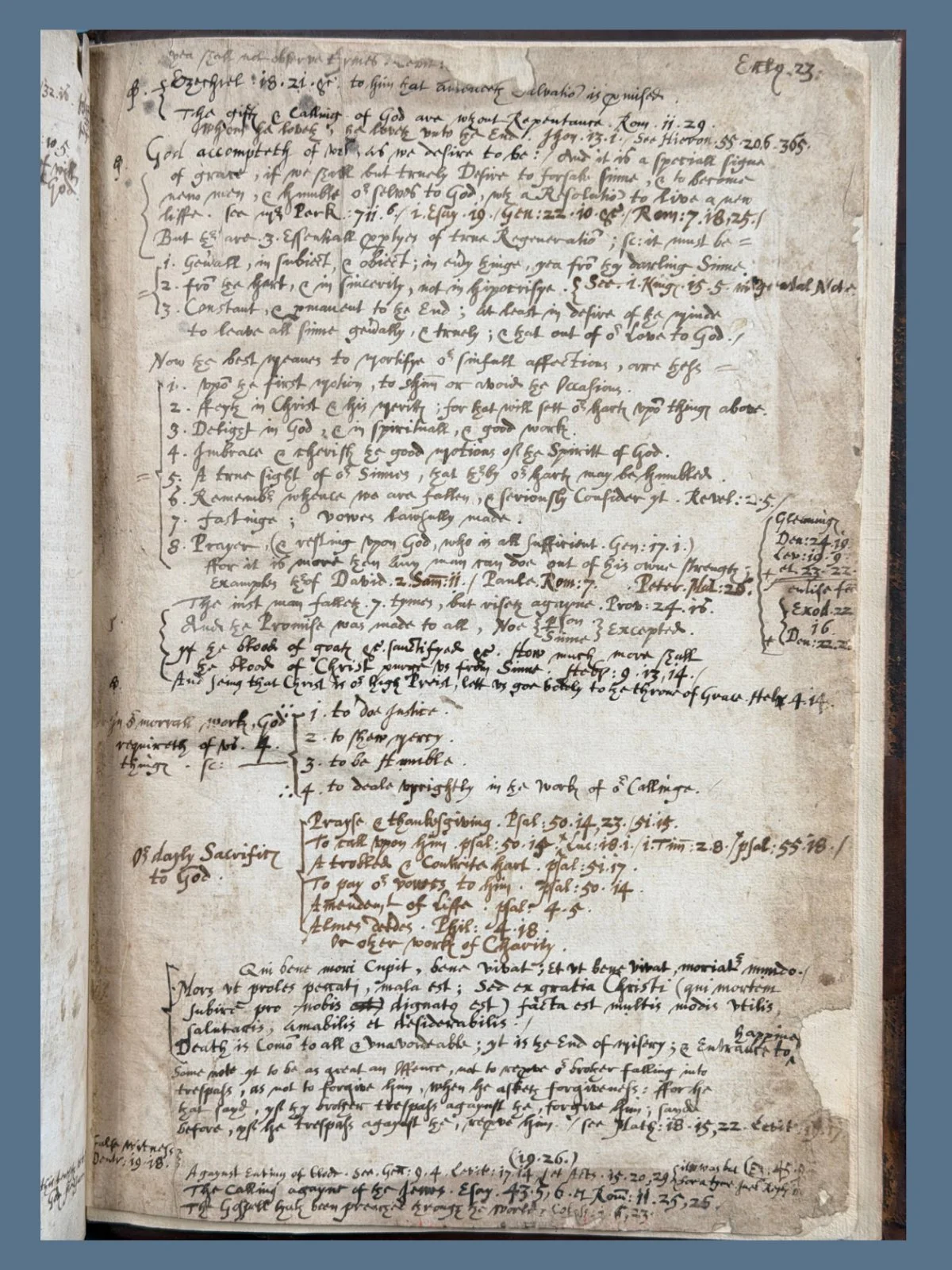 Image 29 of 29
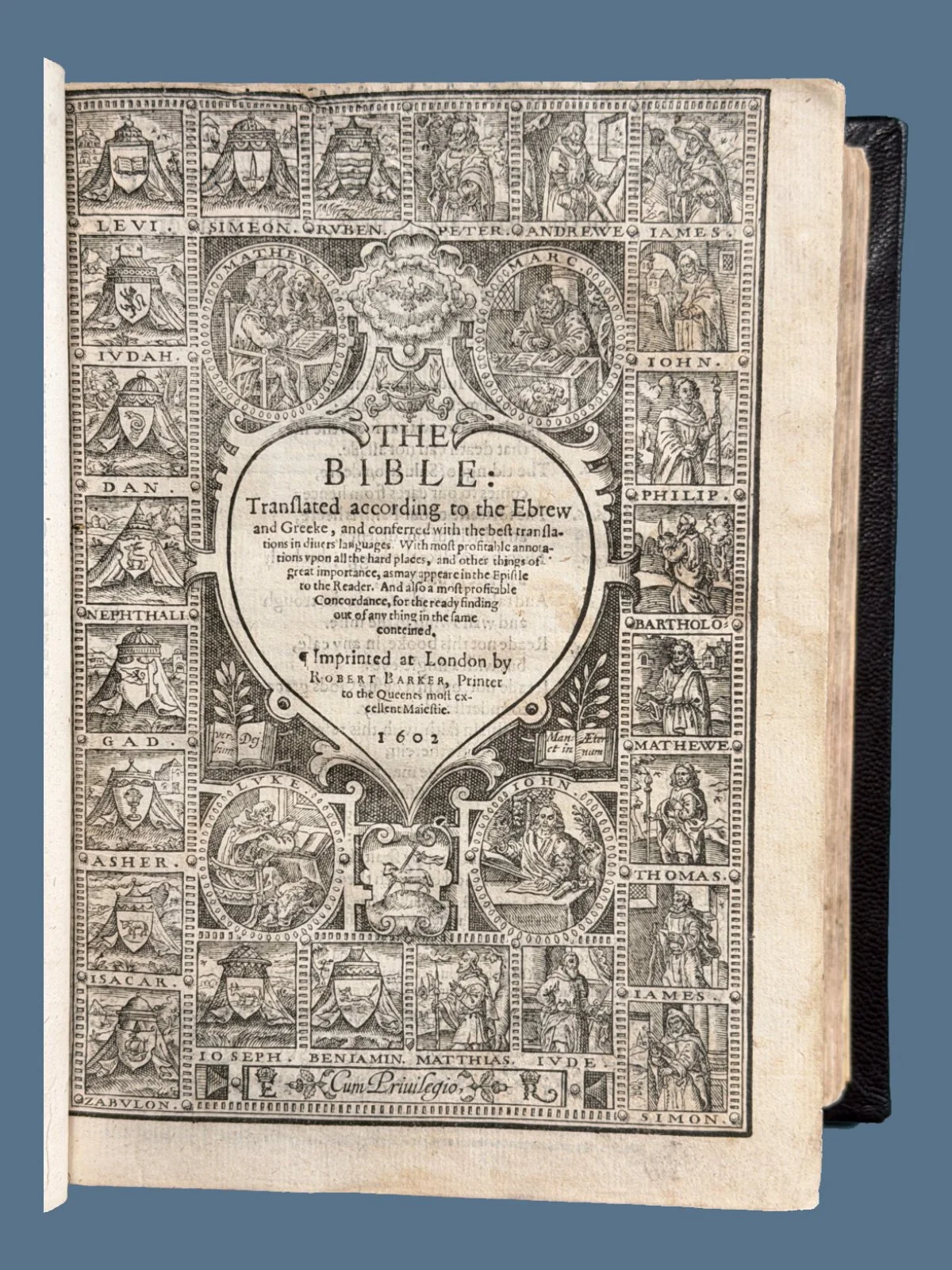
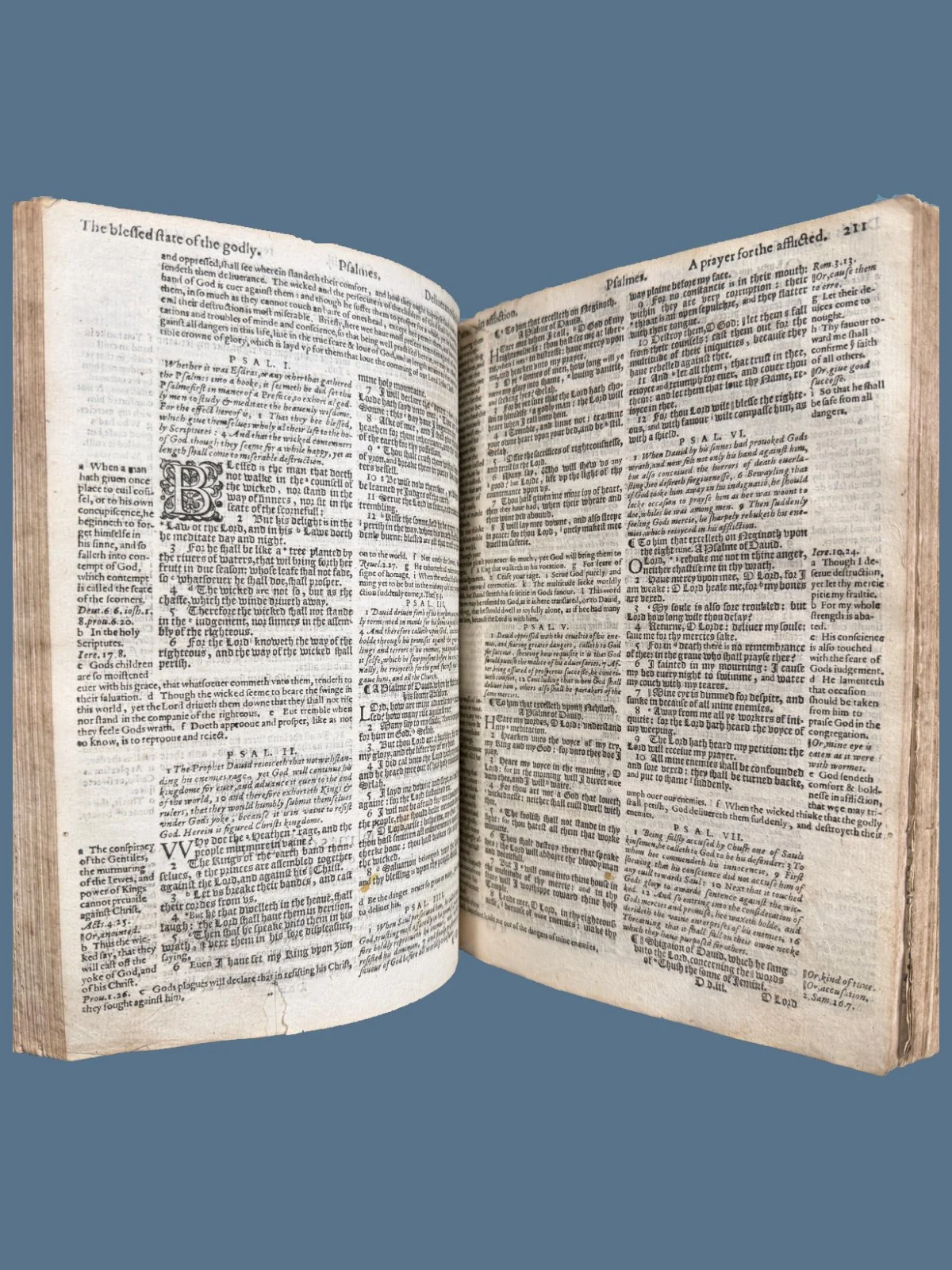
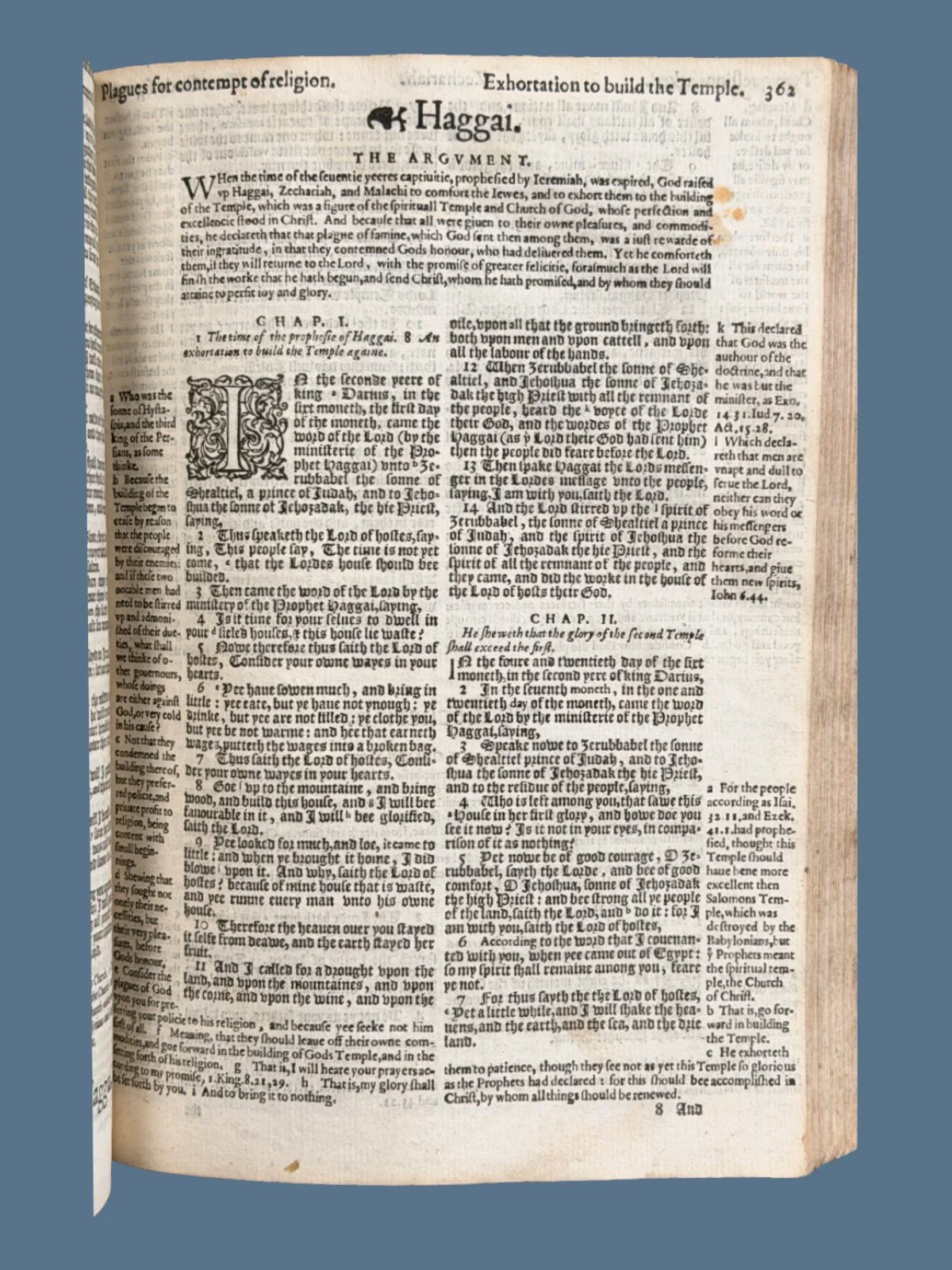
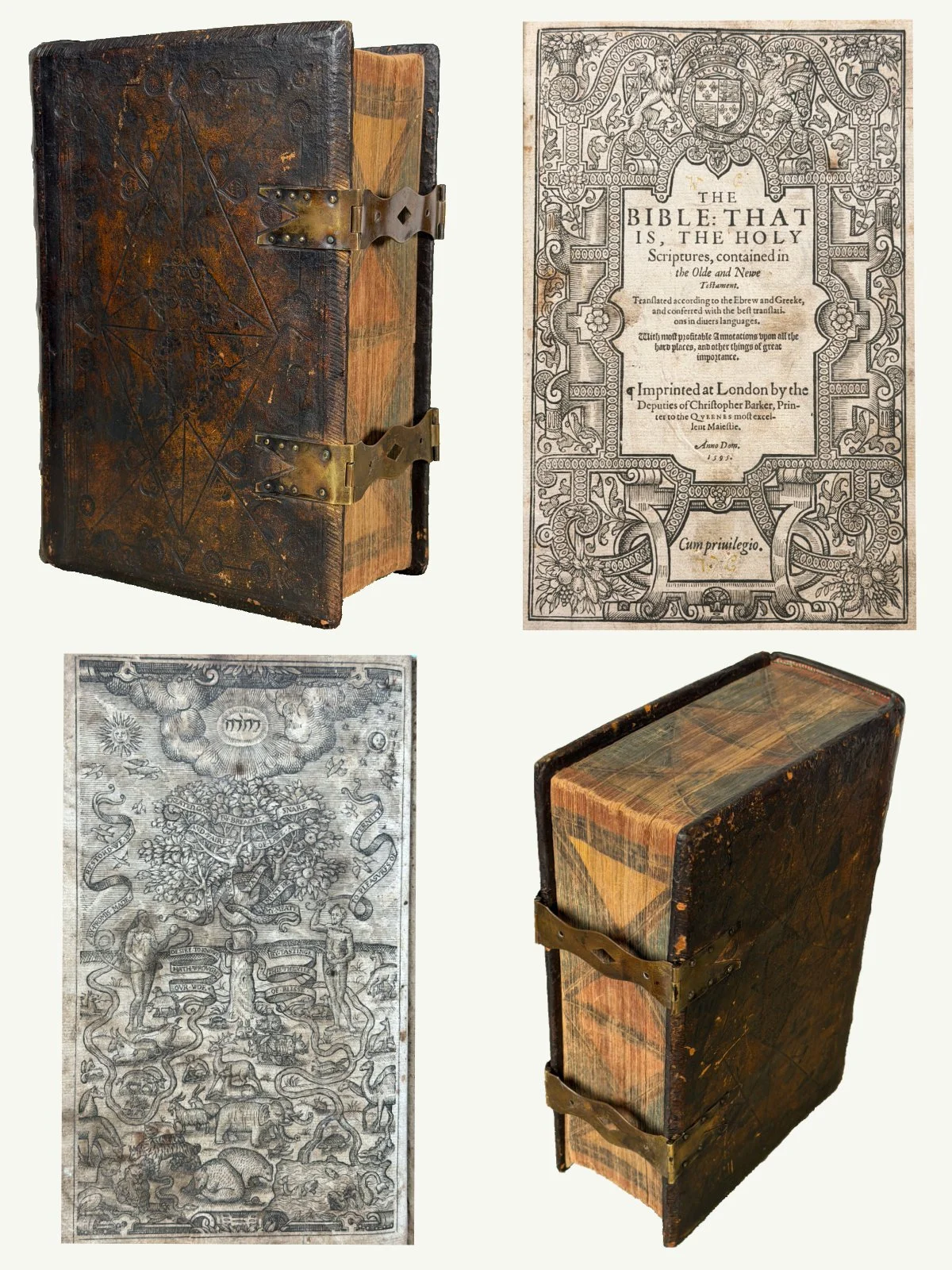
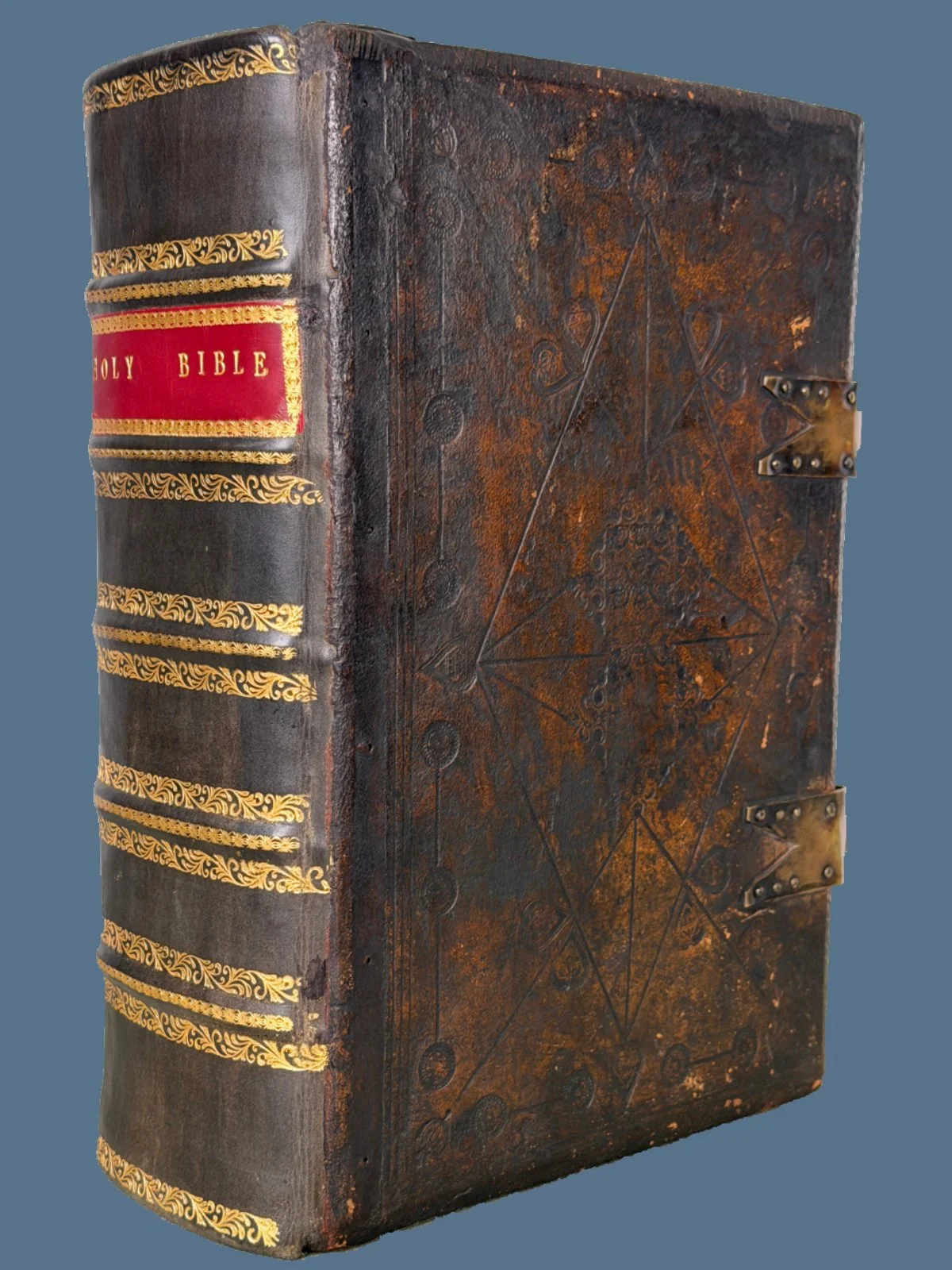
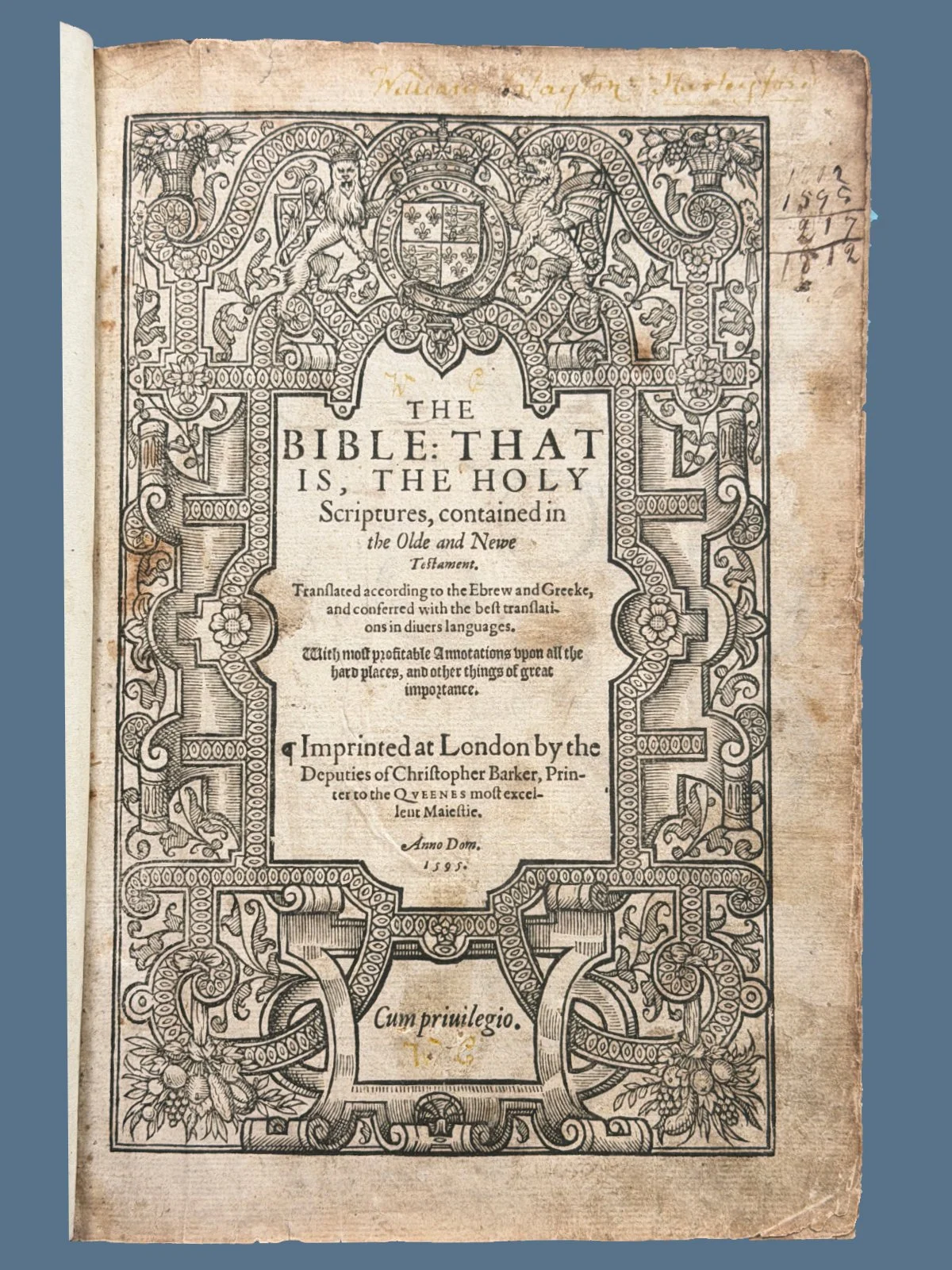
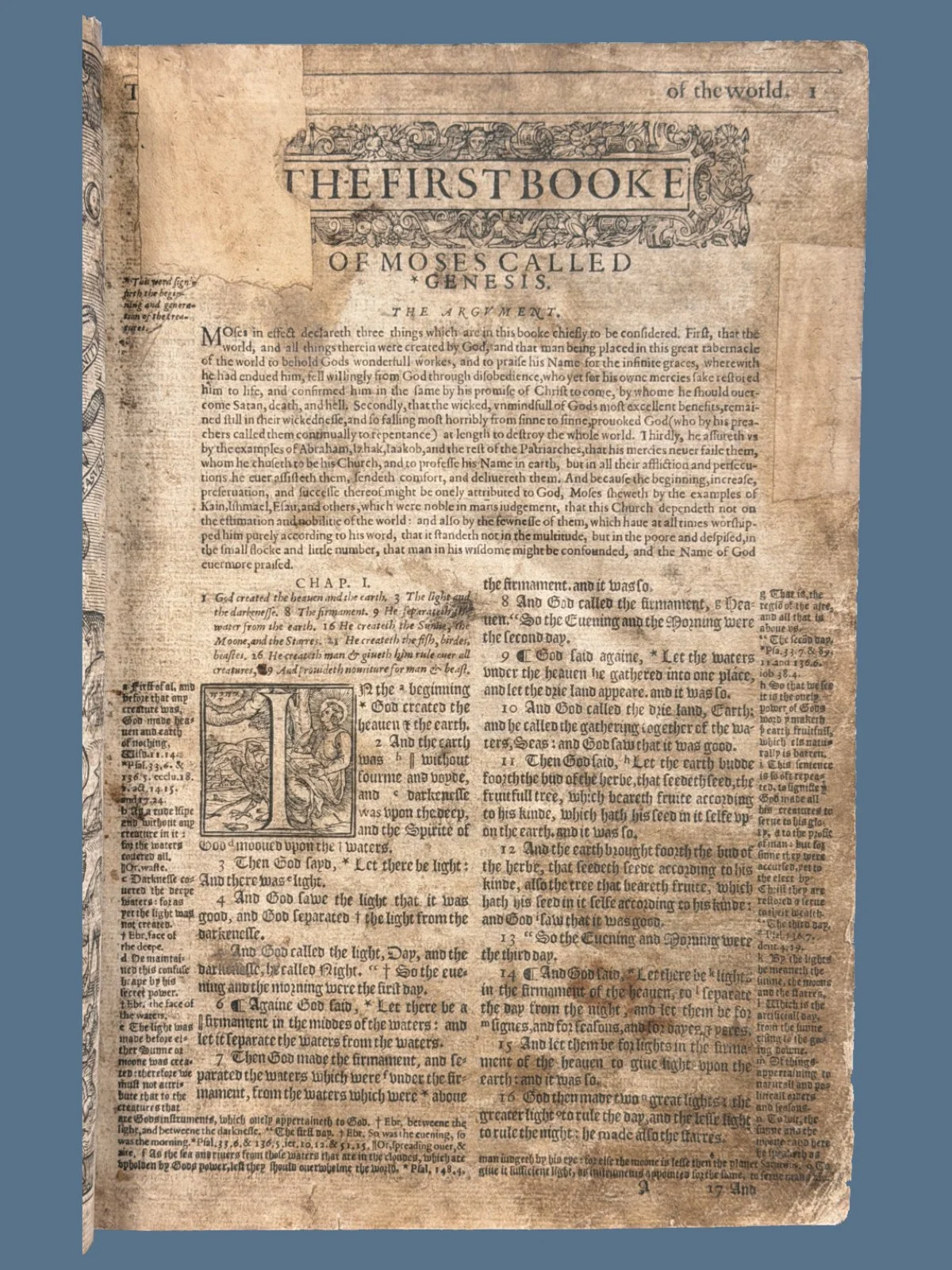
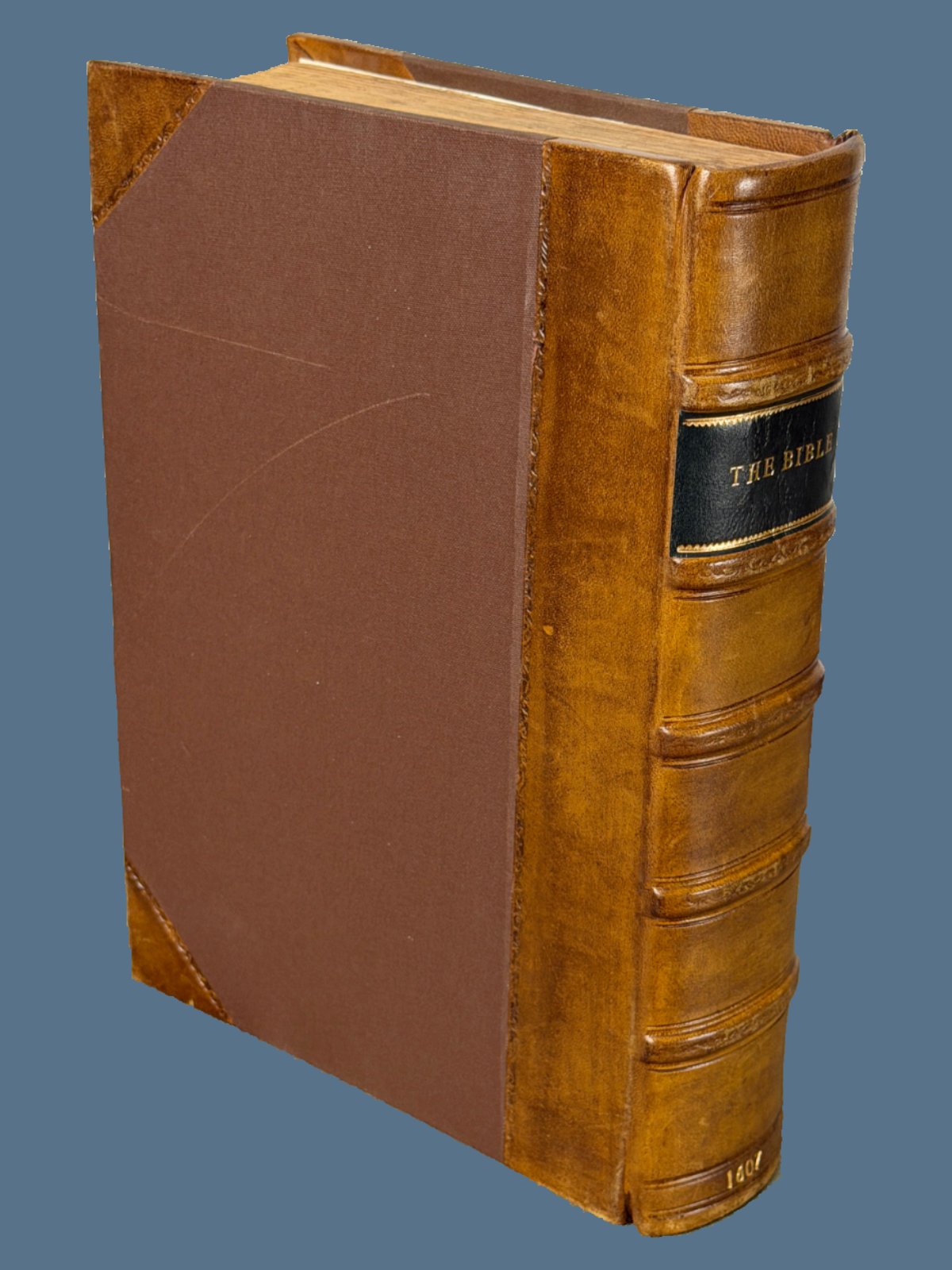
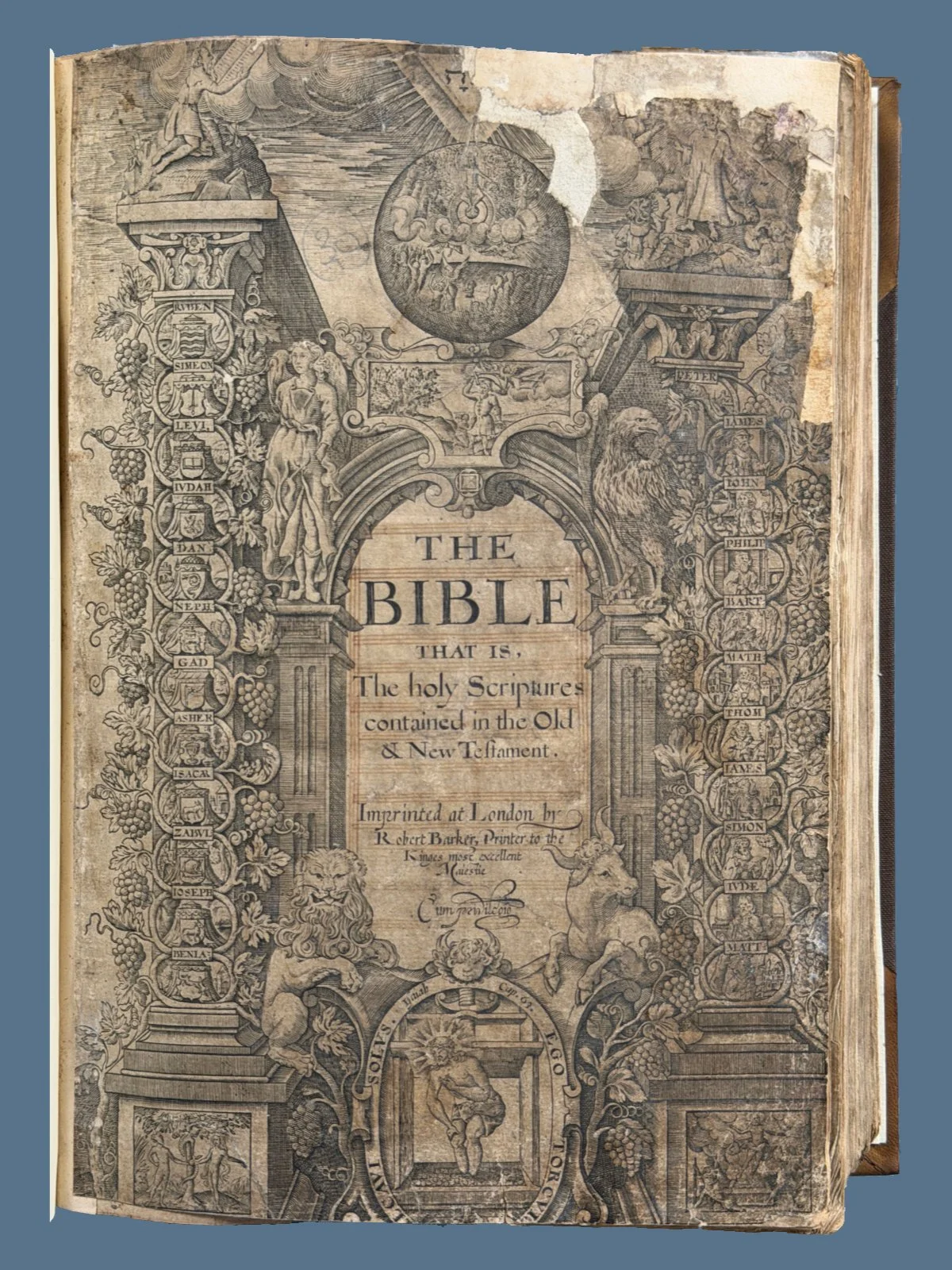
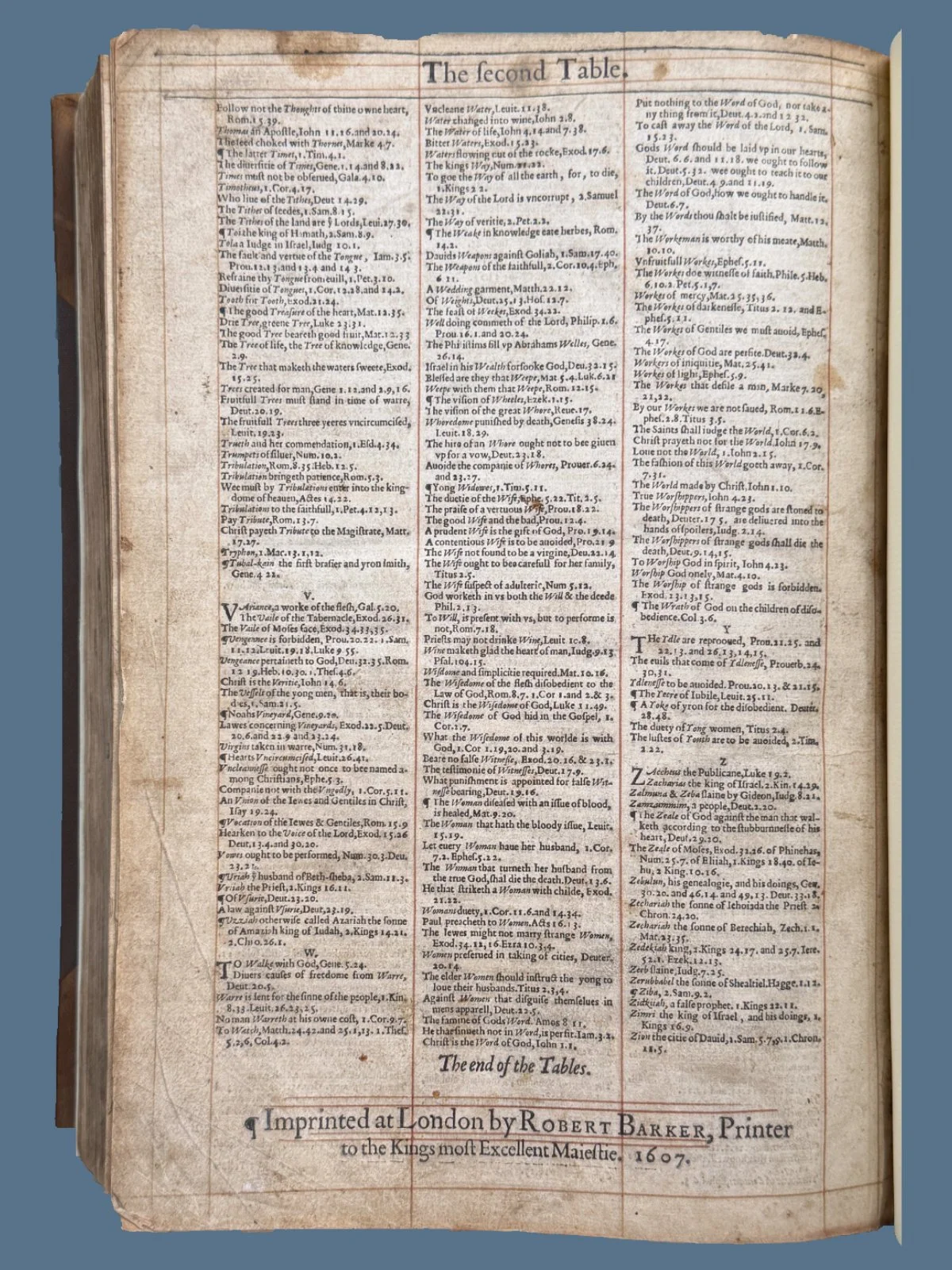
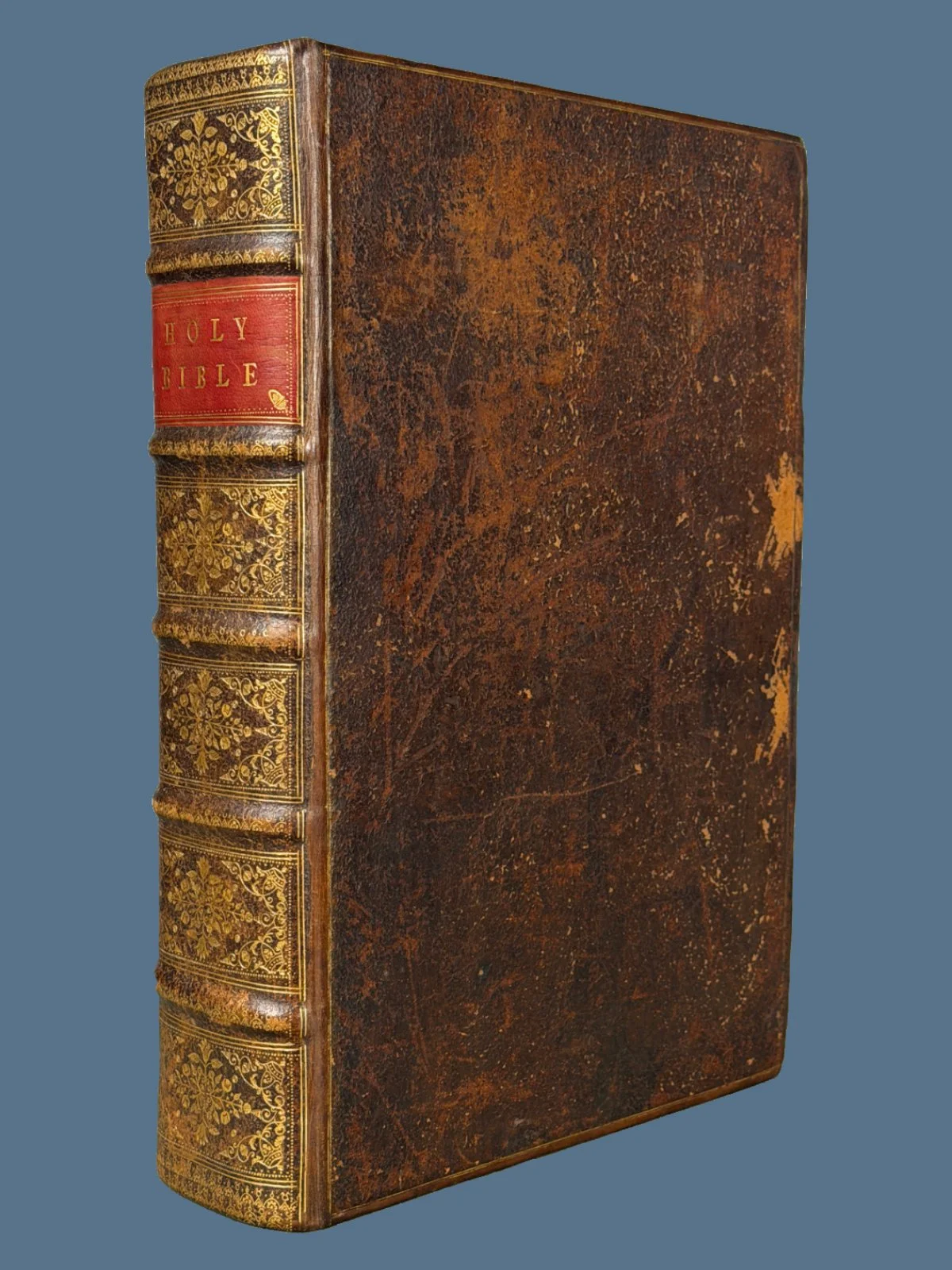
The Bible, that is, the Holy Scriptures contained in the Old and New Testament. Translated according to the Ebrew and Greeke, and conferred with The Best Translations in Divers Languages. With most profitable Annotations upon all hard places, and other things of great importance.
Summary
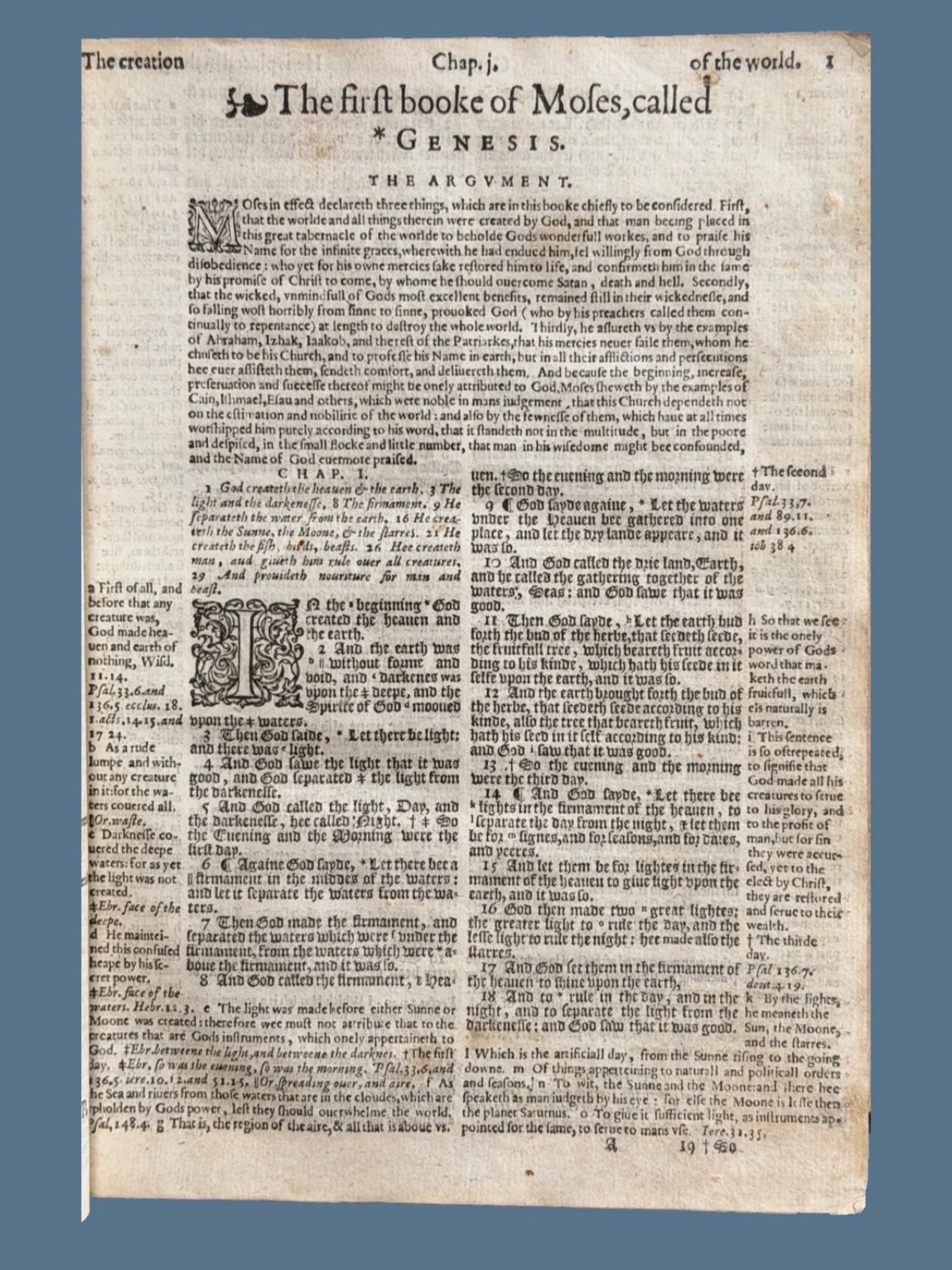
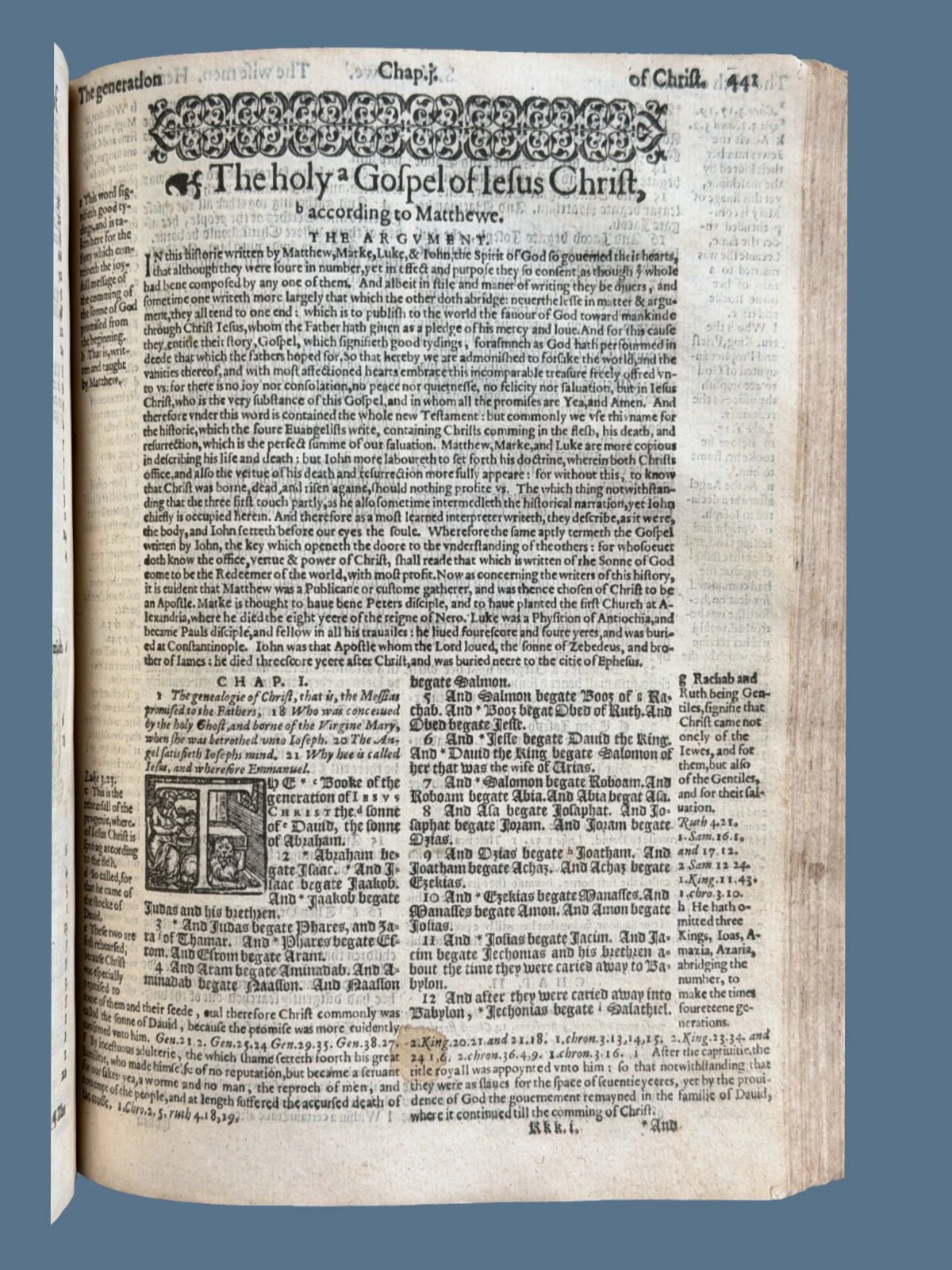
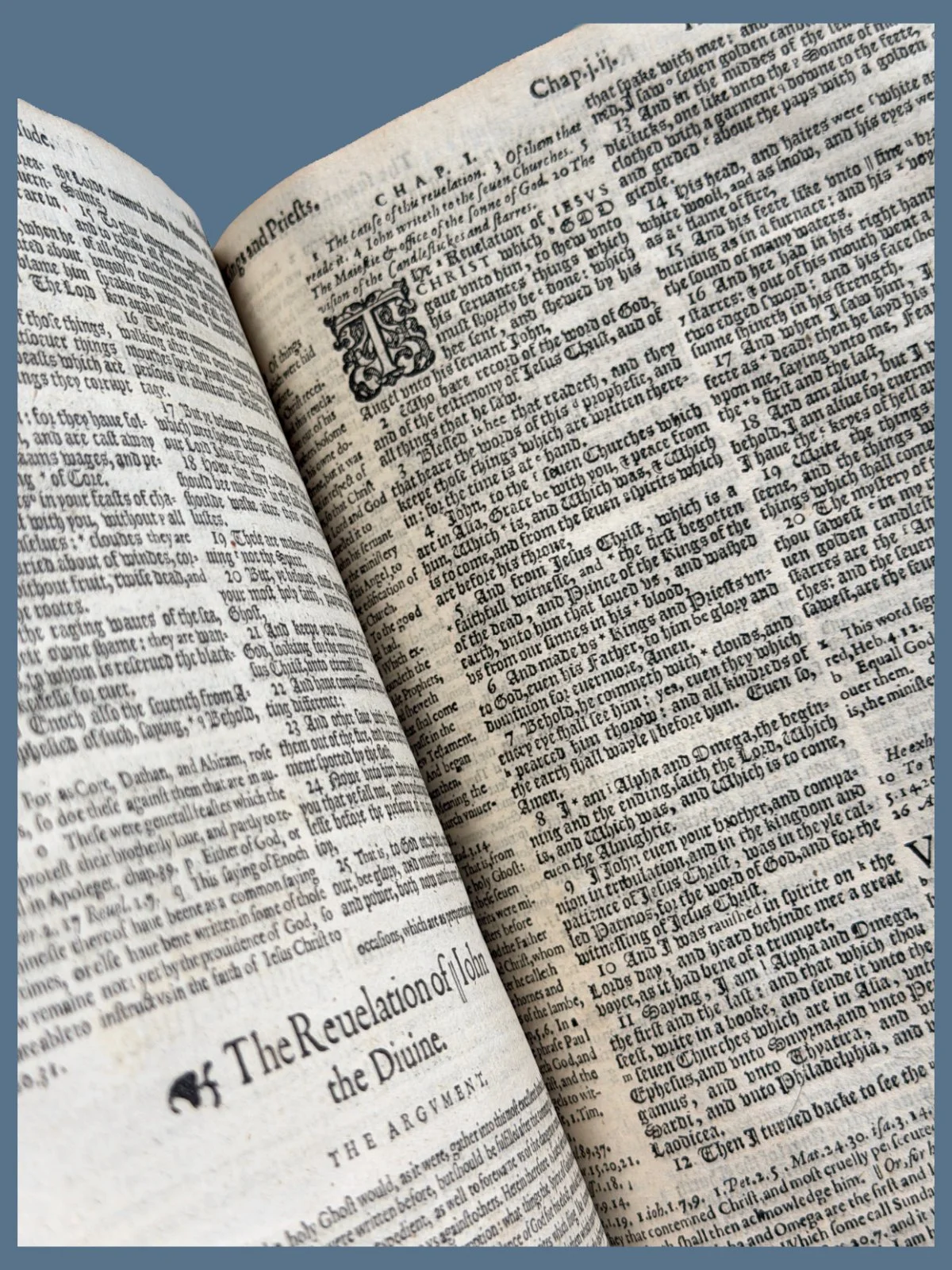
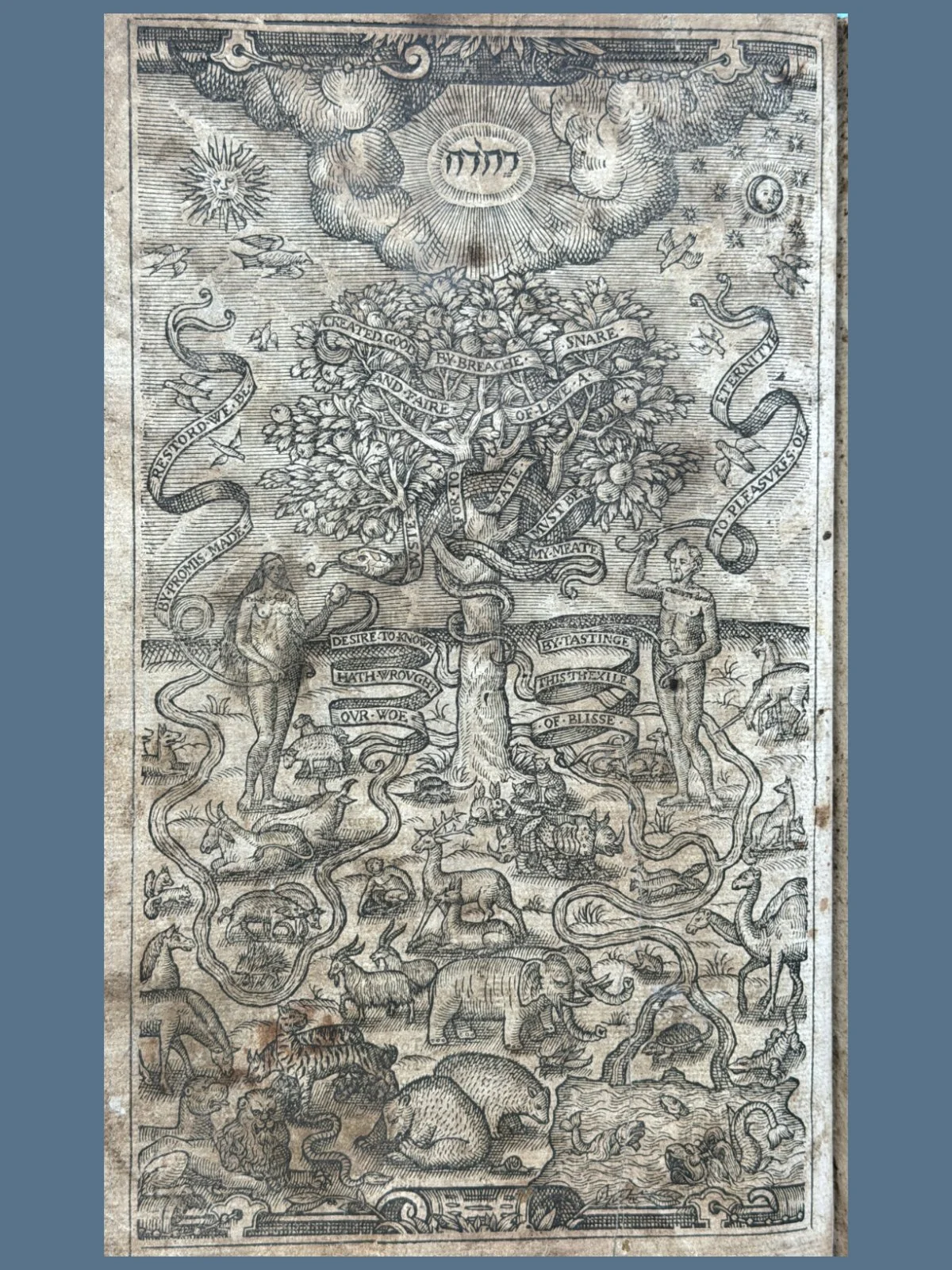
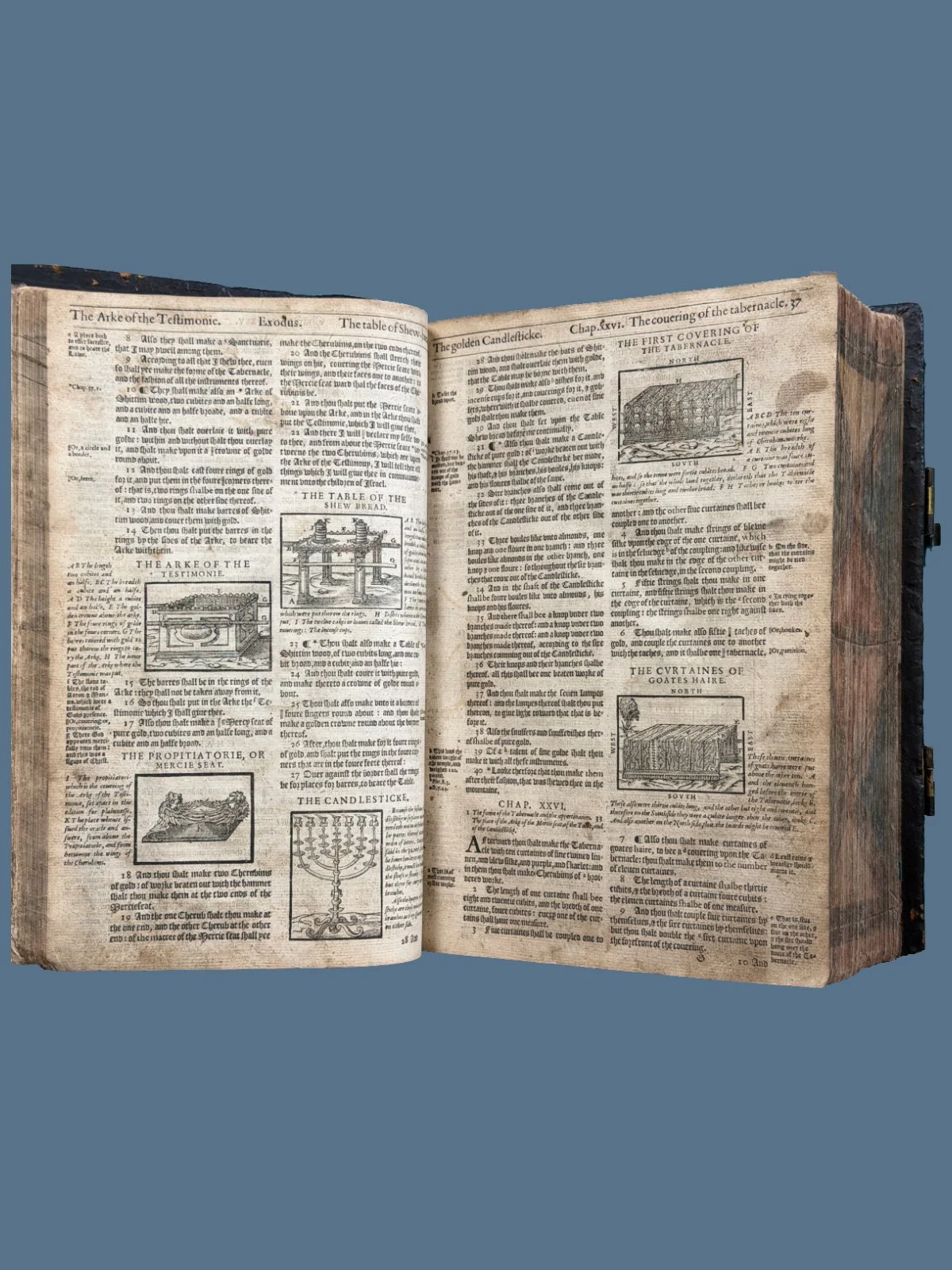
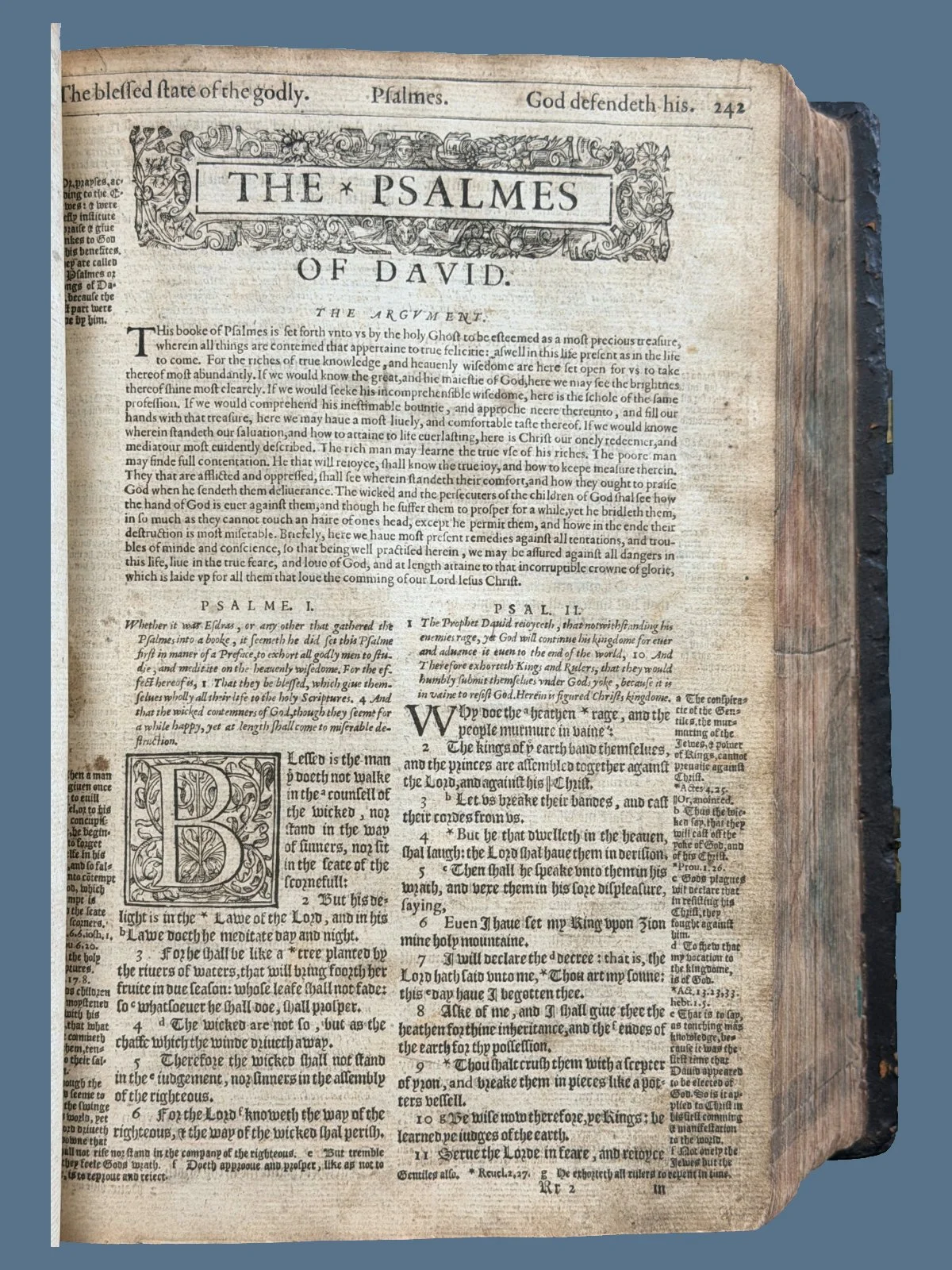
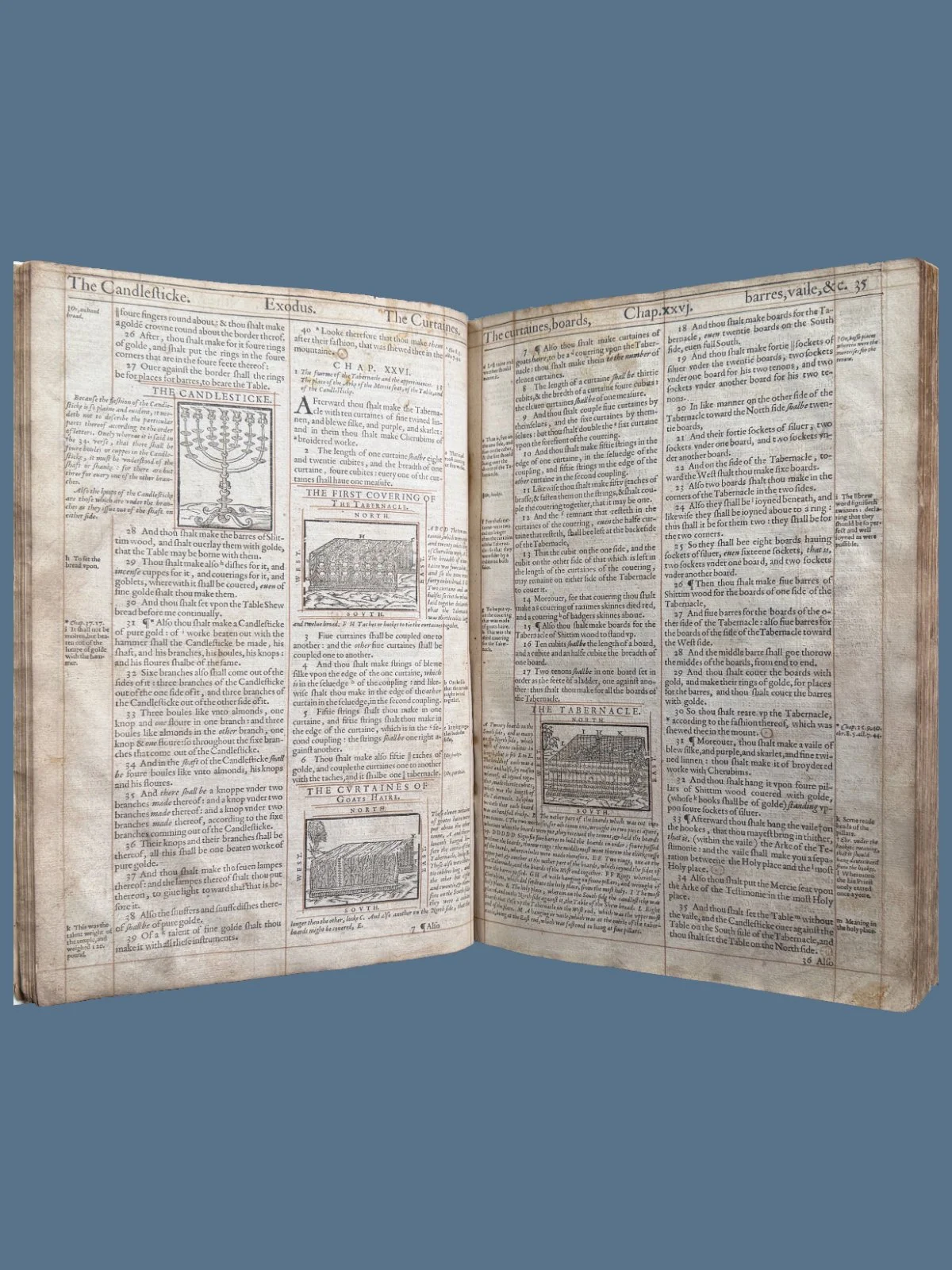
One of the taller folio editions of the Geneva Bible. Printed in easy-to-read Roman font with the complete set of Geneva illustrations and the full-page Adam and Eve engraving. Densely annotated in English and Latin by the jurist Michael Dalton, who treated the volume as a working scholarly repository: calculating biblical chronology, constructing an elaborate Gospel harmony, recording historical and theological authorities, debating the canon and Apocrypha, and writing extensive expositions of Revelation, particularly on the Pope as the Antichrist.
Description
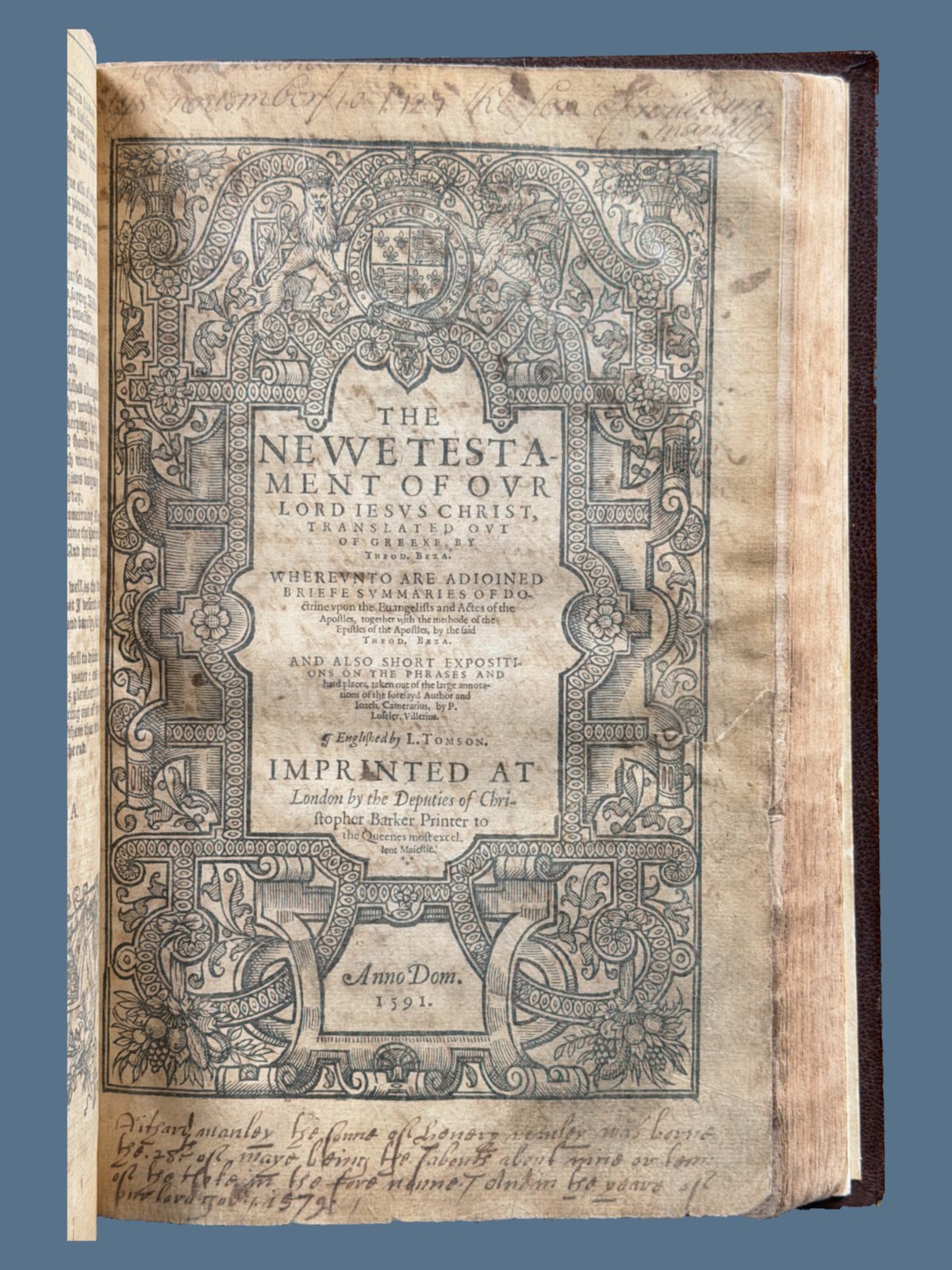
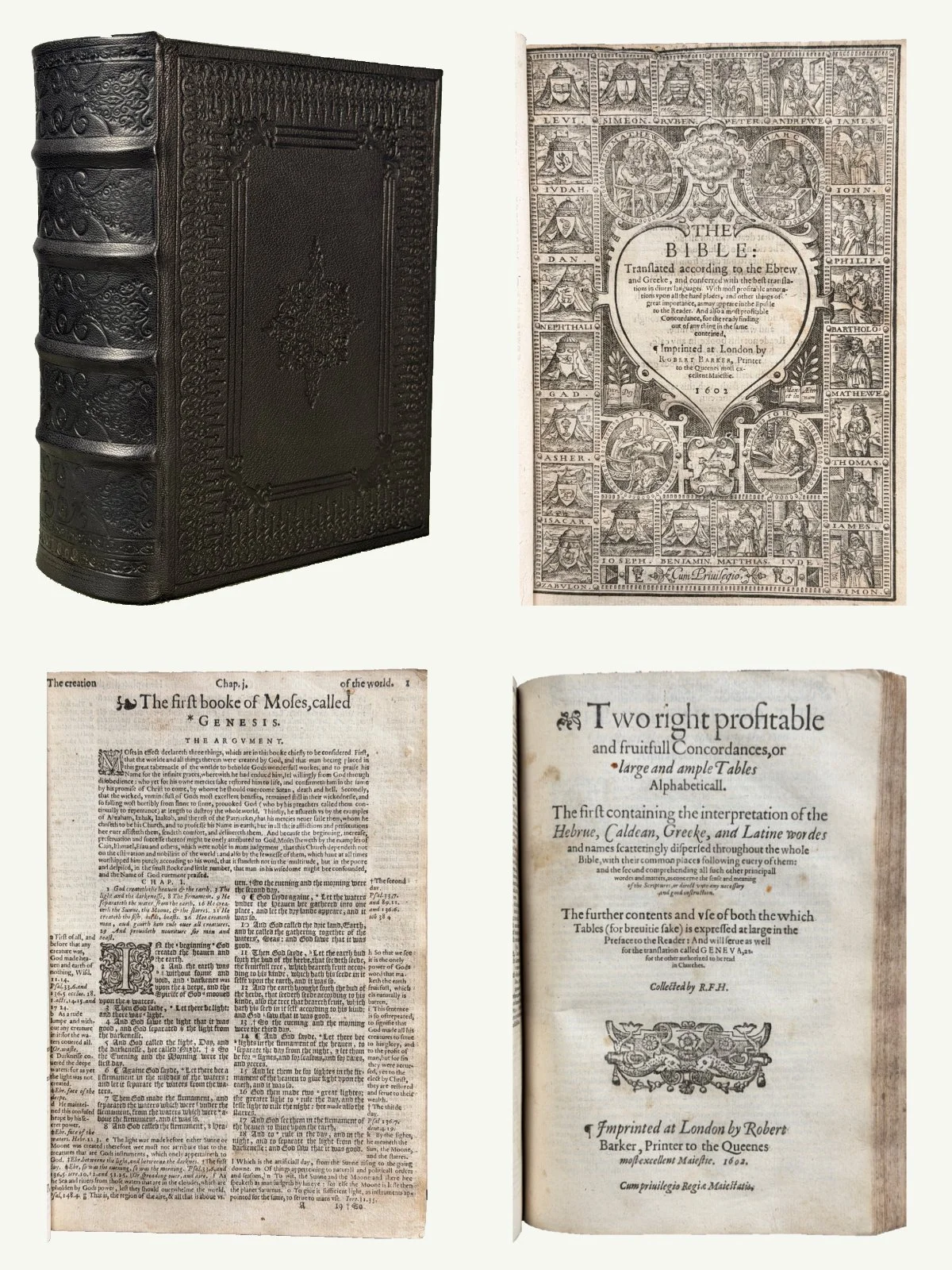
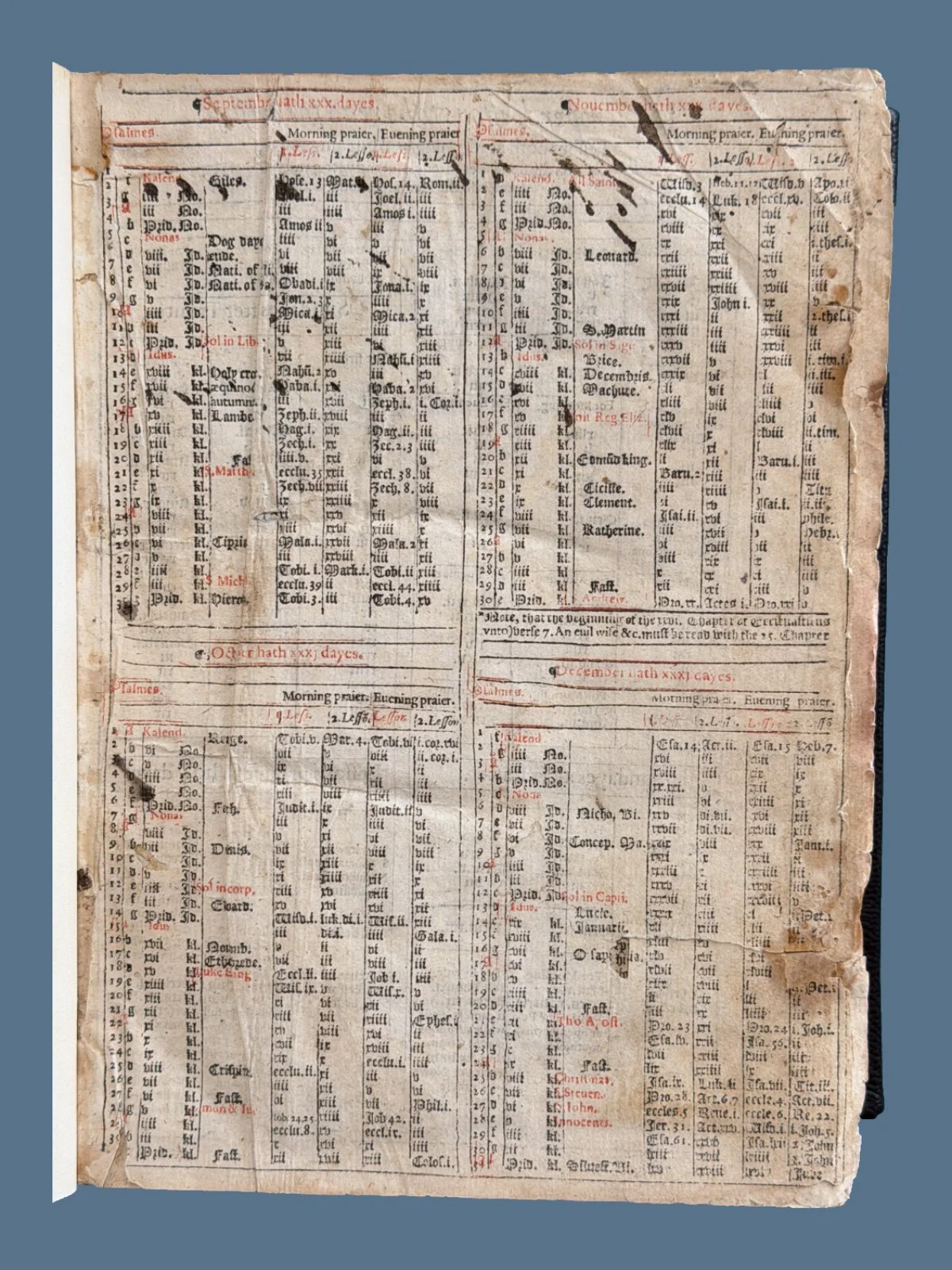
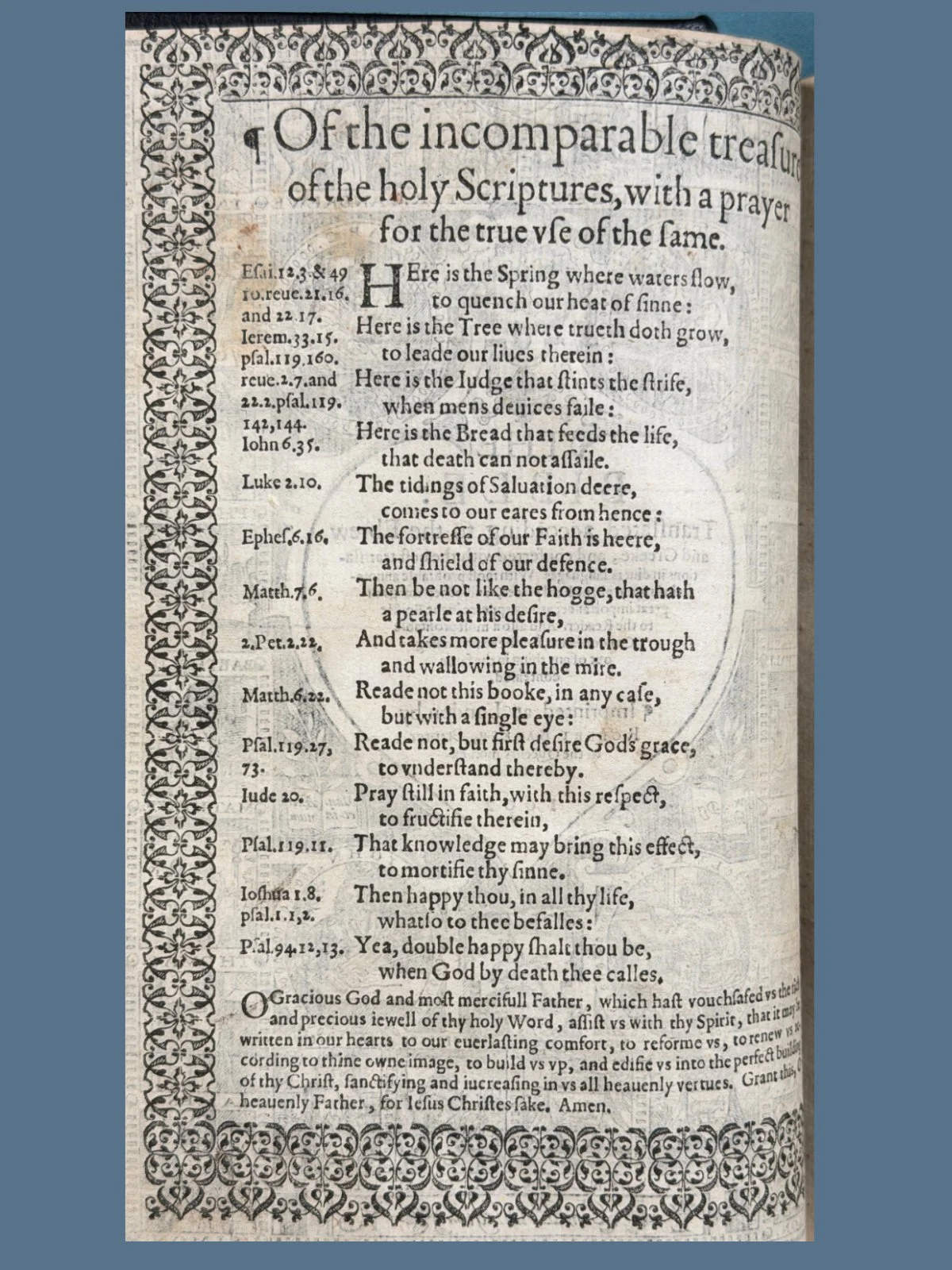
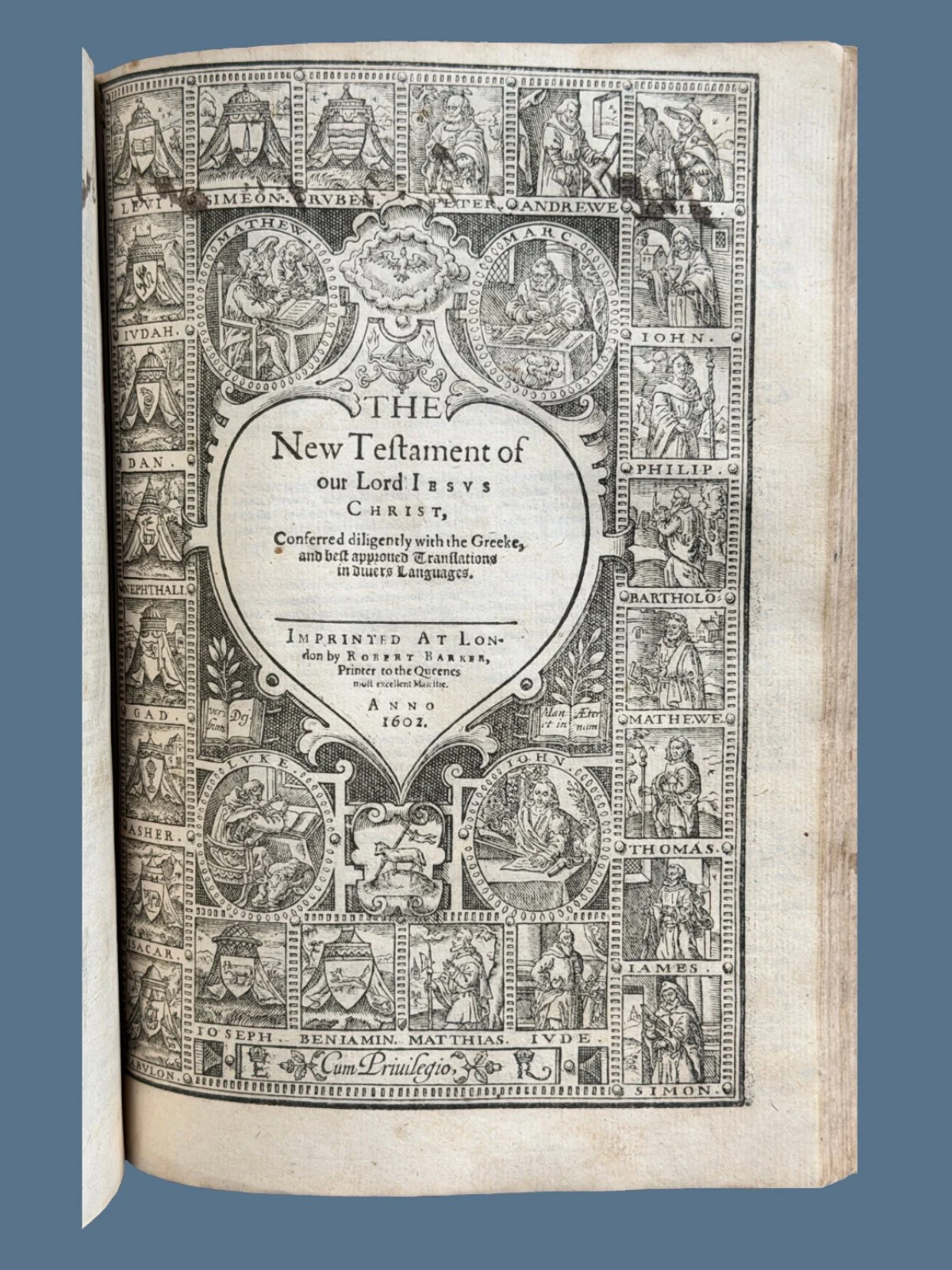
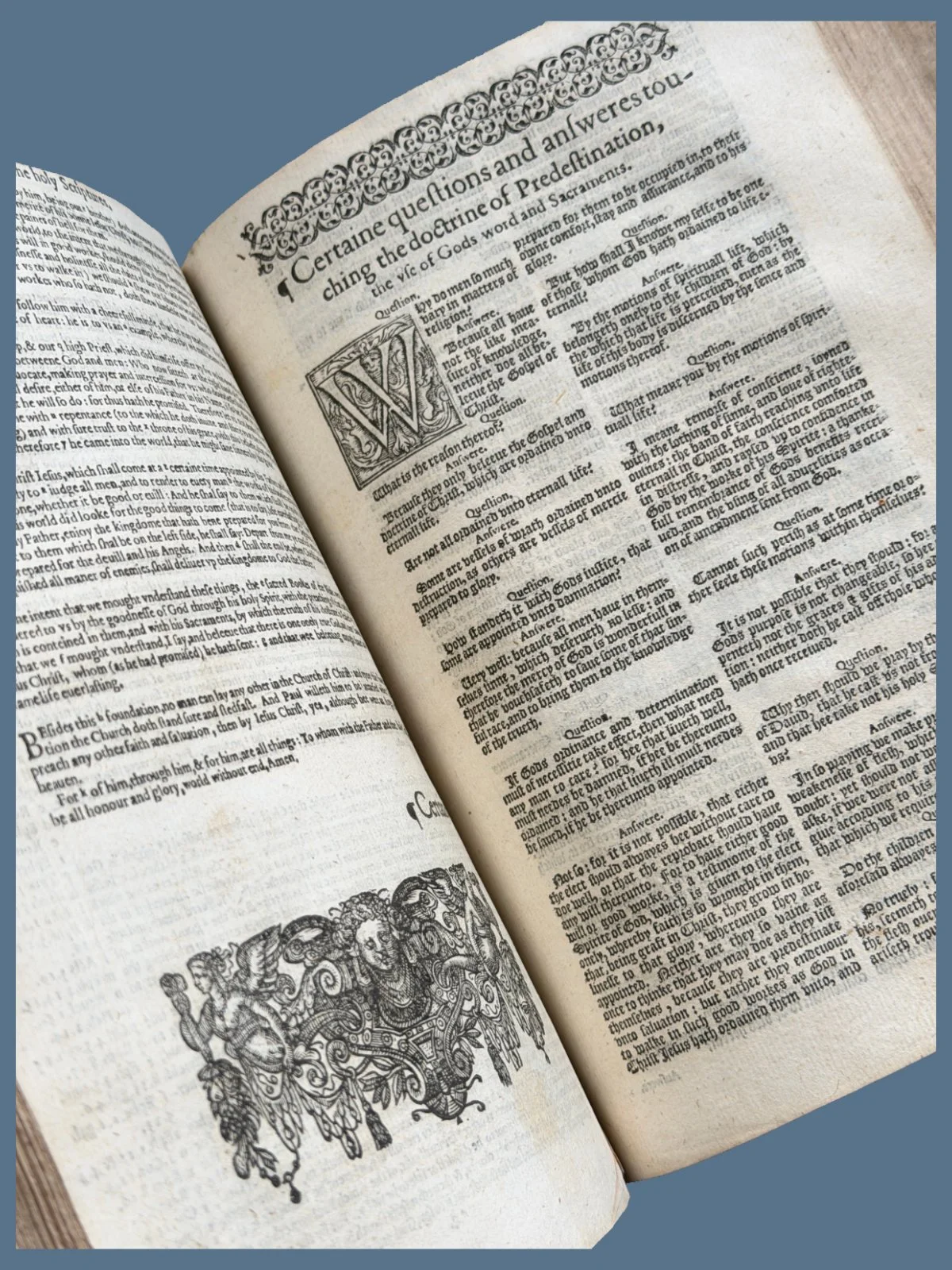
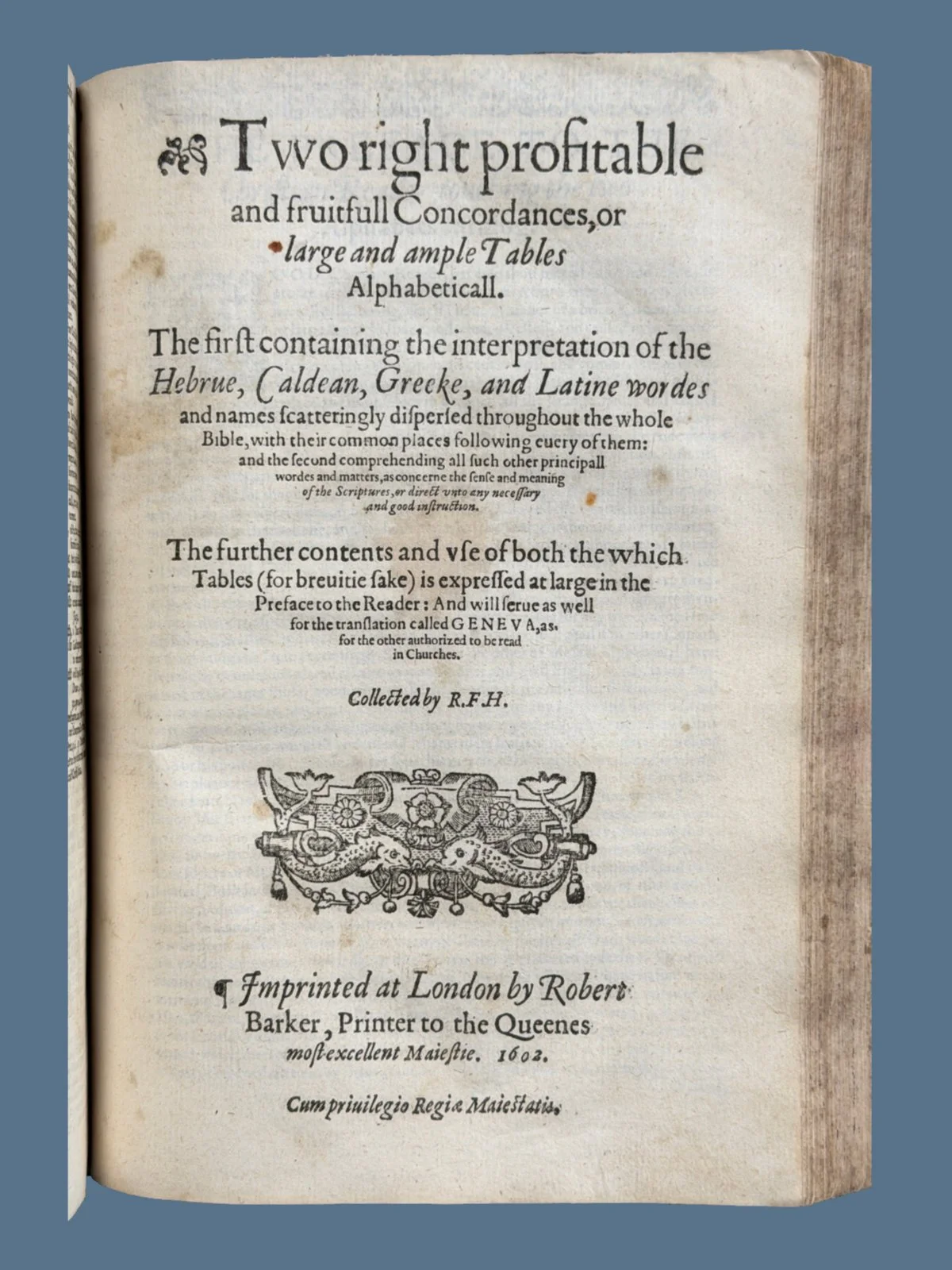
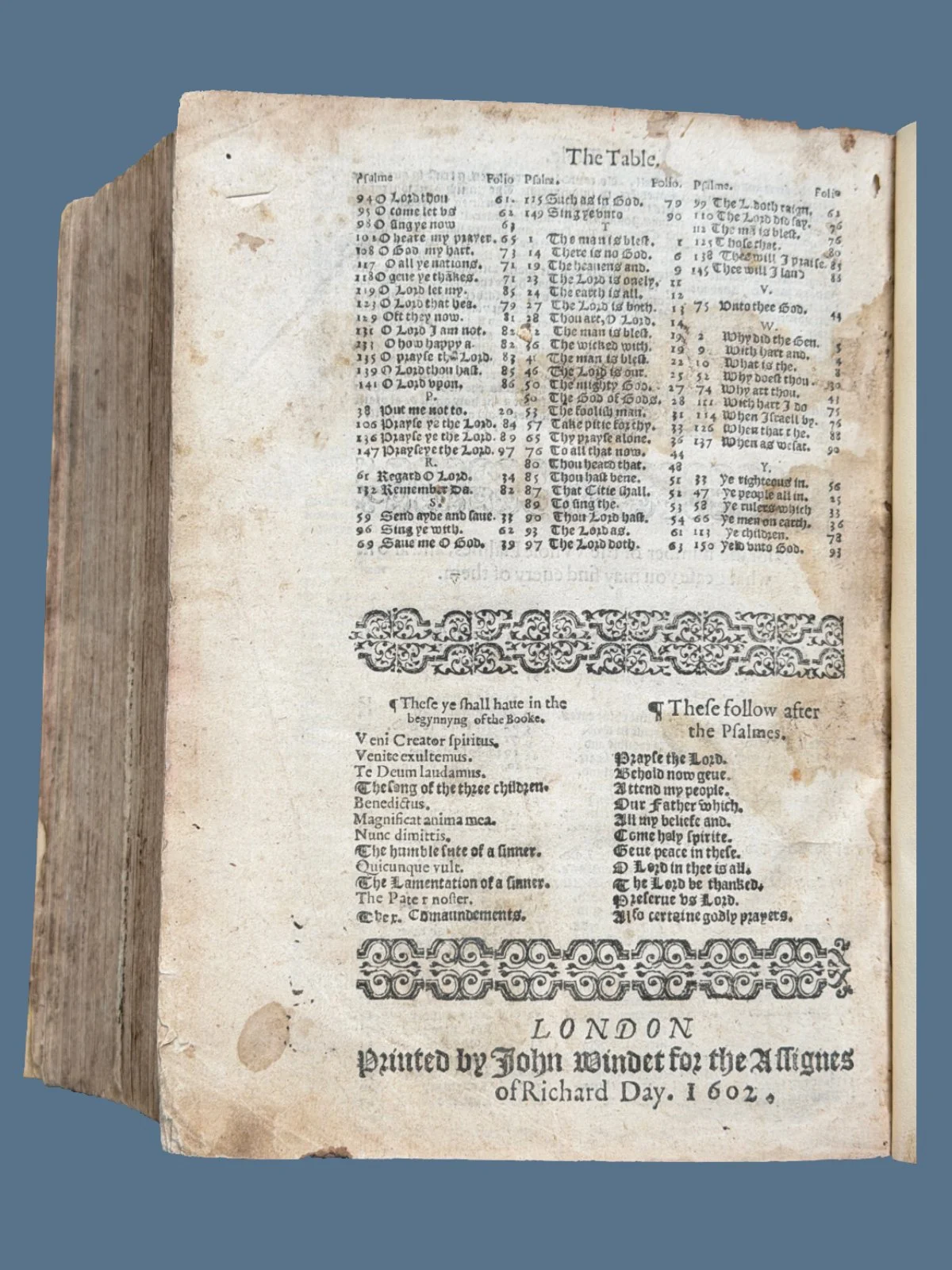
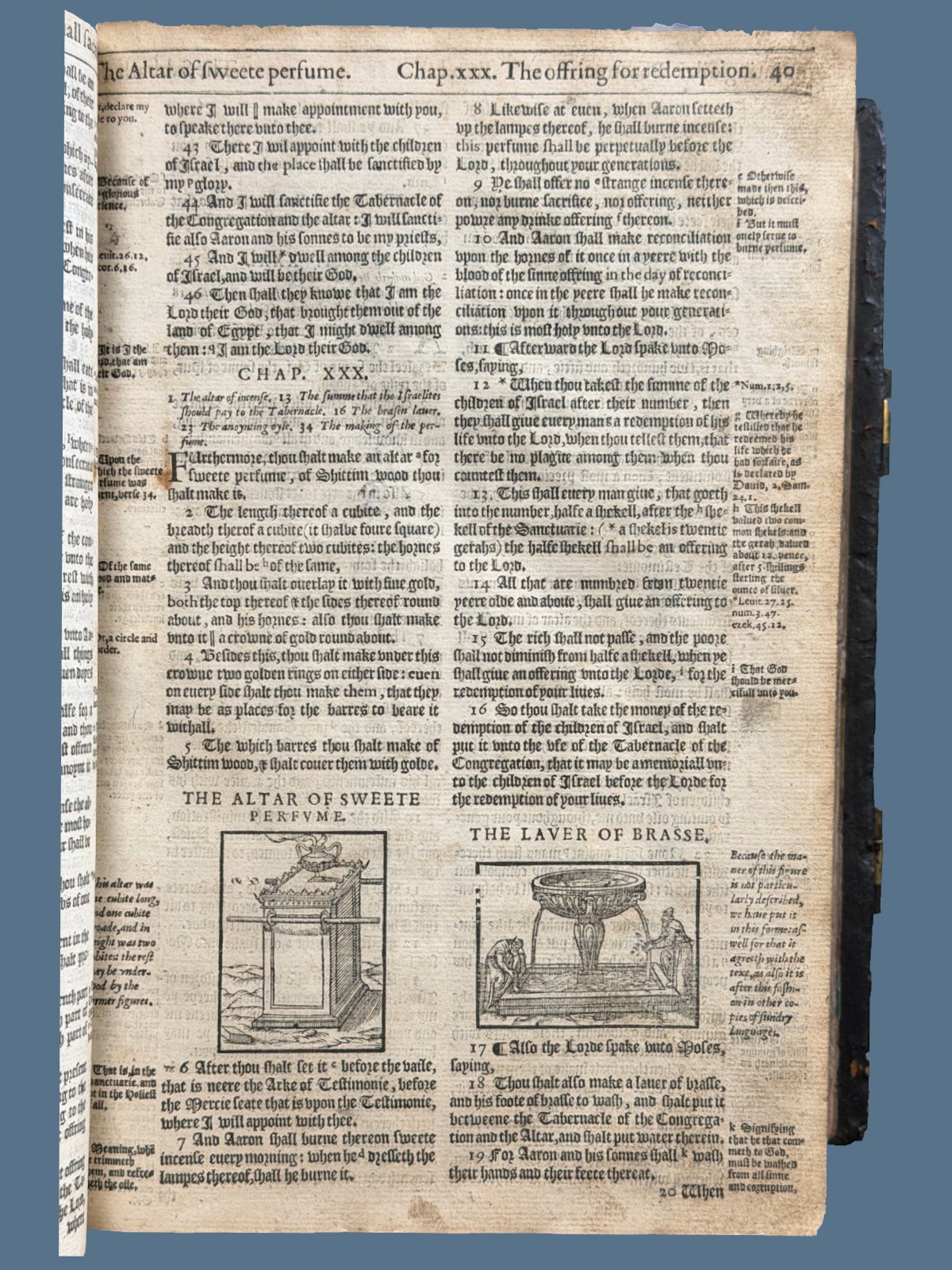
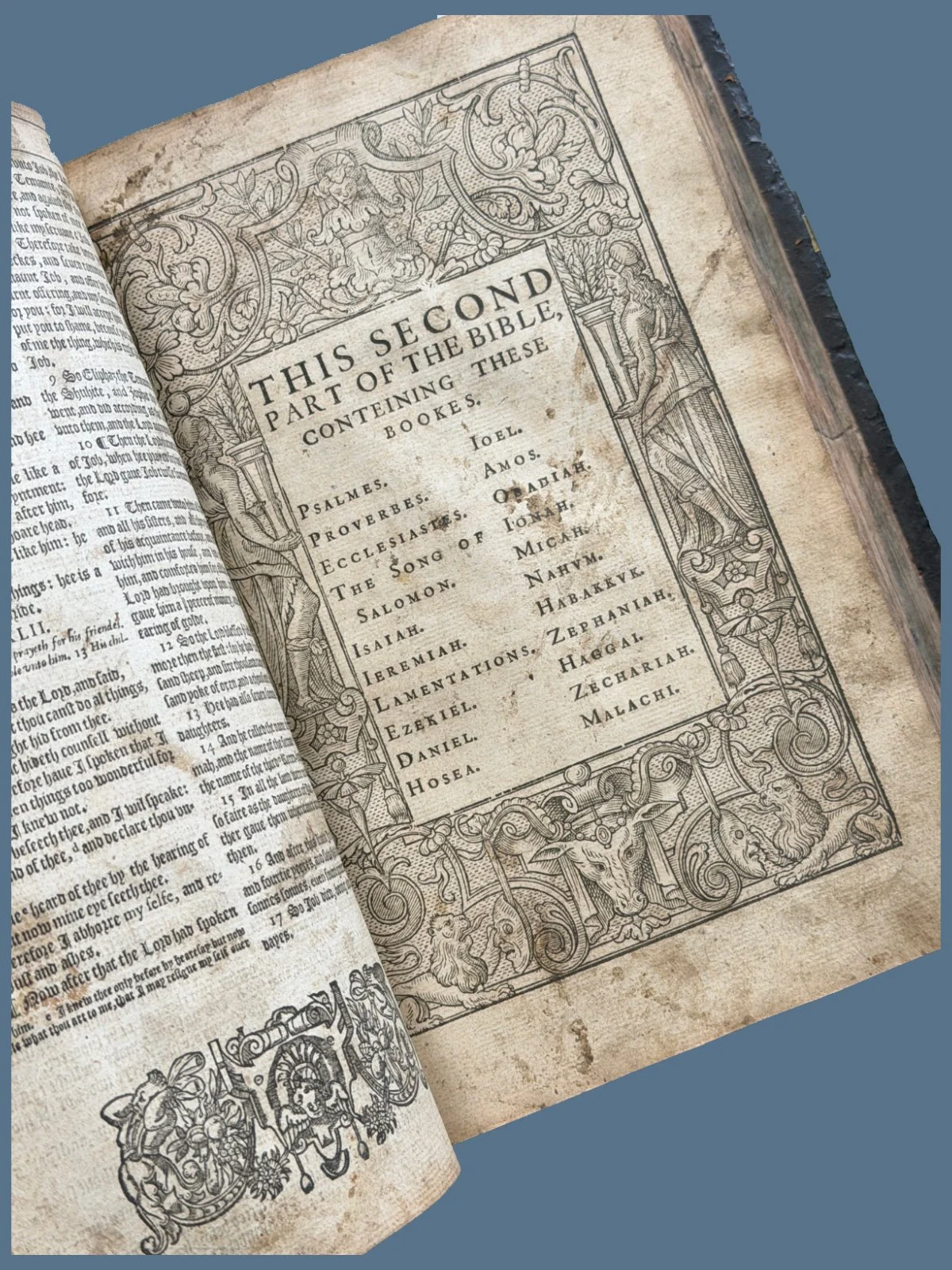
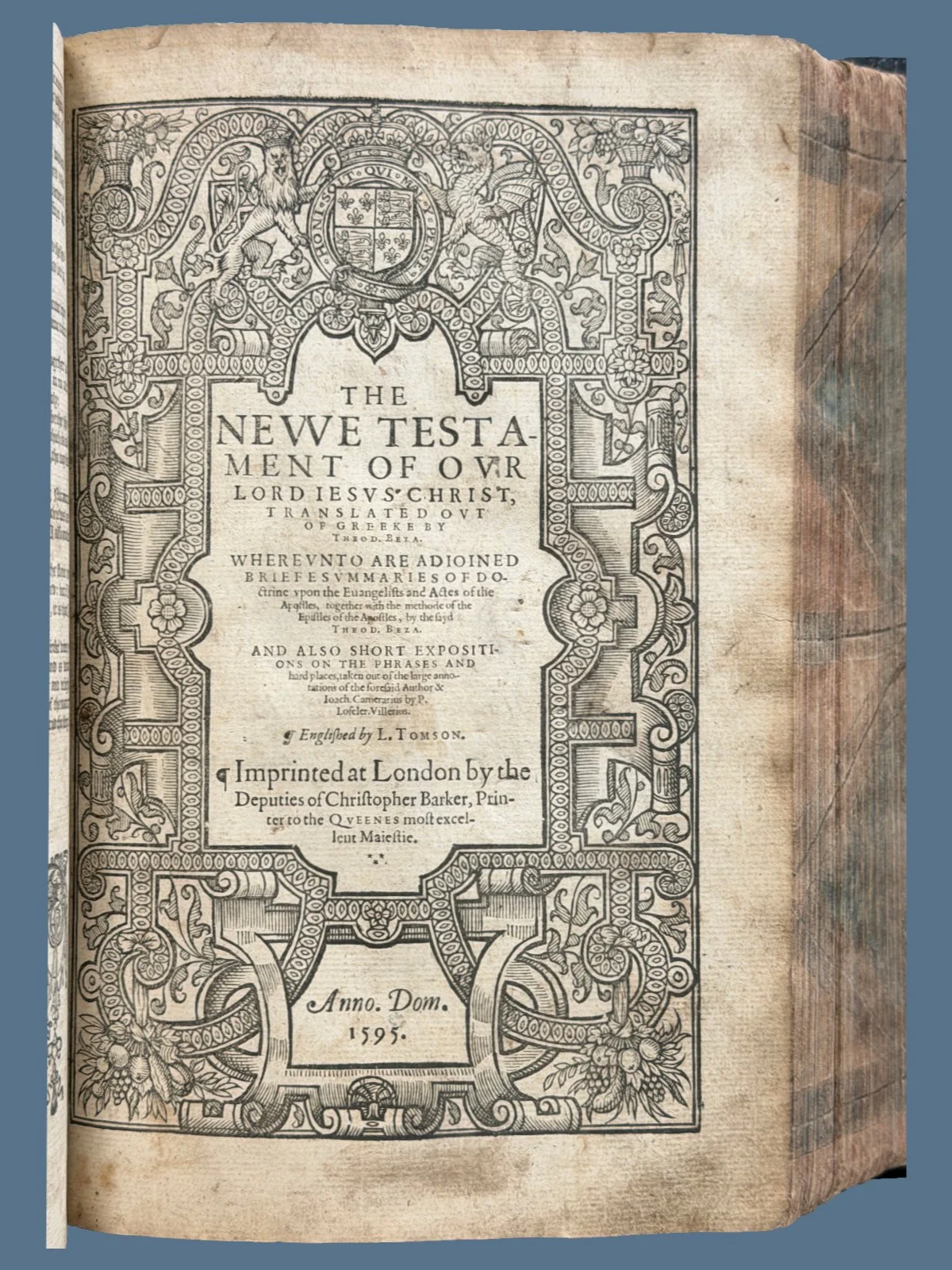
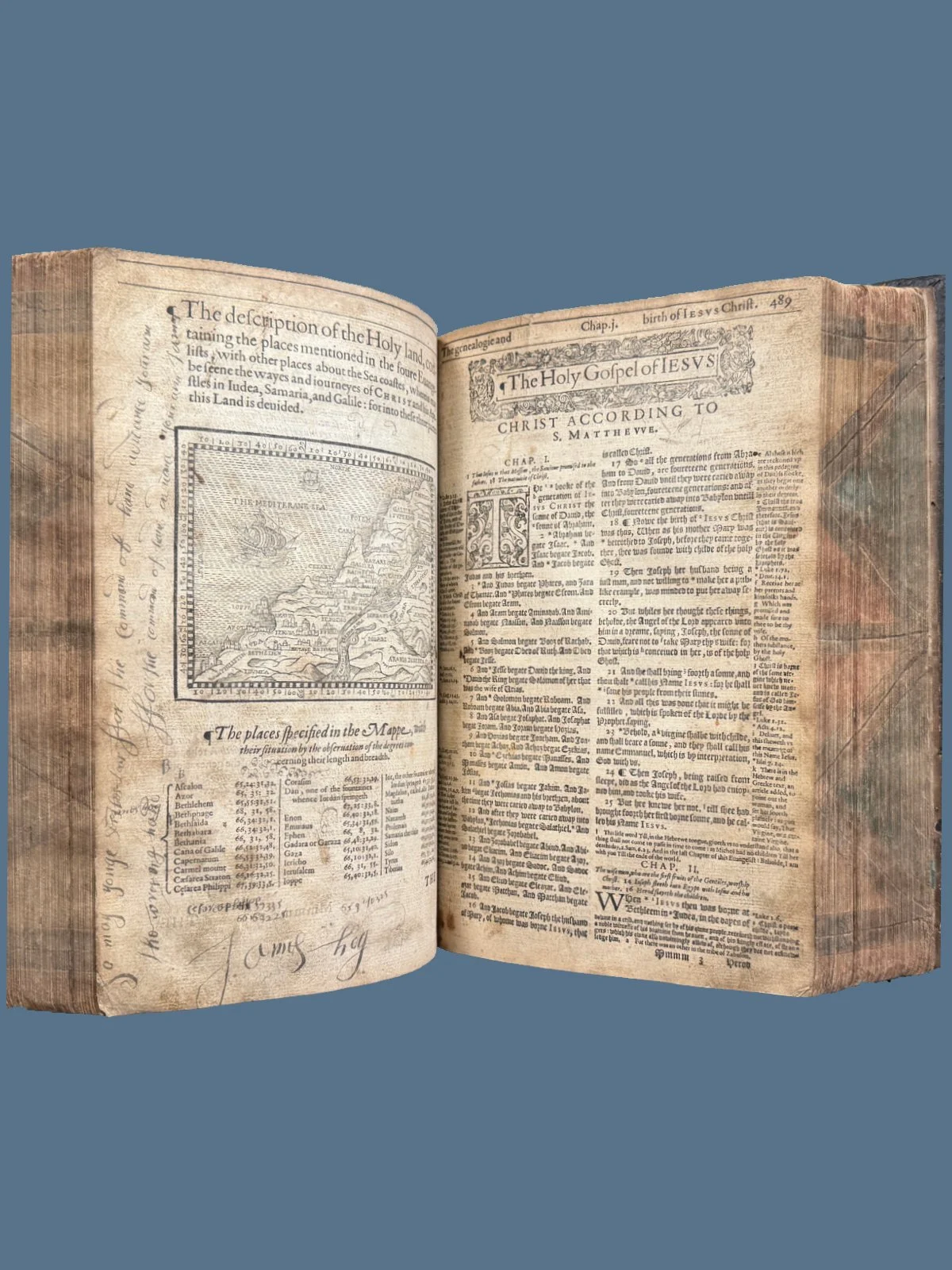
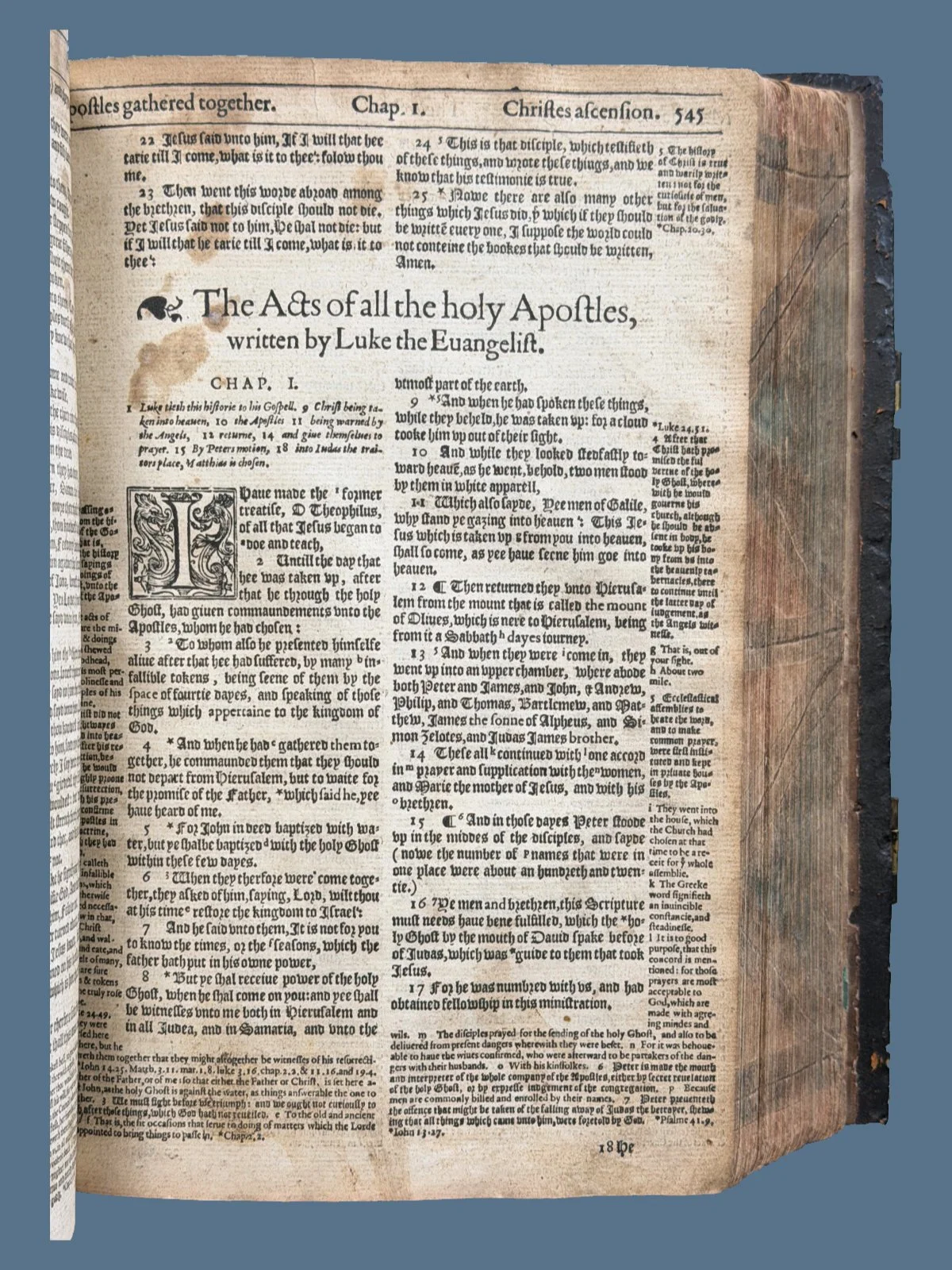
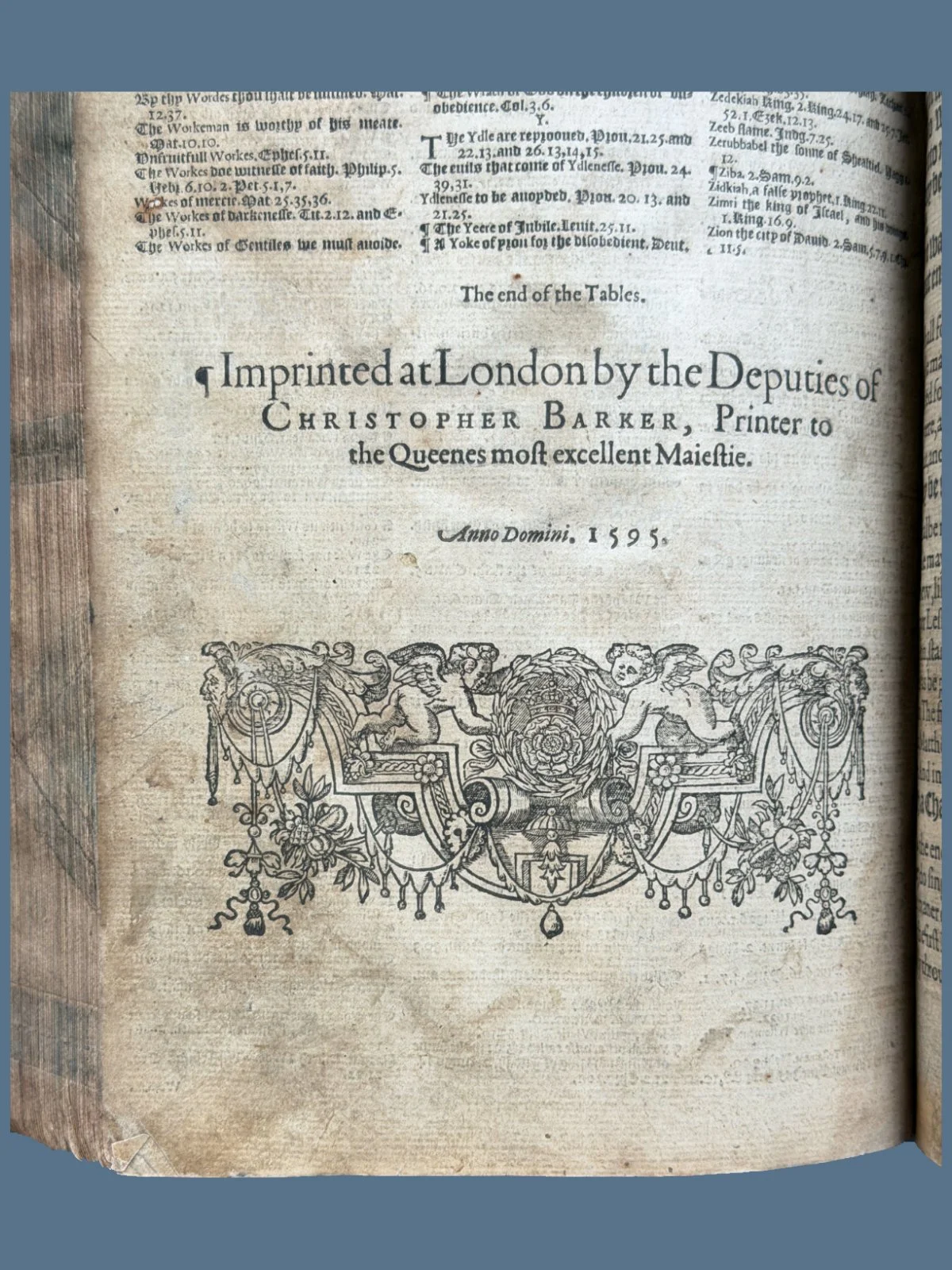
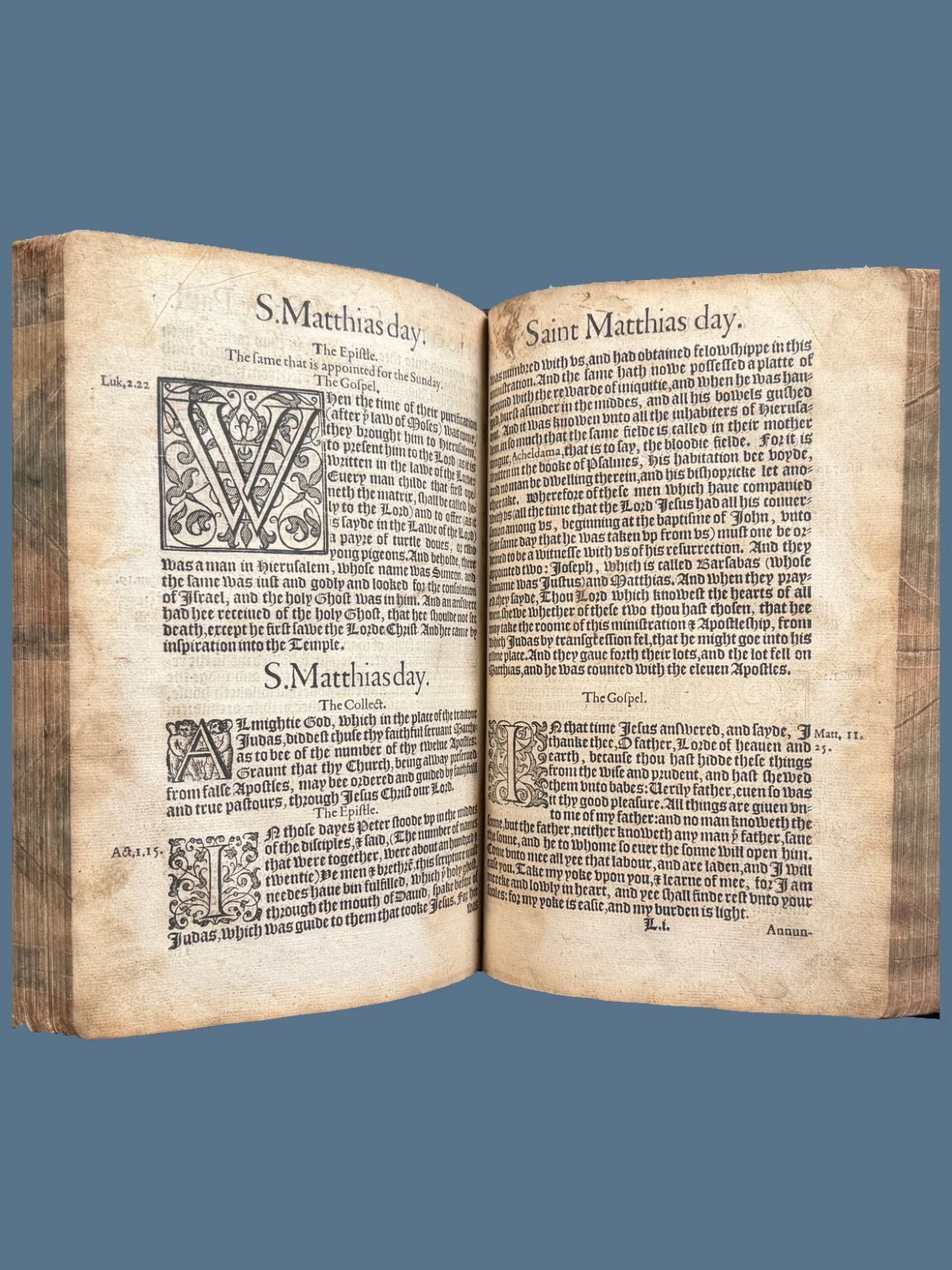
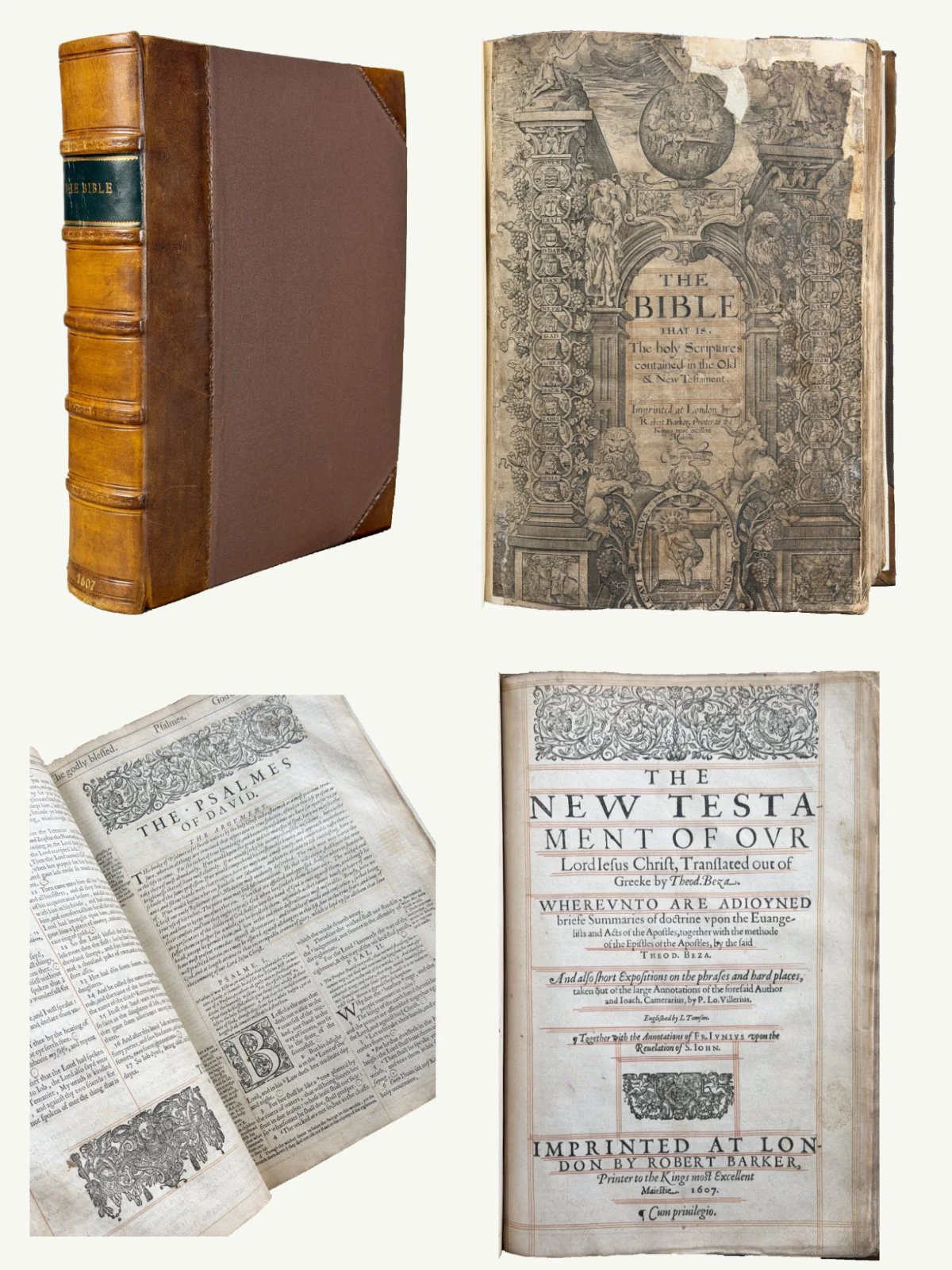
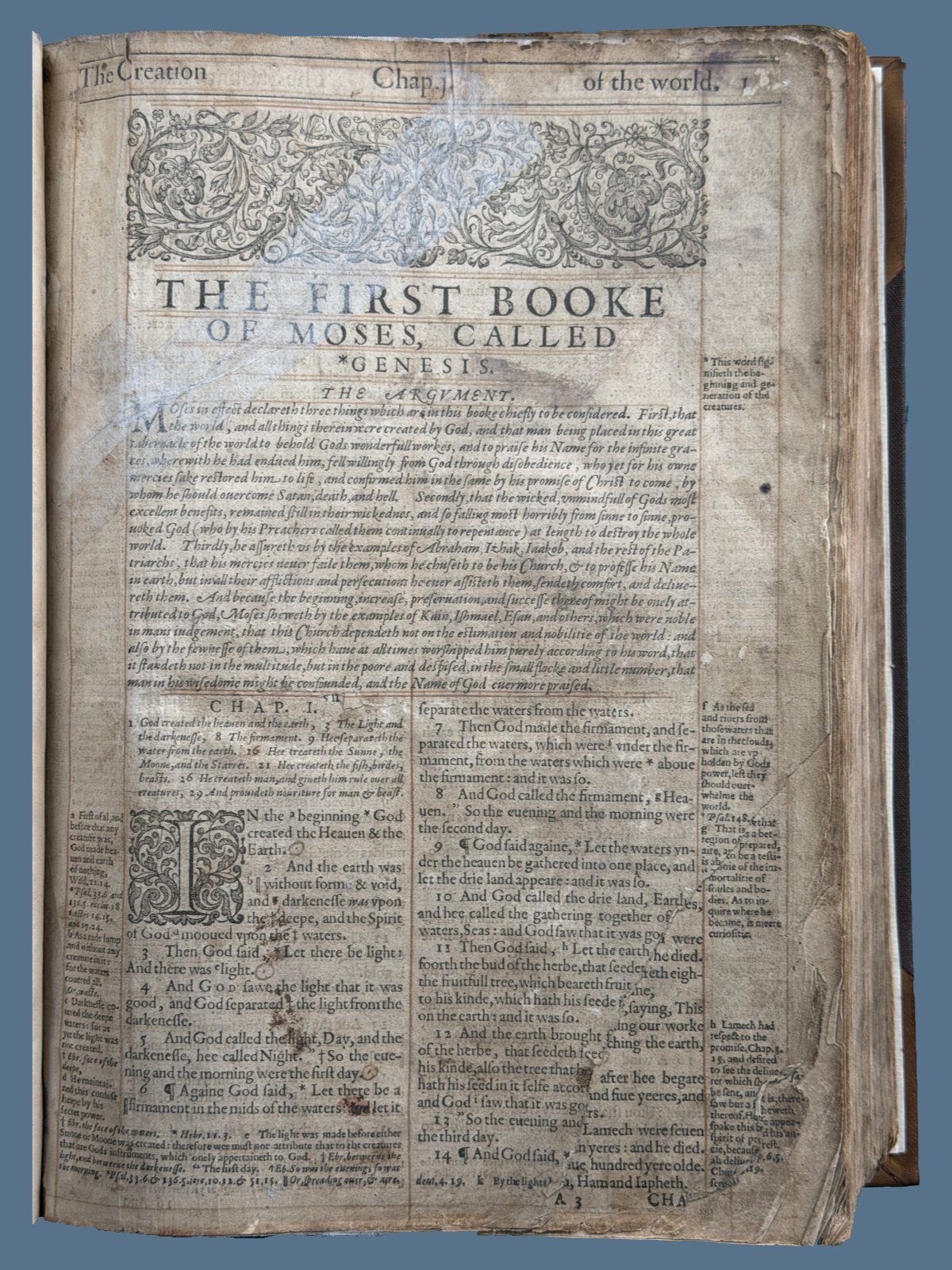
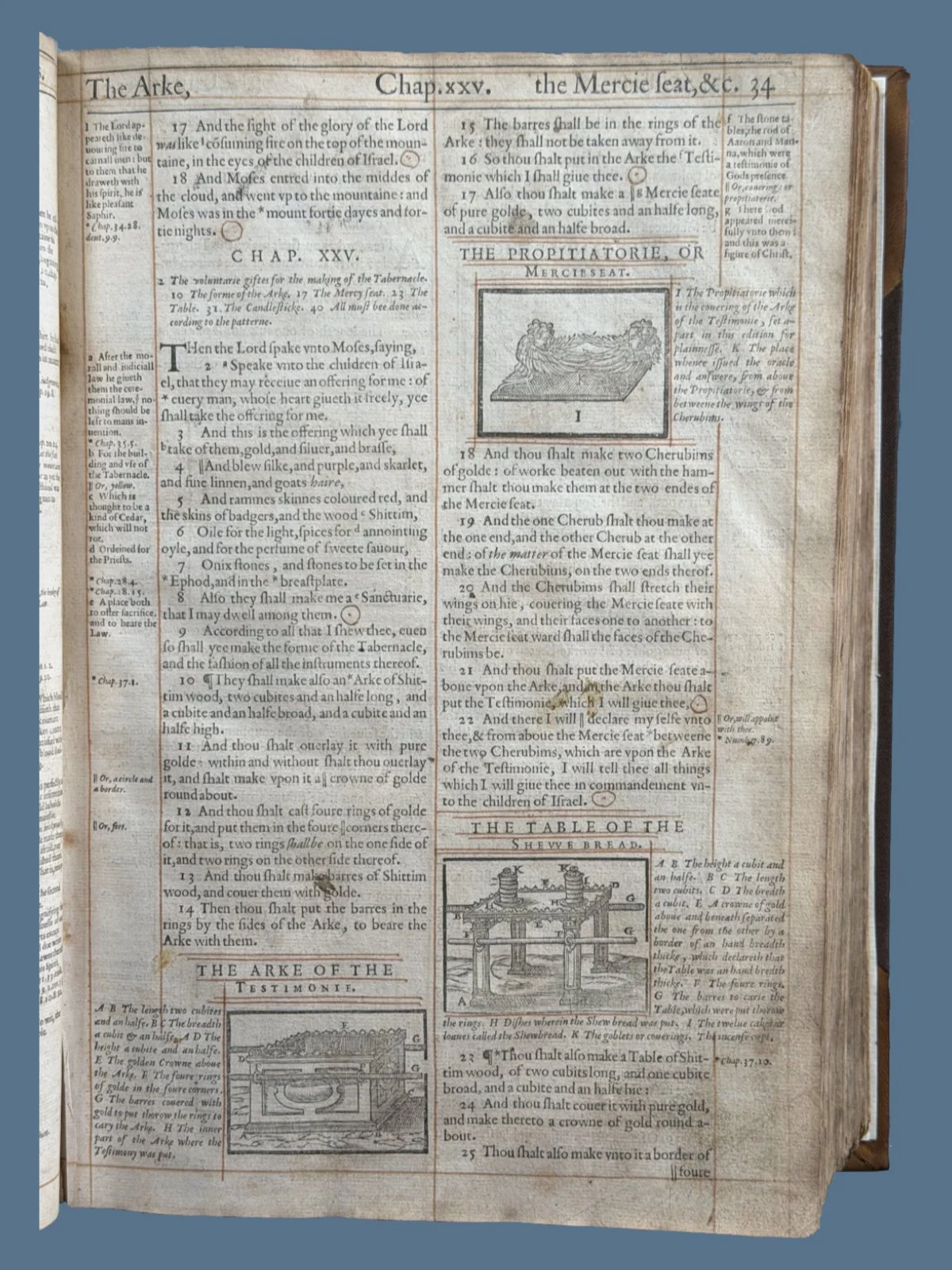
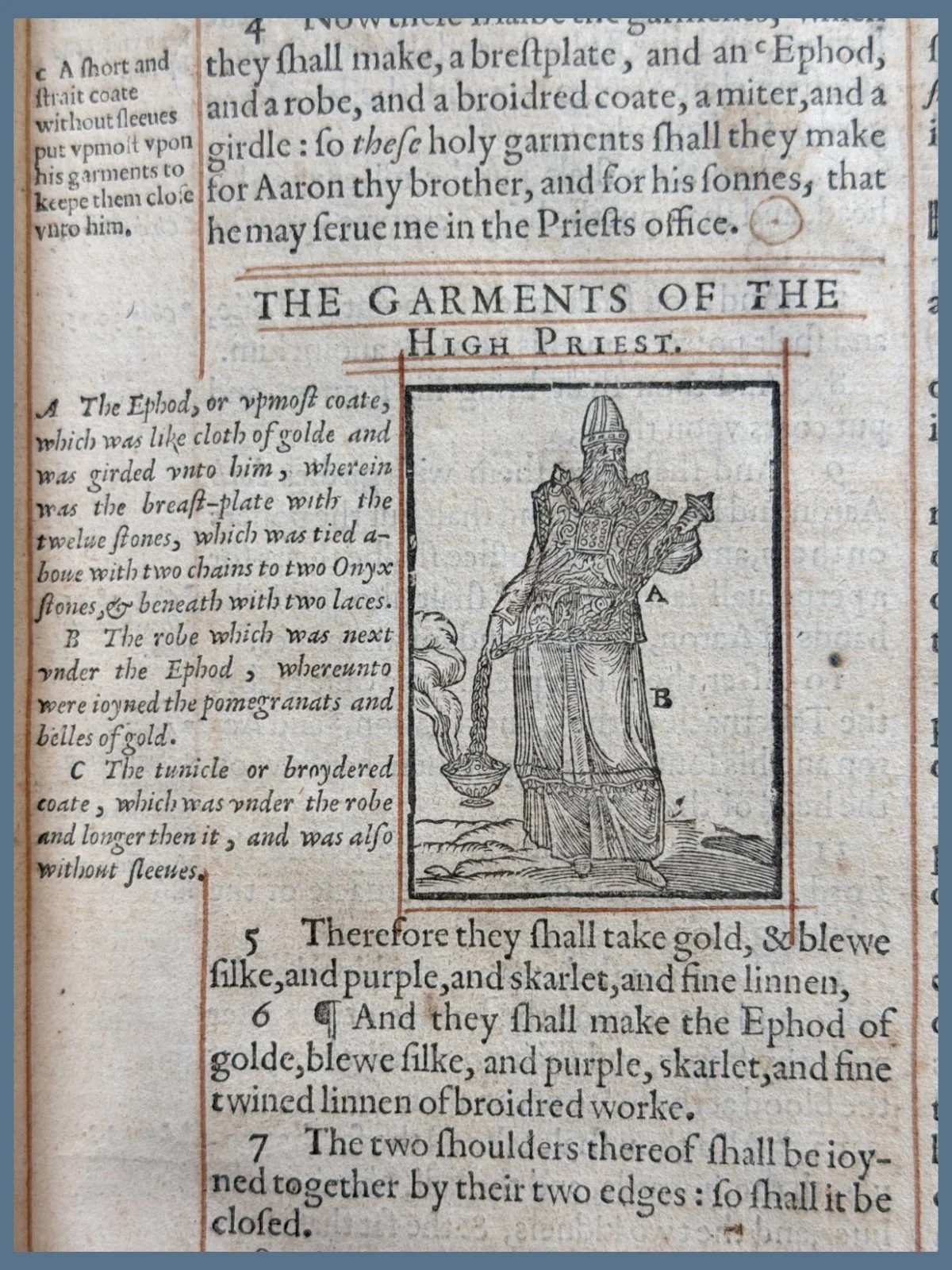
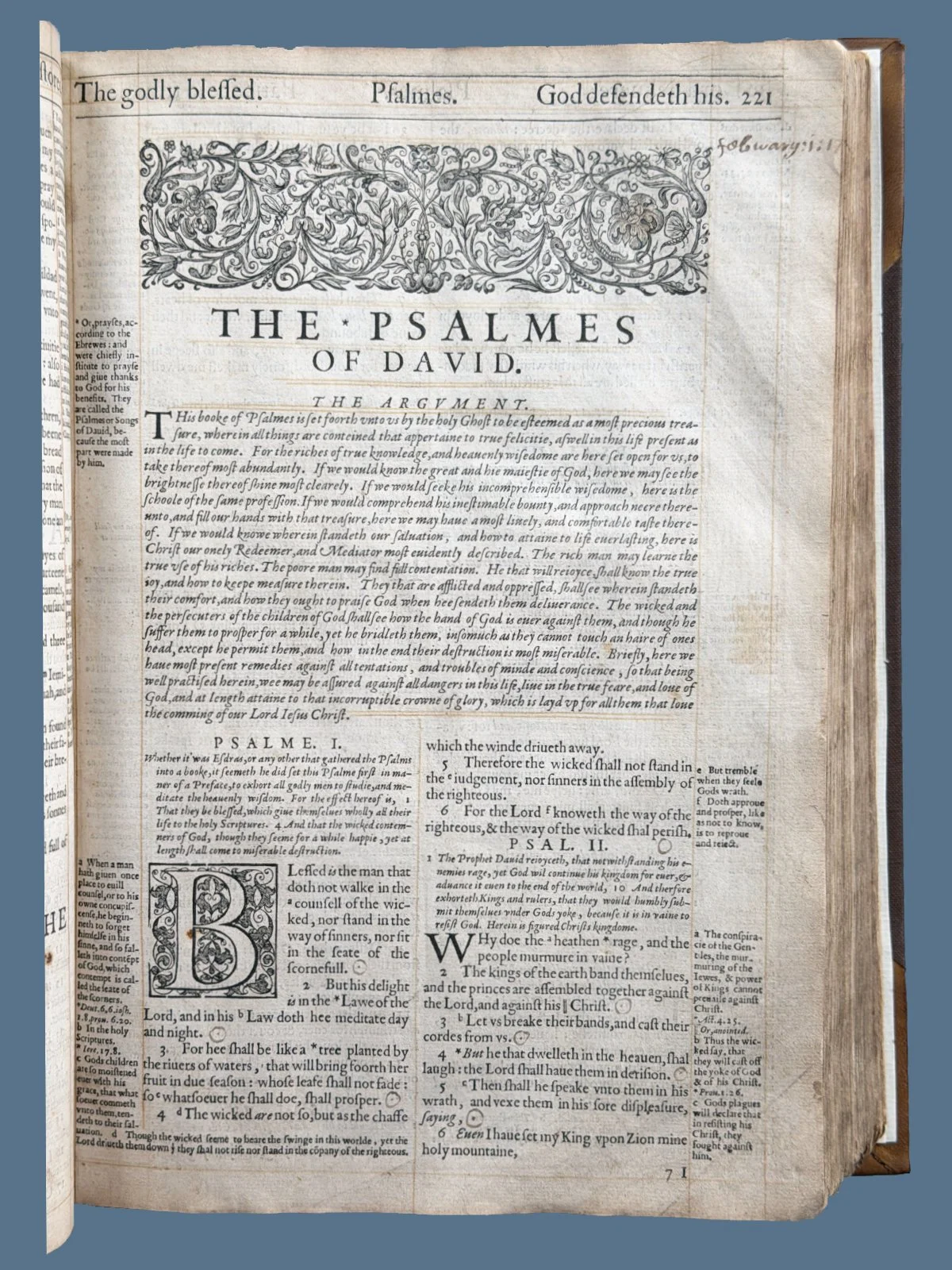
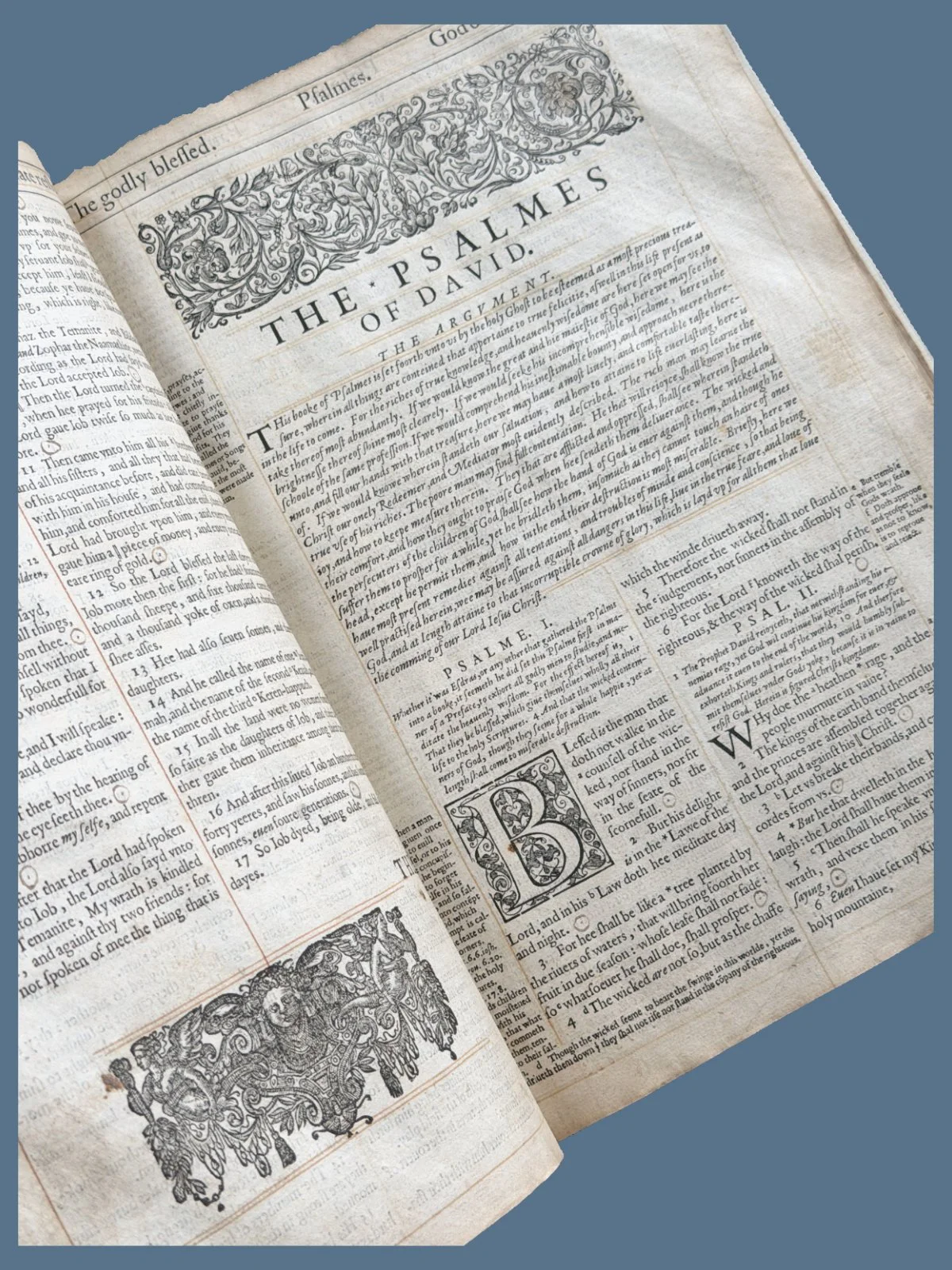
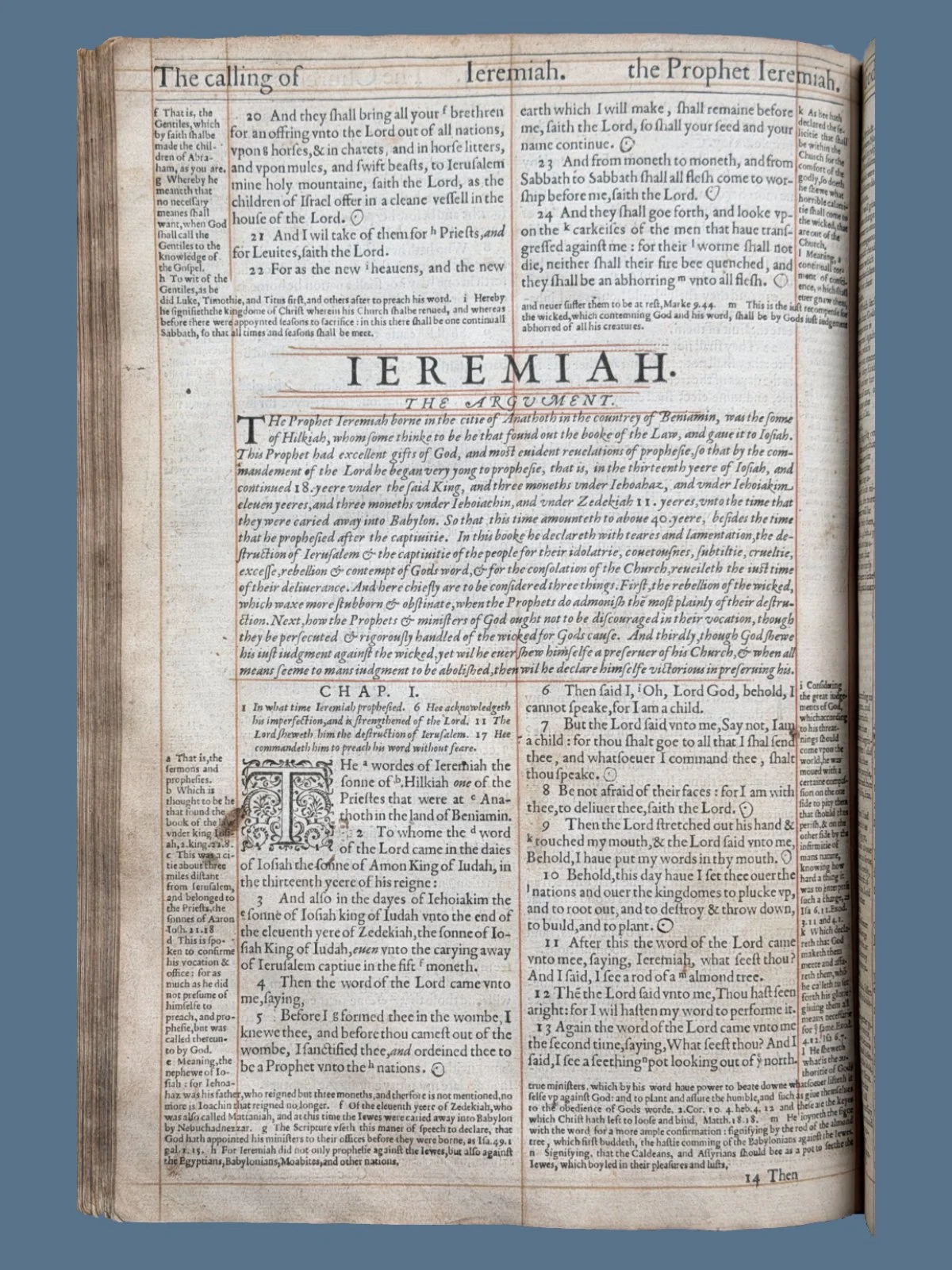
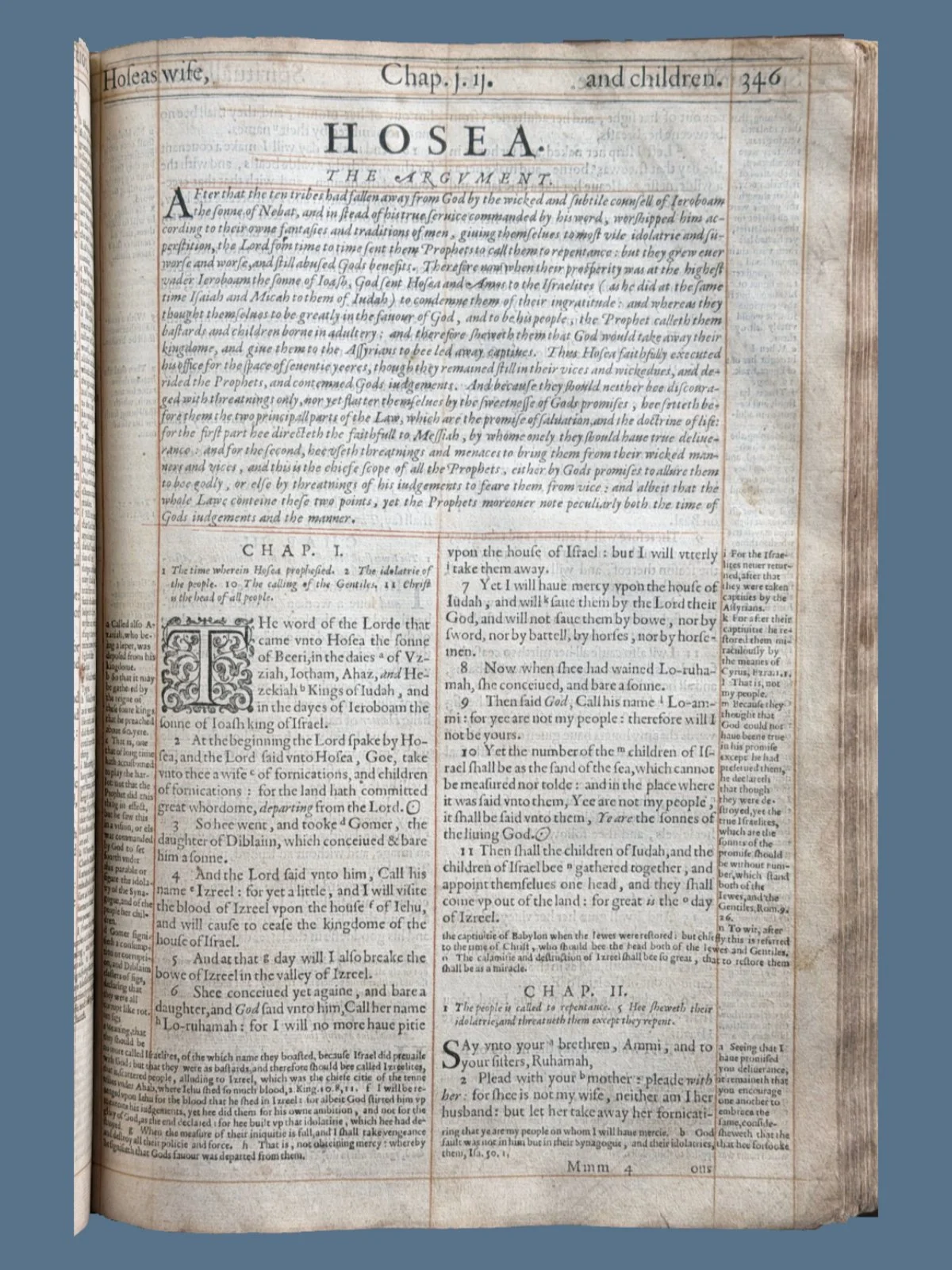
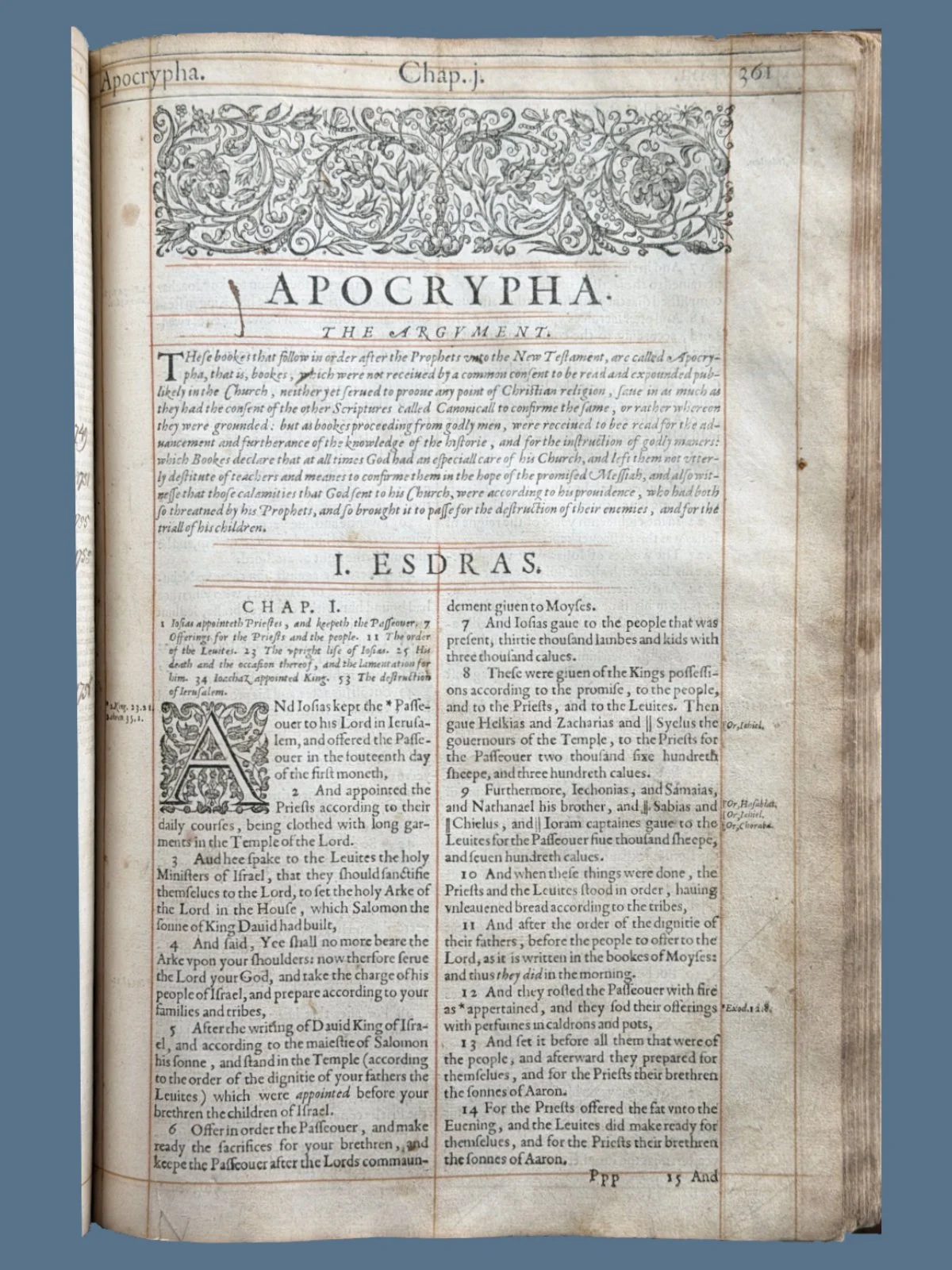
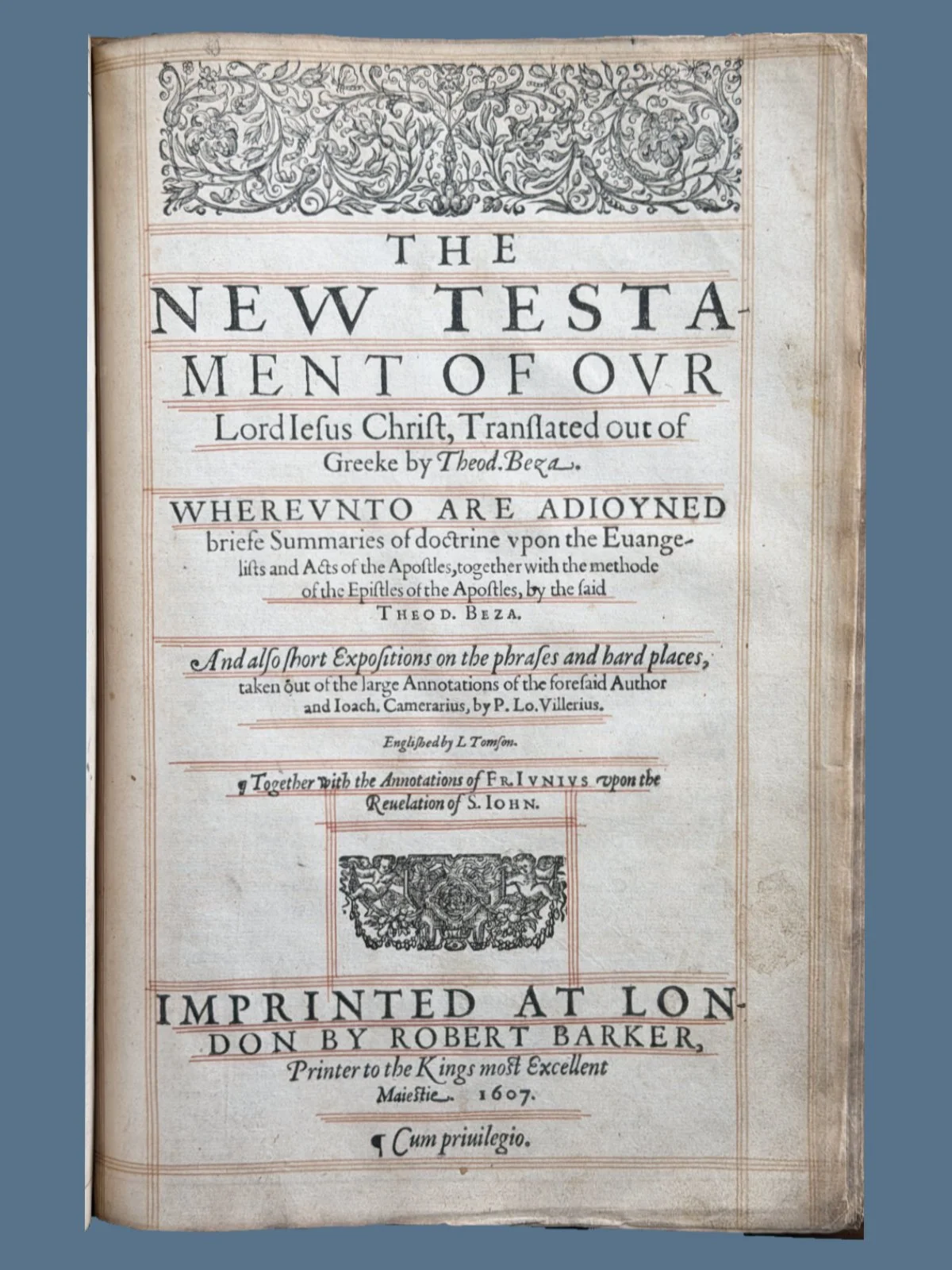
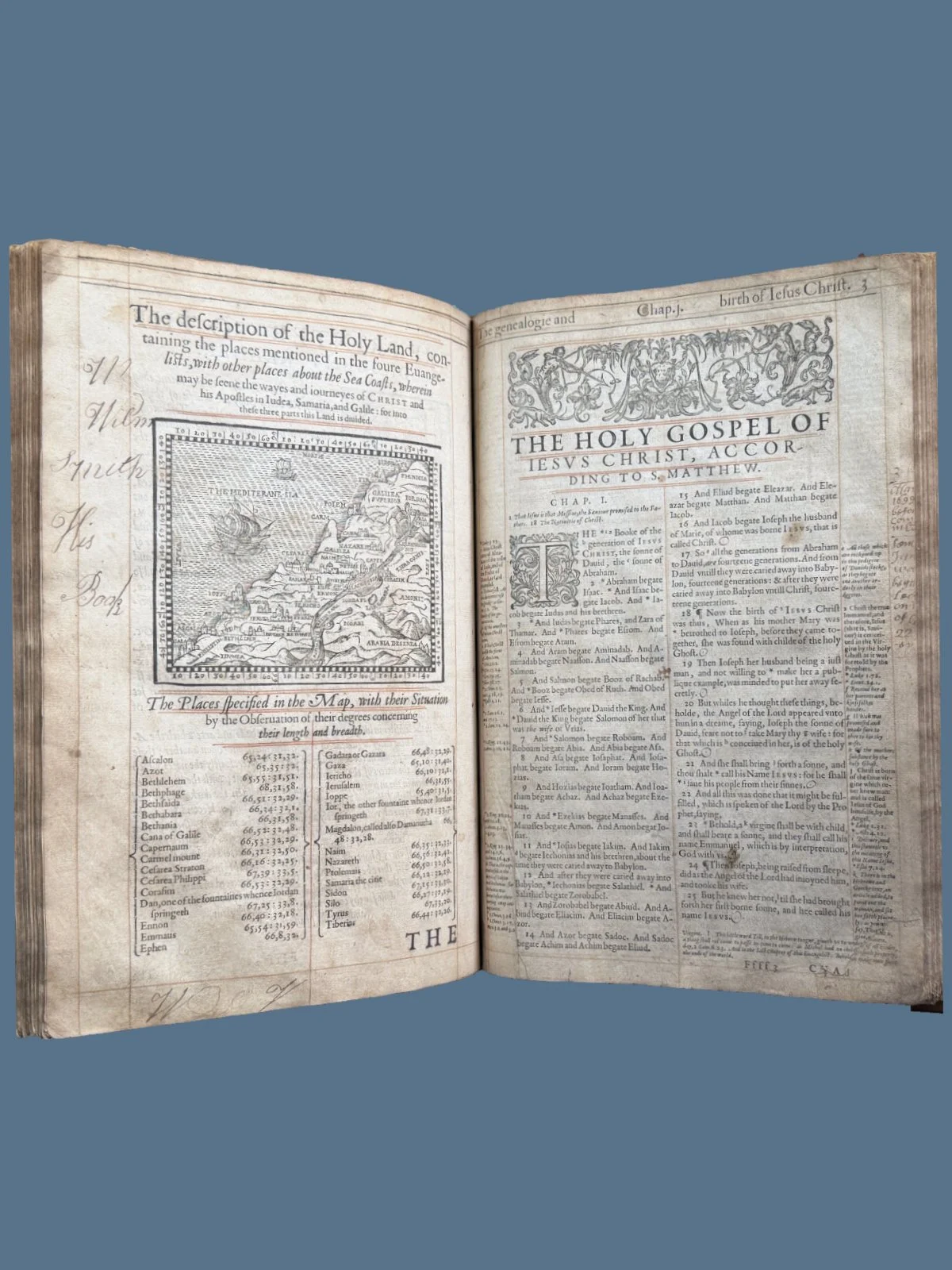
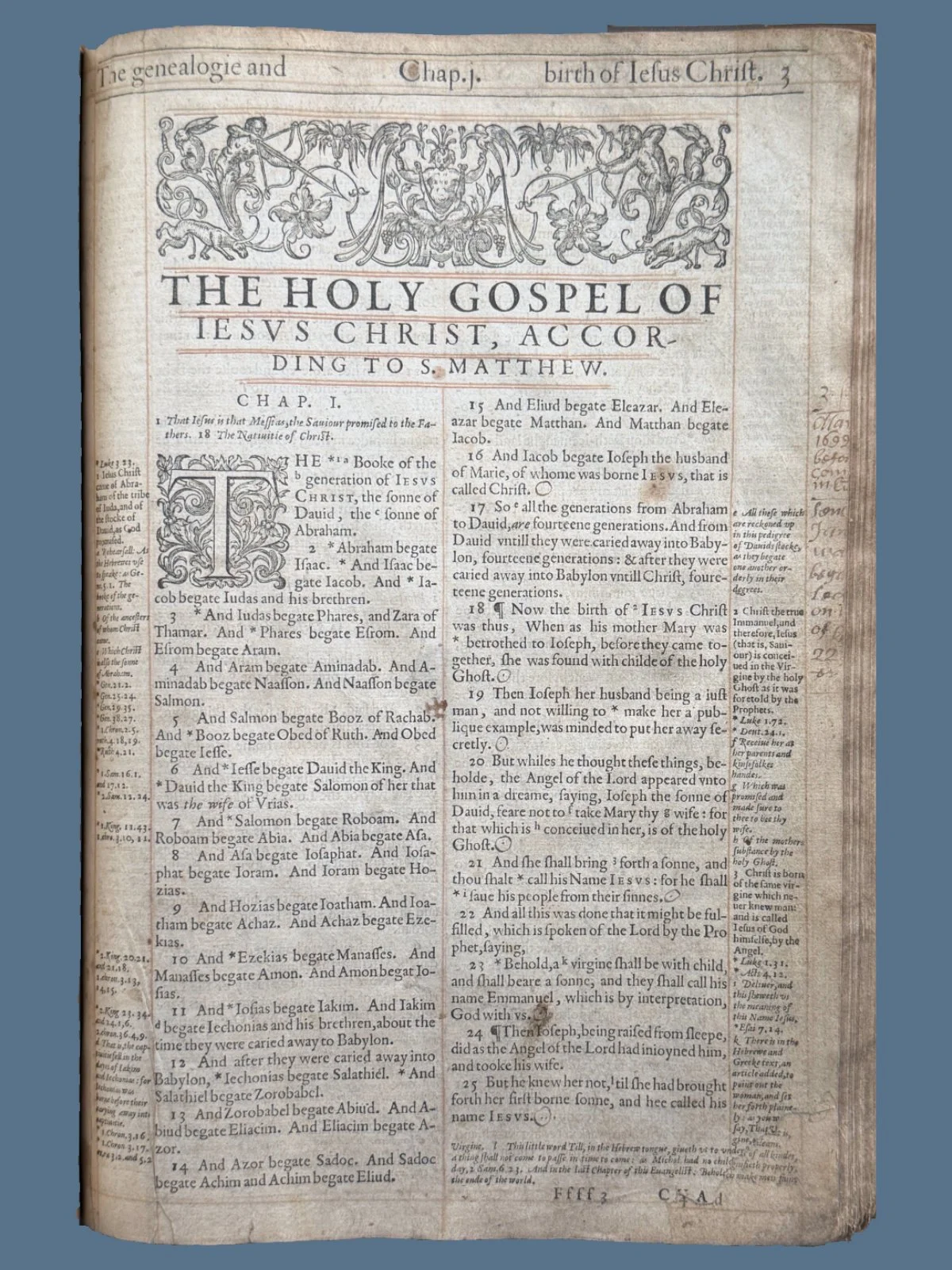
Text in two column Roman font. Bound with the Book of Common Prayer before the Bible text. Engraved title page (n.d.) with architectural design featuring the twelve tribes on the left and the twelve disciples on the right with the four gospel symbols at the center. A full-page engraving featuring Adam and Eve in the Garden before Genesis. Apocrypha included as issued. New Testament title page (1611) with head- and tailpiece. Ends on the dated colophon (1612). Bound with the Whole Booke of Psalmes (1609) by Sternhold and Hopkins. Complete set of Geneva illustrations and maps. Woodcut first chapter initials and decorative head- and tailpieces throughout.
Manuscript Annotations
The annotations extend across the Bible’s margins and blank space. Notable subjects include:
Biblical chronology: dated genealogical calculations throughout the Old Testament, especially Genesis, and historical observations at the beginning of most books.
Gospel concordance: ruled marginal columns and extensive sequential numbering across the four Gospels, suggestive of a systematic scheme for comparing parallel passages.
Canonical and Apocryphal books: an exceptionally full manuscript discussion of the canon, organized arguments against the Apocrypha’s canonical authority, and references to Jewish and early Christian scholars.
Revelation and church history: dense notes throughout Revelation, interpreting the Christian Church, imperial Rome, the beast, the Whore of Babylon, and the papacy within a historical and prophetic scheme.
Practical theology and devotion: extended outlines of faith, repentance, regeneration, sanctification, prayer, good works, Christian duty, and preparation for death, with frequent scriptural cross-references.
The annotations are significant not merely for their quantity but for their organized, research-oriented character in both English and Latin: numbered propositions, reference lists, historical calculations, source comparisons, and sustained commentary appear across multiple books.
Collation
A-Z^6, Aa-Zz^6,. Aaa-Lll^6, Mmm-Ooo^8, Ppp-Zzz^6, Aaaa-Zzzz^6, Aaaaa-Ddddd^6, Eeeee^4. Bible text complete with all title pages.
Binding
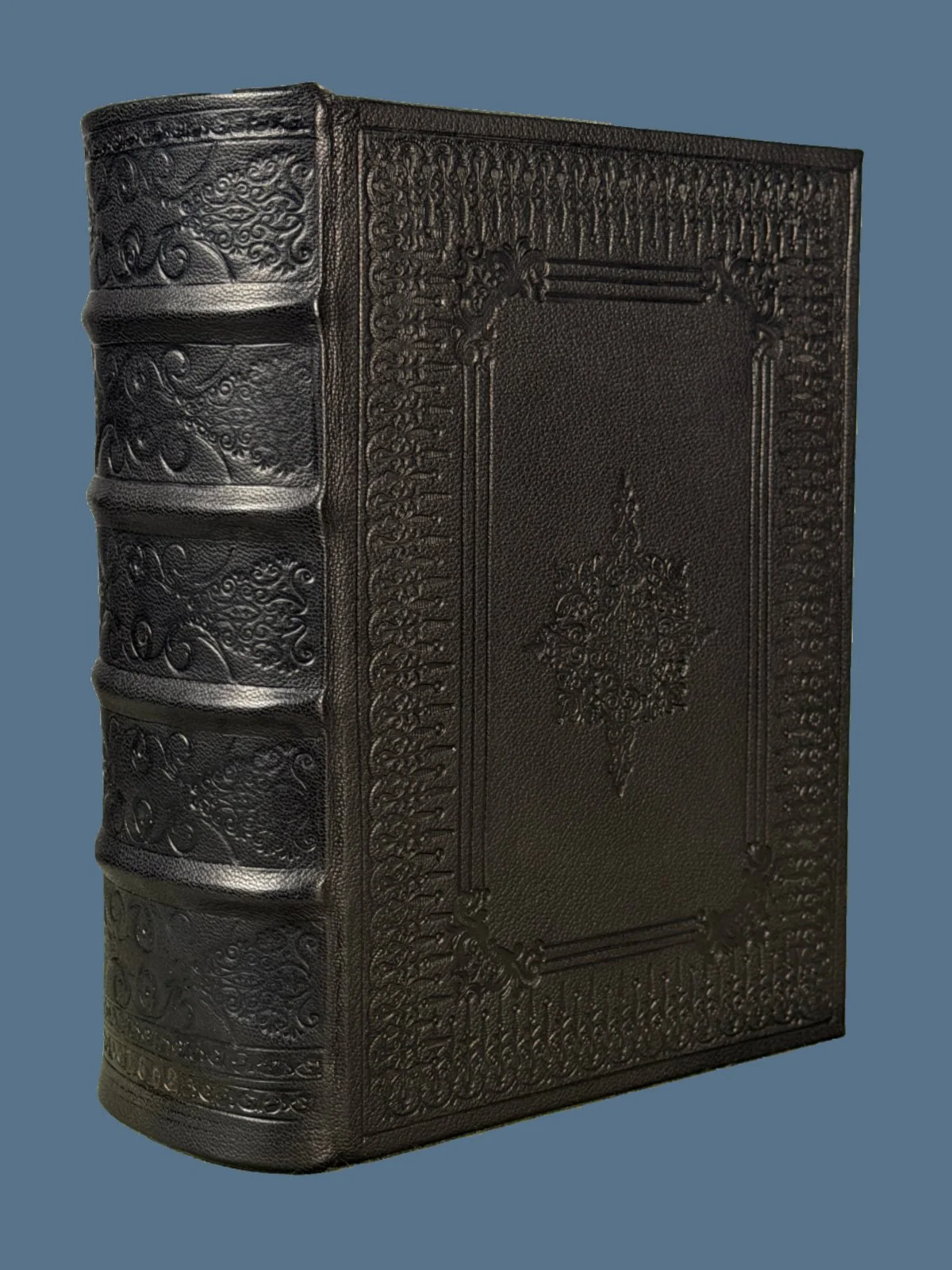
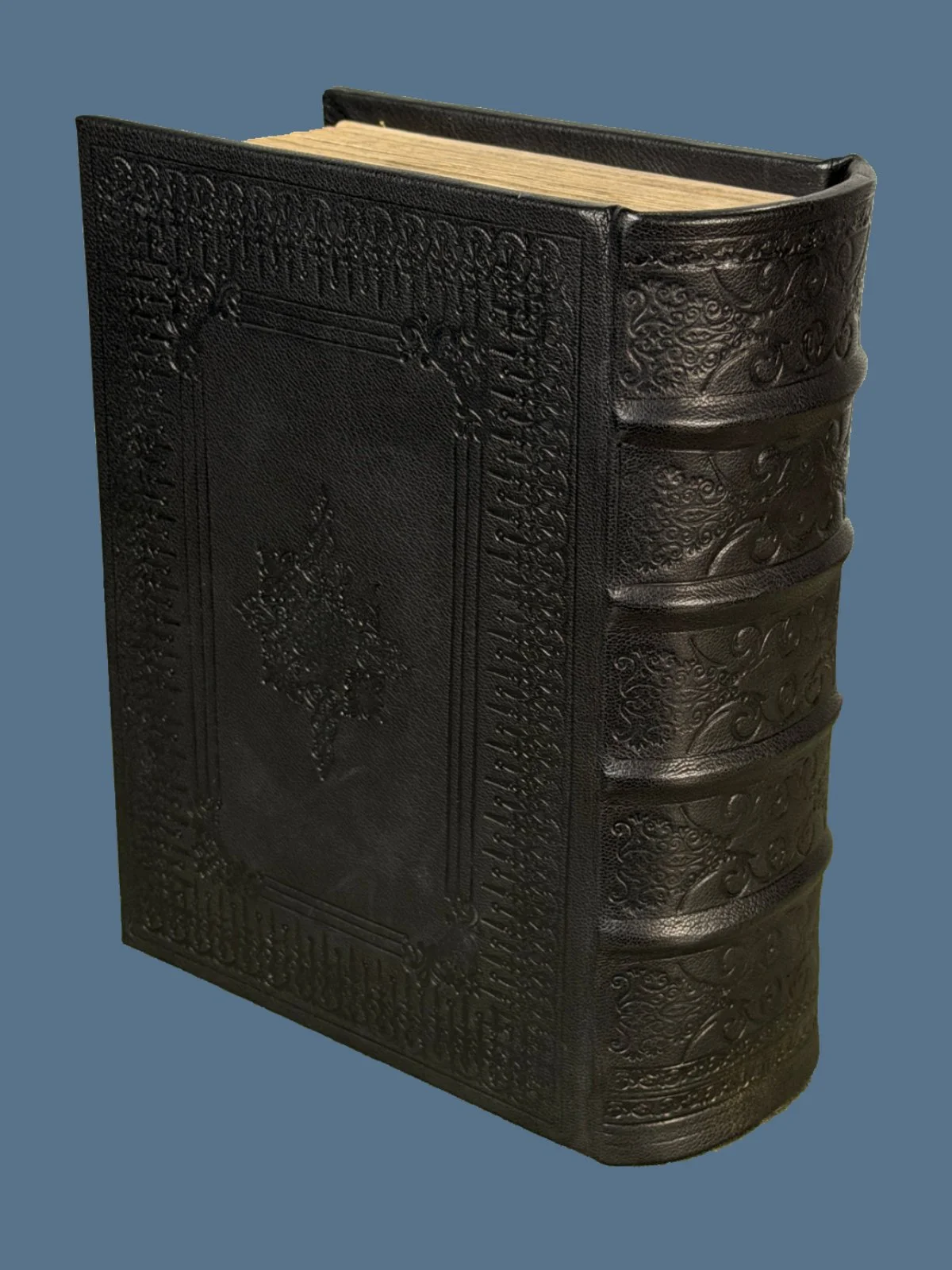
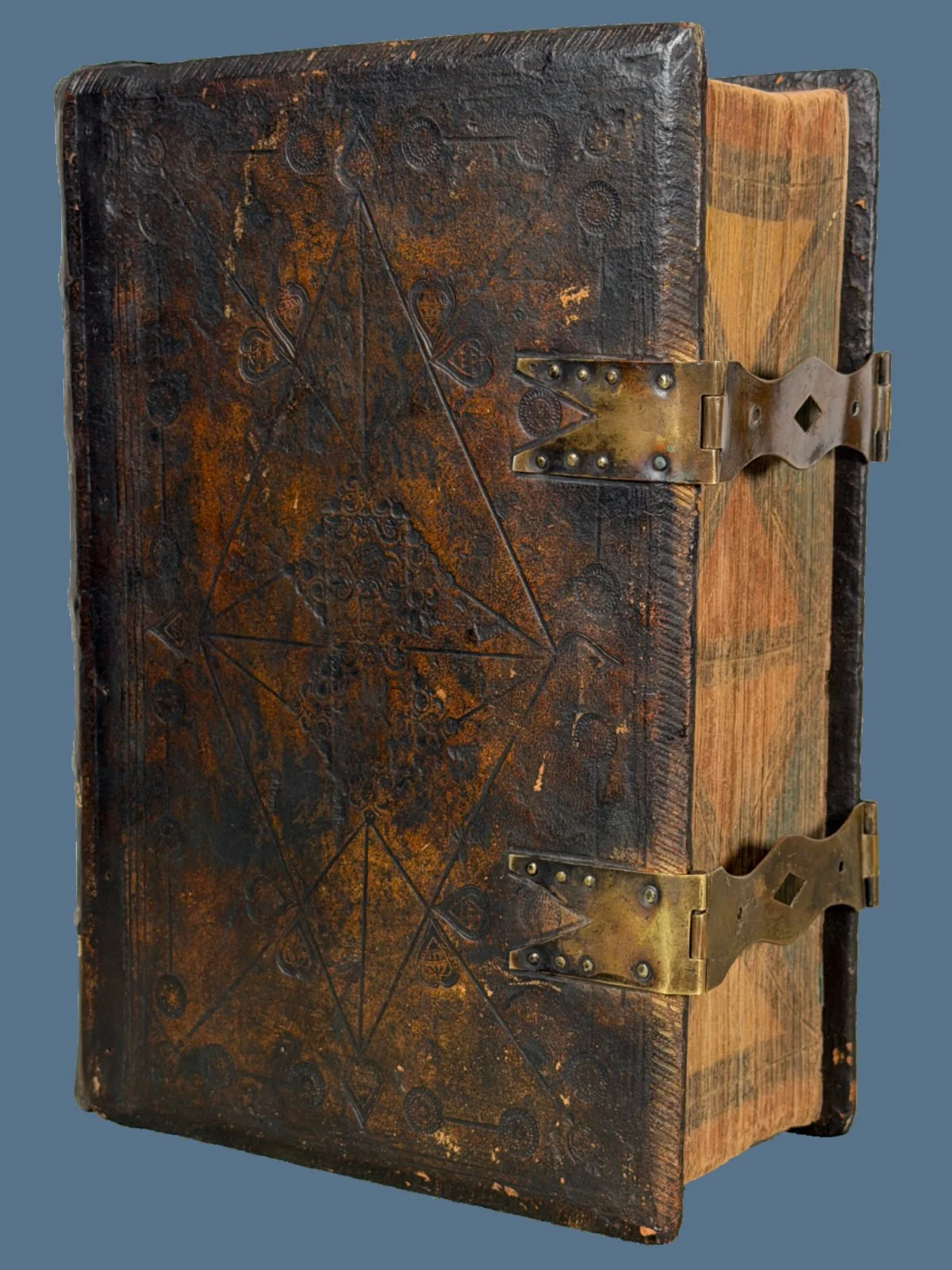
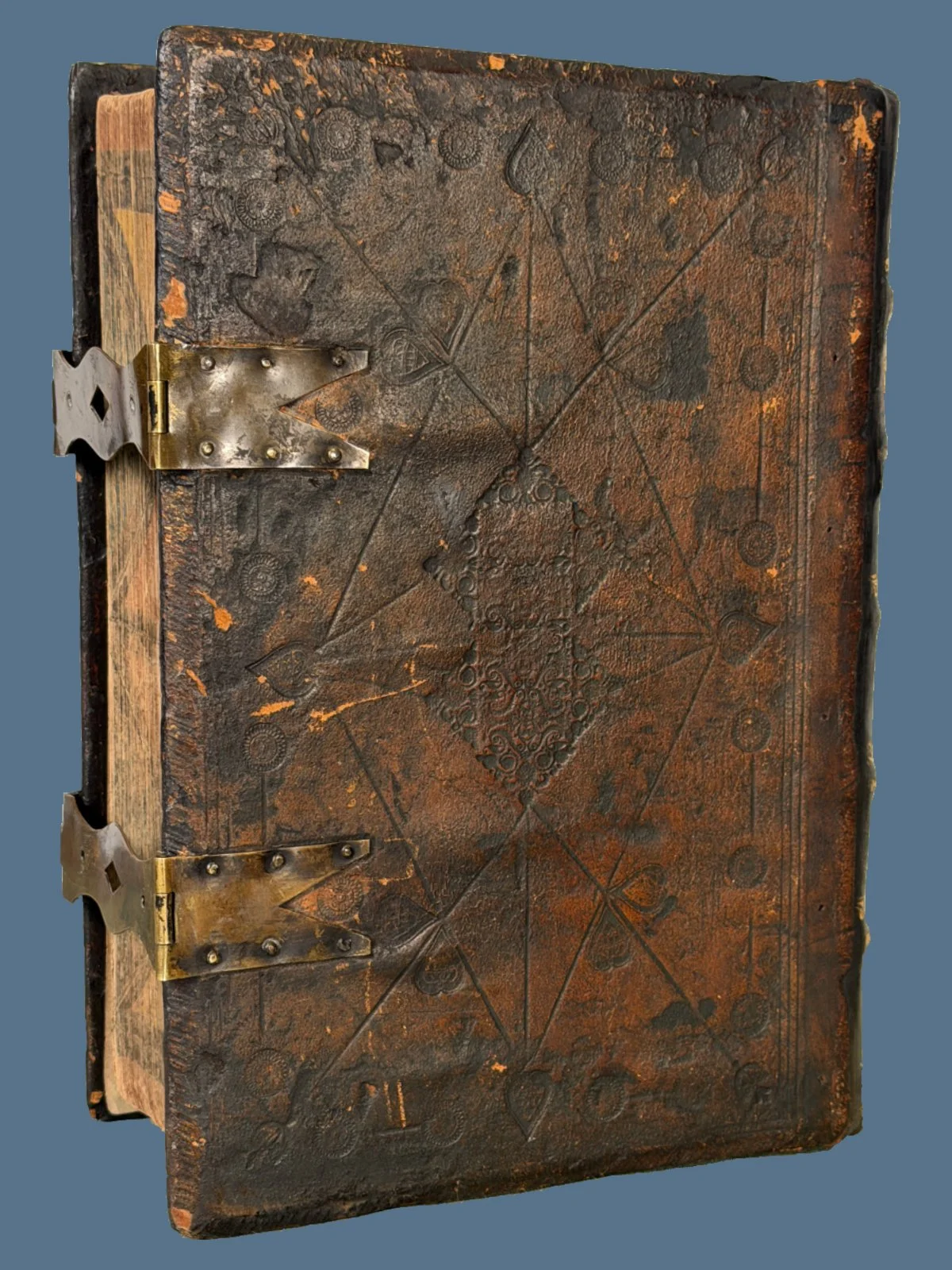
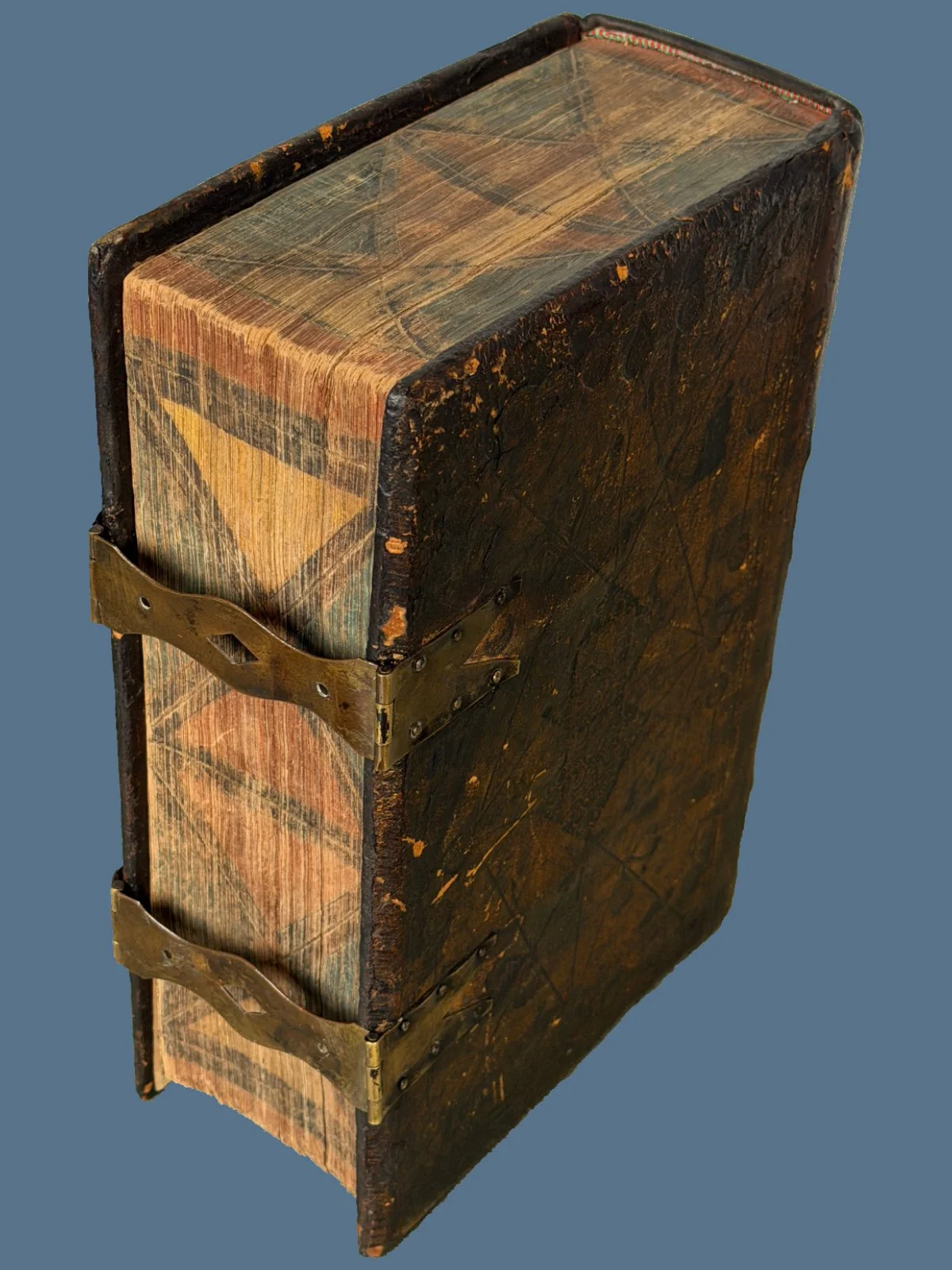
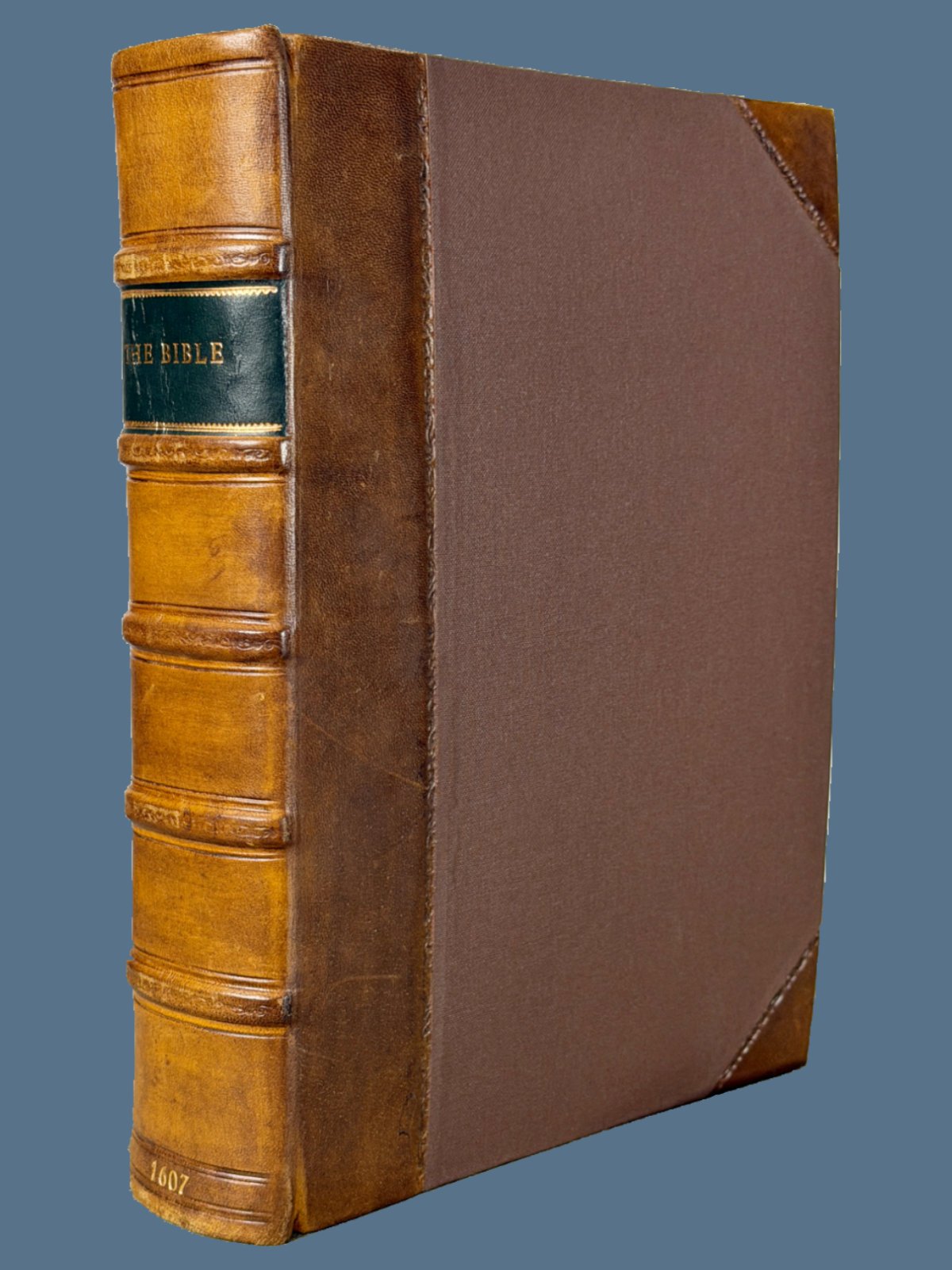
Rebound with contemporary covers and spine laid down. Covers paneled in gilt. Spine with five raised bands, elaborate gilt tooling to compartments, and a gilt-lined red morocco label with the words “Holy Bible” in gilt. Plain endpapers.
Condition
Some ink bleeding through on the title pages to the BCP, general and NT; Qqqq3 upper marginal repair; a few scattered stains, heavier to the final signature of the Psalter.
Provenance and historical significance
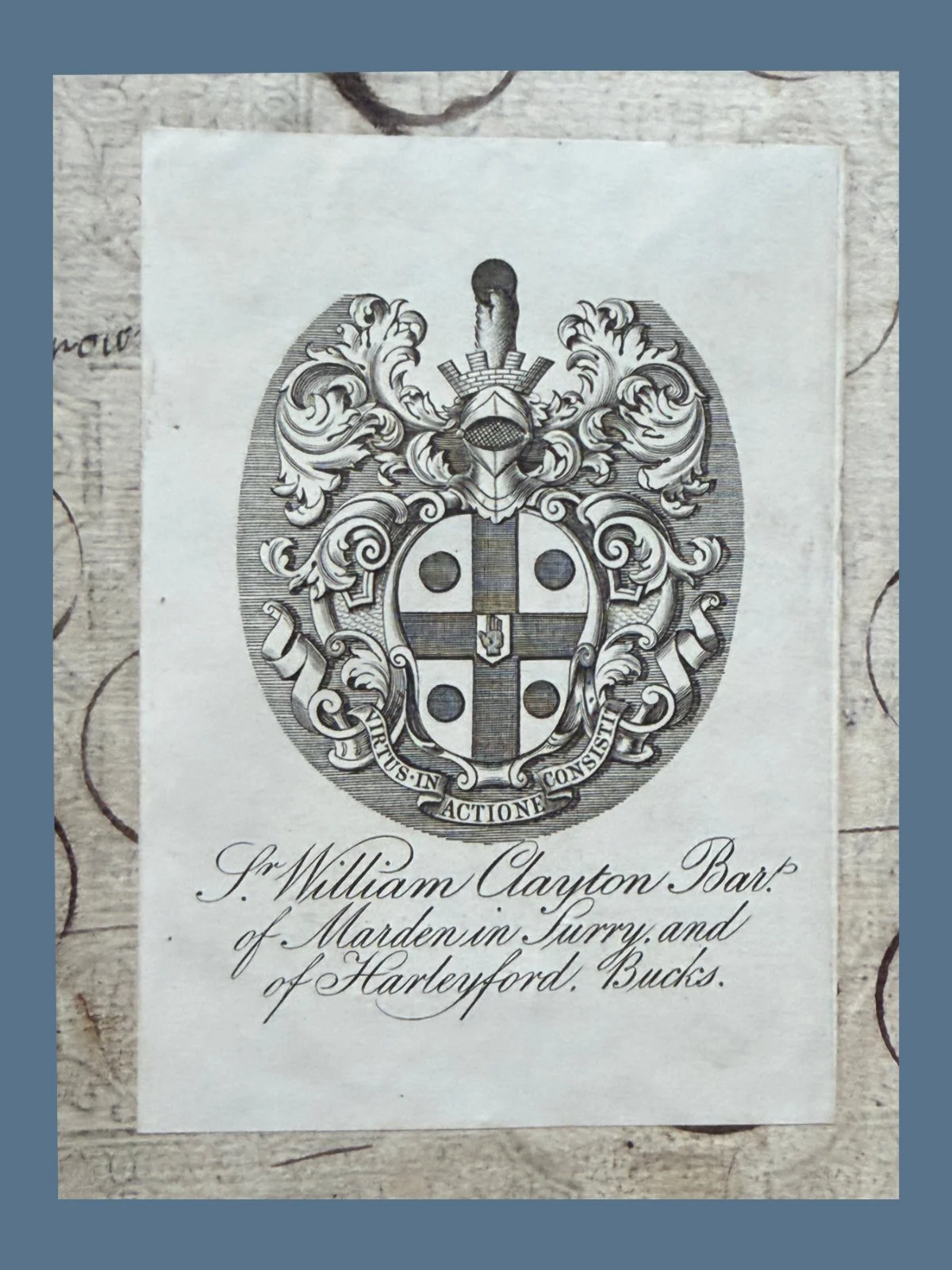
Michael Dalton’s signature to all title pages. Inscription before the first title page reads “Mary his Mother was Grandaughter of Michael Dalton, Esq, of Fulborn near Cambridge, whose observations on ye several parts of ye Bible are here writt with his own Hand, & who was an Eminent Barrister…”
Dalton (1564–1644) was a prominent English jurist, legal scholar, and justice of the peace. Educated at Trinity College, Cambridge, and Lincoln’s Inn, he is best remembered for his influential The Countrey Justice (1618), a practical handbook for magistrates that remained an authoritative legal reference in England and colonial America well into the eighteenth century. He also authored Officium Vicecomitum (1623), a widely consulted treatise on the duties of sheriffs.
Dalton also had a keen interest in religious history and Protestant theology, compiling an extensive manuscript history entitled A Breviary of the State of the Roman (or Westerne) Church and Empire and chronicles the Church from the time of Christ to Martin Luther. His 230-page manuscript survives in the British Library (Add MS 4359). This Bible likely served as a source repository during the intellectual preparation of his Breviary, and offers a unique look into seventeenth century Puritan theological thought and scholarship.
References
Herbert 312. STC 2218.