 Image 1 of 18
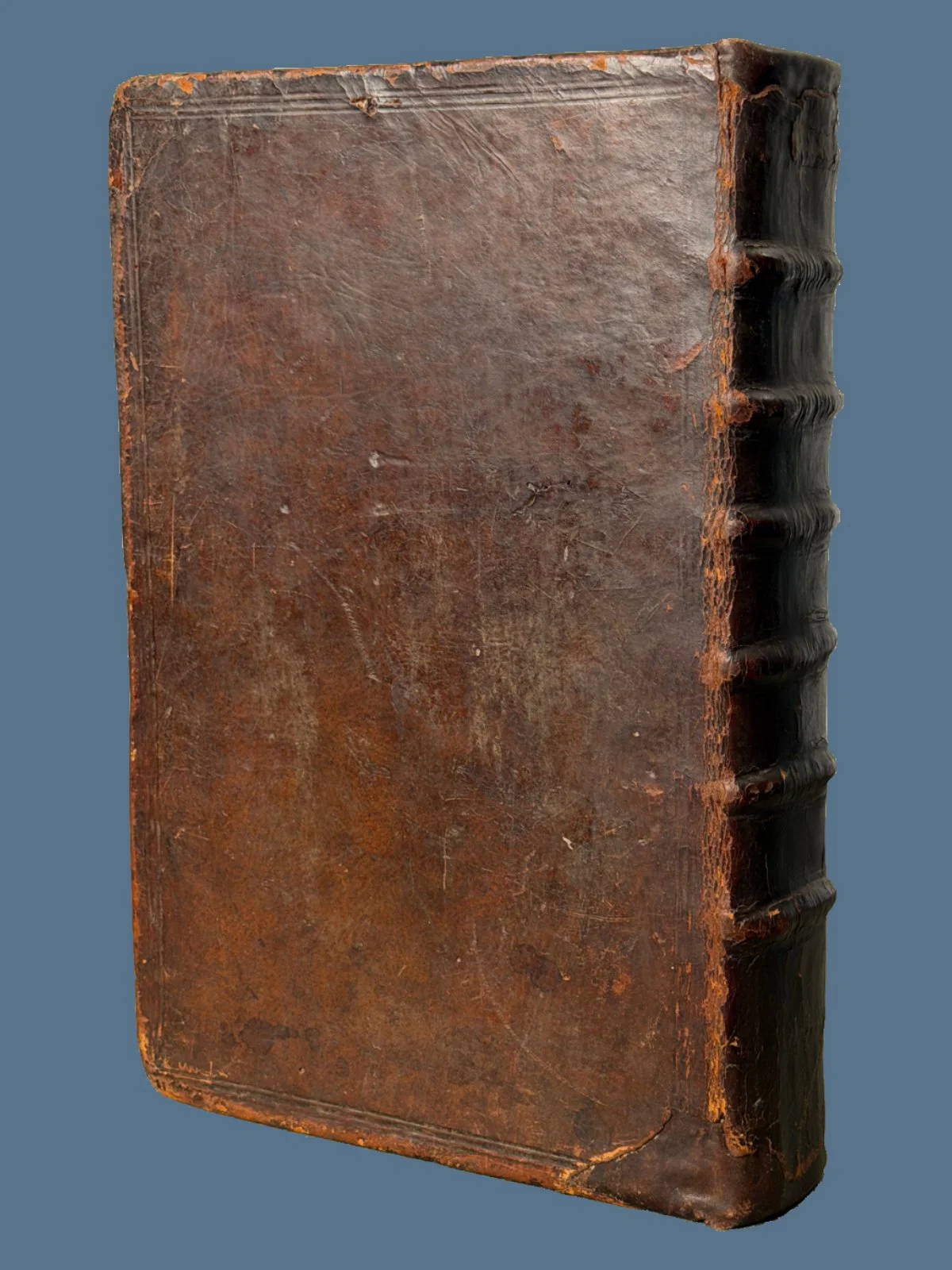 Image 2 of 18
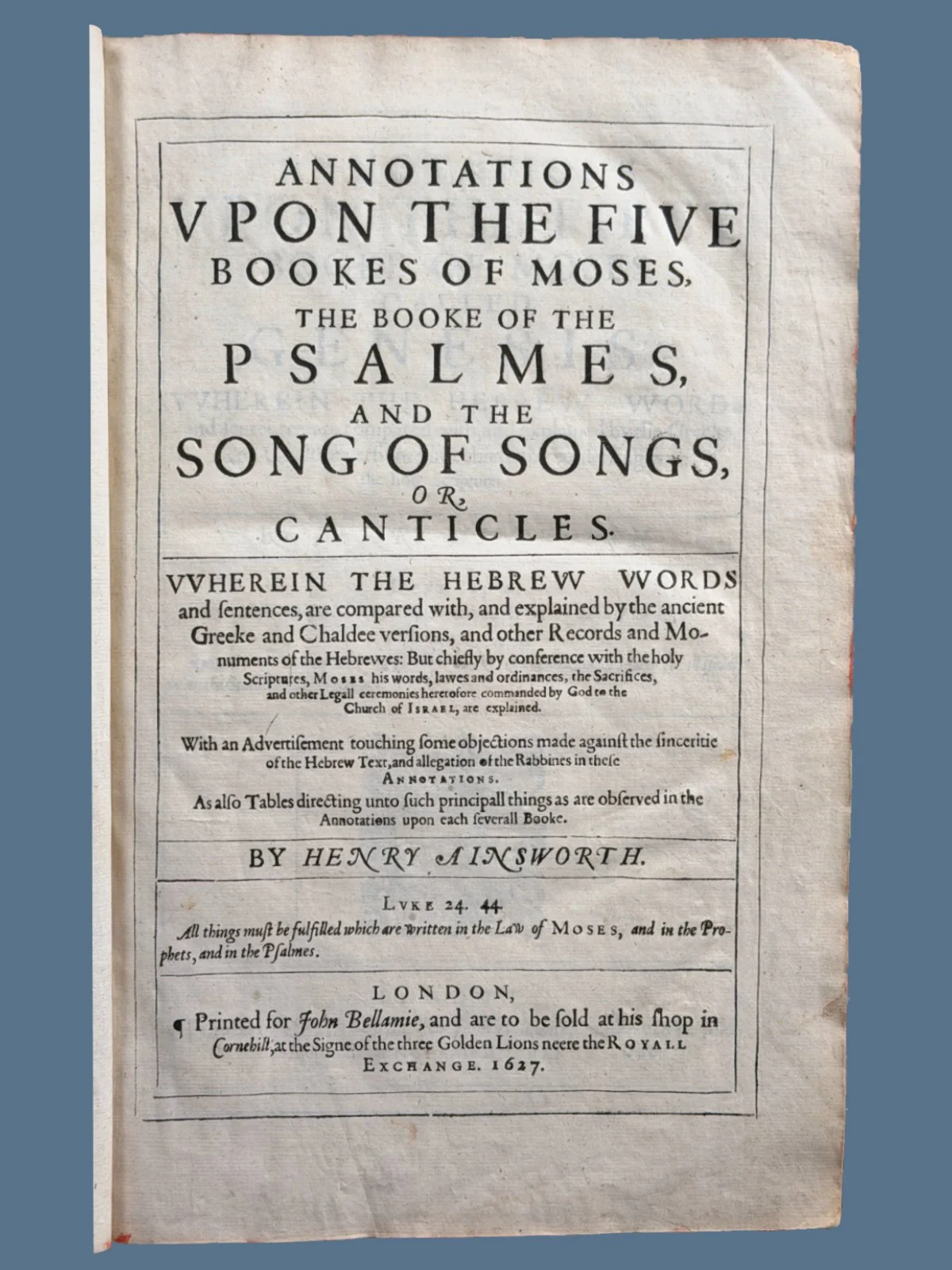 Image 3 of 18
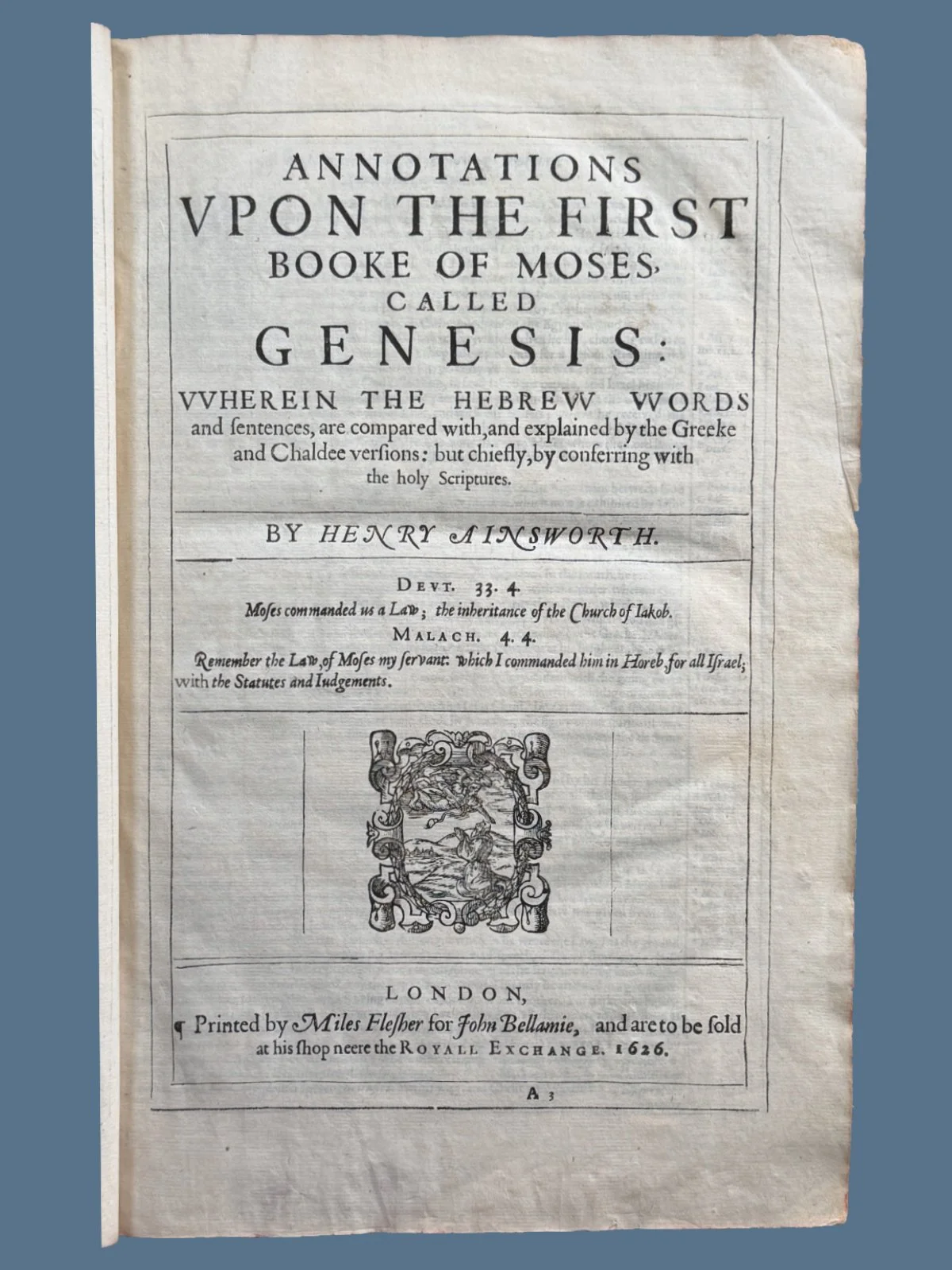 Image 4 of 18
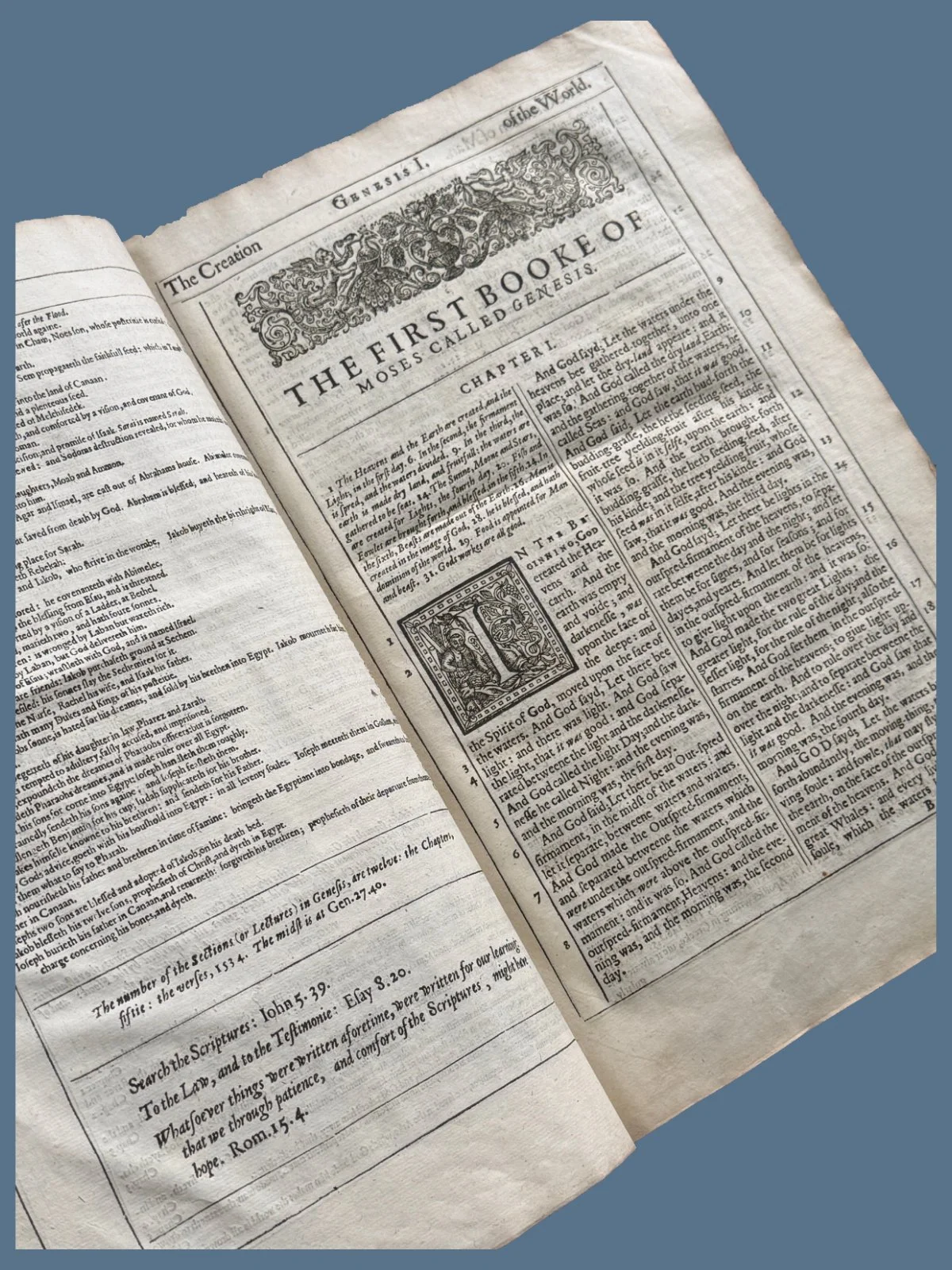 Image 5 of 18
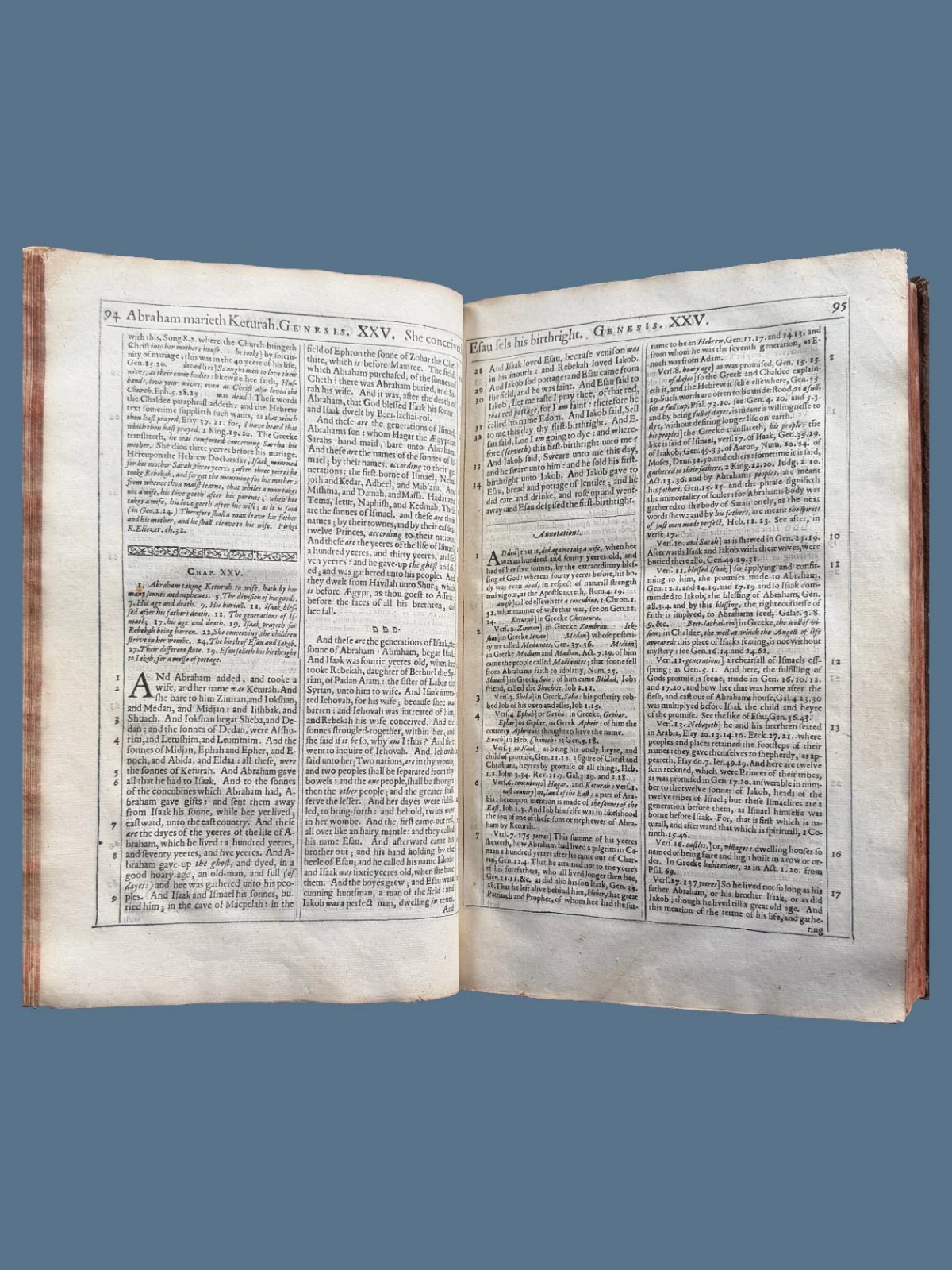 Image 6 of 18
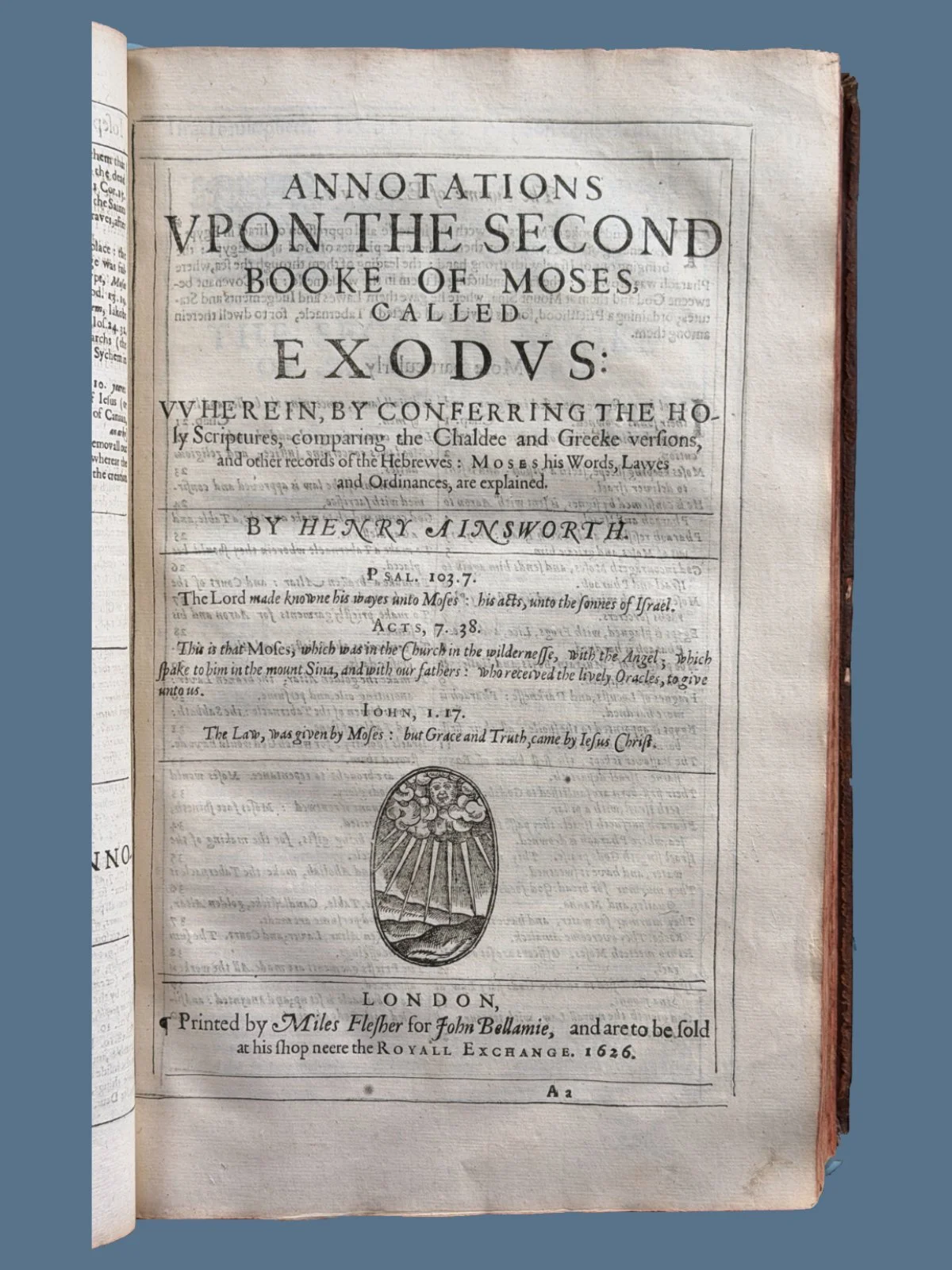 Image 7 of 18
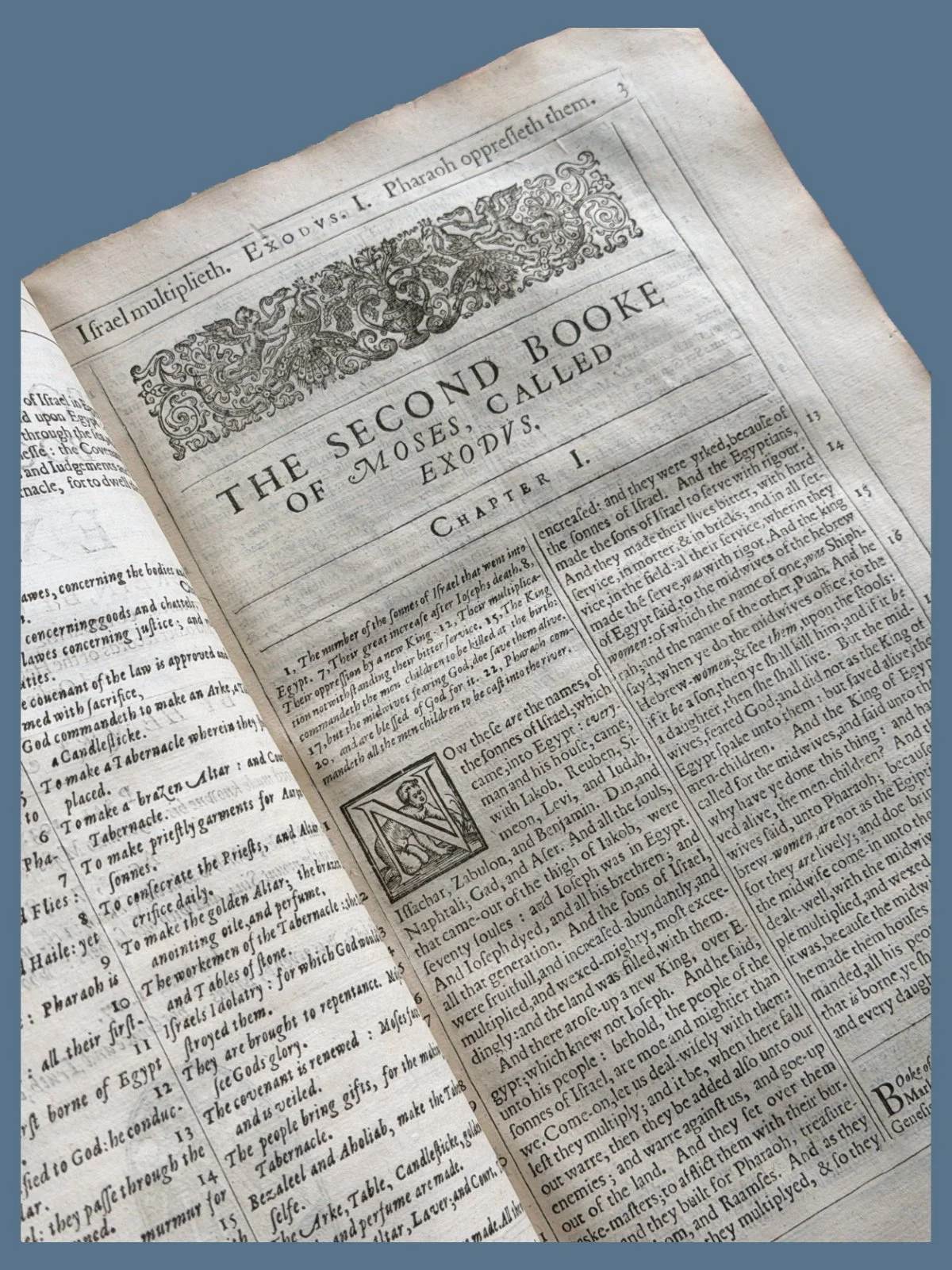 Image 8 of 18
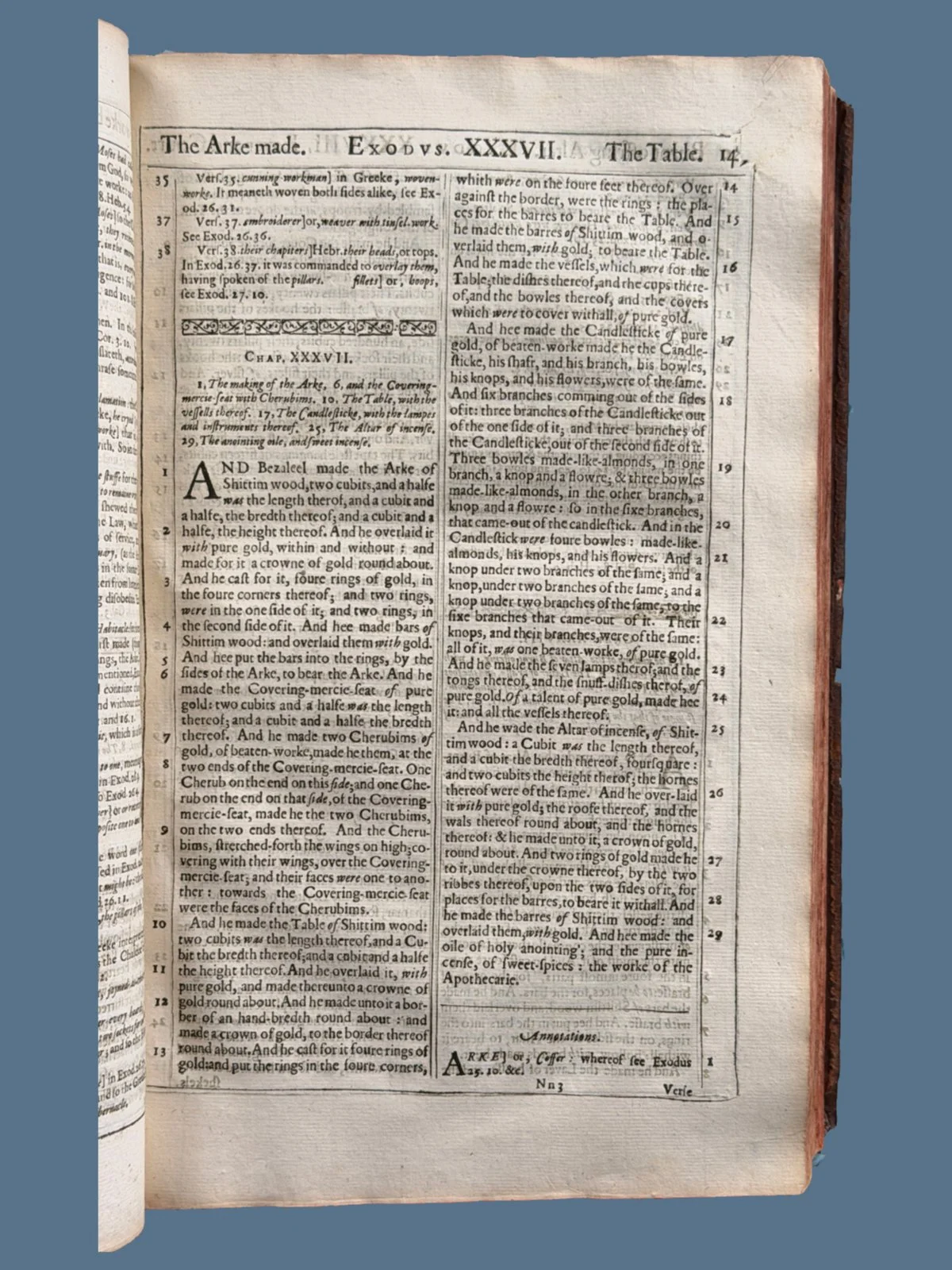 Image 9 of 18
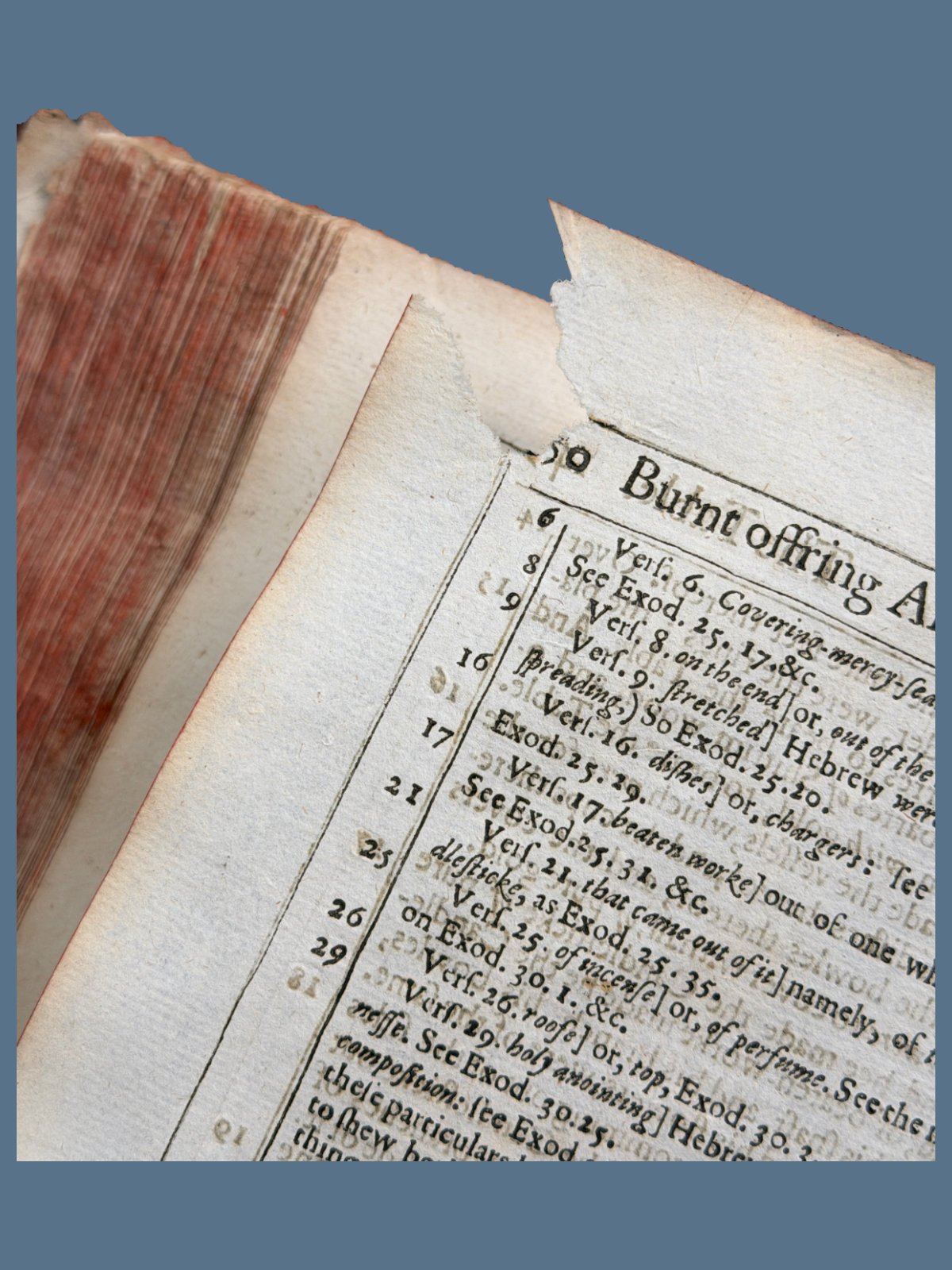 Image 10 of 18
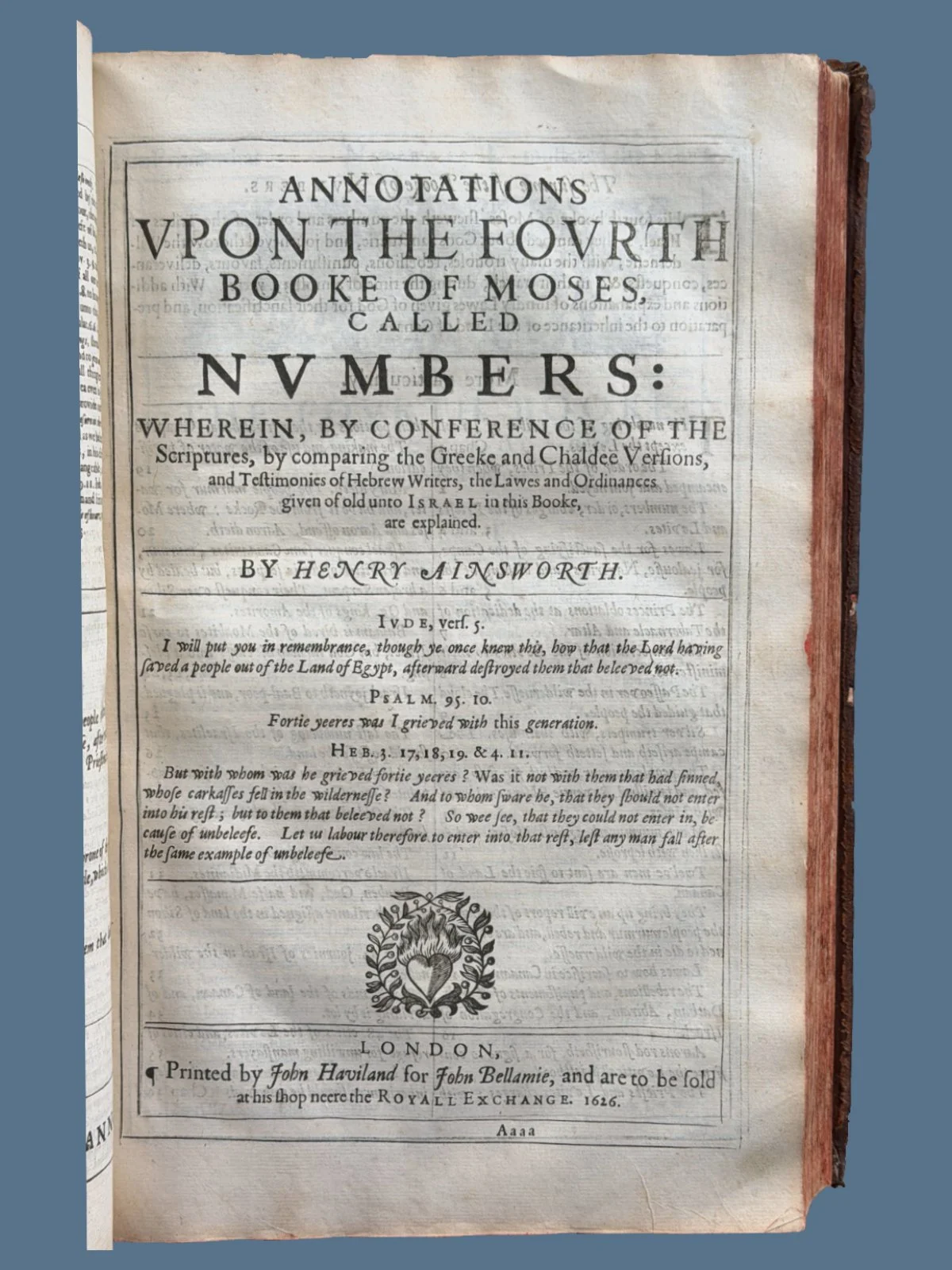 Image 11 of 18
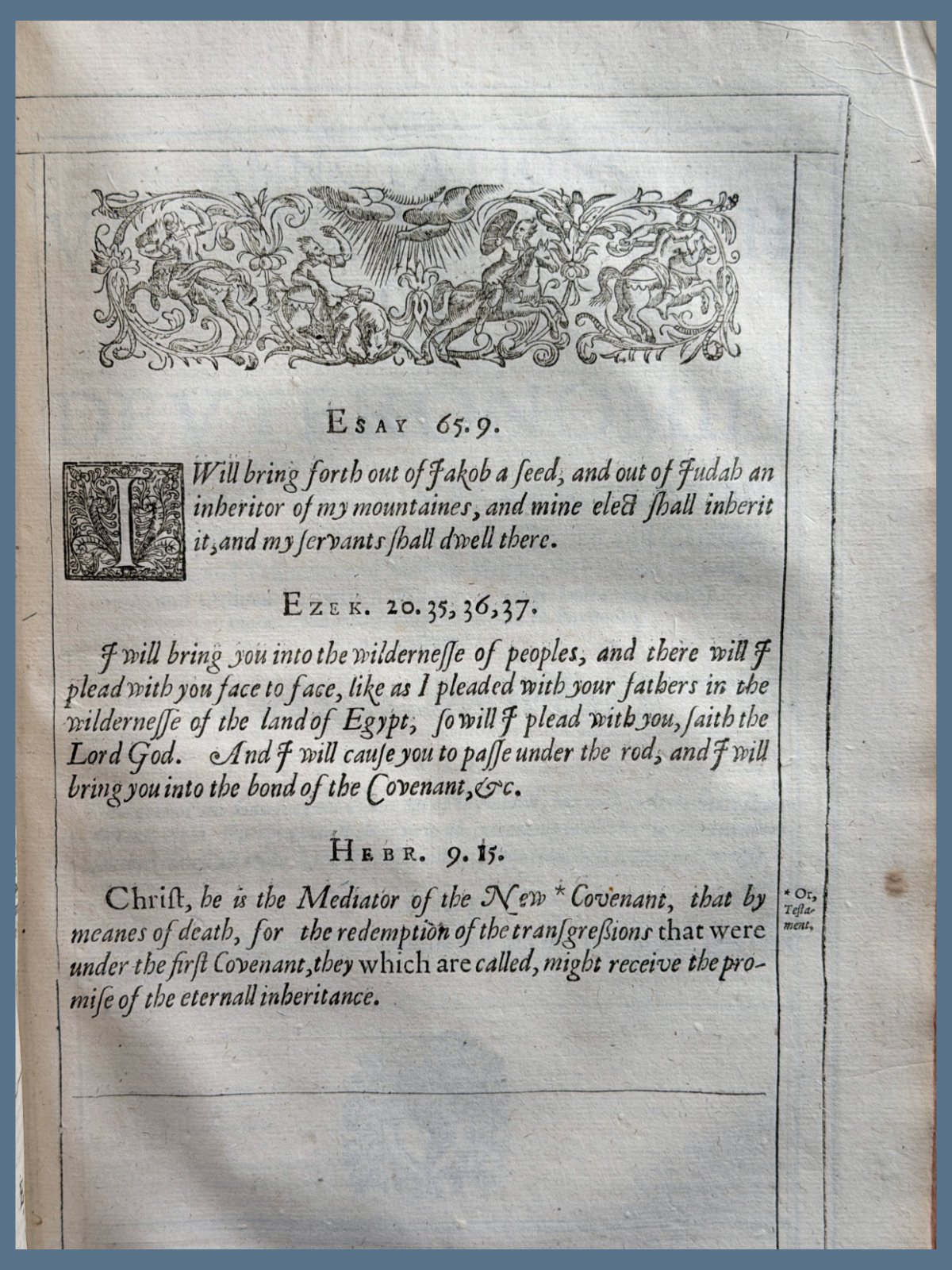 Image 12 of 18
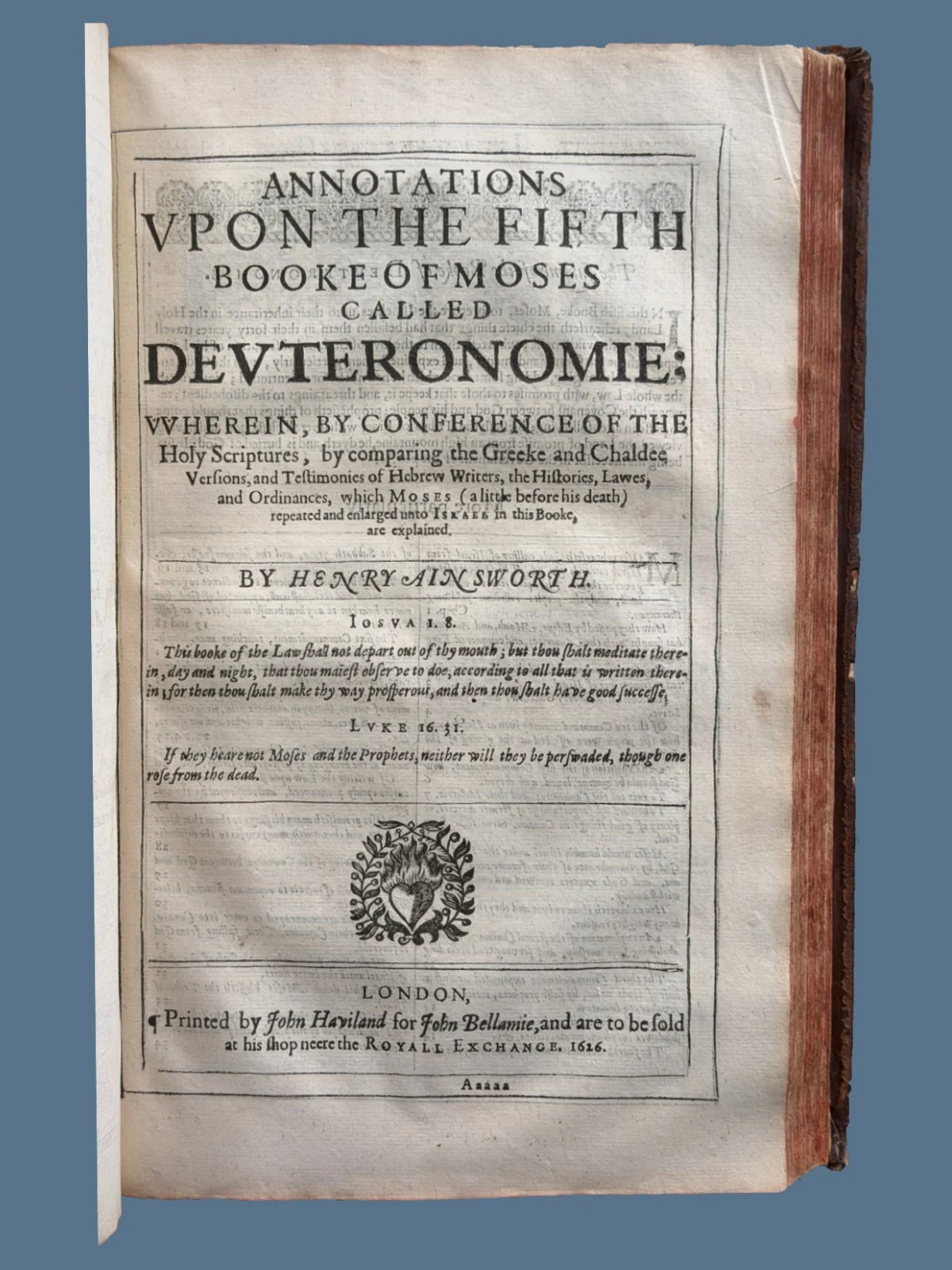 Image 13 of 18
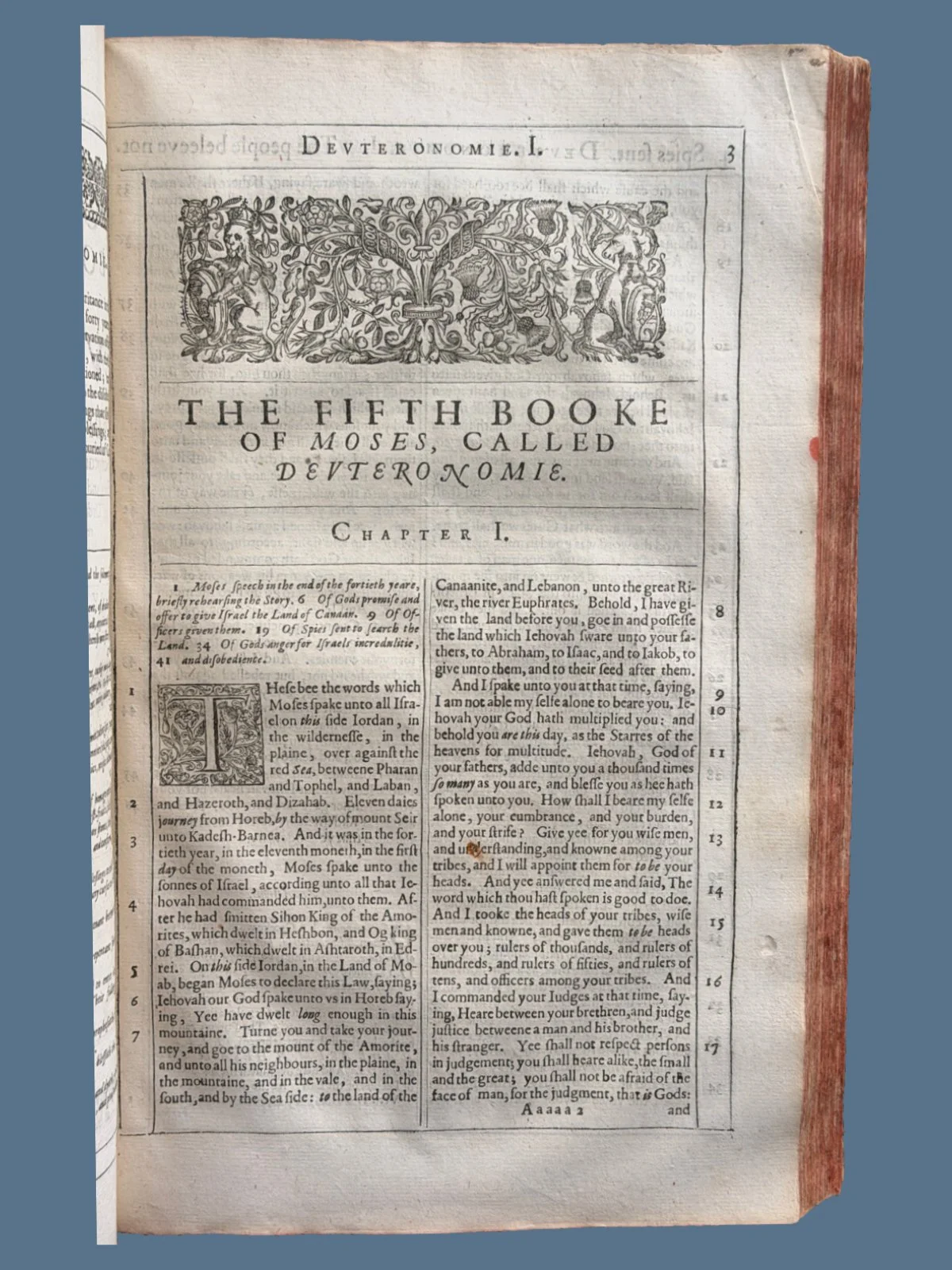 Image 14 of 18
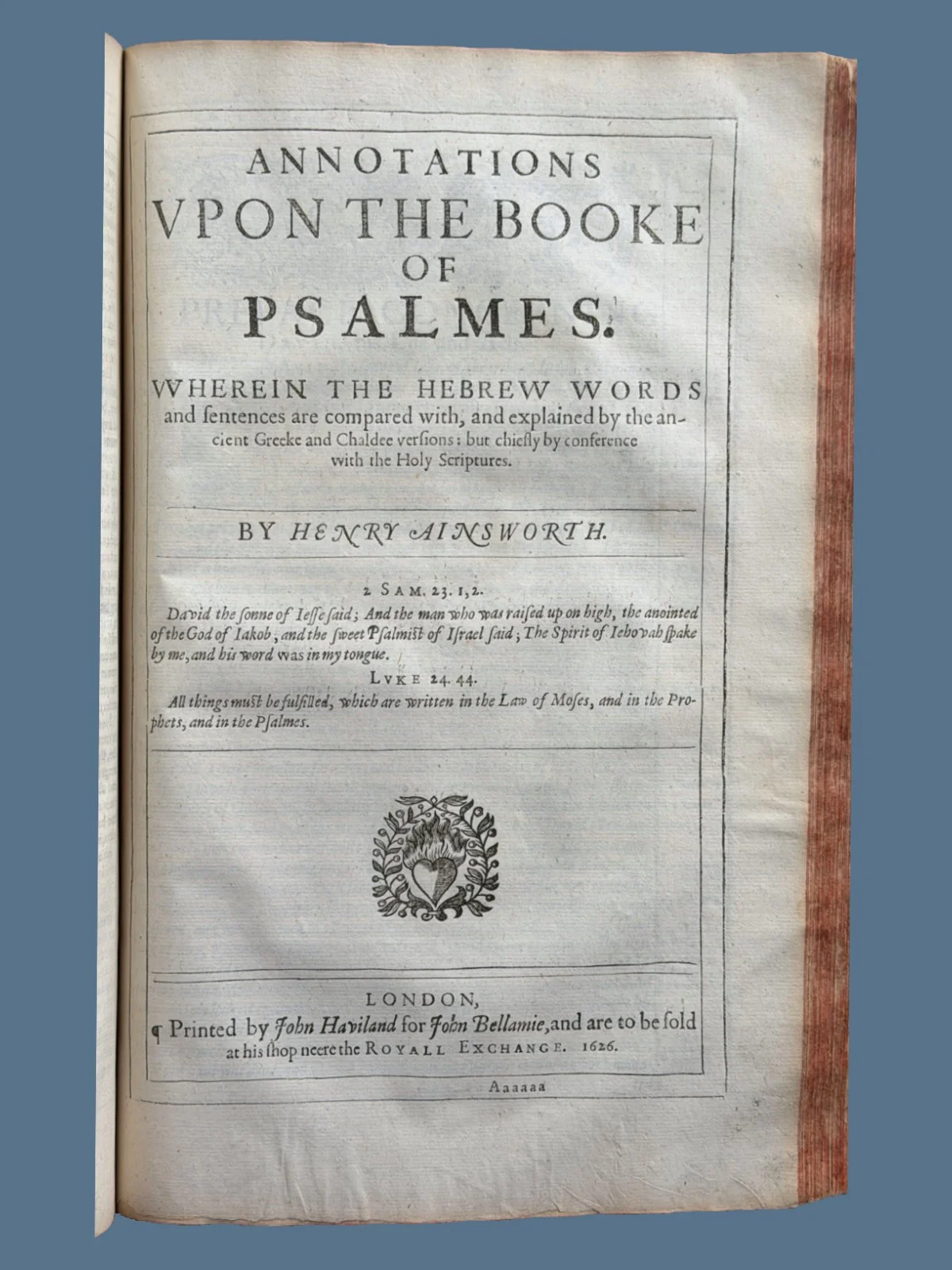 Image 15 of 18
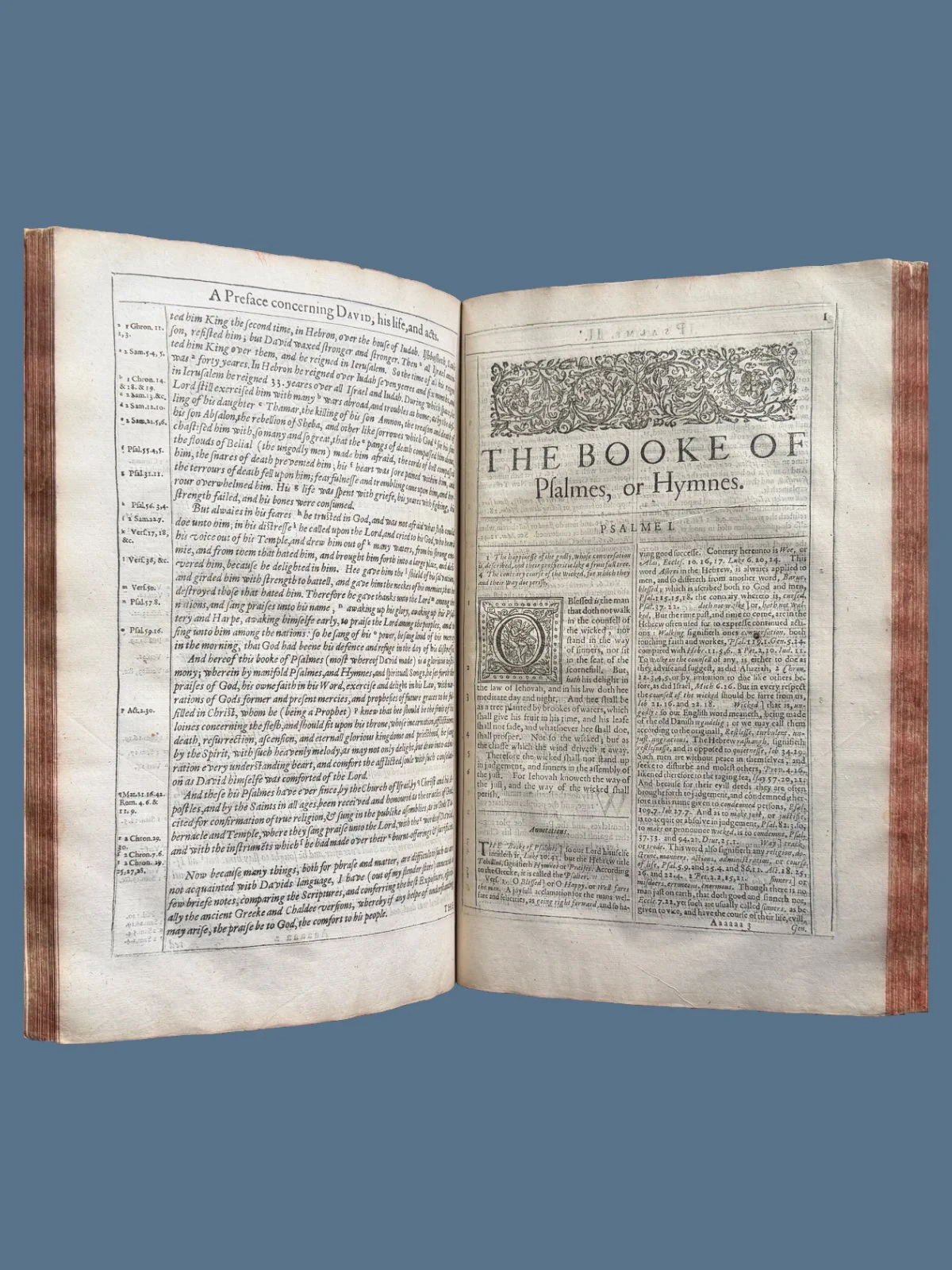 Image 16 of 18
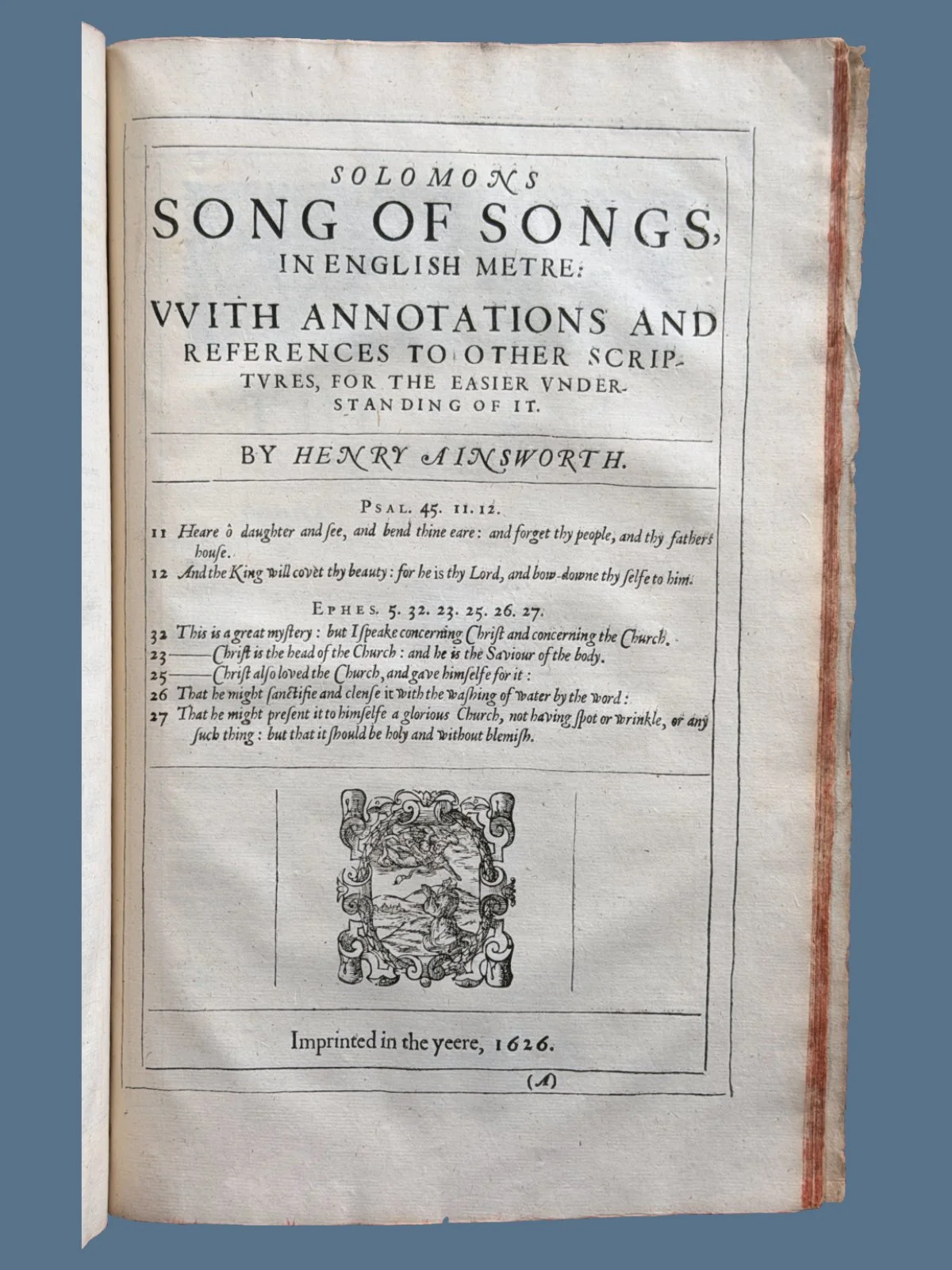 Image 17 of 18
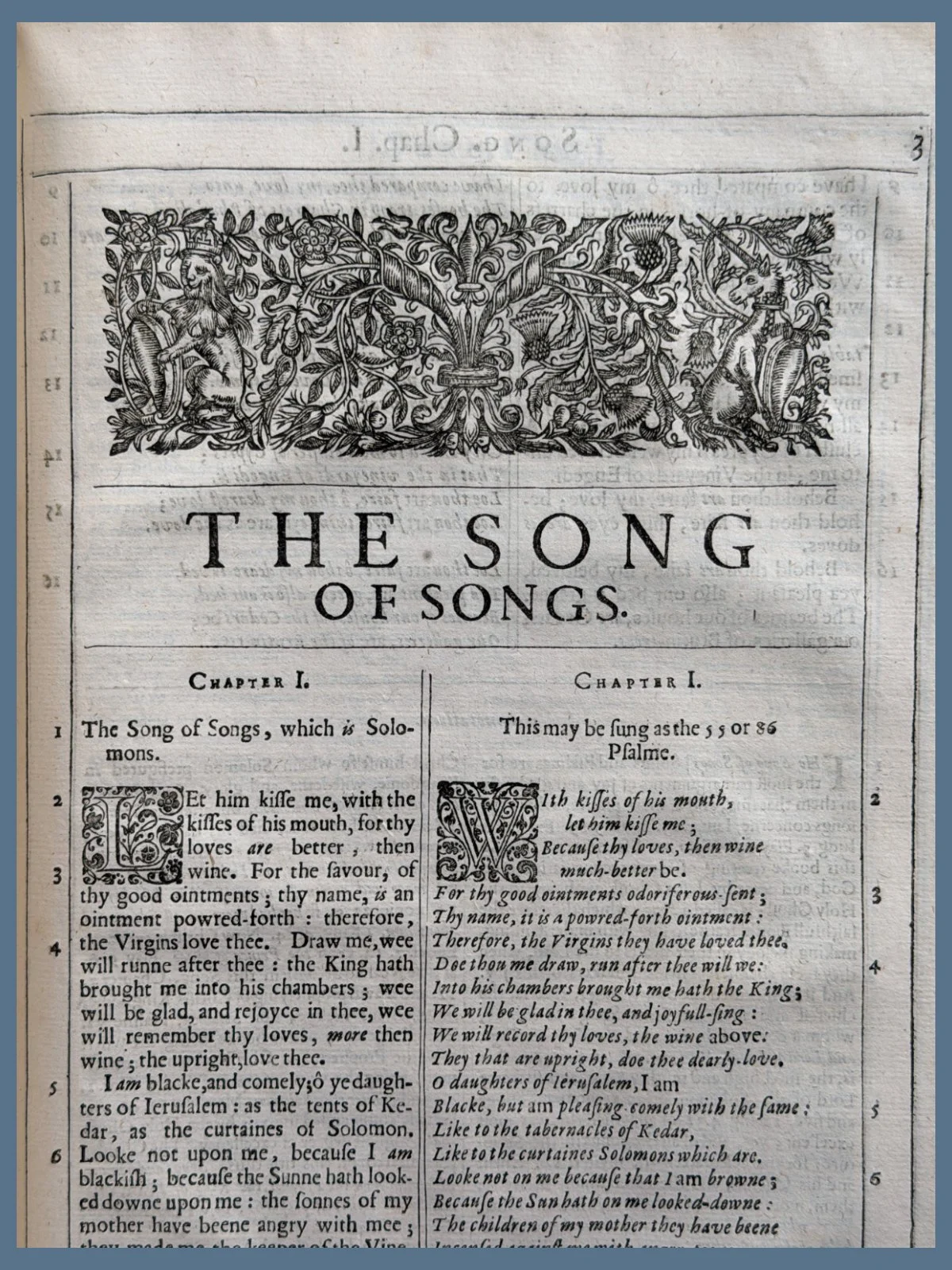 Image 18 of 18
Annotations Upon the Five Bookes of Moses, the Booke of the Psalmes, and the Song of Songs, or Canticles. Wherein the Hebrew Words and Sentences are compared with, and explained by the ancient Greeke and Chaldee versions, and other Records and Monuments of the Hebrewes: But chiefly by confersence with the Holy Scriptures, Moses his words, lawes and ordinances, the Sacrifices and other Legall ceremonies heretofore commanded by God to the Church of Israel are explained.
Description
Text in two column Roman font printed within printed border. Printed title page (1627) with separate title pages to each book. Headpieces and first chapter historiated initials.
Collation
A-P^8 [Genesis], Aa-Nn^6 [Exodus], Aaa-Ooo^6,Ppp^8 [Leviticus]; 4A-4Q^6,4R^8 [Numbers]; 5A-5Q^6 [Deuteronomy]; 6A-Q^6, 6R^4 [Psalms]; (A)-(E)^6 [Song of Songs]. Complete with all titles.
Binding
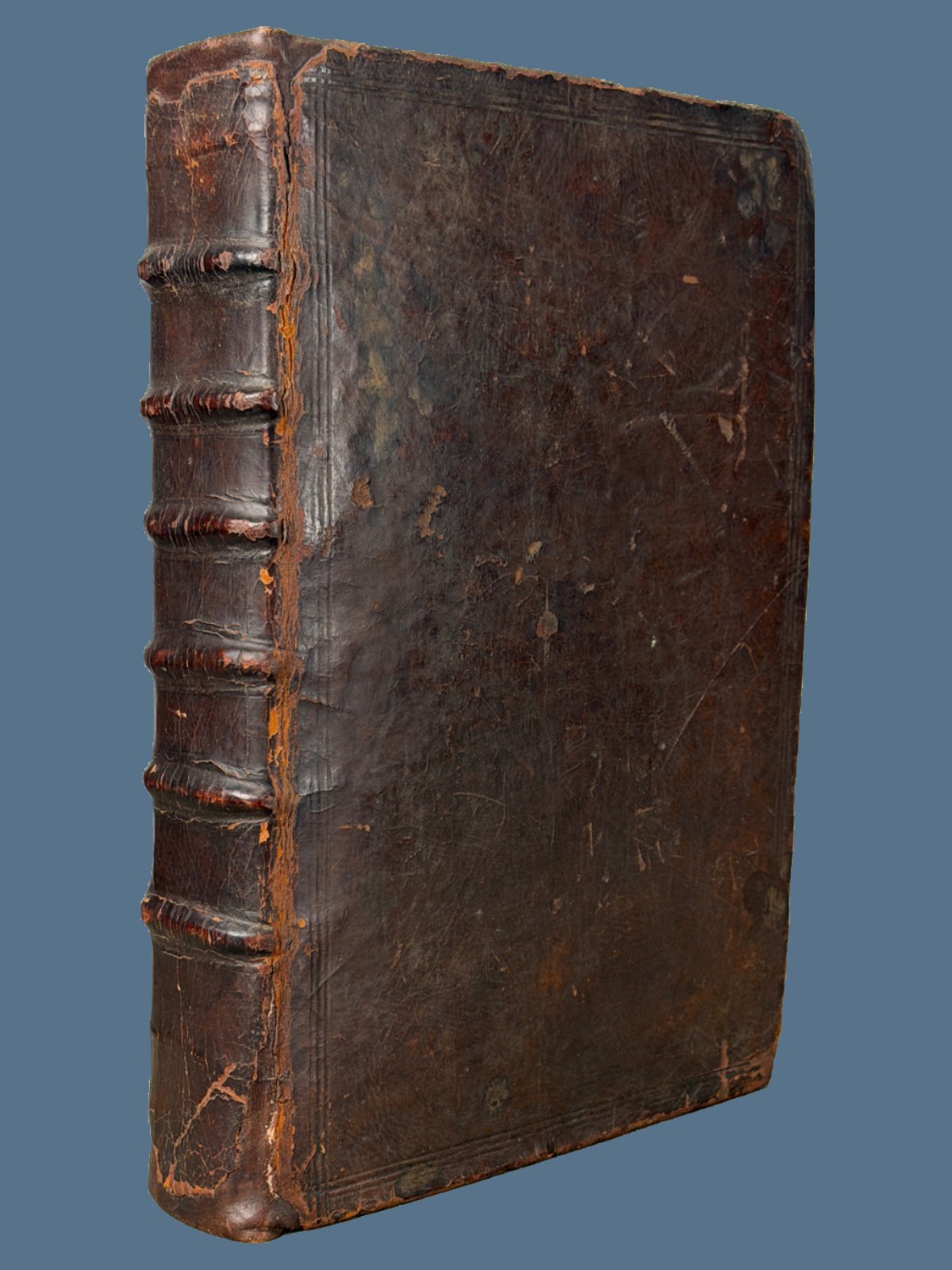
Rebacked and re-cornered brown calf. Boards paneled in blind. Spine with six raised bands. Plain endpapers. All edges red.
Condition
Aa3 upper marginal loss; clean and bright throughout with wide margins.
Note
Henry Ainsworth (1569–1622), a leading separatist scholar and the Hebrew expert of his time, was a key figure in the early Puritan movement. A teacher of the Ancient Separatist Church in Amsterdam, Ainsworth defended congregational independence, scripture-based worship, and strict church discipline. He engaged in theological controversies, debating with the Church of England, Anabaptists, and other religious groups. Despite internal disputes and divisions, he remained committed to biblical scholarship. His Annotations on the Pentateuch, Psalms, and Song of Songs showcase his deep knowledge of Hebrew and the Old Testament, and became his most influential work, establishing a scholarly tradition for English nonconformity.
References
ESTC S106799; STC 219.