
 Image 1 of 15
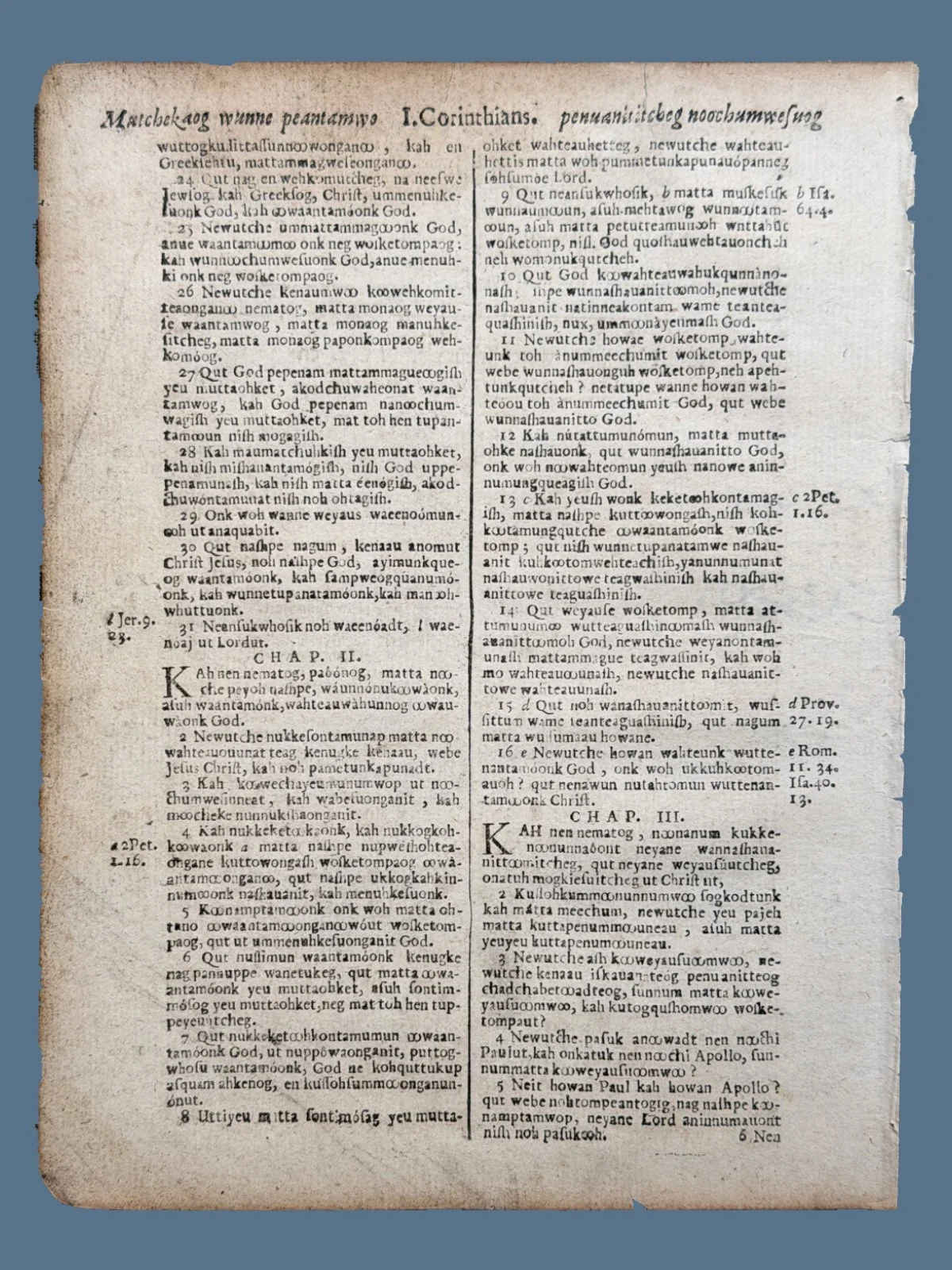 Image 2 of 15
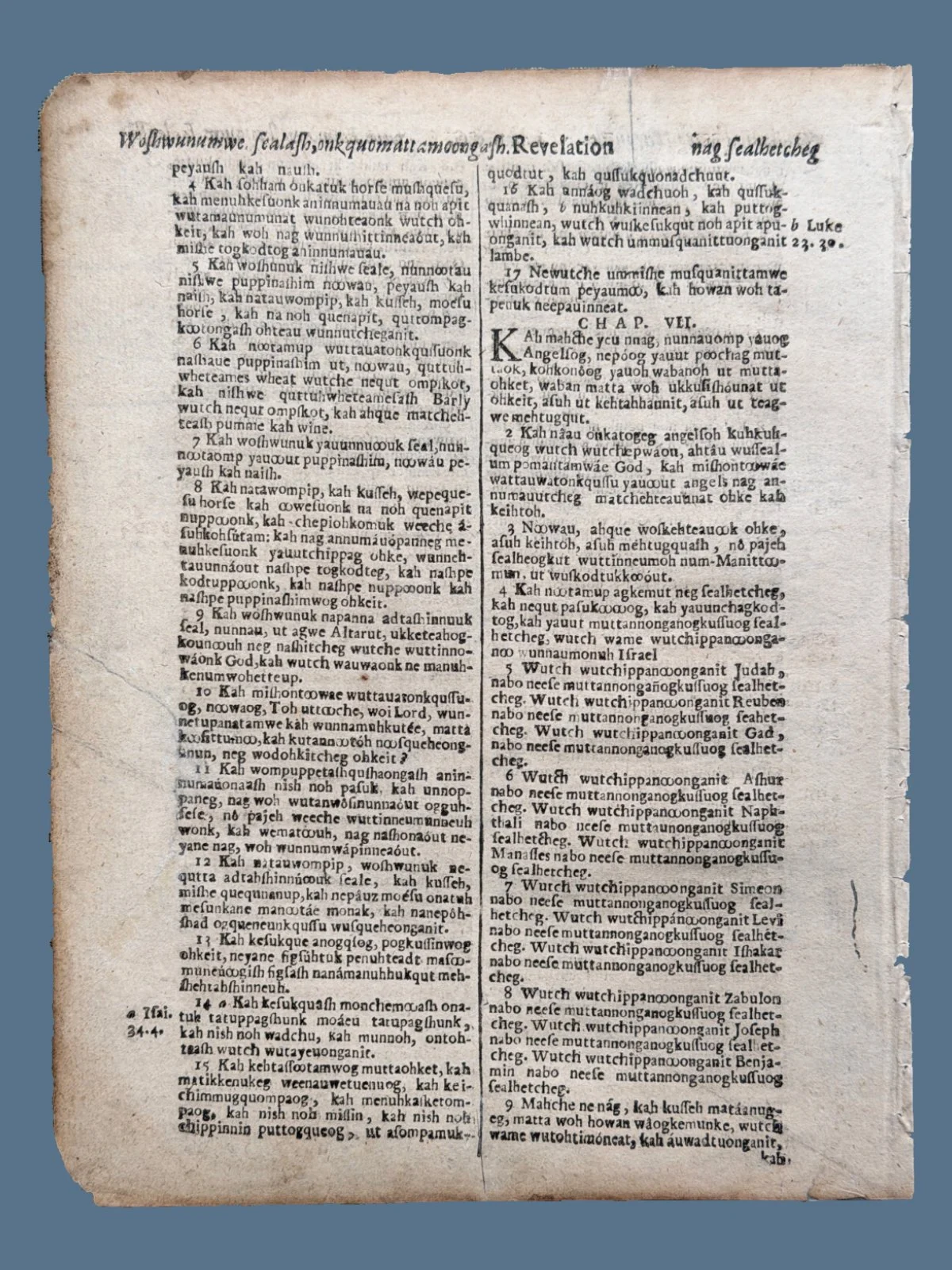 Image 3 of 15
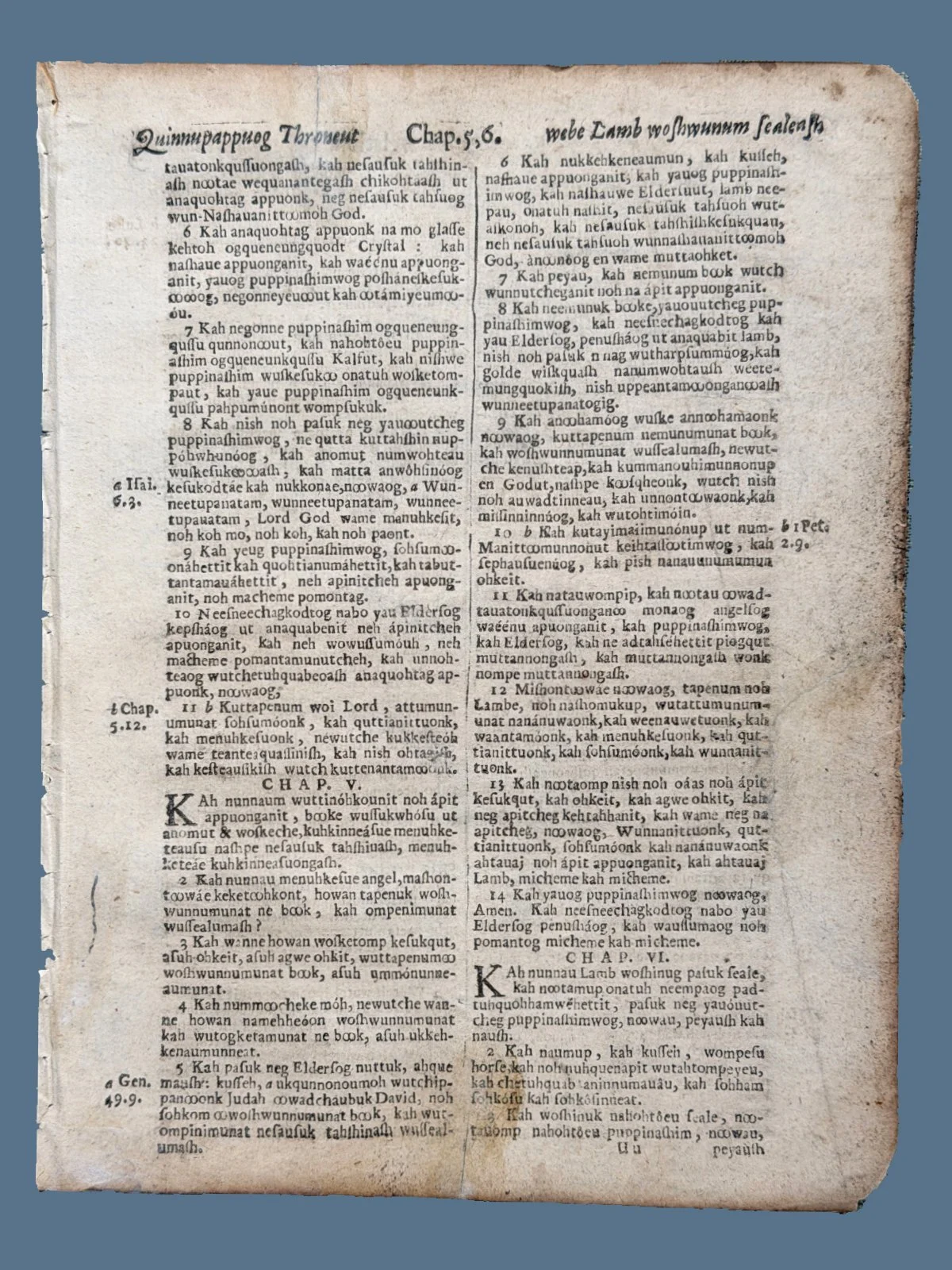 Image 4 of 15
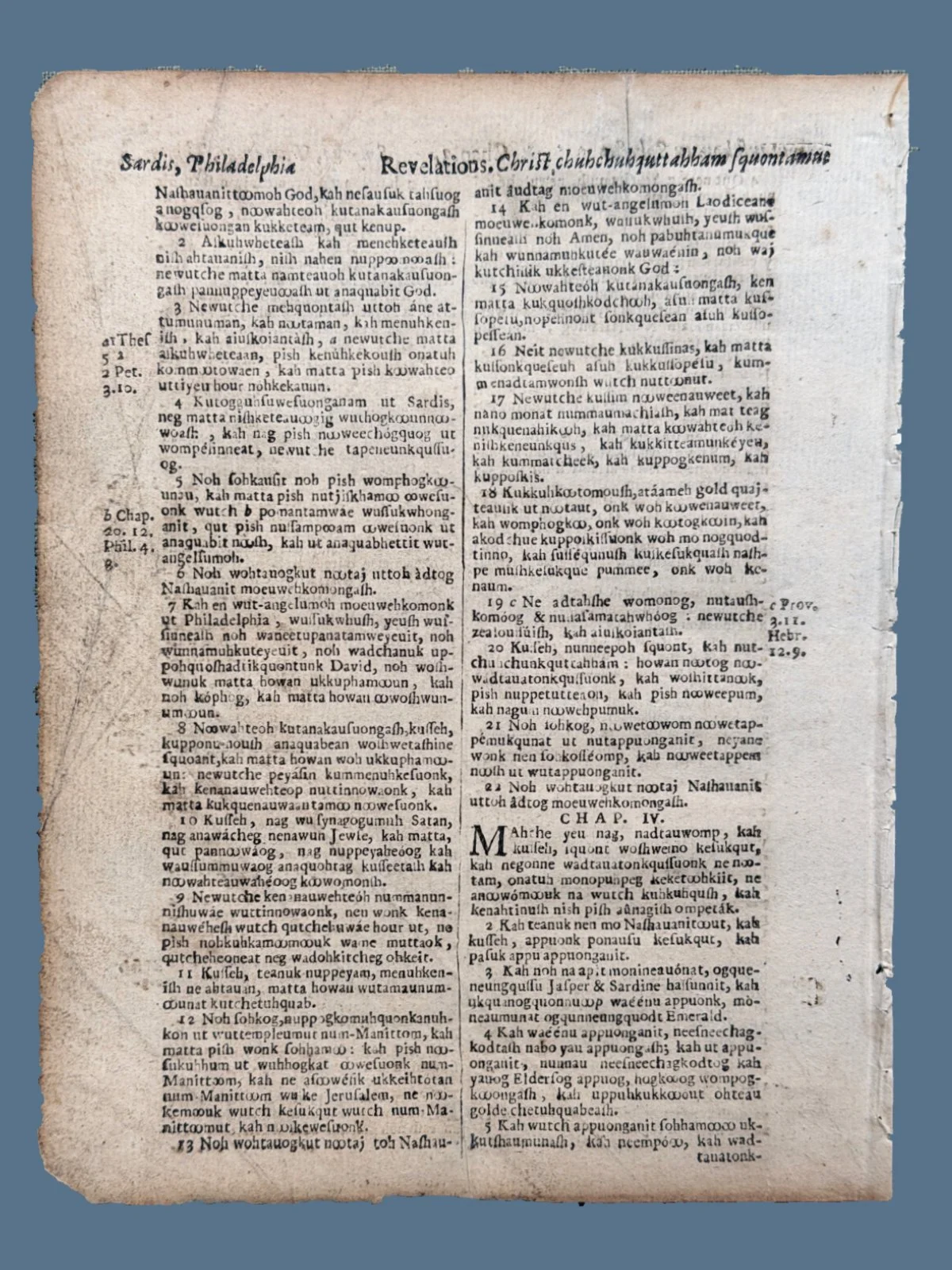 Image 5 of 15
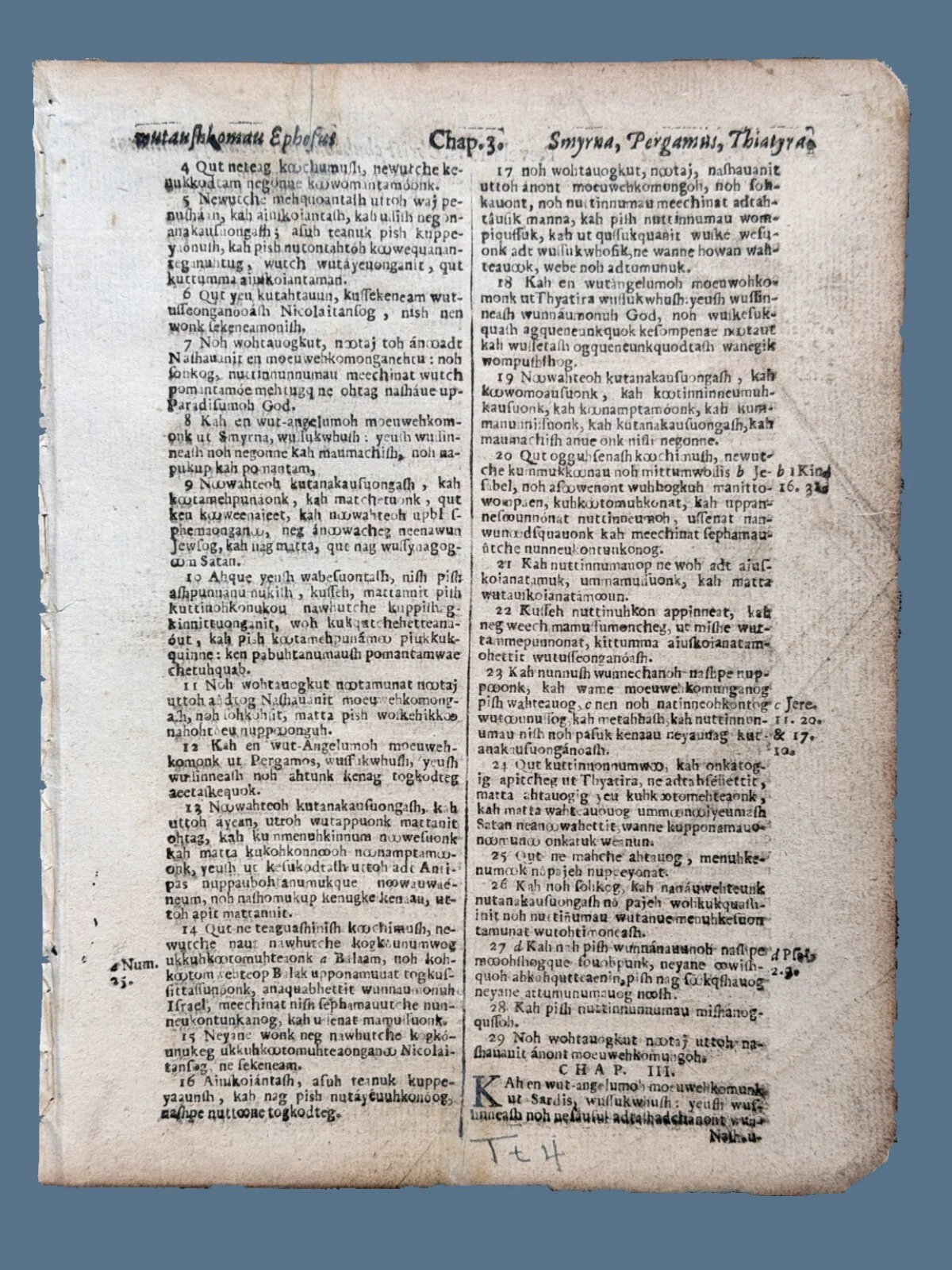 Image 6 of 15
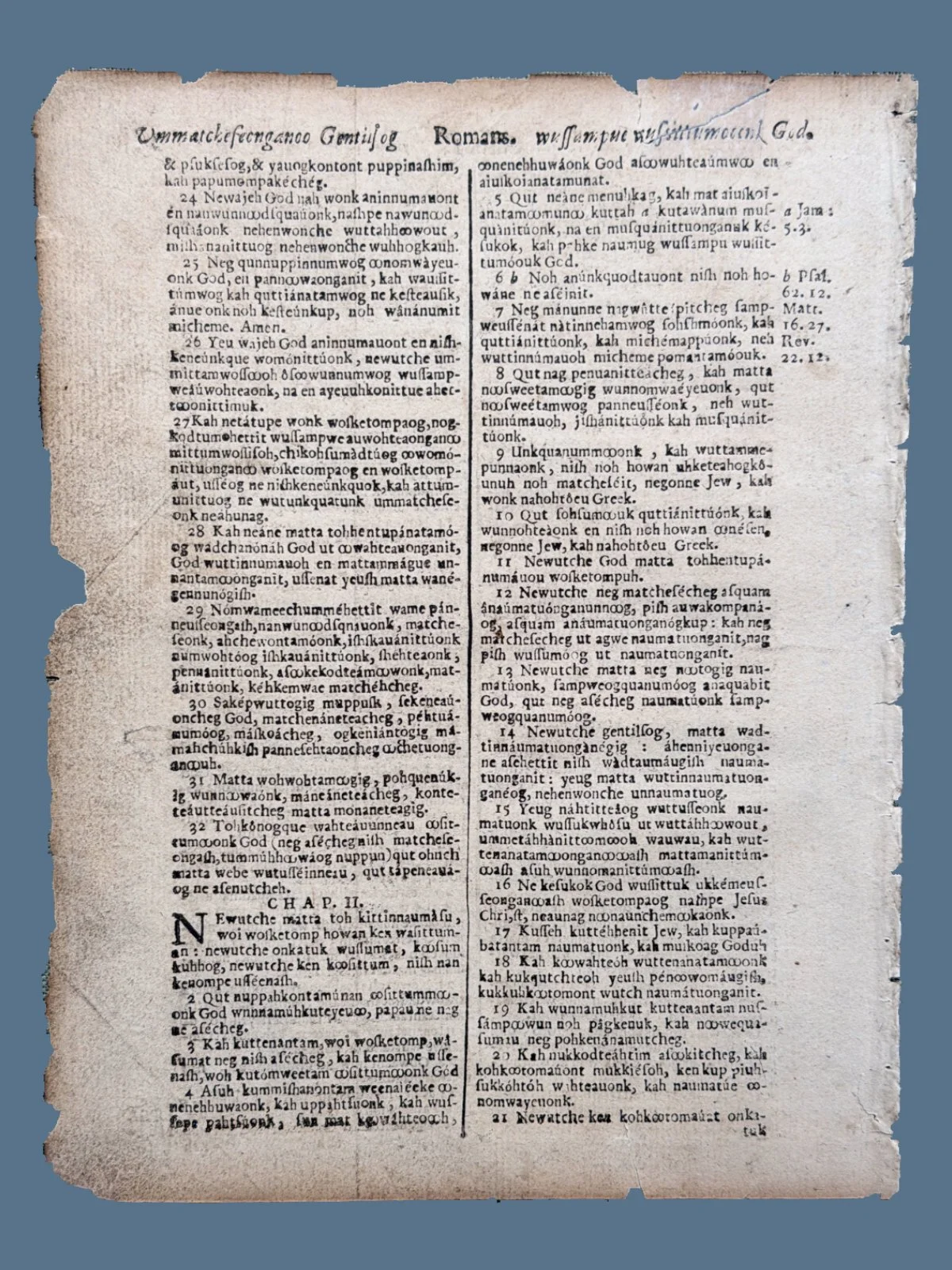 Image 7 of 15
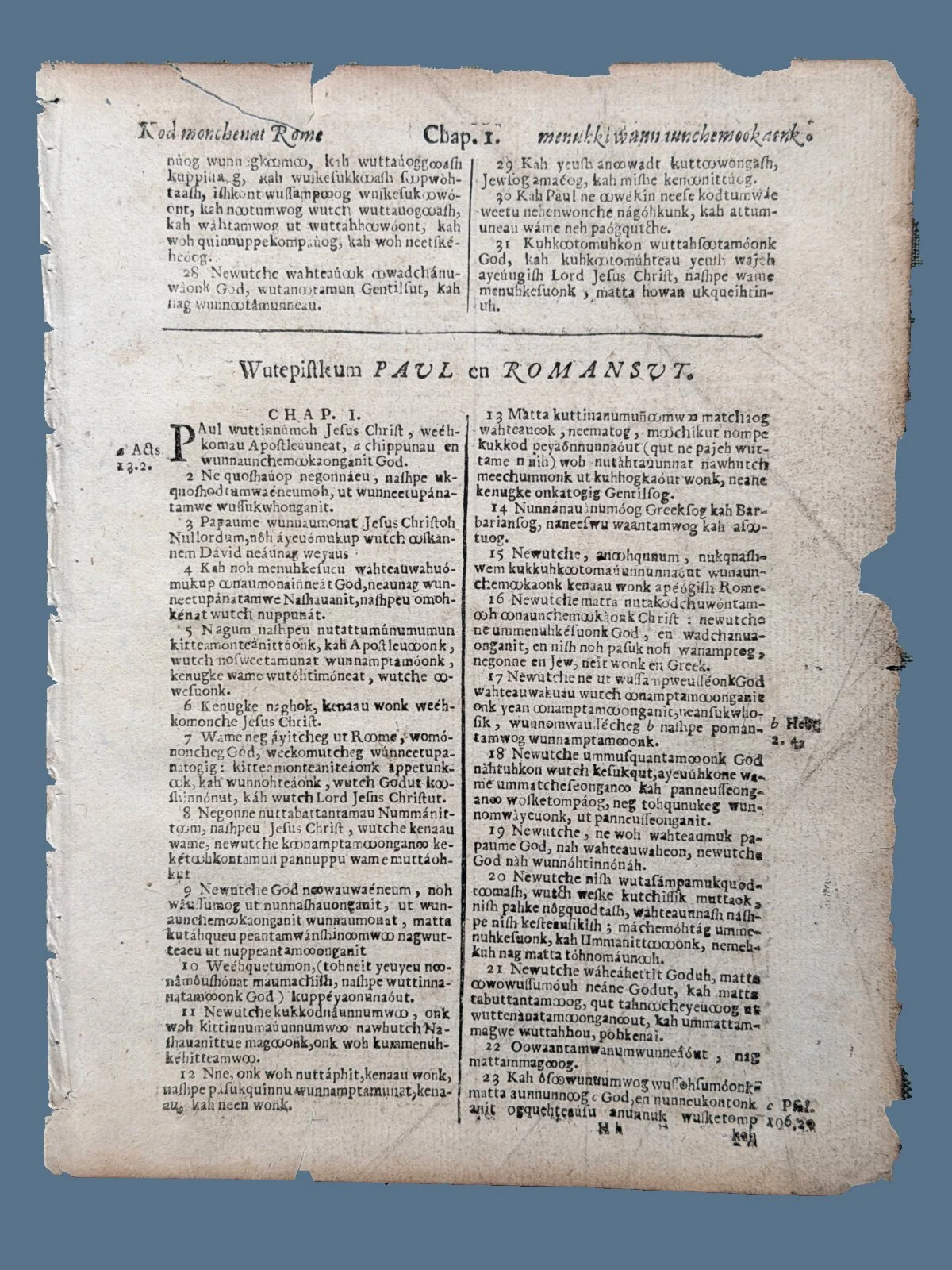 Image 8 of 15
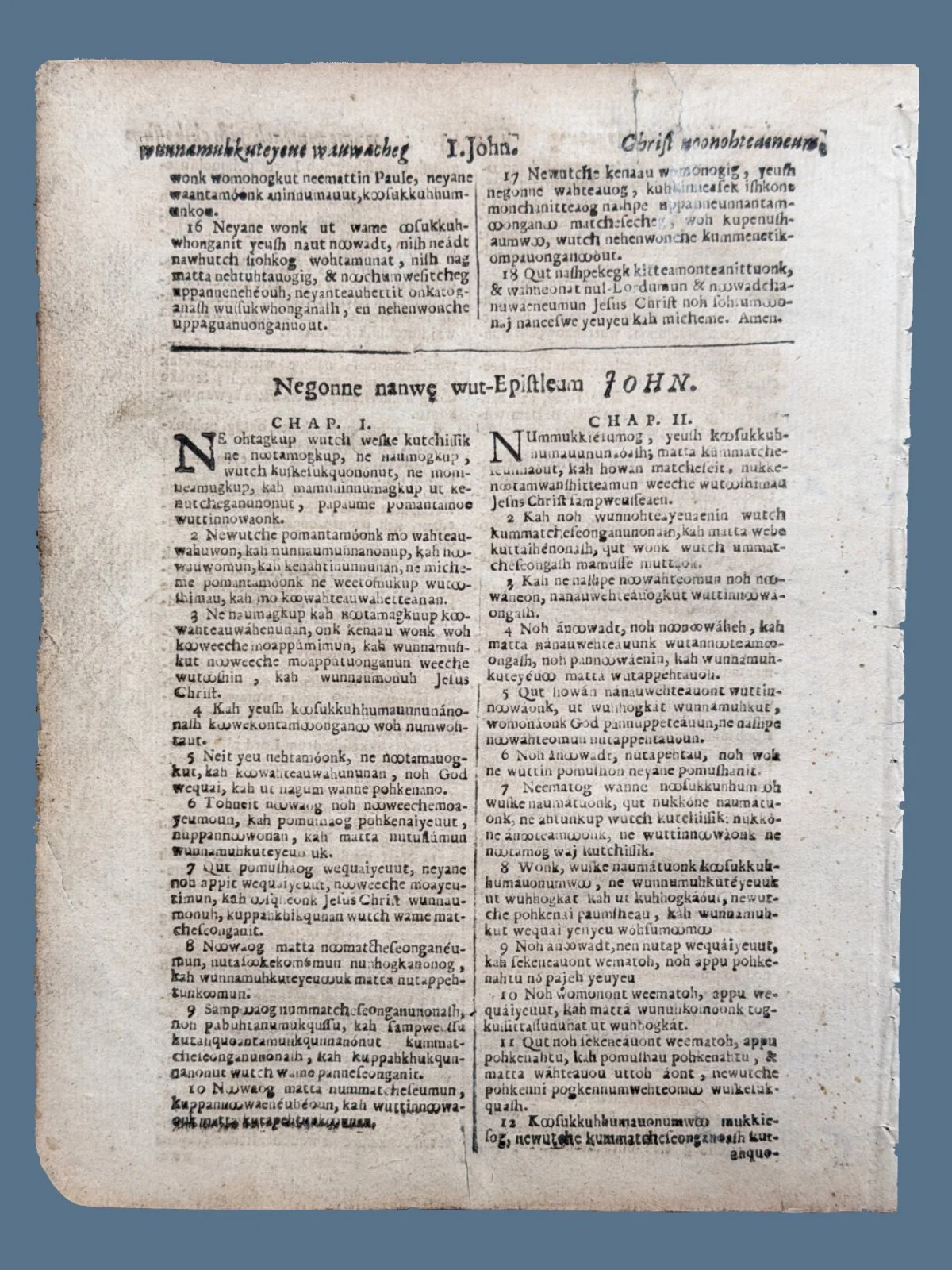 Image 9 of 15
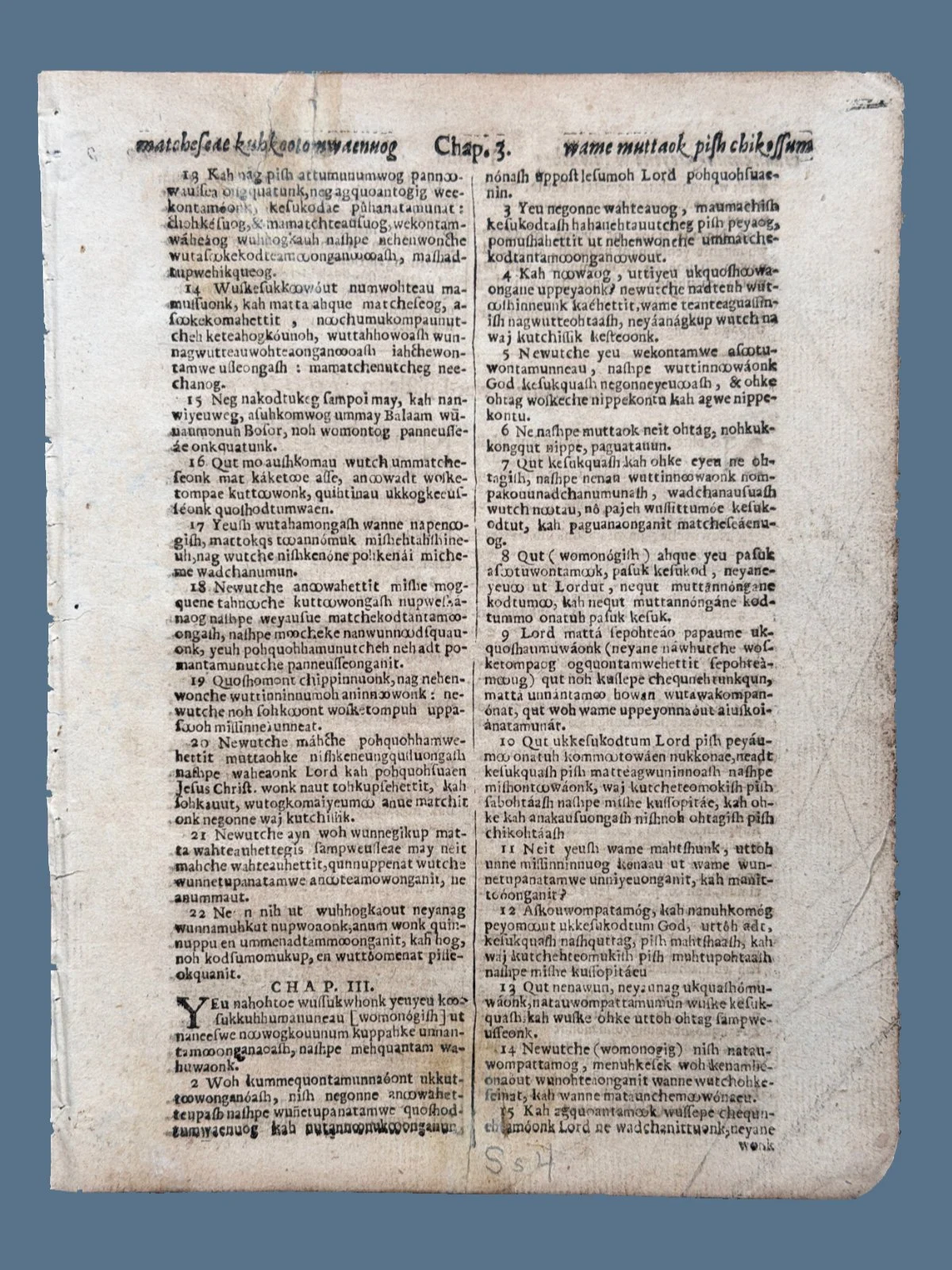 Image 10 of 15
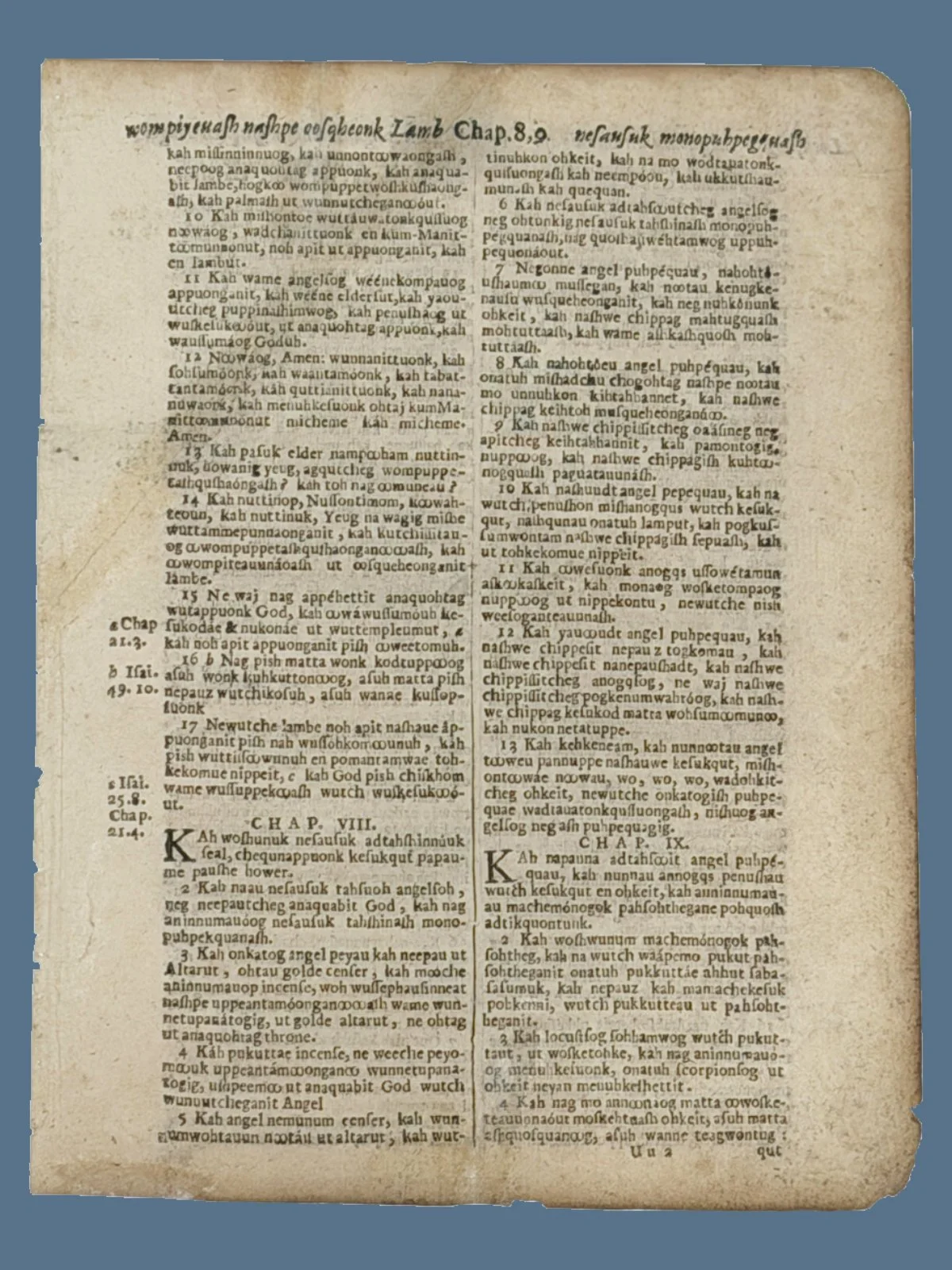 Image 11 of 15
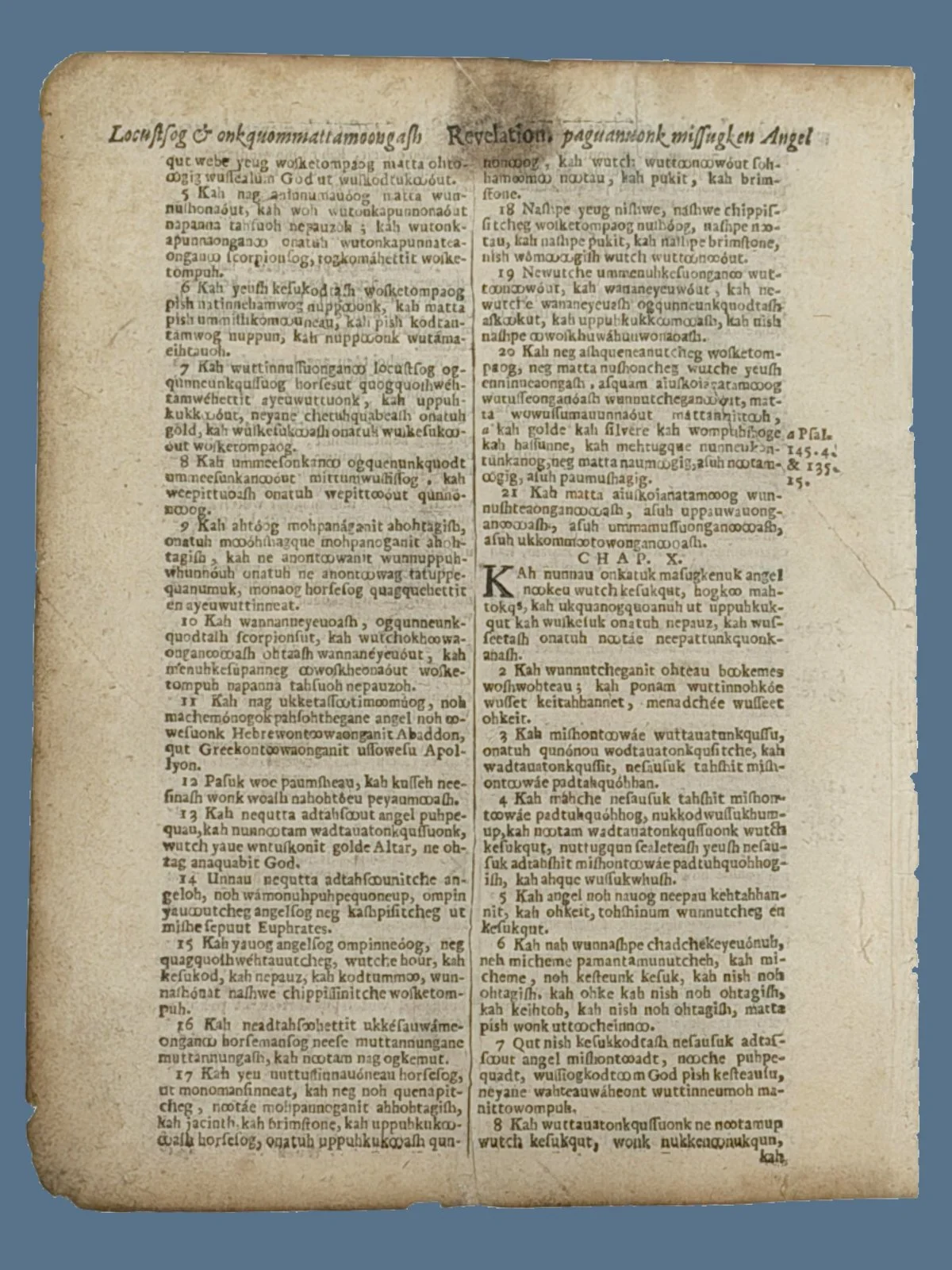 Image 12 of 15
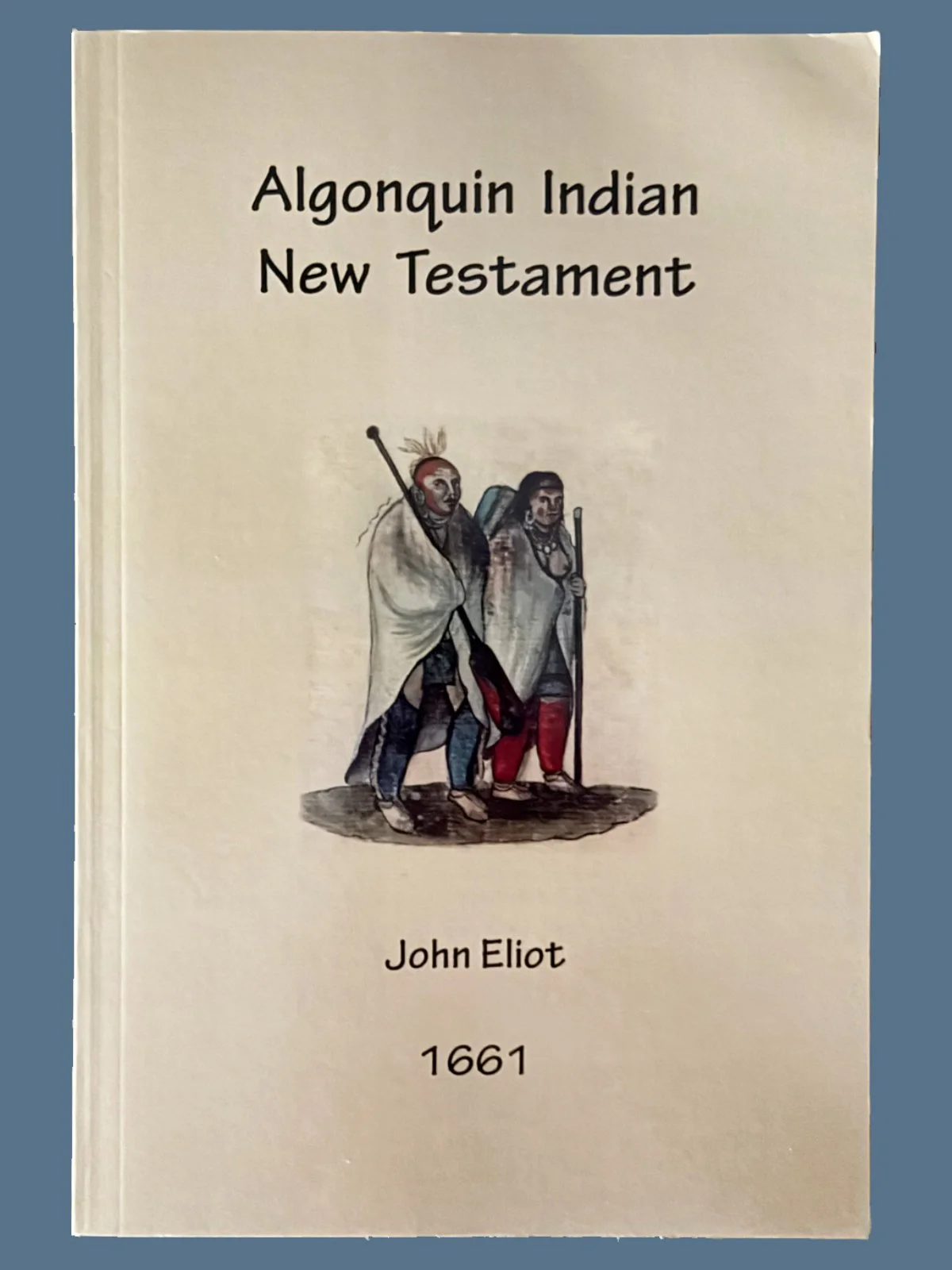 Image 13 of 15
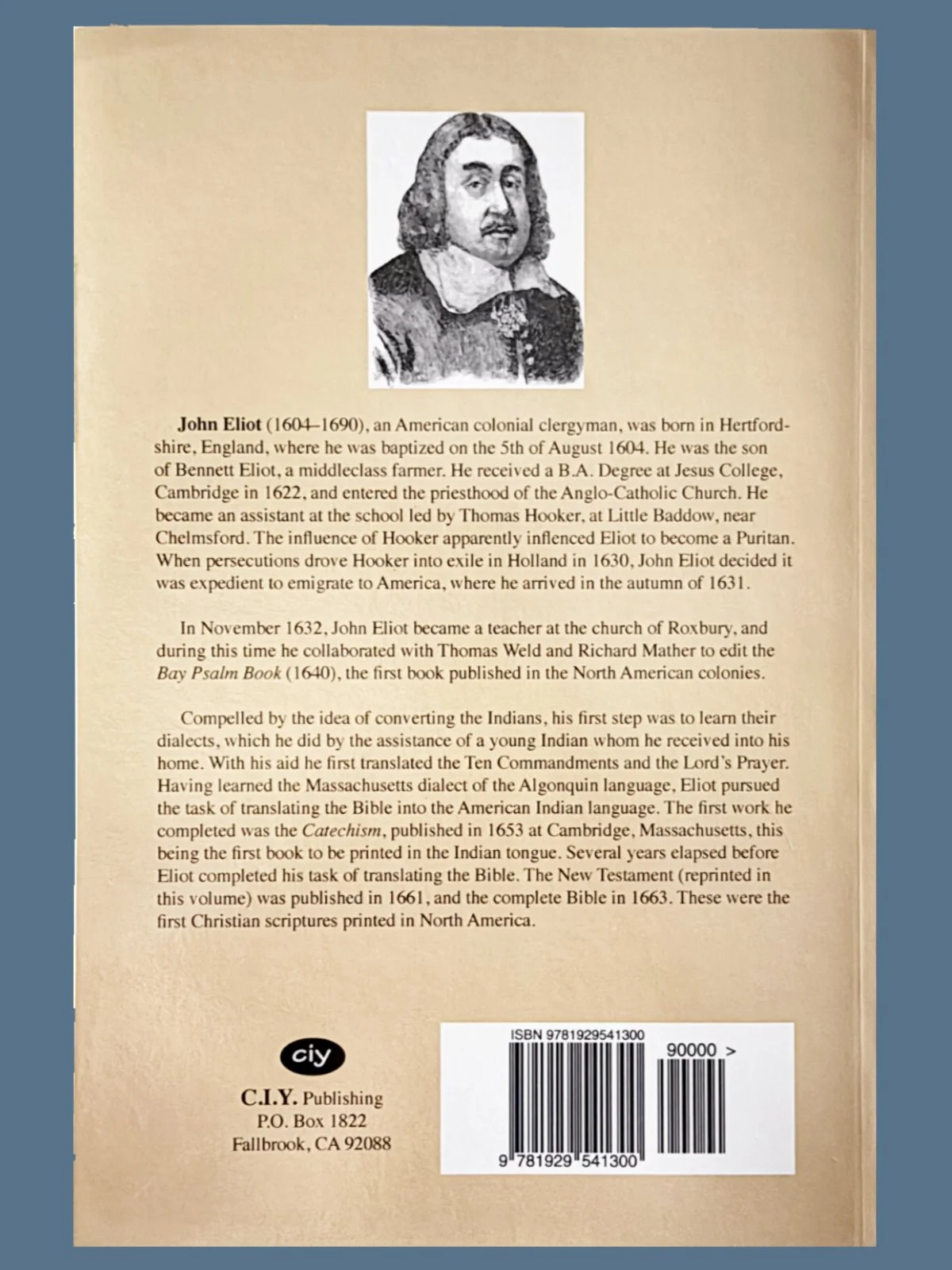 Image 14 of 15
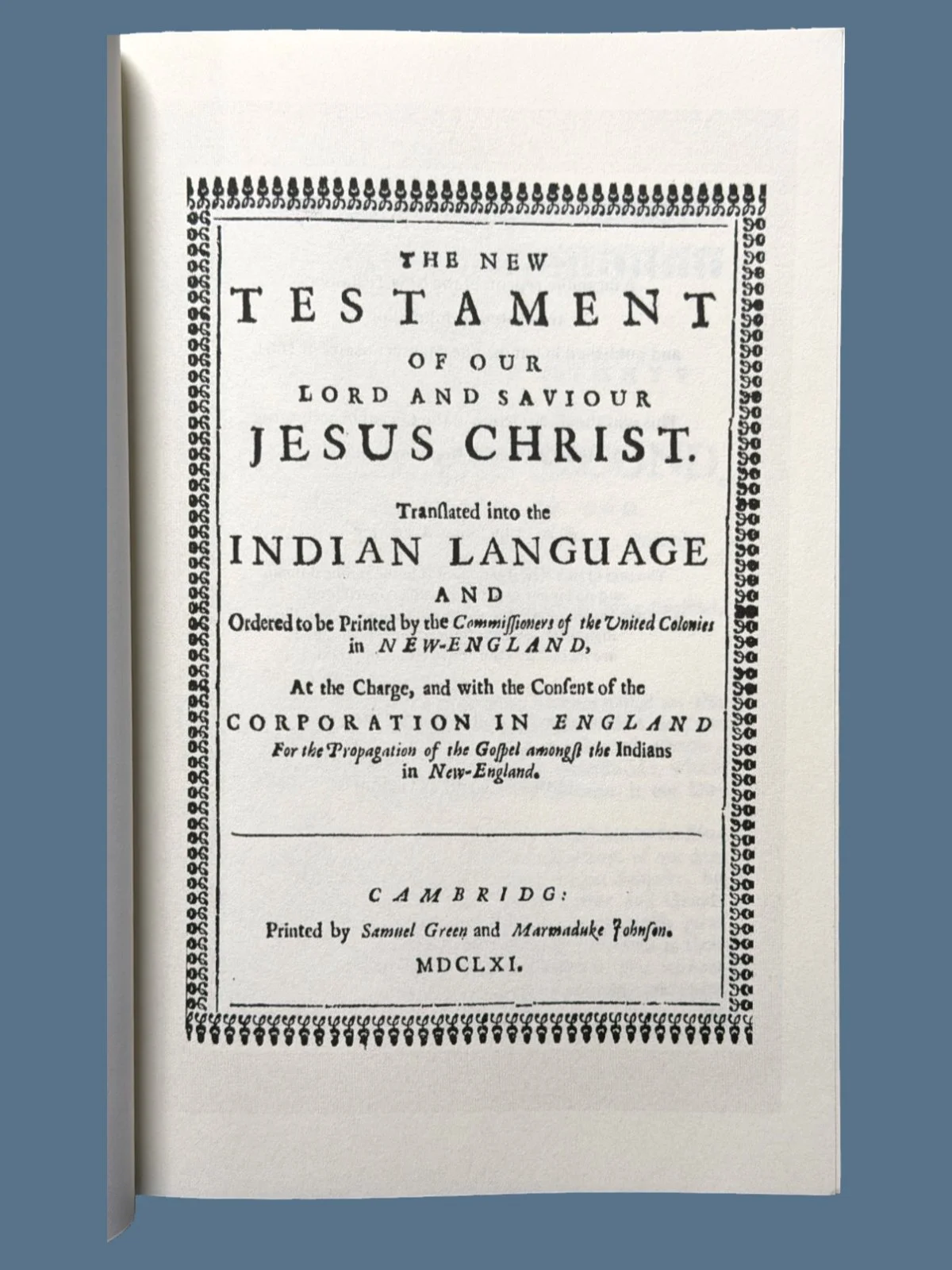 Image 15 of 15
[The New Testament in the Massachusett branch of Algonquin] [Wusku Wuttestamentum Nul-Lordumun Jesus Christ Nuppoquohwussuaeneumun.]
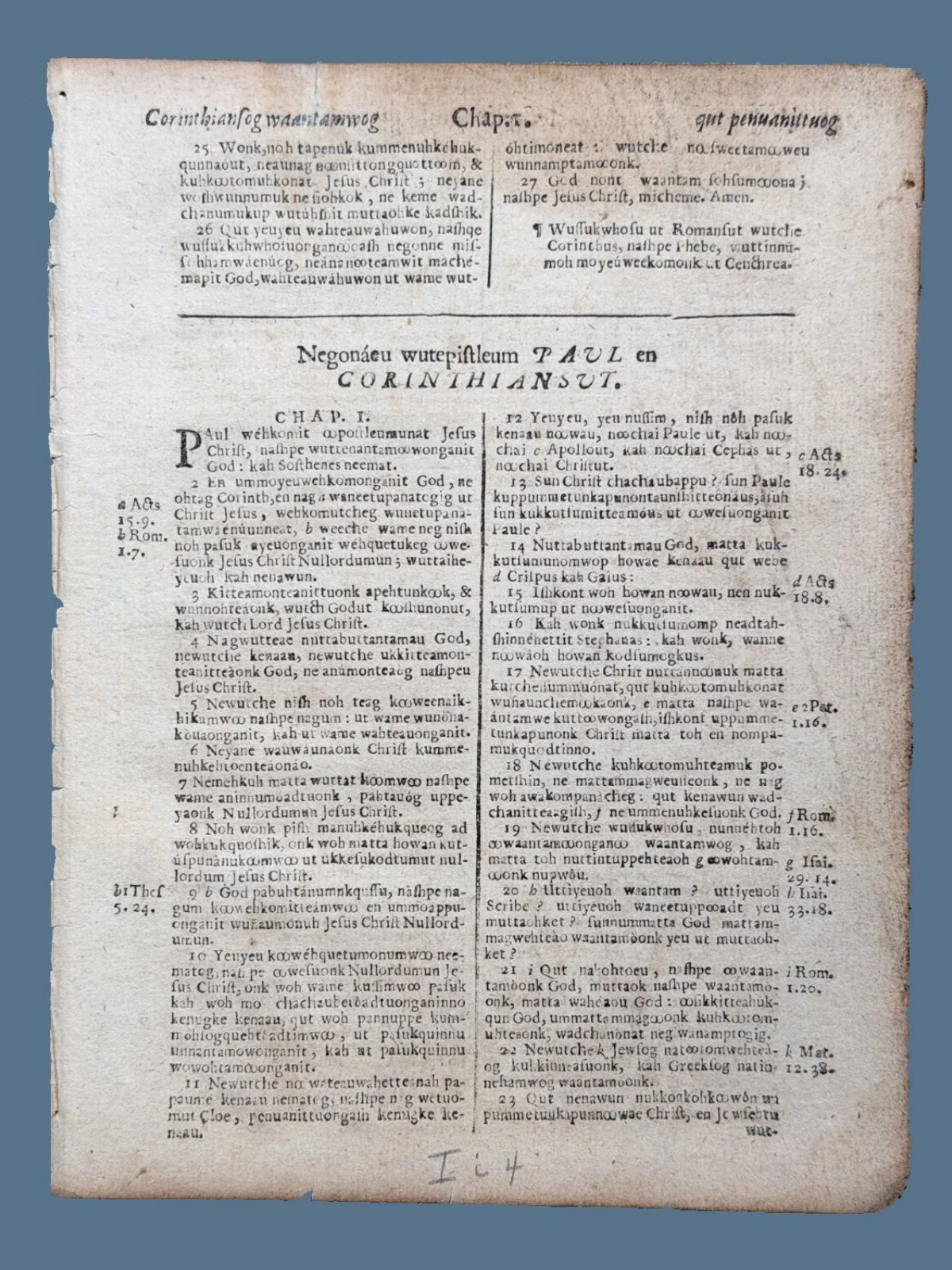
The earliest edition of the New Testament printed in a Native American Language; and the first in any language printed in that continent. Translated by John Eliot, ‘the Apostle of the Indians.’
Leaf Availability
Acts 28:27 - Romans 2:21 $2,500
Romans 16:25 - 1 Corinthians 3:5 $2,500
2 Peter 3:15 - 1 John 3:15 $2,500
Revelation 2:4 - 4:5 $2,250
Revelation 4:6 - 7:9 $2,250
Revelation 7:9 - 10:8 $2,000
Each leaf is accompanied by a facsimile reprint of the 1661 New Testament, published by James Fowler and C.I.Y. Publishing.
Note
John Eliot (1604–1690), the Puritan minister of Roxbury remembered as the “Apostle to the Indians,” devoted much of his life to bringing Christianity to the Native peoples of New England. Believing that the Scriptures should be available to them in their own language, Eliot learned Massachusett, an Algonquian language, with the assistance of Native speakers and began the formidable work of translating the Bible. Describing the painstaking process by which he mastered the language, carefully tracing nouns and verbs through their grammatical variations, Eliot summarized his approach: “We must not sit still, and look for Miracles; Up, and be doing, and the Lord will be with thee. Prayer and Pains, through Faith in Christ Jesus, will do any thing.” Eliot was already connected with one of the landmarks of early American printing, having participated in the translation of the Psalms that resulted in the Bay Psalm Book of 1640, the first book printed in British North America. His missionary work increasingly combined preaching with education and literacy, and the translation of Scripture became central to his efforts among the Native communities of Massachusetts.
The scale of the project required substantial support from across the Atlantic. The Corporation in England for the Propagation of the Gospel amongst the Indians in New England financed the undertaking, while the experienced English printer Marmaduke Johnson was sent to Massachusetts to assist Samuel Green at the Cambridge press. After years of translation and preparation, Eliot’s Indian New Testament appeared at Cambridge in 1661. Approximately 1,500 copies were printed, many intended for use among the Native communities for whom Eliot had labored for more than a decade. Complete copies are now exceedingly rare and are largely confined to institutional collections; USTC records only seventeen institutional copies. Individual leaves therefore survive as important witnesses to the intersection of early American printing, Native American language, Puritan missionary activity, and the history of the Bible in America. As Wright observes, “The Eliot Indian New Testament of 1661 is now an exceedingly rare book” (p. 6).
Shipping
All of our Eliot Indian Bible leaves will be supplied with backing board, in a clear hanging bag, protected in cardboard, placed in a box, and shipped via UPS.
References
Wright pp.1-10; D&M 1092; USTC 3080853; ESTC R214120.