 Image 1 of 12
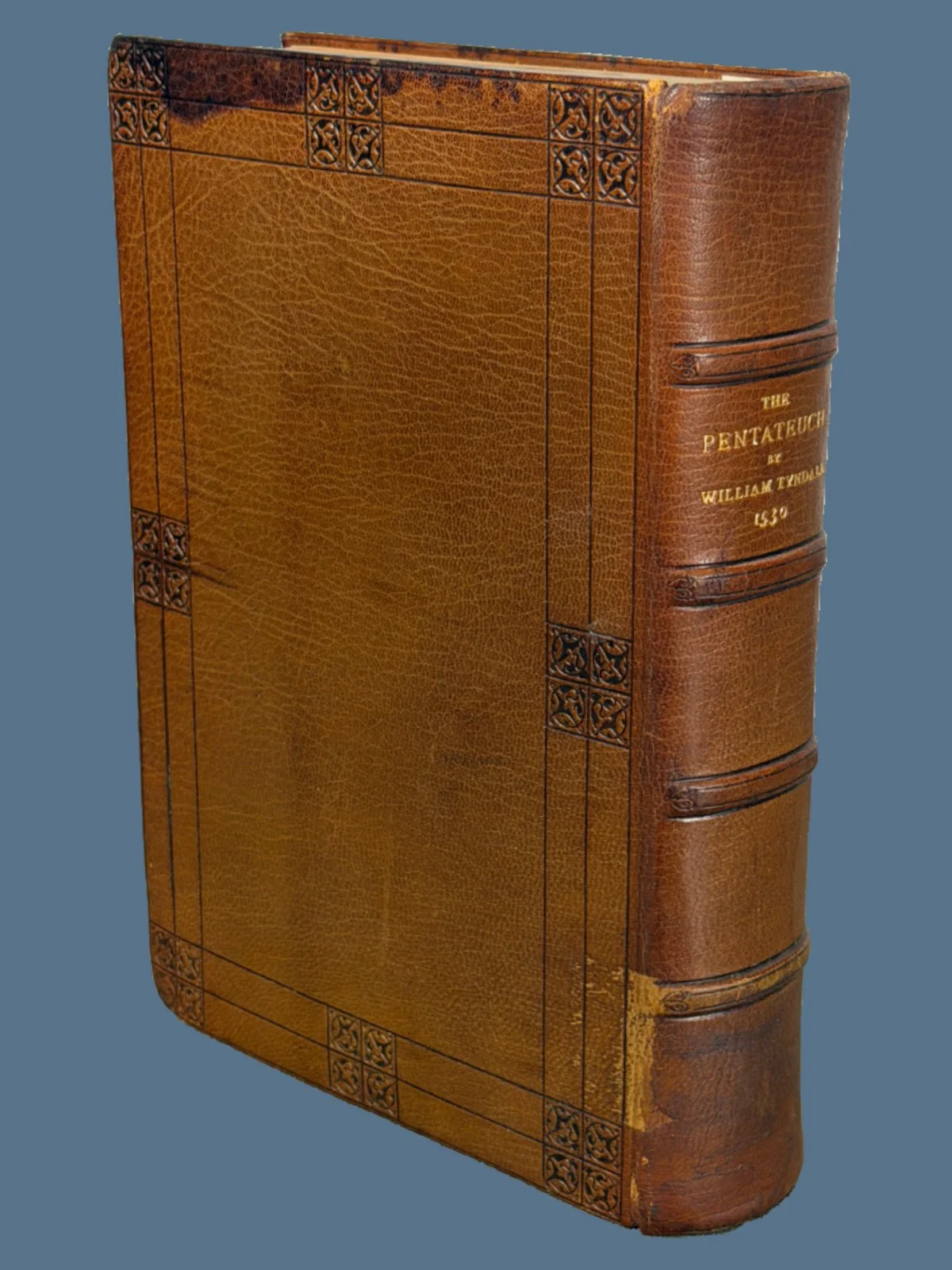 Image 2 of 12
 Image 3 of 12
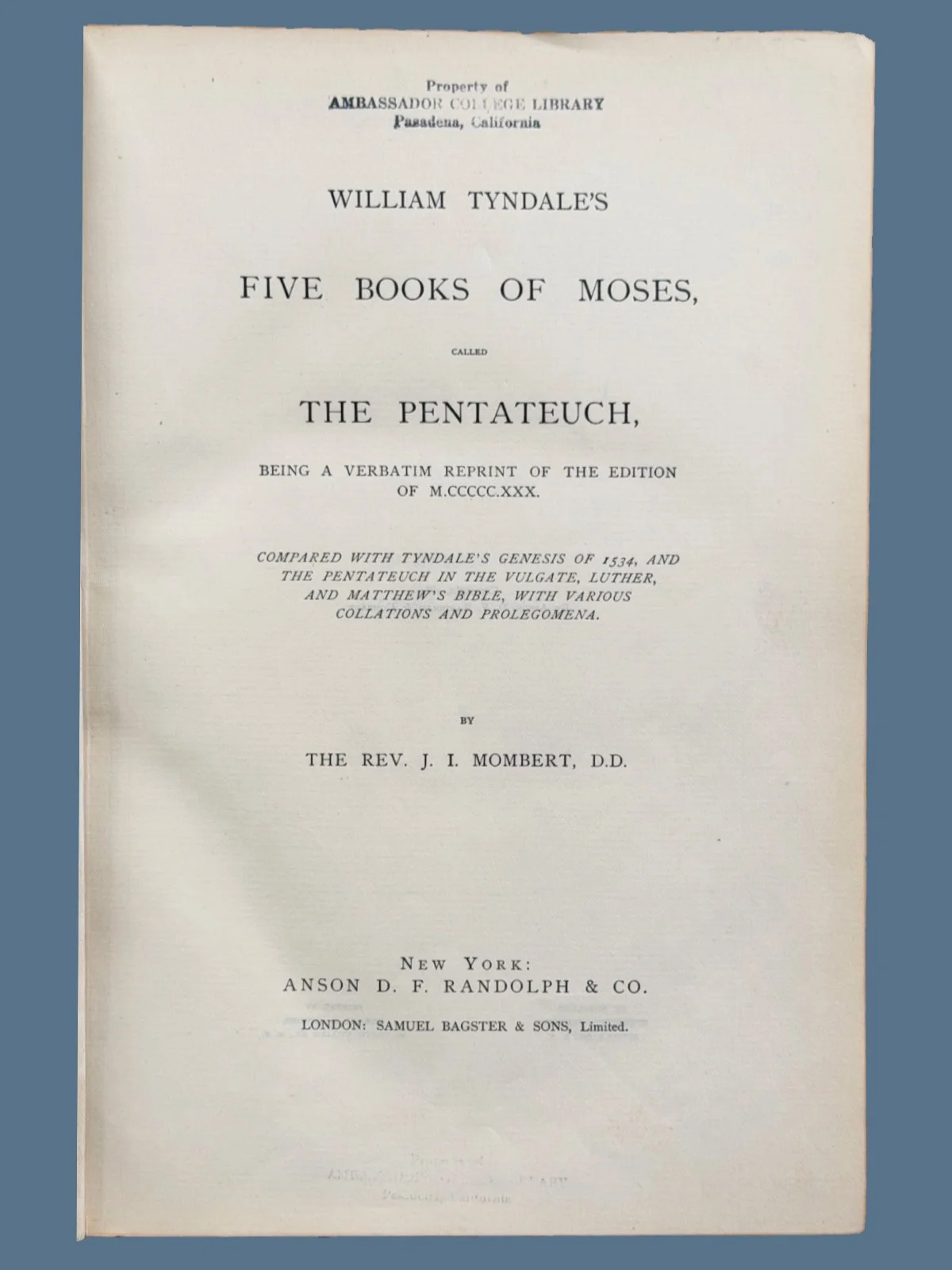 Image 4 of 12
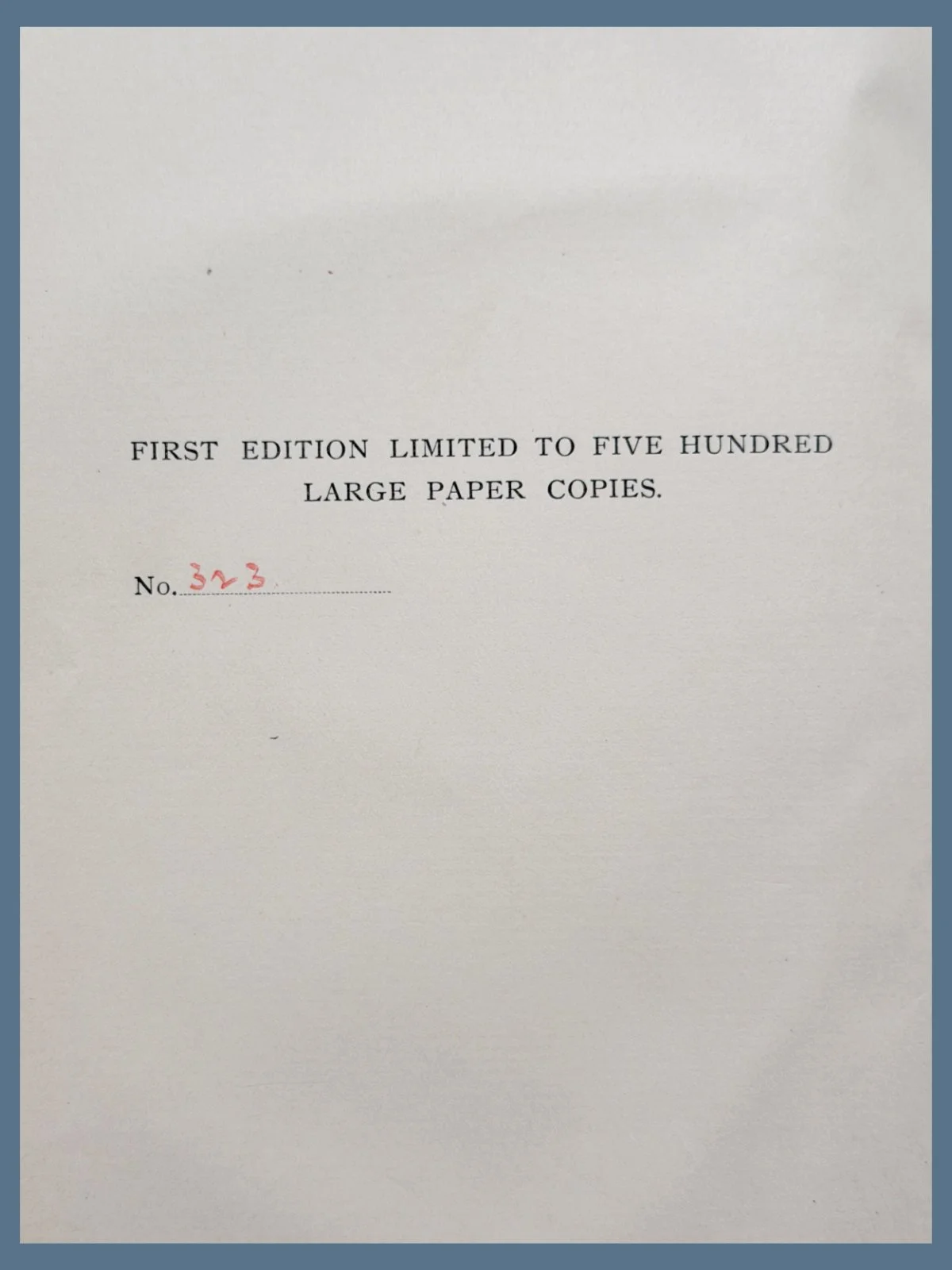 Image 5 of 12
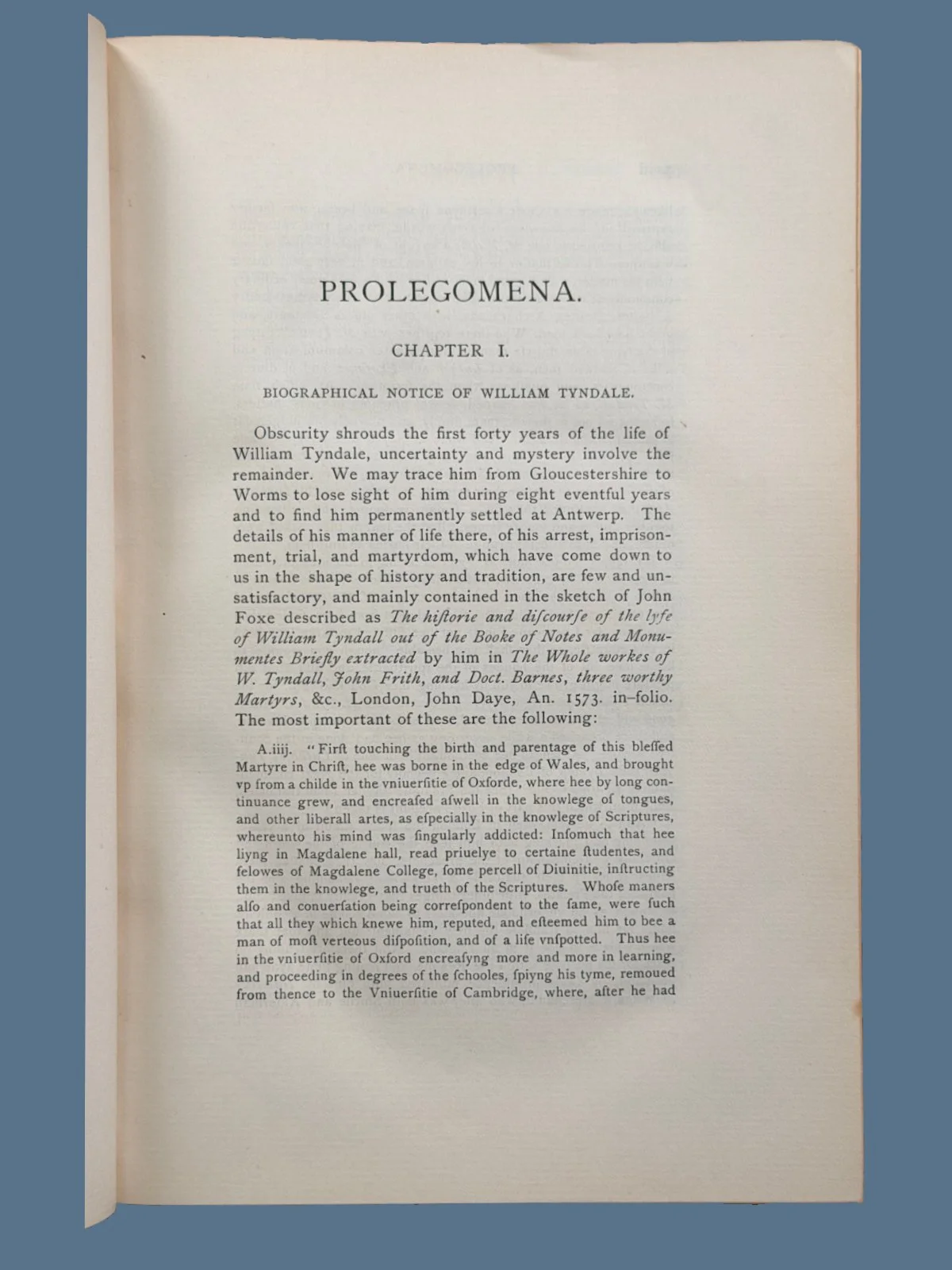 Image 6 of 12
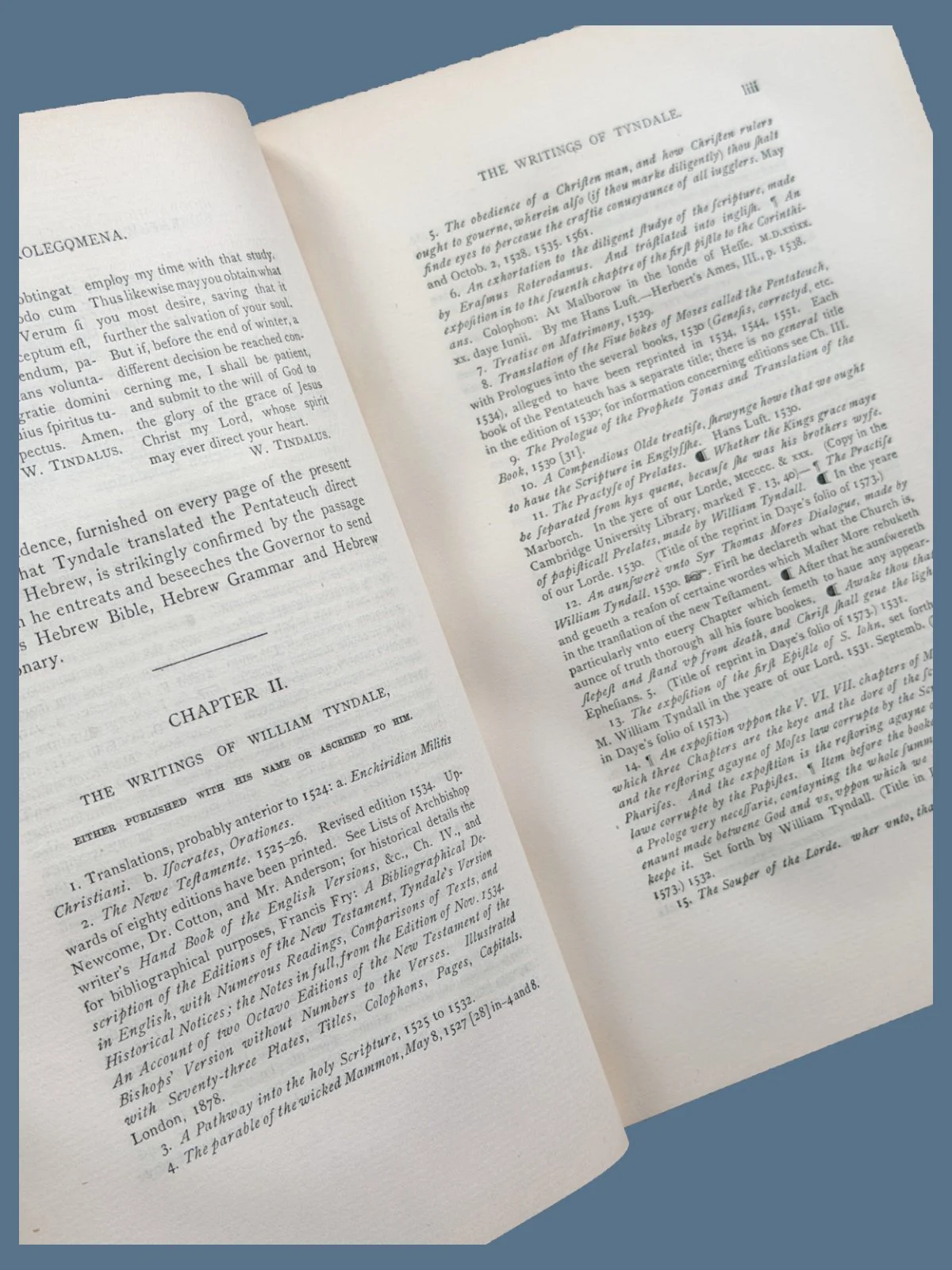 Image 7 of 12
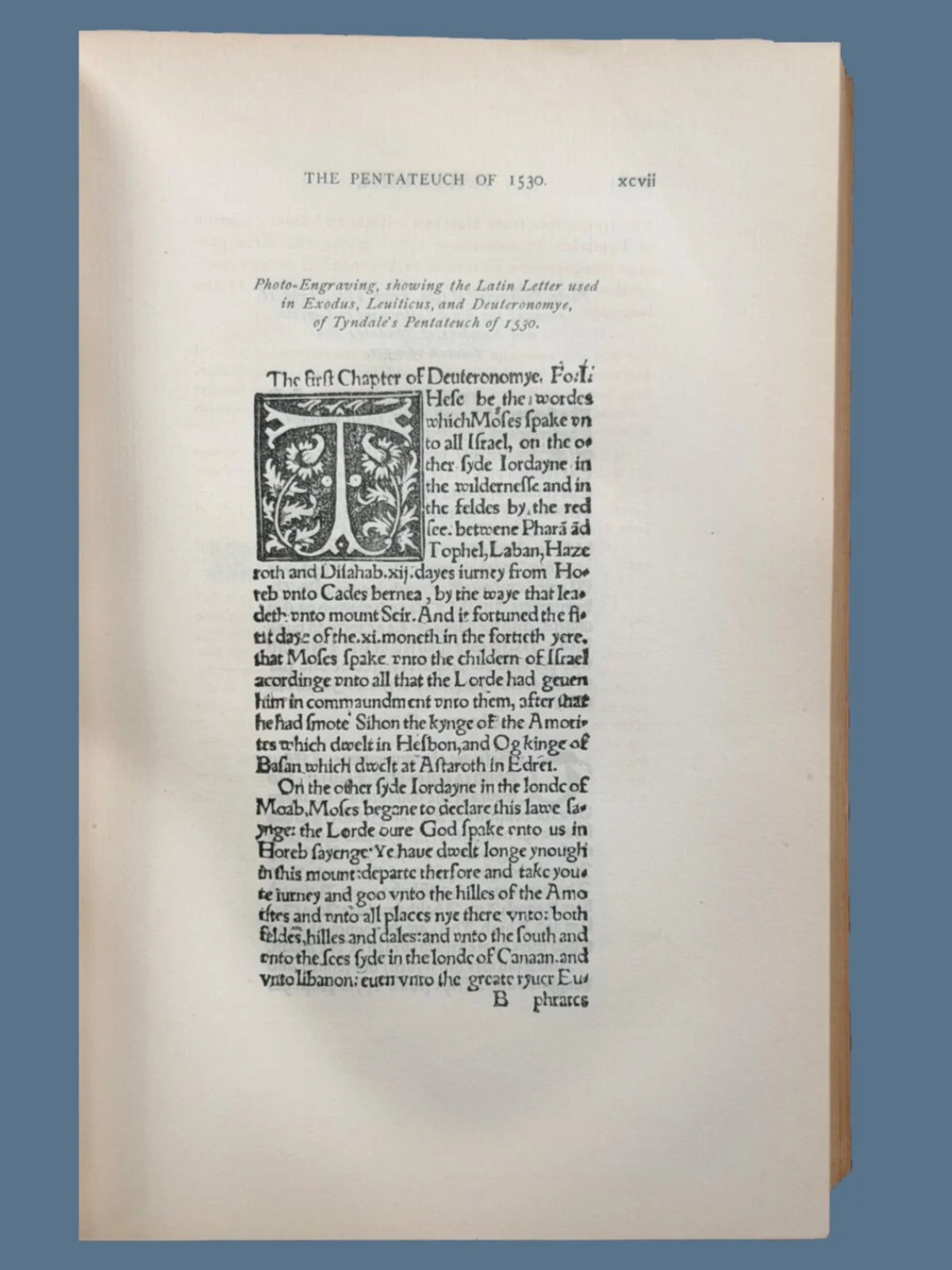 Image 8 of 12
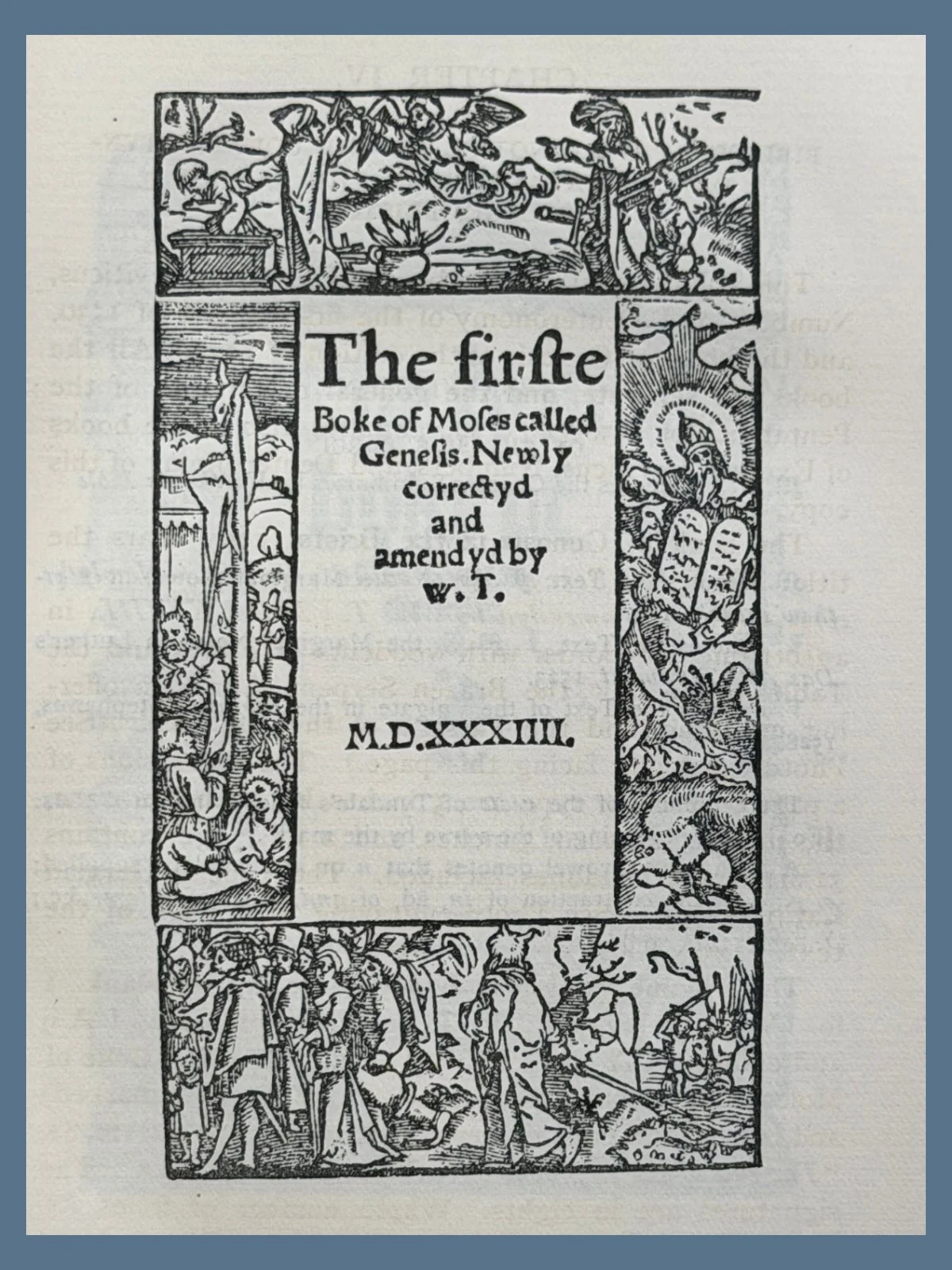 Image 9 of 12
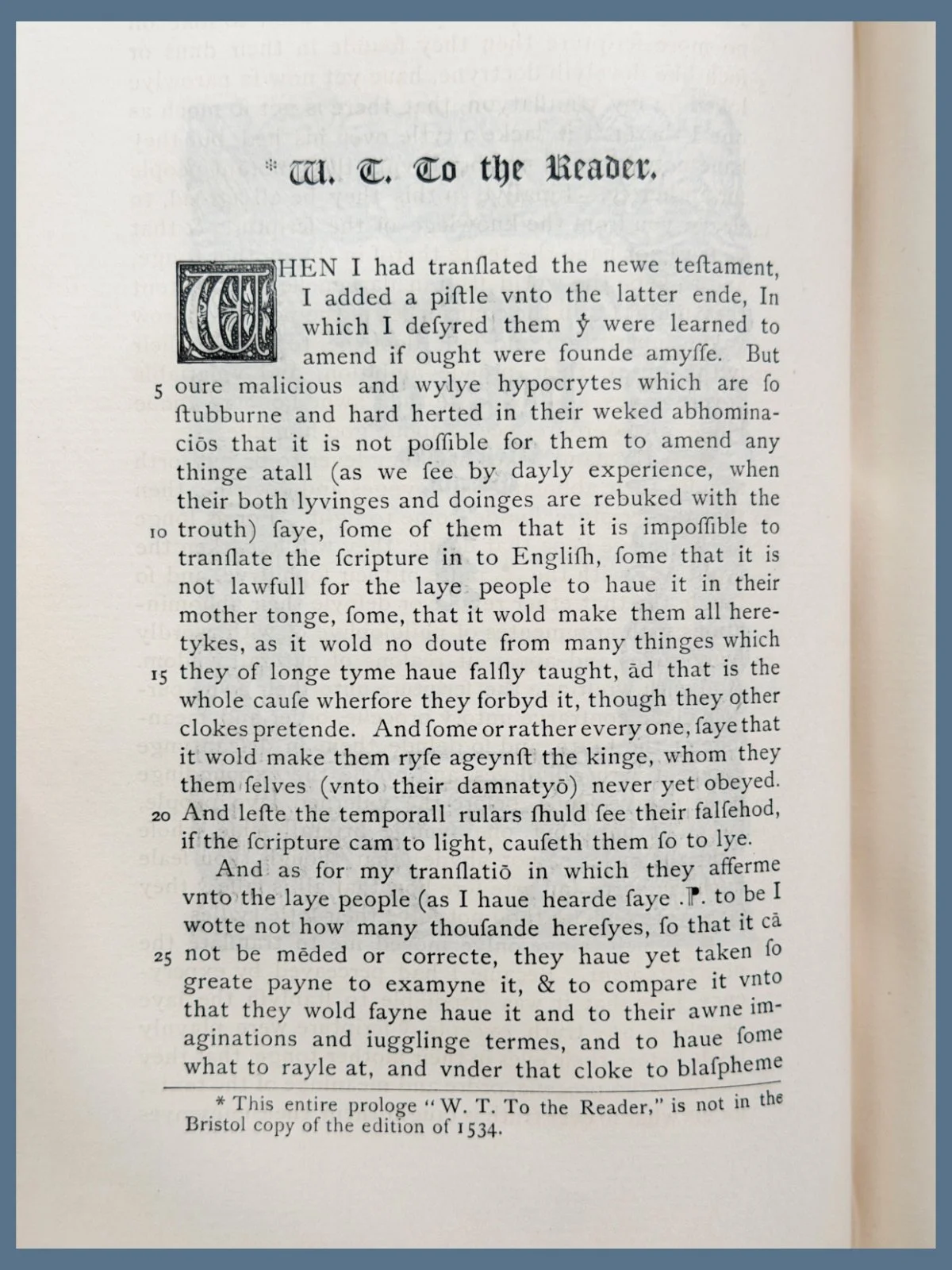 Image 10 of 12
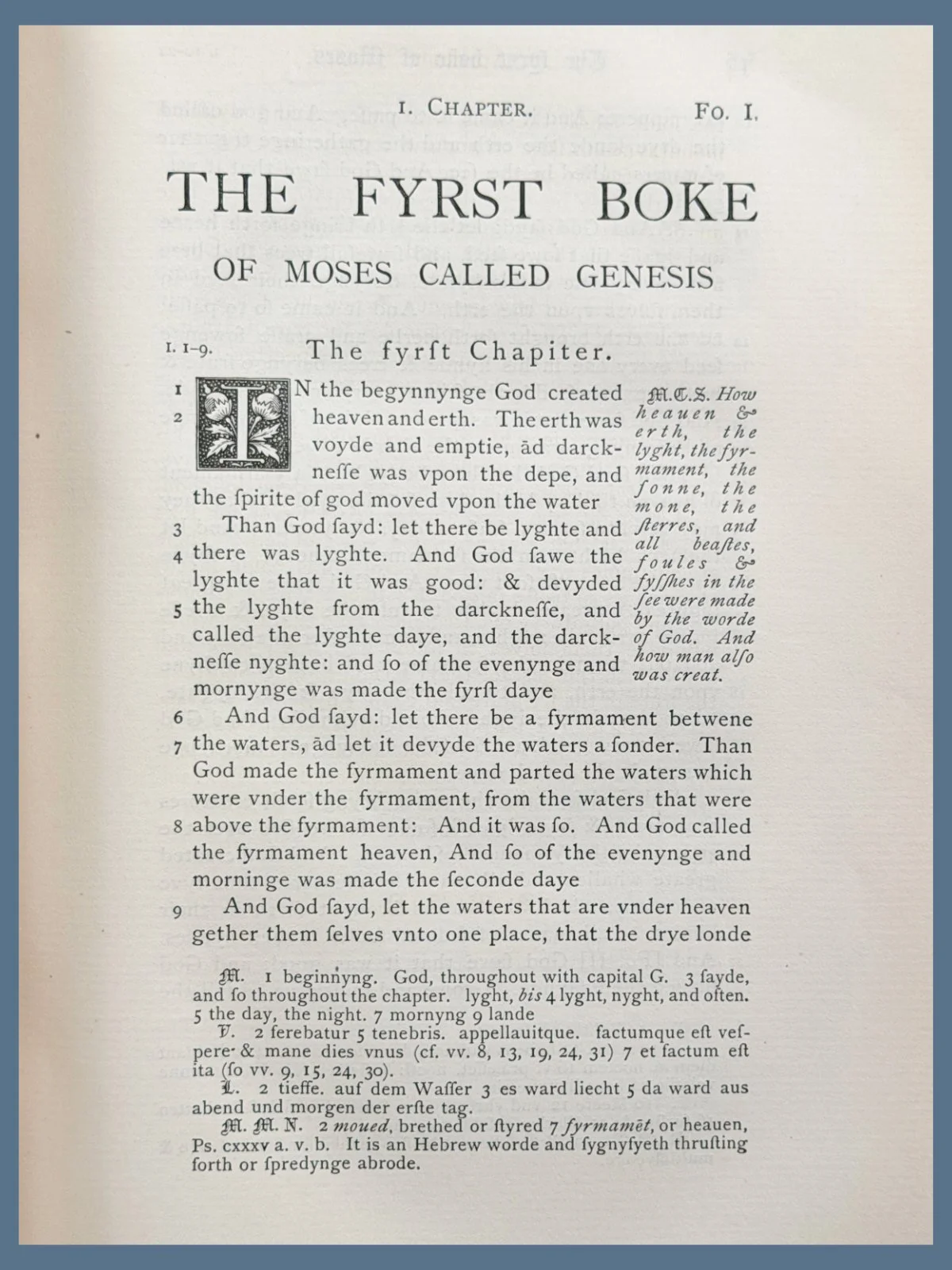 Image 11 of 12
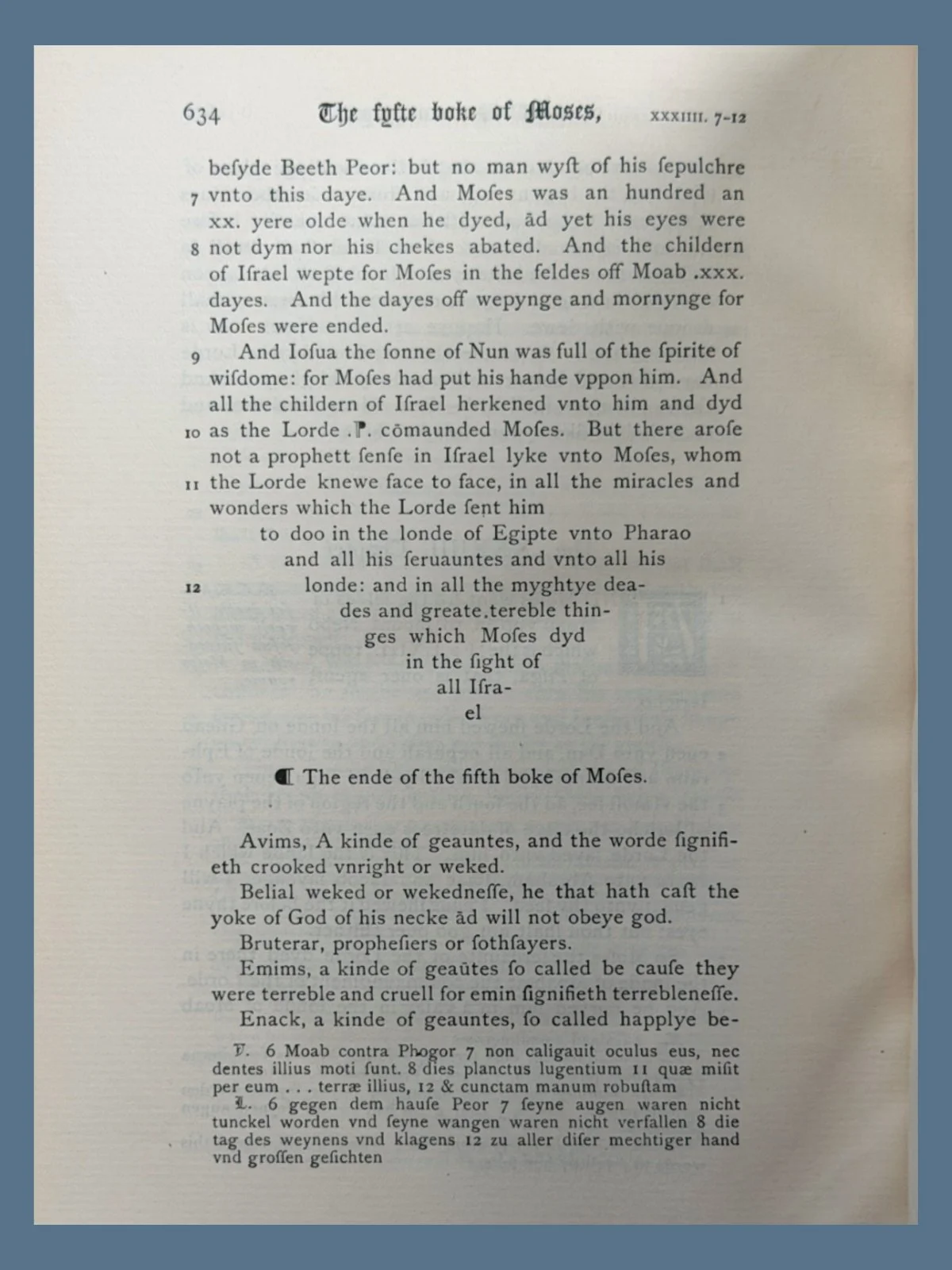 Image 12 of 12
William Tyndale’s Five Books of Moses, called the Pentateuch, being a verbatim reprint of the edition of M.CCCCC.XXX. compared with Tyndale’s Genesis of 1534, and the Pentateuch in the Vulgate, Luther, and Matthew’s Bible, with various collations and prolegomena.
Summary
The first great modern edition of William Tyndale's Pentateuch and one of the landmarks of nineteenth-century English Bible scholarship. Working from the exceedingly rare surviving copies of Tyndale's 1530 translation, Henry A. Mombert produced the first comprehensive scholarly edition to restore this foundational text to students of the English Bible after more than three centuries of inaccessibility.
Description
No. 323 of 500 copies. Extensive scholarly introduction examining the life of Tyndale, his translation methods, the context of English Bible history, and the circumstances surrounding the printing of the 1530 Pentateuch. The introductory material ends with an emphasis on Tyndale’s profound influence on subsequent English translations, culminating in the Authorized Version.
The book continues with a carefully edited text of Tyndale’s Pentateuch, preserving the original spelling, punctuation, and typography. Mombert includes both Tyndale’s notes as well as his own editorial notes, while clearly distinguishing between them.
Pagination
[12],cxlviii,635,[7] pp. Complete.
Binding
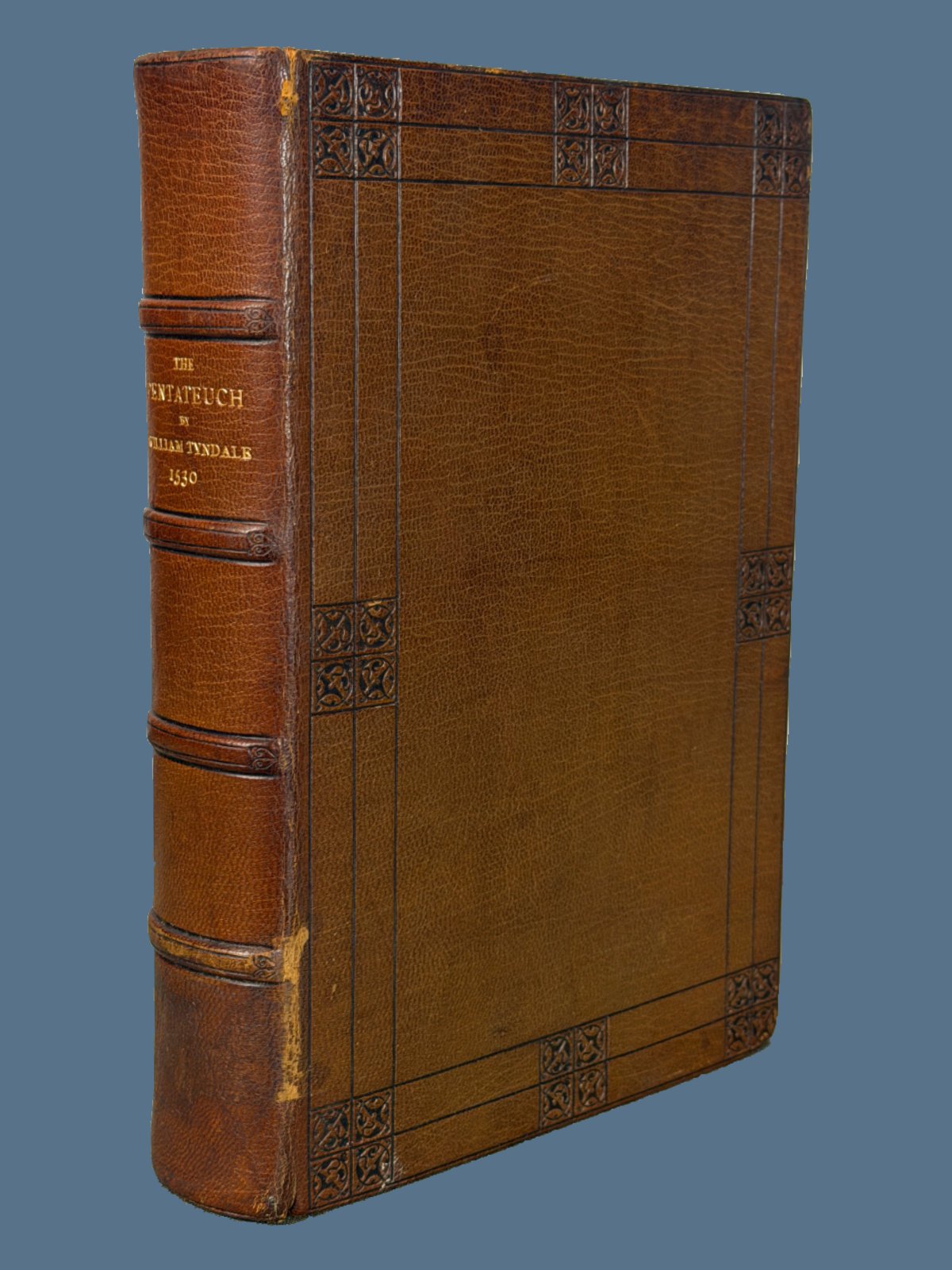
Brown paneled morocco. Spine with four raised bands and the words “The Pentateuch by William Tyndale 1530” in gilt. Top edge gilt. Marbled endpapers.
Condition
Joints lightly rubbed, internally clean and bright.
Provenance
Ex-library copy of Ambassador College Library, Pasadena, CA.
Scarcity
No copies at auction per RBH and no other copies available for sale. Very scarce in commerce.
Note
The five books of Moses, translated by William Tyndale, were not only the first printed editions in English—they were the first translations directly from Hebrew into English. Before this, English translations of the Old Testament relied on Latin versions rather than the original Hebrew.
In 1530, knowledge of Hebrew in England was limited to a small circle of scholars at Cambridge and Oxford. For most of the population, that there was a Hebrew language at all, or that it was the language of the Old Testament, would have been entirely unknown.